


Researchers from the Zhejiang Sci-Tech University have published a dissertation titled "Enhanced Carrier Transport and Photoresponse in Ga2O3 Solar-Blind Photodetectors via Se-Induced Valence Band Modulation" in Advanced Optical Materials.
Background
Solar-blind ultraviolet photodetectors (UV PDs) are crucial for space exploration, information security, and optical communication due to their high signal-to-noise ratio and strong anti-interference capability. β-Ga₂O₃, with its wide 4.9 eV bandgap and excellent stability, is a leading material candidate for solar-blind detection; however, its intrinsic low carrier concentration and mobility severely restrict photoresponse speed and efficiency.
To overcome these limitations, doping strategies have been widely explored. While IV-group dopants (Si, Ge, Sn) enable effective n-type conductivity, reliable p-type doping remains extremely challenging because the O-2p dominated valence band leads to heavy hole mass and deep acceptor levels. Zn and Mg doping have been attempted but suffer from high formation energies and insufficient hole activation.
Recent studies propose modifying the valence band through orbital hybridization to enhance hole localization. Se emerges as a promising dopant due to its compatible electronegativity and atomic size with oxygen, enabling stable hybridization with O-2p orbitals without inducing structural instability. Although Se-doped Ga₂O₃ alloys have been experimentally synthesized, the mechanisms of defect regulation, band structure evolution, and their impact on solar-blind photodetector performance remain insufficiently understood.
This motivates the present study, which systematically investigates structural modulation and device performance in Se-doped Ga₂O₃ films to evaluate their potential for high-sensitivity, fast-response solar-blind UV detection.
Abstract
Ga2O3, with its wide bandgap and excellent physical and chemical stability, has attracted extensive attention for solar-blind ultraviolet photodetectors. However, intrinsic Ga2O3 devices often face challenges such as slow response times and weak responsivity, which significantly hinder their practical applications. Impurity incorporation modulates the electronic structure of Ga2O3, facilitating carrier recombination and transport, and thereby enhancing its optoelectronic performance. In the present work, Se doping with varying molar ratios is employed to achieve a continuous tunability of the Ga2O3 bandgap from 4.97 to 4.59 eV. The photodetector performance of the doped devices surpassed that of intrinsic Ga2O3. Under 5 V at a wavelength of 254 nm, the β-Ga2(SexO1-x)3 ultraviolet photodetector demonstrated a responsivity of 0.78 A W−1, representing a tenfold enhancement over that of the pure device. The corresponding rise and fall times are 63 and 186 ms, significantly faster than the 182 and 135 ms observed for the pure Ga2O3 device. Se incorporation tailors the valence band structure of Ga2O3, narrows the bandgap, and enhances carrier transport, collectively boosting photodetector performance. This study demonstrates high-performance Se-doped Ga2O3 photodetectors for the first time and provides valuable insights for the design of next-generation solar-blind photonic devices.
Conclusion
β-Ga2(SexO1-x)3 films with varying Se/O molar ratios were successfully fabricated by PECVD. Both experimental results and first-principles calculations verify that Se incorporation into β-Ga2O3 effectively modulates the electronic structure, achieving continuous bandgap tuning in the range of 4.59–4.97 eV. Compared to intrinsic Ga2O3-based devices, the constructed MSM structured solar-blind UV PD based on β-Ga2(SexO1-x)3 exhibited a high responsivity of 0.78 A W−1 and a fast photoresponse time of 63/186 ms (rise/decay). Hence, the incorporation of Se effectively reconstructs the valence band structure of Ga2O3, enhances the hole activity and photoelectric detection performance of the device. The high-performance Se-doped Ga2O3 detectors provide valuable theoretical and experimental foundations for the advancement of solar-blind UV detection technologies.
Project Support
This work was supported by the Joint Funds of the National Natural Science Foundation of China (No. U23A20349), the Funds of the Natural Science Foundation of Hangzhou under Grant (No. 2024SZRZDF040001), the National Natural Science Foundation of China (Nos. 62274148, 62304205 and 62374147), the Intramural Grant of Zhejiang Sci-Tech University (No. 24062240-Y).
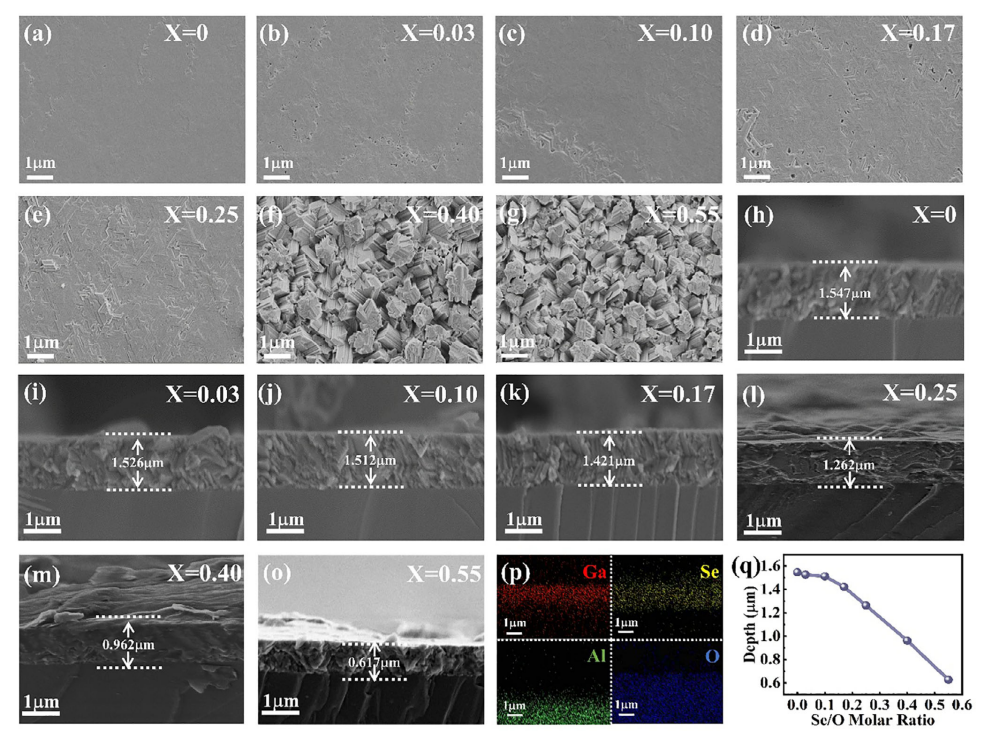
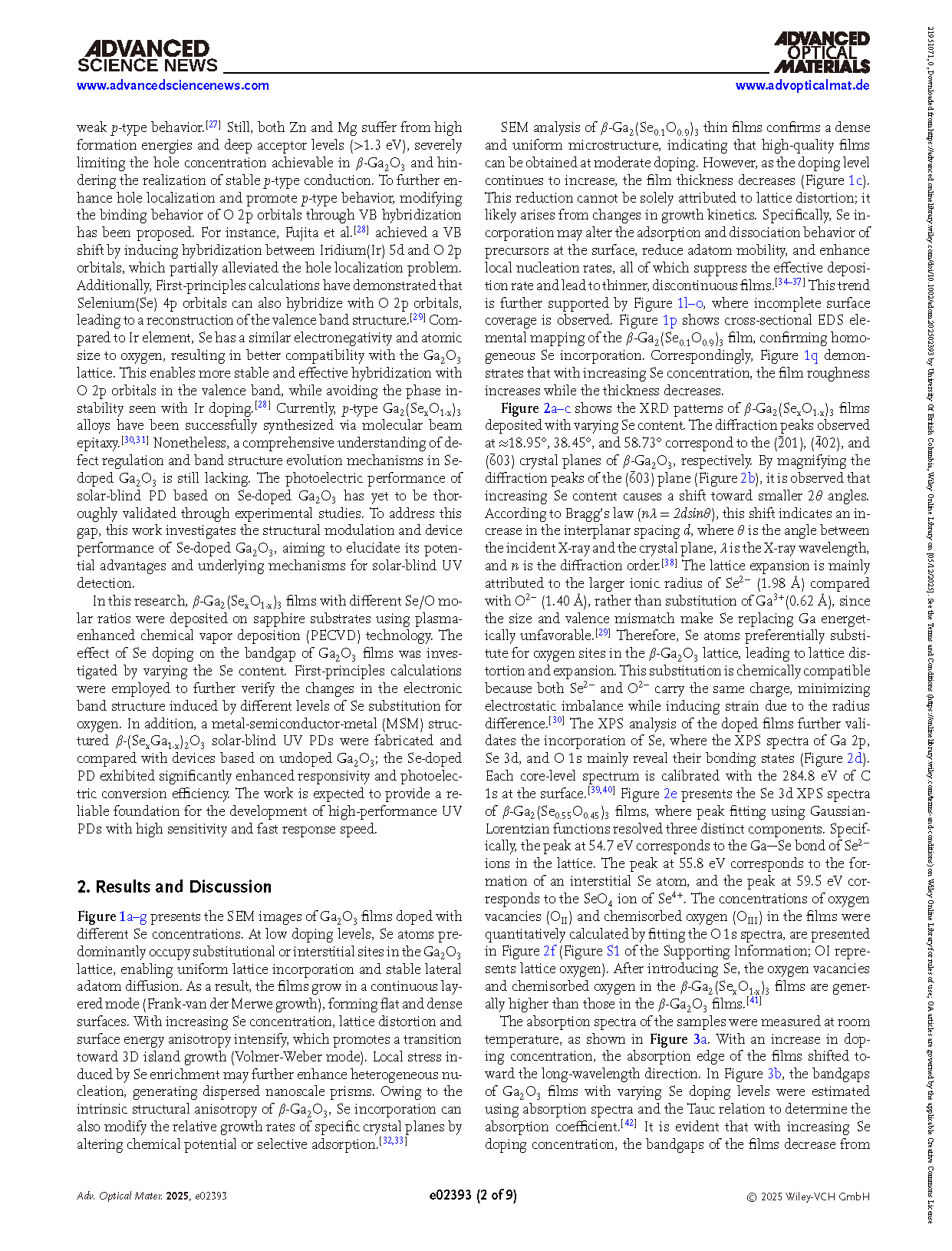
Figure 1. β-Ga2(SexO1-x)3 films: a–g) The surface topography SEM image. h–o) The cross-sectional SEM image; p) EDS elemental mapping of Ga, Se, Al, and O; q) The film thickness vs Se/O molar ratio.
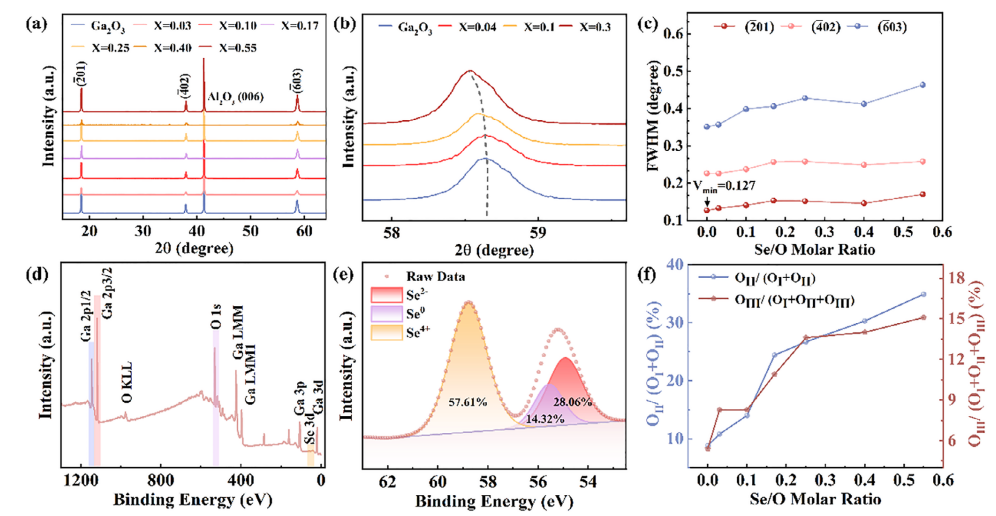
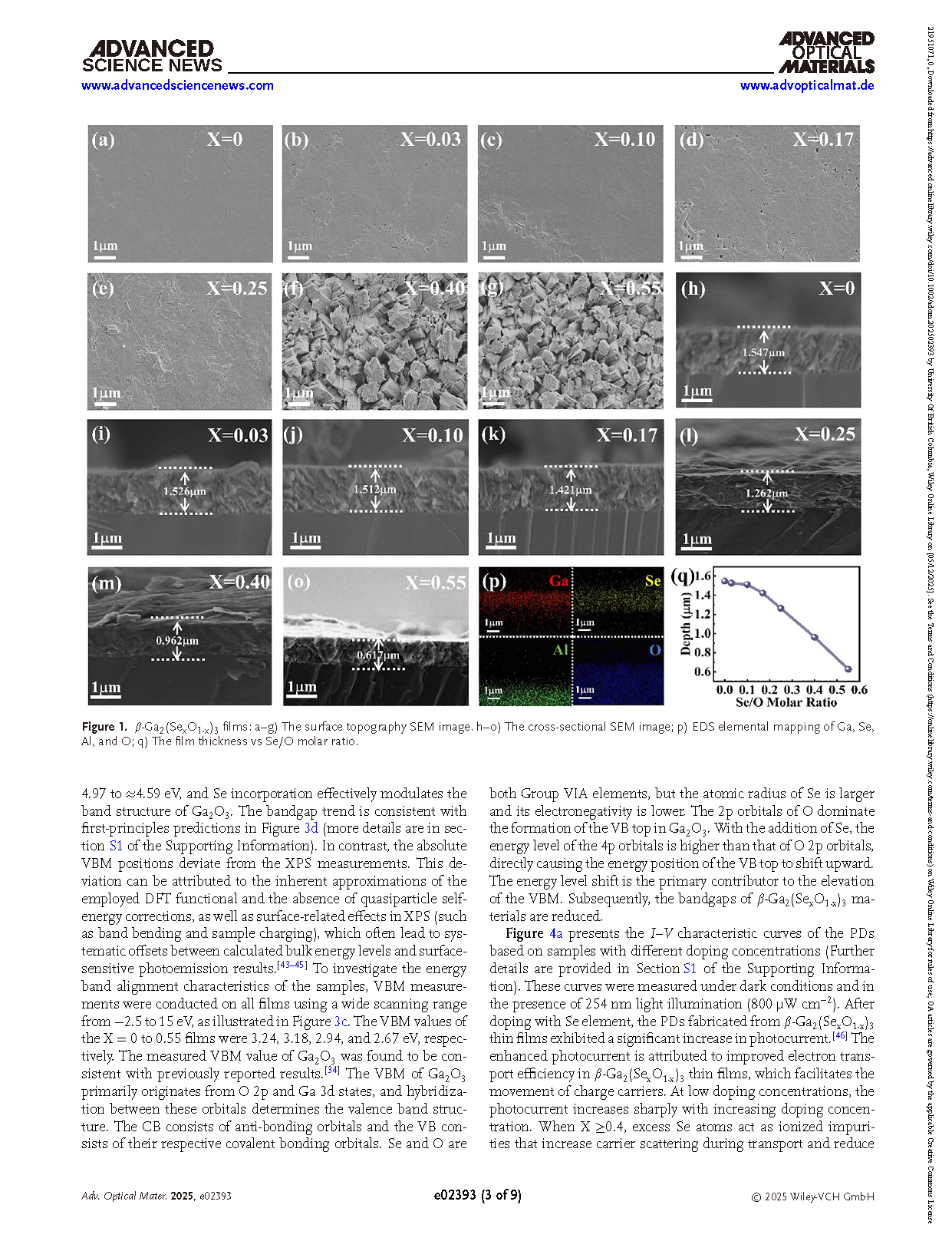
Figure 2. β-Ga2(SexO1-x)3 films: a) XRD patterns; b) Enlarged view of the (603) diffraction peak; c) FWHM of the diffraction peaks; d) Full XPS spectra; ̄ e) XPS spectrum of Se 3d; f) Quantitative analysis of OII and OIII species obtained from the O 1s XPS spectra.
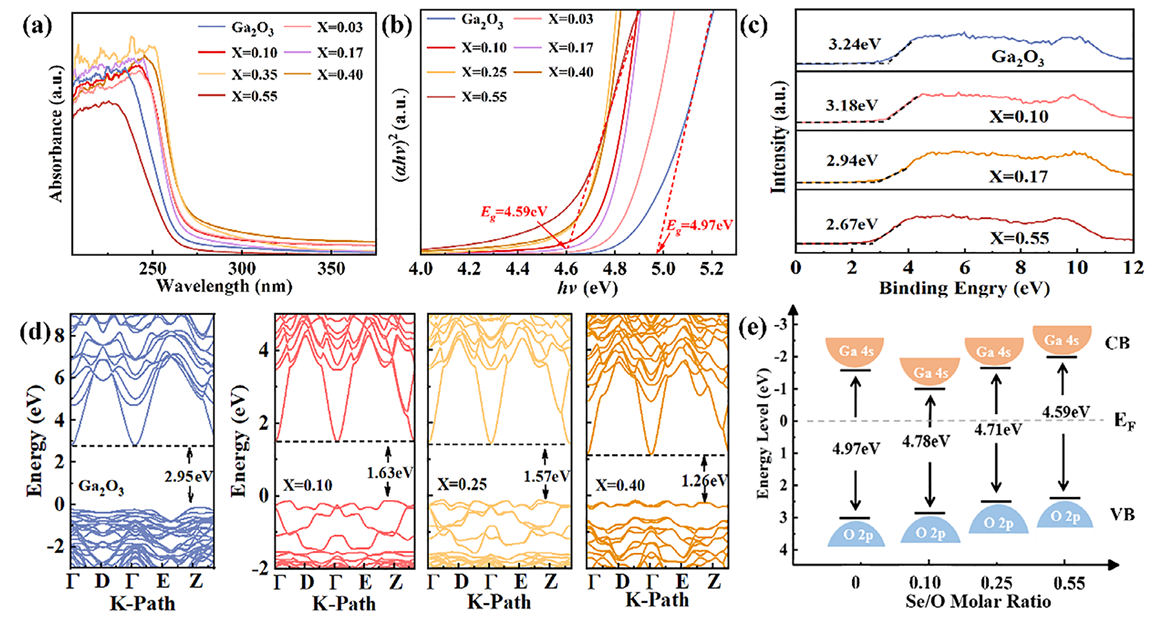
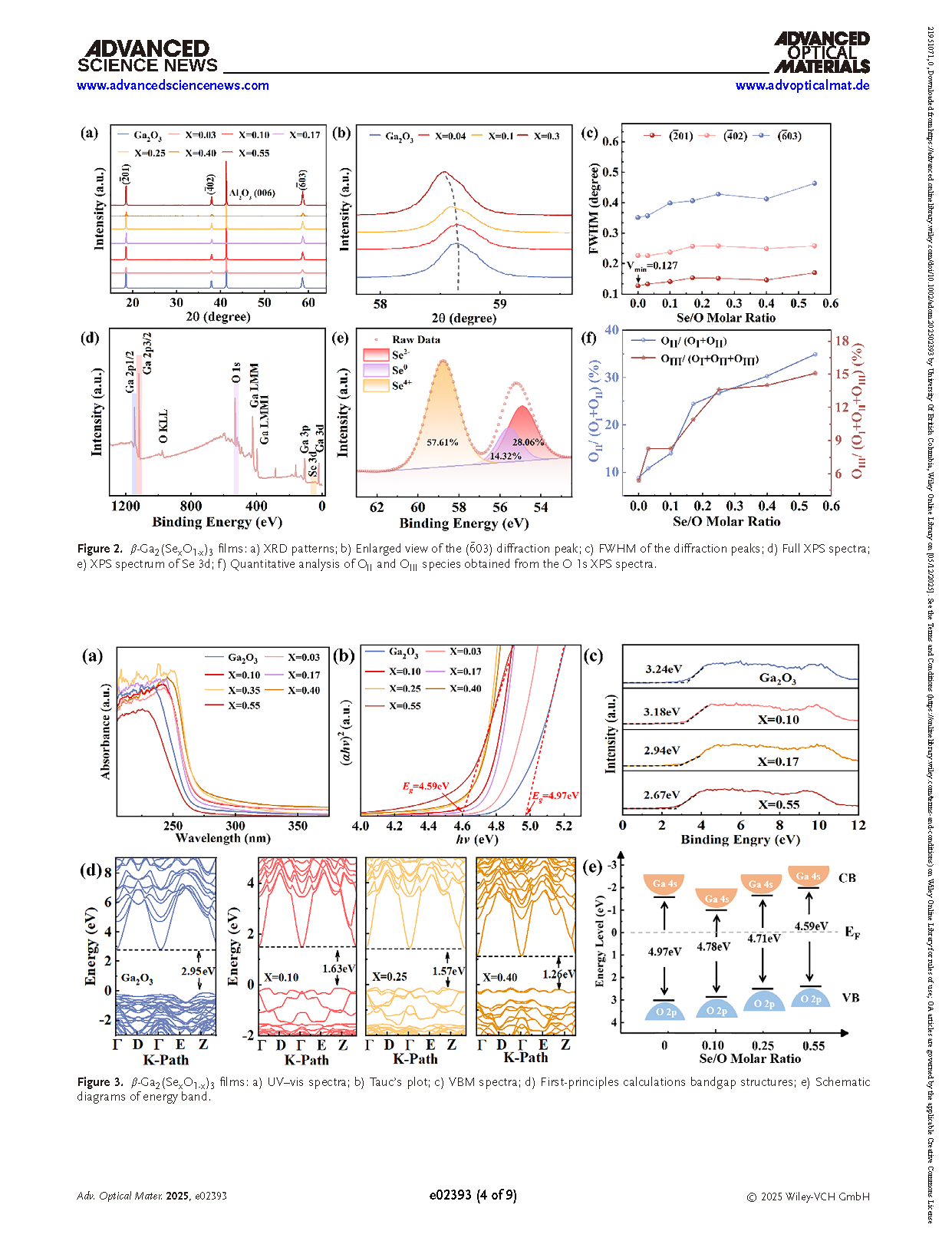
Figure 3. β-Ga2(SexO1-x)3 films: a) UV–vis spectra; b) Tauc’s plot; c) VBM spectra; d) First-principles calculations bandgap structures; e) Schematic diagrams of energy band.

Figure 4.β-Ga2(SexO1-x)3 PDs:a) I–V; b) PDCR; c) R, D*, and EQE; d) I–t curves under different biases. β-Ga2(Se0.1O0.9)3 PDs:e) I–t under different light intensities; f) Iphoto under different voltages; g,h) Calculated response times; i) Response time statistics for all samples.
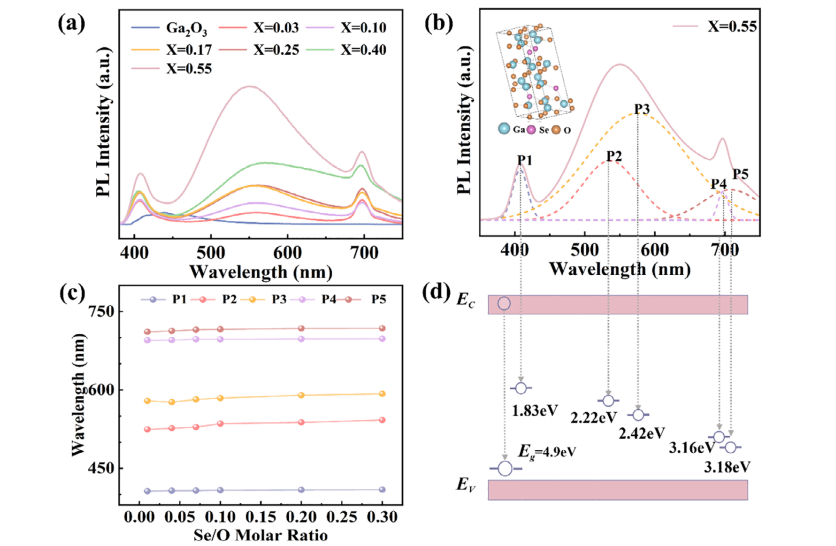
Figure 5. β-Ga2(SexO1-x)3 films: a) PL spectra; b) PL peak fitting and atomic structure model; c) Variation of fitted peak positions; d) The position for fitted PL peak in the energy band.
DOI:
doi.org/10.1002/adom.202502393

Instruction
Official Account

Cooperation
Top