


Researchers from the Sun Yat-sen University have published a dissertation titled " The role of oxygen vacancies in the electronic and optical properties of κ-Ga2O3" in Communications Chemistry.
Background
As an orthorhombic ultrawide-bandgap semiconductor, κ-Ga₂O₃ combines the advantage of being epitaxially grown on mature substrates such as GaN, sapphire, and SiC with pronounced spontaneous polarization, making it highly promising for high-power electronic devices and deep-ultraviolet optoelectronic applications. However, oxygen vacancy defects inevitably introduced during growth can significantly affect its electrical and optical properties. While the characteristics of oxygen vacancies in β-Ga₂O₃ have been systematically investigated, for the metastable κ-Ga₂O₃ phase, a comprehensive theoretical understanding of the thermodynamic stability of oxygen vacancies, their dominant charge states, and their correspondence with experimentally observed defect levels and optical responses remains lacking. This knowledge gap limits precise control of κ-Ga₂O₃ material properties and the optimization of device performance.
Abstract
Oxygen vacancies are regarded as crucial defects greatly affecting the electronic and optical properties of oxide films and devices, yet systematic studies on κ-Ga2O3 are still lacking. Herein, we investigate the thermodynamic, electronic, and optical properties of oxygen vacancies in κ-Ga2O3 using density functional theory calculations with the hybrid functional. The electronic structure reveals that oxygen vacancies create a deep donor defect in the bandgap, with defect levels and transition energies influenced by Ga atom displacement and localized electron dynamics. This interplay explains the stability of vacancies at specific sites and their connection to experimentally observed defect levels. Additionally, oxygen vacancies generate distinct absorption and electron energy loss peaks in the ultraviolet range. Our results elucidate the nature of oxygen vacancies, and offering a foundation for tuning and optimizing the electrical and optical properties of κ-Ga2O3 films and improving device performance through defect engineering.
Conclusion
In this study, we have systematically investigated the thermodynamic, electronic, and optical properties of oxygen vacancies in k-Ga2O3 using first principles calculations. Our findings reveal that oxygen vacancies introduce deep donor levels within the bandgap, significantly influencing the electronic structure and charge dynamics of k-Ga2O3. The analysis of the density of states confirms that these vacancies lead to new defect states, which correlate with observed experimental defect levels, elucidating their role as critical factors in determining the electronic behavior. We demonstrated that the formation energy of oxygen vacancies varies with the Fermi level and growth conditions, highlighting a preference for neutral vacancies under oxygen-poor environments. This indicates that oxygen vacancies can significantly impact the electrical conductivity and charge transport mechanisms, particularly through the formation of polarons. Optically, the presence of oxygen vacancies introduces additional absorption peaks in the ultraviolet region. Our work provides a comprehensive understanding of the effects of oxygen vacancies on the electronic and optical properties of k-Ga2O3, laying a solid foundation for future defect engineering strategies aimed at optimizing the performance of k-Ga2O3-based devices.
Project Support
This work was supported in part by the Young Innovative Talents Project for General University in Guangdong Province (2025KQNCX085), Guangdong Hilly Agriculture Intelligent Equipment Engineering Technology Research Center (2025GCZX010), National Key Research and Development Program (2024YFE0205300), Science and Technology Development Plan Project of Jilin Province, China (No. YDZJ202303CGZH022), Shenzhen Science and Technology Program (No. 20231127114207001), Open Fund of the State Key Laboratory of Optoelectronic Materials and Technologies (OEMT-2023-KF-05), respectively.
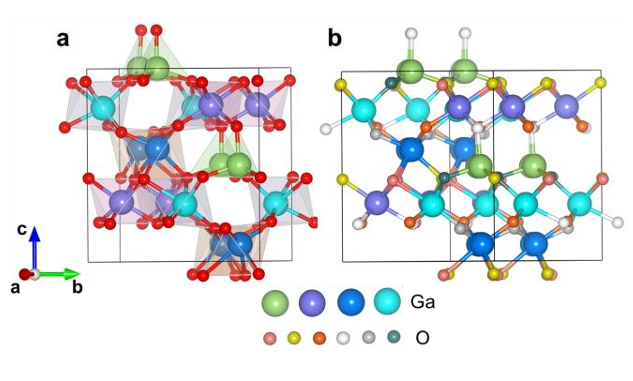
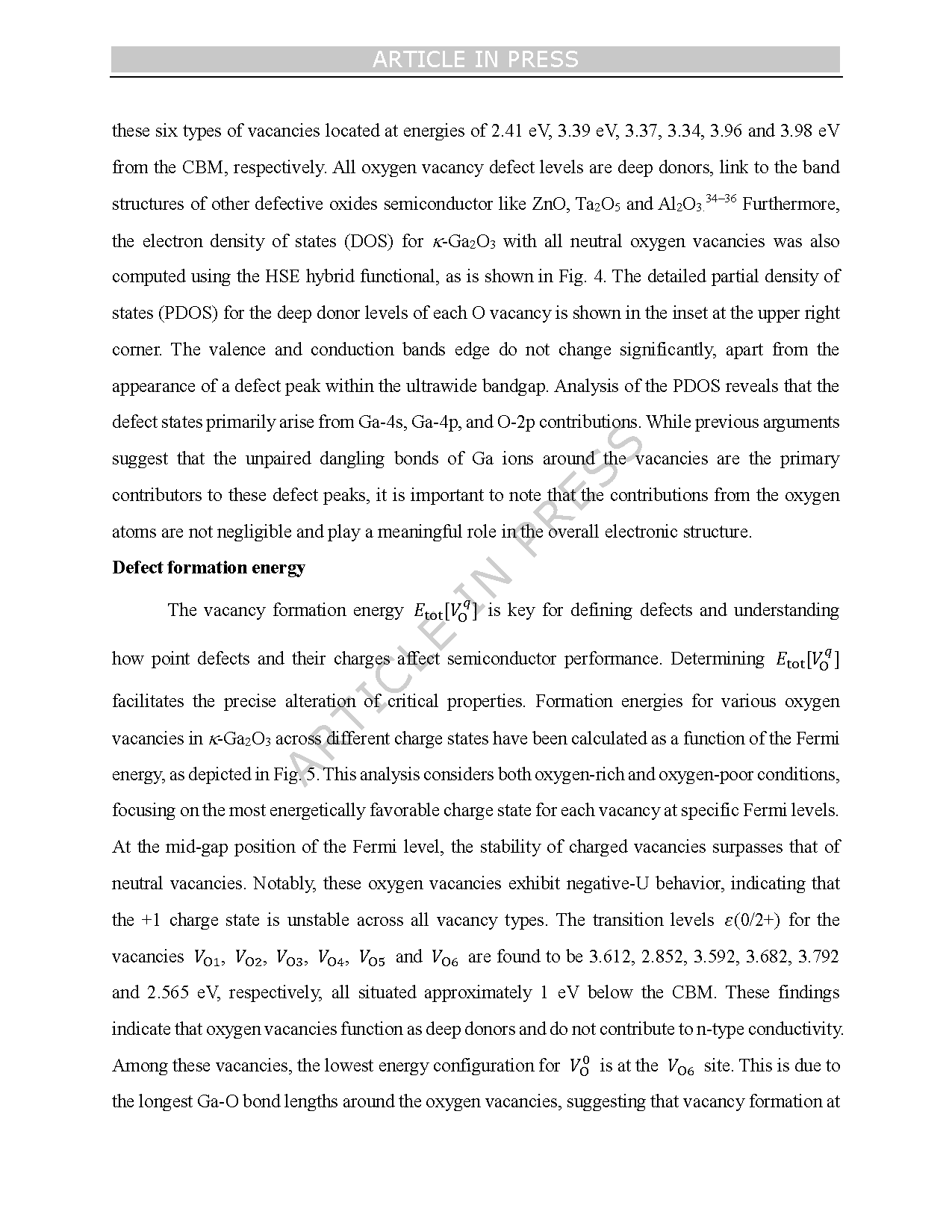
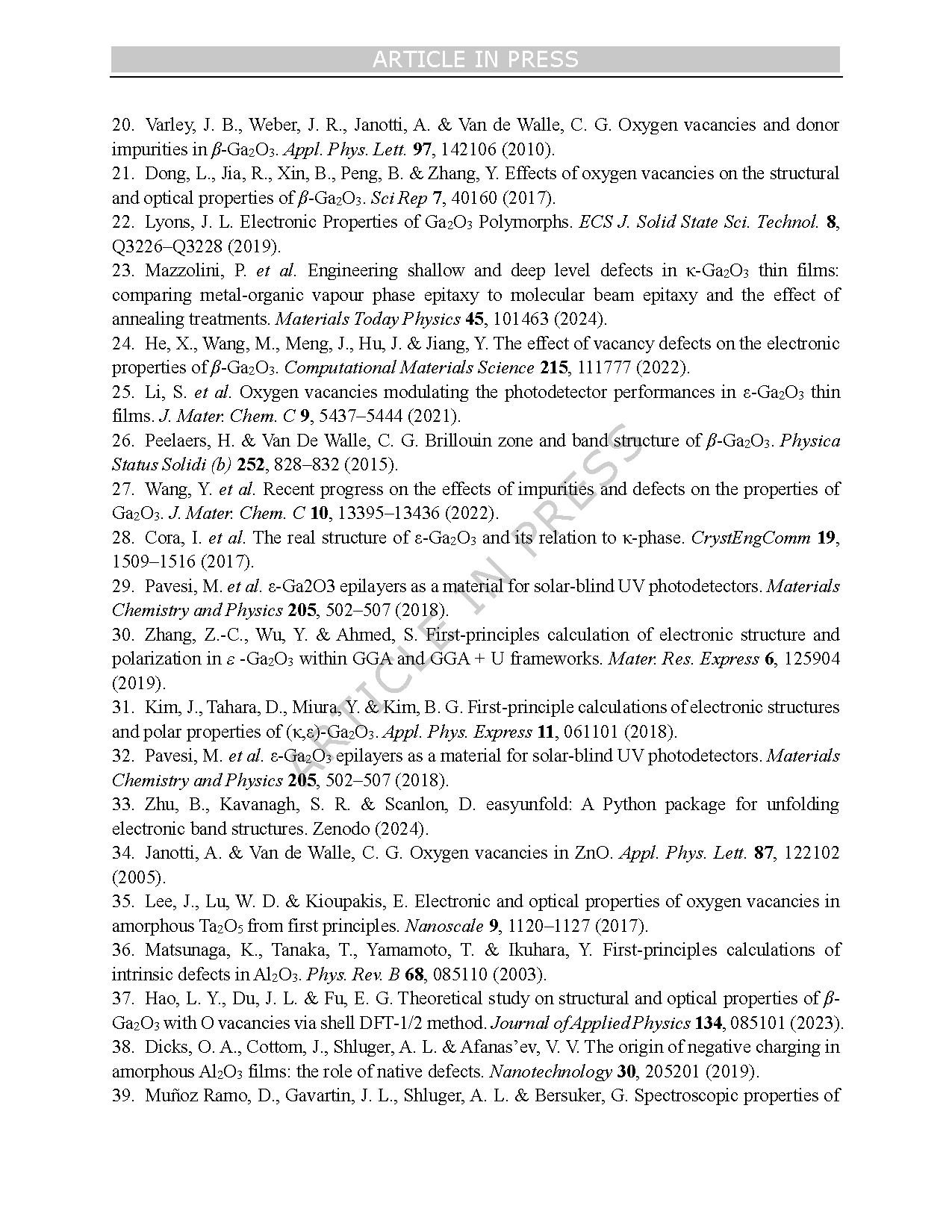
Fig. 1 | Structural Representation of κ-Ga2O3. (a) The conventional cell and (b) the 80 atoms supercell of κ-Ga2O3. Ga1 − Ga4 atoms with different coordinates are represented by green, purple, blue and cyan spheres, while O1 −O6 atoms with different coordinates are illustrated as pink, yellow, red, white, grey, and dark cyan spheres.
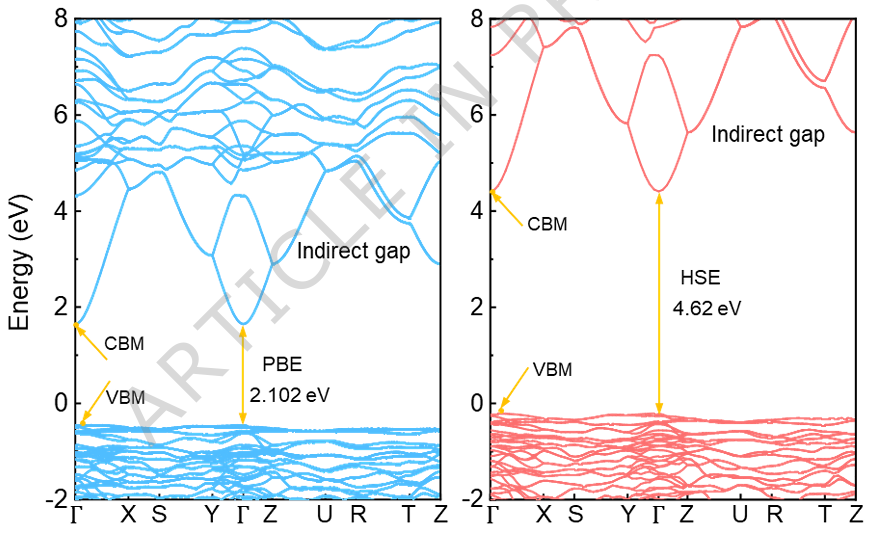
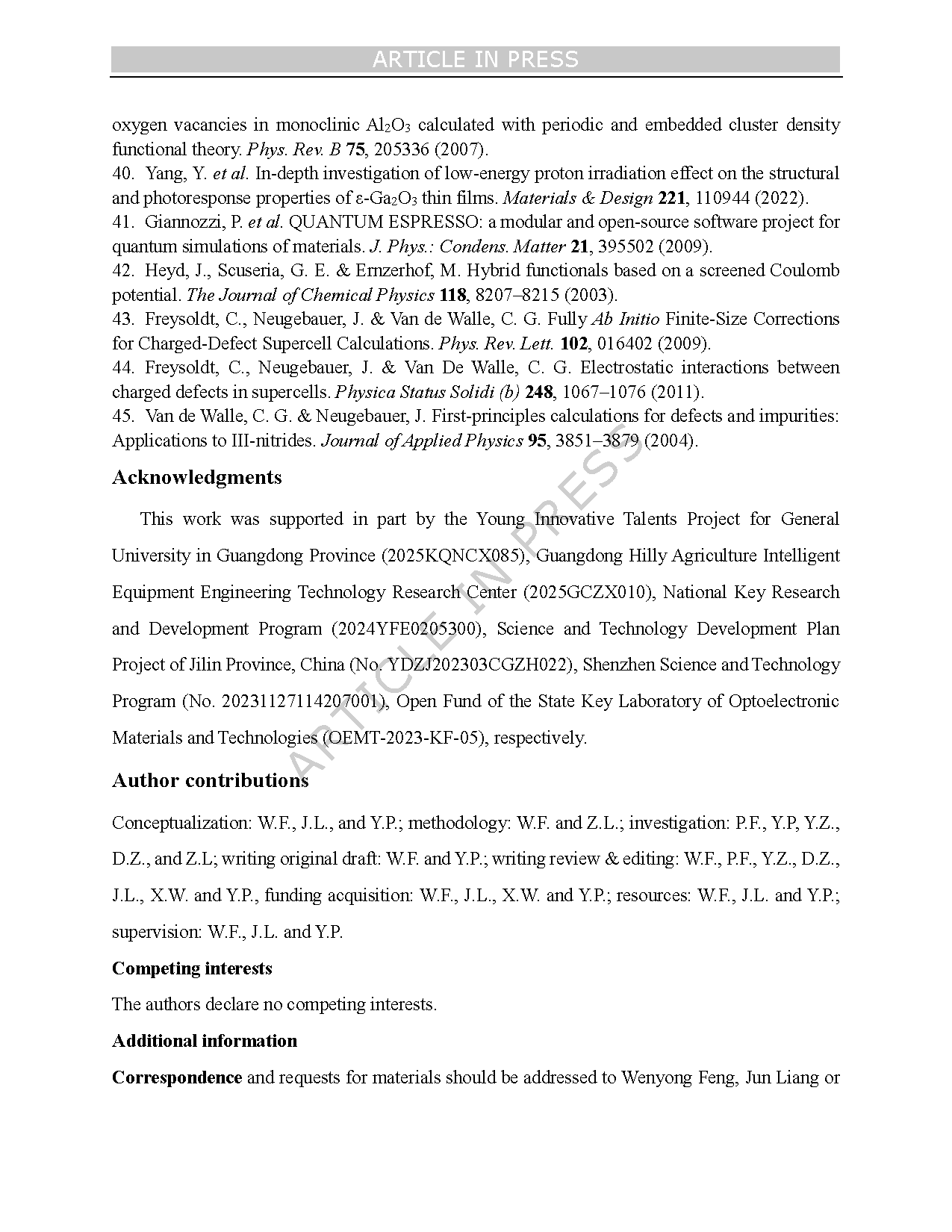
Fig. 2 | Band Structures of Conventional κ-Ga2O3 Cell Calculated Using PBE and HSE Methods. Band structures of the conventional κ-Ga2O3 cell calculated using the PBE approximation and the HSE method, respectively.
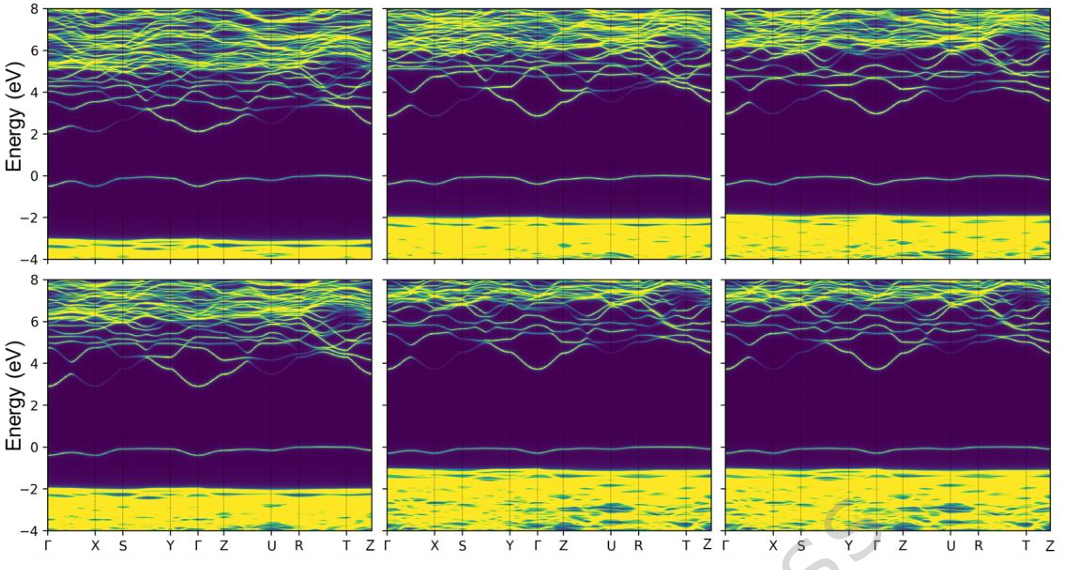
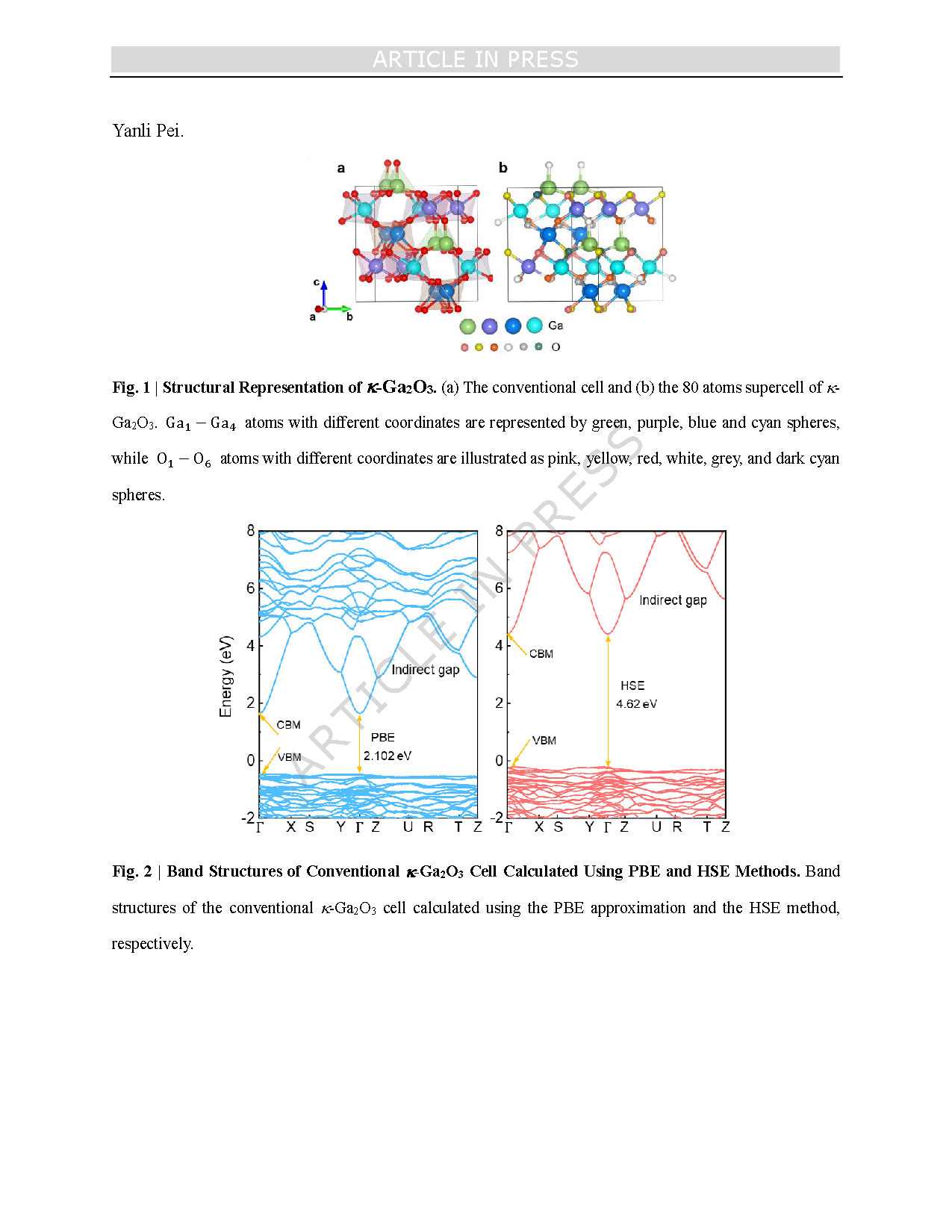
Fig. 3 | Unfolding Band Structures of κ-Ga2O3 with Oxygen Vacancies. Unfolding band structures of k-Ga2O3 with O vacancies in (a) O1, (b) O2, (c) O3, (d) O4, (e) O5 and (f) O6, respectively.
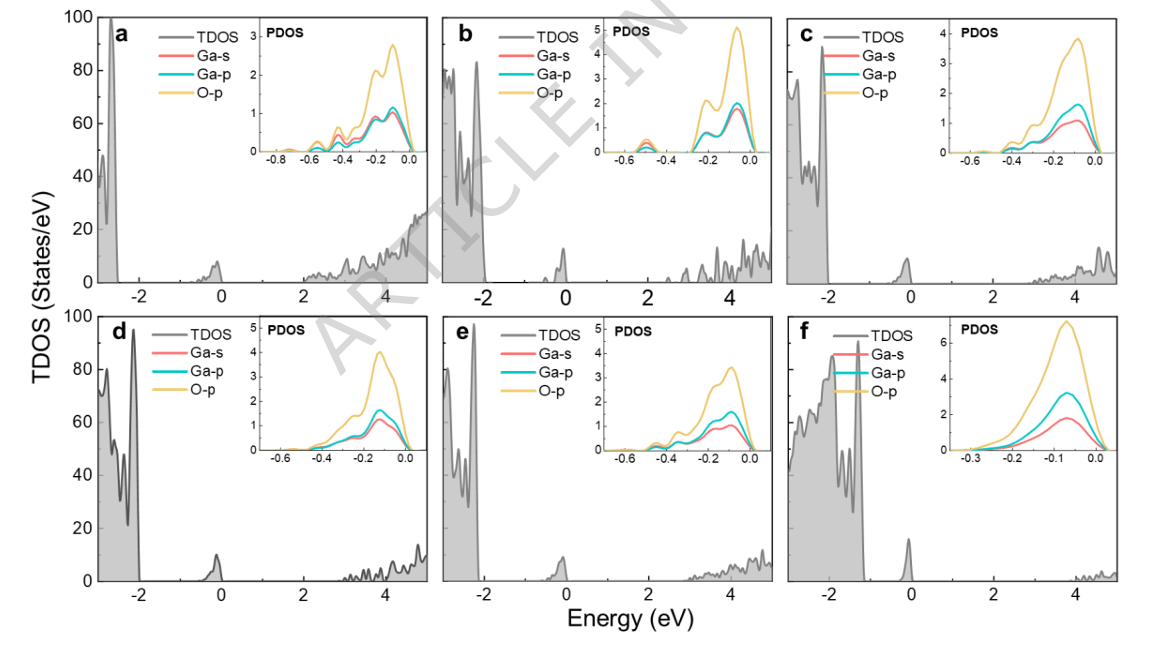
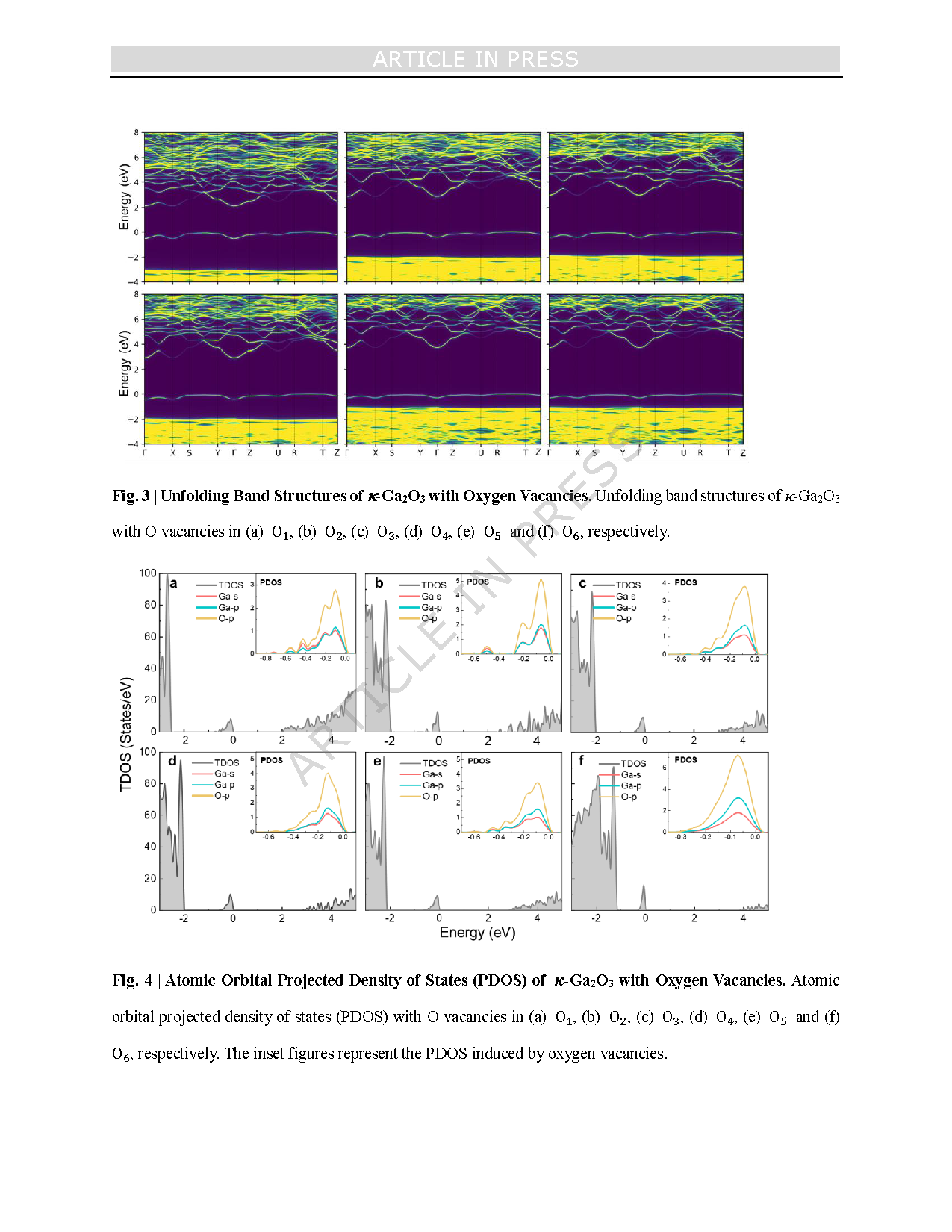
Fig. 4 | Atomic Orbital Projected Density of States (PDOS) of κ-Ga2O3 with Oxygen Vacancies. Atomic orbital projected density of states (PDOS) with O vacancies in (a) O1, (b) O2, (c) O3, (d) O4, (e) O5 and (f) O6, respectively. The inset figures represent the PDOS induced by oxygen vacancies.
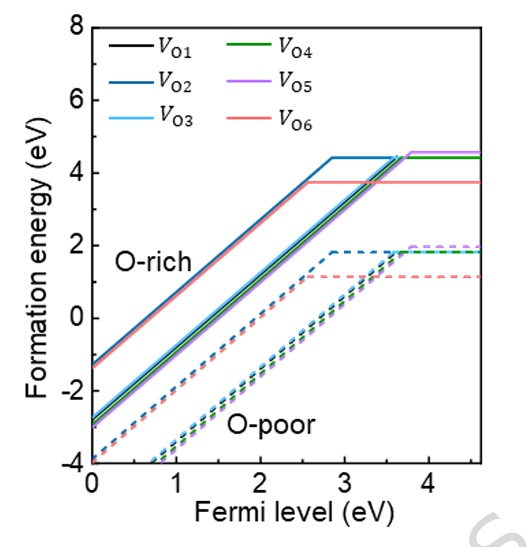
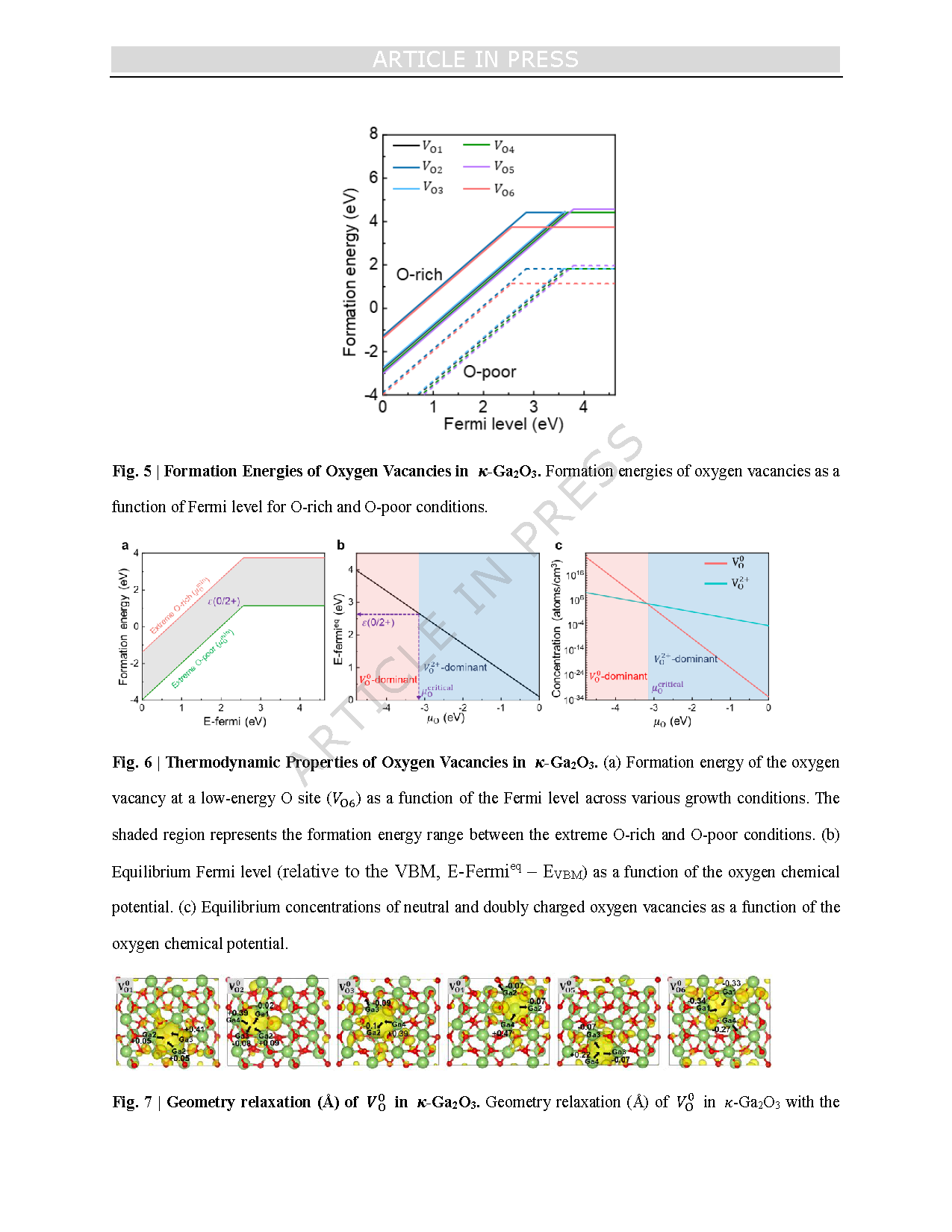
Fig. 5 | Formation Energies of Oxygen Vacancies in κ-Ga2O3. Formation energies of oxygen vacancies as a function of Fermi level for O-rich and O-poor conditions.
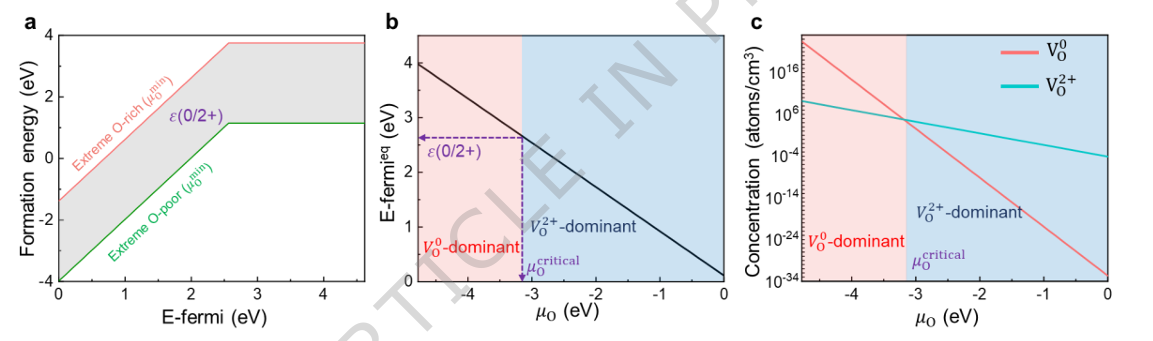
Fig. 6 | Thermodynamic Properties of Oxygen Vacancies in κ-Ga2O3. (a) Formation energy of the oxygen vacancy at a low-energy O site (VO6) as a function of the Fermi level across various growth conditions. The shaded region represents the formation energy range between the extreme O-rich and O-poor conditions. (b) Equilibrium Fermi level (relative to the VBM, E-Fermieq – EVBM) as a function of the oxygen chemical potential. (c) Equilibrium concentrations of neutral and doubly charged oxygen vacancies as a function of the oxygen chemical potential.

Fig. 7 | Geometry relaxation (Å) of VO0 in κ-Ga2O3. Geometry relaxation (Å) of VO0 in κ-Ga2O3 with the yellow shaded area representing the HOMO real-space wave functions.
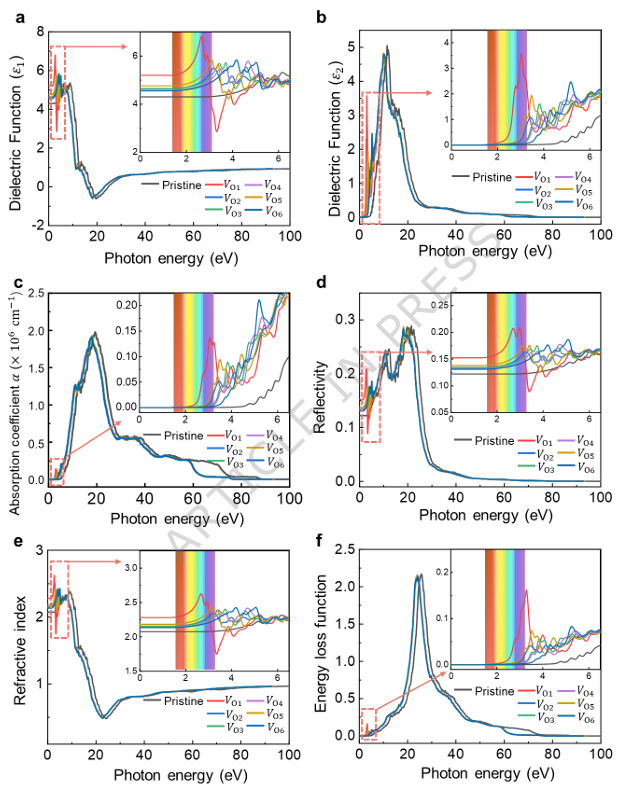
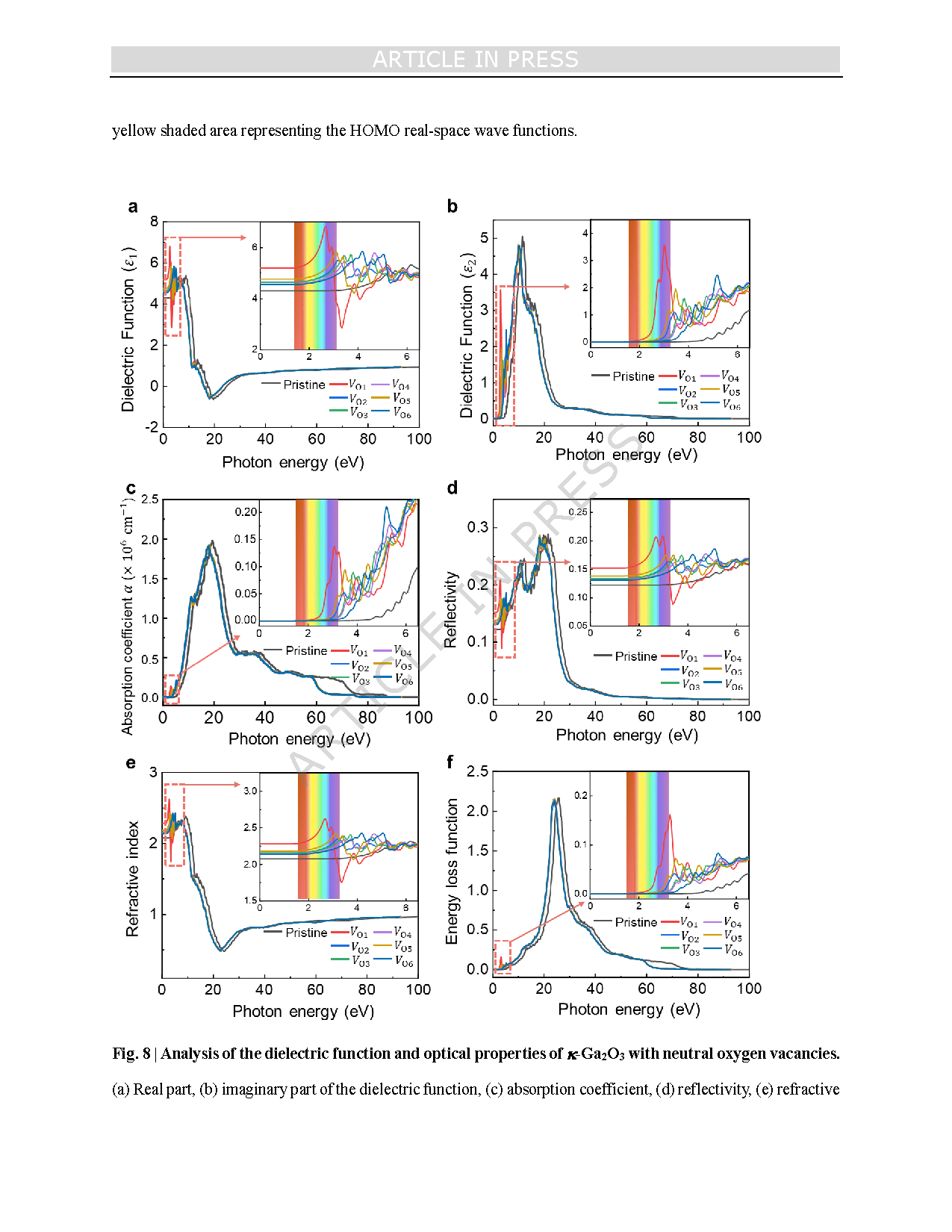
Fig. 8 | Analysis of the dielectric function and optical properties of κ-Ga2O3 with neutral oxygen vacancies. (a) Real part, (b) imaginary part of the dielectric function, (c) absorption coefficient, (d) reflectivity, (e) refractive index, and (f) electron-loss function of κ-Ga2O3 with oxygen vacancies.
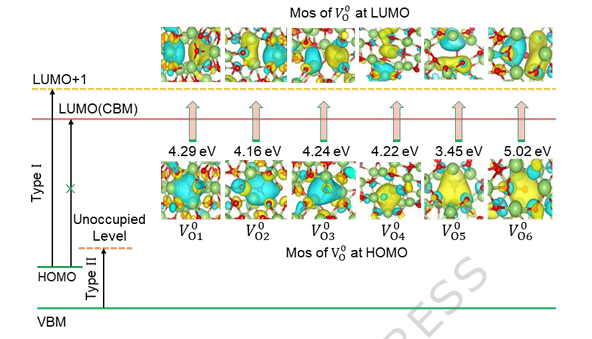
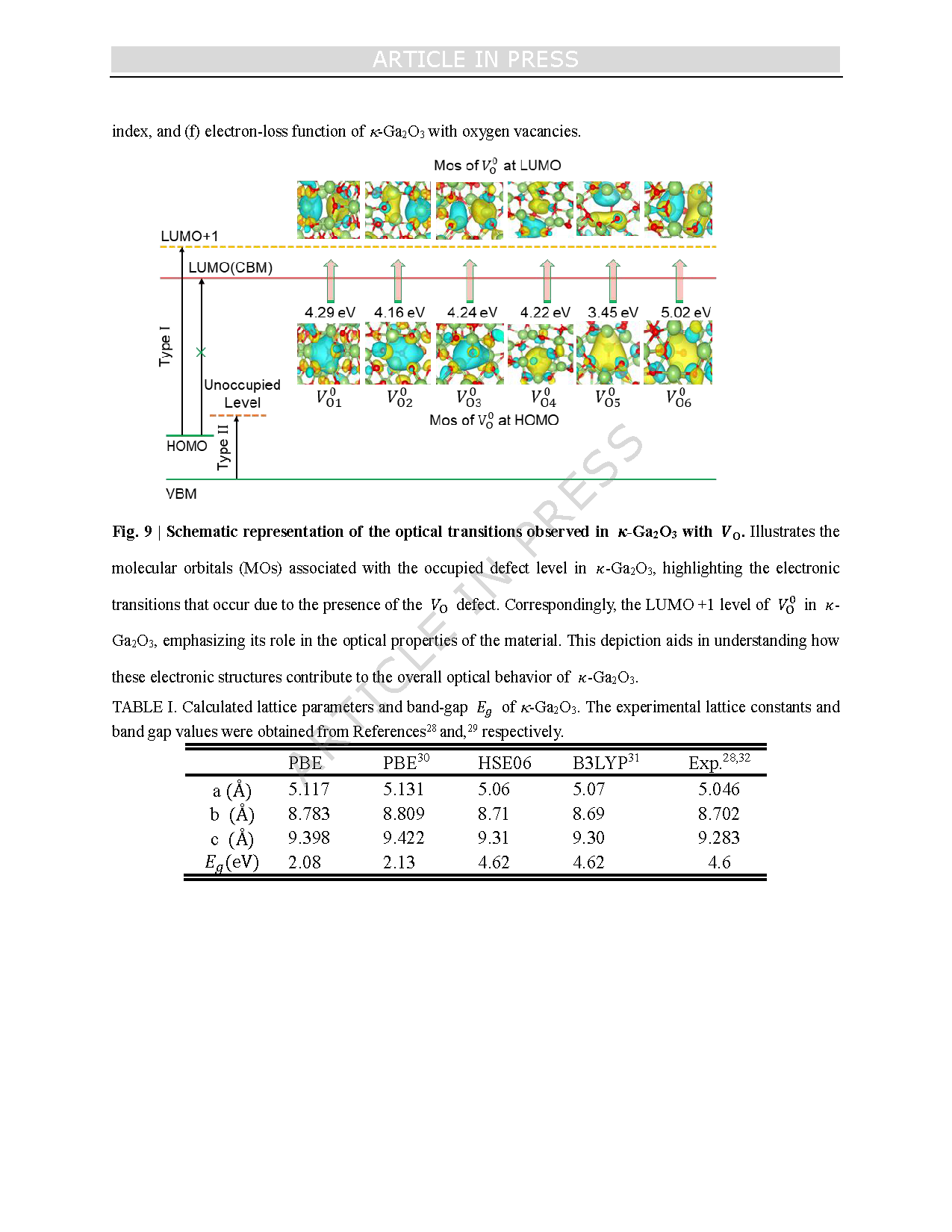
Fig. 9 | Schematic representation of the optical transitions observed in κ-Ga2O3 with VO. Illustrates the molecular orbitals (MOs) associated with the occupied defect level in κ-Ga2O3, highlighting the electronic transitions that occur due to the presence of the VO defect. Correspondingly, the LUMO +1 level of VO0 in κ-Ga2O3, emphasizing its role in the optical properties of the material. This depiction aids in understanding how these electronic structures contribute to the overall optical behavior of κ-Ga2O3.
DOI:
doi.org/10.1038/s42004-025-01843-1

Instruction
Official Account

Cooperation
Top
