


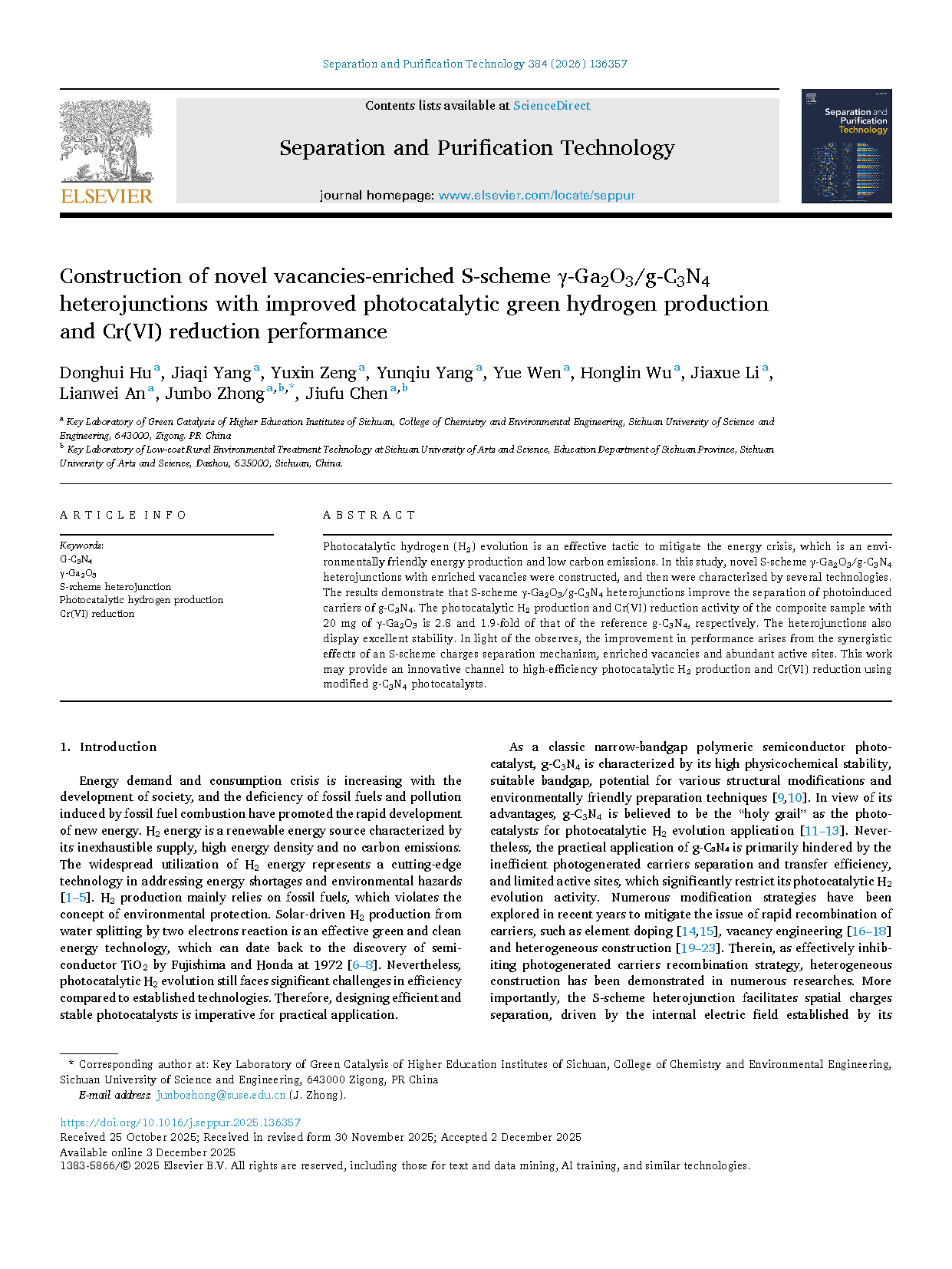
Researchers from the Sichuan University of Science and Engineering have published a dissertation titled "Construction of novel vacancies-enriched S-scheme γ-Ga2O3/g-C3N4 heterojunctions with improved photocatalytic green hydrogen production and Cr(VI) reduction performance" in Separation and Purification Technology.
Project Support
This work was supported by Students Innovation Project of Sichuan University of Science and Engineering (202410622009), Scientific Research and Innovation Team Program of Sichuan University of Science and Engineering (SUSE652A007), Open Fund Project of Sichuan Provincial Key Laboratory of Chemical Synthesis and Pollution Control (CSPC202409) and Key Laboratory of Low-cost Rural Environmental Treatment Technology at Sichuan University of Arts and Science, Education Department of Sichuan Province (XCH2024ZA-03, XCH2023ZB11).
Background
Energy demand and consumption crisis is increasing with the development of society, and the deficiency of fossil fuels and pollution induced by fossil fuel combustion have promoted the rapid development of new energy. H2 energy is a renewable energy source characterized by its inexhaustible supply, high energy density and no carbon emissions. The widespread utilization of H2 energy represents a cutting-edge technology in addressing energy shortages and environmental hazards. H2 production mainly relies on fossil fuels, which violates the concept of environmental protection. Solar-driven H2 production from water splitting by two electrons reaction is an effective green and clean energy technology, which can date back to the discovery of semiconductor TiO2 by Fujishima and Honda at 1972. Nevertheless, photocatalytic H2 evolution still faces significant challenges in efficiency compared to established technologies. Therefore, designing efficient and stable photocatalysts is imperative for practical application.
Abstract
Photocatalytic hydrogen (H2) evolution is an effective tactic to mitigate the energy crisis, which is an environmentally friendly energy production and low carbon emissions. In this study, novel S-scheme γ-Ga2O3/g-C3N4 heterojunctions with enriched vacancies were constructed, and then were characterized by several technologies. The results demonstrate that S-scheme γ-Ga2O3/g-C3N4 heterojunctions improve the separation of photoinduced carriers of g-C3N4. The photocatalytic H2 production and Cr(VI) reduction activity of the composite sample with 20 mg of γ-Ga2O3 is 2.8 and 1.9-fold of that of the reference g-C3N4, respectively. The heterojunctions also display excellent stability. In light of the observes, the improvement in performance arises from the synergistic effects of an S-scheme charges separation mechanism, enriched vacancies and abundant active sites. This work may provide an innovative channel to high-efficiency photocatalytic H2 production and Cr(VI) reduction using modified g-C3N4 photocatalysts.
Conclusion
In summary, g-C3N4 has been successfully prepared through traditional method using urea, and nGa2O3/g-C3N4 heterojunctions have been prepared by an impregnating method. The 20Ga2O3/g-C3N4 shows the highest photocatalytic H2 production properties with a production rate 1.8-fold enhancement than that of the reference g-C3N4. 20Ga2O3/g-C3N4 exhibits 1.9-fold photocatalytic Cr (VI) reduction activity compared with the reference g-C3N4. The increased specific surface area was achieved by introduction of γ-Ga2O3. Most importantly, the enhanced charges separation via S-scheme mechanism, the additional vacancies introduced and abundant active sites, collectively boost photocatalytic H2 production and Cr (VI) reduction activity. This work reveals the feasible pathway to realize the regulation of g-C3N4 charges separation and the boosted photocatalytic H2 production and Cr(VI) reduction performance.

Scheme 1. Schematic illustration of the designed synthetic process for 20Ga2O3/g-C3N4
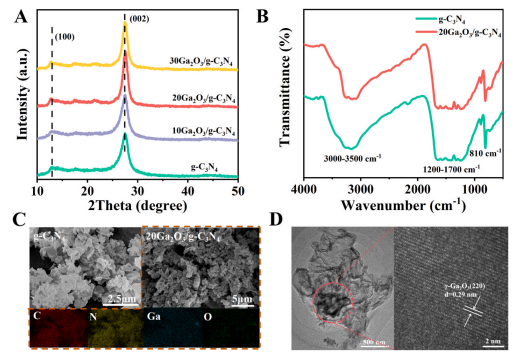
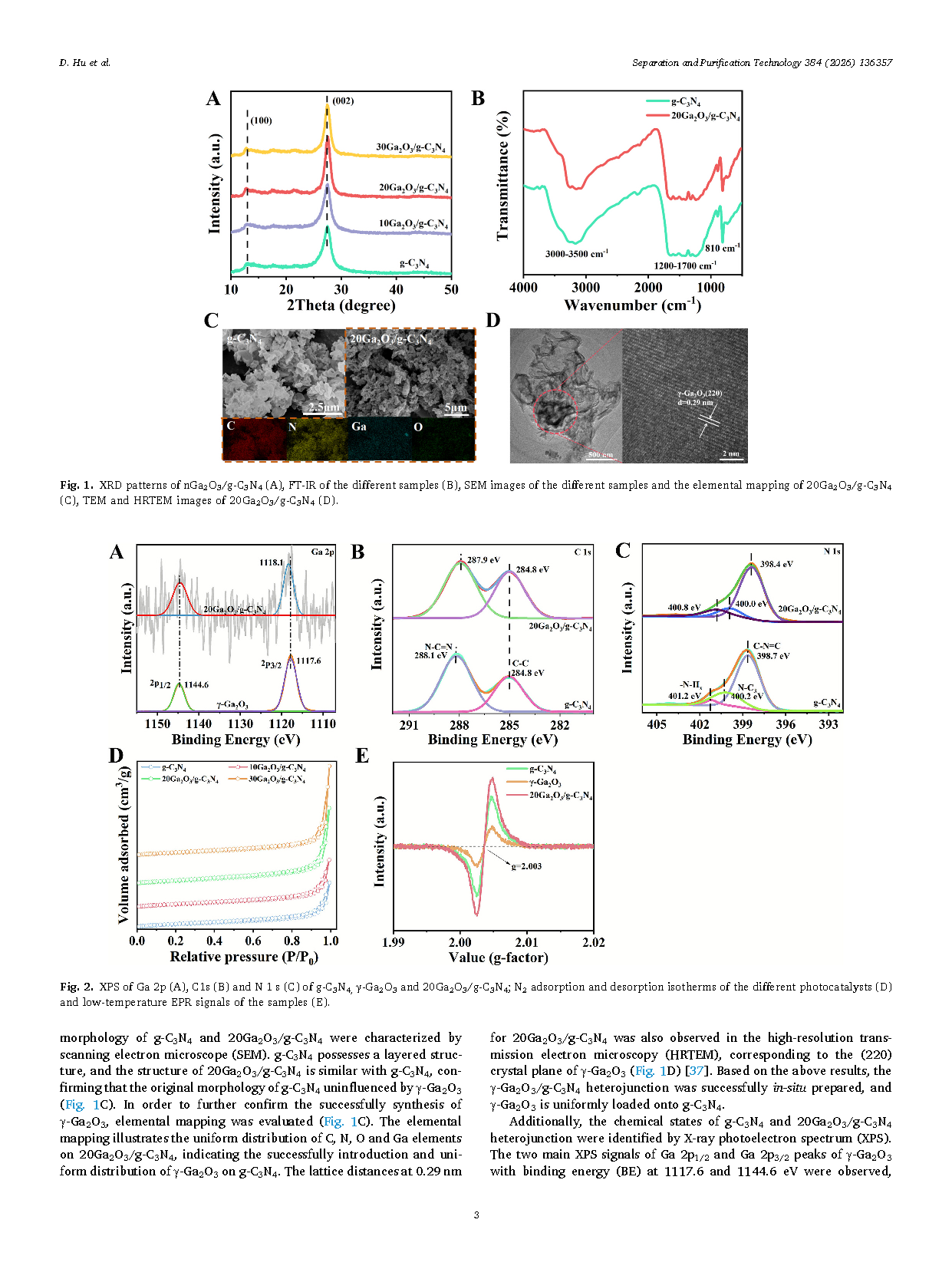
Fig. 1. XRD patterns of nGa2O3/g-C3N4 (A), FT-IR of the different samples (B), SEM images of the different samples and the elemental mapping of 20Ga2O3/g-C3N4 (C), TEM and HRTEM images of 20Ga2O3/g-C3N4(D).
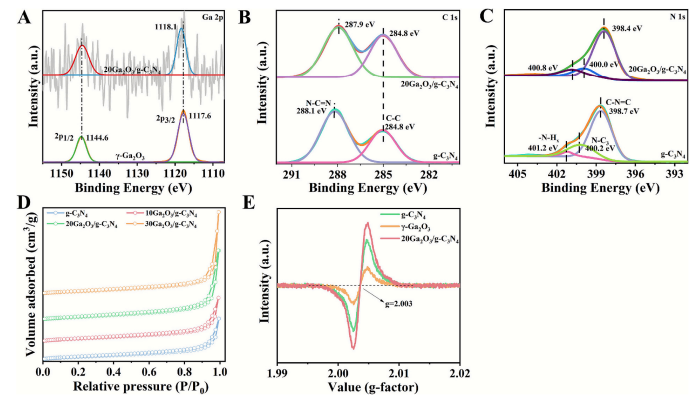
Fig. 2. XPS of Ga 2p (A), C1s (B) and N 1 s (C) of g-C3N4, γ-Ga2O3 and 20Ga2O3/g-C3N4; N2 adsorption and desorption isotherms of the different photocatalysts (D) and low-temperature EPR signals of the samples (E).

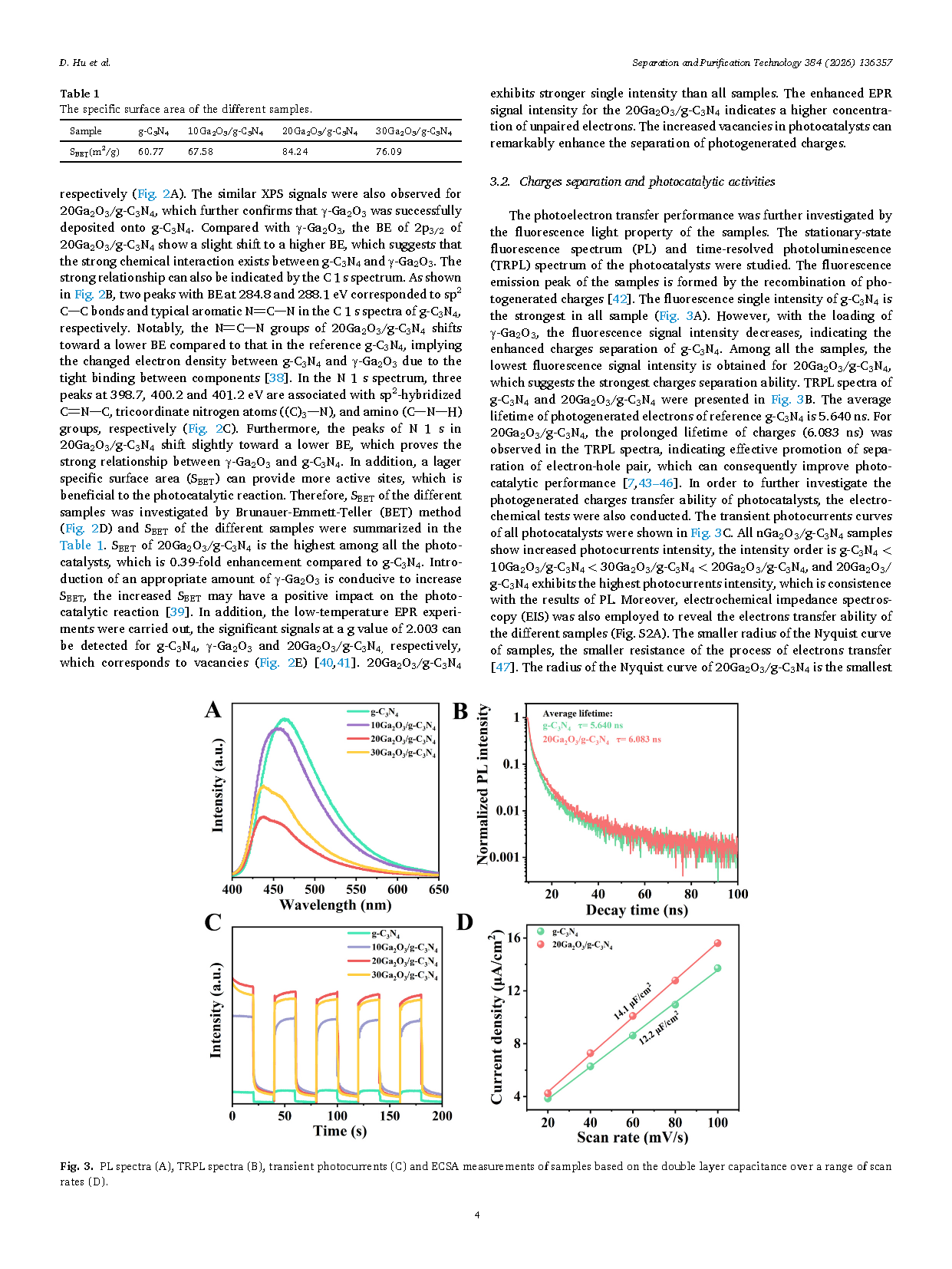
Fig. 3. PL spectra (A), TRPL spectra (B), transient photocurrents (C) and ECSA measurements of samples based on the double layer capacitance over a range of scan rates (D).
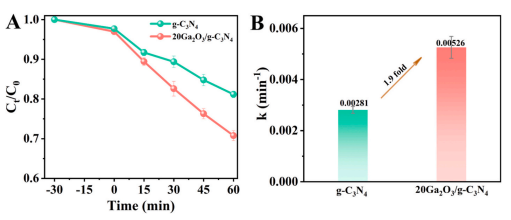
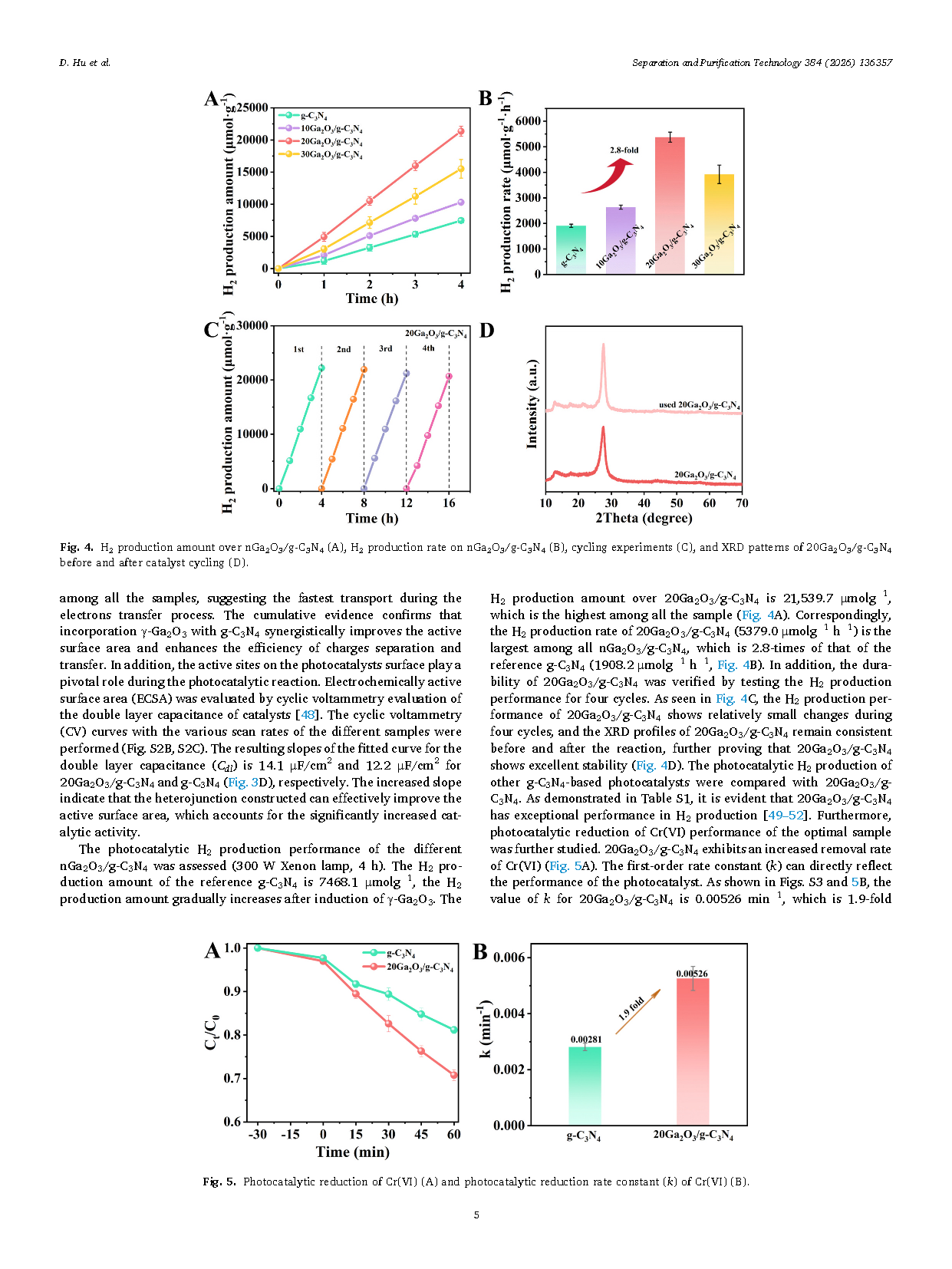
Fig. 4. H2 production amount over nGa2O3/g-C3N4 (A), H2 production rate on nGa2O3/g-C3N4 (B), cycling experiments (C), and XRD patterns of 20Ga2O3/g-C3N4 before and after catalyst cycling (D).
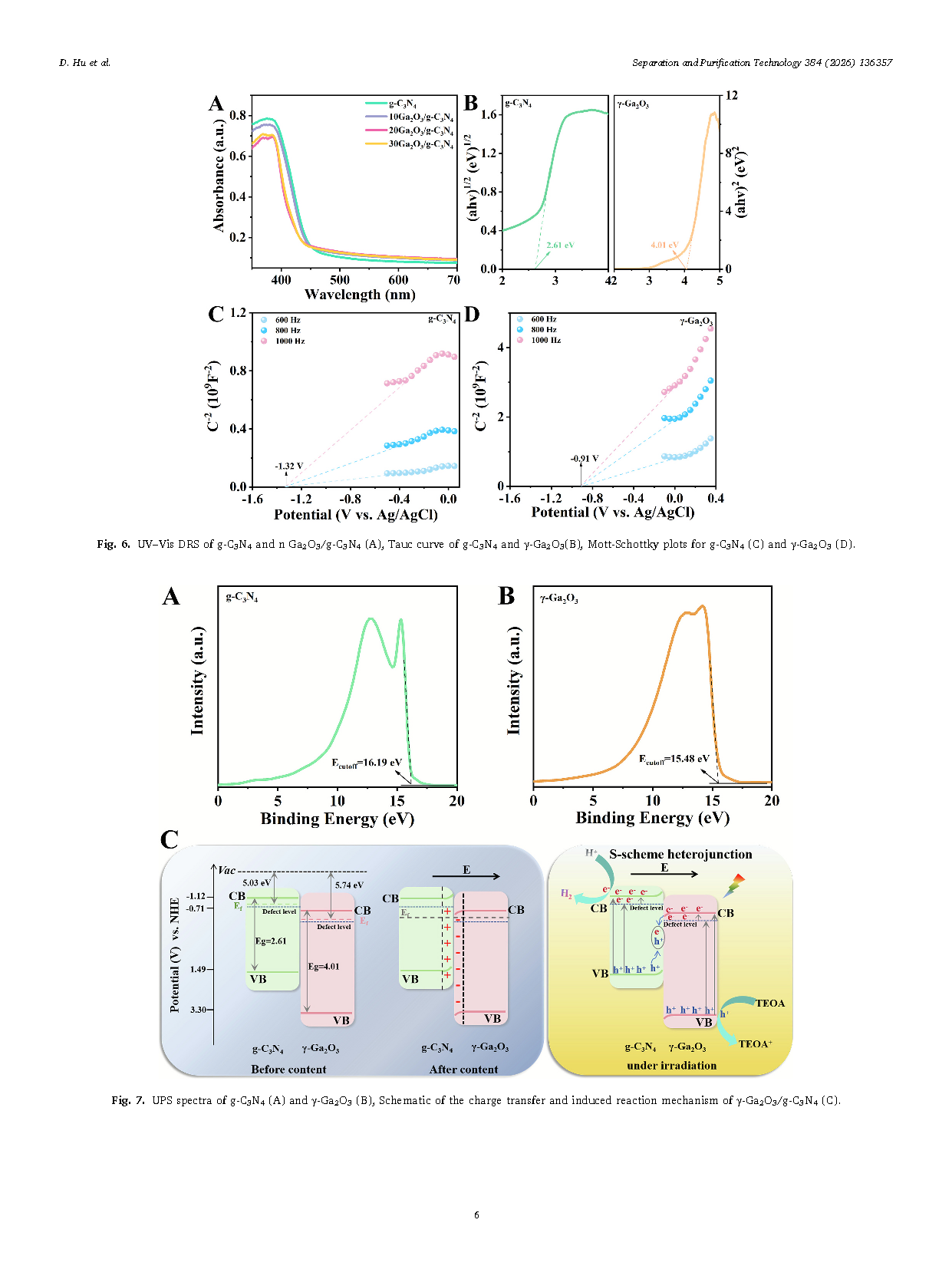
Fig. 5. Photocatalytic reduction of Cr(VI) (A) and photocatalytic reduction rate constant (k) of Cr(VI) (B).
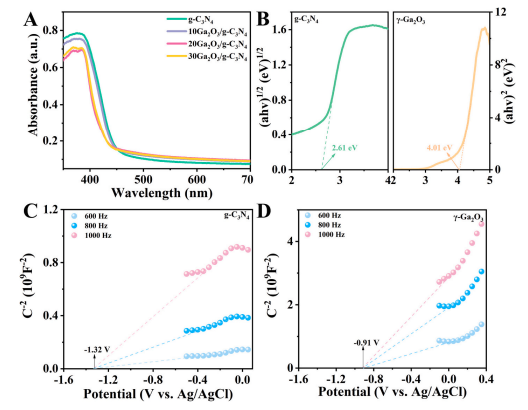
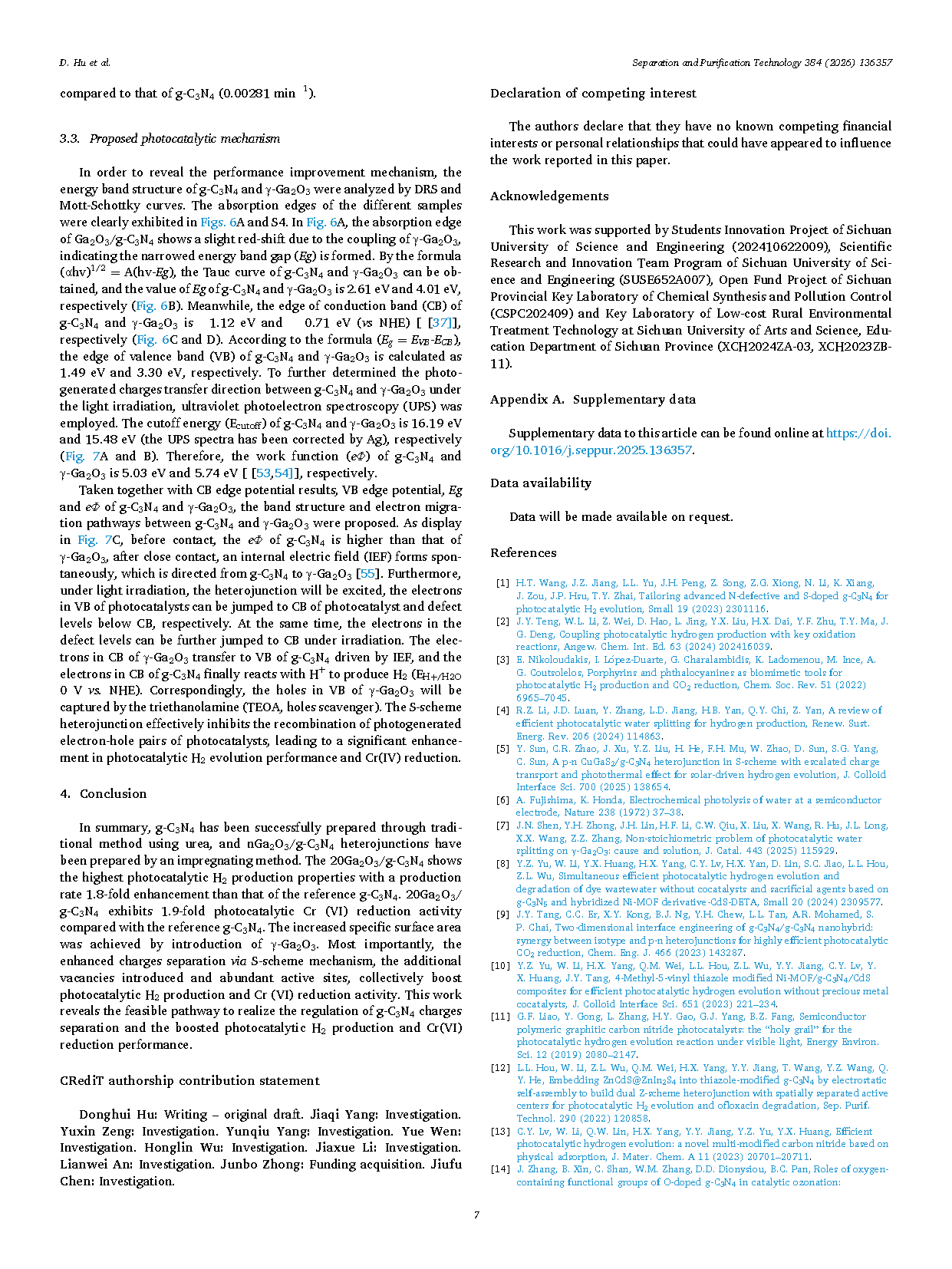
Fig. 6. UV–Vis DRS of g-C3N4 and n Ga2O3/g-C3N4 (A), Tauc curve of g-C3N4 and γ-Ga2O3(B), Mott-Schottky plots for g-C3N4 (C) and γ-Ga2O3 (D).
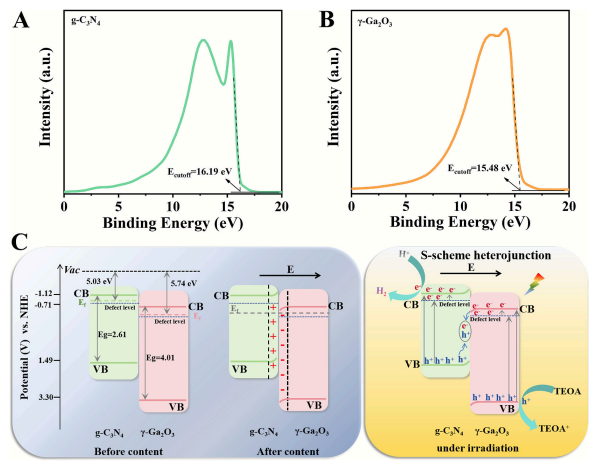
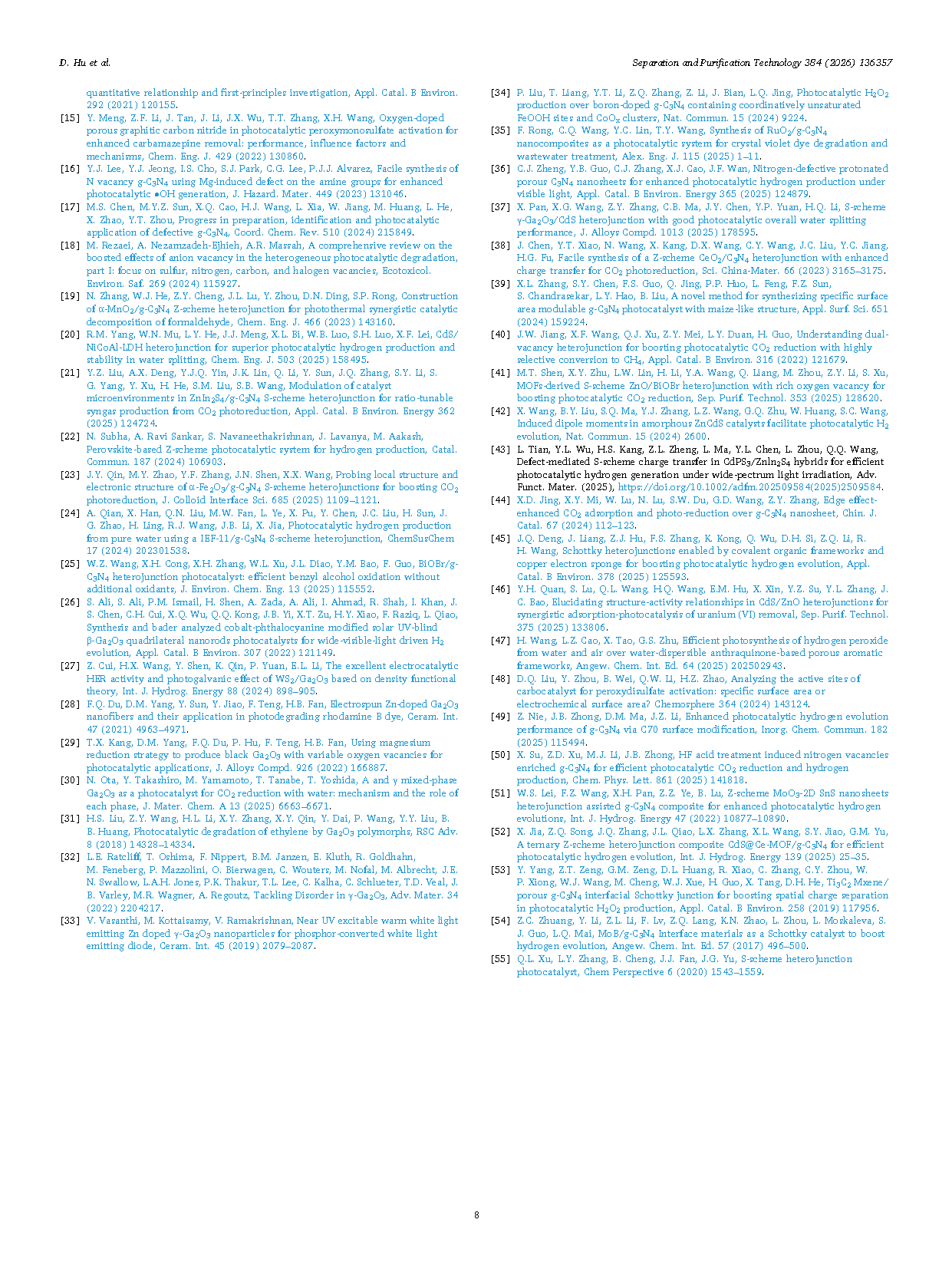
Fig. 7. UPS spectra of g-C3N4 (A) and γ-Ga2O3 (B), Schematic of the charge transfer and induced reaction mechanism of γ-Ga2O3/g-C3N4 (C).
DOI:
doi.org/10.1016/j.seppur.2025.136357

Instruction
Official Account

Cooperation
Top