


Researchers from the Shanghai Dianji University have published a dissertation titled "β-Ga2O3/BP heterojunction for deep ultraviolet and infrared narrowband dual-band photodetection" in Chinese Physics B.
Project Support
Project supported by the National Natural Science Foundation of China (Grant No. U22A2073).
Background
In recent years, multi-band photodetectors (PDs) have received increasing attention due to their ability to accurately identify targets in complex environments. In fact, signal radiation emitted by targets such as flames, missile plumes, and optical communication sources usually covers both the ultraviolet (UV) and infrared (IR) spectral ranges, making these two bands highly significant for detection. Therefore, the development of dual-band detectors for deep ultraviolet and infrared wavelengths is particularly important, especially in the field of missile warning. Due to the short-range characteristics of infrared detection systems and their susceptibility to smoke, dust, fog, adverse weather conditions, and IR countermeasures, single-band IR detection is prone to missed detection, false alarms, and misidentification. Dual-band detection in the deep ultraviolet and infrared regions can effectively compensate for these limitations, enabling a transition from single-band detection to multifunctional “complementary target detection” and reducing missed detection, false detection, and misidentification caused by single-band approaches.
Abstract
The development of high-performance dual-band photodetectors (PDs) capable of simultaneous deep ultraviolet (DUV) and infrared (IR) detection is critical for advanced optoelectronic applications, particularly in missile warning and target identification systems. Conventional UV/IR PDs often suffer from UV (320–400 nm) noise interference and limited responsivity due to the use of narrow-bandgap semiconductors and self-powered operation modes. To address these challenges, high-quality β-Ga2O3 thin films were epitaxially grown on c-plane sapphire via metalorganic chemical vapor deposition (MOCVD), exhibiting excellent crystallinity and surface morphology. Unlike conventional heterojunctions (β-Ga2O3/graphene or β-Ga2O3/TMDs), the β-Ga2O3/BP structure leverages BP’s tunable bandgap and high carrier mobility while maintaining strong type-II band alignment, thereby facilitating efficient charge separation under both UV and IR illumination. We present a high-sensitivity dual-band PD based on a β-Ga2O3/black phosphorus (BP) pn heterojunction. The ultrawide bandgap of β-Ga2O3 enables selective detection of DUV light while effectively suppressing interference from long-wave ultraviolet (UVA, 320–400 nm), whereas BP provides a layer-dependent infrared (IR) response. Photocurrent analysis reveals distinct carrier transport mechanisms, with electrons dominating under UV illumination and holes contributing predominantly under IR exposure. A systematic investigation of the bias-dependent photoresponse demonstrates that the responsivity increases significantly at higher voltages. Under a 7 V bias, the device exhibits a high responsivity of 4.63 × 10⁻² mA/W at 254 nm and 2.35 × 10⁻³ mA/W at 850 nm. This work not only provides a viable strategy for developing high-performance dual-band PDs but also advances the understanding of heterojunction-based optoelectronic devices for military and sensing applications.
Conclusion
In conclusion, we proposed and demonstrated an ultrafast-response β-Ga2O3/BP heterojunction for deep ultraviolet and infrared narrowband dual-band photodetection. In addition, the effect of bias voltage on the responsivity of the dual-band photodetector was systematically investigated. The results show that the performance of the photodetector, including responsivity, improves with increasing bias voltage. The device exhibits remarkable spectral response under ultraviolet and infrared irradiation, with responsivity values of 4.63 × 10⁻² mA/W and 2.35 × 10⁻³ mA/W, respectively. These results indicate that the β-Ga2O3/BP heterojunction has broad application prospects in UV/IR dual-band detection and provides an important reference for realizing high-performance dual-band photodetectors.
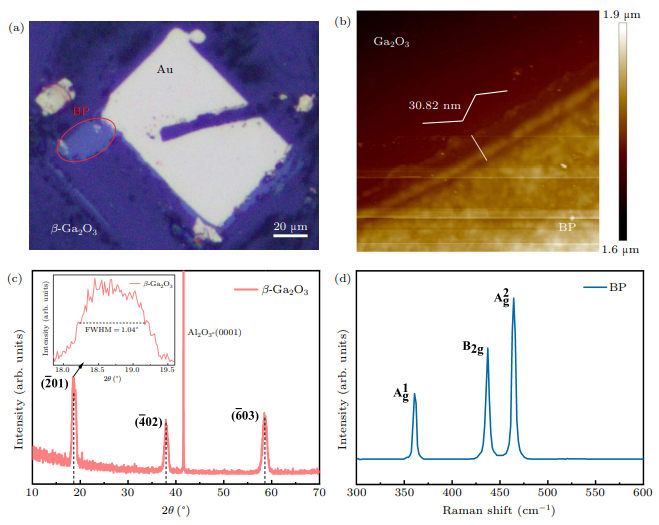
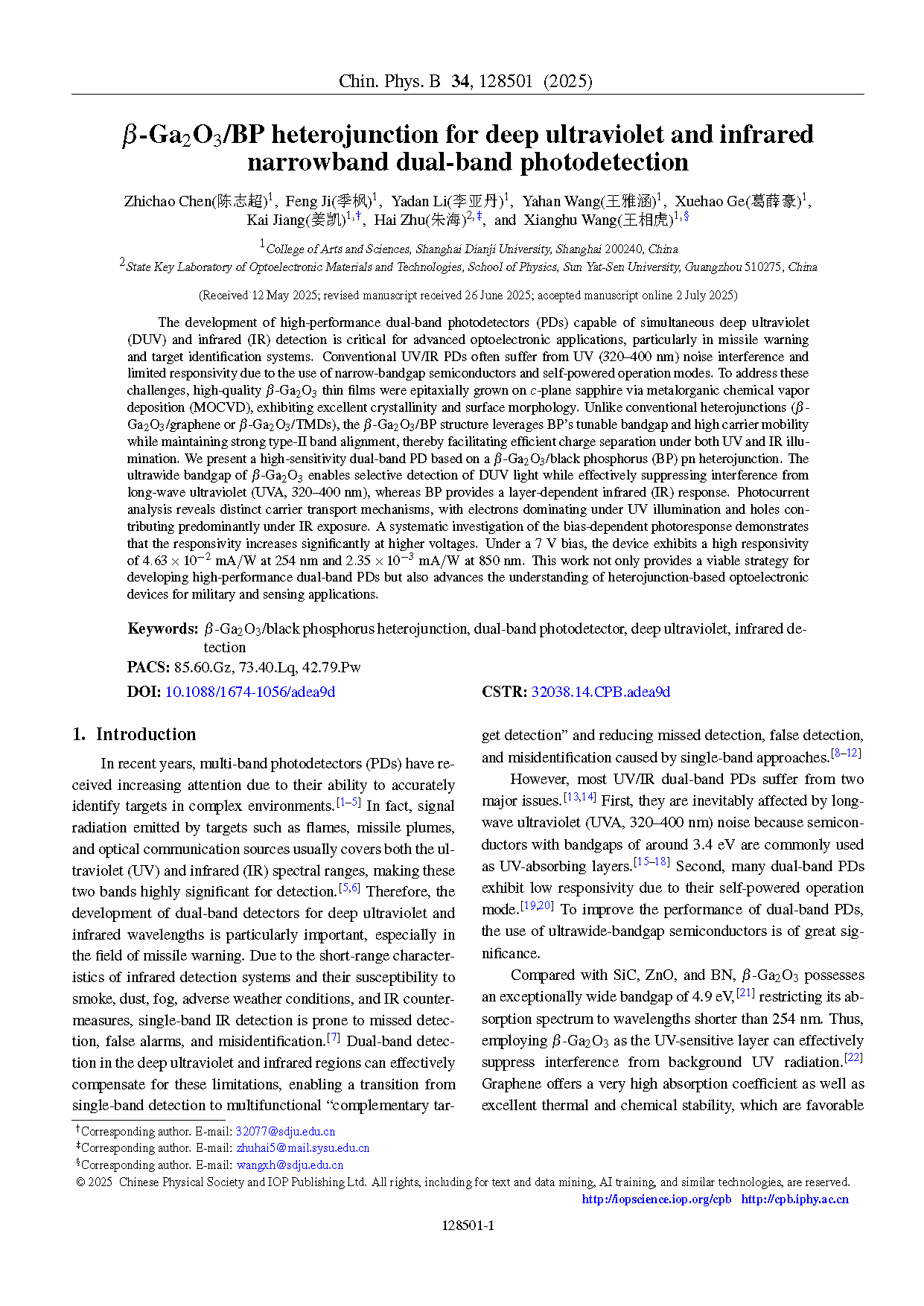
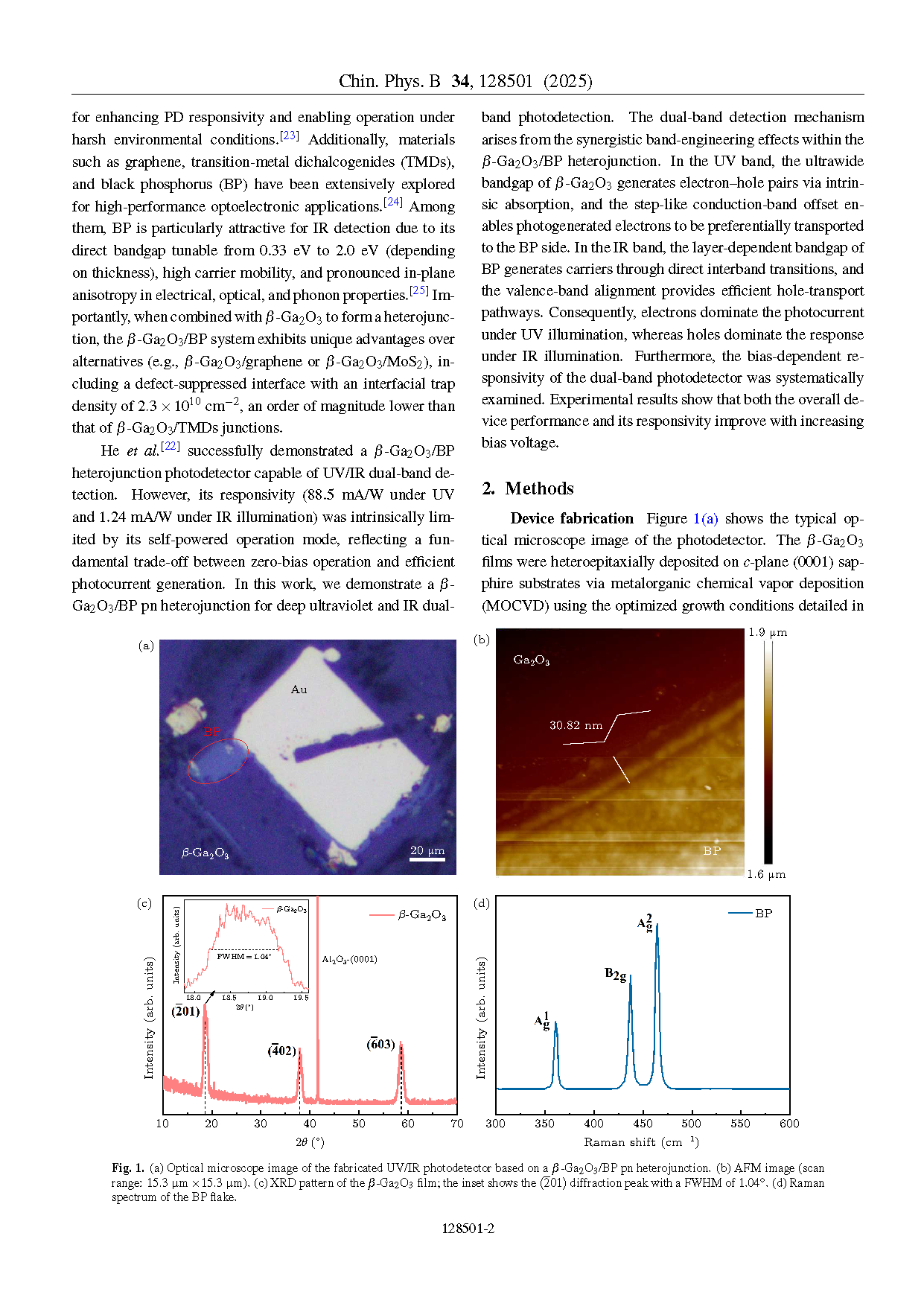
Fig. 1. (a) Optical microscope image of the fabricated UV/IR photodetector based on a β-Ga2O3/BP pn heterojunction. (b) AFM image (scan range: 15.3 µm ×15.3 µm). (c) XRD pattern of the β-Ga2O3 film; the inset shows the (-201) diffraction peak with a FWHM of 1.04°. (d) Raman spectrum of the BP flake.
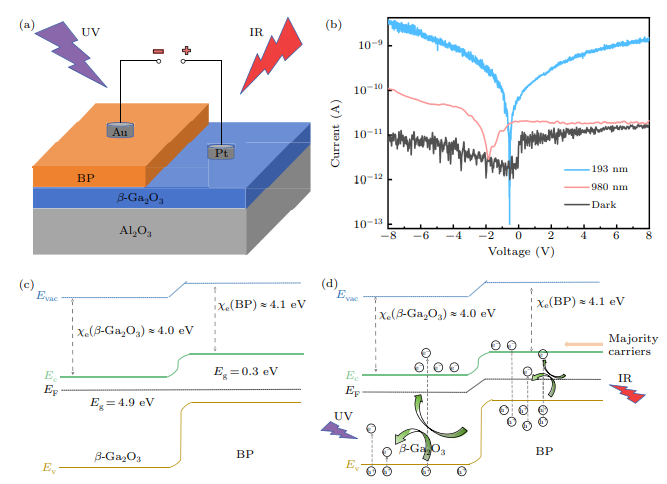
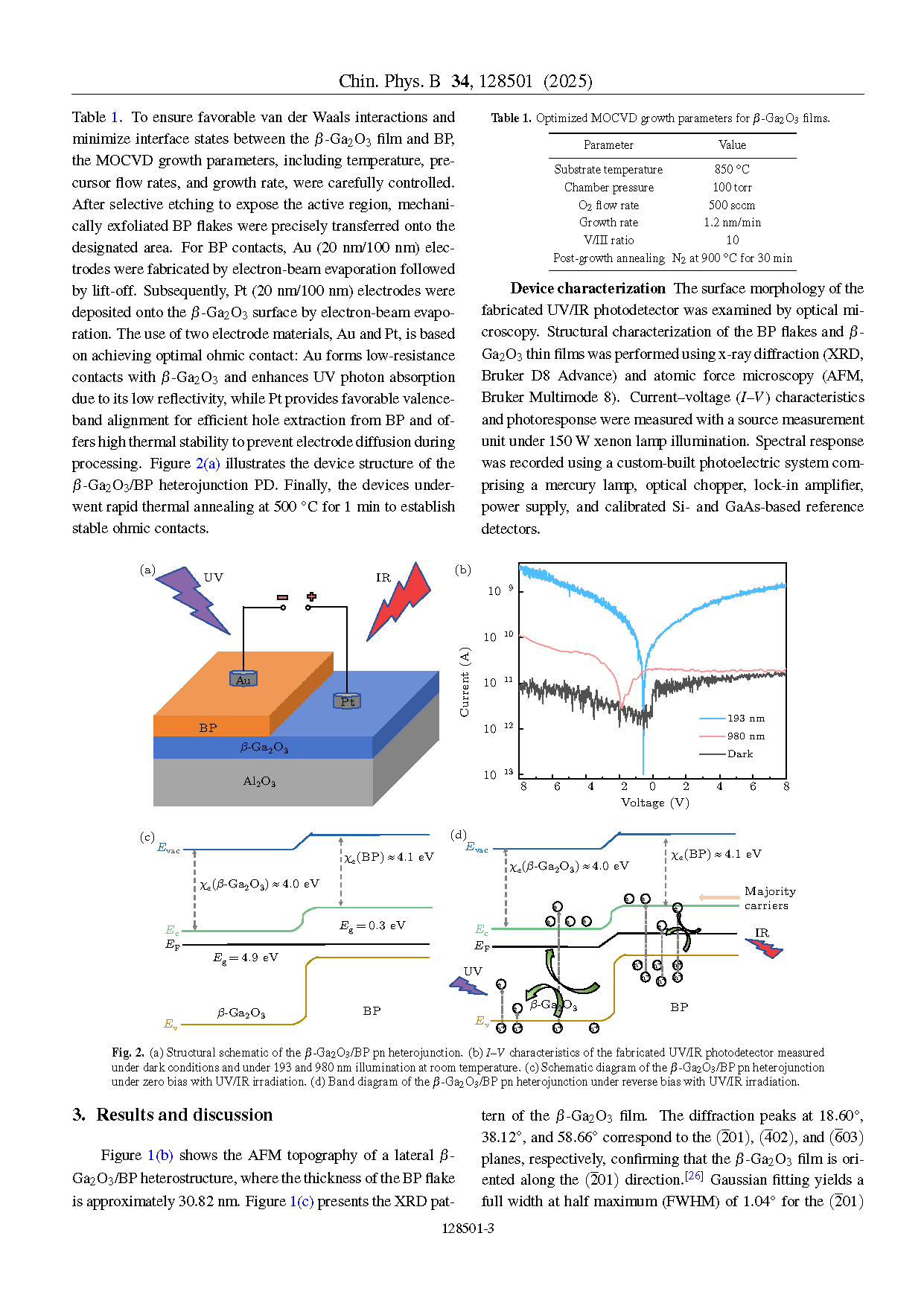
Fig. 2. (a) Structural schematic of the β-Ga2O3/BP pn heterojunction. (b) I–V characteristics of the fabricated UV/IR photodetector measured under dark conditions and under 193 and 980 nm illumination at room temperature. (c) Schematic diagram of the β-Ga2O3/BP pn heterojunction under zero bias with UV/IR irradiation. (d) Band diagram of the β-Ga2O3/BP pn heterojunction under reverse bias with UV/IR irradiation.
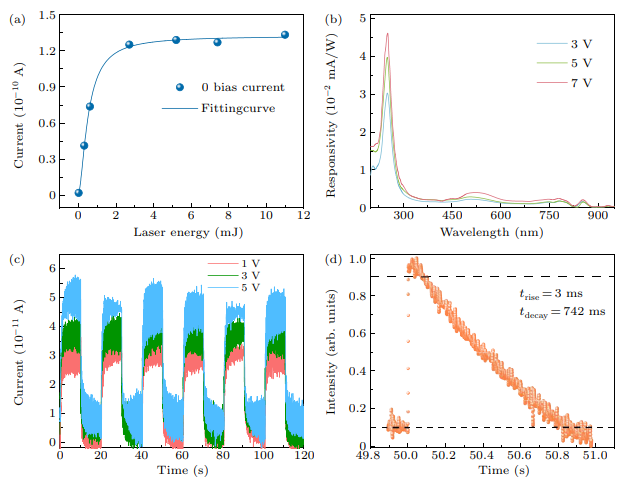
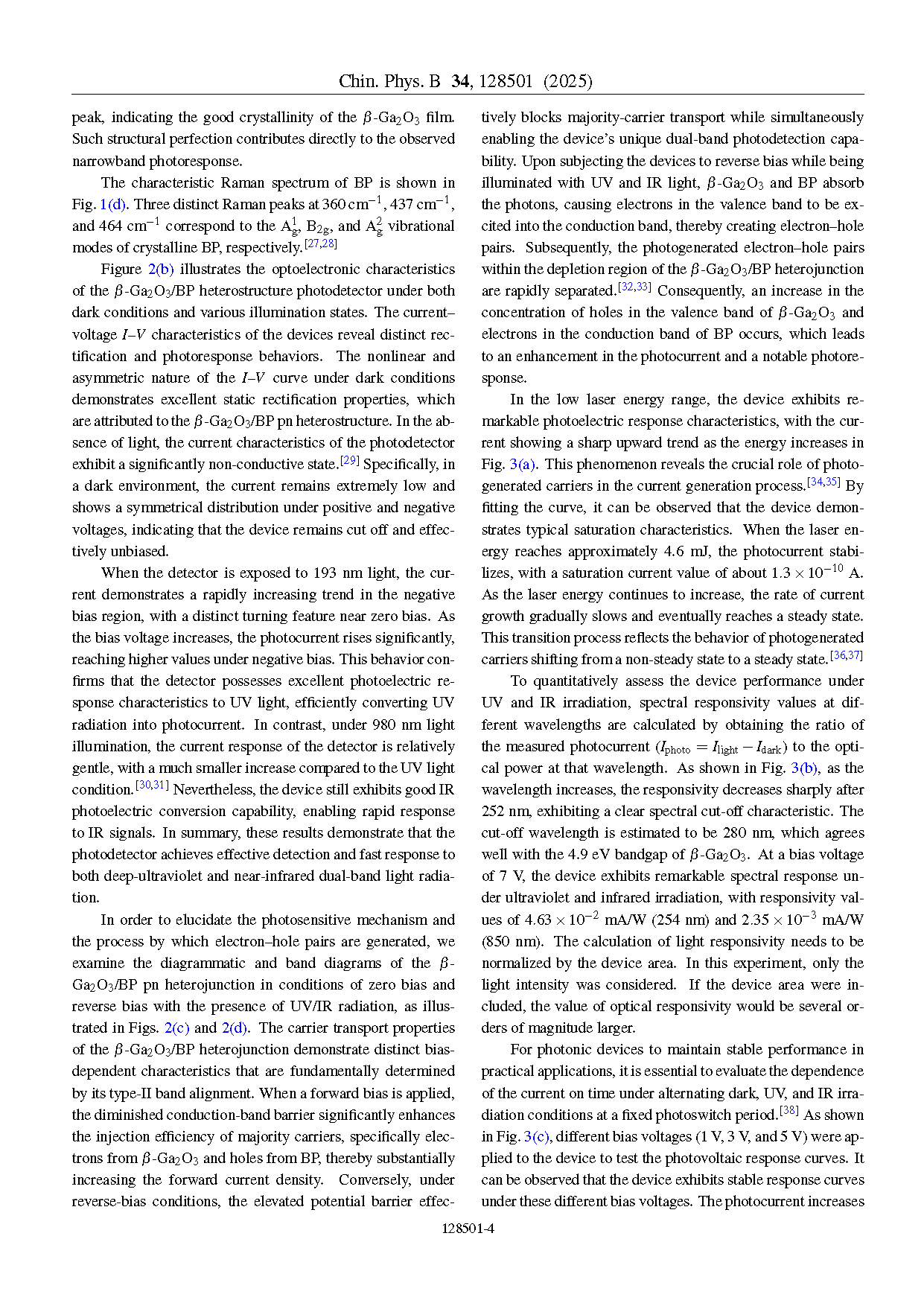
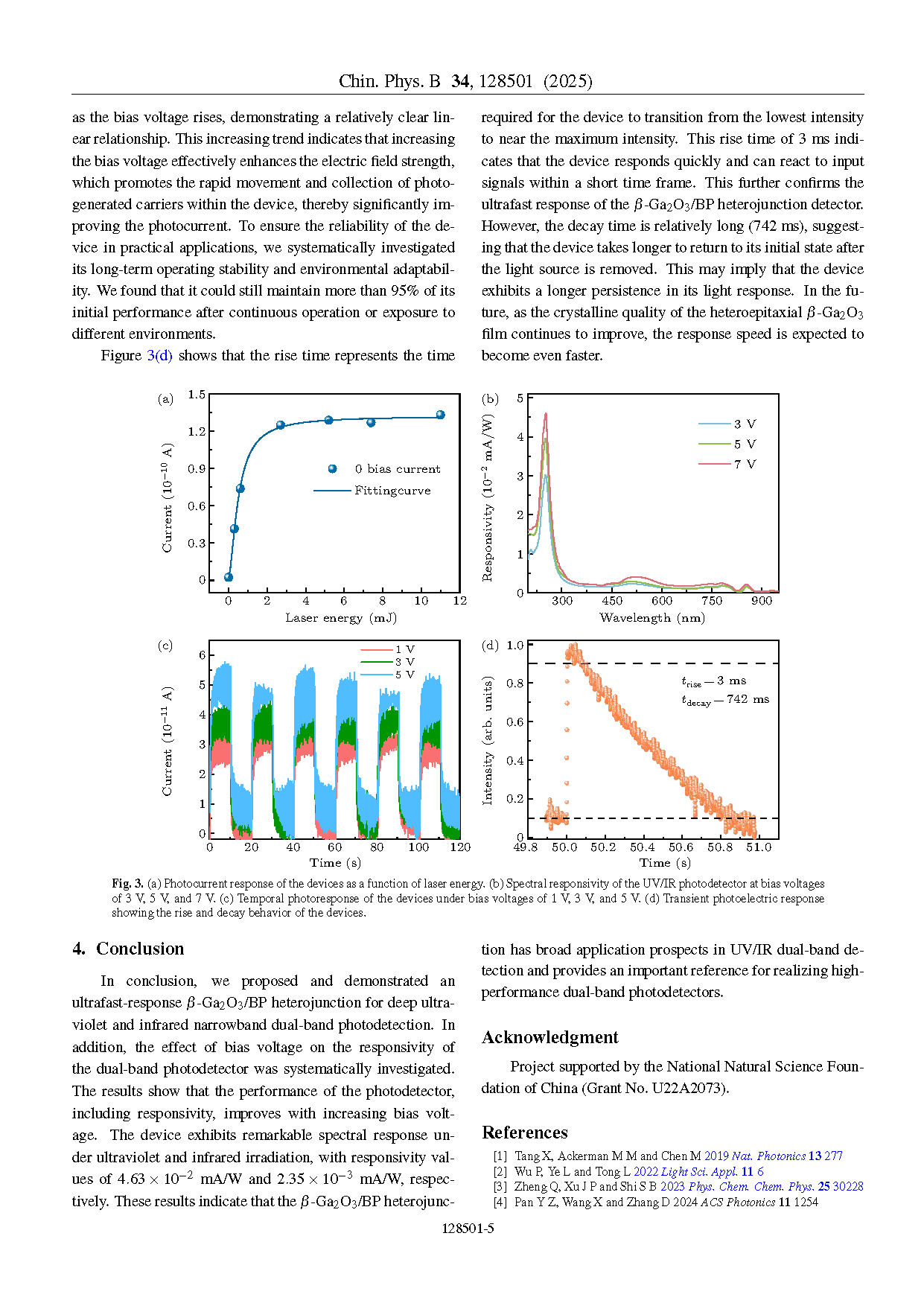
Fig. 3. (a) Photocurrent response of the devices as a function of laser energy. (b) Spectral responsivity of the UV/IR photodetector at bias voltages of 3 V, 5 V, and 7 V. (c) Temporal photoresponse of the devices under bias voltages of 1 V, 3 V, and 5 V. (d) Transient photoelectric response showing the rise and decay behavior of the devices.
DOI:
doi.org/10.1088/1674-1056/adea9d

Instruction
Official Account

Cooperation
Top