


Researchers from the Xi’an Jiaotong University have published a dissertation titled "Low-Temperature Synthesis of Highly Preferentially Oriented ε-Ga2O3 Films for Solar-Blind Detector Application" in Nanomaterials.
Project Support
This research was funded by the National Natural Science Foundation of China (Grants number 51702253, 51332003), Natural Science Foundation of Shaanxi Province (No. 2017JQ5095), and the “111 Project” of China (Grant number B14040). Z.-G.Y. acknowledges the support from the Natural Sciences and Engineering Research Council of Canada (NSERC, DG, RGPIN-2013-04416).
Background
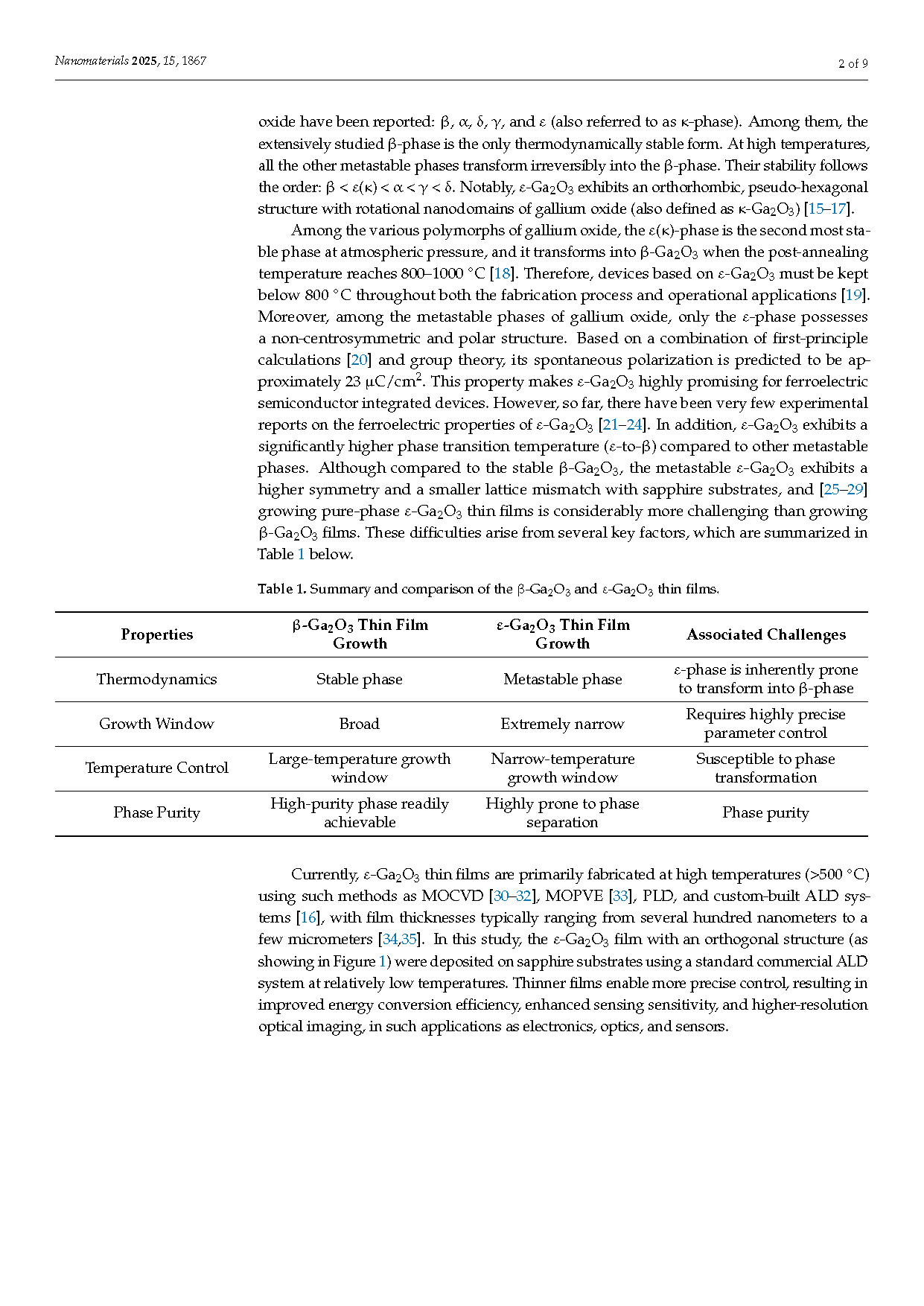
The realization of high-performance power electronic devices in such applications as electric vehicle charging, grid-scale energy storage, and improvements in high-speed trains and other systems depends heavily on wide-bandgap semiconductor materials. Owing to its high breakdown field, ultra-high Baliga’s figure of merit (BFOM), wide bandgap, excellent thermal stability, and chemical inertness, Ga2O3 has emerged as one of the most promising materials beyond the third-generation semiconductors of silicon carbide (SiC) and gallium nitride (GaN). It has attracted significant attention in the fields of power devices and solar-blind ultraviolet detection. To date, at least five crystalline polymorphs of gallium oxide have been reported: β, α, δ, γ, and ε (also referred to as κ-phase). Among them, the extensively studied β-phase is the only thermodynamically stable form. At high temperatures, all the other metastable phases transform irreversibly into the β-phase. Their stability follows the order: β < ε(κ) < α < γ < δ. Notably, ε-Ga2O3 exhibits an orthorhombic, pseudo-hexagonal structure with rotational nanodomains of gallium oxide (also defined as κ-Ga2O3).
Abstract
As one of the polymorphs of the gallium oxide family, ε gallium oxide (ε-Ga2O3) demonstrates promising potential in high-power electronic devices and solar-blind photodetection applications. However, the synthesis of pure-phase ε-Ga2O3 remains challenging through low-energy consumption methods, due to its metastable phase of gallium oxide. In this study, we have fabricated pure-phase and highly oriented ε-Ga2O3 thin films on c-plane sapphire substrates via thermal atomic layer deposition (ALD) at a low temperature of 400 °C, utilizing low-reactive trimethylgallium (TMG) as the gallium precursor and ozone (O3) as the oxygen source. X-ray diffraction (XRD) results revealed that the in situ-grown ε-Ga2O3 films exhibit a preferred orientation parallel to the (002) crystallographic plane, and the pure ε phase remains stable following a post-annealing up to 800 °C, but it completely transforms into β-Ga2O3 once the thermal treatment temperature reaches 900 °C. Notably, post-annealing at 800 °C significantly enhanced the crystalline quality of ε-Ga2O3. To evaluate the optoelectronic characteristics, metal–semiconductor–metal (MSM)-structured solar-blind photodetectors were fabricated using the ε-Ga2O3 films. The devices have an extremely low dark current (<1 pA), a high photo-to-dark current ratio (>106), a maximum responsivity (>1 A/W), and the optoelectronic properties maintained stability under varying illumination intensities. This work provides valuable insights into the low-temperature synthesis of high-quality ε-Ga2O3 films and the development of ε-Ga2O3-based solar-blind photodetectors for practical applications.
Conclusions
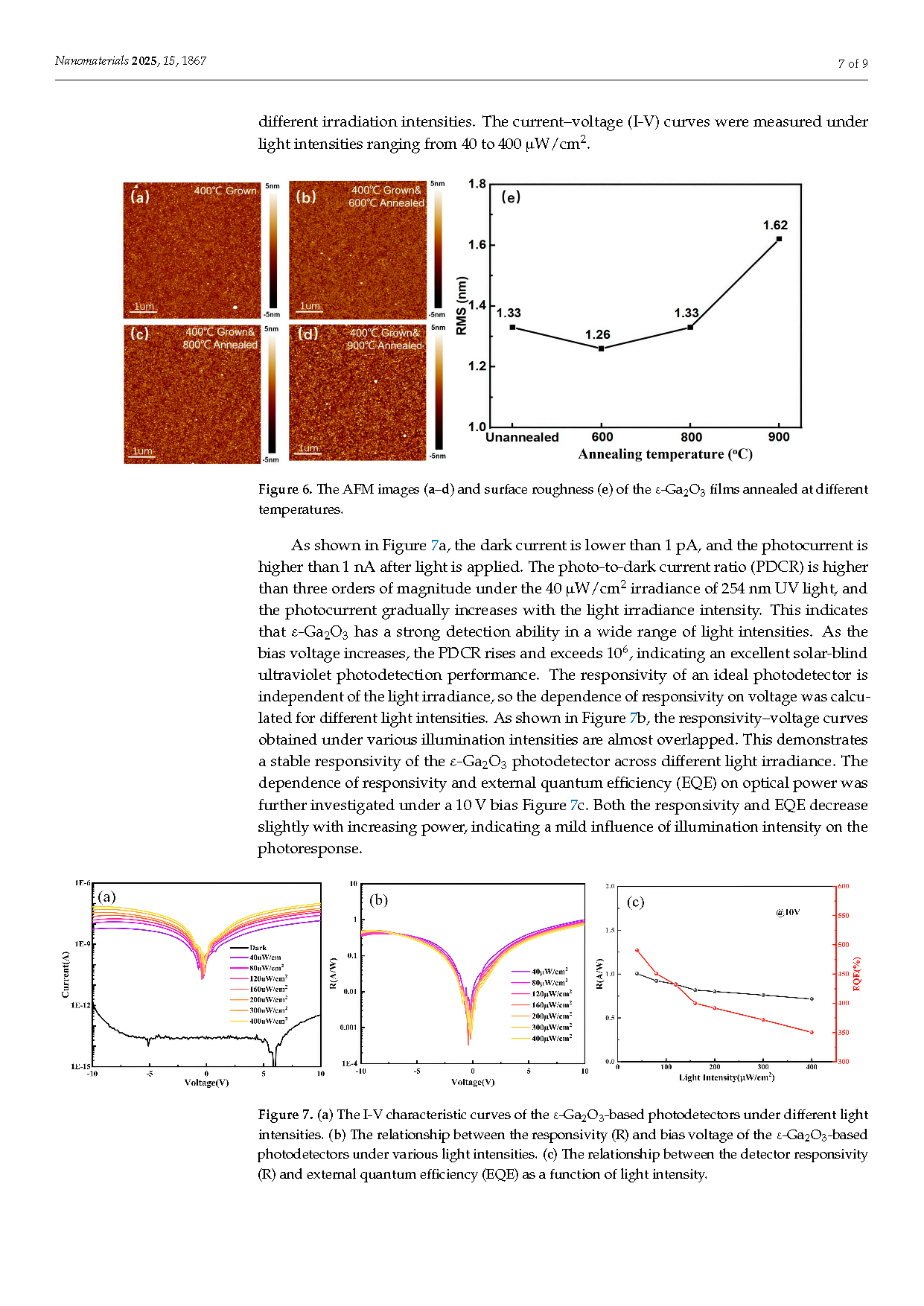
Ultra-thin, pure-phase ε-Ga2O3 films with a preferred orientation were deposited in situ on sapphire substrates by thermal ALD at a relatively low temperature of 400 °C. Post-annealing studies show that the metastable ε-Ga2O3 phase could be stabilized upon post-annealing at temperatures up to 800 °C, and it transforms into the more stable β-Ga2O3 after annealing at 900 °C. The surface roughness of the ɛ-Ga2O3 does not change much after annealing, and the roughness slightly increases after the transformation into β-Ga2O3. The dark current of the solar-blind photodetector prepared based on ɛ-Ga2O3 is lower than 1 pA, and the PDCR is greater than 106, which increases with the increase in light intensity. At the same time, the detector responsivity is almost independent of light intensity, which demonstrates a good day-blind detection performance and light intensity stability.
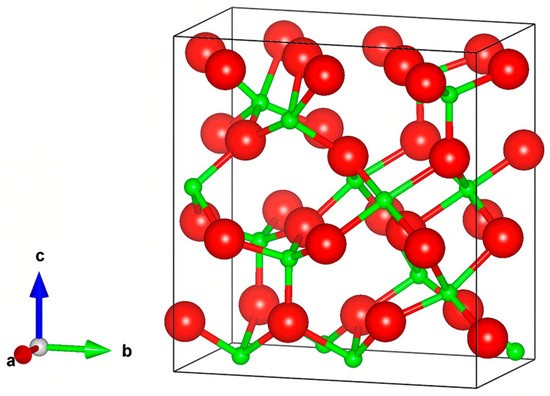
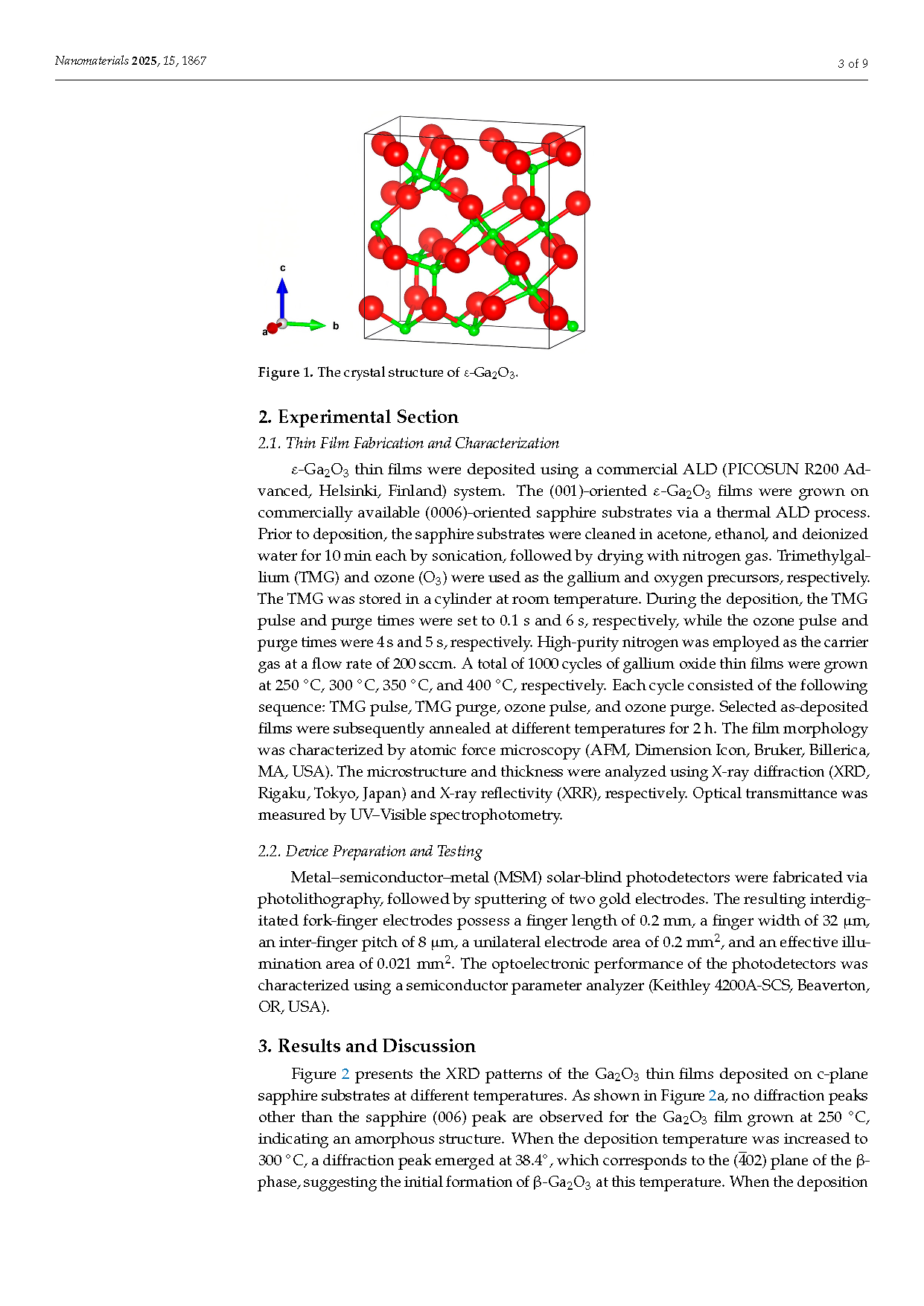
Figure 1. The crystal structure of ε-Ga2O3.
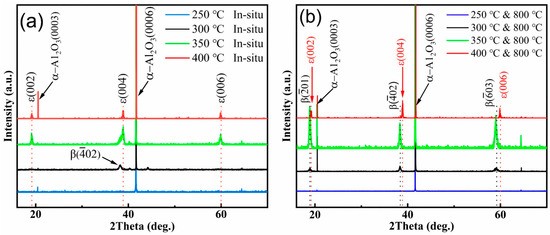
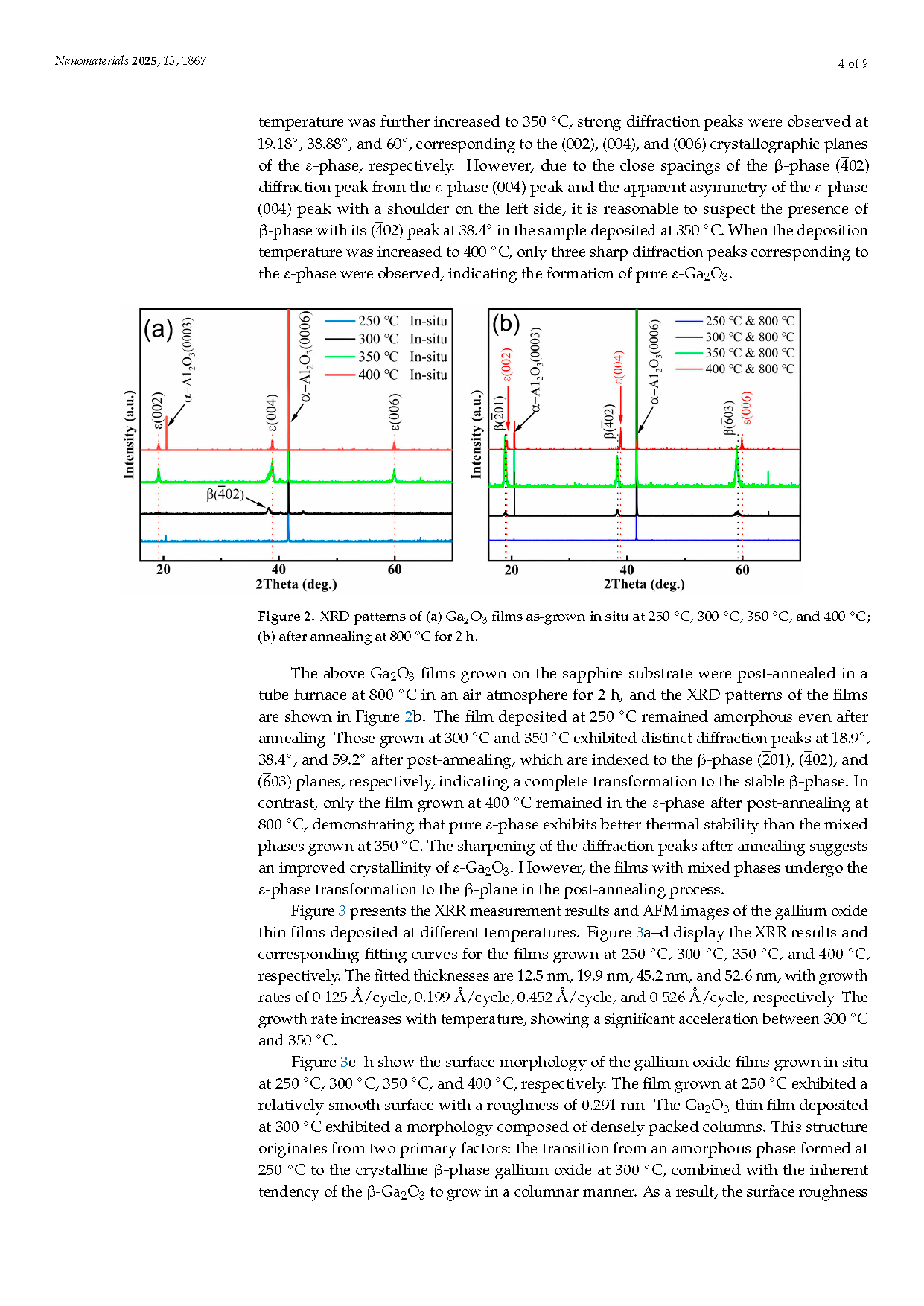
Figure 2. XRD patterns of (a) Ga2O3 films as-grown in situ at 250 °C, 300 °C, 350 °C, and 400 °C; (b) after annealing at 800 °C for 2 h.
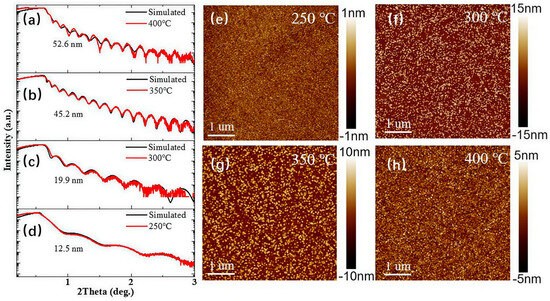
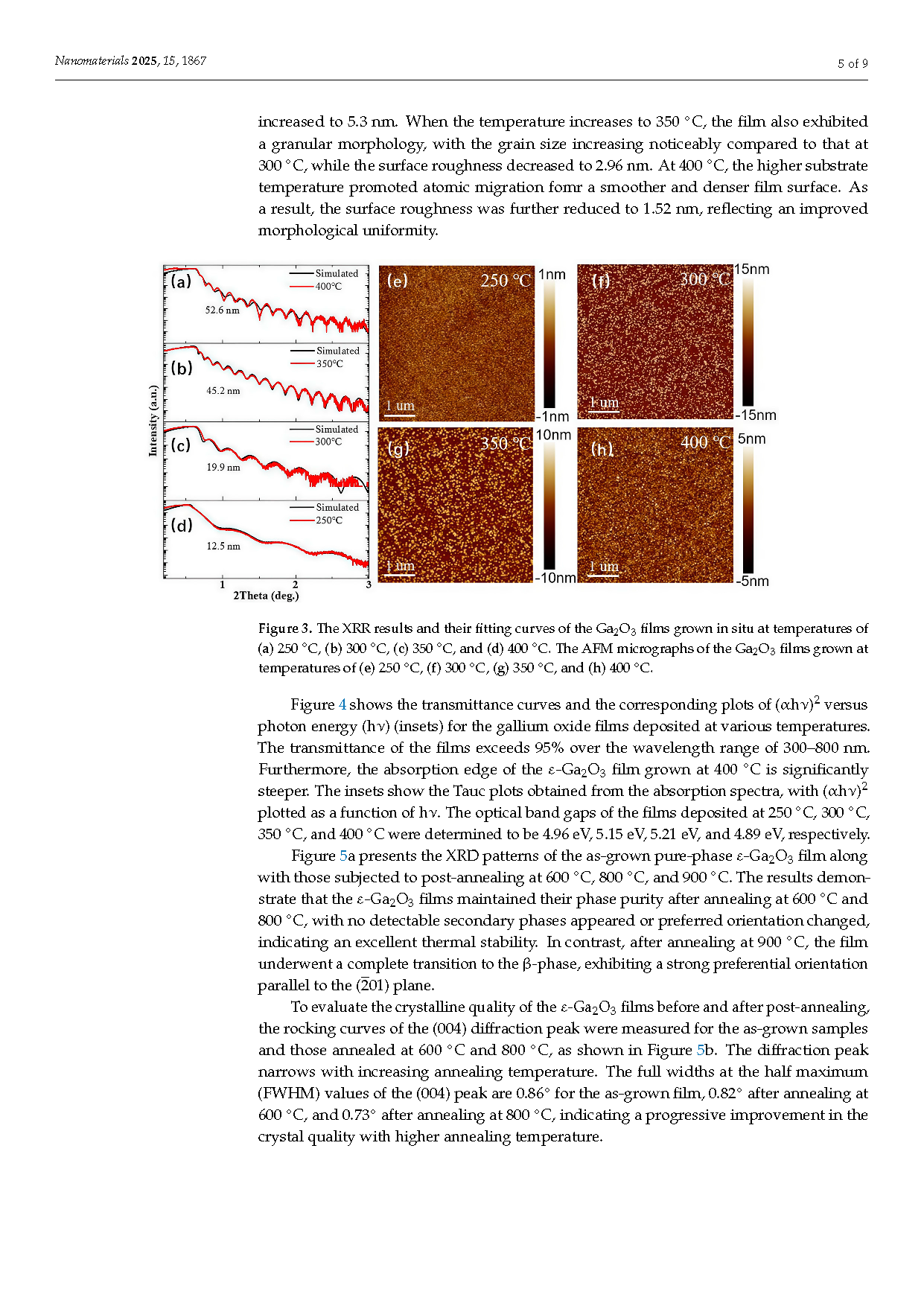
Figure 3. The XRR results and their fitting curves of the Ga2O3 films grown in situ at temperatures of (a) 250 °C, (b) 300 °C, (c) 350 °C, and (d) 400 °C. The AFM micrographs of the Ga2O3 films grown at temperatures of (e) 250 °C, (f) 300 °C, (g) 350 °C, and (h) 400 °C.
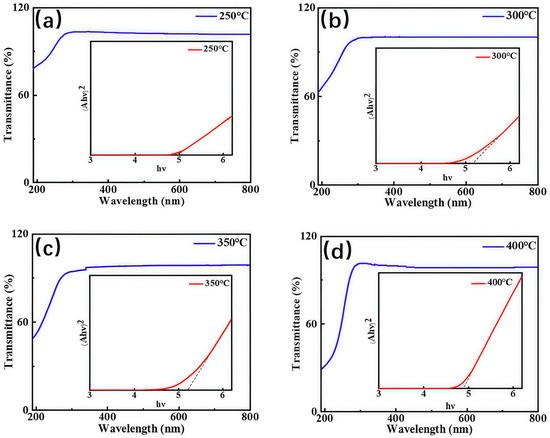
Figure 4. The transmittance spectra of the Ga2O3 films grown in situ at temperatures of (a) 250 °C, (b) 300 °C, (c) 350 °C, and (d) 400 °C, along with the corresponding curves of (αhν)2 versus hν (insets).
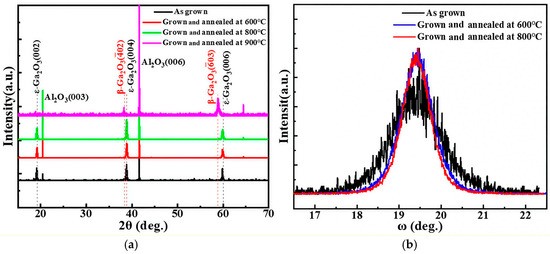
Figure 5. (a) The XRD patterns of ε-Ga2O3 films grown at 400 °C after annealing at different temperatures, and (b) the rocking curves of the (004) diffraction peak of ε-Ga2O3 films.
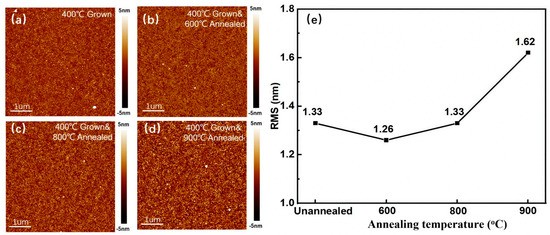
图6. 不同温度退火的 ε-Ga2O3 薄膜的原子力显微镜图像(a–d)及表面粗糙度(e)。
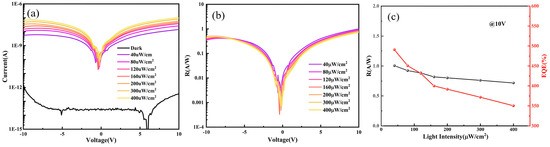
Figure 6. The AFM images (a–d) and surface roughness (e) of the ε-Ga2O3 films annealed at different temperatures.
DOI:
doi.org/10.3390/nano15241867

Instruction
Official Account

Cooperation
Top