


Researchers from the Hubei University have published a dissertation titled "Ferroelectric depolarization field-driven high- property Ga2O3-Based self-powered ultraviolet photodetectors" in Materials Science in Semiconductor Processing.
Background
Ultraviolet (UV) photodetectors, which detect light in the 100–400 nm range, are widely used in scientific, industrial, and military applications. Wide-bandgap semiconductors (Eg > 3 eV) are inherently suitable for UV detection due to their energy band alignment with UV photons. Among them, gallium oxide (Ga₂O₃) stands out as an ideal candidate for next-generation UV photodetectors because of its ultra-wide bandgap (~4.9 eV), high electron mobility, and large breakdown electric field. Self-powered Ga₂O₃ photodetectors, in particular, offer the advantages of eliminating external power supply while achieving high sensitivity and precision, making them promising for robust sensing networks and portable monitoring systems.
However, current Ga₂O₃-based self-powered photodetectors face two major challenges for practical applications: low photogenerated carrier separation efficiency, due to the built-in electric field being confined to narrow p-n or Schottky junction regions, and complex, high-vacuum-dependent fabrication processes, which hinder large-scale deployment. For example, β-Ga₂O₃/4H-SiC p-n junction self-powered photodetectors prepared by pulsed laser deposition show a responsivity of only 10.35 mA/W and a detectivity of 8.8 × 10⁹ Jones at 254 nm.
Ferroelectric materials offer a potential solution by providing a strong bulk depolarization electric field, enabling efficient carrier separation throughout the material. Yet, their inherently low carrier concentration limits photocurrent, resulting in suboptimal responsivity and sensitivity.
To address these limitations, this study reports the design and fabrication of Pb(Zr₀.₅₂Ti₀.₄₈)O₃ (PZT)/(Ga₀.₆Ti₀.₄)₂O₃ (Ga₂O₃:Ti) heterojunction self-powered UV photodetectors. Ti⁴⁺ substitution for Ga³⁺ serves as an effective donor doping method to increase electron carrier concentration, enhancing photocurrent and photoresponse. The combination of the high depolarization field from PZT and the built-in field of the heterojunction significantly improves carrier separation and transport. Furthermore, photogenerated carriers are produced in both the Ga₂O₃:Ti and PZT layers, further increasing carrier density. As a result, the Au/PZT/Ga₂O₃:Ti/FTO photodetector achieves a responsivity of 20.72 mA/W, detectivity of 5.79 × 10¹¹ Jones, and fast rise/decay times of 0.05/0.04 s, outperforming most reported Ga₂O₃-based self-powered photodetectors.
Abstract
Self-powered ultraviolet (UV) photodetectors (PDs) based on Ga2O3 have garnered considerable interest for their application potential. However, their development is constrained by two primary factors: the inherent low carrier concentration of Ga2O3 and weak photogenerated carriers separation ability, which limit photoresponse performances, and the reliance on complex and expensive vacuum-based fabrication techniques. Herein, we report a high-performance PZT/(Ga0.6Ti0.4)2O3 heterojunction UV photodetector fabricated by a facile, low-cost sol-gel method to overcome these limitations. Ti4+ has higher valence than Ga3+, and thus the introduction of Ti4+ into the Ga2O3 can increase carrier concentration. In addition, the separation and transport of photogenerated carriers in the photodetector are synergistically enhanced by the combined action of two internal electric fields: the depolarization field from high remnant polarization of PZT layer and the inherent built-in field at the PZT/(Ga0.6Ti0.4)2O3 heterojunction interfaces. As a consequence, the Au/PZT/(Ga0.6Ti0.4)2O3/FTO heterojunction photodetector exhibits superior photoelectric characteristics under 300 nm light and 0 V bias, characterized by a responsivity of 20.72 mA/W, a detectivity of 5.79 × 10¹¹ Jones, and an ultrafast response rate with rise/decay time of 0.05/0.04 s, which exceeds most Ga2O3-based self-powered photodetectors in terms of overall photoresponse performances.
Highlights
•High-property PZT/(Ga0.6Ti0.4)2O3heterojunction self-powered UV PD is developed.
•The additions of higher-valence Ti4+than Ga3+increase carrier concentration.
•High polarization in the PZT cause the appearance of large depolarization field.
•The depolarization and the built-in fields jointly enhances carrier separation.
•The PD exhibits high D* of 5.79 × 10¹¹Jones and fast rise/decay time (0.05/0.04 s).
Conclusion
Self-powered UV photodetectors (PDs) are developed based on the Au/PZT/(Ga₀.₆Ti₀.₄)₂O₃/FTO structure using the sol-gel method. The (Ga₀.₆Ti₀.₄)₂O₃ and PZT thin films display amorphous characteristics and a pure perovskite structure, respectively. Although FE-SEM and AFM confirm a tight, defect-free interface between the (Ga₀.₆Ti₀.₄)₂O₃ and PZT layers, increasing the number of PZT layers degrades the surface uniformity, thereby hindering the transport of photogenerated carriers. When the devices are poled at negative voltages, the ferroelectric domain in the PZT experiences reconstruction, which creates a depolarization field aligned with the heterojunction’s built-in field. This synergistic interaction between the two fields amplifies the total built-in electric field within the device, thus improving the photocurrent. Conversely, a positive bias generates a depolarization field that opposes the intrinsic built-in field, weakening the total built-in field and thus reducing the photocurrent. The optimal photoresponse performance is exhibited in Au/PZT/(Ga₀.₆Ti₀.₄)₂O₃/FTO PDs with a single PZT layer and a −5 V poling voltage, achieving a large responsivity of 20.72 mA/W, high detectivity of 5.79 × 10¹¹ Jones, and rapid rise/decay times of 0.05/0.04 s.
Project Support
This work was supported by the National Natural Science Foundation of China (Grant Nos. 52172113, 52572127, 62274057), Natural Science Foundation of Henan (Grant No. 252300421928), and the Special Project of Zhengzhou Basic Research and Application Basic Research (ZZSZX202435).
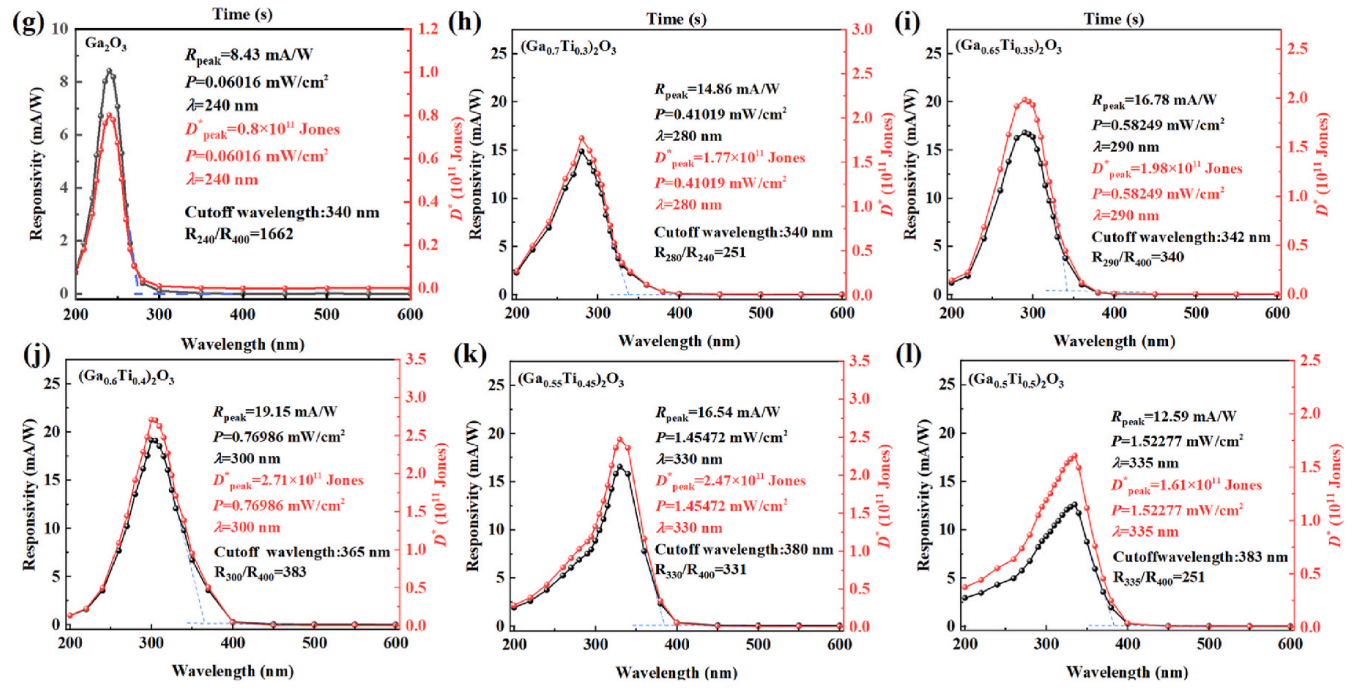
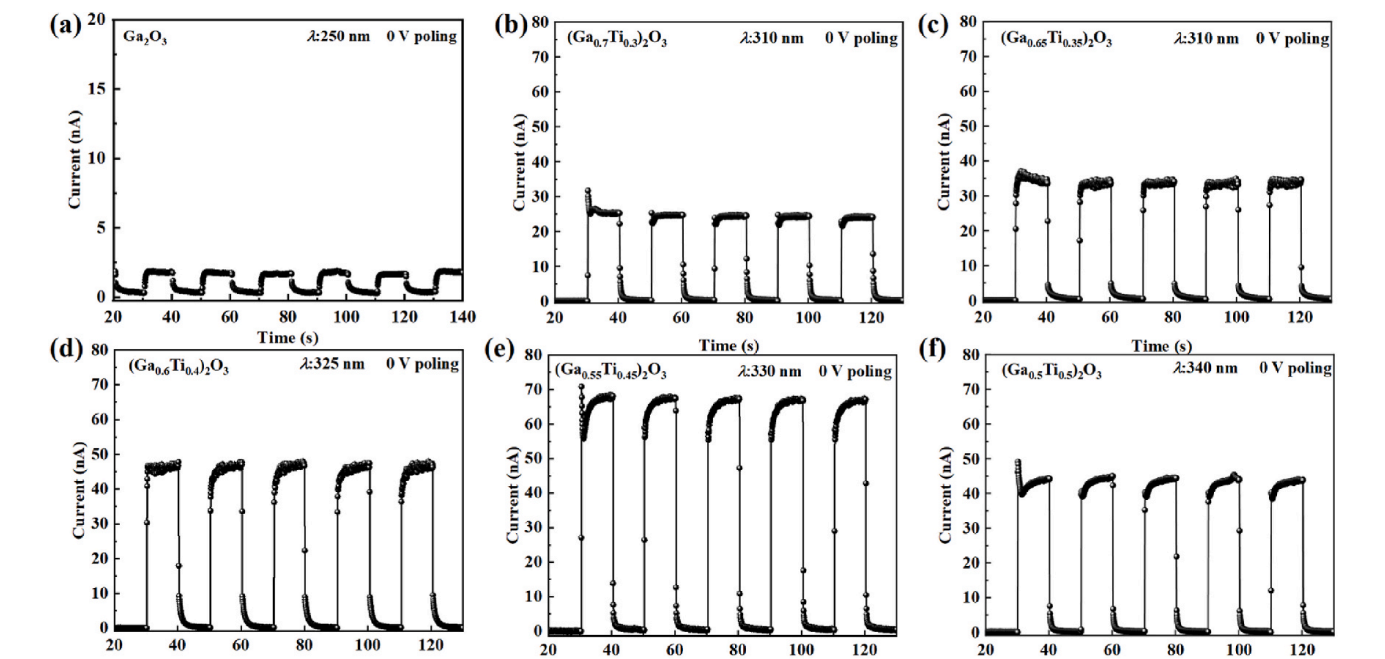
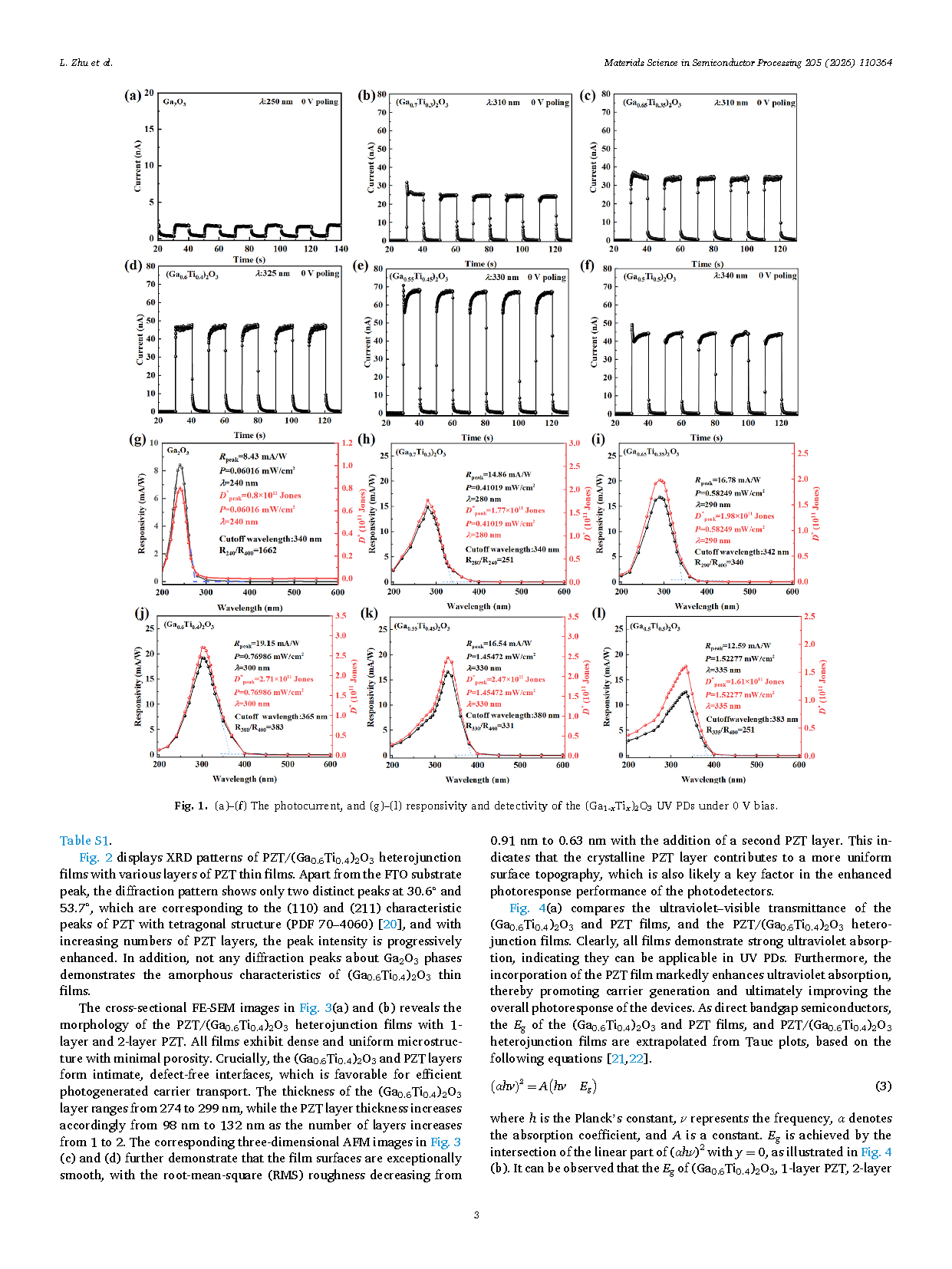
Fig. 1. (a)–(f) The photocurrent, and (g)–(l) responsivity and detectivity of the (Ga1-xTix)2O3 UV PDs under 0 V bias.
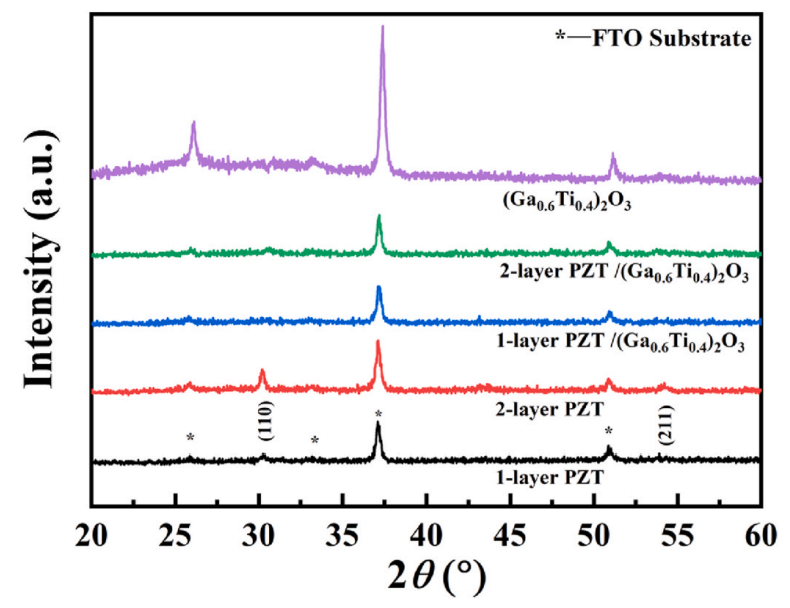
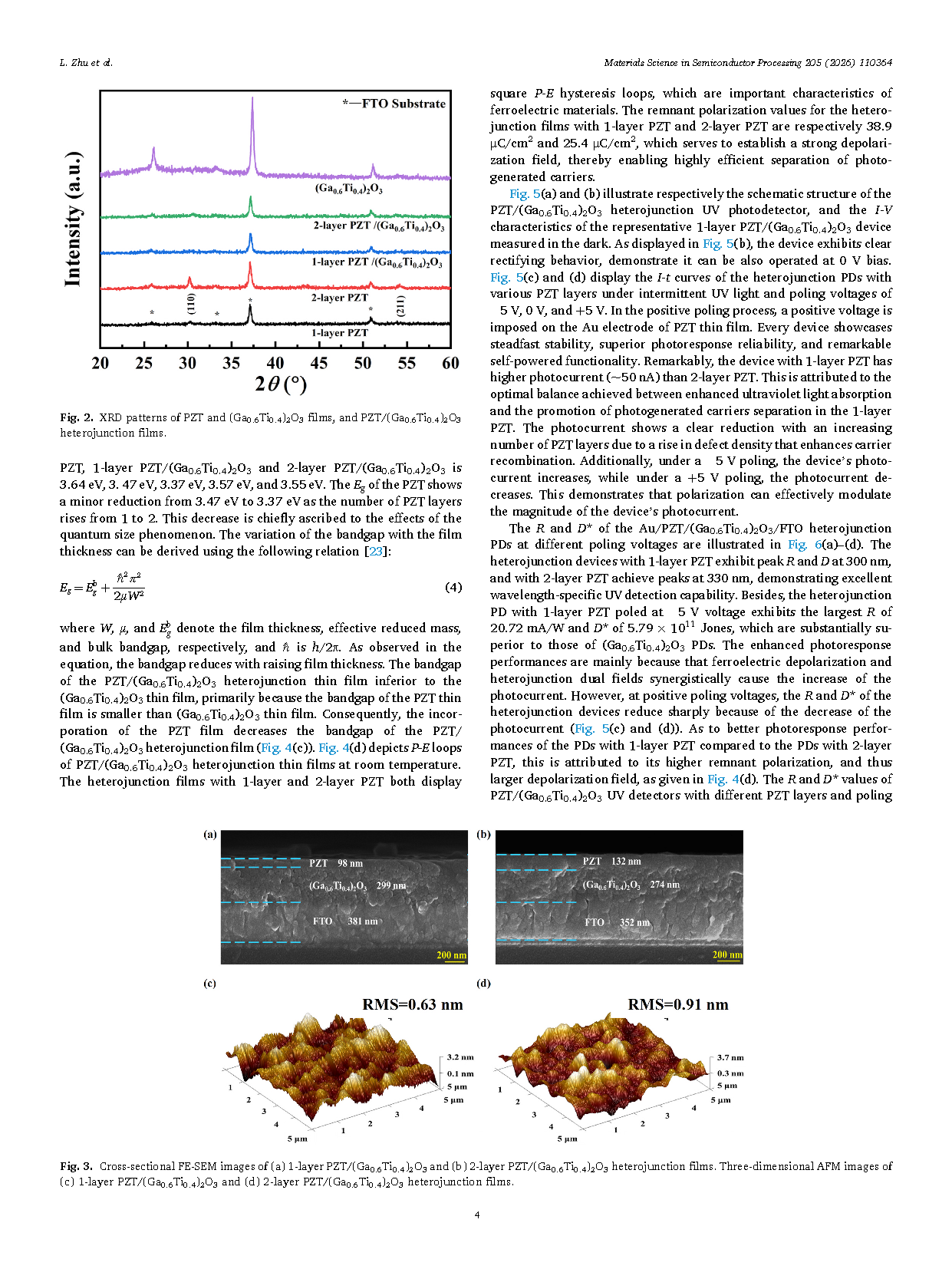
Fig. 2. XRD patterns of PZT and (Ga0.6Ti0.4)2O3 films, and PZT/(Ga0.6Ti0.4)2O3 heterojunction films.
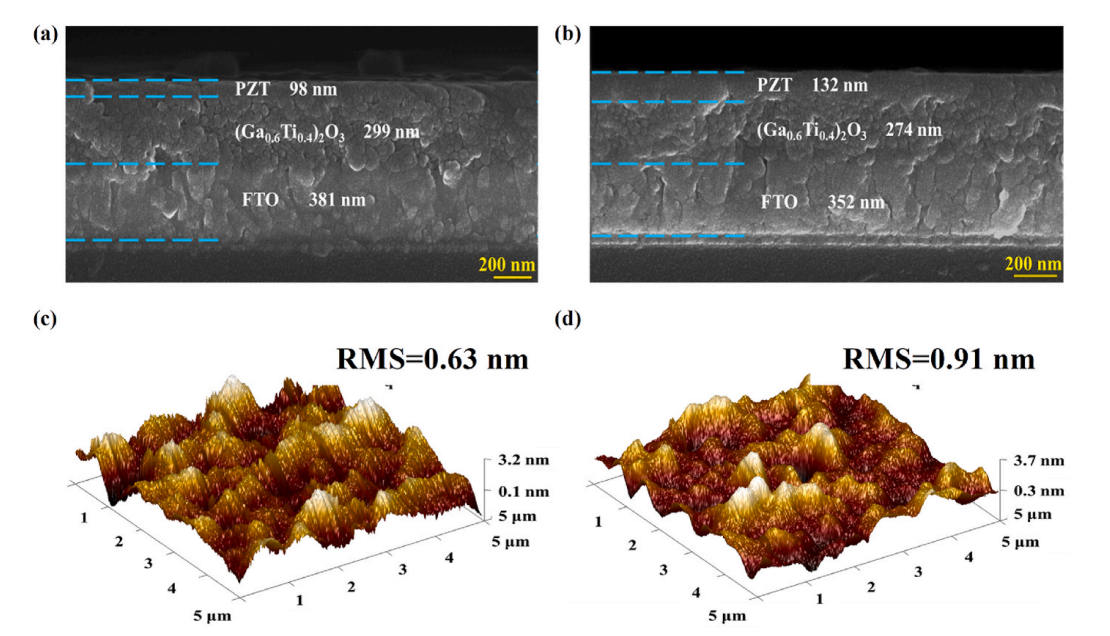
Fig. 3. Cross-sectional FE-SEM images of (a) 1-layer PZT/(Ga0.6Ti0.4)2O3 and (b) 2-layer PZT/(Ga0.6Ti0.4)2O3 heterojunction films. Three-dimensional AFM images of (c) 1-layer PZT/(Ga0.6Ti0.4)2O3 and (d) 2-layer PZT/(Ga0.6Ti0.4)2O3 heterojunction films.
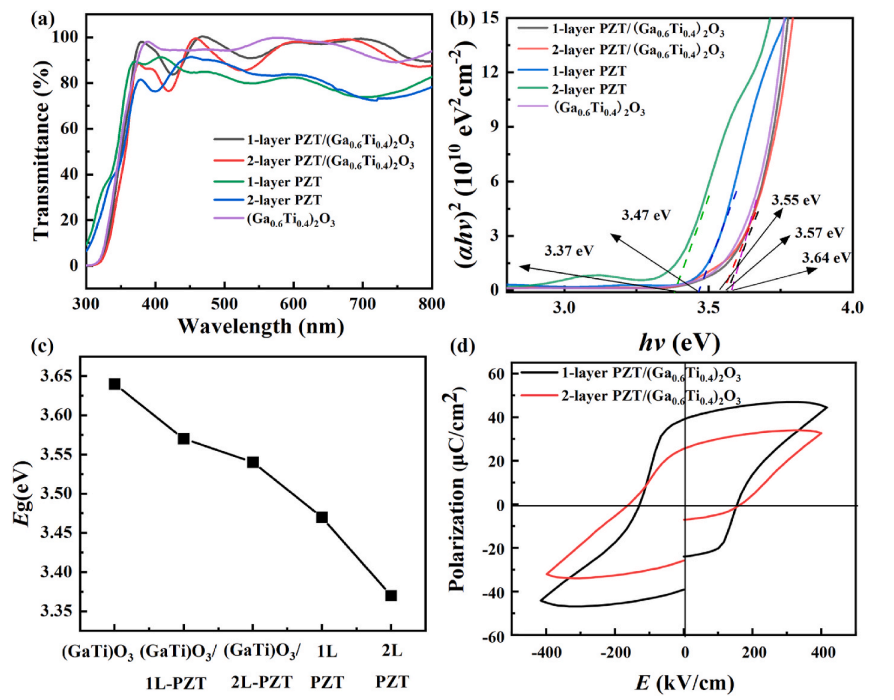
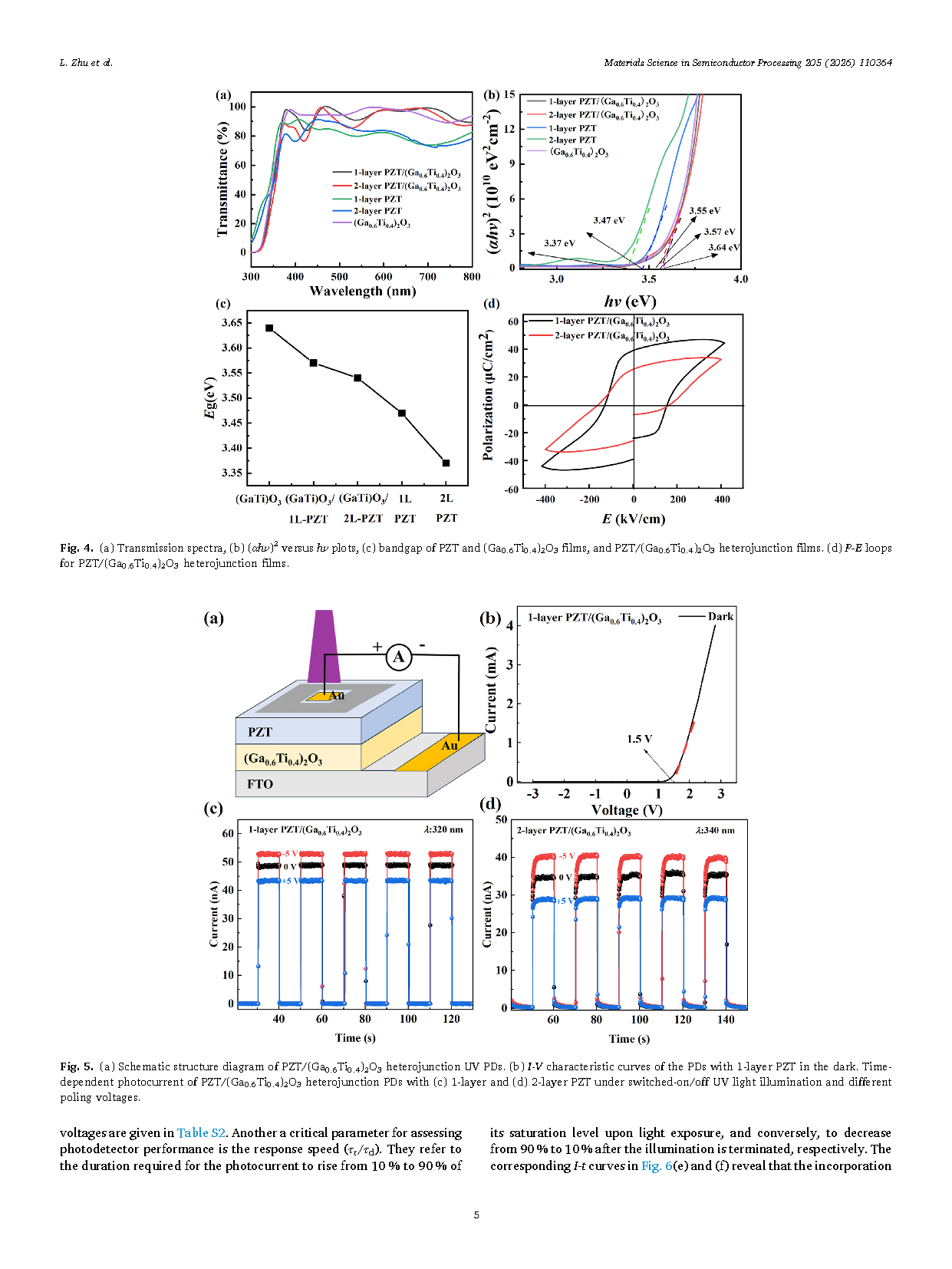
Fig. 4. (a) Transmission spectra, (b) (αhν) 2 versus hν plots, (c) bandgap of PZT and (Ga0.6Ti0.4)2O3 films, and PZT/(Ga0.6Ti0.4)2O3 heterojunction films. (d) P-E loops for PZT/(Ga0.6Ti0.4)2O3 heterojunction films.
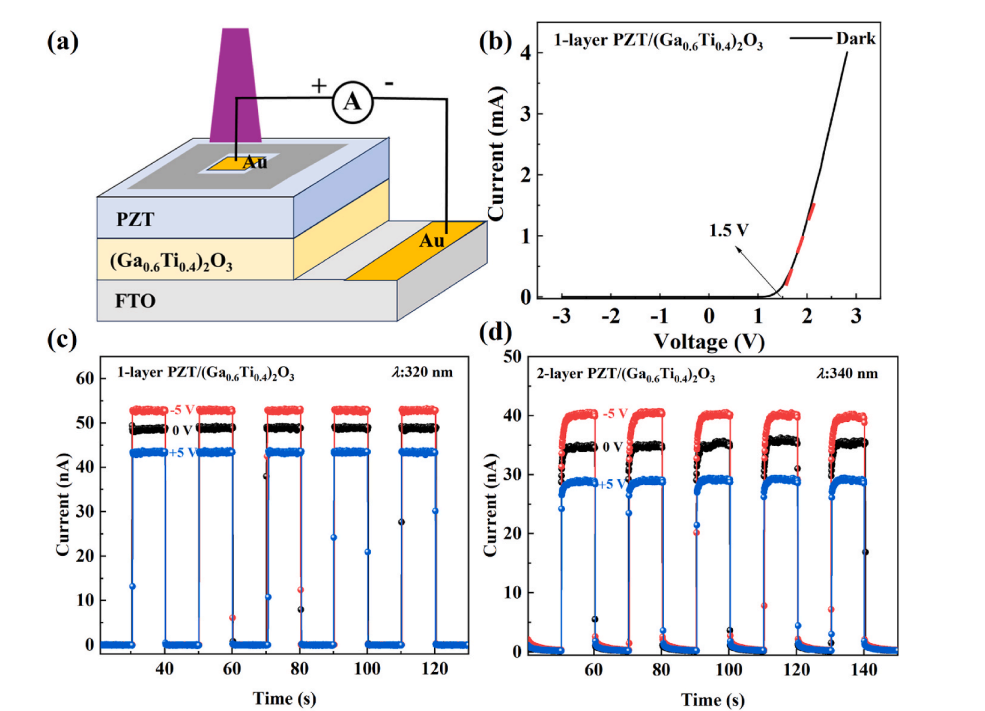
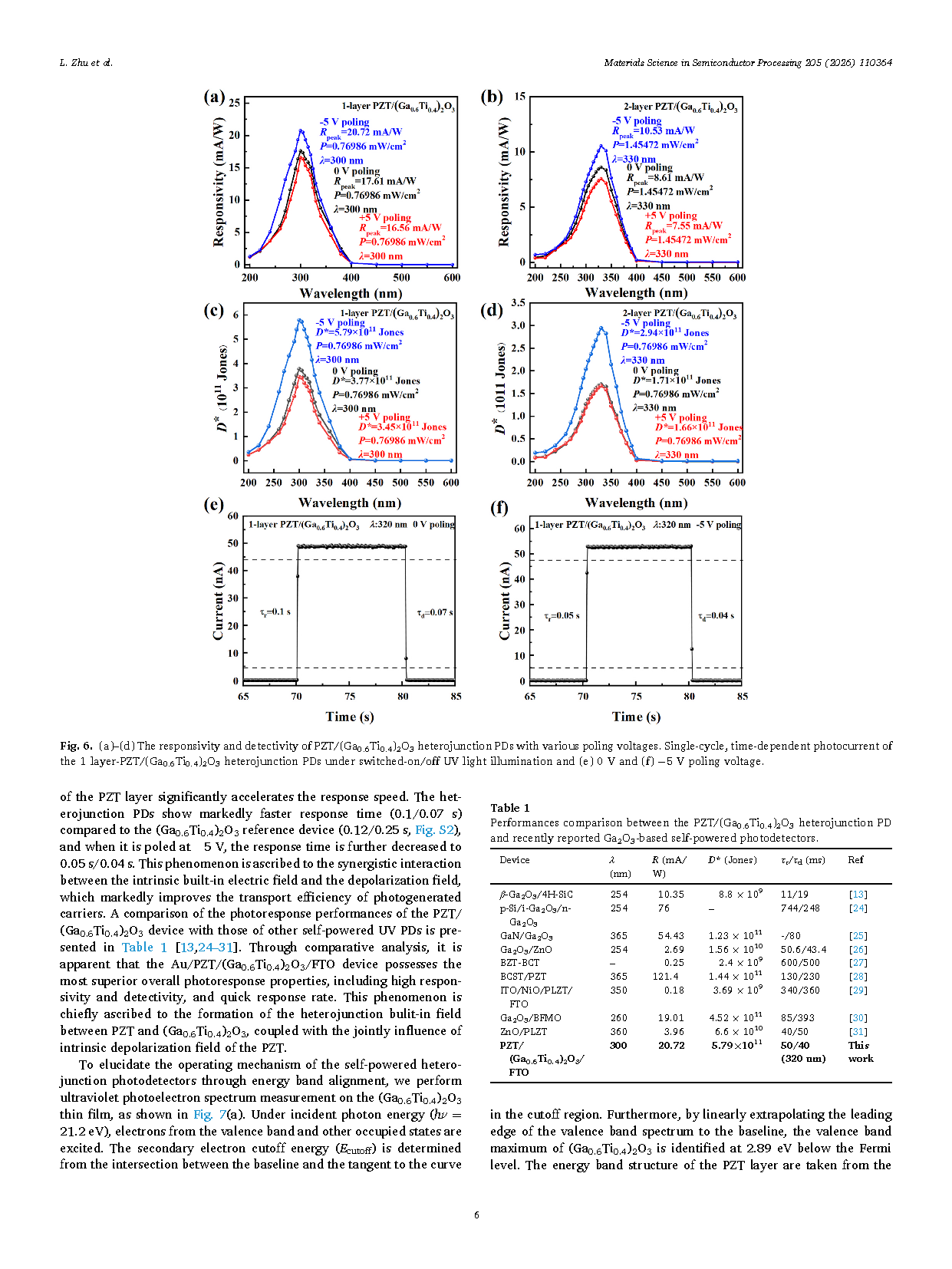
Fig. 5. (a) Schematic structure diagram of PZT/(Ga0.6Ti0.4)2O3 heterojunction UV PDs. (b) I-V characteristic curves of the PDs with 1-layer PZT in the dark. Timedependent photocurrent of PZT/(Ga0.6Ti0.4)2O3 heterojunction PDs with (c) 1-layer and (d) 2-layer PZT under switched-on/off UV light illumination and different poling voltages.
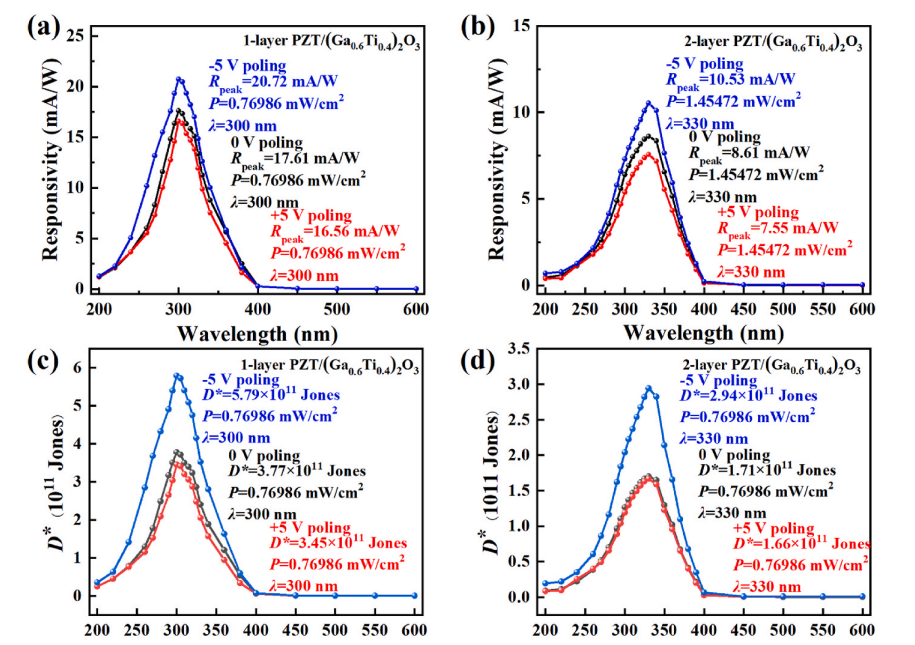
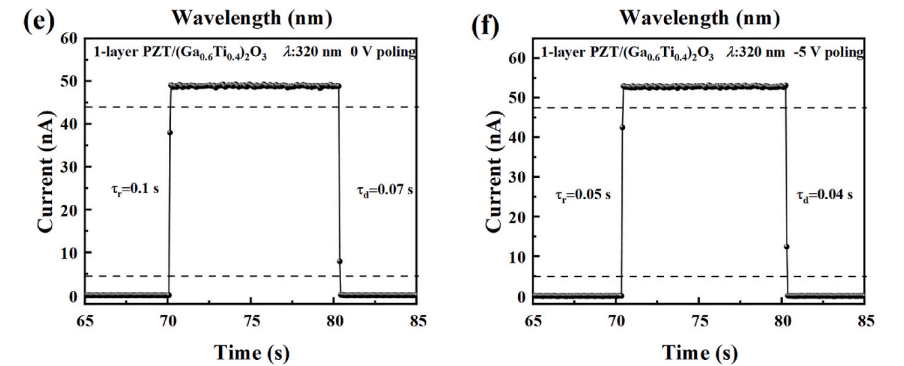
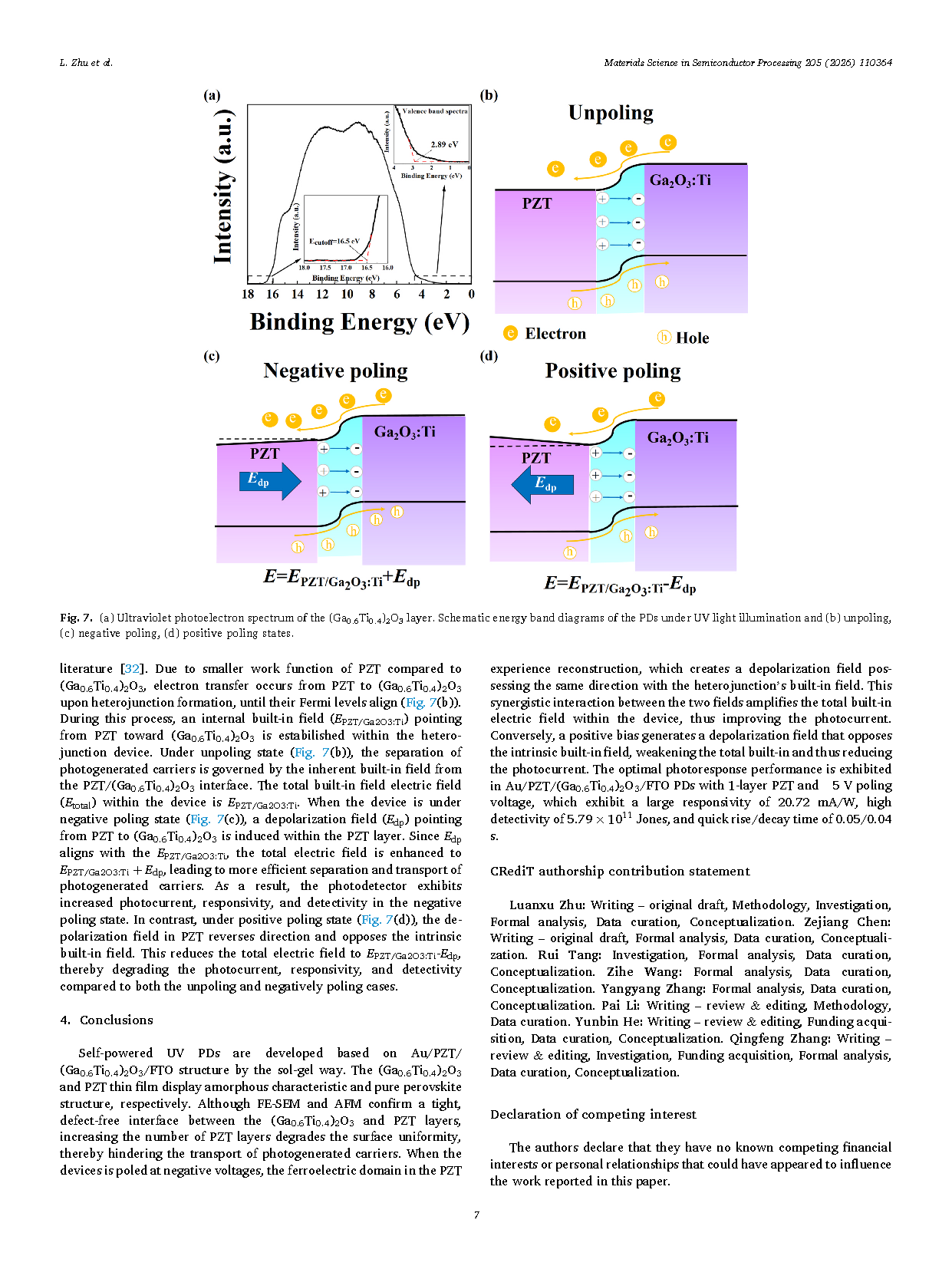
Fig. 6. (a)–(d) The responsivity and detectivity of PZT/(Ga0.6Ti0.4)2O3 heterojunction PDs with various poling voltages. Single-cycle, time-dependent photocurrent of the 1 layer-PZT/(Ga0.6Ti0.4)2O3 heterojunction PDs under switched-on/off UV light illumination and (e) 0 V and (f) − 5 V poling voltage.

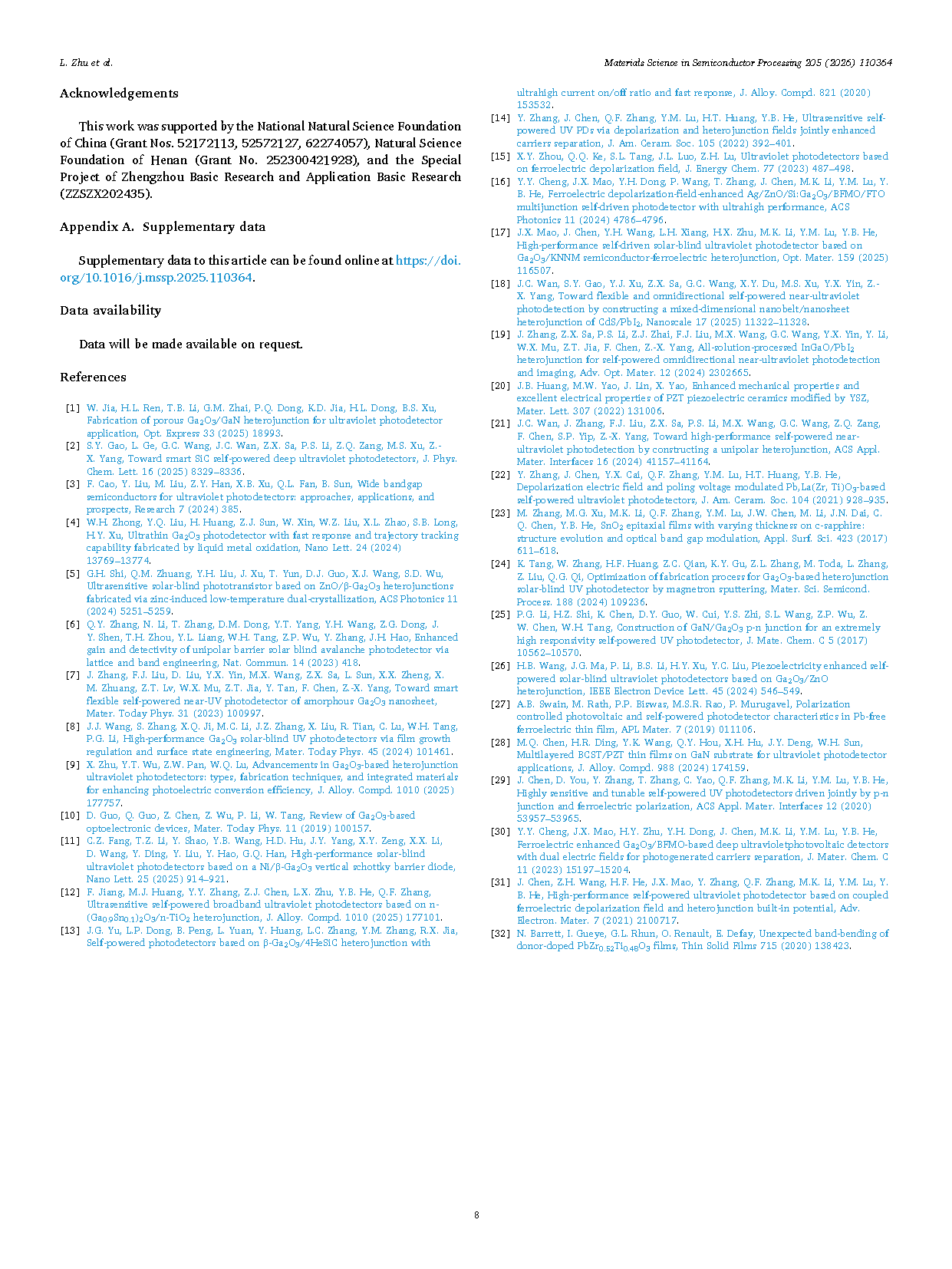
Fig. 7. (a) Ultraviolet photoelectron spectrum of the (Ga0.6Ti0.4)2O3 layer. Schematic energy band diagrams of the PDs under UV light illumination and (b) unpoling, (c) negative poling, (d) positive poling states.
DOI:
doi.org/10.1016/j.mssp.2025.110364
Instruction
Official Account

Cooperation
Top