


The research team led by Professor Mingming Jiang from Nanjing University of Aeronautics and Astronautics and Professor Zeng Liu from Inner Mongolia University published an article titled “A Self-Powered Ga2O3/MgO/GaN Heterojunction Polarization-Sensitive, Superlinear and Solar-Blind Selectivity Detector Enabling Optical Neural Networks” in the academic journal Chip.
Journal Introduction
Chip is the world’s only comprehensive international journal focused on chip-related research. It is published by Shanghai Jiao Tong University, distributed globally in collaboration with Elsevier, and partners with multiple renowned academic organizations both domestically and internationally, providing a high-quality platform for academic conferences. The latest impact factor is 7.1, and the journal ranks in the Q1 category within the fields of electronic and electrical engineering, optics, and applied physics.
Project Support
The authors acknowledge support from the National Natural Science Foundation of China (12374257, 62404101, 62204125, and 62564011) and the Fundamental Research Funds for the Central Universities (NC2025016).
Background
Solar-blind ultraviolet (200–280 nm) polarization detectors, due to their ultra-high polarization ratios, hold significant potential for optical information analysis and find wide applications in atmospheric remote sensing, environmental monitoring, and stealth detection. Traditional polarization detection relies on external polarizing components, which involve complex fabrication, low integration, and high power consumption, severely limiting system miniaturization and integration. In recent years, ultra-wide bandgap semiconductors with in-plane anisotropy have provided a new pathway for solar-blind UV polarization detection; however, existing material systems still exhibit significant limitations in absorption capability, stability, and scalability. Ga2O3, with its ultra-wide bandgap, intrinsic anisotropy, and excellent stability, has emerged as an ideal candidate for solar-blind polarization detection. Nevertheless, current Ga2O3 polarization detectors still generally face challenges such as high operating voltage, insufficient polarization selectivity, and limited system integration, and achieving high-performance solar-blind polarization detection remains a significant challenge.
Main Content
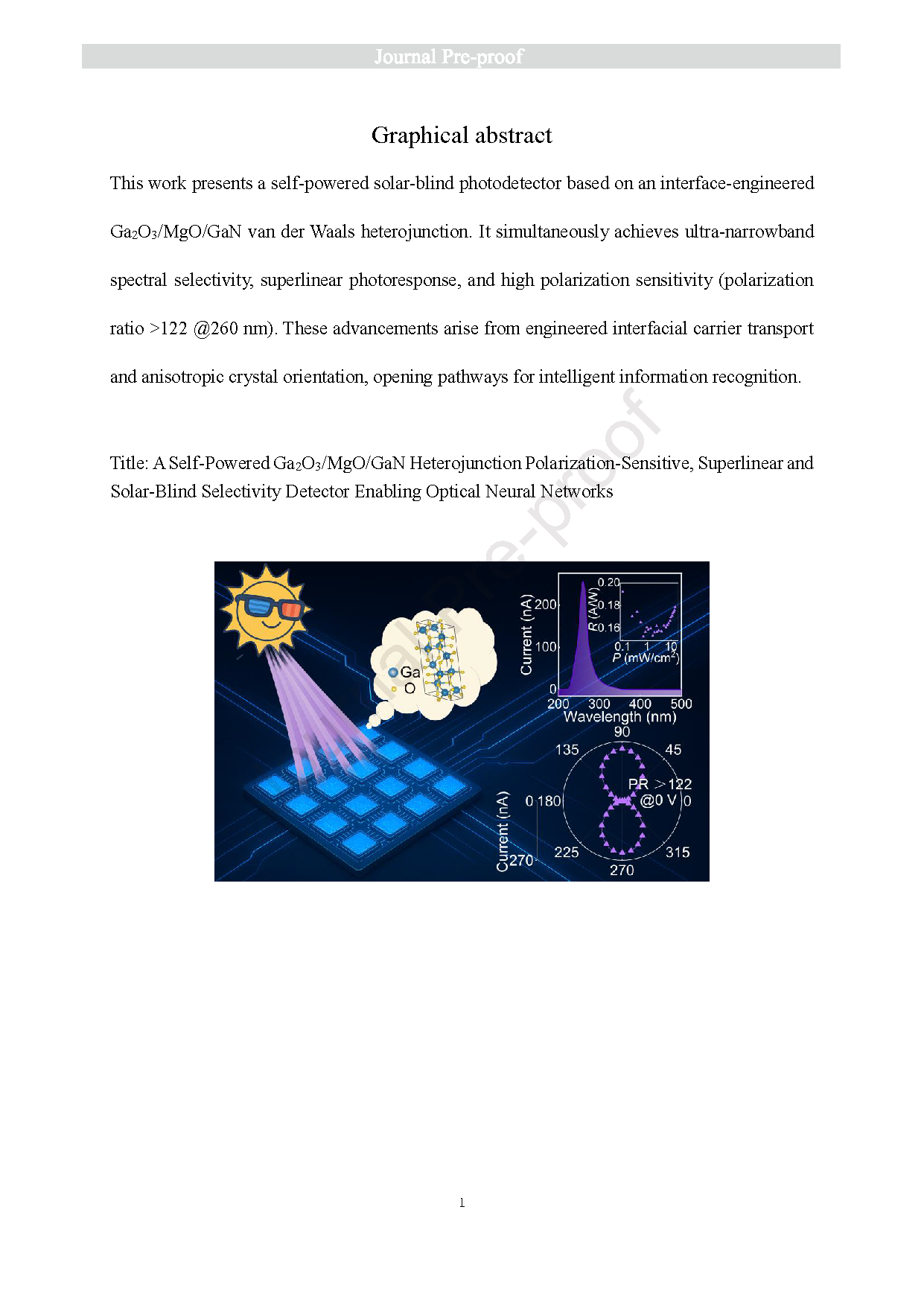
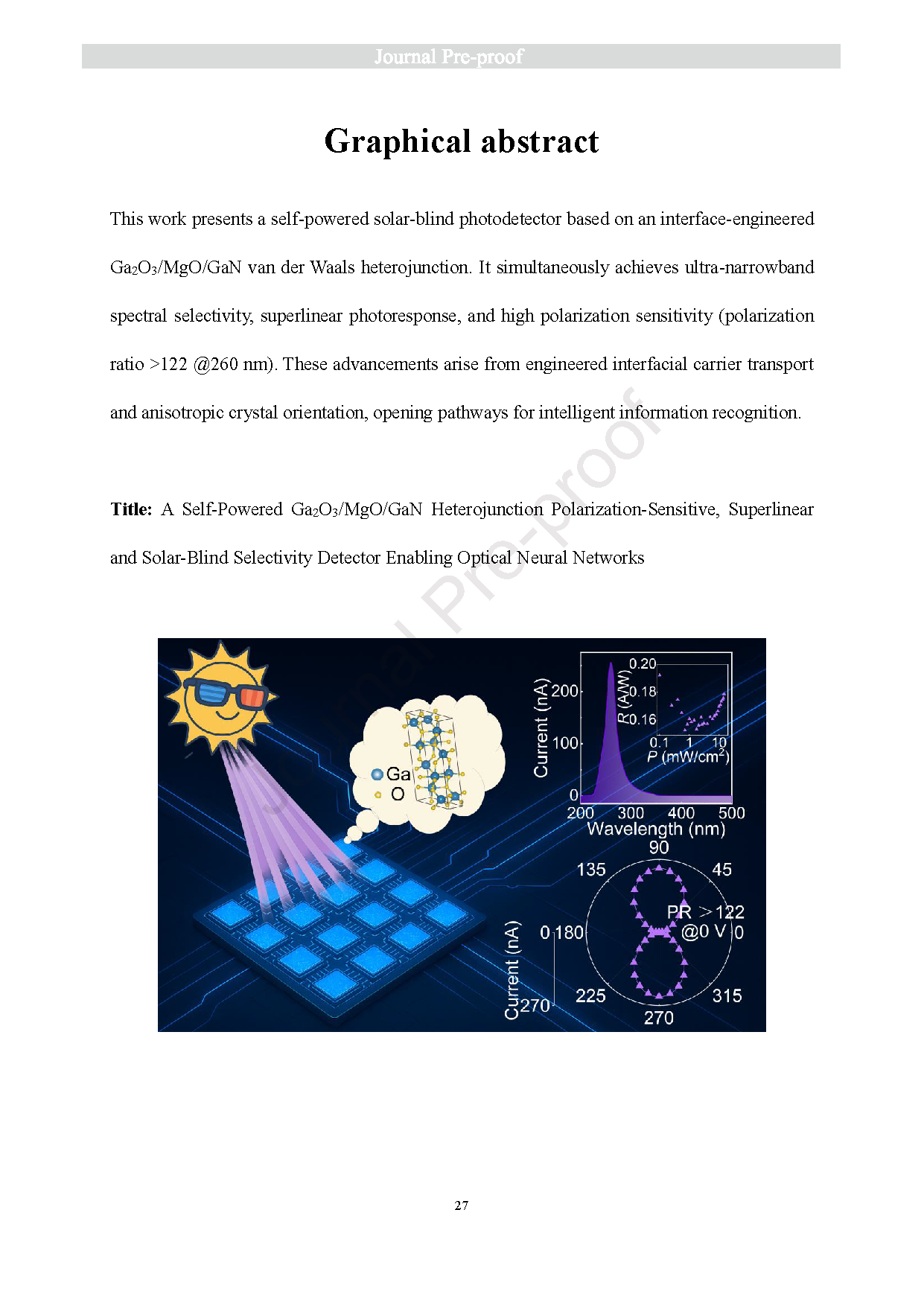
The research team addressed key challenges in solar-blind ultraviolet polarization detection, including high sensitivity, self-powered operation, and intelligent applications, by proposing a novel interface-engineered heterojunction based on one-dimensional β-Ga2O3 single crystals and GaN. This work exploits the inherent in-plane anisotropy of low-dimensional Ga2O3 and, together with an ultrathin MgO layer, constructs a Ga2O3/MgO/GaN van der Waals heterojunction, achieving narrowband selective detection of 260 nm ultraviolet light (full width at half maximum < 23 nm) without an external bias. In the self-powered mode, the device simultaneously exhibits a responsivity of 0.20 A/W, a specific detectivity of 2.95×10¹¹ Jones, and fast response times on the microsecond scale (rise/decay: 26.5/25.7 µs). The device maintains stable operation under strong illumination and demonstrates pronounced superlinear photoresponse characteristics. Benefiting from the synergistic effect of the material’s intrinsic anisotropy and the heterojunction’s built-in electric field, the detector shows extremely high selectivity for linearly polarized ultraviolet light, with a polarization ratio up to 122, significantly outperforming most existing self-powered UV polarization detectors. Based on this, the team further constructed a 10×10 pixel polarization-sensitive detector array and integrated it into an optical neural network system, enabling efficient recognition and processing of multi-polarization-state information. Even under complex noisy backgrounds, the system achieves reliable image reconstruction and pattern recognition, demonstrating the device’s potential for intelligent optical sensing applications.
Novelty
●One-dimensional Ga2O3 single crystals with strong in-plane anisotropy, solar-blind response, and high stability are synthesized via CVD.
●The Ga2O3/MgO/GaN self-powered detector shows stable, spectrum-selective solar-blind UV detection with superlinear photoresponse under strong illumination.
●The detector exhibits excellent polarization-sensitive response with a polarization ratio up to 122.
●Leveraging the ultrahigh dichroic ratio and photoresponse, the detector in an optical neural network enables high-quality imaging even under noisy conditions.
Conclusion
This study proposes and demonstrates a self-powered solar-blind ultraviolet polarization detection scheme based on a Ga2O3/MgO/GaN van der Waals heterojunction. It shows that through the synergistic design of interface engineering and low-dimensional anisotropic materials, high-sensitivity detection and high-fidelity polarization recognition can be simultaneously achieved without the need for an external bias. The results indicate that the intrinsic anisotropy of low-dimensional β-Ga2O3 single crystals can be effectively amplified and stably output by the built-in electric field of the heterojunction, overcoming the performance trade-offs that traditionally limit ultraviolet polarization detection. Moreover, the device maintains a stable response under strong illumination, demonstrating excellent environmental adaptability and operational robustness. By further integrating the polarization-sensitive detector array into an optical neural network, polarization-driven intelligent recognition and noise-resistant imaging are realized, verifying its feasibility for information sensing and processing under complex optical fields. This work not only provides new insights for the design of solar-blind ultraviolet polarization detectors but also lays an important foundation for the application of low-power, integrated intelligent optoelectronic systems in extreme environments.
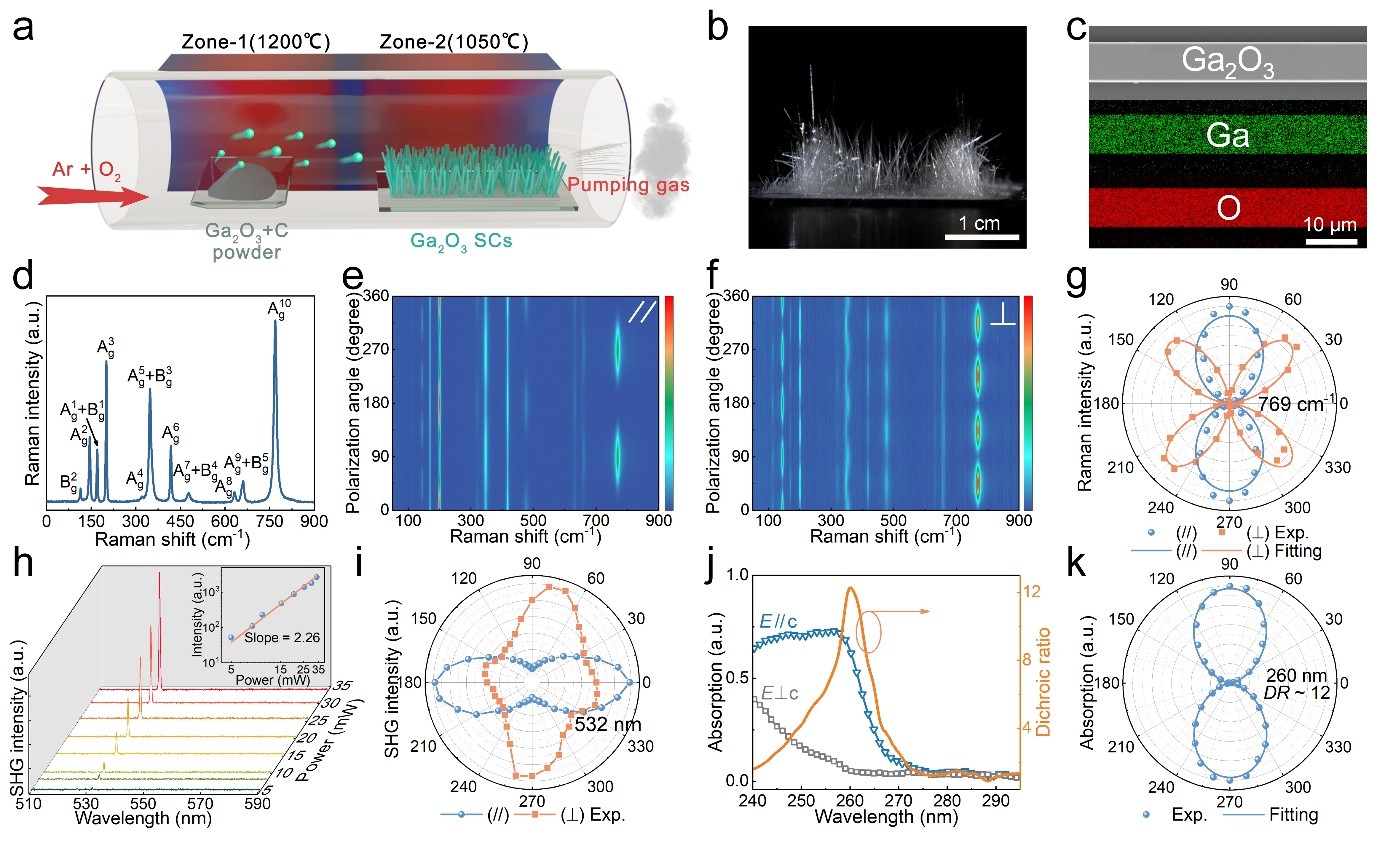
Fig. 1 | Growth and optical anisotropy of Ga2O3 SCs. a, Schematic illustration of the growth process. b, High-resolution optical image. c, Scanning electron microscopy image. d, Raman spectrum. Contour maps of angle-resolved polarized Raman spectroscopy under e, parallel and f, perpendicular configurations, respectively. g, Polar plot of Raman intensity at 769 cm-1. h, Power-dependent SHG spectrum under 1064 nm excitation; inset shows a log-scale linear fit. i, Angle-resolved SHG spectra measured under parallel and perpendicular configurations. j, Absorption spectra for E//c and E⊥c, and the corresponding dichroic ratio. k, Polar plot of absorbance at 260 nm.
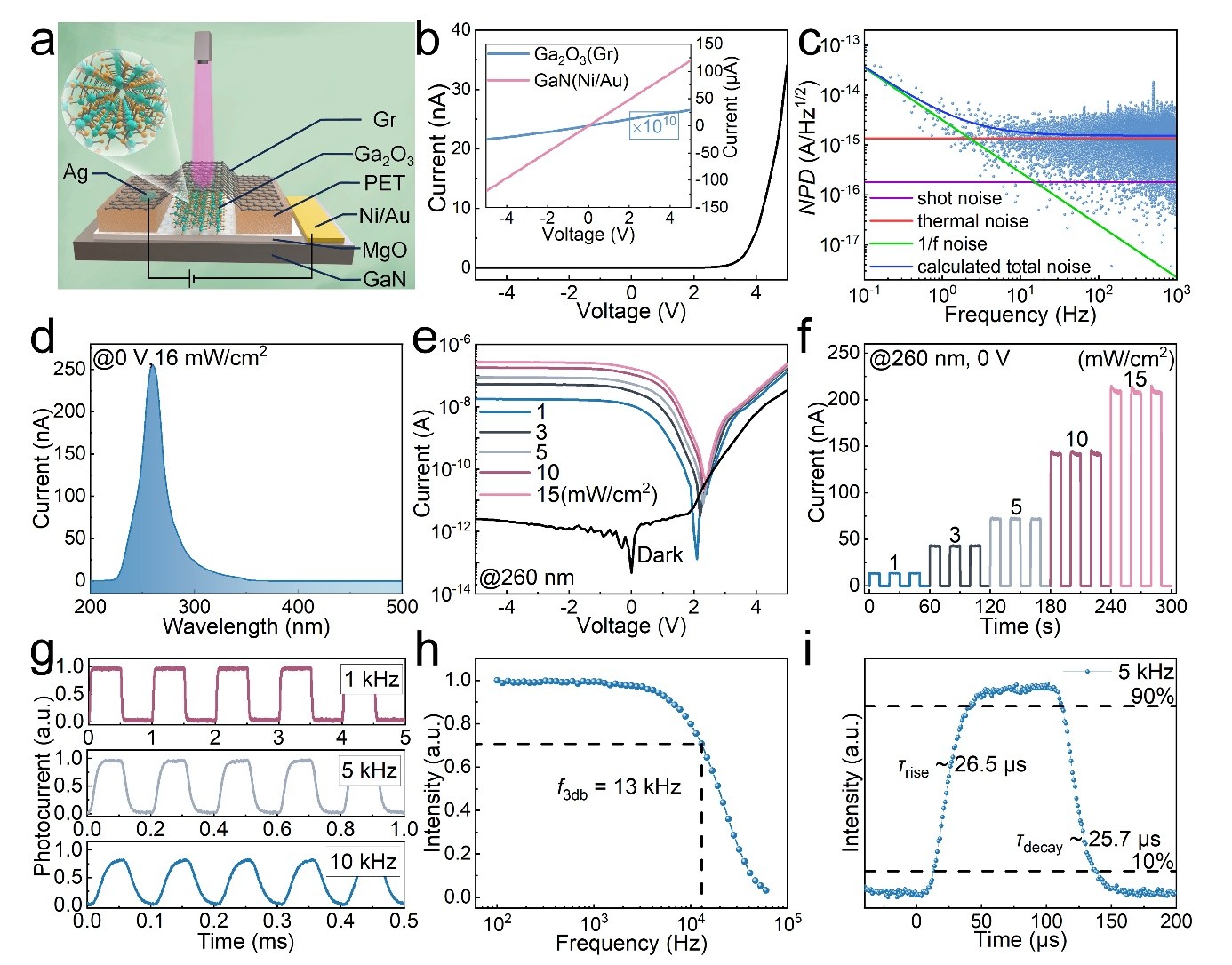
Fig. 2 | Optoelectronic performance of the Ga2O3/MgO/GaN vdWh. a, Schematic of device structure. b, Dark current; inset shows the I-V characteristics of the Ga2O3 MSM structure with Gr electrodes on both sides and the GaN MSM structure with Ni/Au electrodes on both sides. c, Total noise power density spectrum obtained by Fourier transform of the time-domain dark current. d, Wavelength-dependent current at 0 V bias. Irradiance-dependent e, I-V and f, I-t curves under 260 nm light. g, Transient response at variable modulation frequencies. h, Normalized response versus frequency. i, Enlarged single-cycle response for rise/decay time estimation.
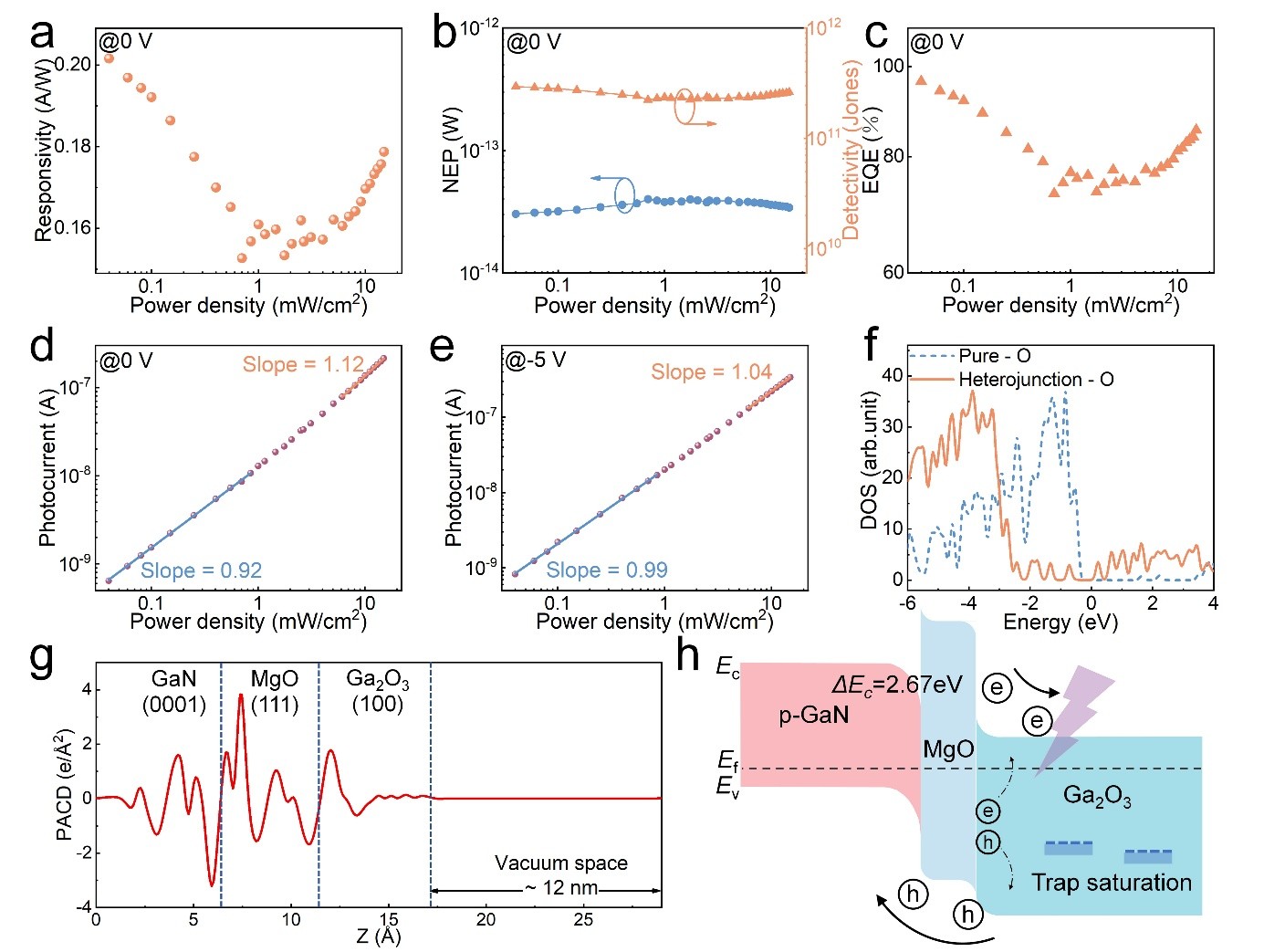
Fig. 3 | Superlinear response of the device and its physical mechanism. a, Responsivity, b, noise-equivalent power with detectivity, c, external quantum efficiency as functions of light power density. d, Log-scale photocurrent fitting at 0 V. e, Log-scale photocurrent fitting at -5 V. f, Oxygen density of states of isolated Ga2O3 and Ga2O3 in the heterostructure. g, Planar-averaged charge density of Ga2O3/MgO/GaN. h, Schematic energy band diagram under ultraviolet illumination.
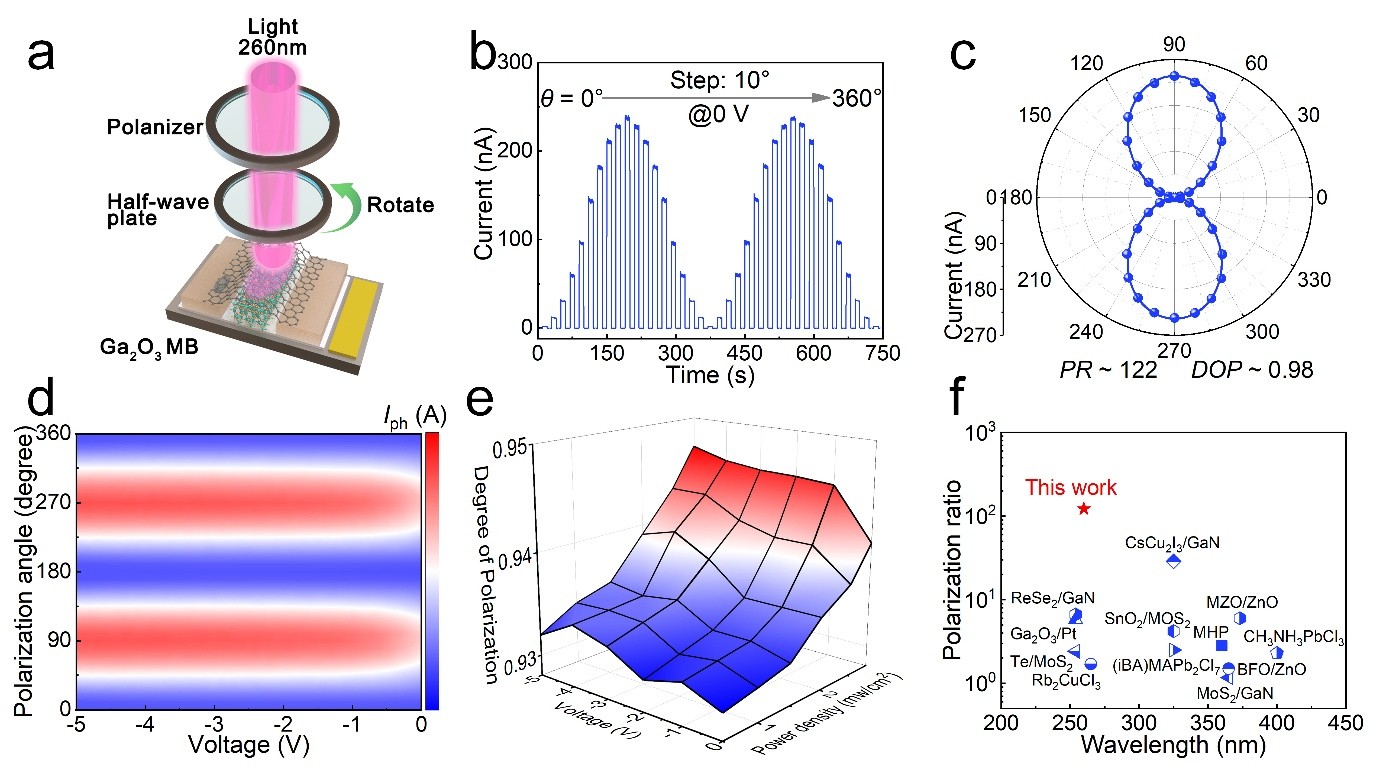
Fig. 4 | Polarization characteristics and performance comparison of the Ga2O3/MgO/GaN vdWh photodetector. a, Schematic of polarization-sensitive photodetection. b, Time-resolved photoresponse under 260 nm linearly polarized light (polarization angle 0°-360°) at 0 V bias. c, Polar plot of photocurrent. d, Two-dimensional color map of photocurrent as a function of bias voltage and polarization angle. e, Three-dimensional map of DOP as a function of bias voltage and incident light intensity. f, Comparison of PR among reported ultraviolet polarization-sensitive photodetectors.
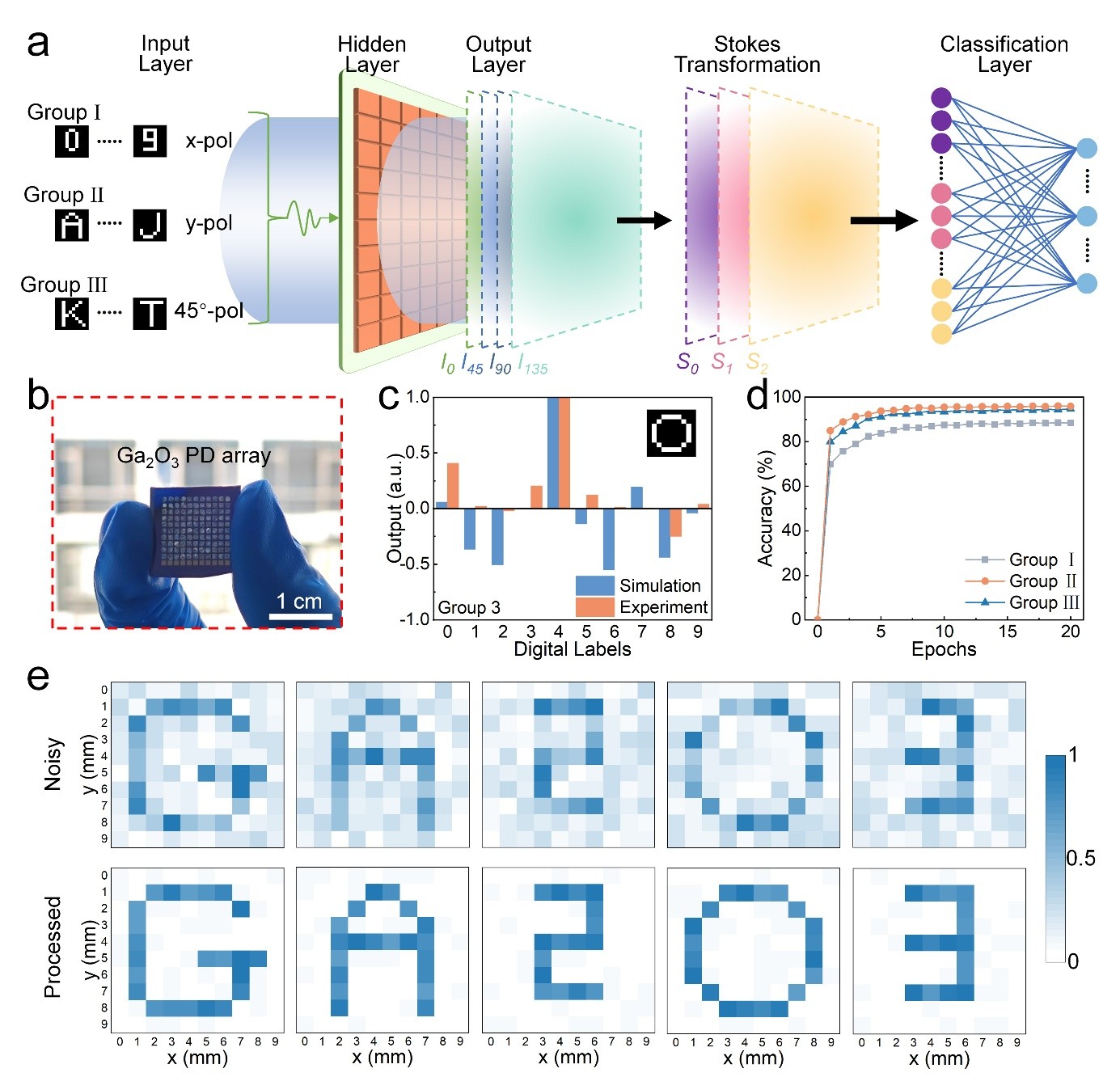
Fig. 5 | Polarization-driven optical neural network for pattern recognition and image enhancement. a, Schematic of the neural network architecture. b, 10×10 Ga2O3 photodetector array. c, Comparison of simulated and experimental outputs for input pattern “O”. d, Recognition accuracy of Groups I, II, and III. e, “Noisy”: raw image captured directly by the detector array; “Processed”: enhanced image after feature extraction.
DOI:
10.1016/j.chip.2025.100190



Instruction
Official Account

Cooperation
Top