


Hao Yue, Academician of the Chinese Academy of Sciences, is a renowned expert in microelectronics and solid-state electronics, and a Professor and Ph.D. Supervisor at Xidian University. Born in March 1958, he graduated in 1982 from Northwest Institute of Telecommunications Engineering (now Xidian University). He currently serves as a Member of the National Committee of the Chinese People’s Political Consultative Conference (CPPCC), a Standing Committee Member of the Central Committee of the Jiusan Society, and Vice President of the Chinese Institute of Electronics. He has previously served as a member of the 9th, 10th, and 13th CPPCC National Committees, a deputy to the 11th National People’s Congress, and Chairman of the 13th Jiusan Society Shaanxi Provincial Committee.
Academician Hao Yue is a pioneering figure and leading scientist in China’s third-generation semiconductor field—wide-bandgap semiconductor electronic devices. For decades, he has been devoted to the research of novel semiconductor materials and devices, as well as to talent cultivation. In the face of long-term technological blockades imposed by Western countries, he led his team to focus on key materials such as gallium nitride (GaN), starting from scratch and relying on independent innovation. Over more than ten years of sustained effort, his team systematically overcame a series of critical “chokepoint” challenges, spanning material growth, device fabrication, and reliability. They successfully developed high-power microwave electronic devices at an internationally advanced level, providing strong support for China’s independent development in next-generation mobile communications, advanced radar systems, and satellite communications.
As an outstanding educator, Academician Hao has remained rooted in western China, regarding “educating talent for the Party and the nation” as his lifelong mission. He has cultivated a large number of top-tier professionals for the semiconductor industry. Through his remarkable scientific achievements and his distinctive style as both a strict mentor and a caring guide, he exemplifies the dedication and national responsibility of a strategic scientist in the new era.
From the Loess Plateau to the Hall of Microelectronics
A Spark of the “Chinese Chip” Is Lit
In 1977, China ushered in a spring of science with the restoration of the national college entrance examination after a decade-long suspension. In Chongqing, a young man named Hao Yue seized this historic opportunity with an intense thirst for knowledge and a determination to change his destiny. He was admitted to Northwest Institute of Telecommunications Engineering in Xi’an and assigned to a highly forward-looking major at the time—semiconductor physics and devices. This admission letter not only tied his life to China’s burgeoning electronics industry, but also marked the beginning of his lifelong commitment to developing “Chinese chips” on the Loess Plateau.
Xidian University, a red-heritage institution that has grown alongside the electronics sector of the People’s Republic of China, has carried the mission of cultivating cutting-edge scientific talent since its founding. During his student years, Hao Yue was not only diligent in his studies but also demonstrated strong organizational skills and a deep sense of responsibility, serving as the Party branch secretary of his class.
After graduation, while many of his peers chose to pursue careers in more developed coastal regions, Hao made an unexpected decision—to remain at the university as a faculty member and dedicate his youth to western China. He firmly believed that despite relatively harsh conditions, western regions were an indispensable part of the nation’s scientific and technological strategy.
Transitioning from student to teacher, his role changed, but his passion for semiconductors and his attachment to the land never wavered. Starting as a lecturer, he devoted himself to teaching while continuing to explore the frontiers of research. These seemingly ordinary years laid the most solid foundation for his later breakthroughs in wide-bandgap semiconductors. A spark committed to national technological self-reliance had quietly taken root in his heart, awaiting its moment to be fully ignited.
Entering the “No-Man’s Land”
A Decade of Perseverance
In the 1990s, the global semiconductor landscape underwent profound changes. Third-generation semiconductors represented by gallium nitride (GaN), with their high breakdown voltage, high temperature tolerance, and high-frequency capabilities, were recognized as revolutionary materials for next-generation communications, efficient power electronics, and advanced radar systems. For China, however, this field was almost entirely uncharted territory, with core technologies tightly monopolized by the United States and Japan and subjected to strict embargoes.
Recognizing both the challenge and the strategic opportunity, Hao Yue decisively led his team to shift their research focus to wide-bandgap semiconductors, plunging into this high-risk, high-uncertainty frontier.
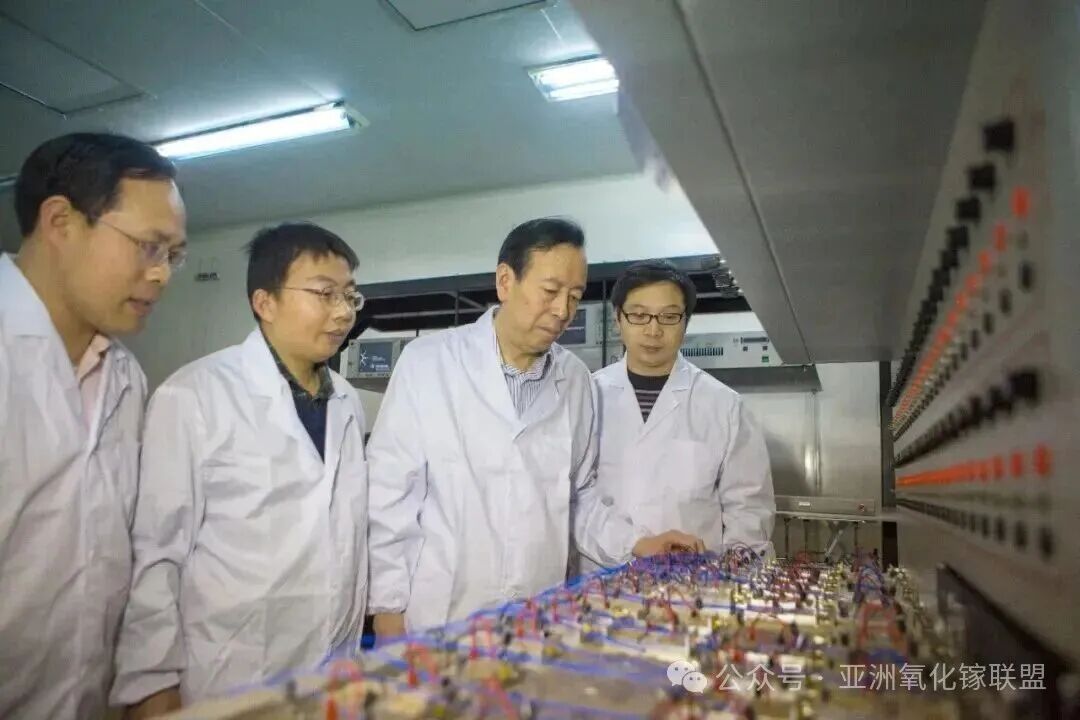
The journey proved far more difficult than expected. GaN, often called a “hero material,” is notorious for its extremely demanding growth conditions and defect-prone nature. The team faced a situation of having no mature equipment, no established processes, and no reference experience. Hao often emphasized that scientific research requires the patience to “sit on the cold bench.” Team members served as both designers and operators. When a critical component of their imported second-hand molecular beam epitaxy (MBE) system failed and foreign experts declared it irreparable, Hao refused to accept defeat. He led his team to study schematics day and night, dismantling and repairing the equipment themselves until it was restored to operation—an emblematic story of self-reliance.
Through this unyielding determination, the team spent a full decade mastering high-quality GaN material growth and overcoming defect challenges, laying the groundwork for subsequent device development. This long and solitary perseverance forged both the team’s resilience and China’s independent innovation capability in third-generation semiconductors.
Answering the Nation’s Call
Lighting the Path to Strength with “Chinese Chips”
After material challenges were resolved, even greater tests followed. In 2005, Hao Yue’s team received an urgent national assignment to develop GaN microwave power devices for a major strategic project. With tight timelines and exacting standards, the task was critical to national defense and engineering progress.
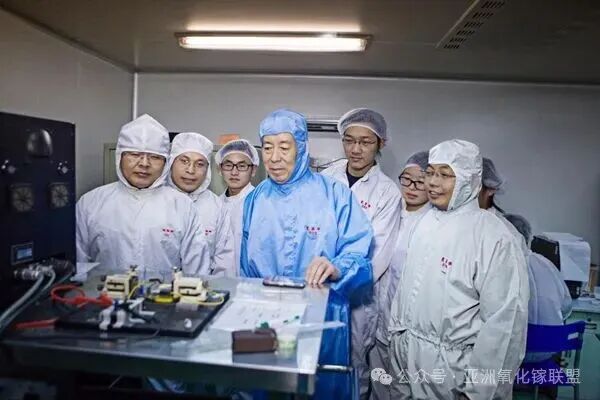
The team worked around the clock, adopting an extreme schedule of continuous experimentation, design, fabrication, and testing. After more than one hundred days of relentless effort, they delivered the first batch of high-performance devices on time, ensuring the smooth advancement of the national project. This success validated a decade of technical accumulation and underscored the responsibility of Chinese scientists to serve national strategy.
Subsequently, their achievements found broader application, particularly in the rapidly developing 5G sector, where GaN power amplifiers are indispensable. When domestic enterprises faced severe external constraints, Hao Yue’s team provided critical technological reserves and solutions, contributing decisively to China’s leadership in global 5G competition. Their “Chinese chips” truly illuminated the road toward national technological strength.
Educating the Next Generation
“My Greatest Achievement Is My Students”
“Professor Hao’s rigor is legendary—he reviews reports down to every punctuation mark,” one student recalled. In research, he is a strict mentor; in life, a caring guide. He often says, “My best work is my students.”
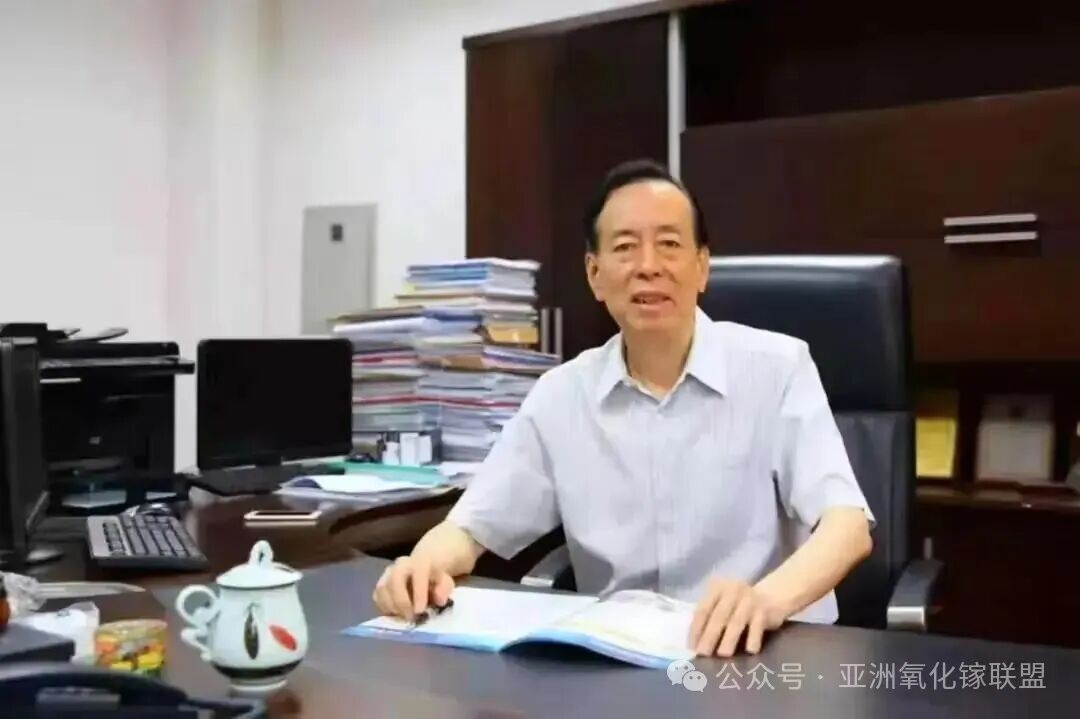
Placing talent cultivation on par with scientific research, he played a key role in establishing China’s first National Demonstration Microelectronics College and National Integrated Circuit Talent Training Base, building a robust talent pipeline for the semiconductor industry. His academic environment emphasizes both rigor and innovation, nurturing problem-solving skills and a strong sense of national responsibility.
Over decades, he has supervised more than 40 doctoral and 100 master’s students, many of whom are now leaders and core technical experts across research institutes, key enterprises, and major national projects. Through them, his spirit of scientific dedication and patriotism continues to be passed on.
Today, despite his distinguished achievements, Academician Hao Yue remains at the forefront of research and education, turning his attention to next-generation materials such as diamond and Gallium Oxide. He continues to lead his team into deeper scientific frontiers, embodying the essence of a Chinese strategic scientist: a steadfast commitment to national needs, relentless pursuit of technological excellence, and selfless dedication to nurturing future generations.
Instruction
Official Account

Cooperation
Top
