


Researchers from the Shanxi Institute of Technology, Nanjing University of Posts and Telecommunications, Inner Mongolia University have published a dissertation titled "Self-powered solar-blind photodetector and single-pixel optical imaging based on organic-inorganic van der Waals heterojunctions" in Acta Physica Sinica.
Background
Solar-blind ultraviolet photodetectors operate in the 200–280 nm solar-blind ultraviolet band. Blocked by the atmosphere, this band enables detectors with anti-interference and high-precision detection capabilities, making them core devices in military, aerospace, environmental monitoring, power equipment partial discharge detection, civil fire warning and other fields. The band gap of semiconductors determines the photoresponse wavelength range. β-Ga₂O₃ (gallium oxide), an ultra-wide band gap semiconductor with a band gap of 4.4–5.2 eV, is a natural solar-blind photodetection material. It also has advantages such as high critical breakdown field strength, excellent chemical and thermal stability, radiation resistance, oxidation resistance and low preparation cost. Single Ga₂O₃ material has limitations in detection function. Constructing a heterojunction can form a built-in electric field through non-equilibrium diffusion of carriers at the interface, realizing self-powered detection without external bias, solving the problems of high energy consumption and dependence on external power supply of traditional devices, and adapting to scenarios such as security, deep space exploration and wearable devices. Traditional array solar-blind imaging devices have high requirements for component consistency and high cost, while single-pixel imaging realizes imaging only through a single pixel combined with scanning and data processing, with no crosstalk, adjustable resolution and lower cost. The team combined β-Ga₂O₃ with P-type conductive polymer PEDOT:PSS (poly(3,4-ethylenedioxythiophene)-poly(styrene sulfonate)) to construct an organic-inorganic heterojunction and explore its self-powered solar-blind detection and single-pixel imaging performance.
Abstract
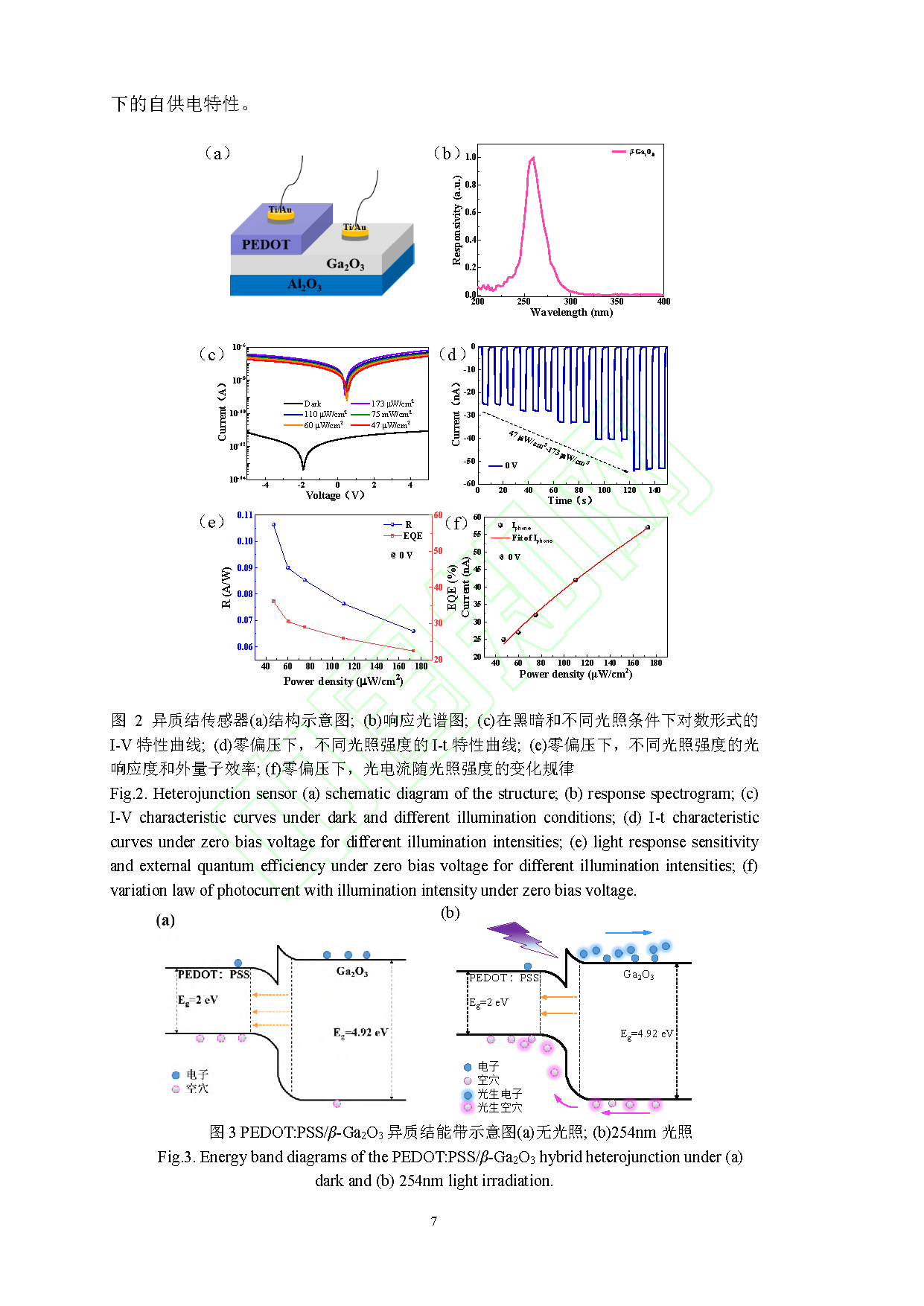
Solar-blind ultraviolet photodetection holds significant potential application value in fields such as missile tracking, ultraviolet communication and biomedical treatment. The development of self-powered photoelectric sensors can address the bottlenecks of traditional devices, including their reliance on external bias voltage and high energy consumption. The team prepared β-Ga₂O₃ thin films via plasma-enhanced chemical vapor deposition (PECVD), and spin-coated PEDOT:PSS on its surface to construct an organic-inorganic heterojunction photodetector, followed by investigating its photoelectric properties and application potential in single-pixel imaging. The results demonstrate that under zero bias voltage, upon irradiation by 254 nm solar-blind ultraviolet light with an intensity of 47 μW/cm², the device achieves a photo-to-dark current ratio of 8.8×10³, a photoresponsivity of 0.106 A/W and an external quantum efficiency of 38%. The photocurrent exhibits a near-linear variation with light intensity, indicating excellent photoresponse performance.
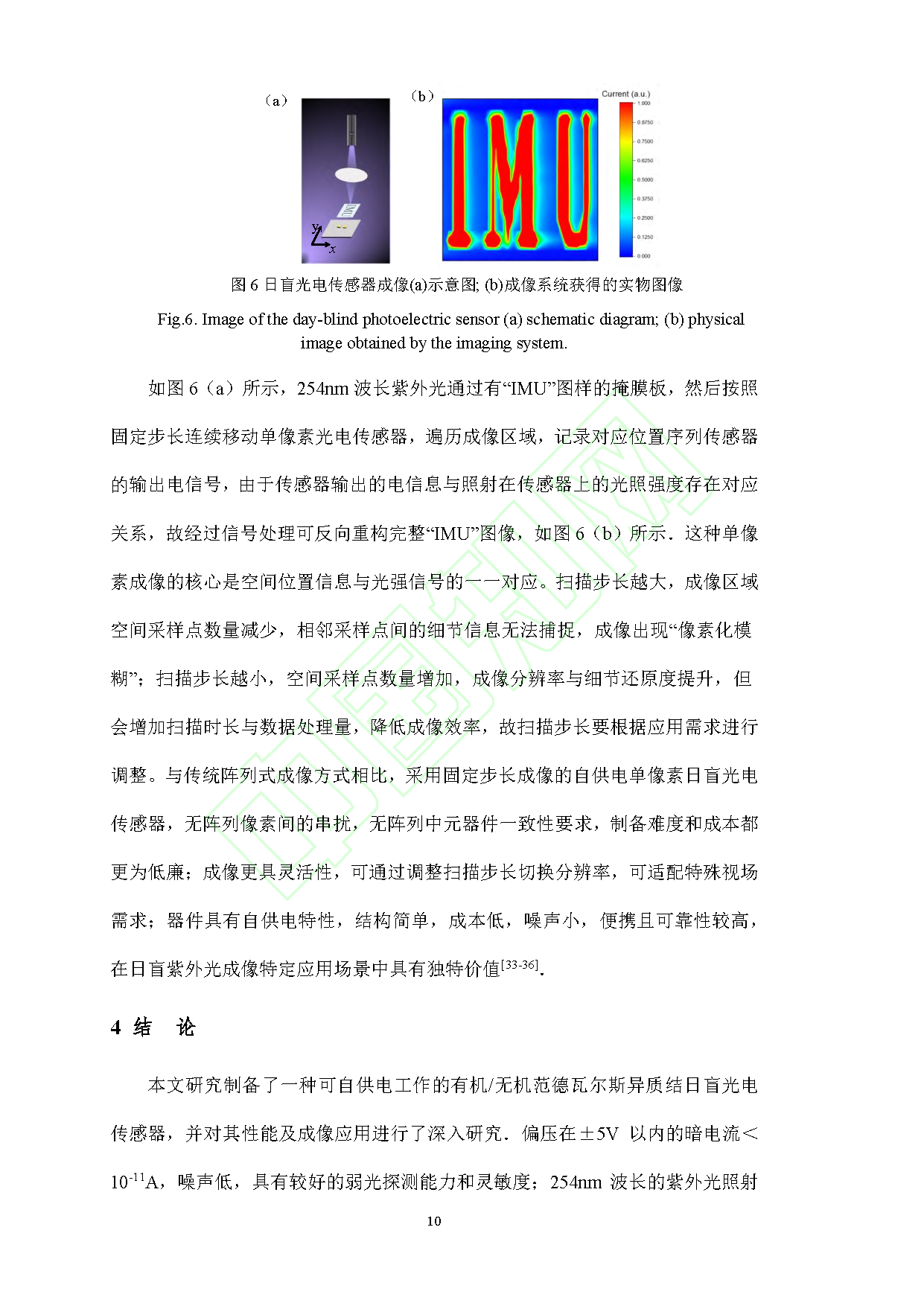
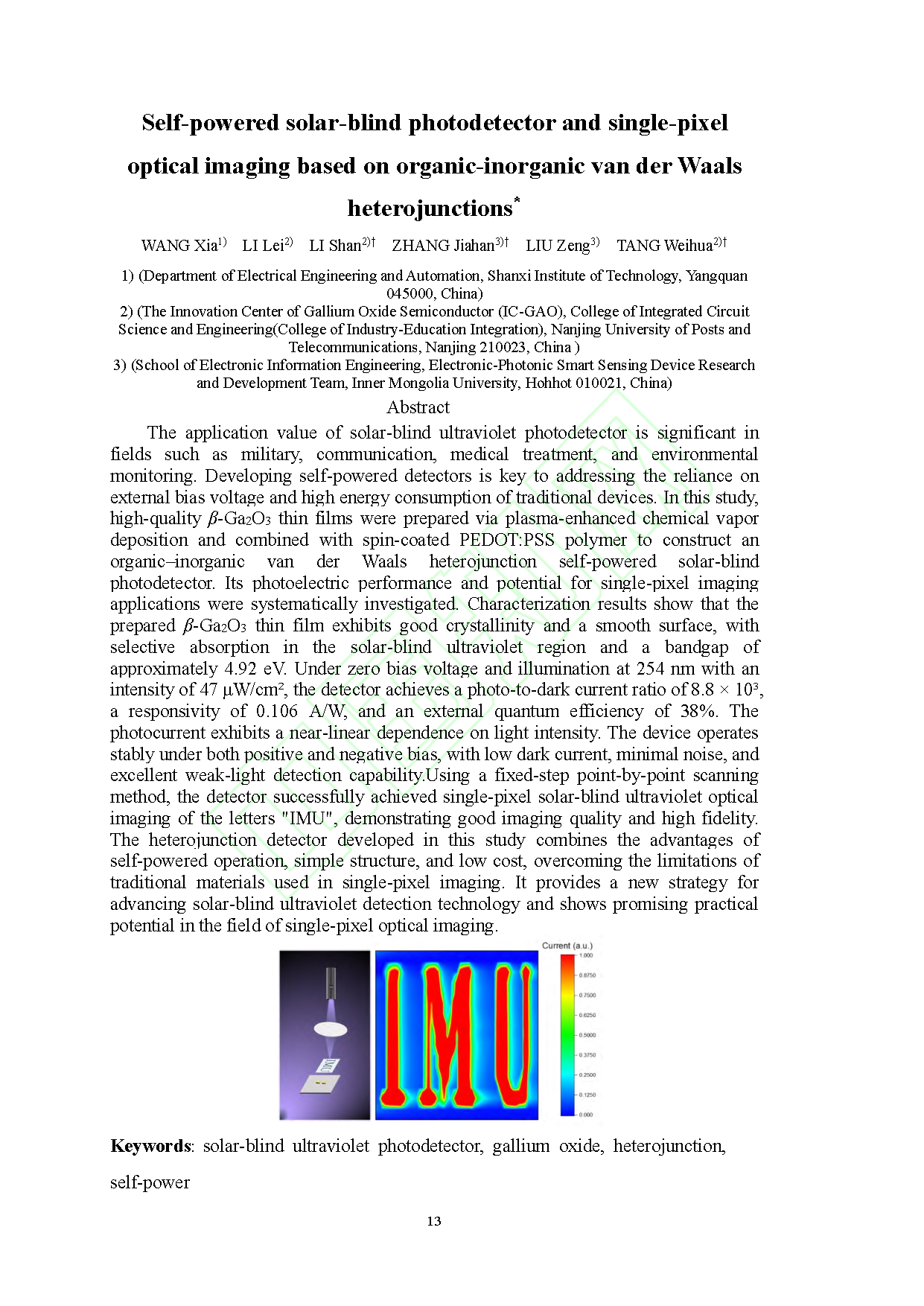
Through fixed-step point-by-point scanning, signal acquisition, data processing and image reconstruction, this detector successfully reproduced the letter image of "IMU", demonstrating the promising application prospect of single-pixel solar-blind optical imaging.
Highlights
Innovative Material System:The team combined PEDOT:PSS with β-Ga₂O₃ for the first time to construct an organic-inorganic van der Waals heterojunction, breaking through the limitations of traditional materials for single-pixel imaging.
Excellent Self-powered Performance:High-efficiency solar-blind ultraviolet detection is realized under zero bias, with a photo-to-dark current ratio of 8.8×10³, a dark current as low as 10⁻¹² A, low noise and strong weak light detection capability.
Outstanding Photoelectric Parameters:Under 254 nm solar-blind illumination, the responsivity is 0.106 A/W, the external quantum efficiency is 38%, and the photocurrent has a good linear relationship with light intensity.
Realization of Single-pixel Imaging:The "IMU" pattern solar-blind ultraviolet imaging is successfully realized through fixed-step point-by-point scanning technology, with clear imaging and high reduction degree.
Advantages in Fabrication and Application:PECVD and spin-coating processes are adopted, with simple preparation and low cost; the device has no array crosstalk, adjustable resolution, and is suitable for special imaging scenarios.
Conclusion
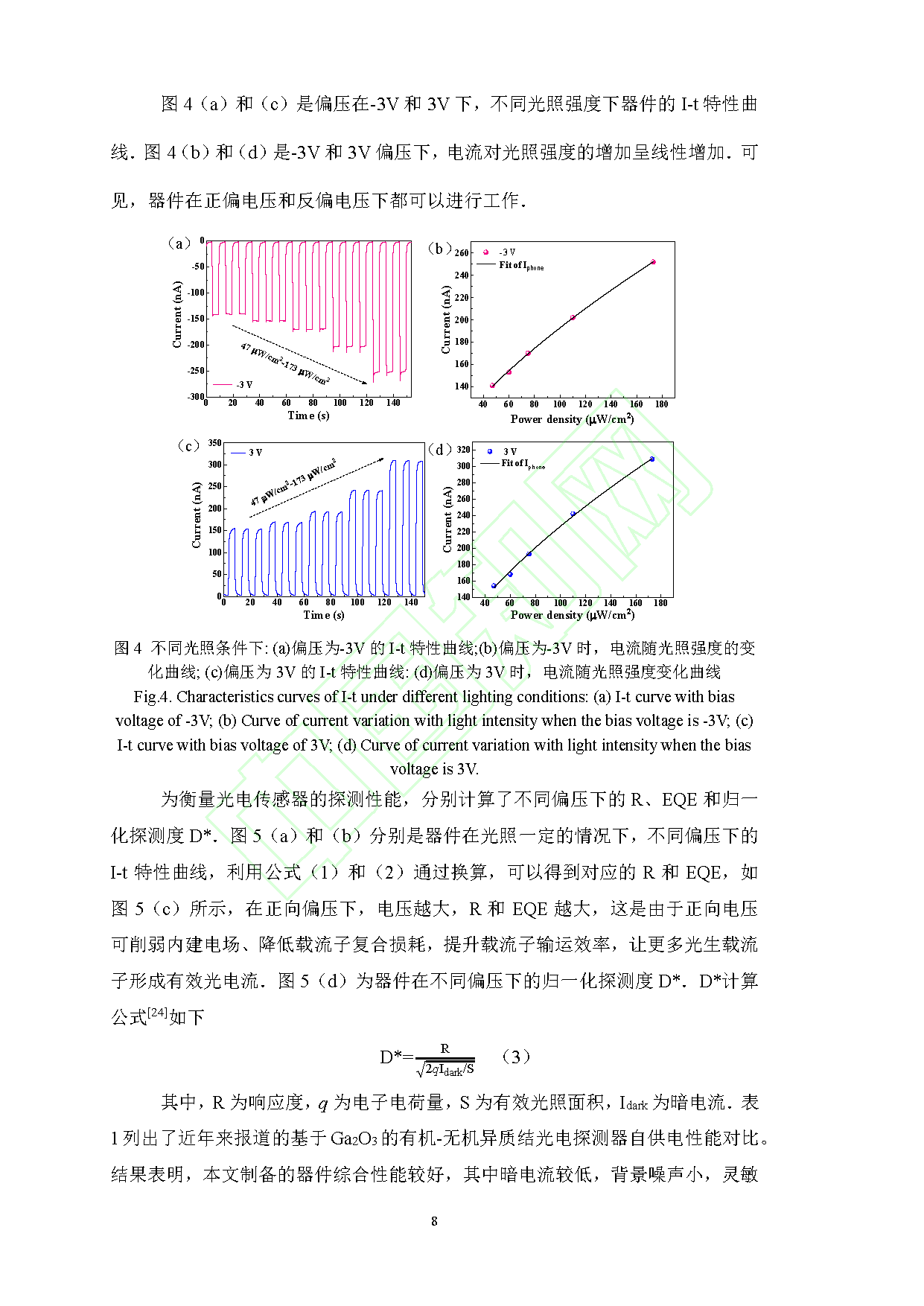
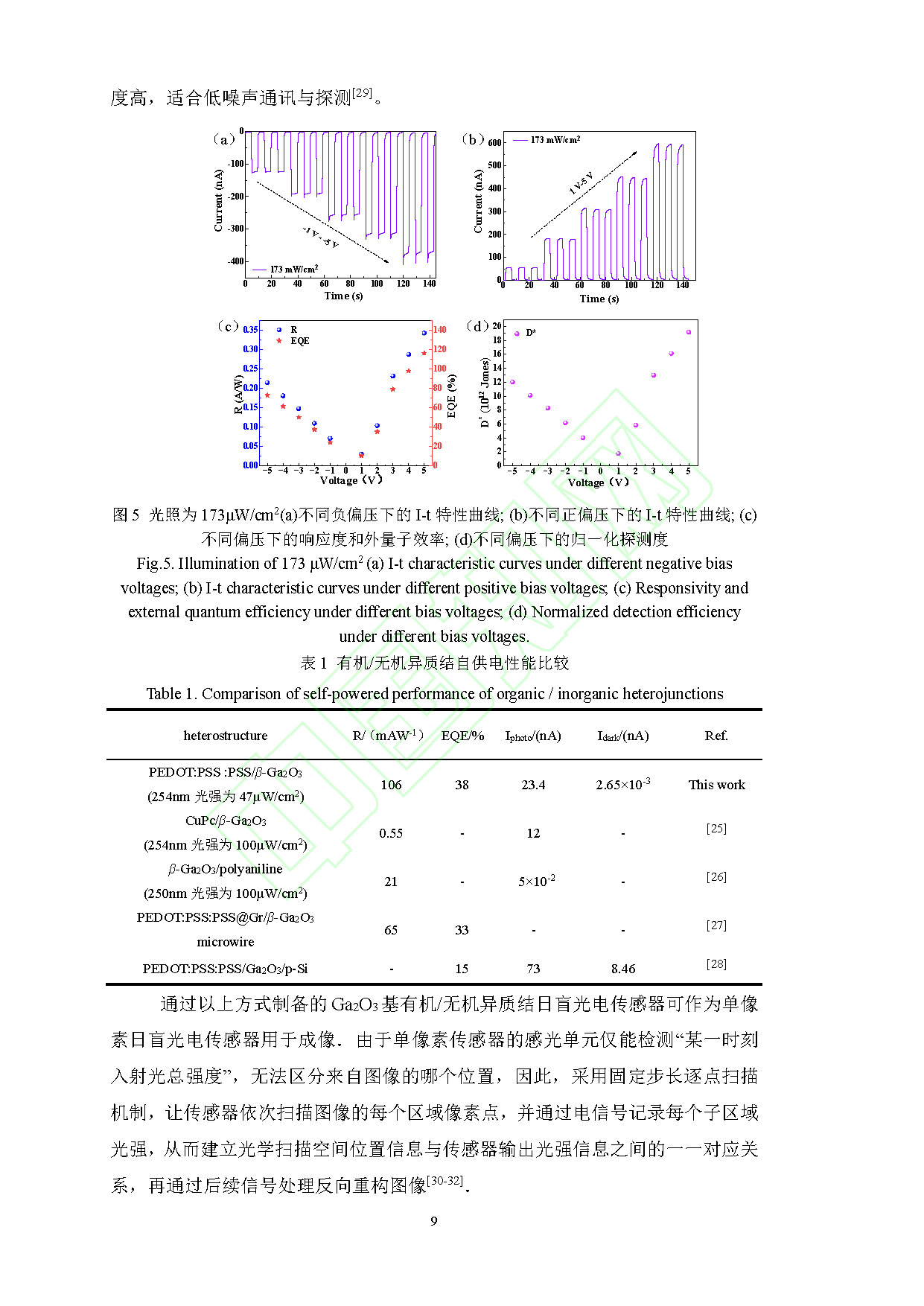
This study developed a self-powered organic-inorganic van der Waals heterojunction solar-blind photodetector and systematically investigated its performance and imaging applications. The dark current is below 10⁻¹¹ A within ±5 V bias voltage, leading to low noise and excellent weak-light detection capability and sensitivity. Under 254 nm UV illumination, the photocurrent shows a good linear relationship with light intensity. At zero-bias self-powered condition, the device exhibits excellent photo-to-dark current ratio, responsivity and external quantum efficiency, and can work stably under both forward and reverse biases. Furthermore, the detector realizes single-pixel solar-blind UV imaging of the "IMU" pattern based on the single-pixel imaging principle with good imaging quality. Combining the self-powered energy-saving advantage and the simple structure of single-pixel imaging, the device has the merits of low cost, simple structure, compact size, energy conservation, environmental friendliness and low noise, showing unique value in scenarios hard to be covered by traditional sensors. It provides a new strategy for the development of solar-blind UV detection and single-pixel imaging technologies.
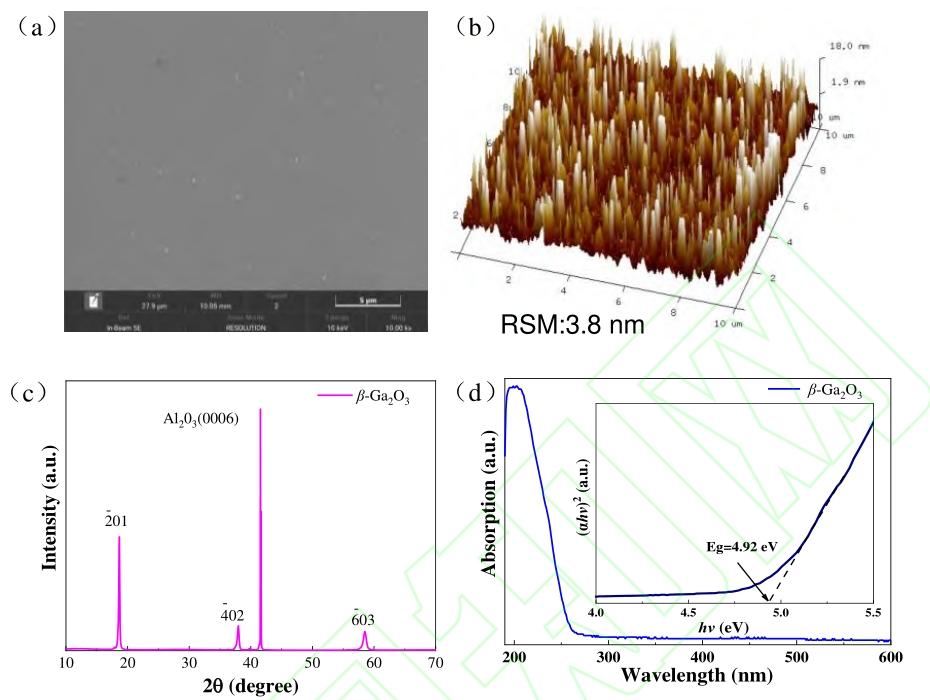
Fig.1. Physical properties of β-Ga₂O₃ thin film (a) the SEM image; (b) AFM image; (c) XRD pattern; (d) UV-Visible absorption spectrum, inset is the Tauc curve diagram.
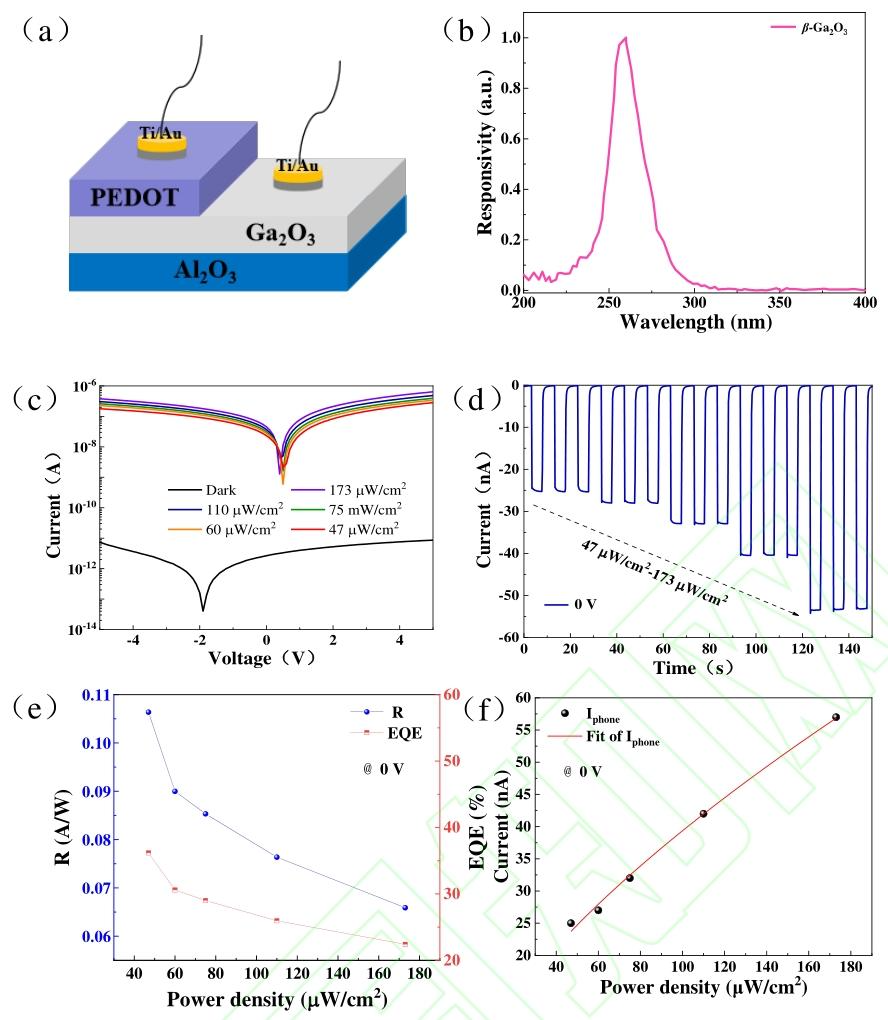
Fig.2. Heterojunction sensor (a) schematic diagram of the structure; (b) response spectrogram; (c) I-V characteristic curves under dark and different illumination conditions; (d) I-t characteristic curves under zero bias voltage for different illumination intensities; (e) light response sensitivity and external quantum efficiency under zero bias voltage for different illumination intensities; (f) variation law of photocurrent with illumination intensity under zero bias voltage.
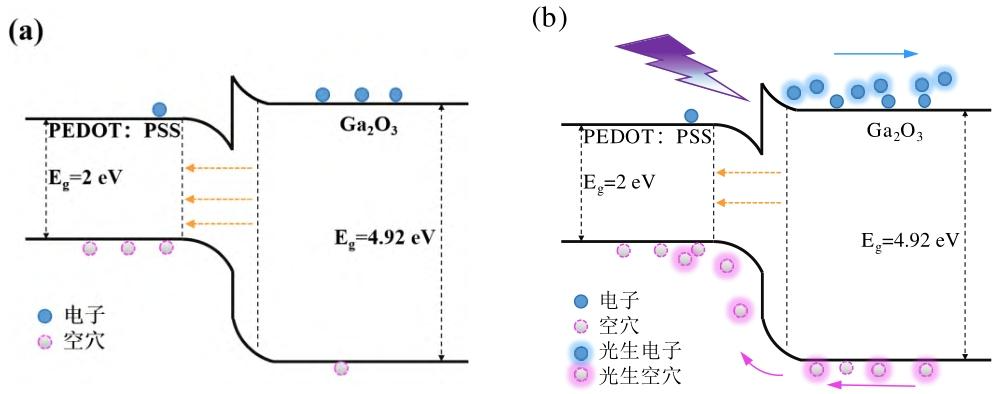
Fig.3. Energy band diagrams of the PEDOT:PSS/β-Ga₂O₃ hybrid heterojunction under (a) dark and (b) 254 nm light irradiation.
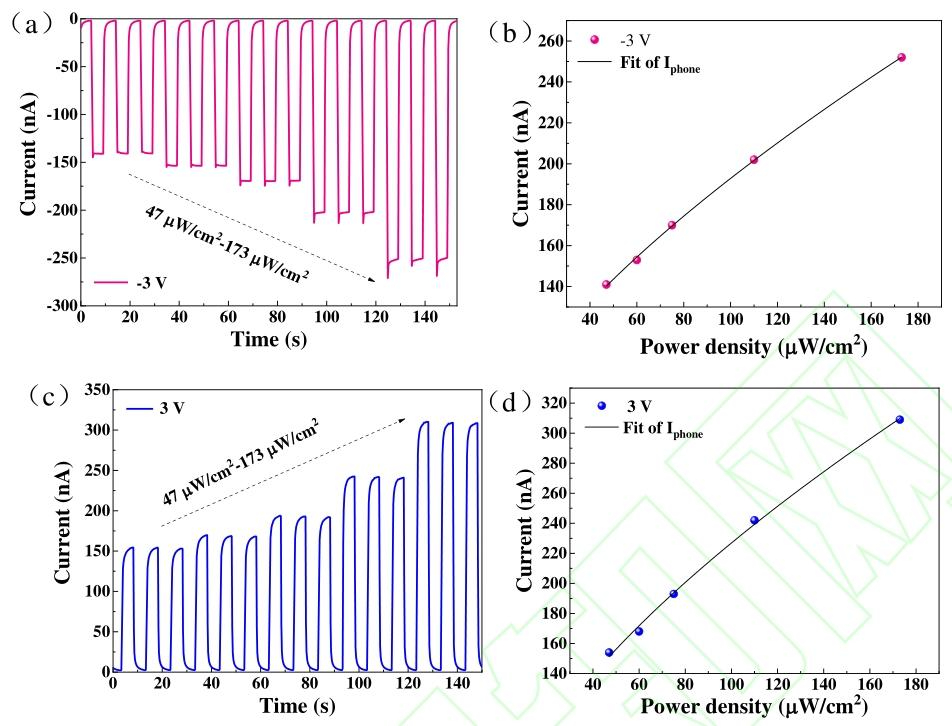
Fig.4. Characteristics curves of I-t under different lighting conditions: (a) I-t curve with bias voltage of -3 V; (b) Curve of current variation with light intensity when the bias voltage is -3 V; (c) I-t curve with bias voltage of 3 V; (d) Curve of current variation with light intensity when the bias voltage is 3 V.
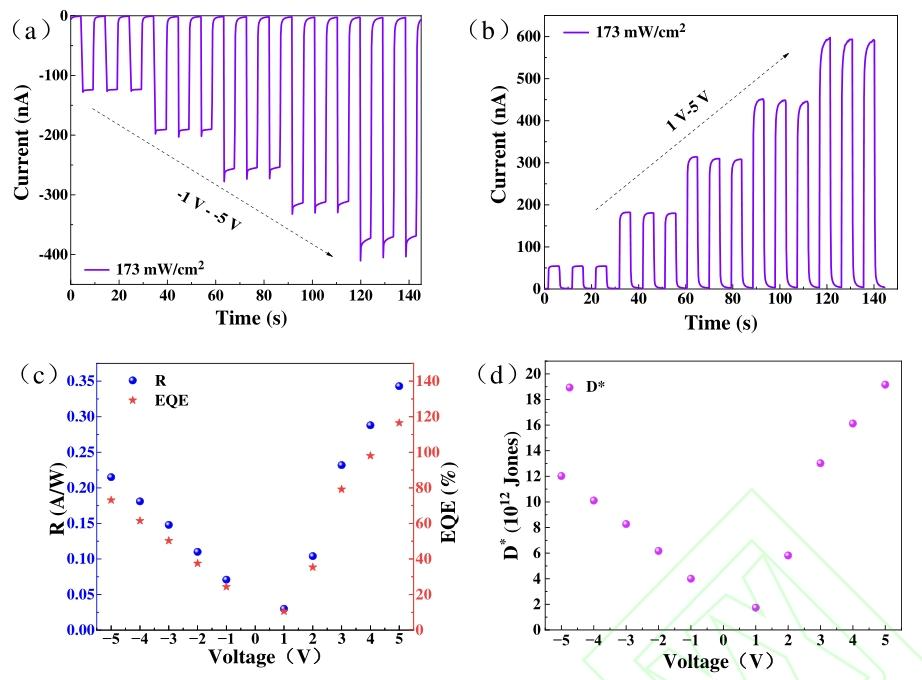
Fig.5. Illumination of 173 μW/cm² (a) I-t characteristic curves under different negative bias voltages; (b) I-t characteristic curves under different positive bias voltages; (c) Responsivity and external quantum efficiency under different bias voltages; (d) Normalized detection efficiency under different bias voltages.
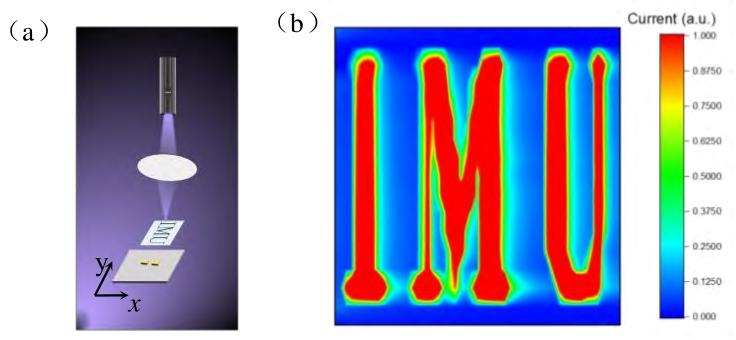
Fig.6. Image of the day-blind photoelectric sensor (a) schematic diagram; (b) physical image obtained by the imaging system.
DOI:
10.7498/aps.75.20251632

Instruction
Official Account

Cooperation
Top