


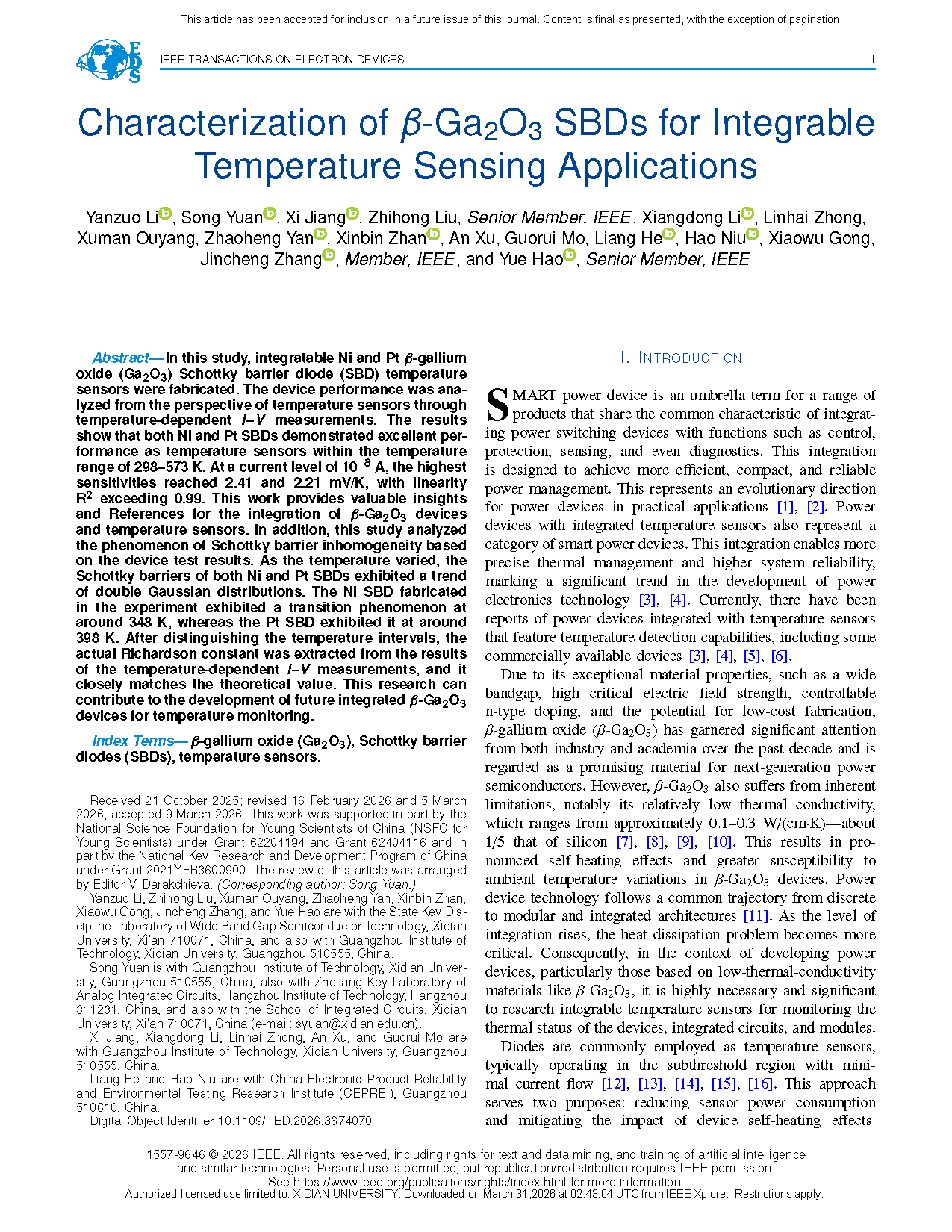
Researchers from Xidian University of Science and Technology have published a dissertation titled " Characterization of β-Ga2O3 SBDs for Integrable Temperature Sensing Applications " in IEEE Transactions on Electron Devices A.
Background
As an ultra-wide bandgap semiconductor, β‑Ga₂O₃ has the advantages of large bandgap, high critical electric field, controllable n-type doping and low-cost fabrication, making it an ideal material for next-generation power semiconductors. However, this material has extremely low thermal conductivity (0.1–0.3 W/(cm・K), about 1/5 that of silicon), resulting in obvious self-heating effects and high sensitivity to ambient temperature changes. With the development of power devices toward integration and modularization, the heat dissipation problem becomes more critical, so it is extremely necessary to develop integrable temperature sensors for monitoring the thermal status of β‑Ga₂O₃ devices, circuits and modules. Diodes are often used as temperature sensors, and operating in the subthreshold region can reduce power consumption and self-heating effects. β‑Ga₂O₃ SBD has the characteristics of low threshold voltage, simple structure, process compatibility and low power consumption, which is suitable for temperature sensors, but there is almost no research on β‑Ga₂O₃ SBD specifically for temperature sensing applications.
Abstract
In this study, integratable Ni and Pt β‑gallium oxide (Ga₂O₃) Schottky barrier diode (SBD) temperature sensors were fabricated. The device performance was analyzed from the perspective of temperature sensors through temperature-dependent I–V measurements. The results show that both Ni and Pt SBDs demonstrated excellent performance as temperature sensors within the temperature range of 298–573 K. At a current level of 10⁻⁸ A, the highest sensitivities reached 2.41 and 2.21 mV/K, with linearity R² exceeding 0.99. This work provides valuable insights and references for the integration of β‑Ga₂O₃ devices and temperature sensors. In addition, this study analyzed the phenomenon of Schottky barrier inhomogeneity based on the device test results. As the temperature varied, the Schottky barriers of both Ni and Pt SBDs exhibited a trend of double Gaussian distributions. The Ni SBD fabricated in the experiment exhibited a transition phenomenon at around 348 K, whereas the Pt SBD exhibited it at around 398 K. After distinguishing the temperature intervals, the actual Richardson constant was extracted from the results of the temperature-dependent I–V measurements, and it closely matches the theoretical value. This research can contribute to the development of future integrated β‑Ga₂O₃ devices for temperature monitoring.
Highlights
First systematic verification of β‑Ga₂O₃ SBD for integrable high-temperature sensing: achieving high-sensitivity and high-linearity temperature measurement in the wide temperature range of 298–573 K without special structure or process.
Revealing the law of barrier inhomogeneity: firstly clarifying the double Gaussian barrier distribution of Ni/Pt-β‑Ga₂O₃ contacts and the temperature transition interval, correcting the error of the traditional thermionic emission model.
Accurate extraction of effective Richardson constant: the value after piecewise fitting is highly consistent with the theoretical value, providing a reliable method for parameter calibration of β‑Ga₂O₃ devices.
Suitable for power device integration: simple structure, process compatibility, monolithic integration with β‑Ga₂O₃ power switches, solving the thermal monitoring problem caused by its low thermal conductivity.
Conclusion
In summary, Ni and Pt vertical β‑Ga₂O₃ SBDs were fabricated and characterized via temperature-dependent I–V measurements. Their Schottky barrier parameters were analyzed, revealing a double Gaussian distribution of barrier inhomogeneity, which allowed for accurate correction of the Richardson constant through temperature range partitioning. From the perspective of temperature sensing, both devices exhibited high sensitivity and linearity (2.41 mV/K with R²=0.99955 for Ni, and 2.21 mV/K with R²=0.99946 for Pt) within 298–573 K at 10⁻⁸ A, without requiring special structural design. Ni SBD showed slightly higher sensitivity and better barrier uniformity, while Pt SBD exhibited smaller barrier height variation at high temperatures, suggesting better high-temperature stability. These results demonstrate the potential of β‑Ga₂O₃ SBDs as temperature sensors, particularly for future integration with β‑Ga₂O₃ power switches to enable high-resolution temperature mapping. It should also be noted that β‑Ga₂O₃ is a material with low thermal conductivity, which poses certain challenges for devices. In practical operation, if the temperature sensor is positioned far from the heat generation points within the β‑Ga₂O₃ power device, the monitored device temperature may be inaccurate. Special attention should be paid to this during layout design. Further research is needed to advance the application of β‑Ga₂O₃ temperature sensors.
Project Support
This project was supported by the National Science Foundation for Young Scientists of China under Grants 62204194 and 62404116, and by the National Key Research and Development Program of China under Grant 2021YFB3600900.
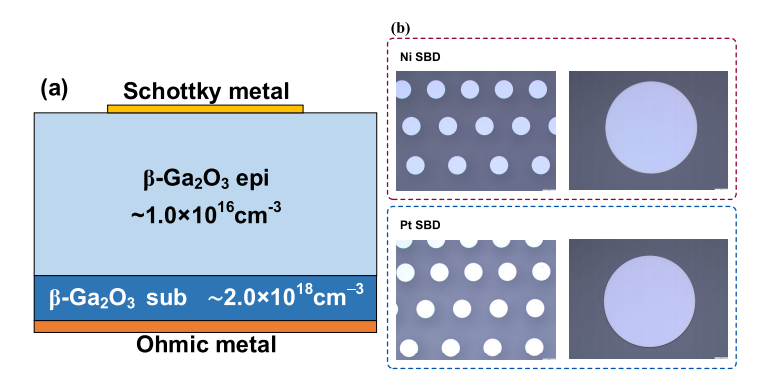
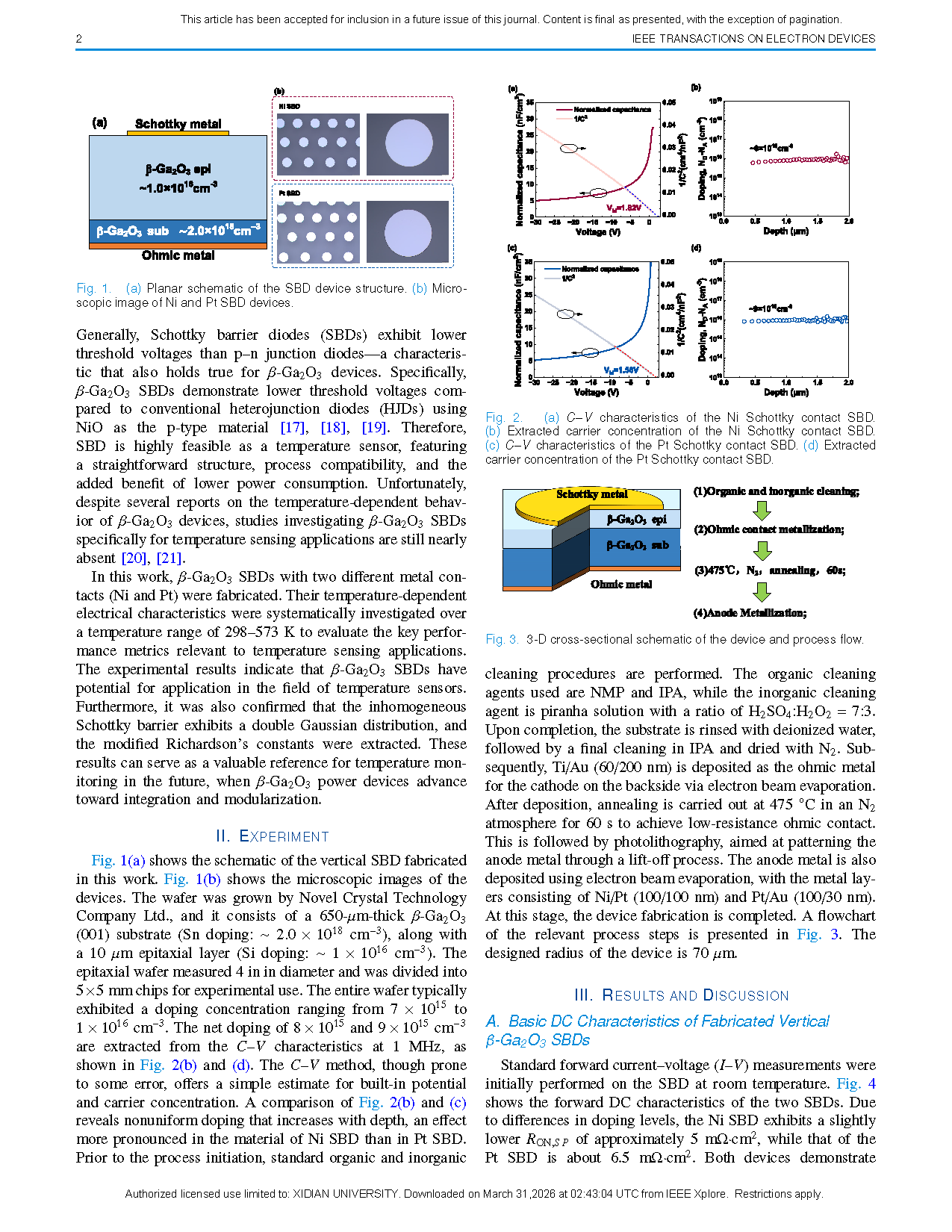
Fig. 1. (a) Planar schematic of the SBD device structure. (b) Microscopic image of Ni and Pt SBD devices.
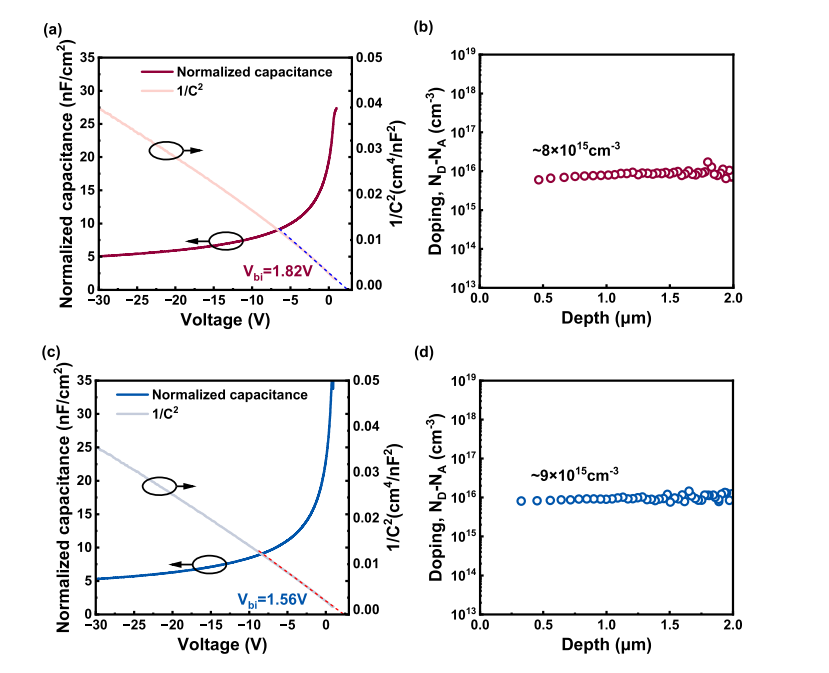
Fig. 2. (a) C–V characteristics of the Ni Schottky contact SBD.(b) Extracted carrier concentration of the Ni Schottky contact SBD.(c) C–V characteristics of the Pt Schottky contact SBD. (d) Extractedcarrier concentration of the Pt Schottky contact SBD.
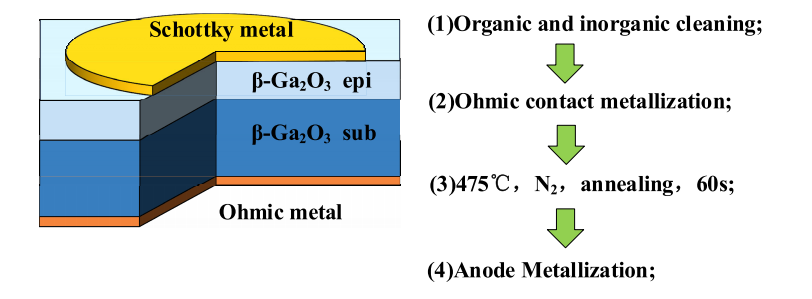
Fig. 3. 3-D cross-sectional schematic of the device and process flow.
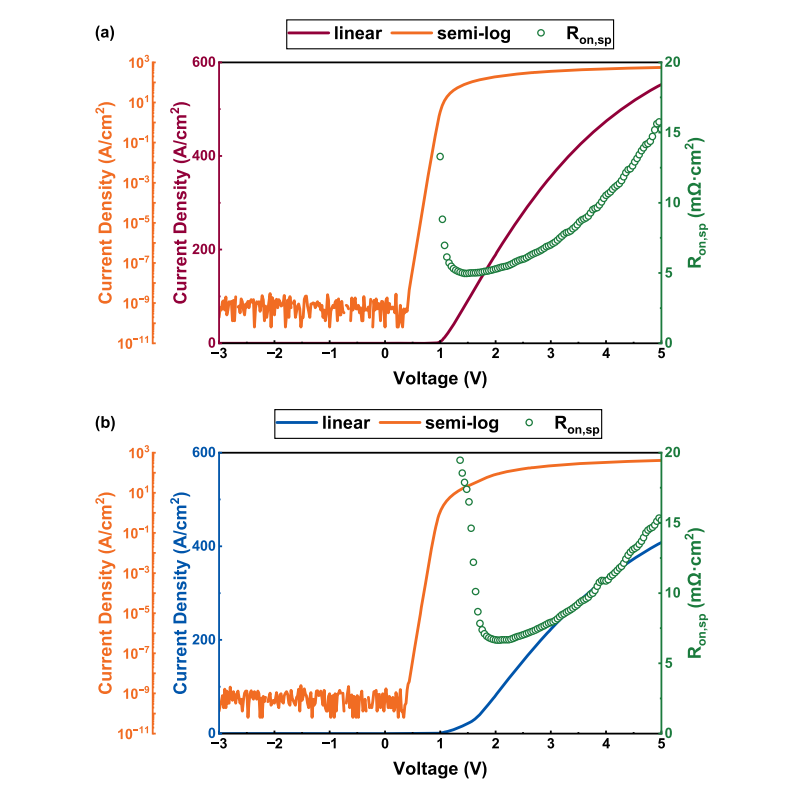
Fig. 4. Forward I–V characteristics and ON-resistance of the (a) Ni and(b) Pt SBD in the linear scale and semi-log scale.
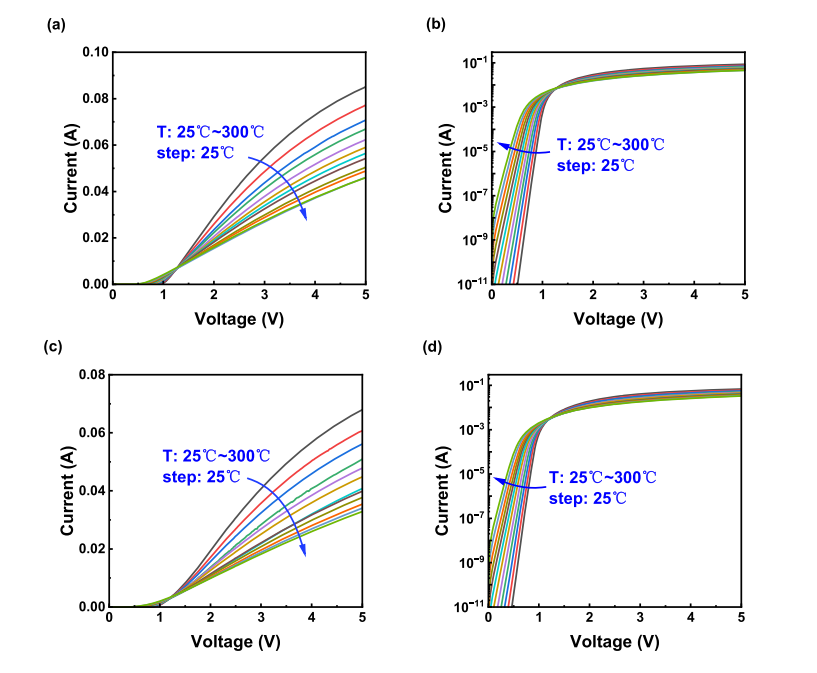
Fig. 5. Linear and semi-logarithmic I–V characteristics of (a)–(b) Ni and (c)–(d) Pt SBDs at various temperatures.
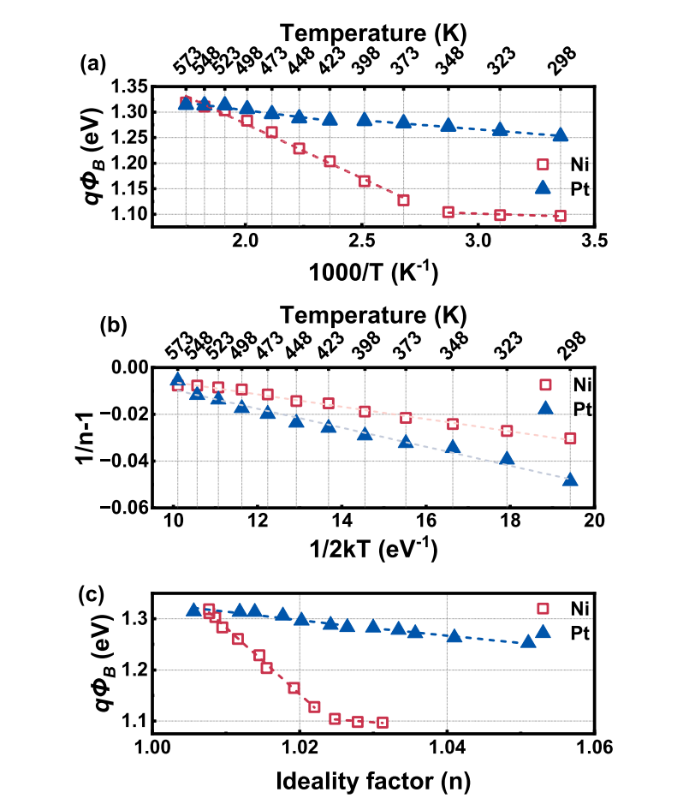
Fig. 6. Temperature dependency of (a) ΦB and (b) n. (c) Relationship between ΦB and n for three types of devices, where the dotted line is the fit line.
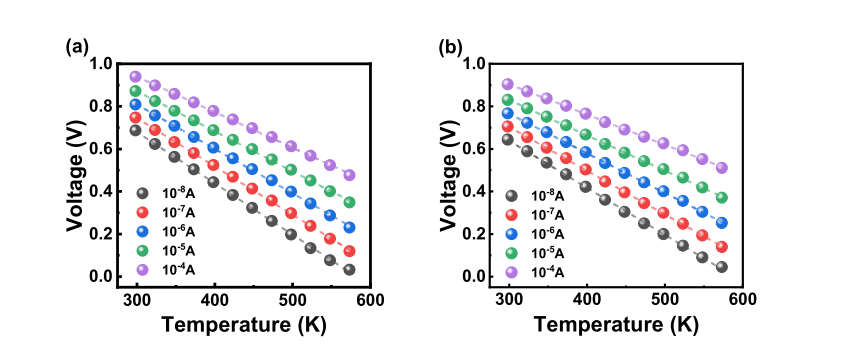
Fig. 7. Forward voltage at given currents versus different temperatures for (a) Ni and (b) Pt/β-Ga2O3 SBD temperature sensors.
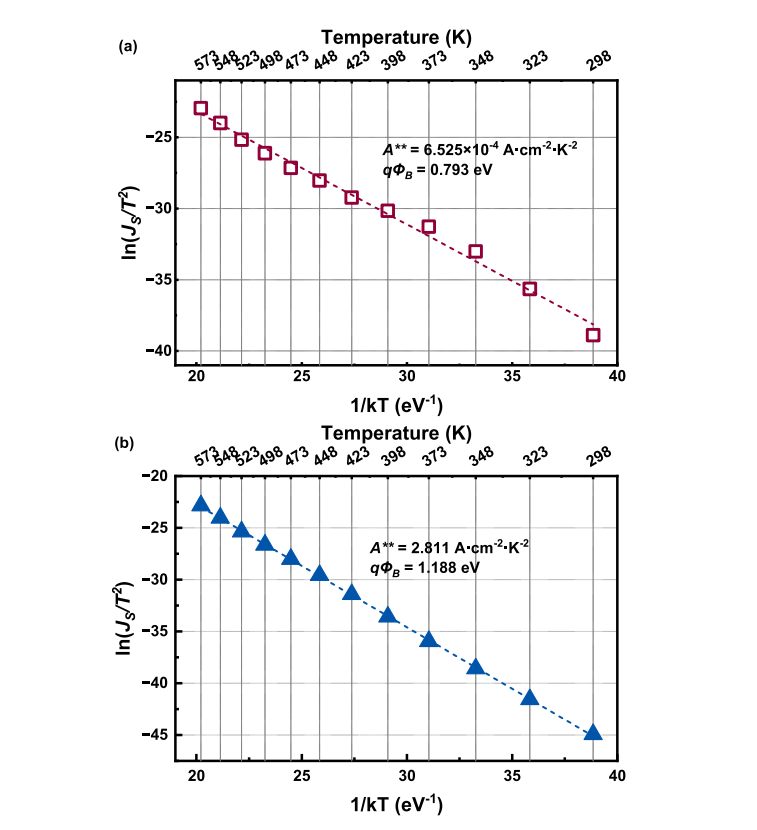
Fig. 8. Richardson constants A∗ of (a) Ni and (b) Pt SBDs extractedusing (8), respectively
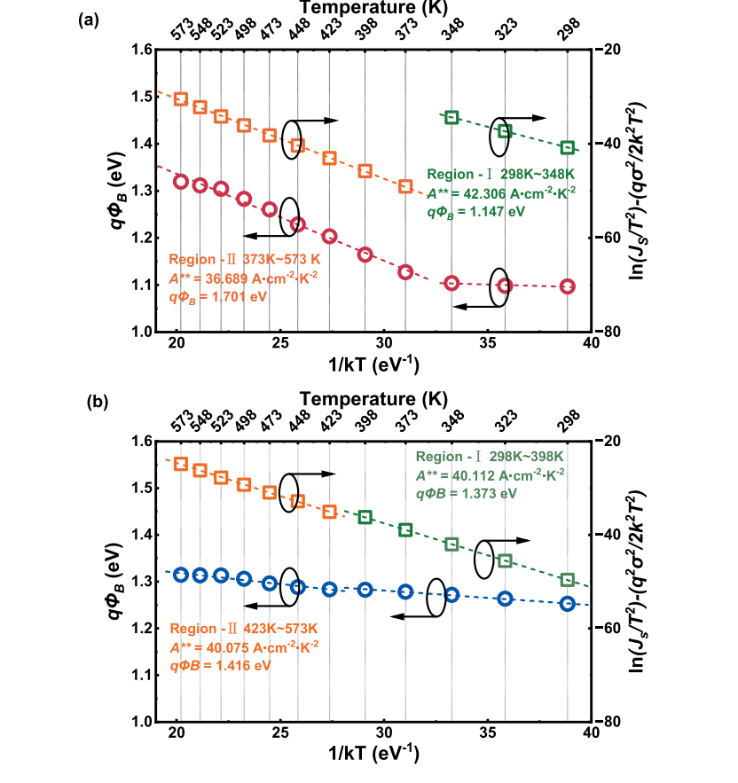
Fig. 9. (a) Ni SBD and (b) Pt SBD Extracted SBH using multitemperature I–V method considering double Gaussian distribution of SBHs. The measured and fitting results are represented by a symbol and a line,respectively
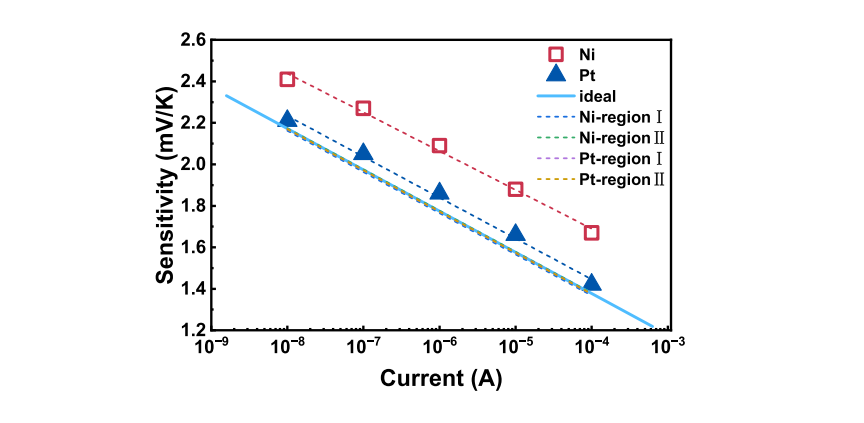
Fig. 10. Comparison diagram of the calibrated Richardson constant A∗∗ with the ideal sensitivity and actual test results
DOI:
10.1109/TED.2026.3674070
Instruction
Official Account

Cooperation
Top