

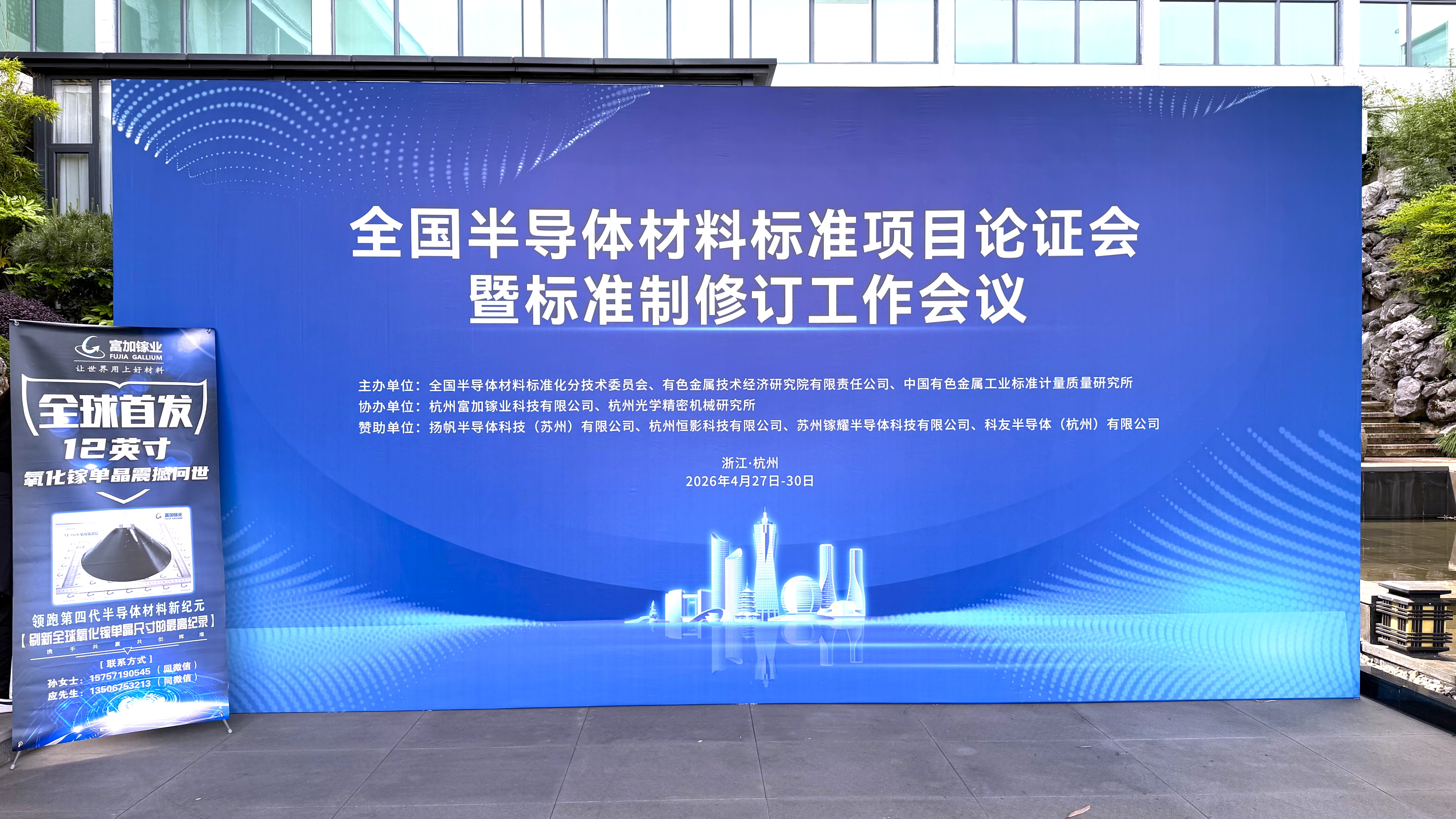
From April 27 to 30, the National Semiconductor Material Standards Project Demonstration and Revision Meeting was successfully held in Fuyang, Hangzhou. This meeting was co-hosted by the Subcommittee on Semiconductor Materials of the National Technical Committee on Semiconductor Equipment and Materials of Standardization Administration of China, the China Nonferrous Metals Techno-Economic Research Institute Co., Ltd., and the China Nonferrous Metals Industry Institute of Standards, Metrology and Quality. The event was co-organized by the Hangzhou Institute of Optics and Fine Mechanics (HIOM) and its incubated enterprise, Hangzhou Fujia Gallium Technology Co., Ltd.
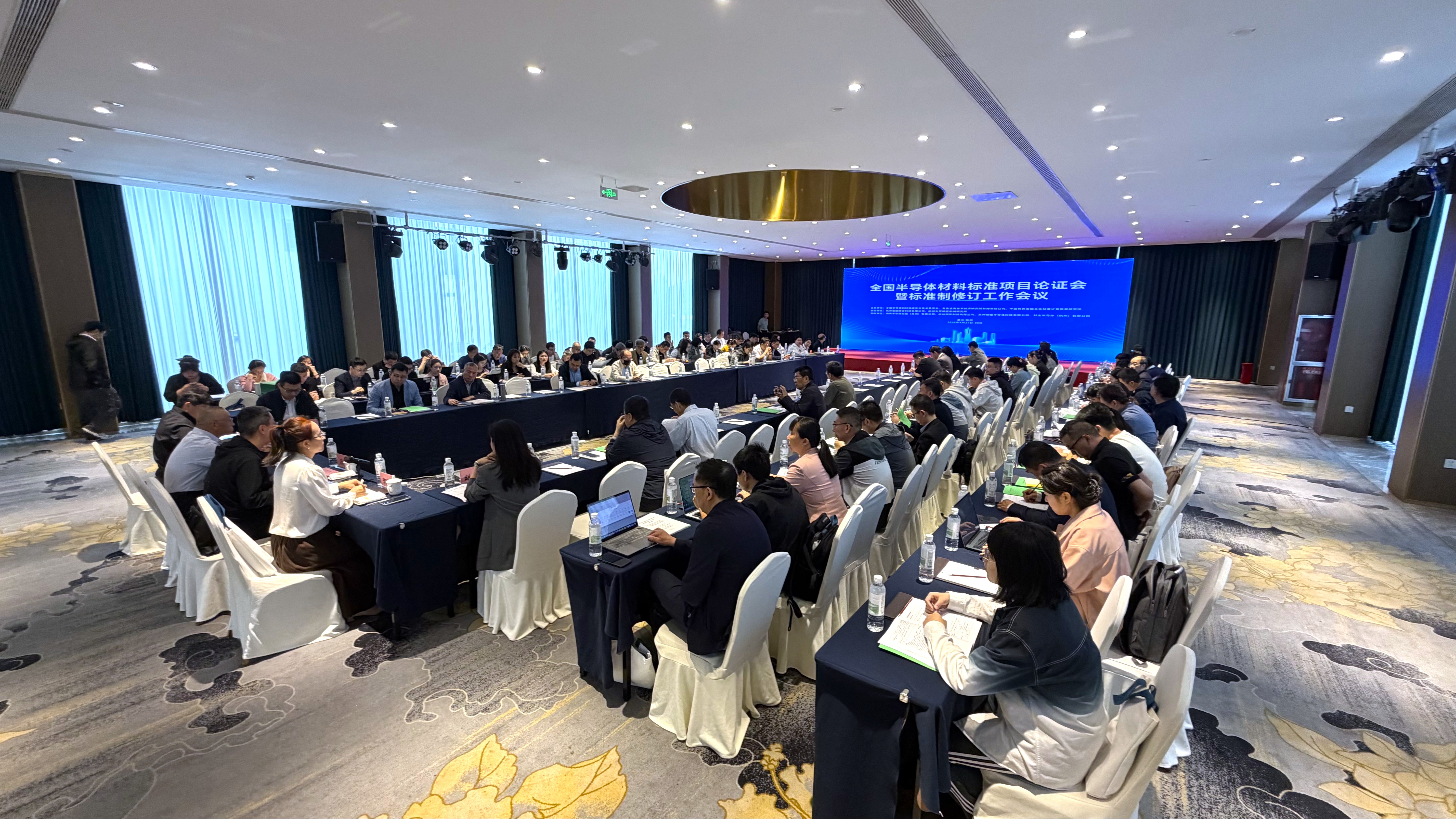
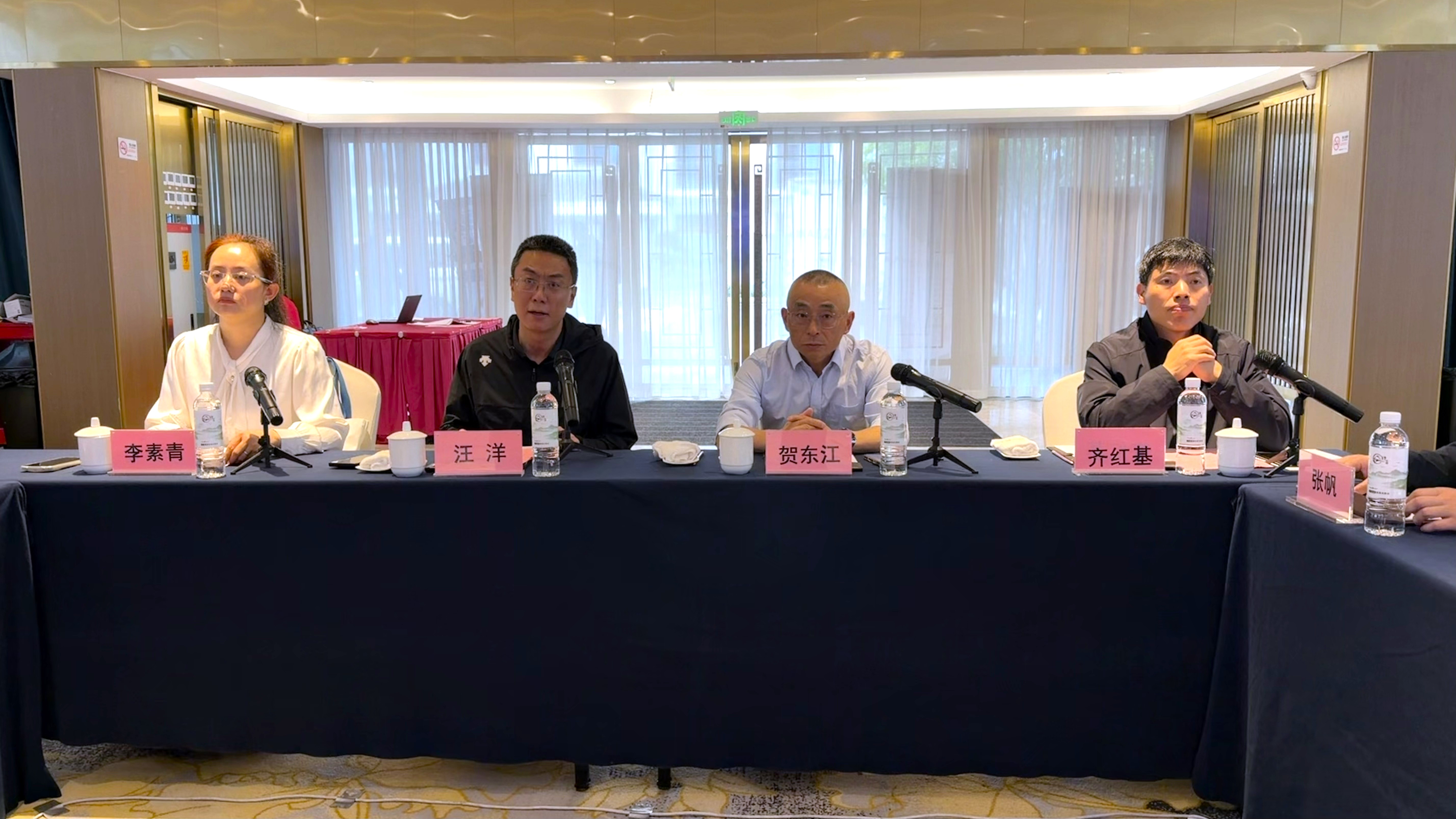
The meeting was attended by key figures including He Dongjiang, Chairman of the Subcommittee on Semiconductor Materials; Wang Yang, Deputy Secretary of the Party Working Committee of Hangzhou Fuchun Bay New City Management Committee; Qi Hongji, Chairman of Hangzhou Fujia Gallium Technology Co., Ltd.; and Li Suqing, Secretary-General of the Subcommittee on Semiconductor Materials. They were joined by a gathering of experts, scholars, corporate representatives, and research institutions from the national semiconductor material field to conduct in-depth discussions on the construction of the semiconductor material standard system.
Of particular note, among the 39 standard application projects involved in this session, 5 projects were related to Gallium Oxide. Additionally, two other projects have already entered the pre-examination and discussion phases. These standards cover multiple critical links, including single crystals, epitaxy, defect detection, film thickness measurement, and impurity analysis. This indicates a significant acceleration in the construction of China's Gallium Oxide standard system—for an industry still in its early stages of commercialization, the advancement of a standard system typically signals a transition from laboratory R&D toward engineering and large-scale production.
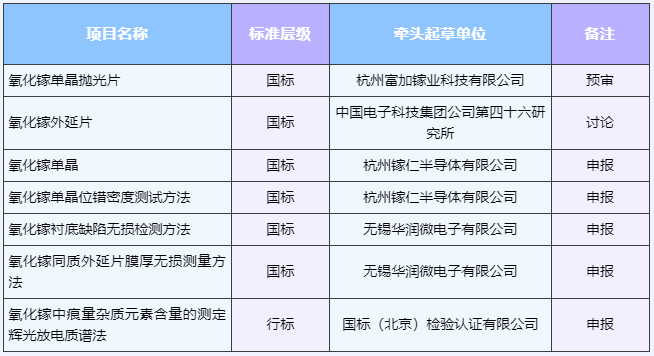
From the perspective of project focus, the current round of Gallium Oxide standard development is no longer limited to material definition itself, but is gradually extending toward key links across the industrial chain. Whether involving single-crystal and epitaxial material standards, or dislocation density characterization, defect inspection, film thickness measurement, and trace impurity analysis, these efforts essentially correspond to the quality evaluation systems and process specifications required for the Gallium Oxide industry to advance toward industrialization and large-scale production.
For the Gallium Oxide industry, which is still in the early stage of commercialization, the advancement of national standards carries significant importance. Standards are not only related to the unification of material parameters, testing methodologies, and quality evaluation systems, but also directly influence industrial-chain collaboration, device reliability verification, and downstream application integration efficiency. As Gallium Oxide applications continue to expand in power devices, deep-ultraviolet detection, and high-temperature electronics, the gradual improvement of national standards also indicates that the industry is moving beyond laboratory-scale research toward practical industrialization.
During this conference, the concentrated emergence of projects related to “non-destructive testing,” “dislocation density measurement,” and “film thickness characterization” also reflects a shift in industry priorities. The development focus of the Gallium Oxide industry is gradually transitioning from “whether materials and devices can be fabricated” to “how to establish a mature, stable, and reproducible industrial system.”
Meanwhile, the alliance continues to pay close attention to and participate in the advancement of Gallium Oxide standardization efforts. Through industrial exchange, technical collaboration, resource integration, and standard system development, the alliance promotes coordinated development across the upstream and downstream sectors of the industry. As an increasing number of enterprises, research institutions, and industrial stakeholders enter the Gallium Oxide field, the importance of standardization will become even more prominent and is expected to serve as a critical foundation supporting the industrialization of Gallium Oxide.
Instruction
Official Account

Cooperation
Top