


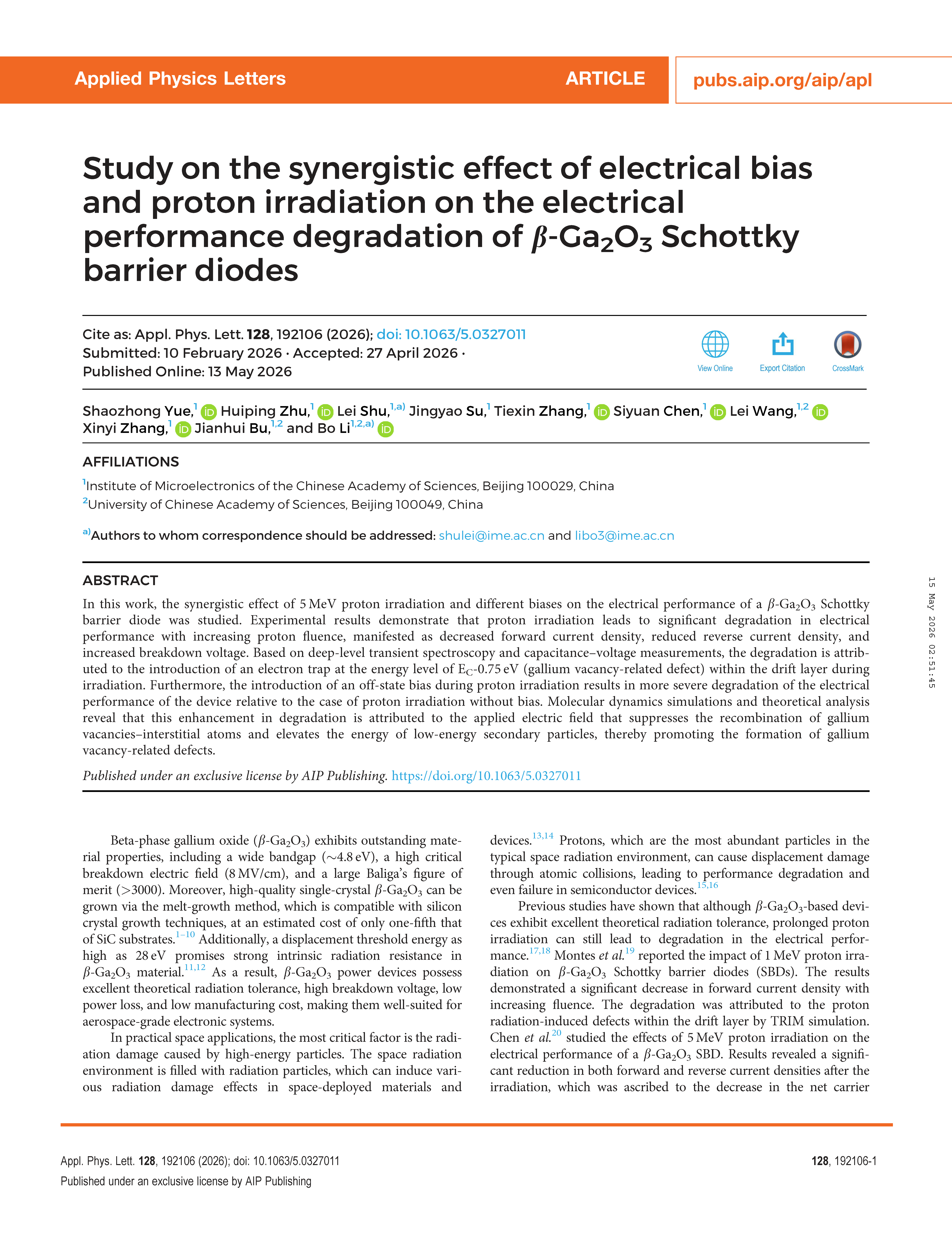
Researchers from the Institute of Microelectronics of the Chinese Academy of Sciences have published a dissertation titled "Study on the synergistic effect of electrical bias and proton irradiation on the electrical performance degradation of β‑Ga₂O₃ Schottky barrier diodes" in Applied Physics Letters.
Background
β‑Ga₂O₃, with its ultra‑wide bandgap, high breakdown electric field and low cost, has become a core candidate for aerospace power electronics. High‑energy protons in space easily induce lattice displacement damage, limiting long‑term device reliability. Most traditional irradiation studies focus on zero‑bias conditions, while devices operate under on/off‑state bias in practice. The degradation mechanism under bias‑irradiation coupling remains unclear, calling for systematic research to support radiation hardening design.
Abstract
In this work, the synergistic effect of 5 MeV proton irradiation and different biases on the electrical performance of a β‑Ga₂O₃ Schottky barrier diode was studied. Experimental results demonstrate that proton irradiation leads to significant degradation in electrical performance with increasing proton fluence, manifested as decreased forward current density, reduced reverse current density, and increased breakdown voltage. Based on deep‑level transient spectroscopy and capacitance–voltage measurements, the degradation is attributed to the introduction of an electron trap at the energy level of EC‑0.75 eV (gallium vacancy‑related defect) within the drift layer during irradiation. Furthermore, the introduction of an off‑state bias during proton irradiation results in more severe degradation of the electrical performance of the device relative to the case of proton irradiation without bias. Molecular dynamics simulations and theoretical analysis reveal that this enhancement in degradation is attributed to the applied electric field that suppresses the recombination of gallium vacancies–interstitial atoms and elevates the energy of low‑energy secondary particles, thereby promoting the formation of gallium vacancy‑related defects.
Highlights
The first systematic investigation of the synergistic degradation effects of 5 MeV proton irradiation combined with different biases (off‑state -200 V / on‑state +4 V) on the electrical performance of β‑Ga₂O₃ SBDs, filling the research gap in this field.
Clarified that the EC‑0.75 eV gallium vacancy‑related electron trap induced by irradiation is the core cause of device degradation, establishing a direct correlation between defect energy levels and degradation behavior.
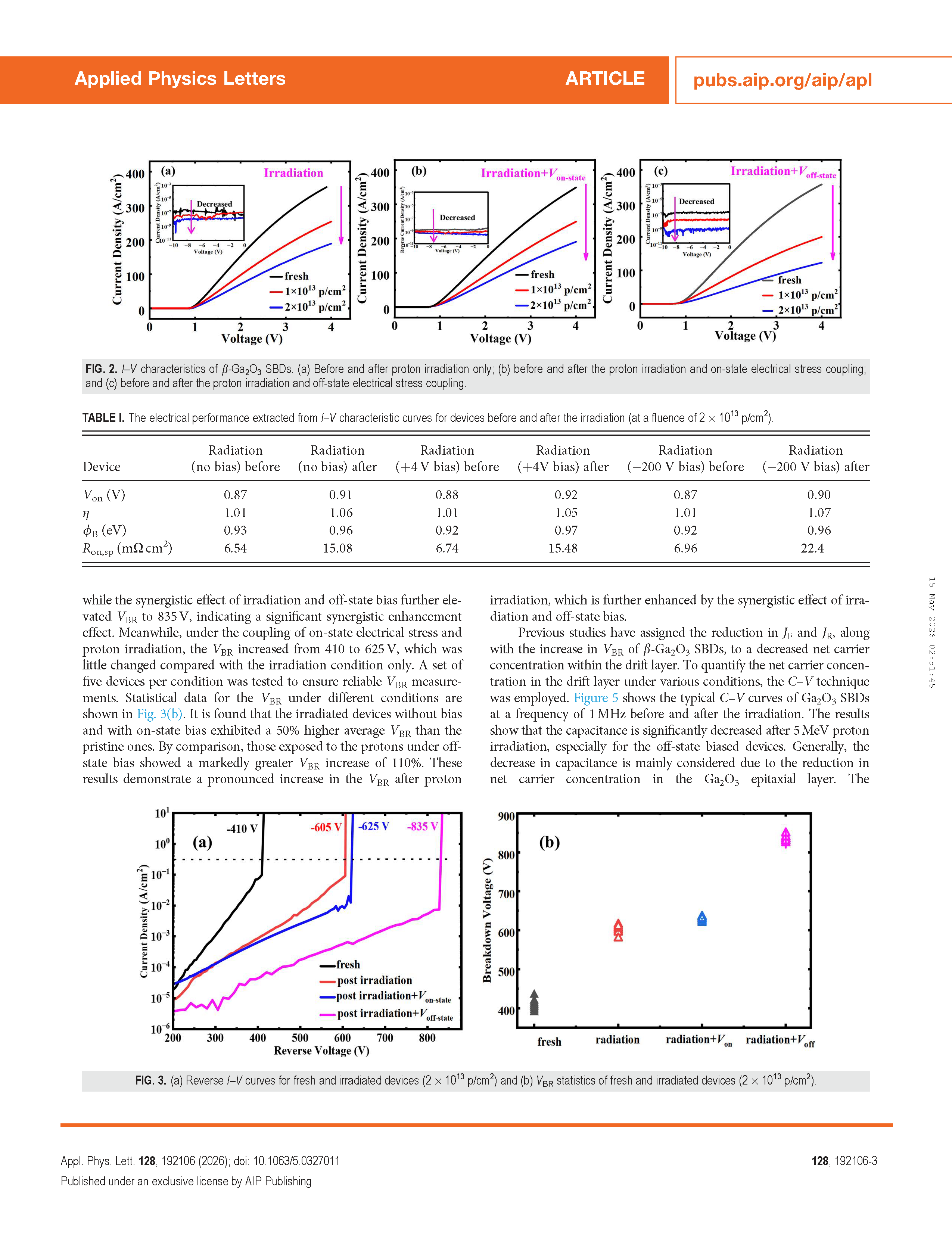
Found that off‑state bias significantly exacerbates irradiation damage: at the same fluence, the degradation rate of forward current density increases from 44% (no bias) to 66%, and the increase in breakdown voltage rises from 50% to 110%.
Revealed the synergistic degradation mechanism via molecular dynamics simulations: the electric field suppresses the recombination of vacancies and interstitial atoms, elevates the energy of secondary particles, and promotes the stable formation of gallium vacancy defects.
Conclusion
In conclusion, the correlation between bias conditions and the electrical performance degradation of β‑Ga₂O₃ SBDs under 5 MeV proton irradiation and its underlying physical mechanism are studied from the perspective of defects. It is observed that the forward current density significantly decreases, the breakdown voltage obviously increases, and the reverse current density clearly reduces with the increasing proton fluence. Based on the C–V and DLTS results, the device degradation is attributed to the carrier removal effect caused by an increase in acceptor‑like traps at the energy level of EC‑0.75 eV which is the dominant defect within the scanned energy range. Furthermore, the application of an off‑state bias during proton irradiation generates more defects within the drift layer, leading to exacerbated degradation of the electrical performance. MD simulations and theoretical analysis reveal that the off‑state bias exacerbates defect formation by increasing the energy of low‑energy secondary particles and introducing an external field that reduces the recombination rate of vacancies and interstitials during cascade collisions. The findings of this work may offer important insights for further enhancing the properties and reliability of β‑Ga₂O₃‑based devices.
Project Support
This work was supported by the National Natural Science Foundation of China under Grant Nos. 62404247 and 62204019.
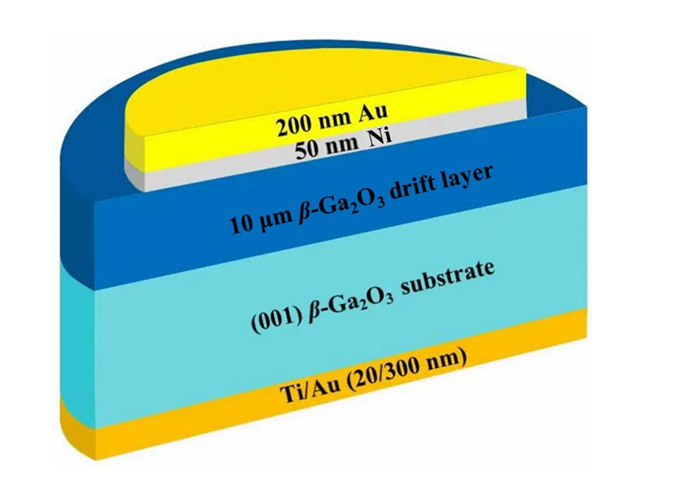
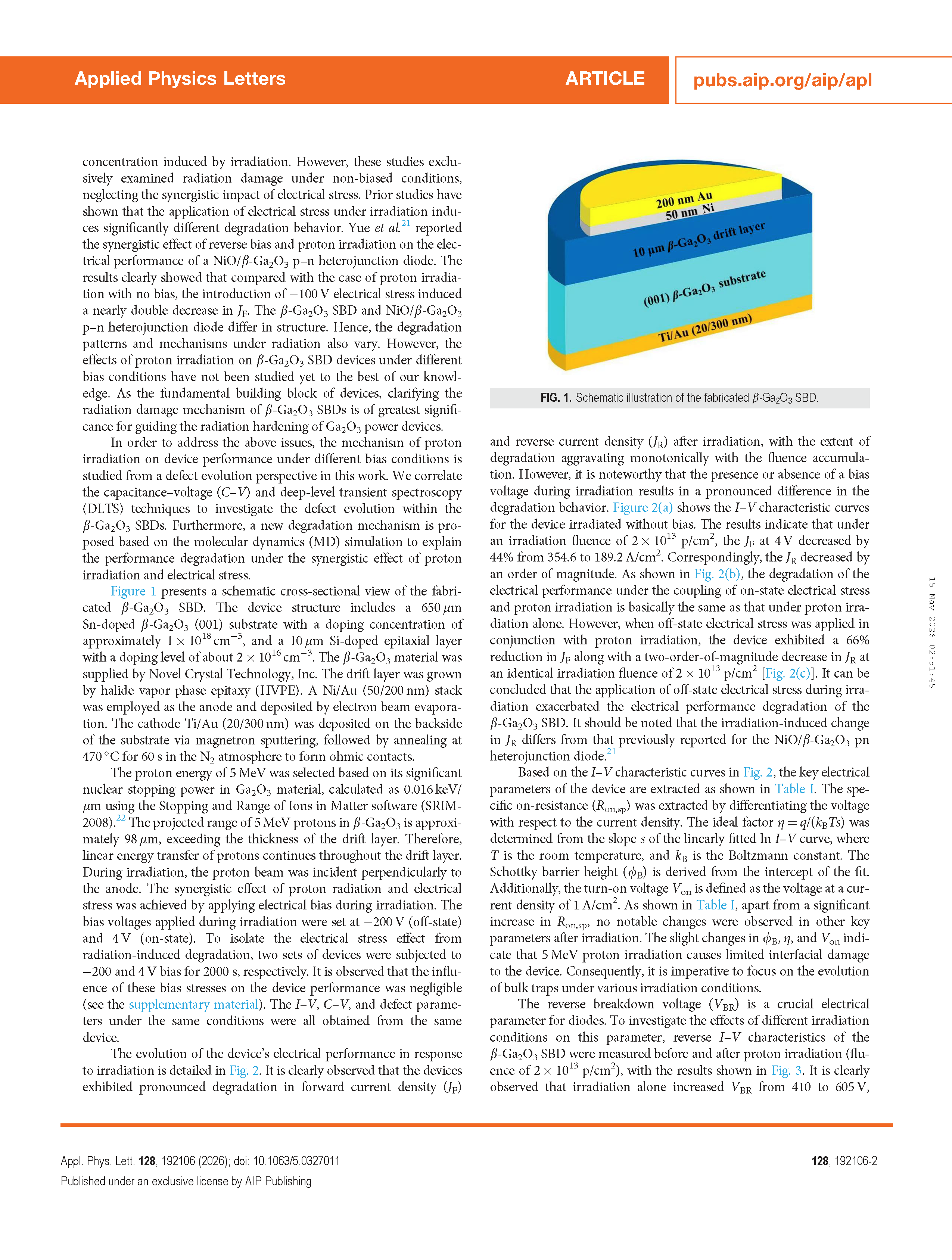
Figure 1 Schematic illustration of the fabricated β‑Ga₂O₃ SBD.
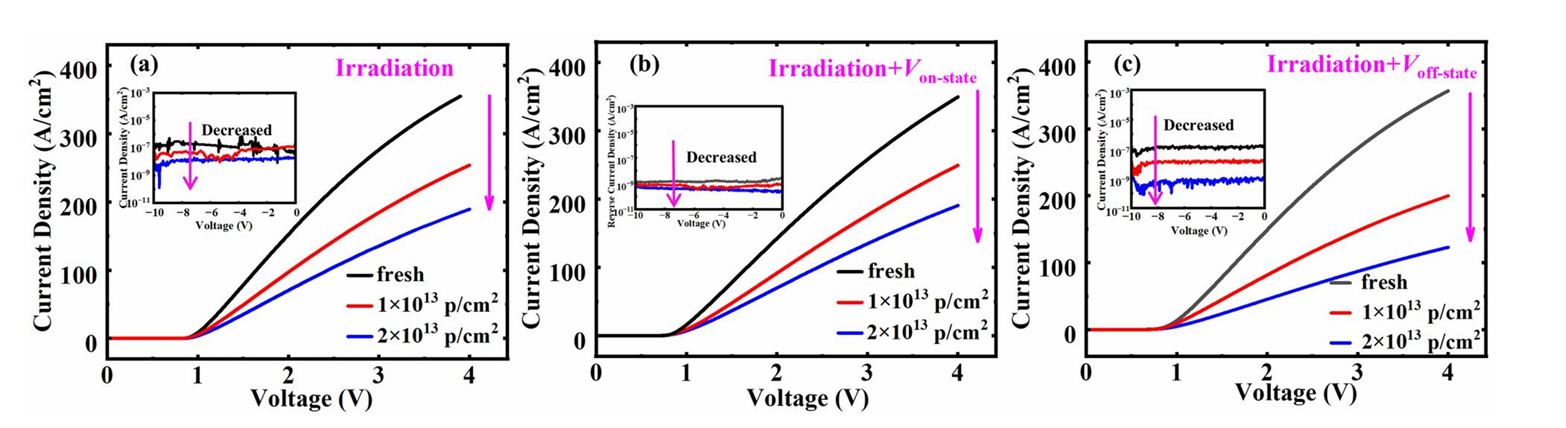
Figure 2 I–V characteristics of β‑Ga₂O₃ SBDs. (a) Before and after proton irradiation only; (b) before and after the proton irradiation and on‑state electrical stress coupling; and (c) before and after the proton irradiation and off‑state electrical stress coupling.
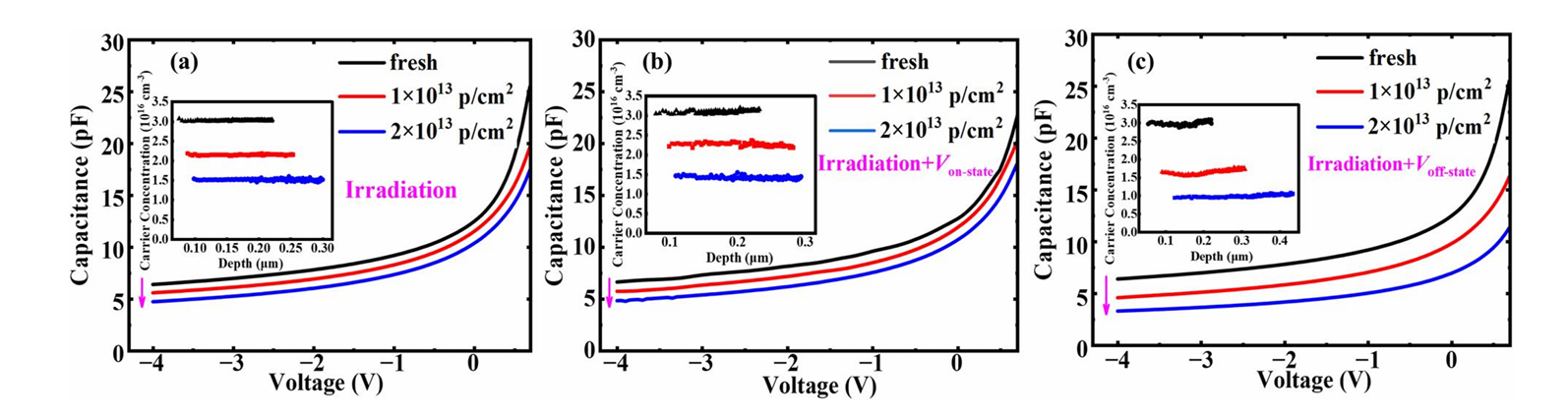
Figure 3 (a) Reverse I–V curves for fresh and irradiated devices (2 × 10¹³ p/cm²) and (b) VBR statistics of fresh and irradiated devices (2 × 10¹³ p/cm²).
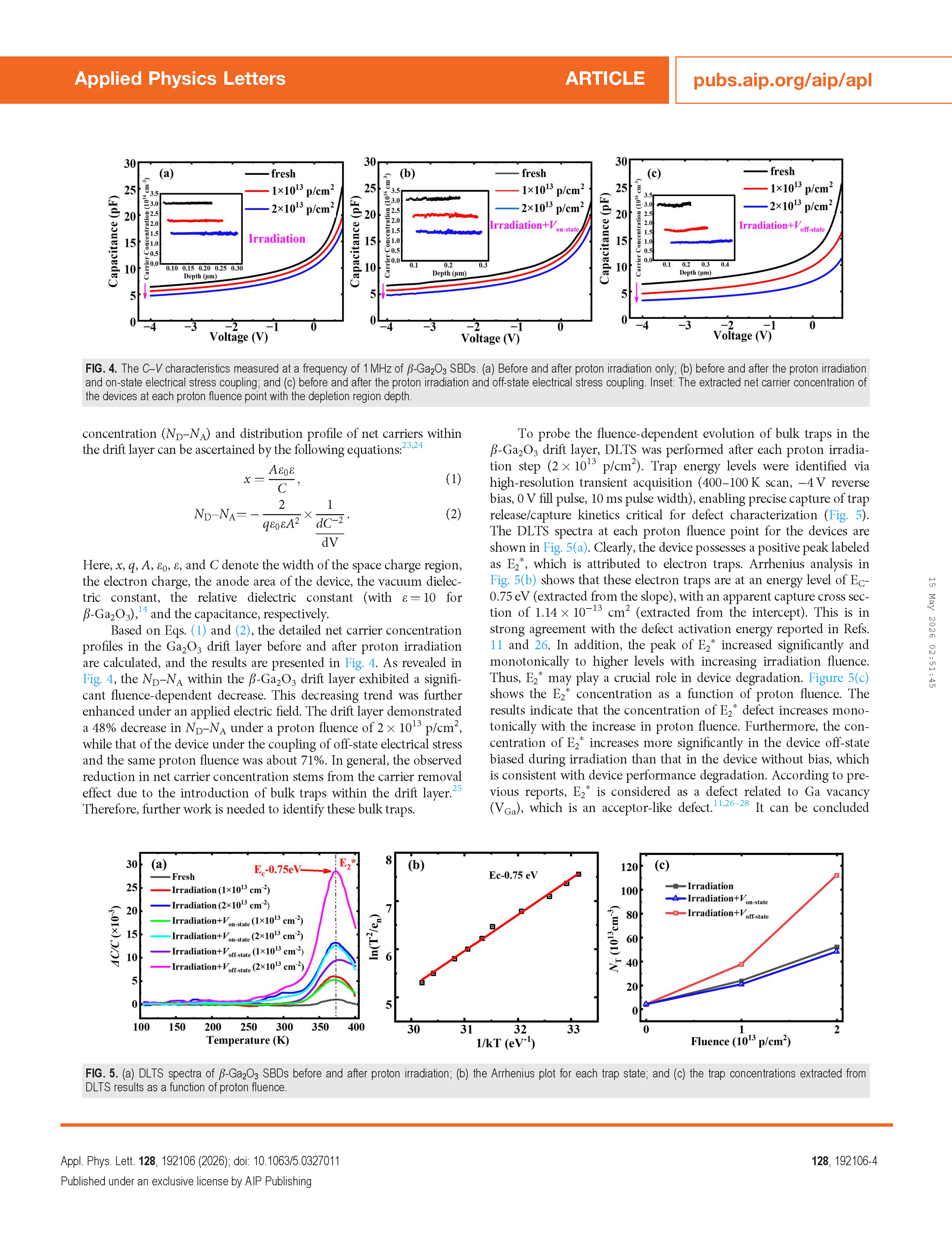
Figure 4 The C–V characteristics measured at a frequency of 1 MHz of β‑Ga₂O₃ SBDs. (a) Before and after proton irradiation only; (b) before and after the proton irradiation and on‑state electrical stress coupling; and (c) before and after the proton irradiation and off‑state electrical stress coupling. Inset: The extracted net carrier concentration of the devices at each proton fluence point with the depletion region depth.
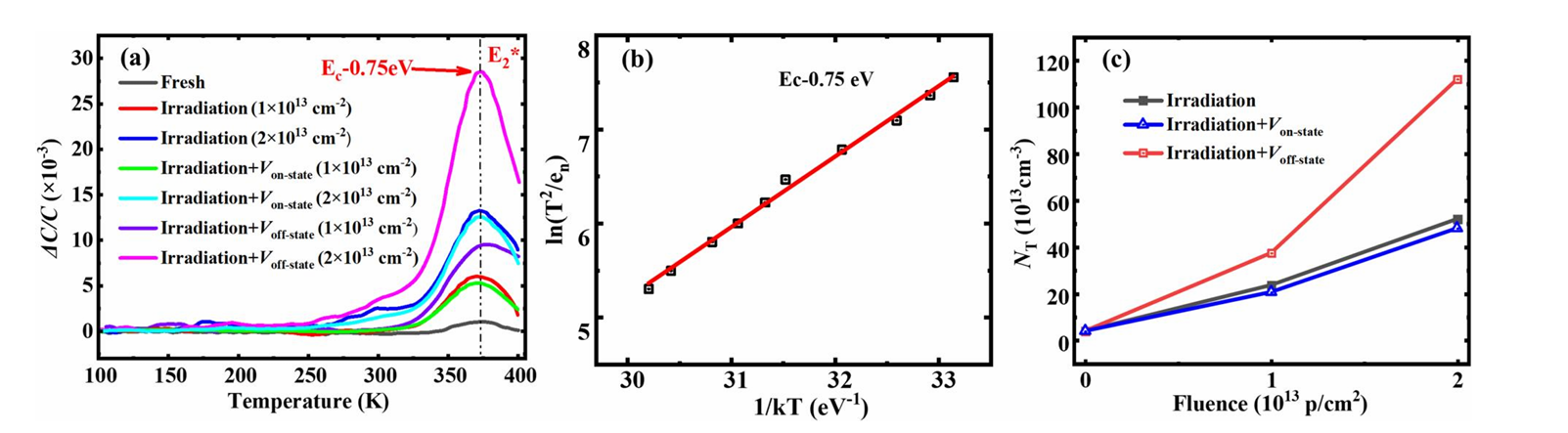
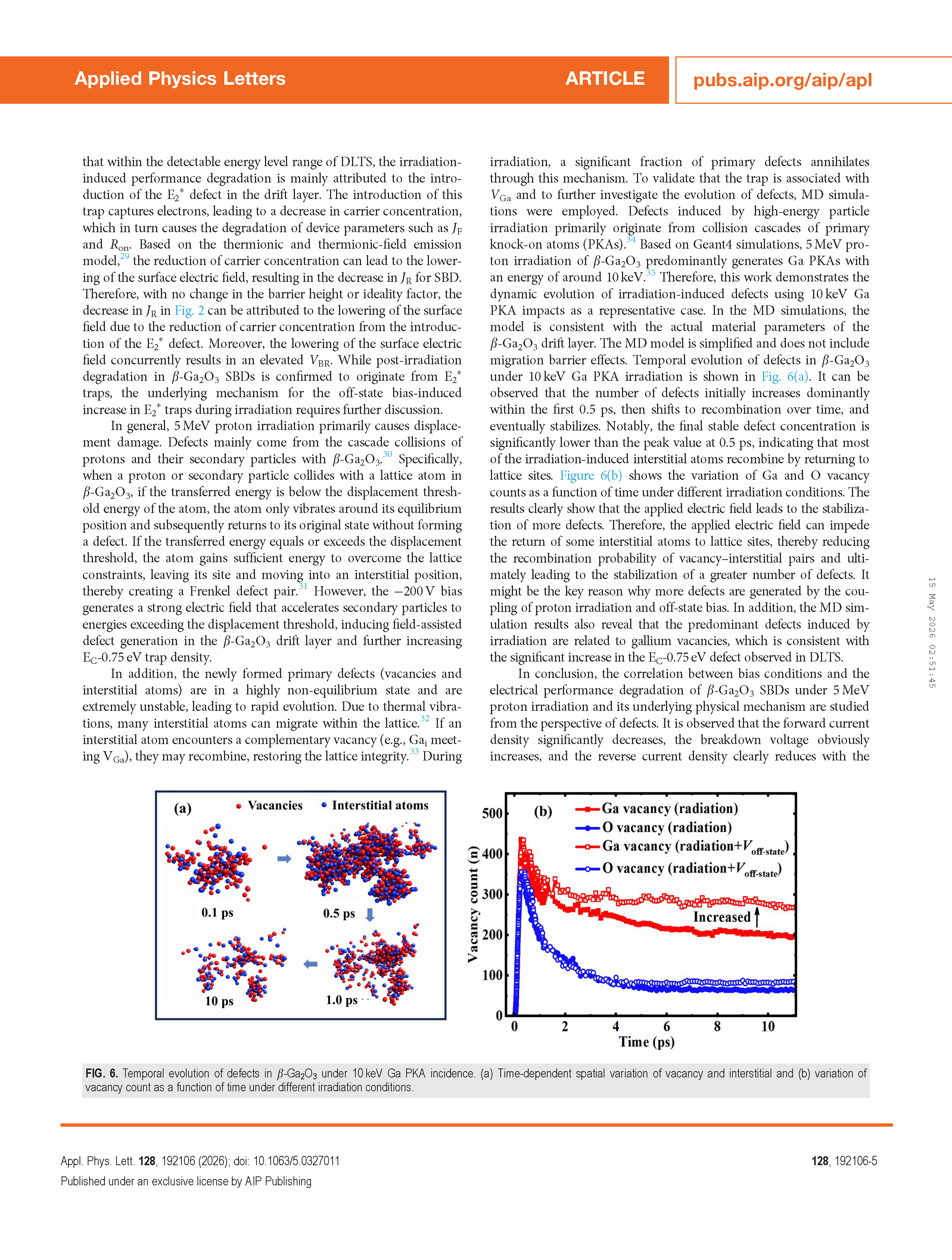
Figure 5 (a) DLTS spectra of β‑Ga₂O₃ SBDs before and after proton irradiation; (b) the Arrhenius plot for each trap state; and (c) the trap concentrations extracted from DLTS results as a function of proton fluence.
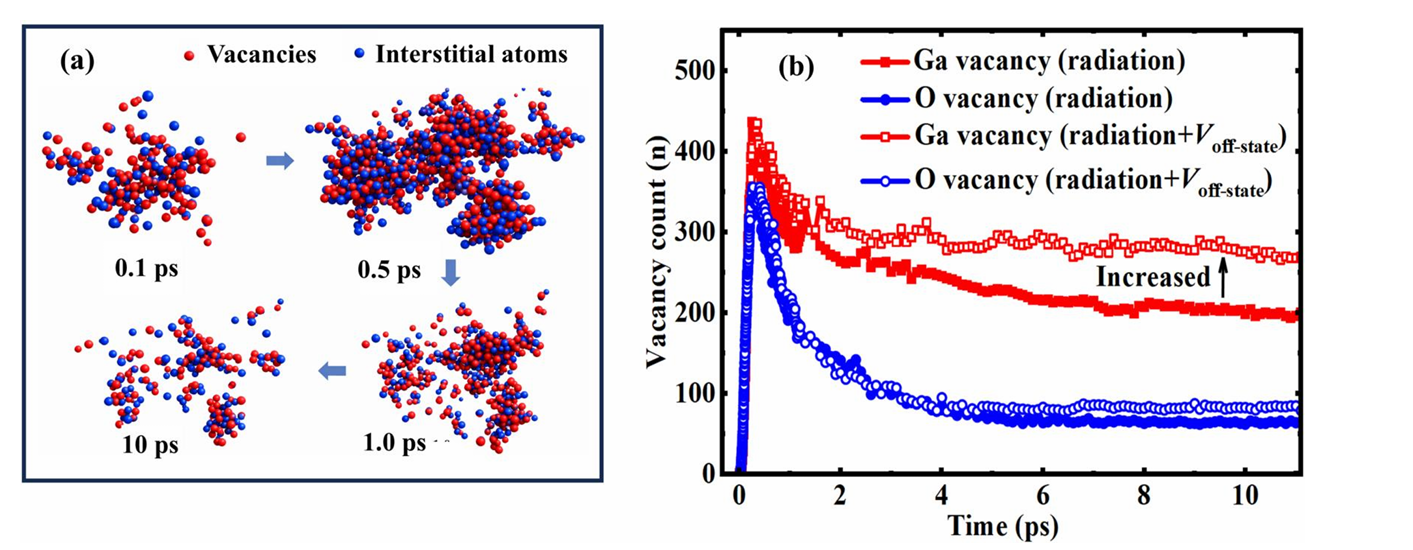
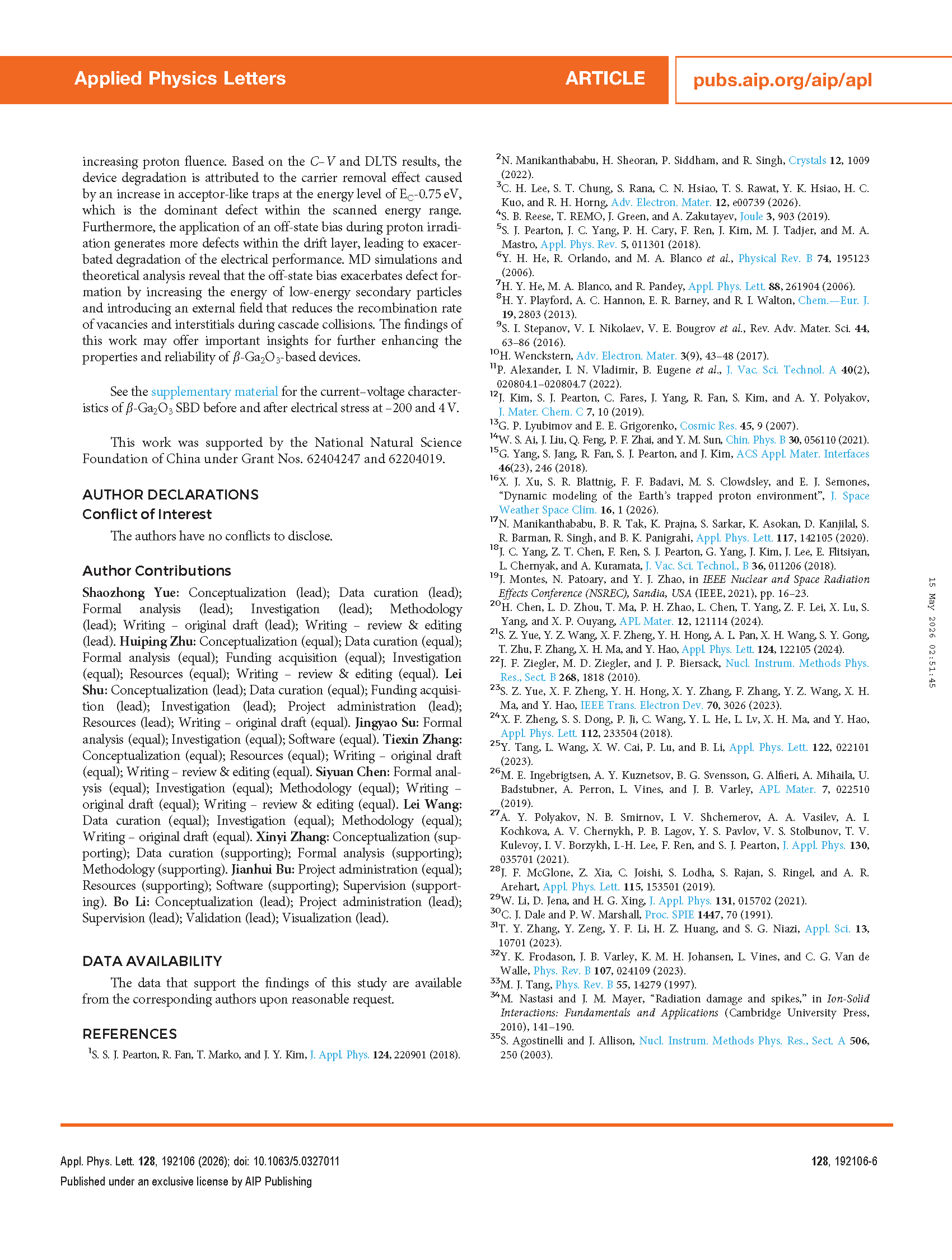
Figure 6 Temporal evolution of defects in β‑Ga₂O₃ under 10 keV Ga PKA incidence. (a) Time‑dependent spatial variation of vacancy and interstitial and (b) variation of vacancy count as a function of time under different irradiation conditions.
DOI:
10.1063/5.0327011
Instruction
Official Account

Cooperation
Top