


Researchers from Japan Fine Ceramics Center, Mie University have published a dissertation titled "Determination of Burgers vectors of dislocations in monoclinic β‑Ga₂O₃ crystals by large‑angle convergent‑beam electron diffraction" in Japanese Journal of Applied Physics.
Background
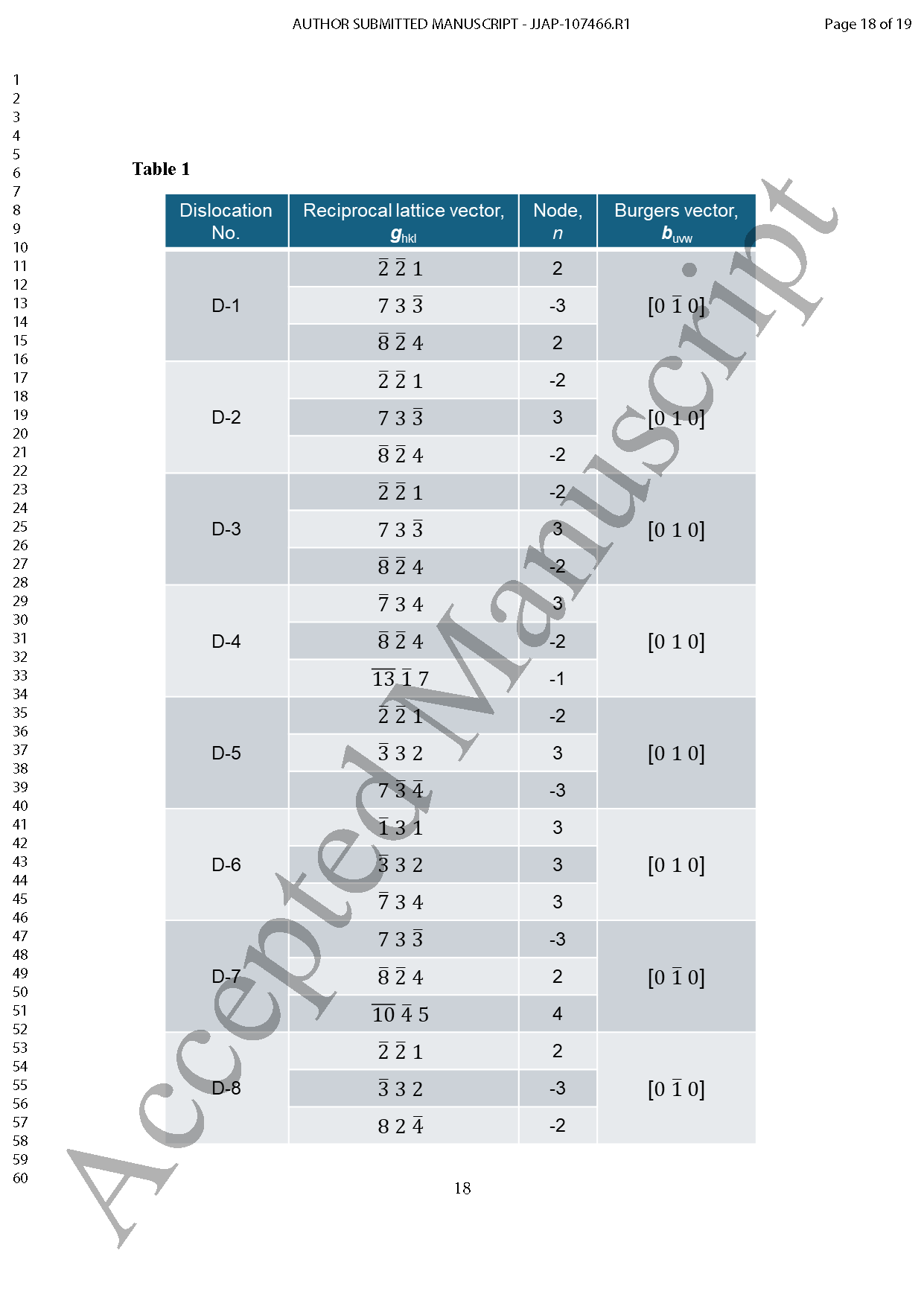
β‑Ga₂O₃ is a promising ultra‑wide bandgap semiconductor with a bandgap of ~4.5 eV and a breakdown electric field of ~7 MV/cm, which is crucial for fabricating high‑efficiency ultra‑high‑voltage power conversion devices, and large‑sized single‑crystal substrates can be obtained by melt growth techniques, showing significant application value. A large number of dislocations exist in the crystal, which significantly affect device performance, and accurately determining the Burgers vectors of dislocations is a core prerequisite for analyzing defect effects and optimizing crystal processes. Traditional weak‑beam dark‑field (WBDF) imaging can only determine the direction of Burgers vectors based on the g・b=0 criterion but cannot determine their magnitude, which is difficult to meet the needs of accurate characterization; large‑angle convergent‑beam electron diffraction (LACBED) can uniquely determine Burgers vectors through the g・b=n relation, but the applicability of this method in β‑Ga₂O₃, a monoclinic non‑orthogonal crystal system, has not been systematically verified.
Abstract
The determination of Burgers vectors of dislocations in β‑Ga₂O₃, a monoclinic semiconductor with a non‑orthogonal crystal structure, is important for understanding their influence on device performance. In this study, the applicability of large‑angle convergent‑beam electron diffraction (LACBED) for Burgers vector analysis in β‑Ga₂O₃ was examined. It is shown that the inner product g・b (where g is the reciprocal lattice vector and b is the Burgers vector) in non‑orthogonal systems can be evaluated without using a metric tensor by employing the dual relationship between real and reciprocal lattice bases, as in orthogonal systems. Based on this framework, dislocations were analyzed using LACBED. The Burgers vectors were determined unambiguously from the number of nodes observed in LACBED patterns. The results are consistent with weak‑beam dark‑field imaging. These findings indicate that LACBED is applicable to β‑Ga₂O₃ and is useful for Burgers vector determination.
Highlights
Established the LACBED analysis theory for non‑orthogonal crystal system β‑Ga₂O₃, enabling g·b inner product calculation without metric tensor.
Realized unique and accurate determination of Burgers vectors of dislocations in β‑Ga₂O₃ using the node number in LACBED patterns.
Experimentally confirmed that the Burgers vectors of dislocations introduced by indentation in β‑Ga₂O₃ are uniformly <010> type.
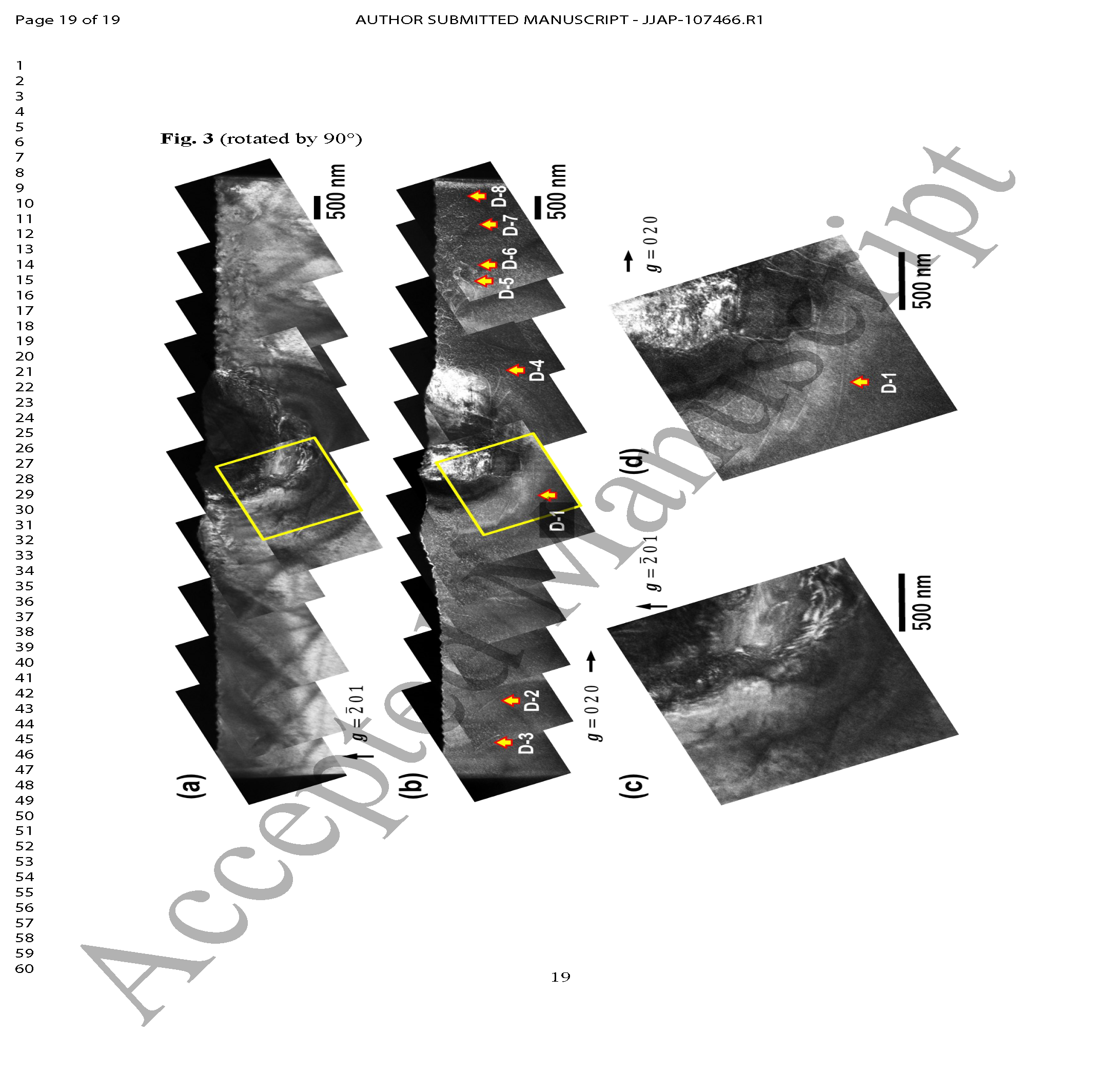
LACBED results are verified by WBDF imaging, proving the method is reliable and effective.
Conclusion
In conclusion, in the analysis of dislocation structures in β‑Ga₂O₃ (a monoclinic, non‑orthogonal crystal system), it was demonstrated that the inner product of vectors can be evaluated straightforwardly without using a metric tensor, as in orthogonal crystal systems, indicating that the LACBED method is applicable. Model dislocations introduced into β‑Ga₂O₃ by nanoindentation were analyzed by LACBED, and their Burgers vectors were determined. The results were consistent with those obtained by WBDF imaging. These findings demonstrate that the LACBED method is effective for determining the Burgers vectors of dislocations in β‑Ga₂O₃ and is expected to contribute to a better understanding of defects affecting device performance.
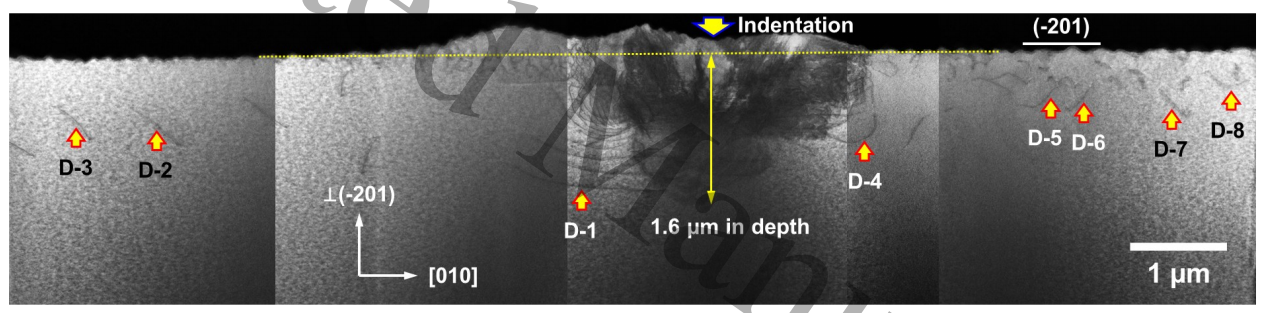
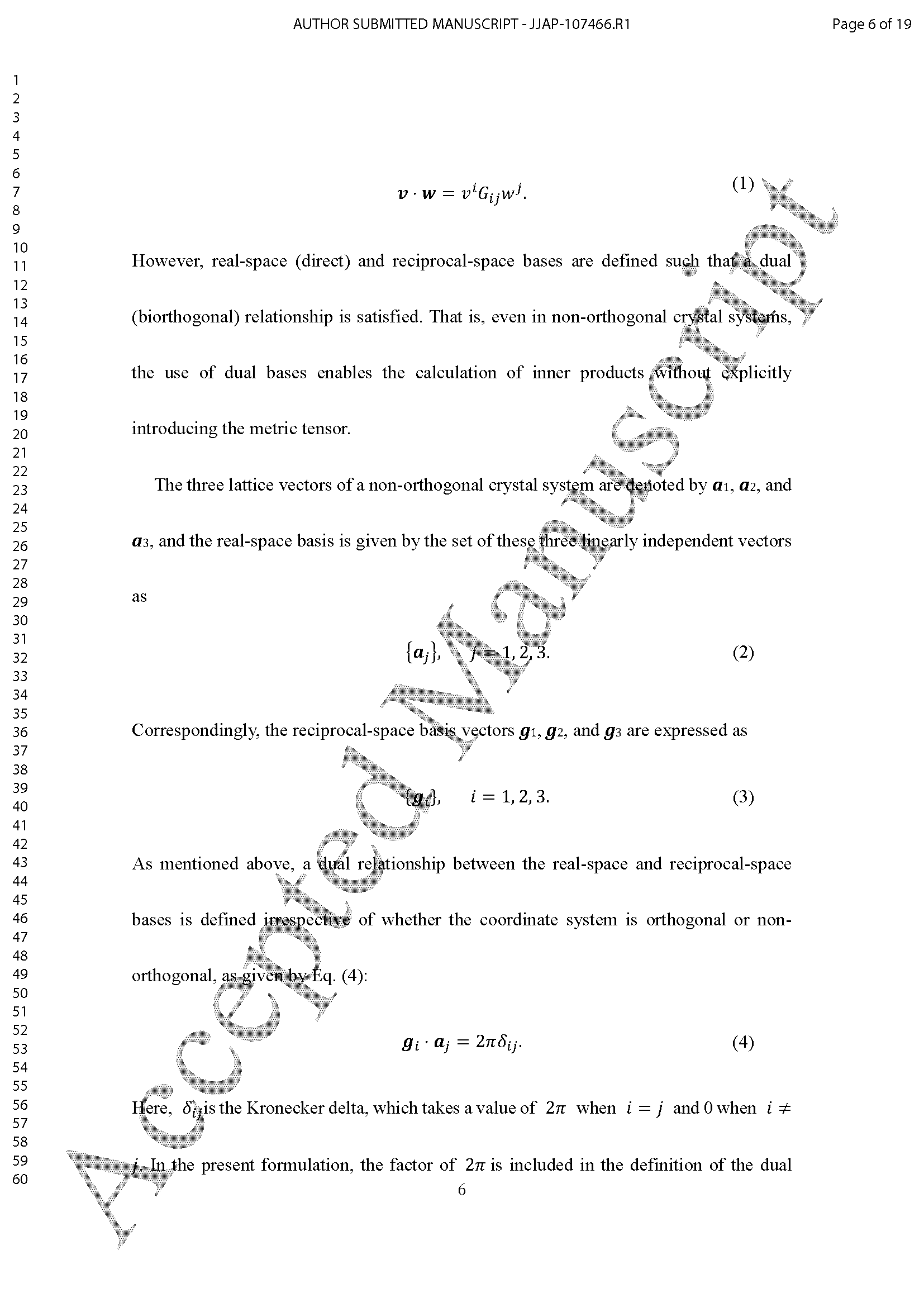
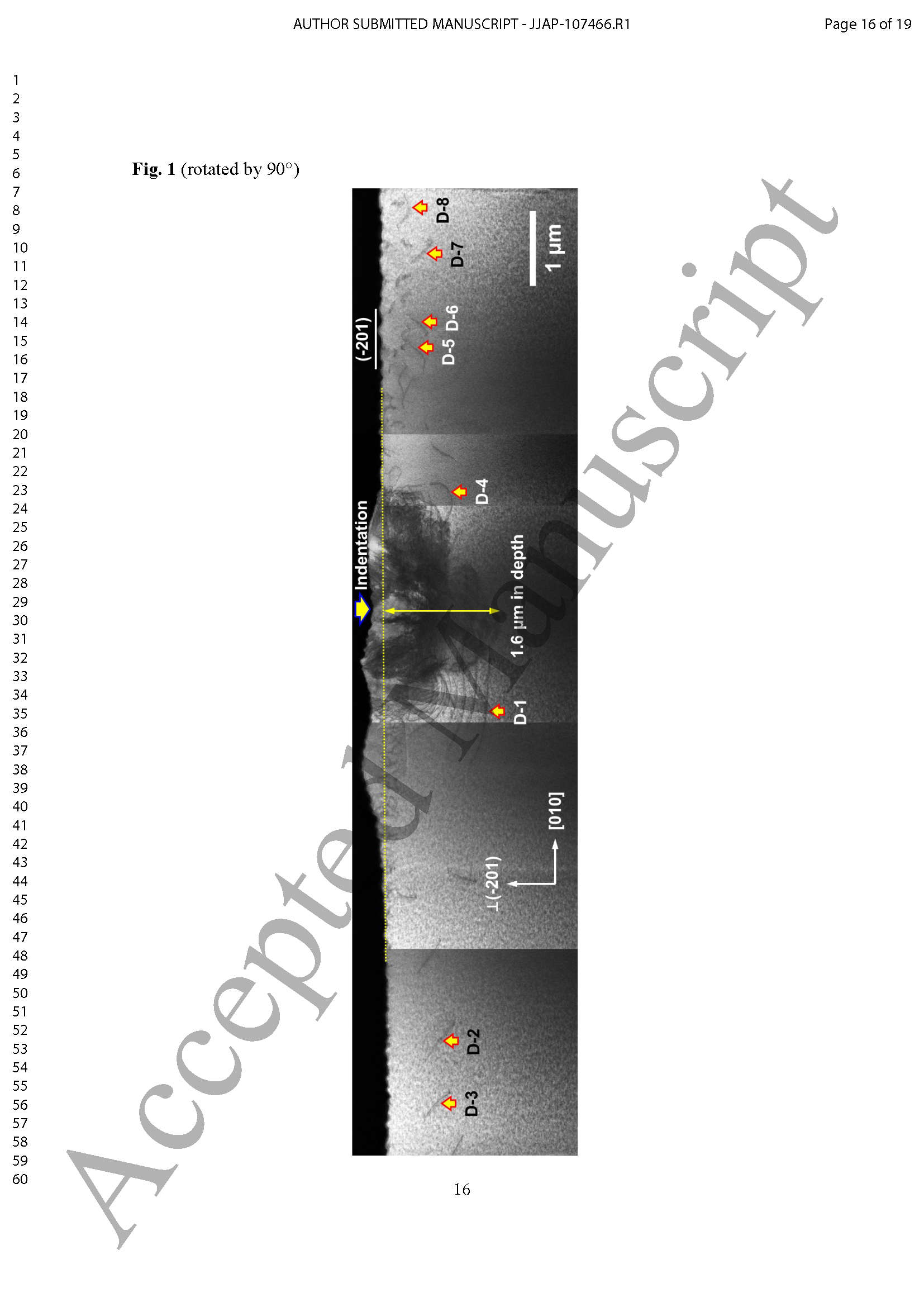
Fig. 1. Cross-sectional BF-STEM image of dislocations introduced around an indentation in β-Ga₂O₃ by nanoindentation. The substrate surface is the (-201) plane, and the incident electron beam is parallel to the [102] direction. The indentation load was 50 mN. A dislocation-rich region extending to a depth of ~1.6 µm is observed beneath the indentation. Dislocations labeled D-1 to D-8 indicate the dislocations analyzed in this study.
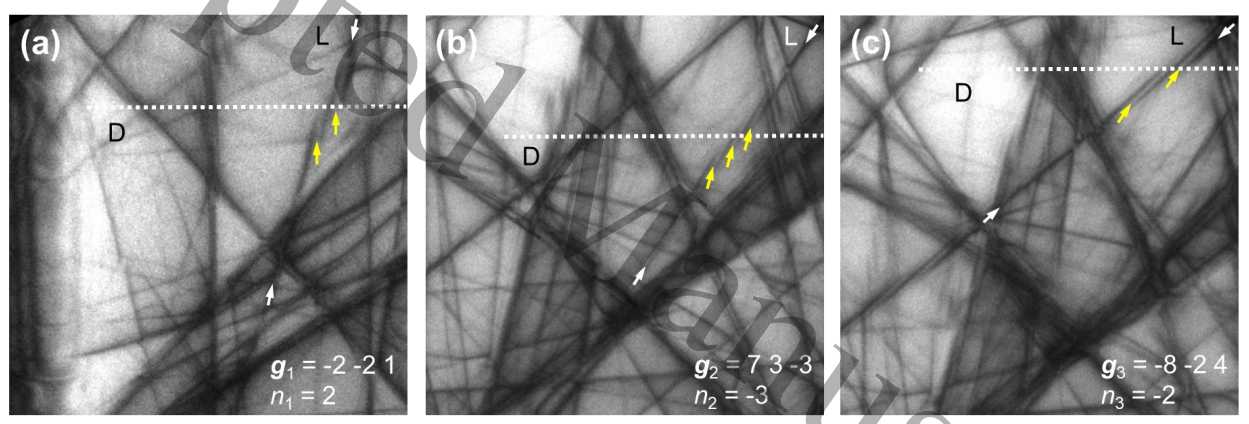
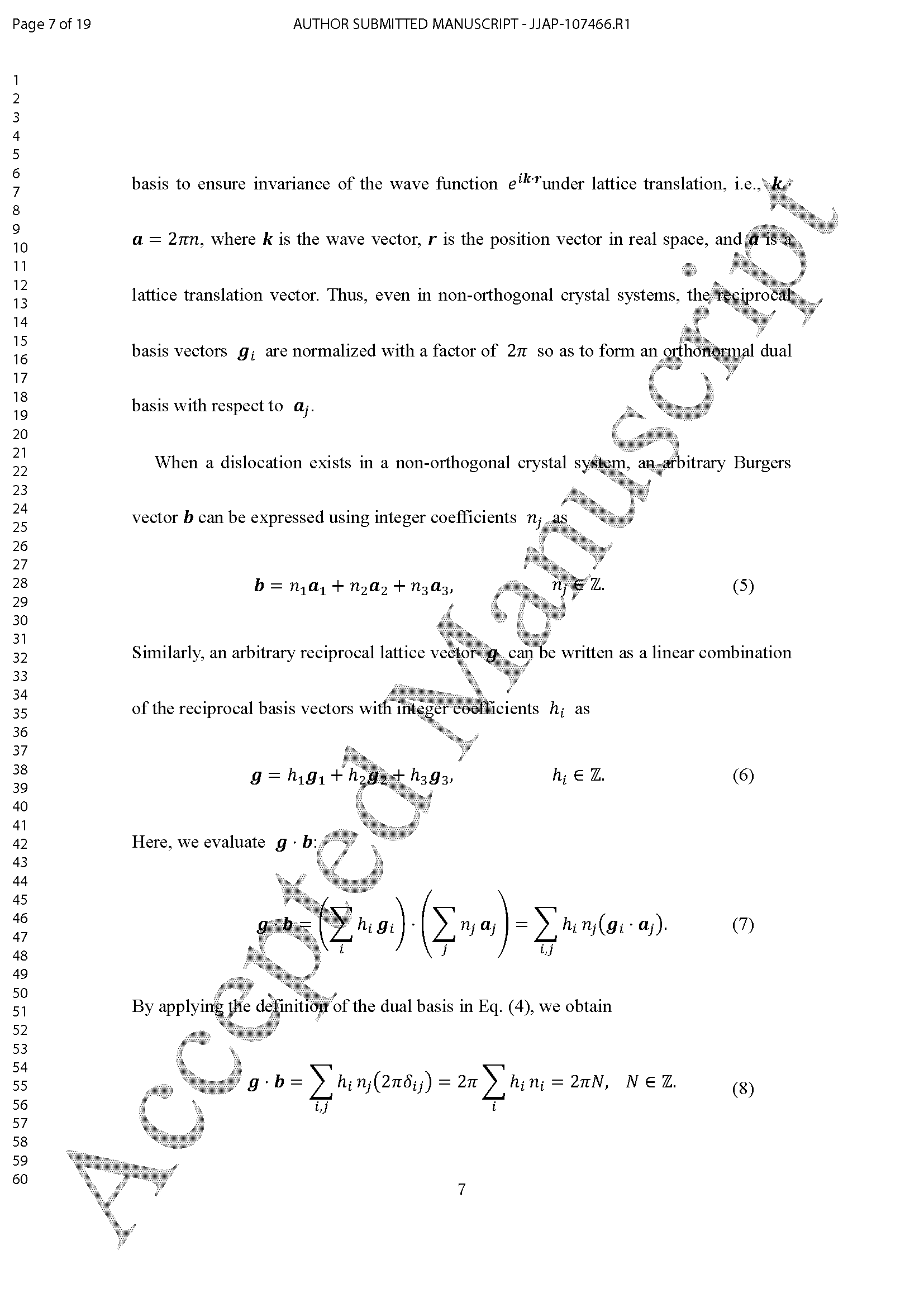
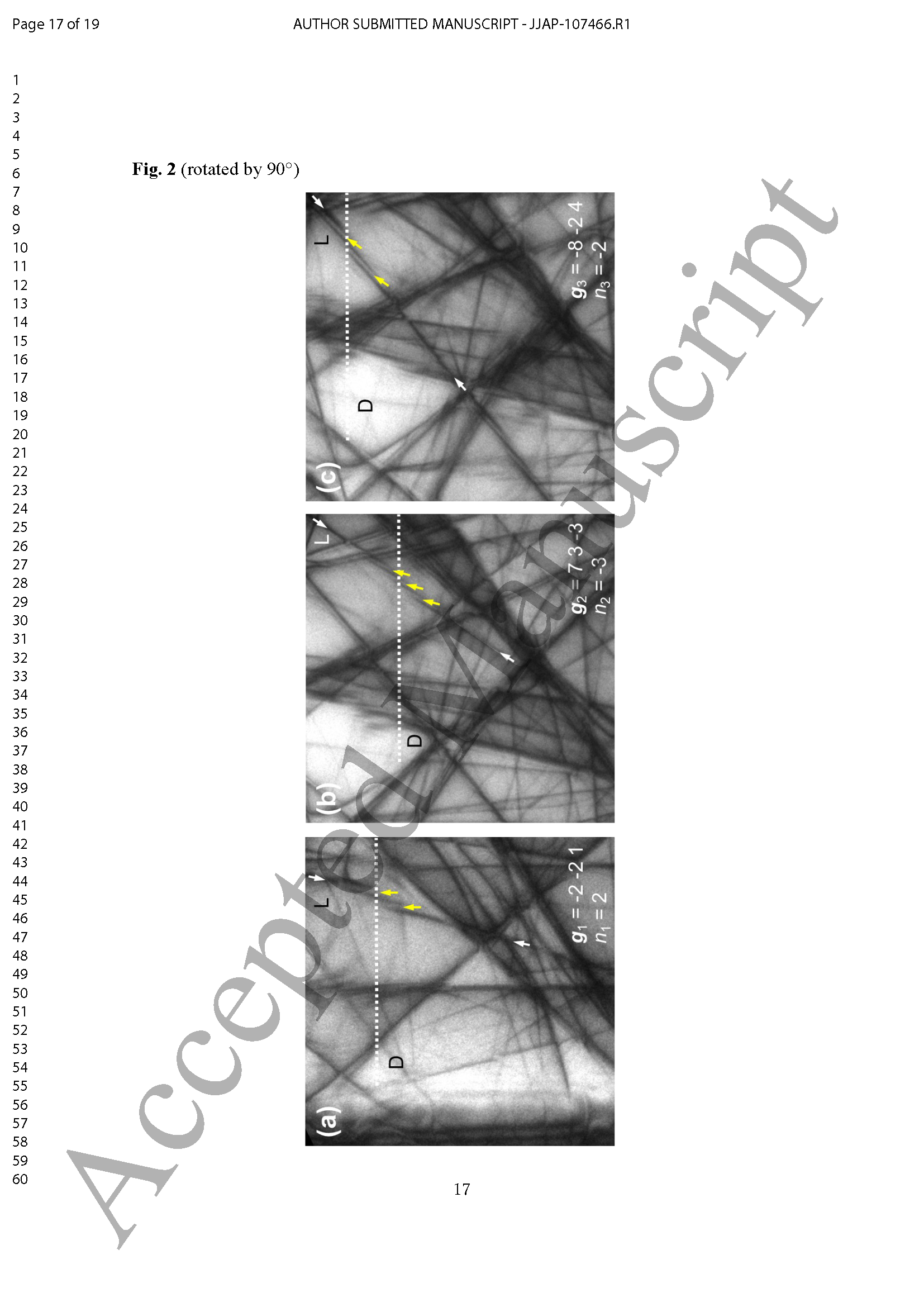
Fig. 2. Three kinds of bright-field LACBED patterns obtained from area D-1. The reciprocal lattice vector g and n are (a) g₁=(-2-21), n₁=2, (b) g₂=(73-3), n₂=-3, (c) g₃=(-8-24), n₃=-2. The dashed line D, white arrow L, and number of yellow arrows represent the dislocation lines, Laue reflection lines, and number of nodes, respectively.
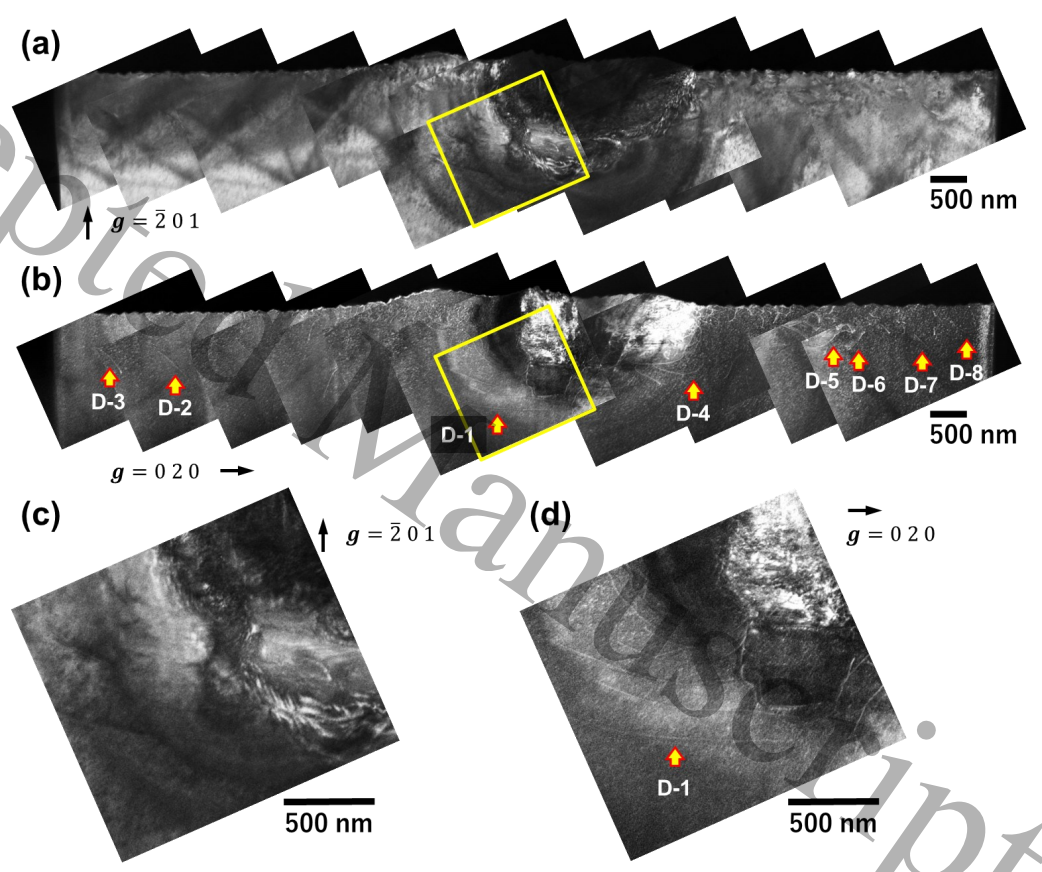
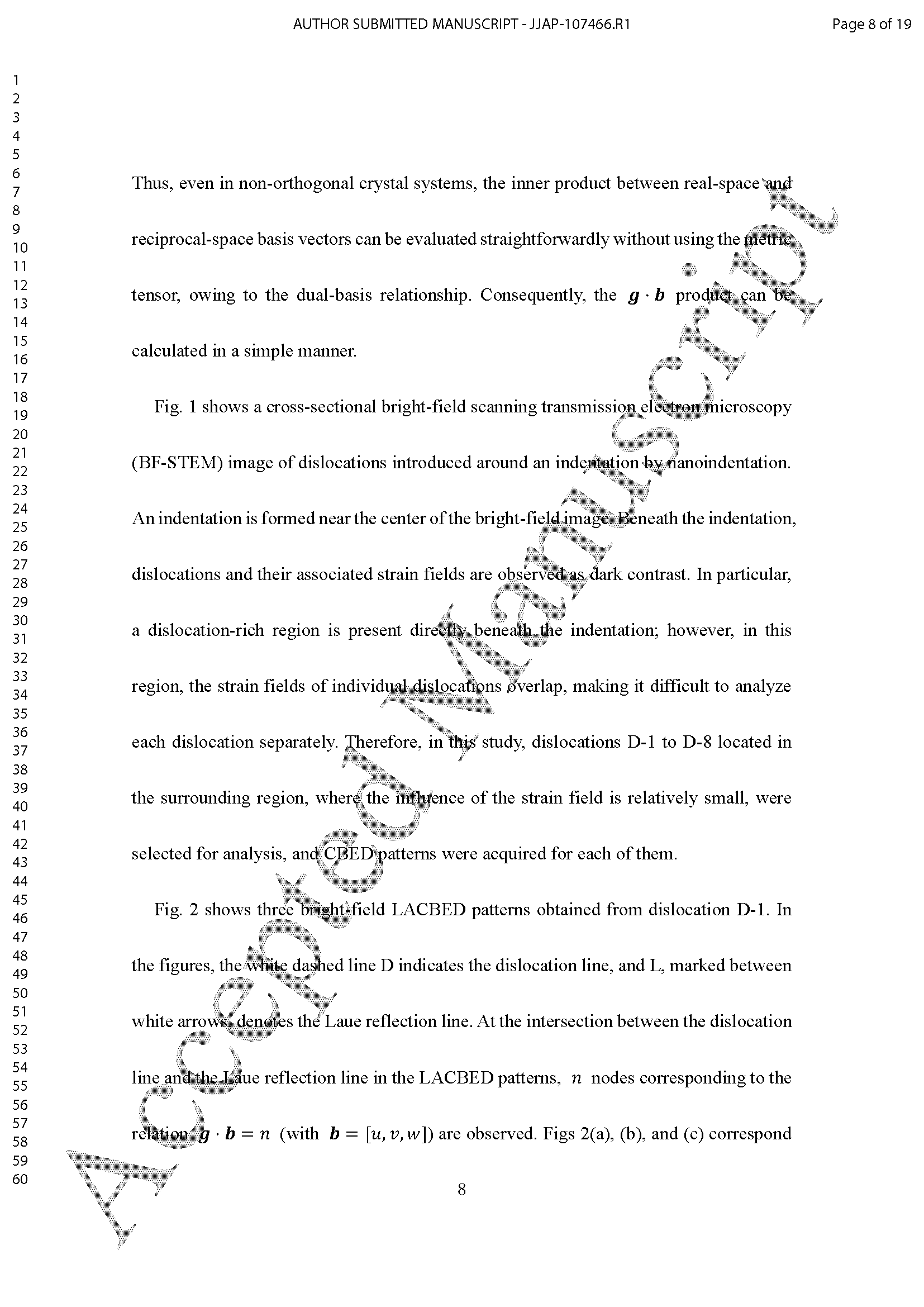
Fig. 3. WBDF images of dislocations formed around the indentation in β-Ga₂O₃. (a) With reciprocal lattice vector g=(-201) and (b) g=(020). (c) and (d) are enlarged images of the same area indicated by the yellow rectangles. In (c), the contrast of dislocation D-1 is extremely weak, whereas in (d) it appears strong. The excitation condition for the dark-field images was g/3g in both cases.
DOI:
doi.org/10.35848/1347-4065/ae70b5
Instruction
Official Account

Cooperation
Top