


Researchers from Chinese Academy of Sciences have published a dissertation titled " Self-Powered Solar-Blind Polarization-Sensitive β-Ga₂O₃ Photodetector Focal Plane Array " in Advanced Functional Materials.
Background
Conventional photodetectors achieve solar-blind ultraviolet (SBUV) imaging primarily by detecting fundamental optical parameters-such as amplitude, spectral features, and phase. Incontrast, polarization-sensitive photodetectors enable higher-contrast imaging, supporting multidimensional sensing applications. Accurate SBUV photodetection finds broad utility in flame monitoring, ozone layer observation, and autonomous spacecraft navigation, highlighting the significant application potential of high-precision polarization imaging. However, the miniaturization and integration of these polarization-sensitive photodetection systems are often hindered by the trade-off between imaging resolution and detection sensitivity. Structurally, miniaturized polarization structured polarizers, typically constructed with subwavelength structures, are integrated into photodetection systems to capture multidirectional polarization information. However, achieving polarization-sensitive photodetection in the SBUV band is hindered by challenges in subwavelength fabrication, such as the need for extremely fine processing scales and the reduction in responsivity caused by optical absorption. These issues not only increase manufacturing costs but also limit the commercial scalability of polarization imaging devices. To overcome these limitations, the adoption of ultra-wide bandgap semiconductors with inherent lattice anisotropy offers a promising pathway.
Abstract
Polarization-sensitive solar-blind ultraviolet (SBUV) photodetectors, resolving light intensity, wavelength and polarization, are critical for flame detection, ozone monitoring and high-contrast imaging. However, fabricating polarizer-free, miniaturized, low-power real-time imaging devices remains challenging, as miniaturization and polarizer removal inevitably compromise polarization performance and spatial resolution.β-Ga₂O₃ is an ideal material for its ultra-wide bandgap (4.7–4.9 eV) that suppresses solar background noise and intrinsic anisotropy enabling polarizer-free polarization-sensitive photodetection. Herein, a solar blind polarization-sensitive β-Ga₂O₃ photodetector focal plane array is fabricated by leveraging the anisotropic crystal structure of its (100) and (001) facets. The asymmetric electrode design is rationally employed to construct a Schottky barrier, which endows the array with self-powered photodetection capability. The array exhibits a high polarization ratio (PR=4.7), ultralow dark current (<1 pA) and fast response (4 ms/20 ms rise/fall time), enabling real-time polarization-resolved imaging of target letters via a custom readout circuit. A CNN dual-label recognition model achieves over 95% accuracy in letter and polarization angle identification. This work verifies the polarization response of β-Ga₂O₃ dependent on crystal facets, realizes synergistic optimization of key performances for miniaturized devices, and lays a reliable material and technical foundation for high-performance SBUV polarization imaging systems.
Conclusion
In summary, leveraging the intrinsic anisotropy of β-Ga₂O₃, we realized a polarizer-free SBUV polarization-sensitive FPA. An asymmetric electrode design further introduces a Schottky barrier, allowing the array to operate in a self-powered mode without an external power supply. Through sample optimization, the (100) Ga₂O₃ FPA achieves both a fast response (rise/fall time =4ms/20 ms) and an ultralow dark current (<1 pA), effectively reconciling performance parameters that are typically mutually restrictive. The array also exhibits a high polarization ratio (PR = 4.7) and excellent uniformity, with a stable photocurrent of 34.9 ± 3.3 pA and a PRNU of 9.4%. Real-time SBUV imaging verifies its high-contrast polarization-sensitive detection capability. In addition, a dual-output branch convolutional neural network (CNN) achieves 95% overall accuracy for simultaneous letter and polarization angle recognition. These results establish (100)-oriented β-Ga₂O₃ as a promising candidate for compact, low-power-consumption, integrated SBUV sensing systems in applications such as target recognition, flame detection, and environmental monitoring.
Project Support
This work was financially supported by the National Natural Science Foundation of China (Grant Nos. U24A20285, 62125404, 62574195,12204060,62504015), Beijing Natural Science Foundation (Z220005), the Talent Fund of Beijing Jiaotong University (2024XKRC091), the Postdoctoral Fellowship Program of CPSF (Grant No. GZB20250150), and State Key Laboratory of Semiconductor Physics and Chip Technologies, Institute of Semiconductors, Chinese Academy of Sciences, (Grant No. SKSP202502).

FIGURE 1 Crystal structure and characterization of β-Ga₂O₃ (a) Schematic of β-Ga₂O₃ FPA for SBUV polarization imaging. (b) Crystal structure of β-Ga₂O₃. (c) Band structure of β-Ga₂O₃. (d) XRD test results of (100) and (001) Ga₂O₃. (e) Schematic of atomic structures of (100) and (001) planes. (f) Raman spectra of the (100) and (001) planes. (g,h) The corresponding contour color map with angle-resolved Raman spectra of the (100) and (001) planes under parallel configuration. (i) Experimental (dots) and fitted (lines) angular dependence of the Bg and Ag modes for the (100) and (001) planes
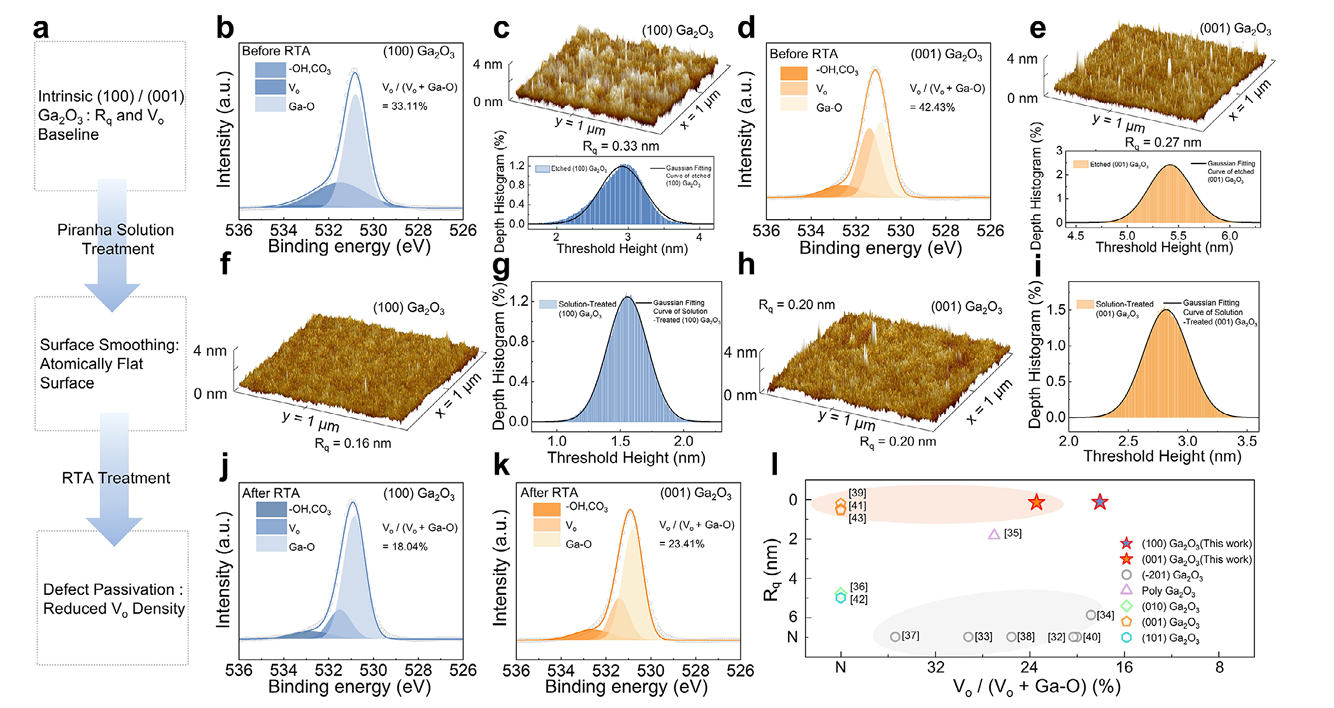
FIGURE 2 Surface optimization results of β-Ga₂O₃. (a) Schematic illustration of two sequential surface optimization treatments (piranha solution treatment and rapid thermal annealing) on (100) and (001) Ga₂O₃ samples. (b,d) XPS characterization results of (100) and (001) Ga₂O₃ before RTA treatment. (c,e) AFM roughness and particle size analysis of (100) and (001) Ga₂O₃ surface before piranha solution treatment. (f) AFM roughness of (100) Ga₂O₃ surface after piranha solution treatment. (g) Particle size analysis of (100) Ga₂O₃ surface after piranha solution treatment. (h) AFM roughness of (001) Ga₂O₃ surface after piranha solution treatment. (g) Particle size analysis of (001) Ga₂O₃ surface after piranha solution treatment. (j,k) XPS characterization results of (100) and (001) Ga₂O₃ after RTA treatment. (i) Comparison of RTA/solution treatment effects on Rq and Vo concentration in Ga₂O₃.
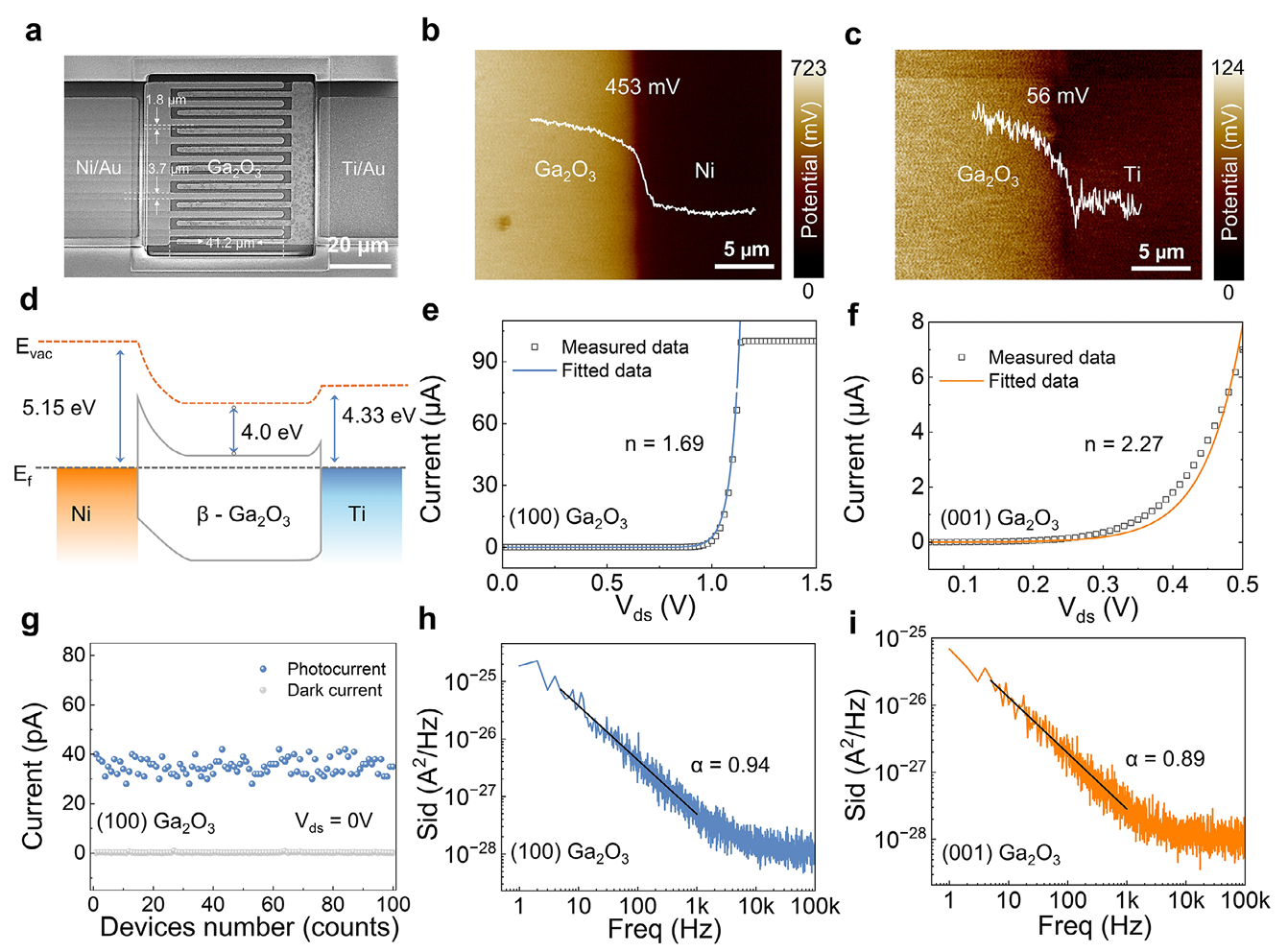
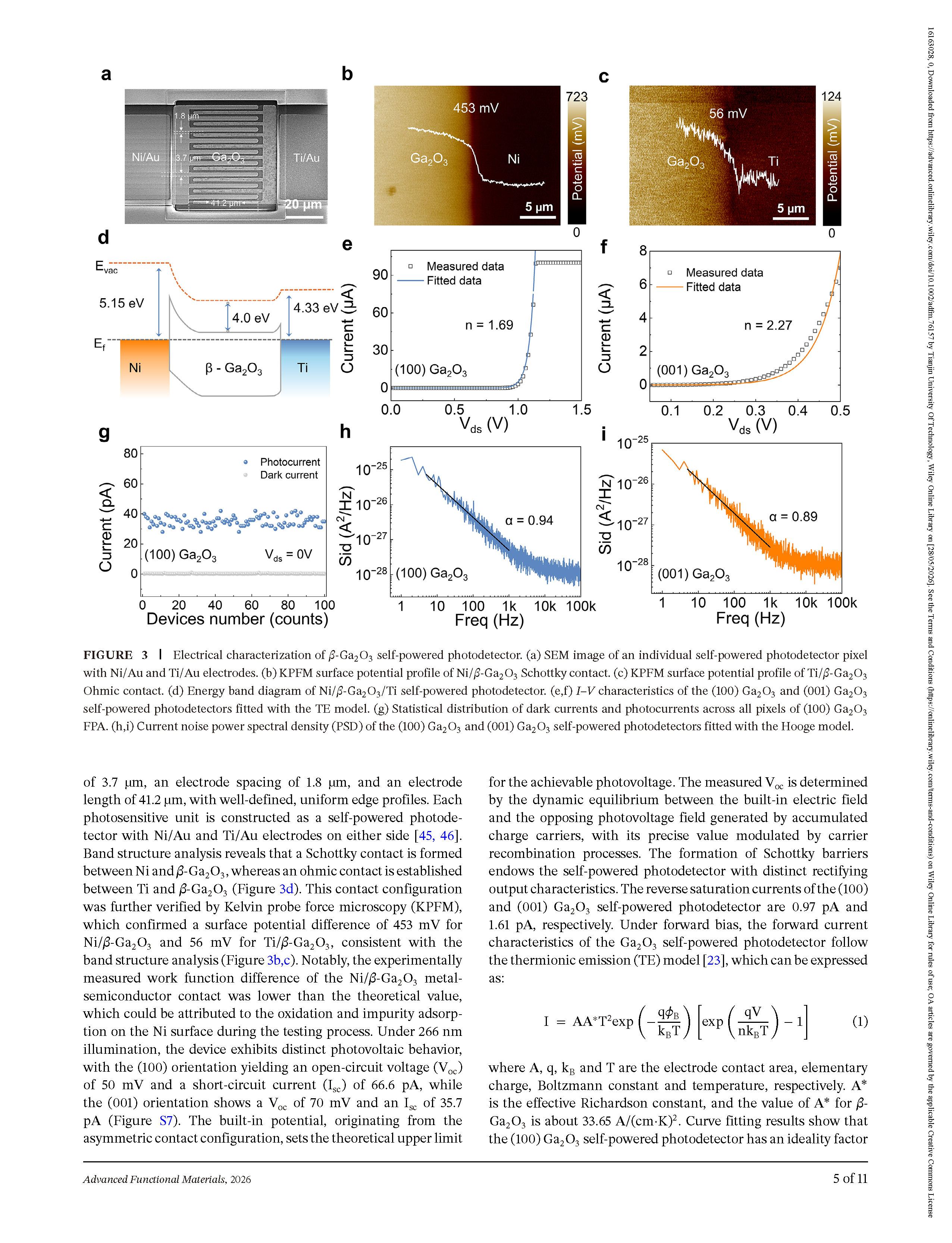
FIGURE 3 Electrical characterization of β-Ga₂O₃ self-powered photodetector. (a) SEM image of an individual self-powered photodetector pixel with Ni/Au and Ti/Au electrodes. (b) KPFM surface potential profile of Ni/β-Ga₂O₃ Schottky contact. (c) KPFM surface potential profile of Ti/β-Ga₂O₃ Ohmic contact. (d) Energy band diagram of Ni/β-Ga₂O₃/Ti self-powered photodetector. (e,f) I–V characteristics of the (100) Ga₂O₃ and (001) Ga₂O₃ self-powered photodetectors fitted with the TE model. (g) Statistical distribution of dark currents and photocurrents across all pixels of (100) Ga₂O₃ FPA. (h,i) Current noise power spectral density (PSD) of the (100) Ga₂O₃ and (001) Ga₂O₃ self-powered photodetectors fitted with the Hooge model.
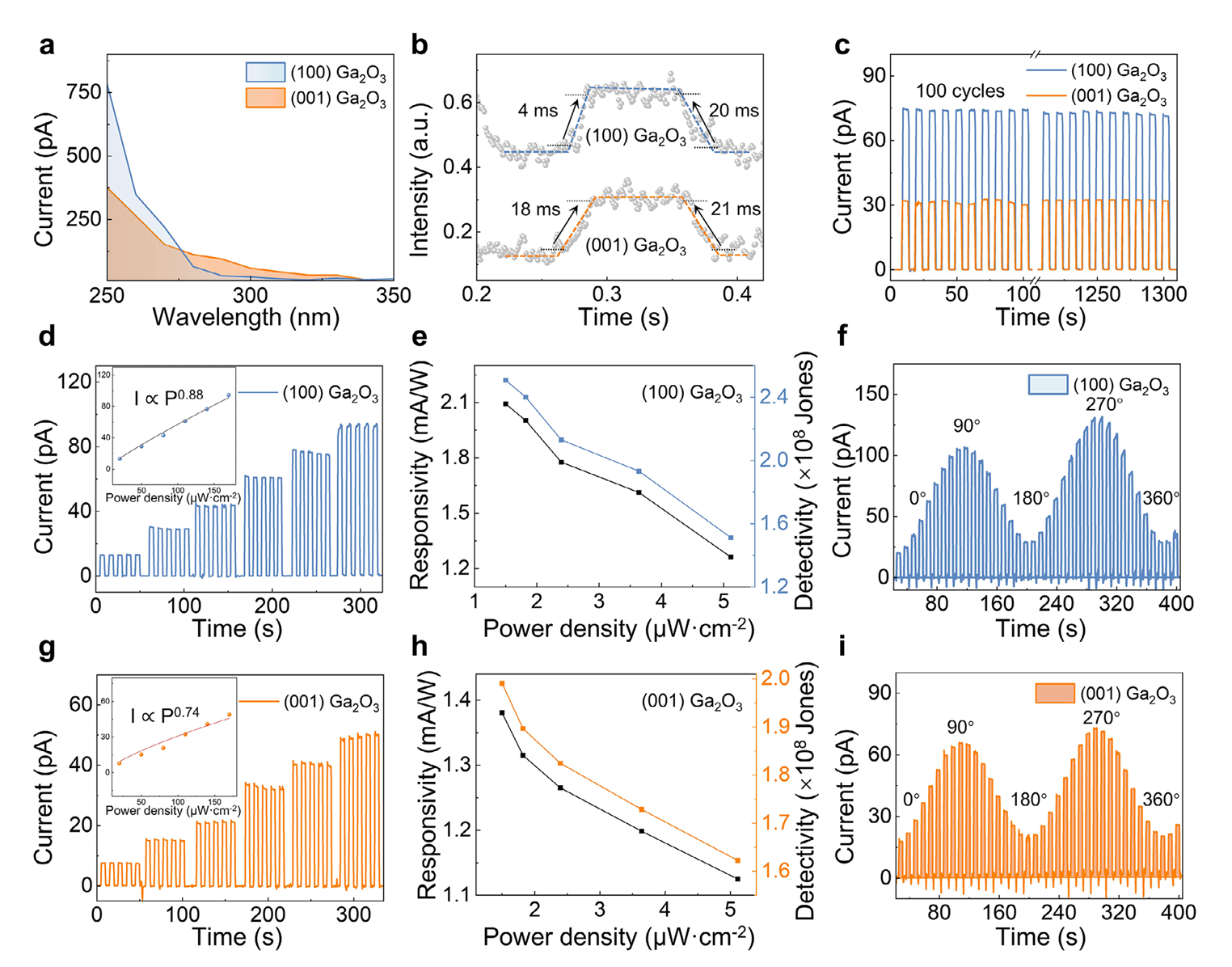
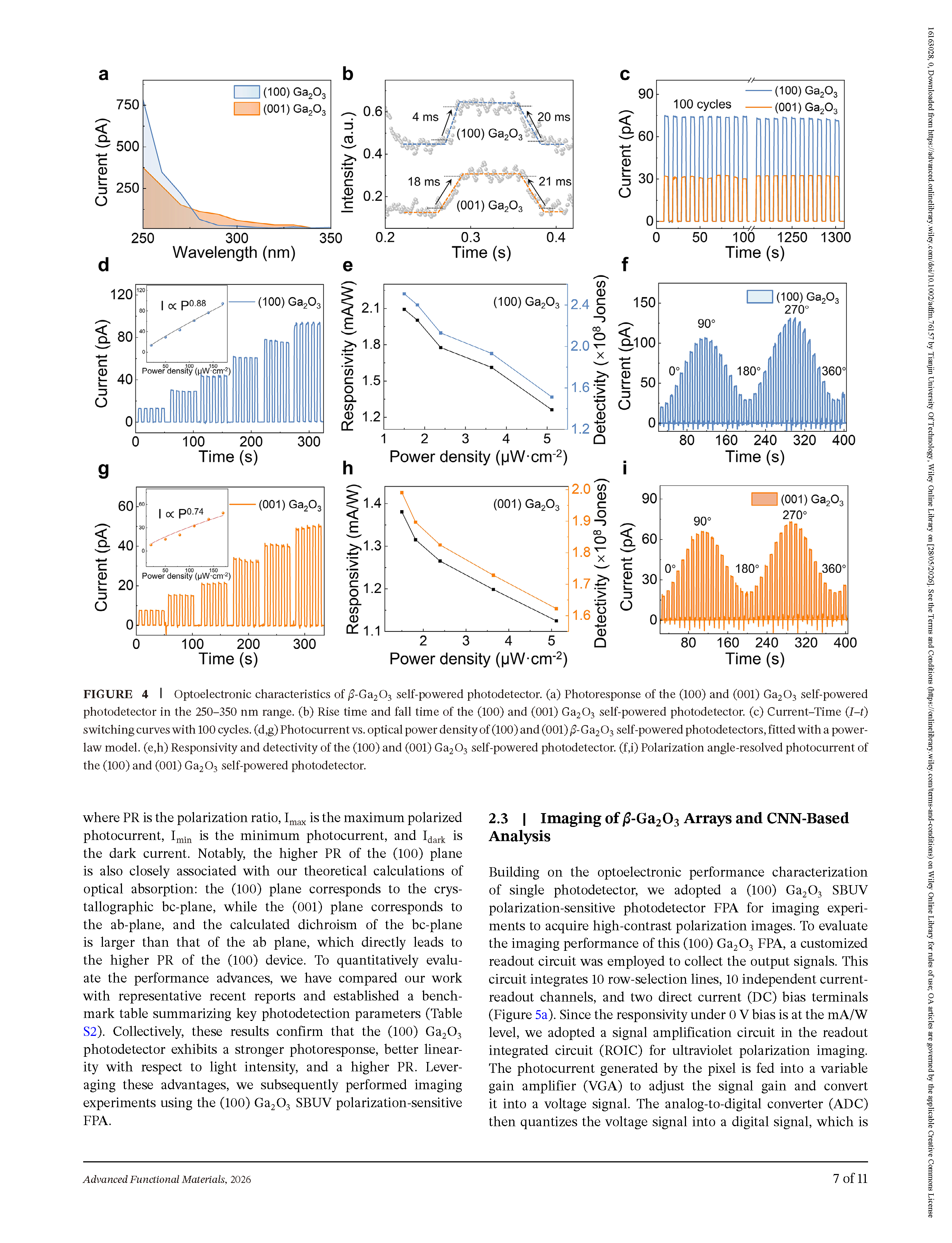
FIGURE 4 Optoelectronic characteristics of β-Ga₂O₃ self-powered photodetector. (a) Photoresponse of the (100) and (001) Ga₂O₃ self-powered photodetector in the 250–350 nm range. (b) Rise time and fall time of the (100) and (001) Ga₂O₃ self-powered photodetector. (c) Current–Time (I–t) switching curves with 100 cycles. (d,g)Photocurrentvs. Optical power density of (100) and (001) β-Ga₂O₃ self-powered photodetectors, fitted with a powerlaw model. (e,h) Responsivity and detectivity of the (100) and (001) Ga₂O₃ self-powered photodetector. (f,i) Polarization angle-resolved photocurrent of the (100) and (001) Ga₂O₃ self-powered photodetector.
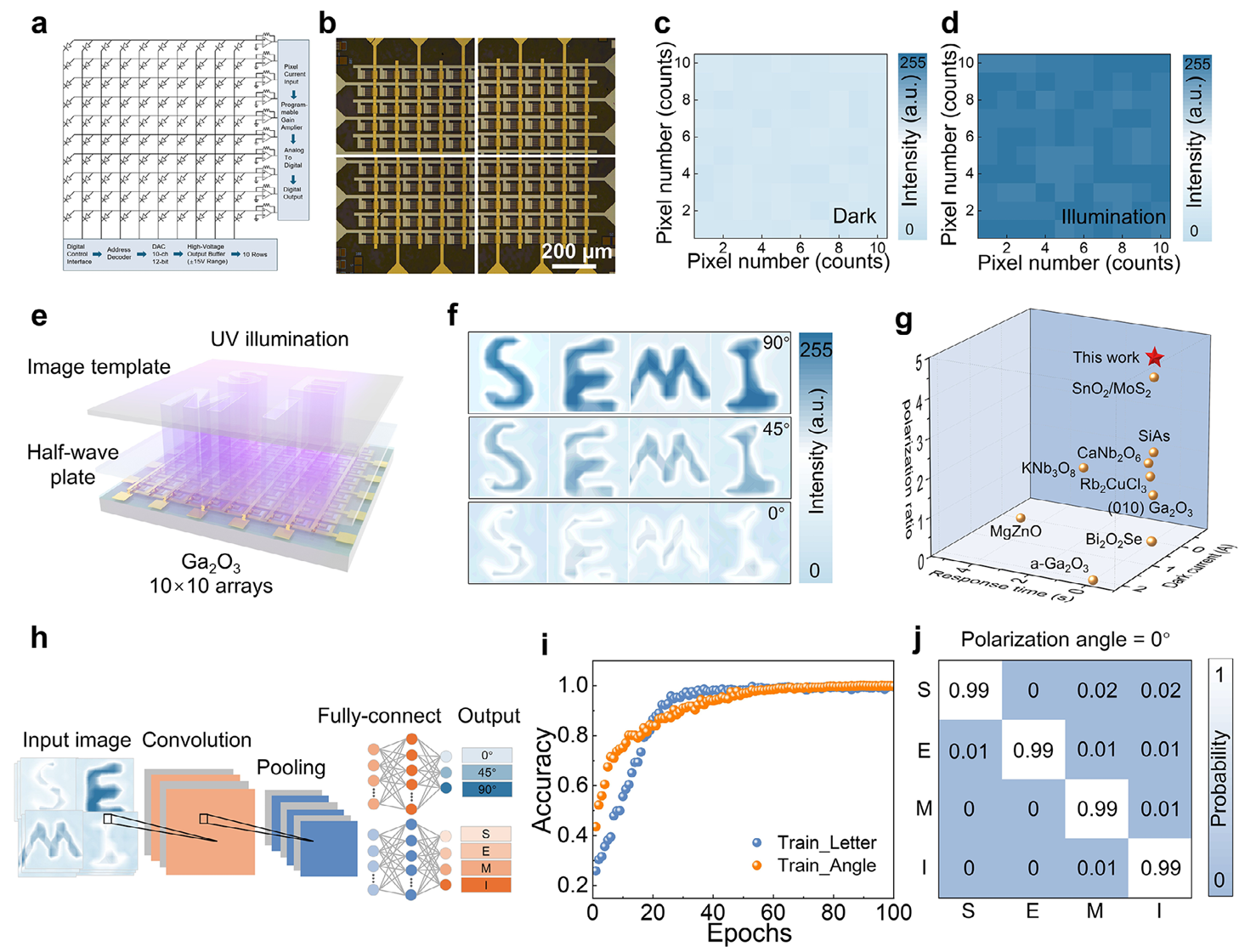
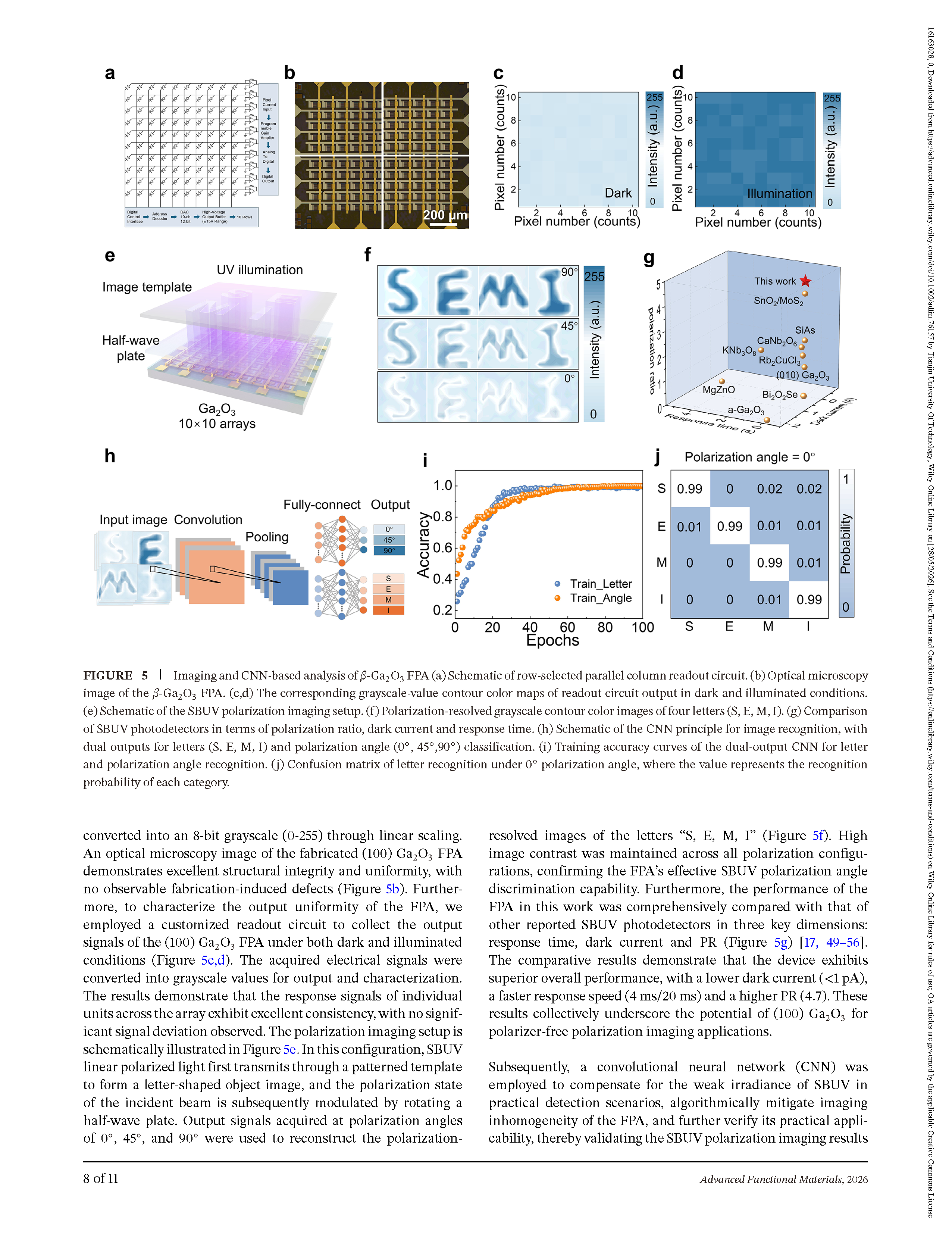
FIGURE 5 Imaging and CNN-based analysis of β-Ga₂O₃ FPA (a) Schematic of row-selected parallel column readout circuit. (b)Optical microscopy image of the β-Ga₂O₃ FPA. (c,d) The corresponding grayscale-value contour color maps of readout circuit output in dark and illuminated conditions. (e) Schematic of the SBUV polarization imaging setup. (f)Polarization-resolved grayscale contour color images of four letters (S,E,M,I). (g)Comparison of SBUV photodetectors in terms of polarization ratio, dark current and response time. (h) Schematic of the CNN principle for image recognition, with dual outputs for letters (S, E, M, I) and polarization angle (0°,45°,90°) classification. (i) Training accuracy curves of the dual-output CNN for letter and polarization angle recognition. (j) Confusion matrix of letter recognition under 0° polarization angle, where the value represents the recognition probability of each category.
DOI:
doi.org/10.1002/adfm.76157

Instruction
Official Account

Cooperation
Top