


Researchers from Shandong University of Technology and Dongguan Institute of Materials Science and Technology, Chinese Academy of Sciences have published a dissertation titled "Giant Intrinsic Dichroism in β-Ga₂O₃ Enables Filter-Free, High-Fidelity Polarization Division Multiplexing" in Laser & Photonics Reviews.
Background
With the rapid development of data centers, artificial intelligence, and high-speed optical communication systems, information transmission capacity is approaching the physical limits of conventional communication architectures. Polarization Division Multiplexing (PDM) has emerged as an effective strategy for enhancing channel capacity by simultaneously transmitting independent data streams through two orthogonal polarization states.
Conventional PDM systems generally rely on polarization beam splitters, optical filters, and sophisticated digital signal processing units to demultiplex signals. These components increase system complexity, power consumption, and cost while limiting miniaturization and integration.
β-Ga₂O₃, an ultra-wide-bandgap semiconductor, has attracted extensive attention because of its large bandgap, excellent thermal stability, and high breakdown field strength. Unlike cubic crystals, β-Ga₂O₃ possesses a monoclinic crystal structure, leading to strong intrinsic optical anisotropy and polarization-dependent absorption characteristics.
Although polarization-sensitive behavior has been observed previously in β-Ga₂O₃, its capability for high-fidelity polarization division multiplexing and filter-free polarization demultiplexing has remained largely unexplored.
In this work, the team combined first-principles calculations, polarization-resolved spectroscopy, and device demonstrations to investigate the origin of intrinsic dichroism in β-Ga₂O₃ and explore its application in polarization information processing. The study demonstrates filter-free, high-fidelity polarization division multiplexing enabled by the giant intrinsic dichroism of β-Ga₂O₃, providing a promising material platform for next-generation integrated photonic communication systems.
Abstract
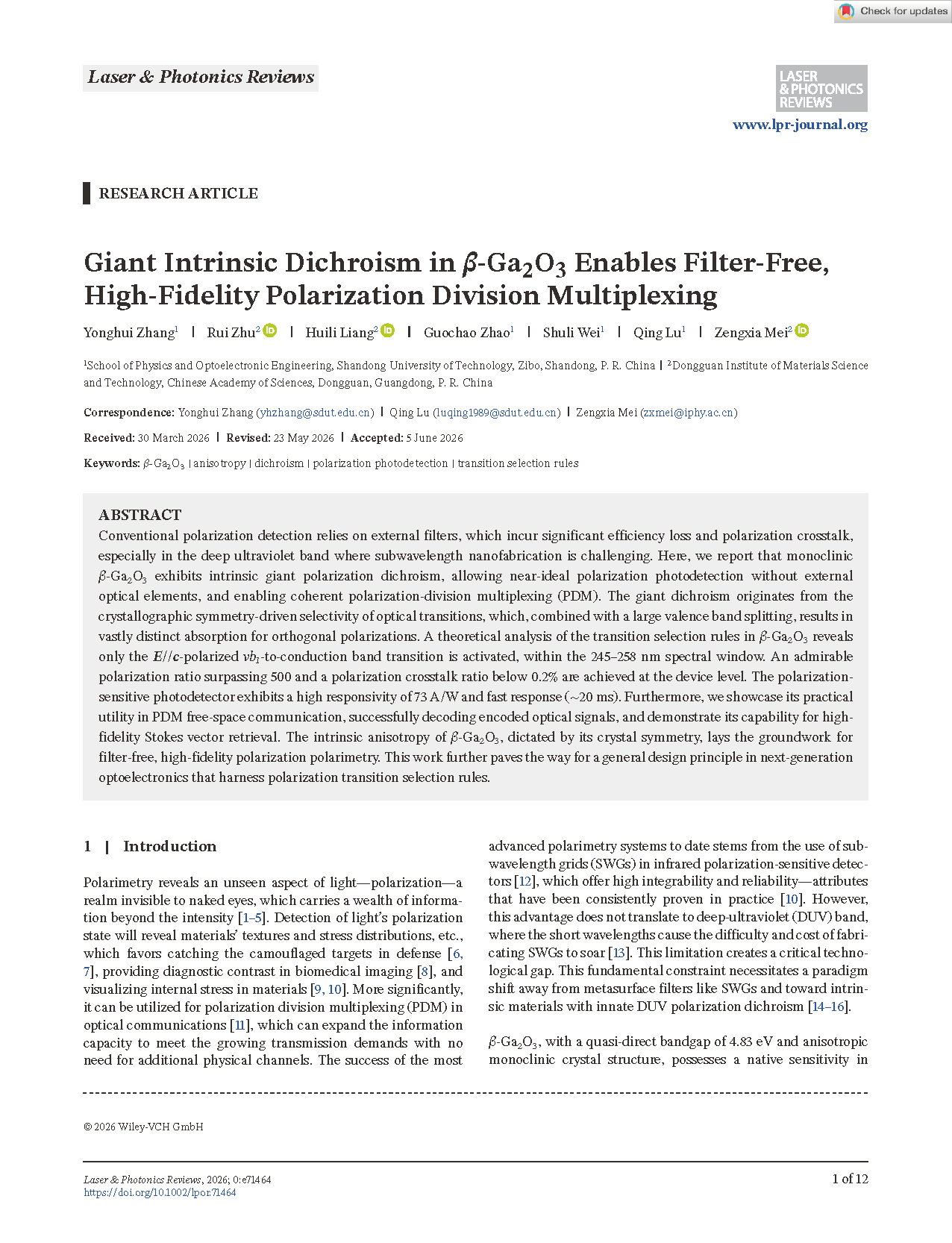
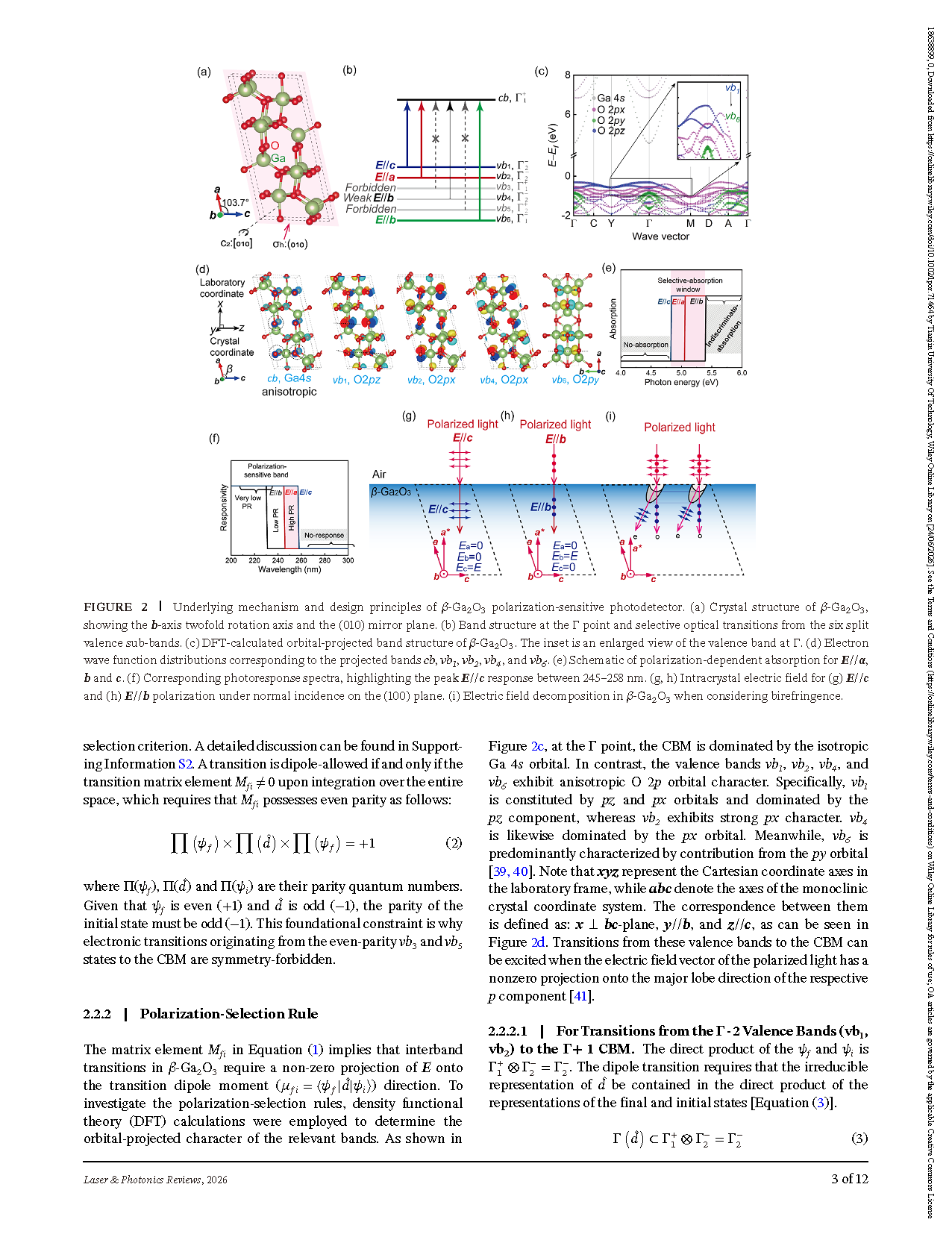
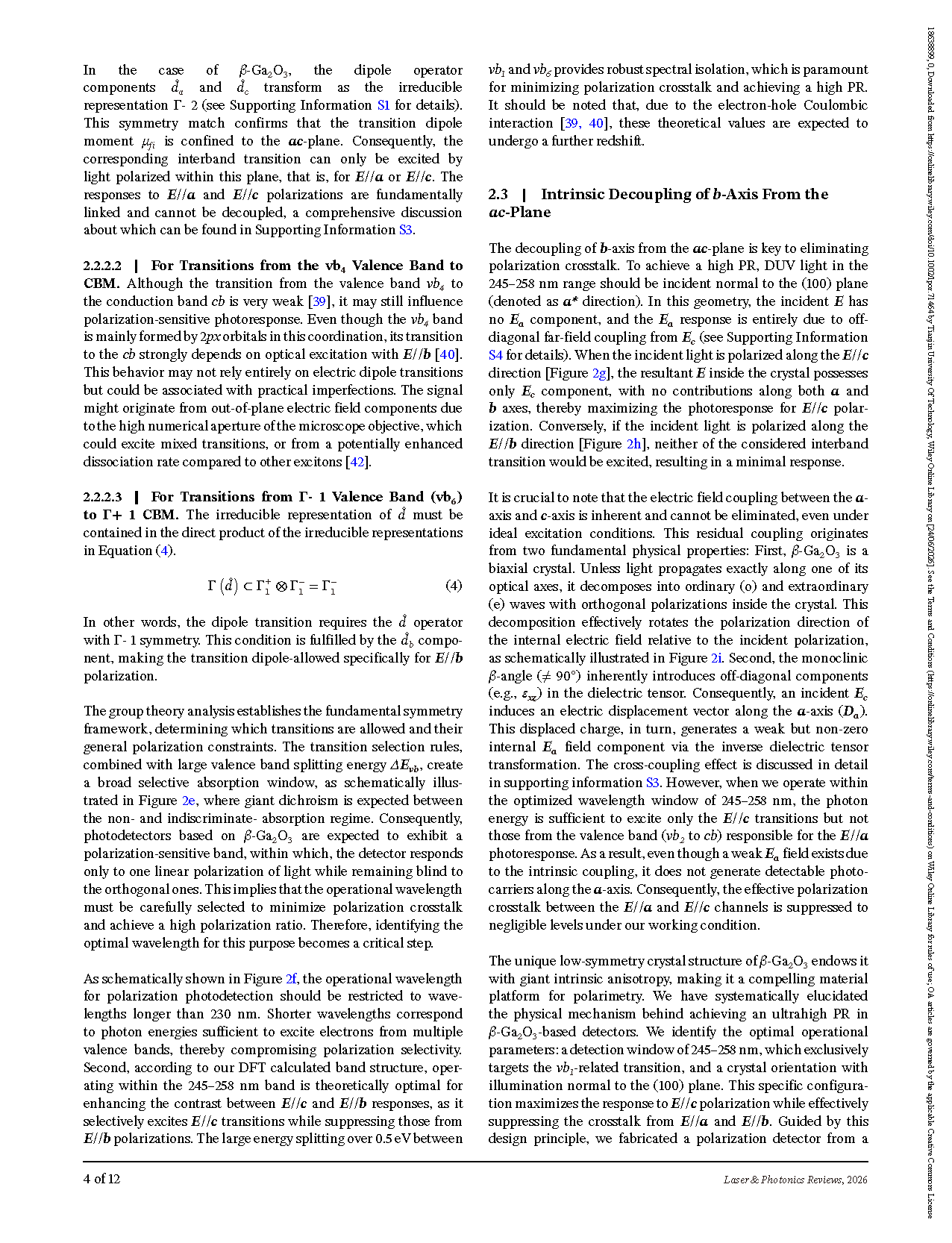
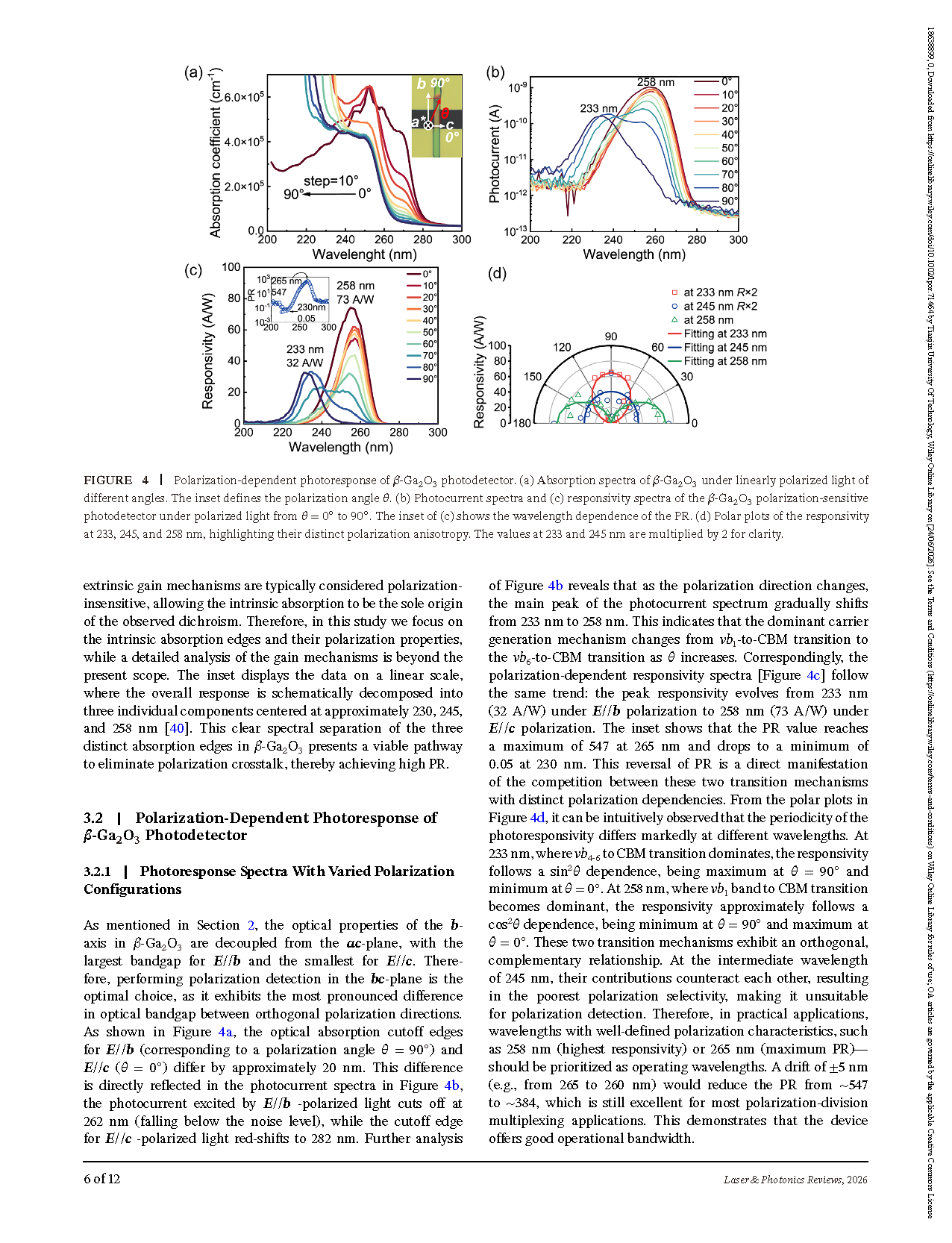
Conventional polarization detection relies on external filters, which incur significant efficiency loss and polarization crosstalk, especially in the deep ultraviolet band where subwavelength nanofabrication is challenging. Here, we report that monoclinic β-Ga₂O₃ exhibits intrinsic giant polarization dichroism, allowing near-ideal polarization photodetection without external optical elements, and enabling coherent polarization-division multiplexing (PDM). The giant dichroism originates from the crystallographic symmetry-driven selectivity of optical transitions, which, combined with a large valence band splitting, results in vastly distinct absorption for orthogonal polarizations. A theoretical analysis of the transition selection rules in β-Ga₂O₃ reveals that only the E // c-polarized vb1-to-conduction band transition is activated within the 245–258 nm spectral window. An admirable polarization ratio surpassing 500 and a polarization crosstalk ratio below 0.2% are achieved at the device level. The polarization-sensitive photodetector exhibits a high responsivity of 73 A/W and fast response (~20 ms).
Furthermore, we showcase its practical utility in PDM free-space communication, successfully decoding encoded optical signals, and demonstrate its capability for high-fidelity Stokes vector retrieval. The intrinsic anisotropy of β-Ga₂O₃, dictated by its crystal symmetry, lays the groundwork for filter-free, high-fidelity polarization polarimetry.
This work further paves the way for a general design principle in next-generation optoelectronics that harness polarization transition selection rules.
Highlights
First-principles calculations and experiments reveal the anisotropic electronic-state origin of giant linear dichroism in monoclinic β-Ga₂O₃.
Intrinsic polarization-selective absorption replaces conventional optical filtering components.
Independent transmission and recovery of polarization-encoded information are experimentally demonstrated.
The work expands β-Ga₂O₃applications beyond power electronics and UV photodetection into integrated photonics and optical communications.
Conclusion
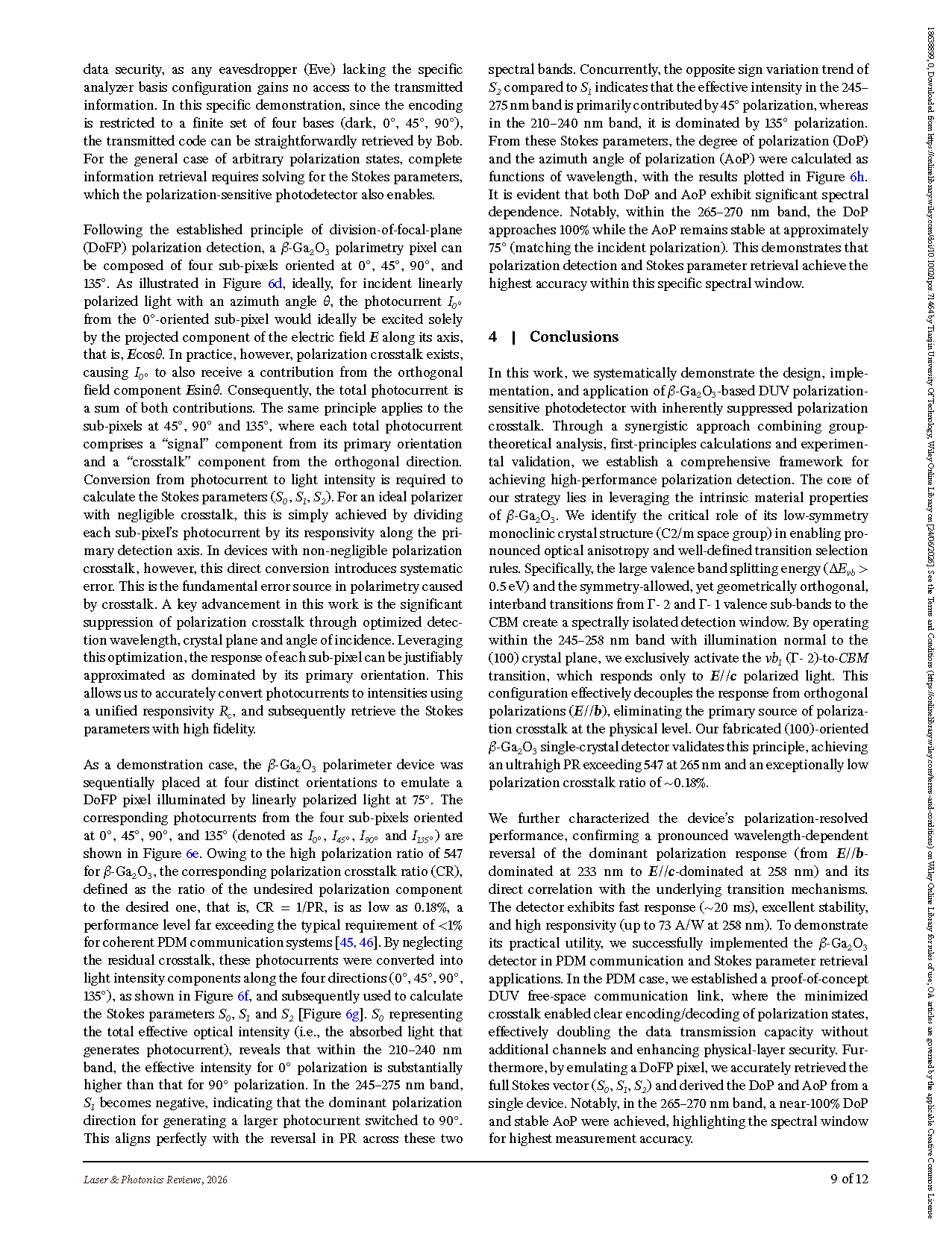
This work systematically elucidated the formation mechanism of giant intrinsic linear dichroism in β-Ga₂O₃ and demonstrated its capability to directly enable high-fidelity polarization multiplexing and demultiplexing. The results show that the material itself can perform polarization selection and information separation without the need for additional polarization filters, thereby significantly reducing system complexity and enhancing integration potential. This achievement not only deepens the understanding of the intrinsic optical anisotropy of β-Ga₂O₃, but also provides a new technological pathway for building high-density, low-power, and integrated optical communication systems.
Project Support
This work was supported by the National Natural Science Foundation of China, the Natural Science Foundation of Shandong Province, and research programs of the Chinese Academy of Sciences.
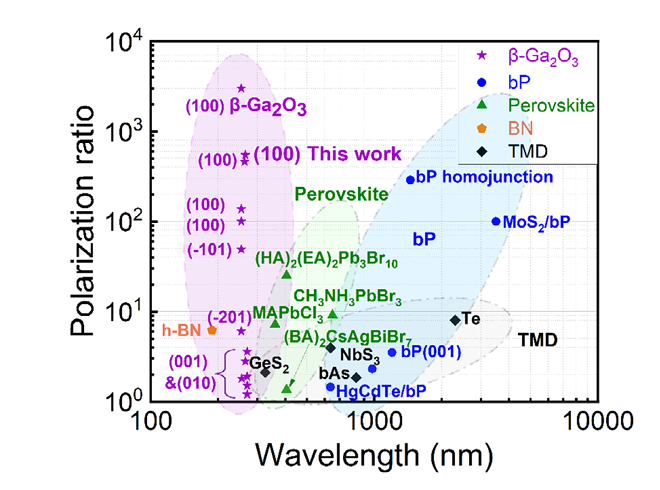
Figure 1. Statistical data of the polarization ratio (PR) in polarization-sensitive photodetectors based on diverse material systems.
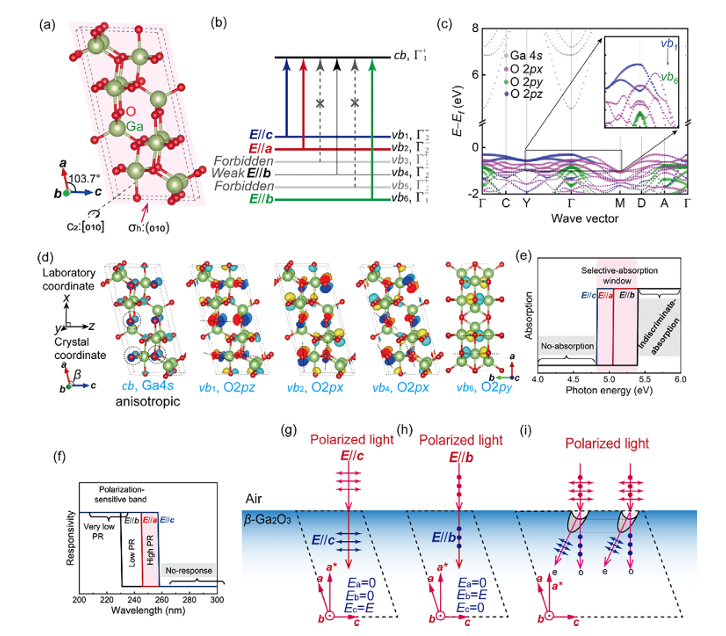
Figure 2. Underlying mechanism and design principles of the β-Ga₂O₃ polarization-sensitive photodetector. (a) Crystal structure of β-Ga₂O₃, showing the b-axis twofold rotation axis and the (010) mirror plane. (b) Band structure at the point and selective optical transitions from the six split valence sub-bands. (c) DFT-calculated orbital-projected band structure of β-Ga₂O₃; the inset shows an enlarged view of the valence band at . (d) Electron wave function distributions corresponding to the projected bands cb, vb1, vb2, vb4, and vb6. (e) Schematic of polarization-dependent absorption for E // a, b, and c. (f) Corresponding photoresponse spectra, highlighting the peak E // c response between 245–258 nm. (g, h) Intracrystal electric field distributions under normal incidence on the (100) plane for (g) E // c and (h) E // b polarization. (i) Electric field decomposition in β-Ga₂O₃ considering birefringence.
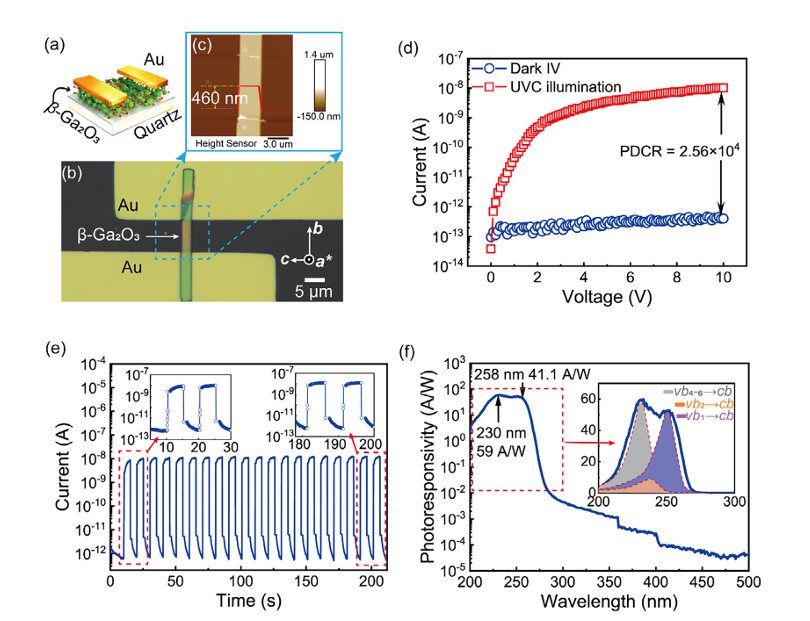
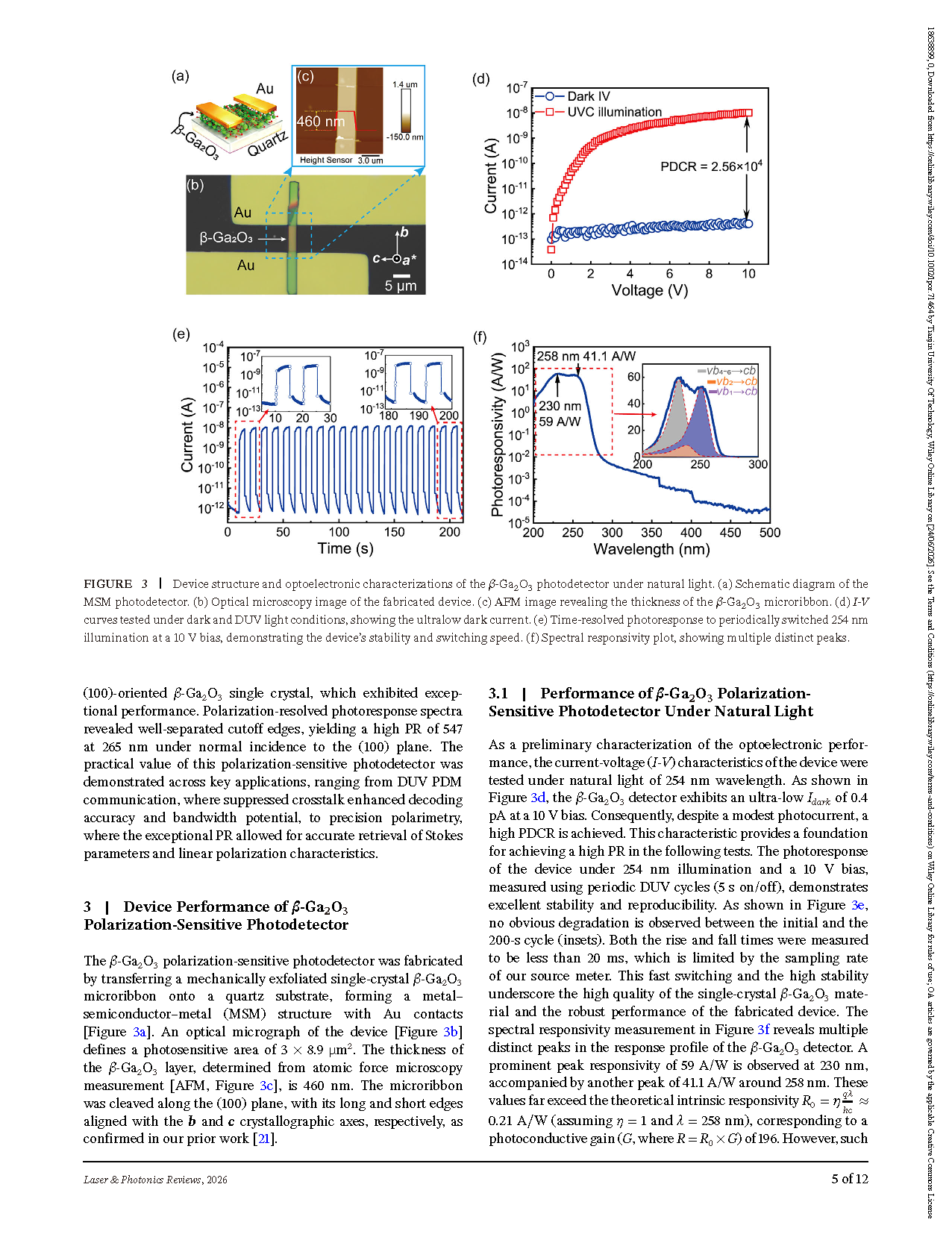
Figure 3. Device structure and optoelectronic characterization of the β-Ga₂O₃ photodetector under natural light. (a) Schematic diagram of the MSM photodetector. (b) Optical microscopy image of the fabricated device. (c) AFM image showing the thickness of the β-Ga₂O₃ microribbon. (d) I–V curves measured under dark and DUV illumination conditions, demonstrating an ultralow dark current. (e) Time-resolved photoresponse under periodically switched 254 nm illumination at a 10 V bias, indicating device stability and switching speed. (f) Spectral responsivity showing multiple distinct peaks.
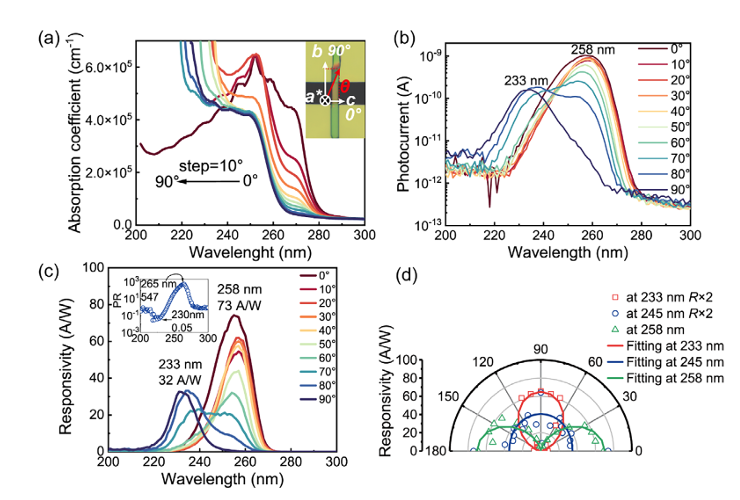
Figure 4. Polarization-dependent photoresponse of the β-Ga₂O₃ photodetector. (a) Absorption spectra of β-Ga₂O₃ under linearly polarized light at different angles; the inset defines the polarization angle θ. (b) Photocurrent spectra of the polarization-sensitive β-Ga₂O₃ photodetector under polarized light from θ = 0° to 90°. (c) Responsivity spectra under polarized light from θ = 0° to 90°; the inset shows the wavelength dependence of the polarization ratio (PR). (d) Polar plots of responsivity at 233, 245, and 258 nm, highlighting distinct polarization anisotropy; values at 233 and 245 nm are multiplied by 2 for clarity.
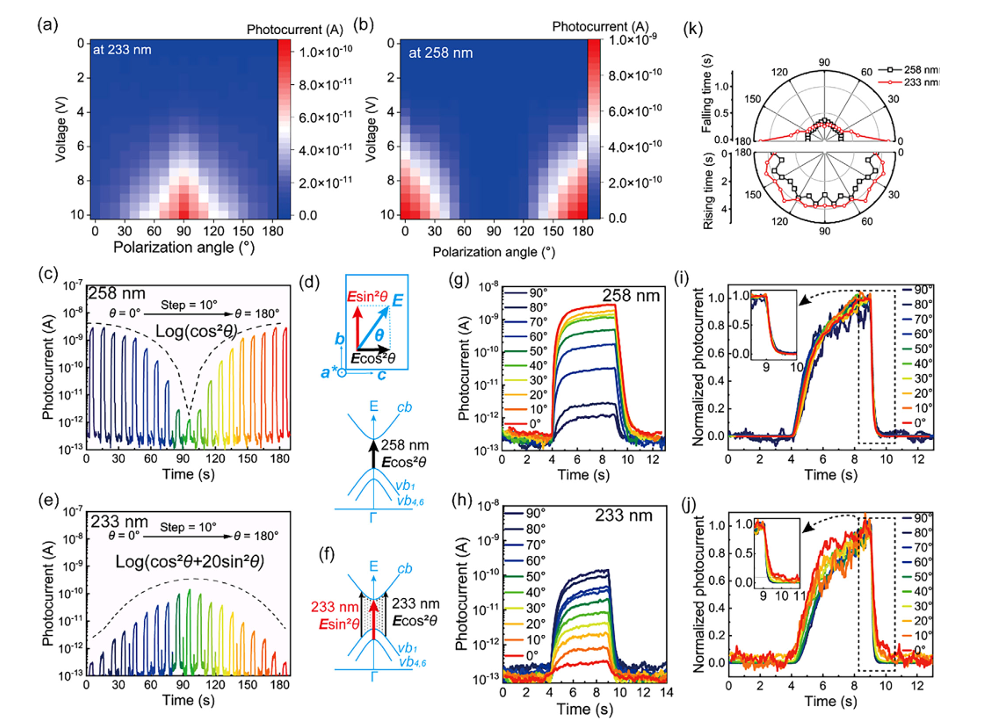
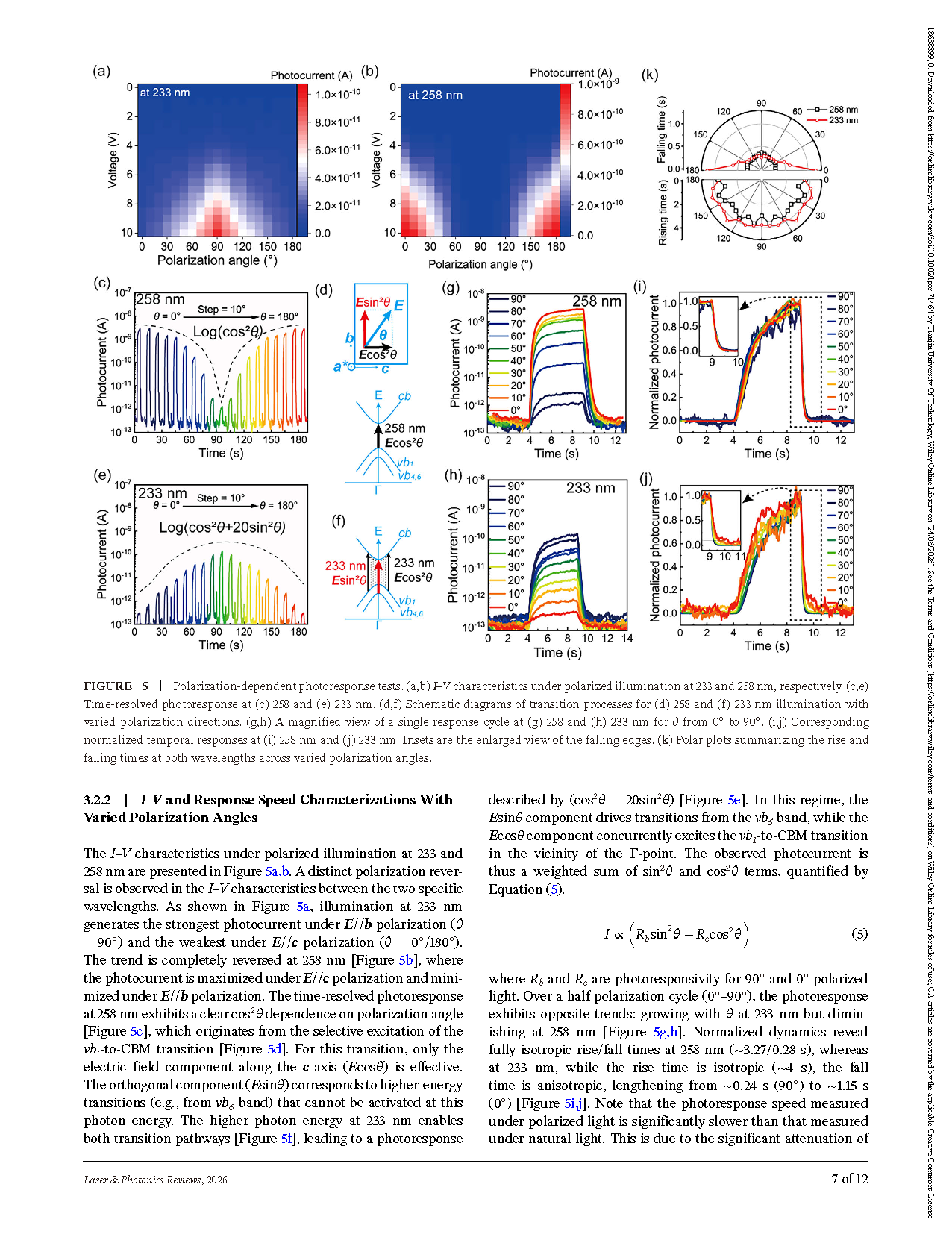
Figure 5. Polarization-dependent photoresponse tests. (a, b) I–V characteristics under polarized illumination at 233 nm and 258 nm, respectively. (c, e) Time-resolved photoresponse at 258 nm (c) and 233 nm (e). (d, f) Schematic diagrams of the transition processes under 258 nm (d) and 233 nm (f) illumination with different polarization directions. (g, h) Enlarged view of a single response cycle at 258 nm (g) and 233 nm (h) for θ from 0° to 90°. (i, j) Corresponding normalized transient responses at 258 nm (i) and 233 nm (j); insets show enlarged falling edges. (k) Polar plots summarizing the rise and fall times at both wavelengths across different polarization angles.
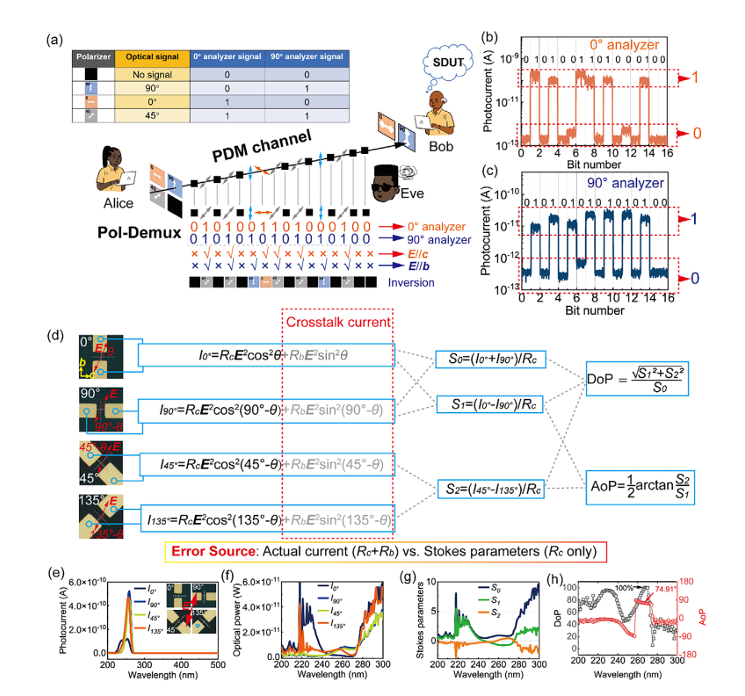
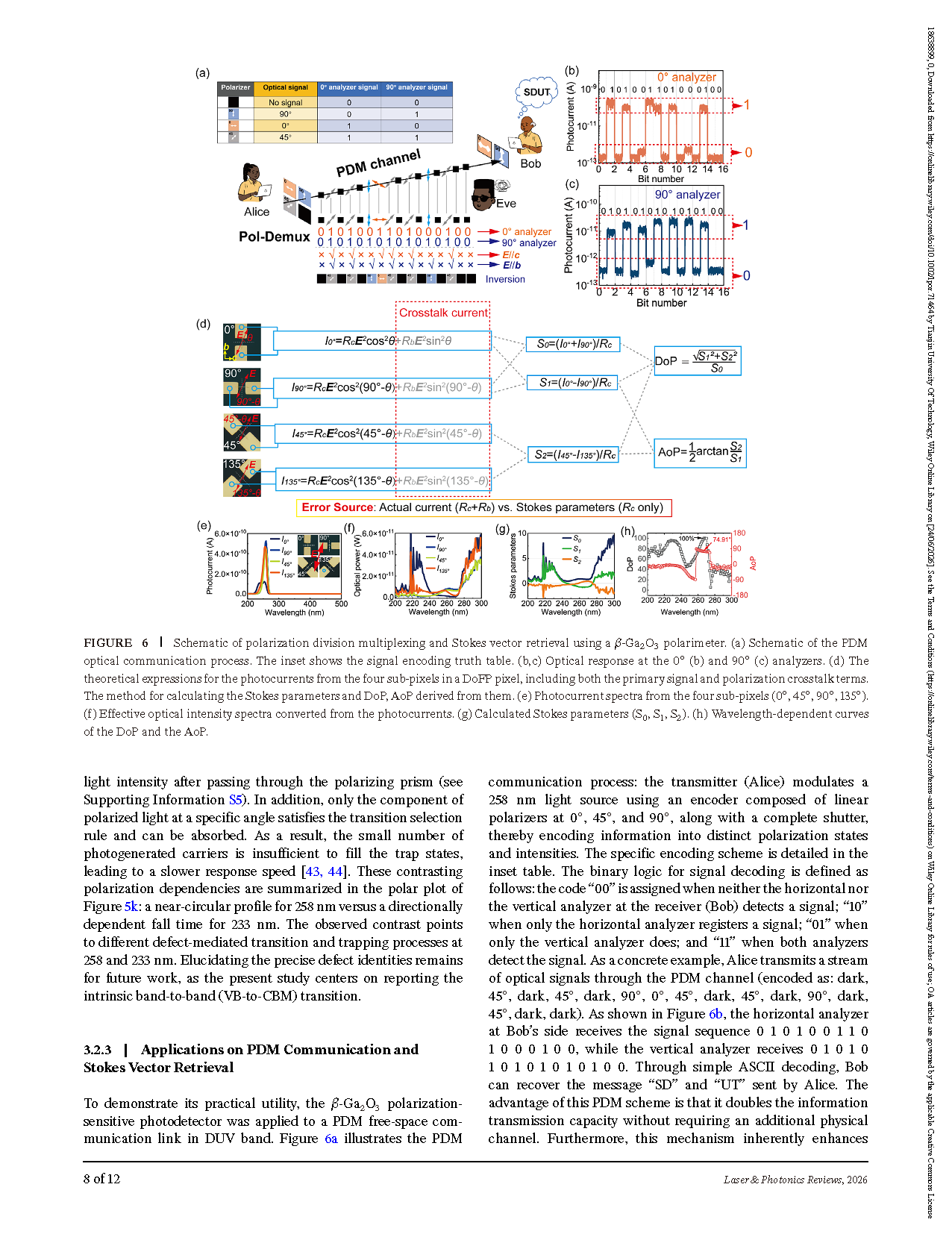
Figure 6. Schematic of polarization-division multiplexing (PDM) and Stokes vector retrieval using a β-Ga₂O₃ polarimeter. (a) Schematic of the PDM optical communication process; the inset shows the signal encoding truth table. (b, c) Optical response at 0° (b) and 90° (c) analyzers. (d) Theoretical expressions for photocurrents from the four sub-pixels in a DoFP pixel, including primary signal and polarization crosstalk terms, and the calculation method for Stokes parameters, DoP, and AoP. (e) Photocurrent spectra from the four sub-pixels (0°, 45°, 90°, 135°). (f) Converted effective optical intensity spectra derived from photocurrents. (g) Calculated Stokes parameters (S₀, S₁, S₂). (h) Wavelength-dependent degree of polarization (DoP) and angle of polarization (AoP).
DOI:
10.1002/lpor.71464
Instruction
Official Account

Cooperation
Top