


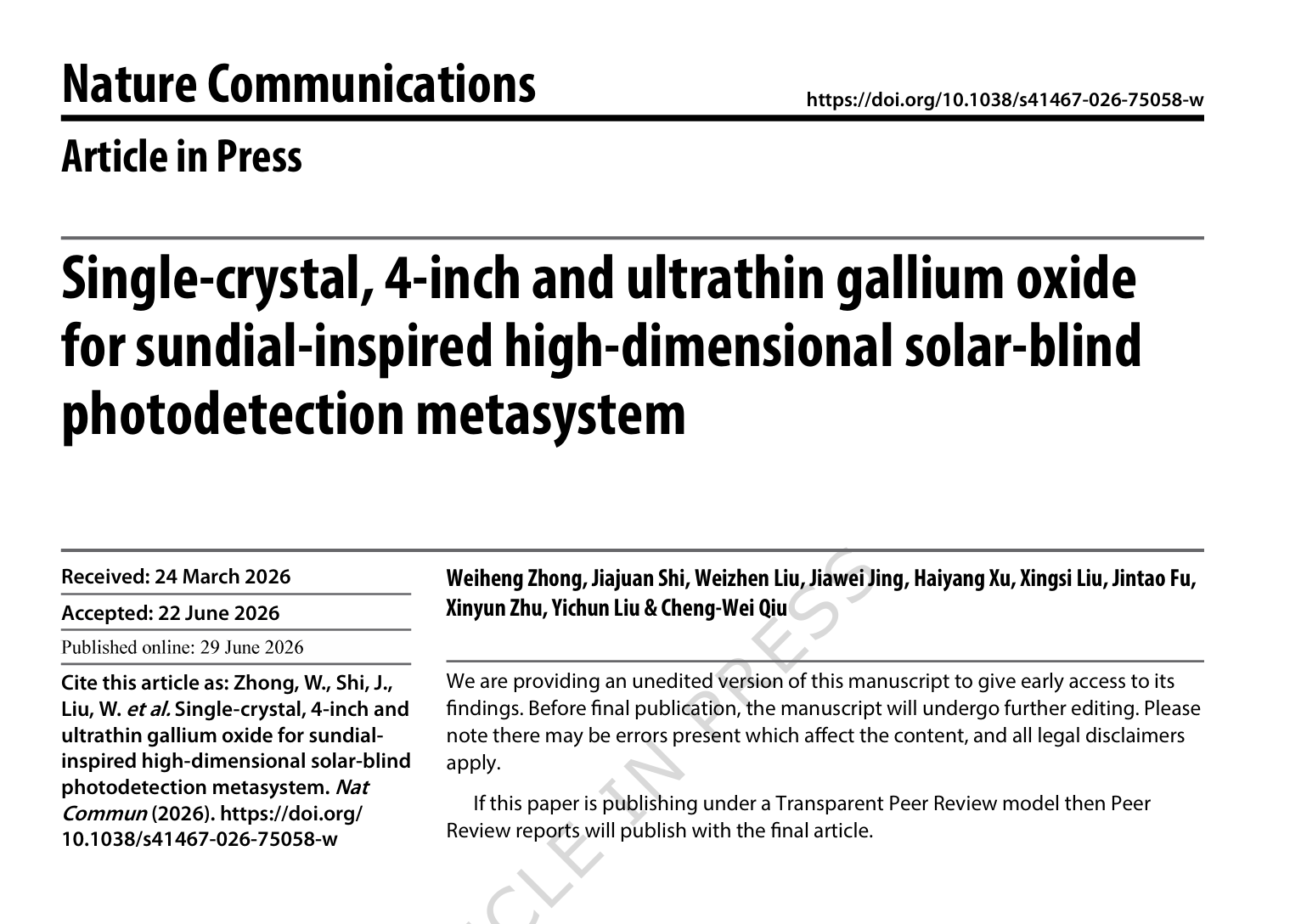
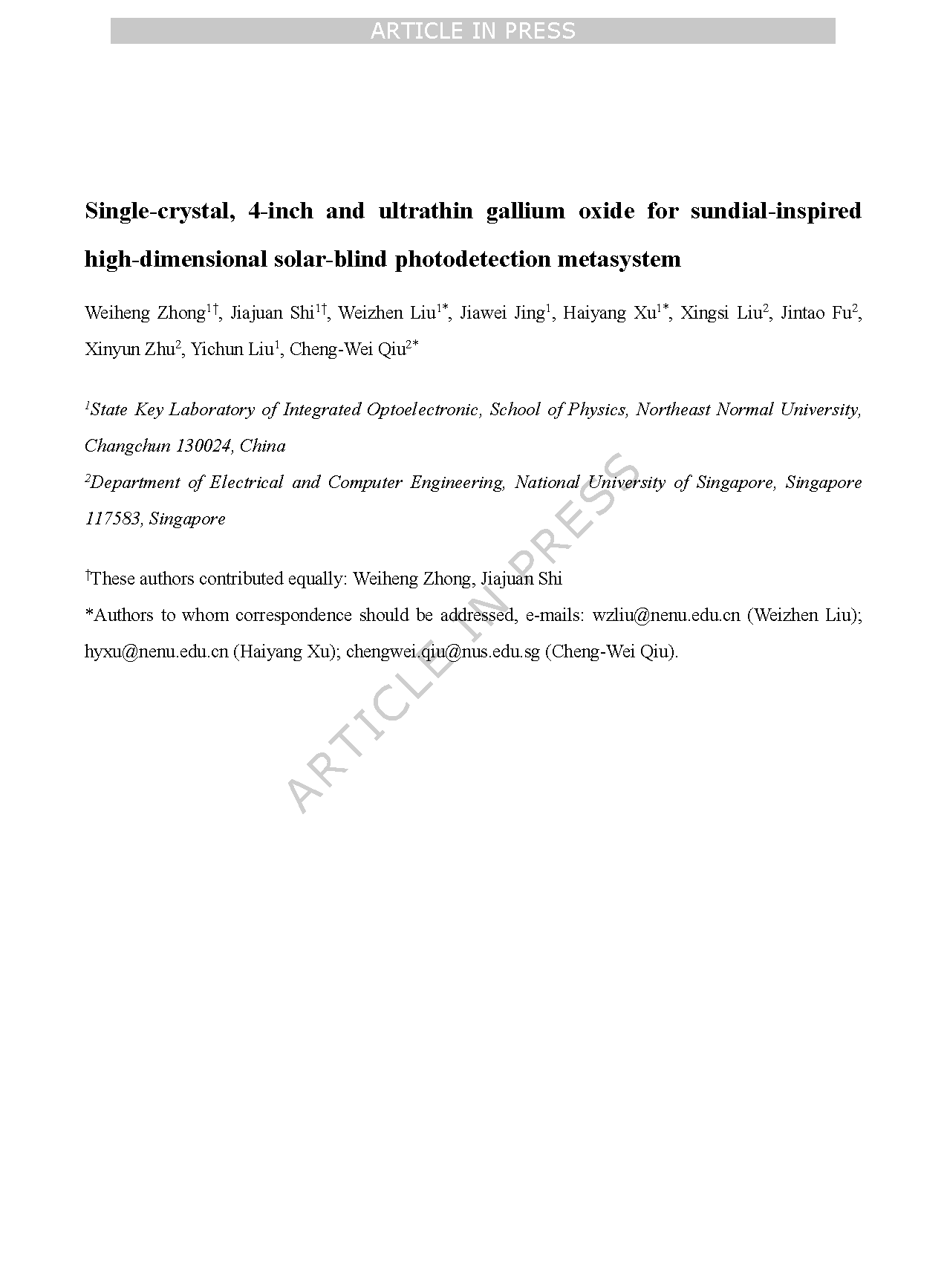
Researchers from National University of Singapore and Northeast Normal University have published a dissertation titled " Single-crystal, 4-inch and ultrathin gallium oxide for sundial-inspired high-dimensional solar-blind photodetection metasystem " in Nature Communications.
Background
Ultra-wide bandgap oxides are essential for next-generation integrated optoelectronic devices due to their high breakdown field, high mobility and outstanding stability. Gallium oxide (Ga₂O₃) is one of the most representative candidates, and its conventional preparation methods include edge-defined film-fed growth, Czochralski process, magnetron sputtering, metal-organic chemical vapor deposition (MOCVD), molecular beam epitaxy (MBE) and even mechanical exfoliation (ME). Unfortunately, these strategies are natively difficult to achieve large-scale production, substrate independence, defect suppression, ultimate purity, and high crystallinity. For instance, the oxygen vacancies that are difficult to eliminate in MOCVD, the strong dependence of sapphire substrates in MBE, and the uncontrollable uneven thickness of samples in ME are all obstacles of Ga₂O₃ preparation process to be overcome. Recently, room-temperature liquid metal offers an opportunity for the synthesis of gallium oxide with nano-scale thickness. However, the liquid-metal-printing strategy is currently encountering issues related to size, edges and stress. A high-quality, low-cost and lightweight production scheme is still absent, hence it is yet to fulfill the prerequisites of wafer-scale ultrathin Ga₂O₃ and fabrication platform compatible with industry-standard pilot lines.
Abstract
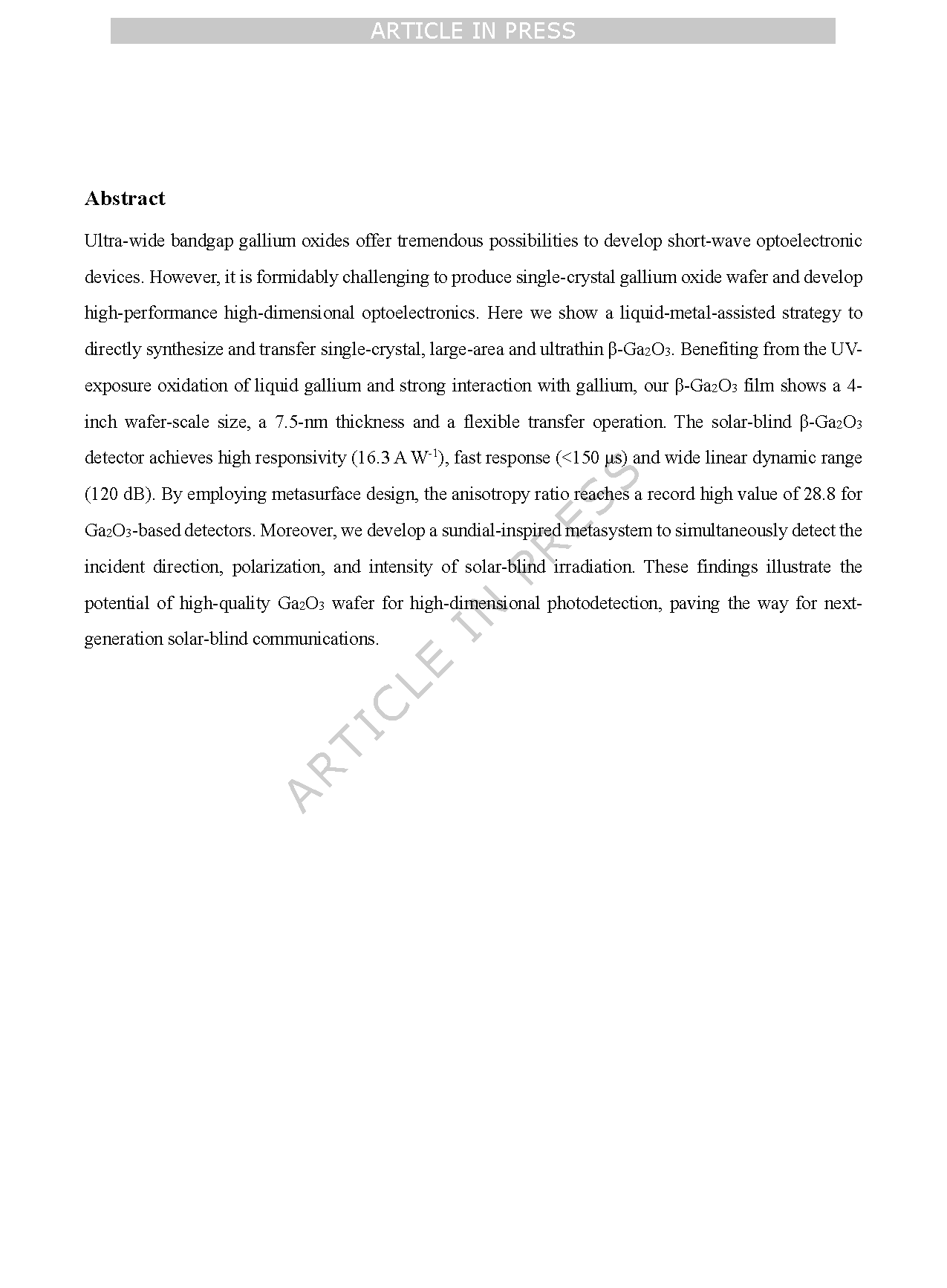
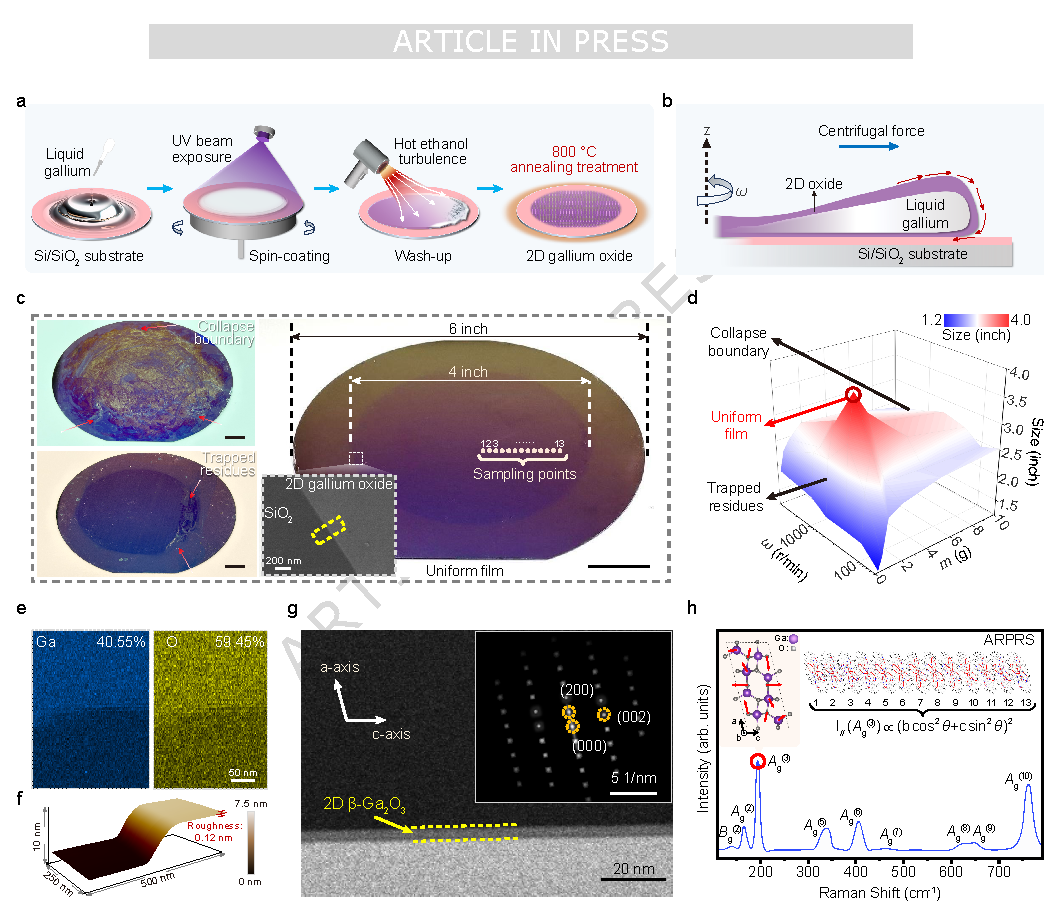
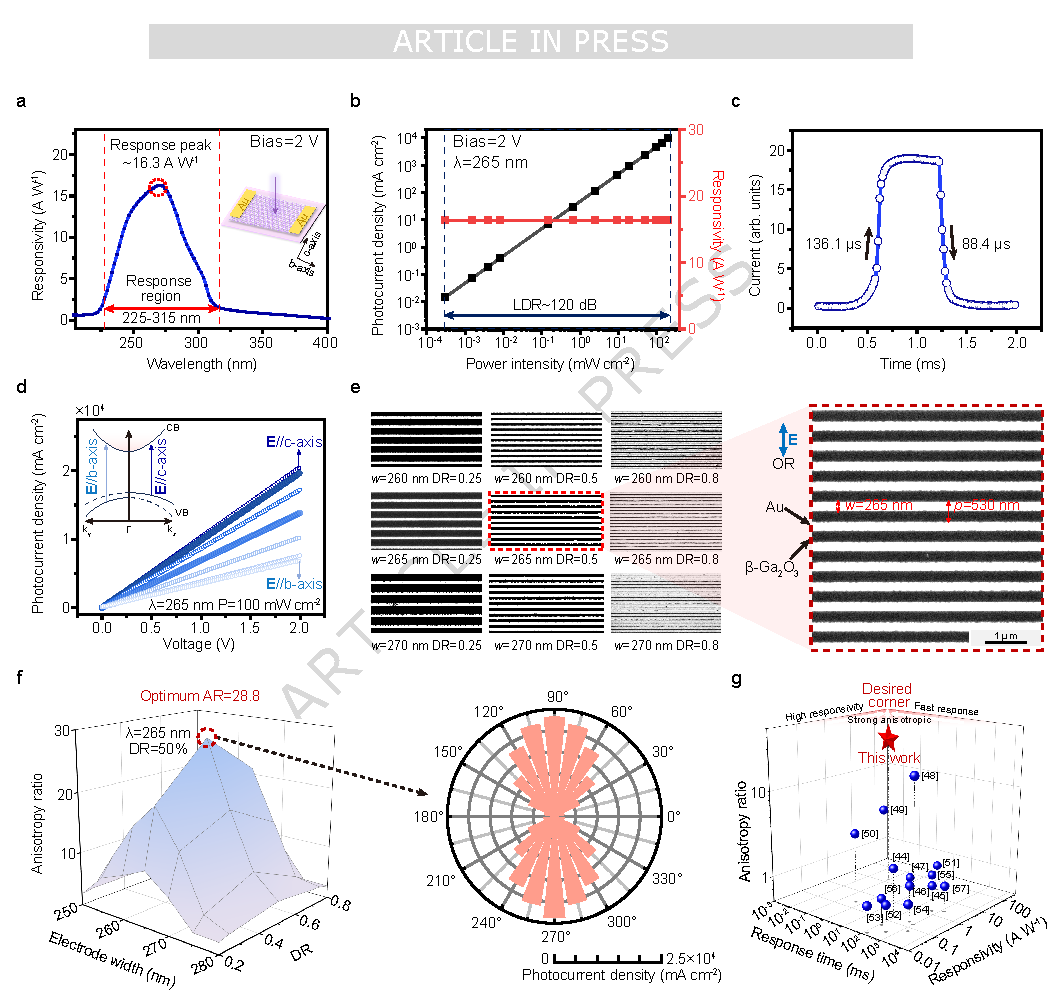
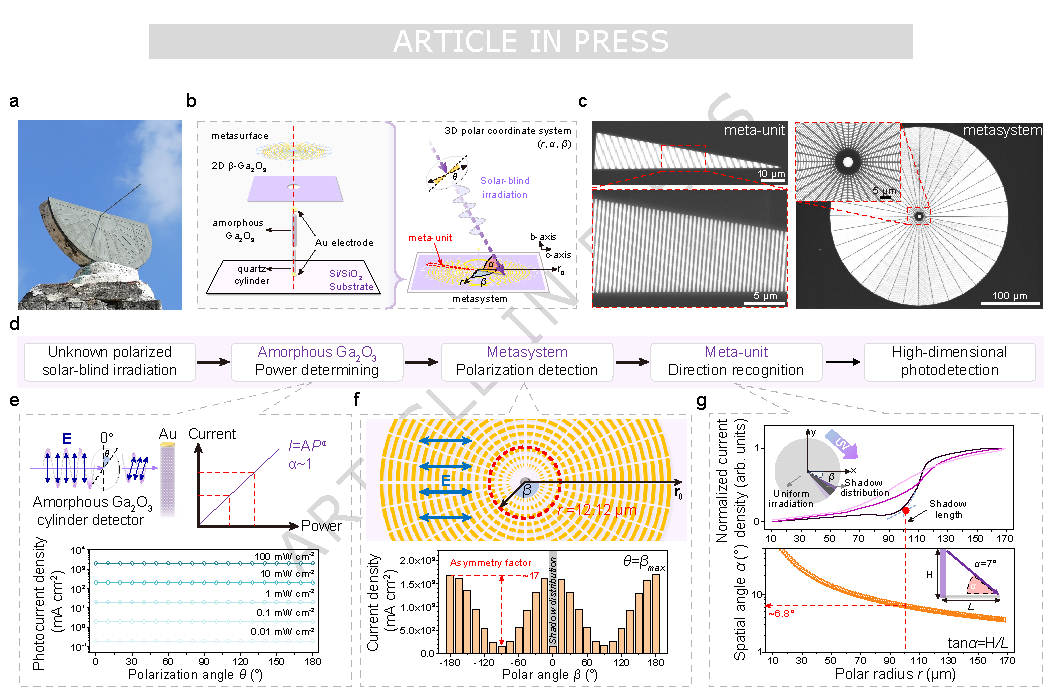
Ultra-wide bandgap gallium oxides offer tremendous possibilities to develop short-wave optoelectronic devices. However, it is formidably challenging to produce single-crystal gallium oxide wafer and develop high-performance high-dimensional optoelectronics. Here we show a liquid-metal-assisted strategy to directly synthesize and transfer single-crystal, large-area and ultrathin β-Ga₂O₃. Benefiting from the UV exposure oxidation of liquid gallium and strong interaction with gallium, our β-Ga₂O₃ film shows a 4 inch wafer-scale size, a 7.5 nm thickness and a flexible transfer operation. The solar-blind β-Ga₂O₃ detector achieves high responsivity (16.3 AW-1), fast response (<150 us) and wide linear dynamic range (120 dB). By employing metasurface design, the anisotropy ratio reaches a record high value of 28.8 for Ga₂O₃-based detectors. Moreover, we develop a sundial-inspired metasystem to simultaneously detect the incident direction, polarization, and intensity of solar-blind irradiation. These findings illustrate the potential of high-quality Ga₂O₃ wafer for high-dimensional photodetection, paving the way for next generation solar-blind communications.
Conclusion
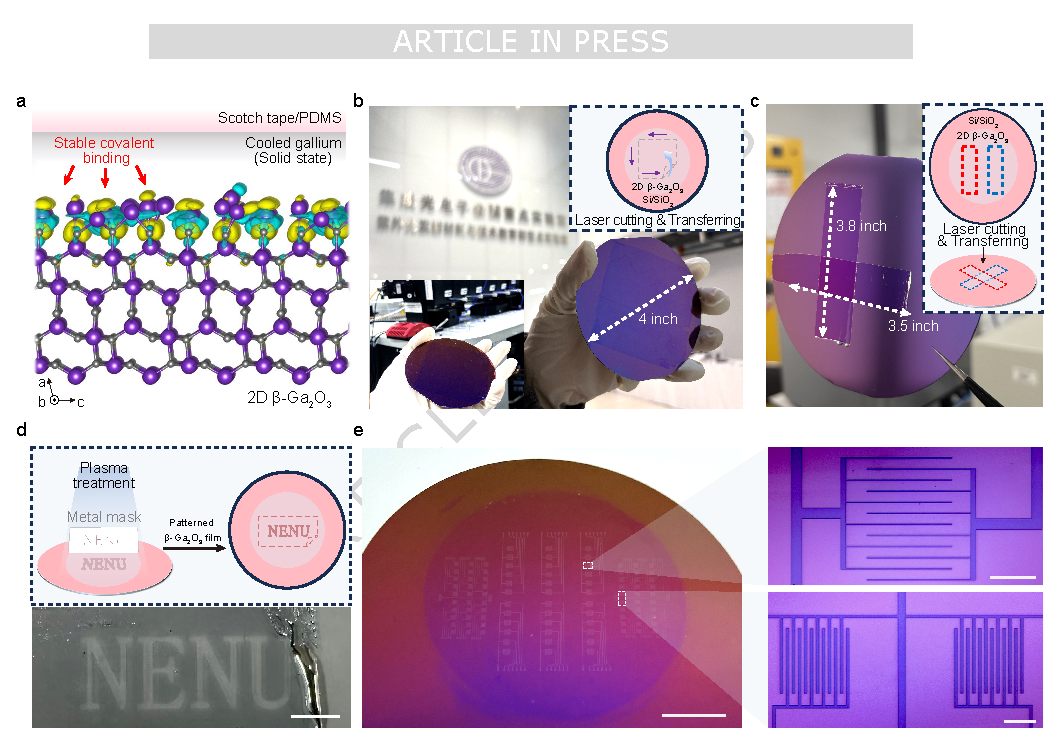
In summary, we have reported a holistic framework to synthesize single-crystal, 4 inch and ultrathin β-Ga₂O₃ wafer via ultraviolet exposure of liquid metal gallium and post-annealing process. The prepared β-Ga₂O₃ wafer can also be flexibly transferred in a specific pattern through covalent bonding with the solidified metallic Ga, providing an effectual manner to construct front-end device architectures for integration. The photodetector based on S4U β-Ga₂O₃ achieves an ultimate comprehensive performance (16.3 AW-1 of high responsivity, response time less than 150 μs and 120 dB of wide linear dynamic range in the solar-blind region). The anisotropy ratio has been optimized to a record high value of 28.8 due to the intrinsic anisotropy of β-Ga₂O₃ and metasurface structure. Such technical approach not only alleviates the trade-off problem between fast response and high responsivity, but also expands the polarization dimension in Ga₂O₃-based photodetection system. Inspired by sundial design, we have constructed a high dimensional solar-blind photodetection metasystem, displaying the practical function of simultaneously detecting the incident direction, polarization, and intensity of solar-blind irradiation. Although further investigations are still needed, our preparation technology of S4U β-Ga₂O₃ and metasystem design both explore and advance a promising production route towards next-generation solar-blind communication architecture.
Project Support
This work was supported by the National Key R&D Program of China (No. 2023YFB3610200), the National Natural Science Fund for Distinguished Young Scholars (No. 52025022), the Program of National Natural Science Foundation of China (Nos. 62574038 and 62275045), the Fund from Jilin Province (Grant No. SKL202602014JC). C.-W.Q. acknowledges the support of NSTIC Grant from A*STAR, Singapore (WBS: A-8003984-00-00).
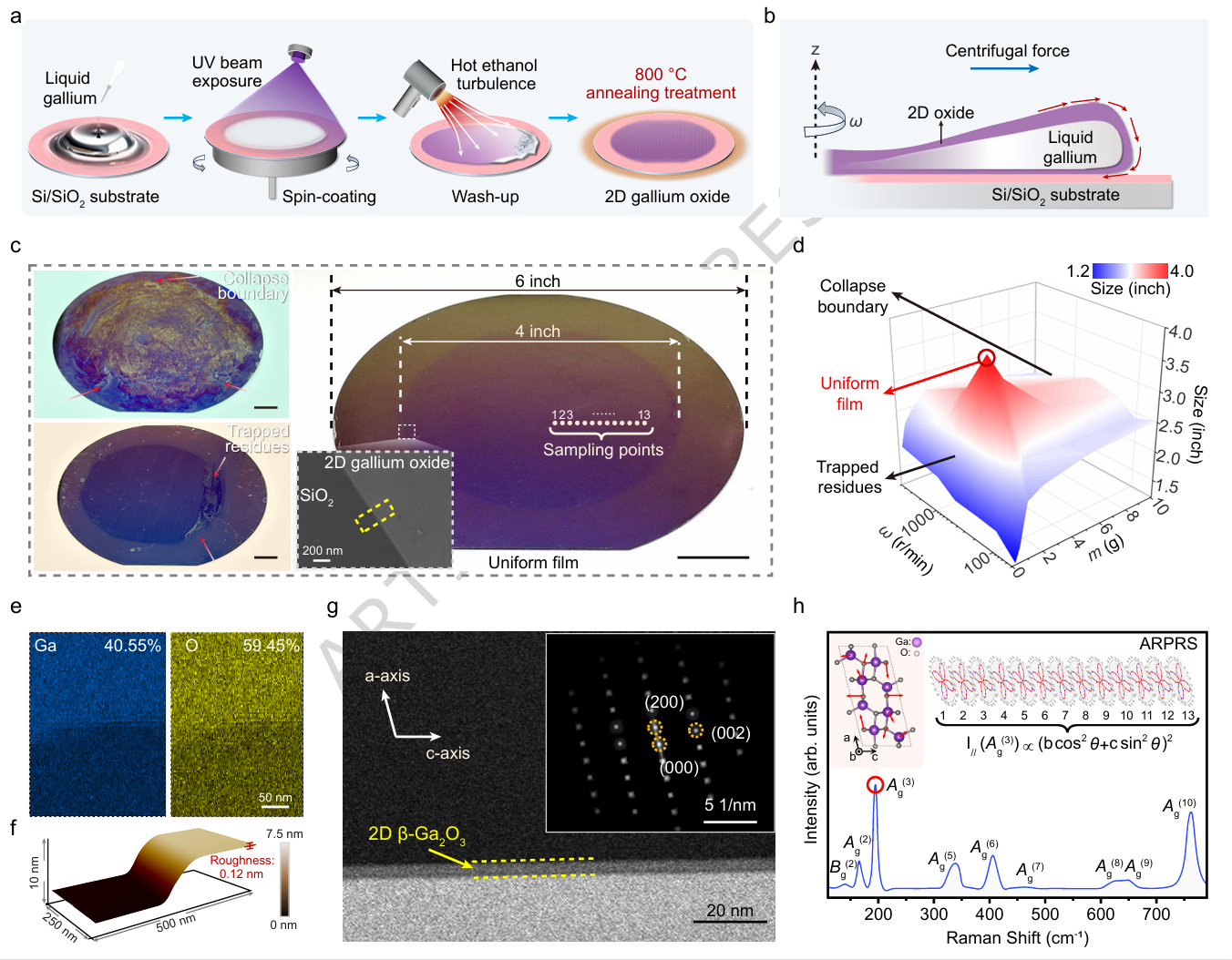
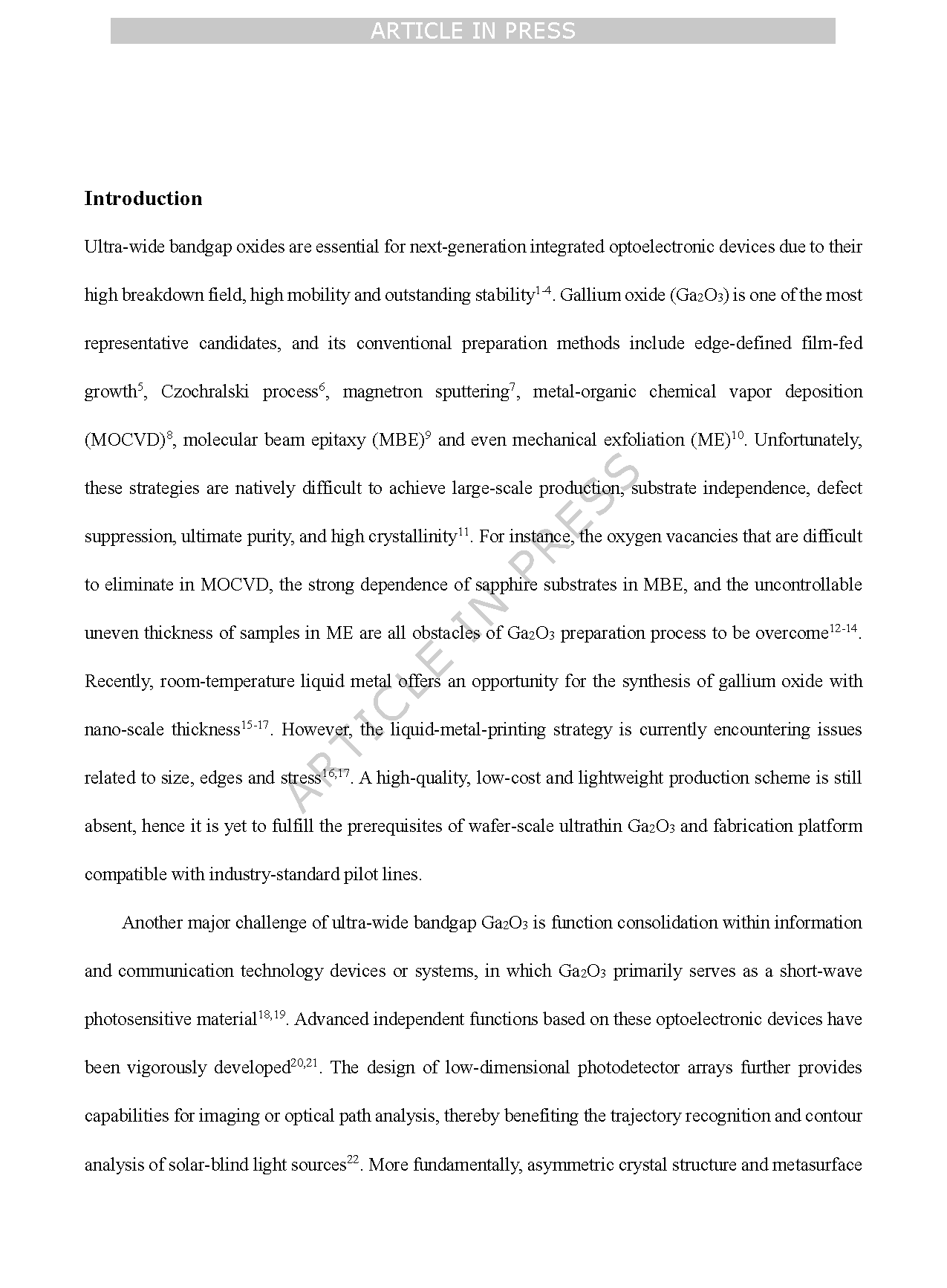
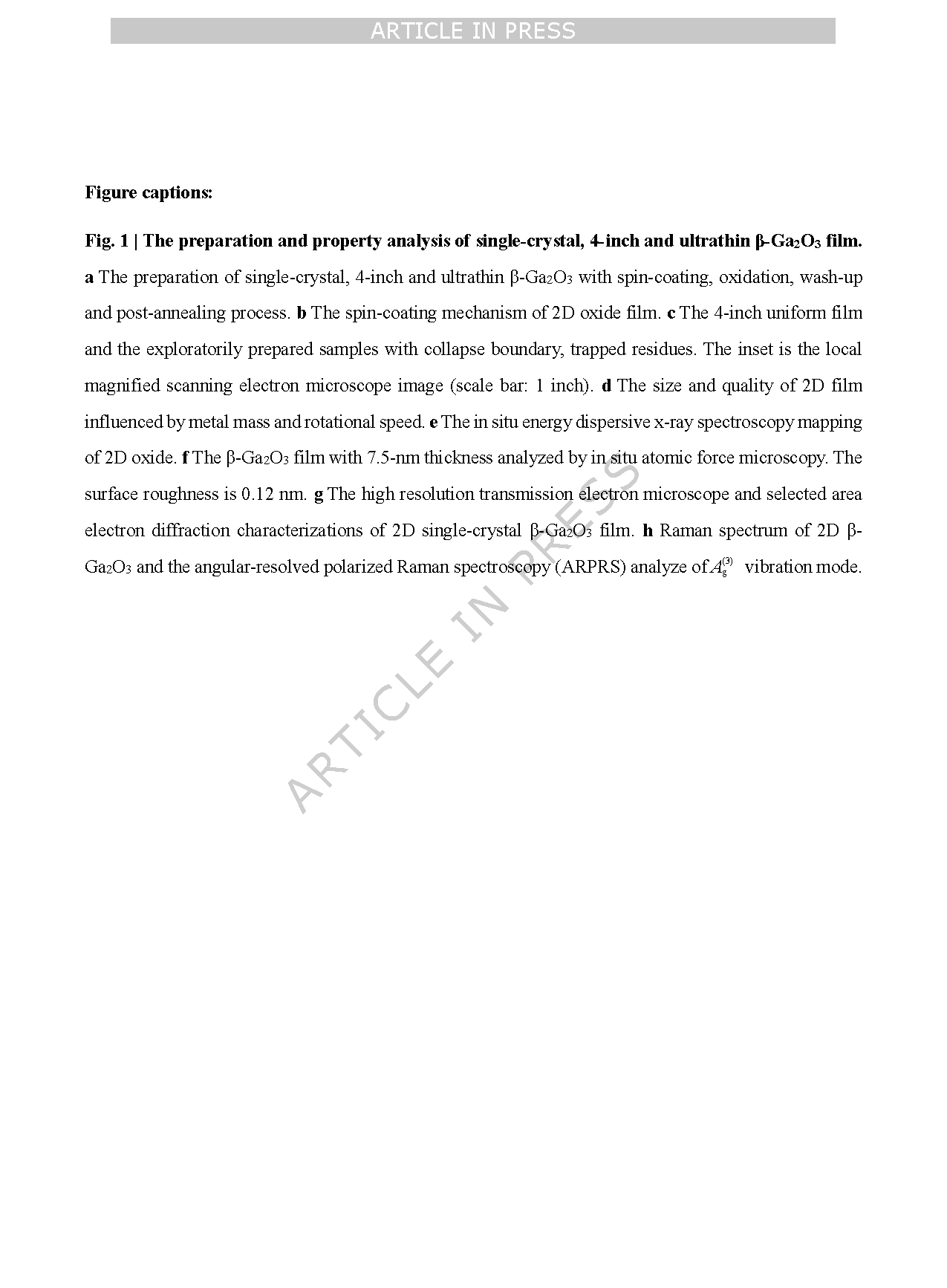
Fig. 1 | The preparation and property analysis of single-crystal, 4-inch and ultrathin β-Ga₂O₃ film.
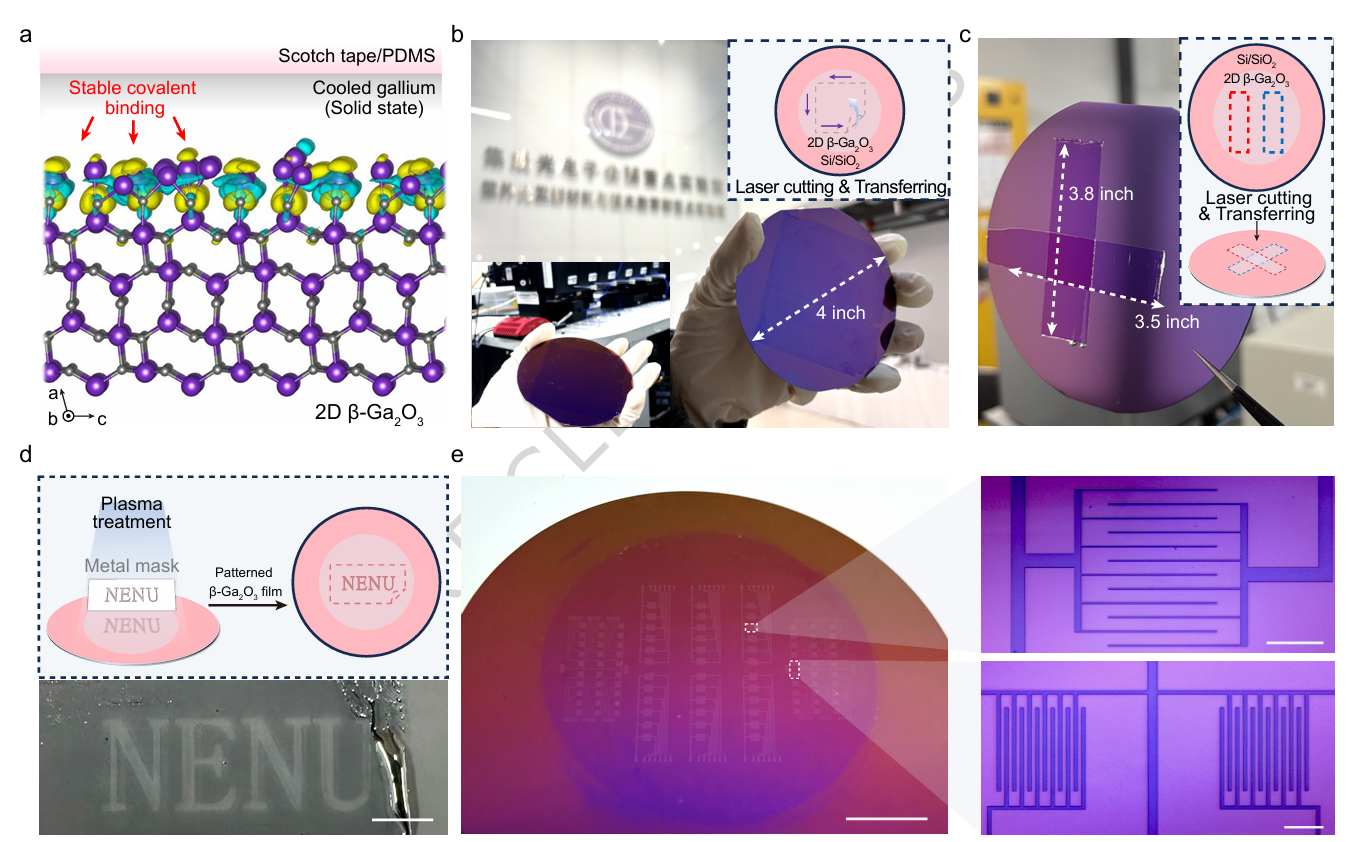
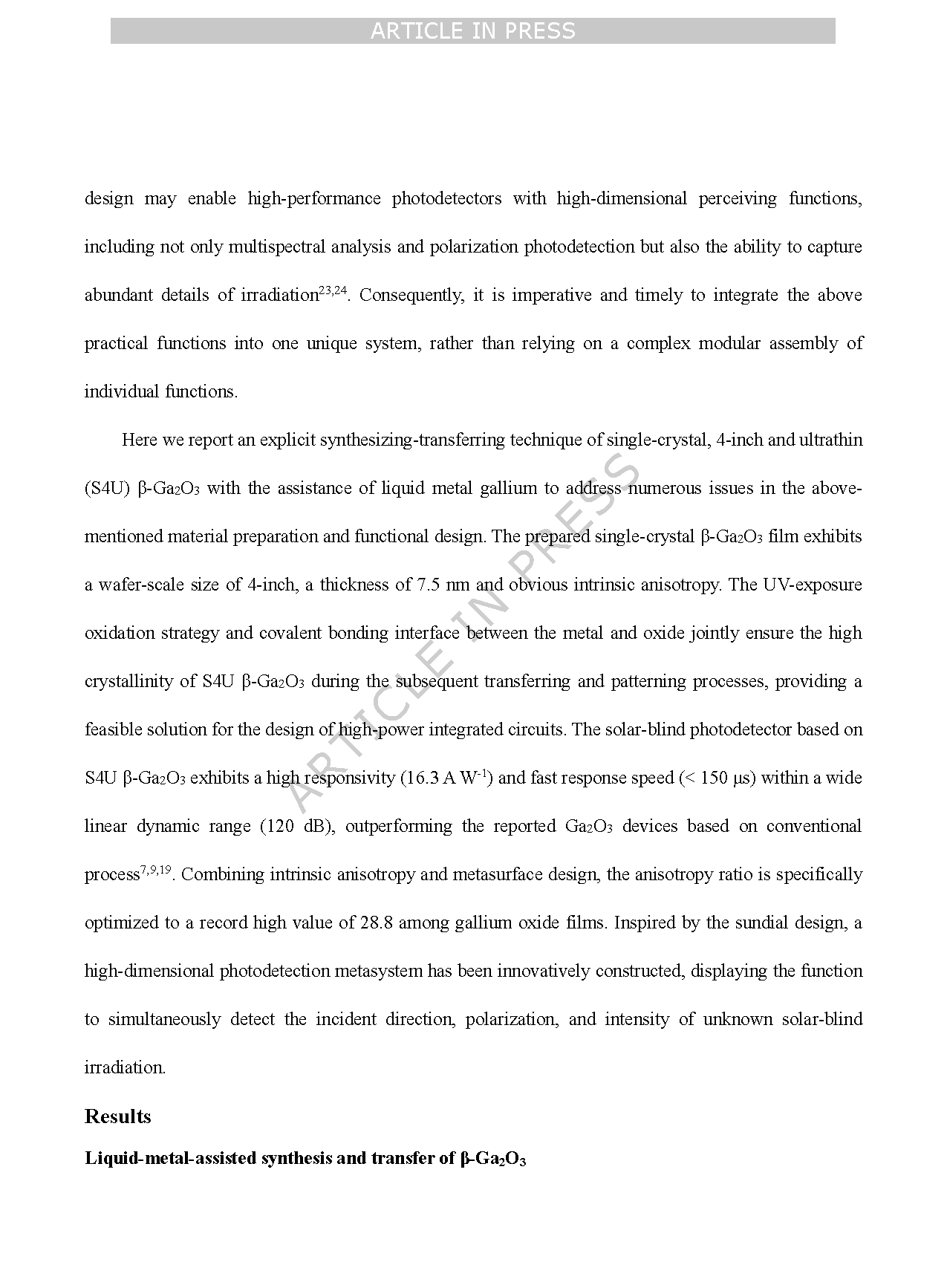
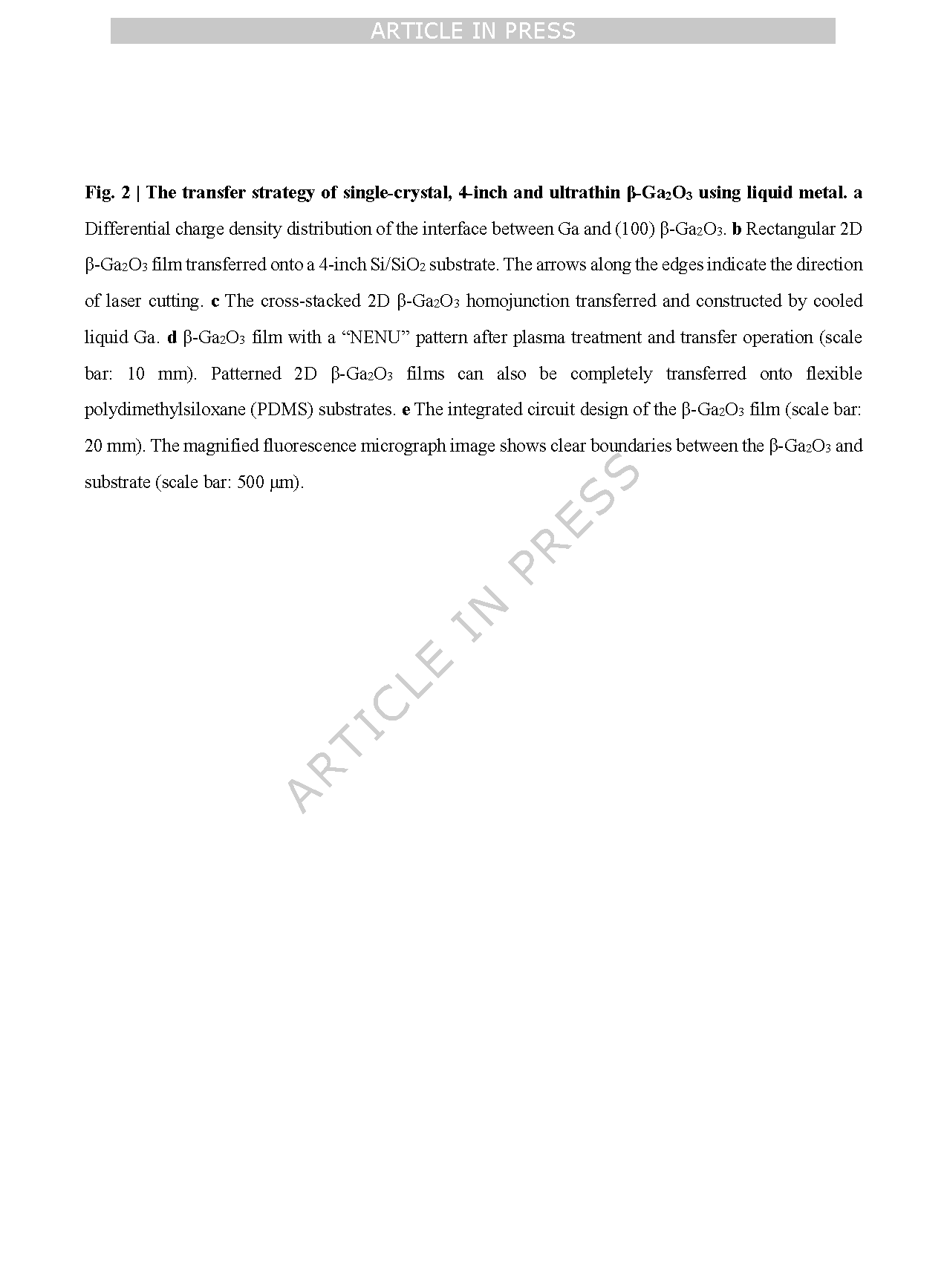
Fig. 2 | The transfer strategy of single-crystal, 4-inch and ultrathin β-Ga₂O₃ using liquid metal.
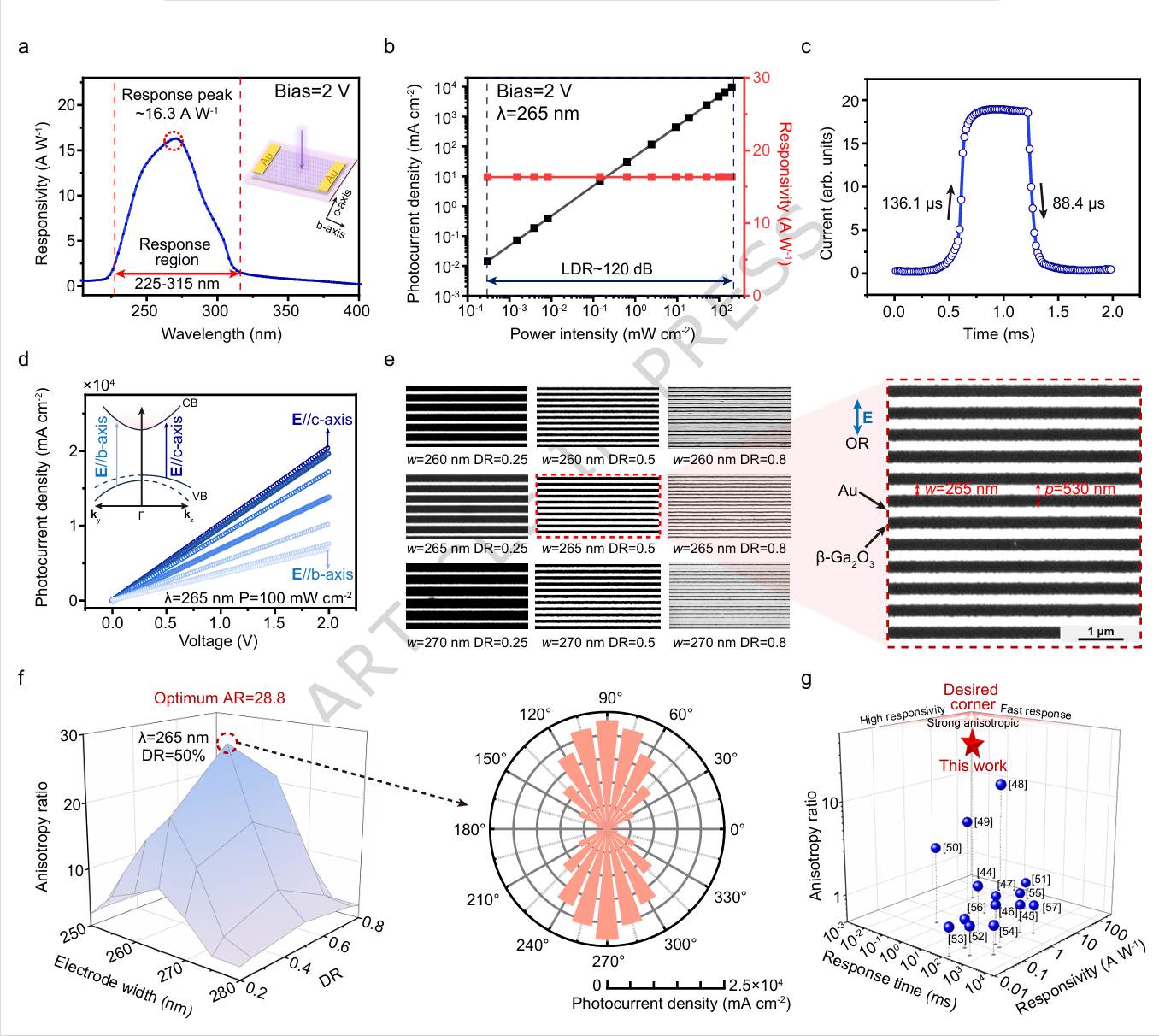
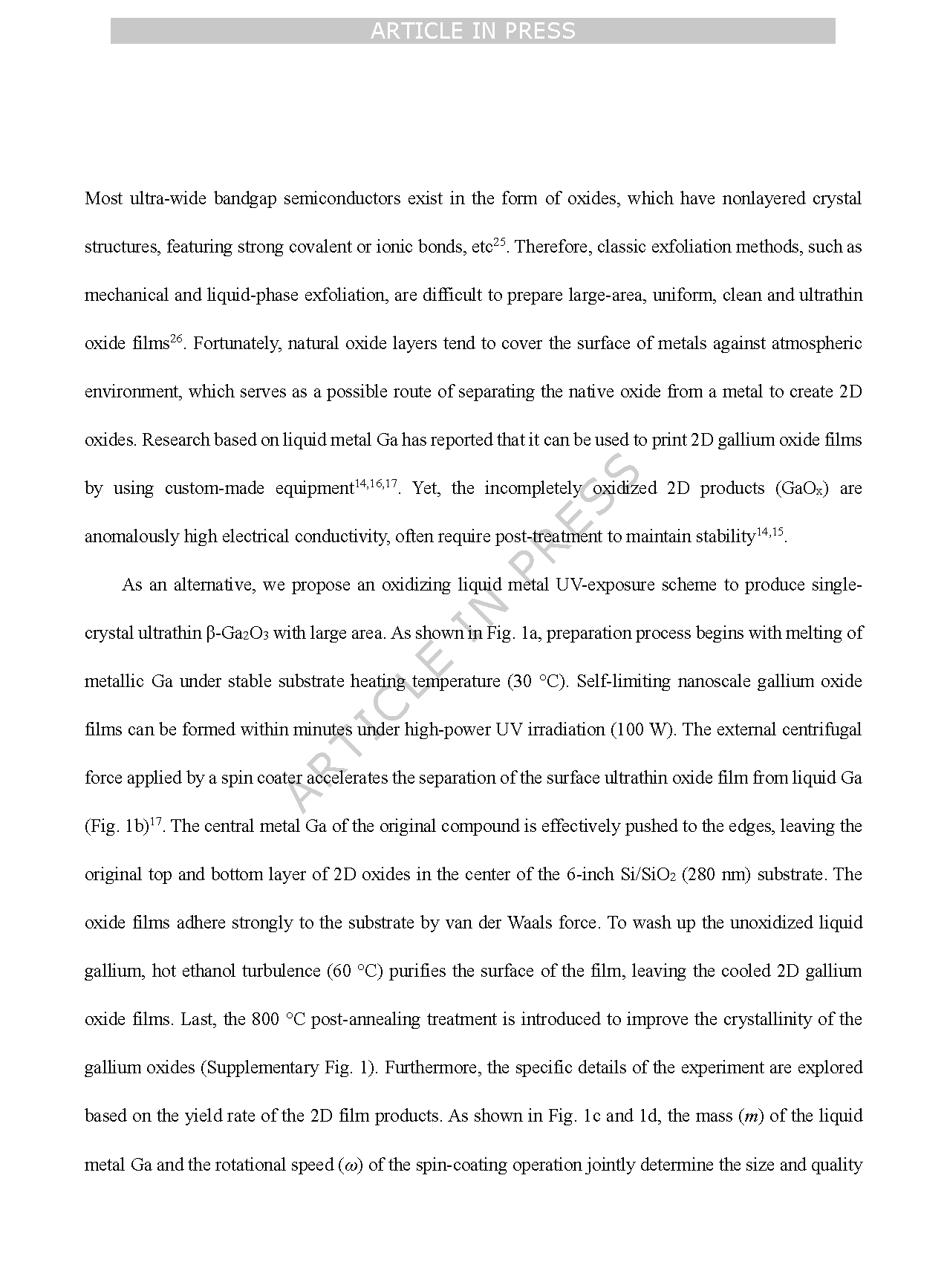
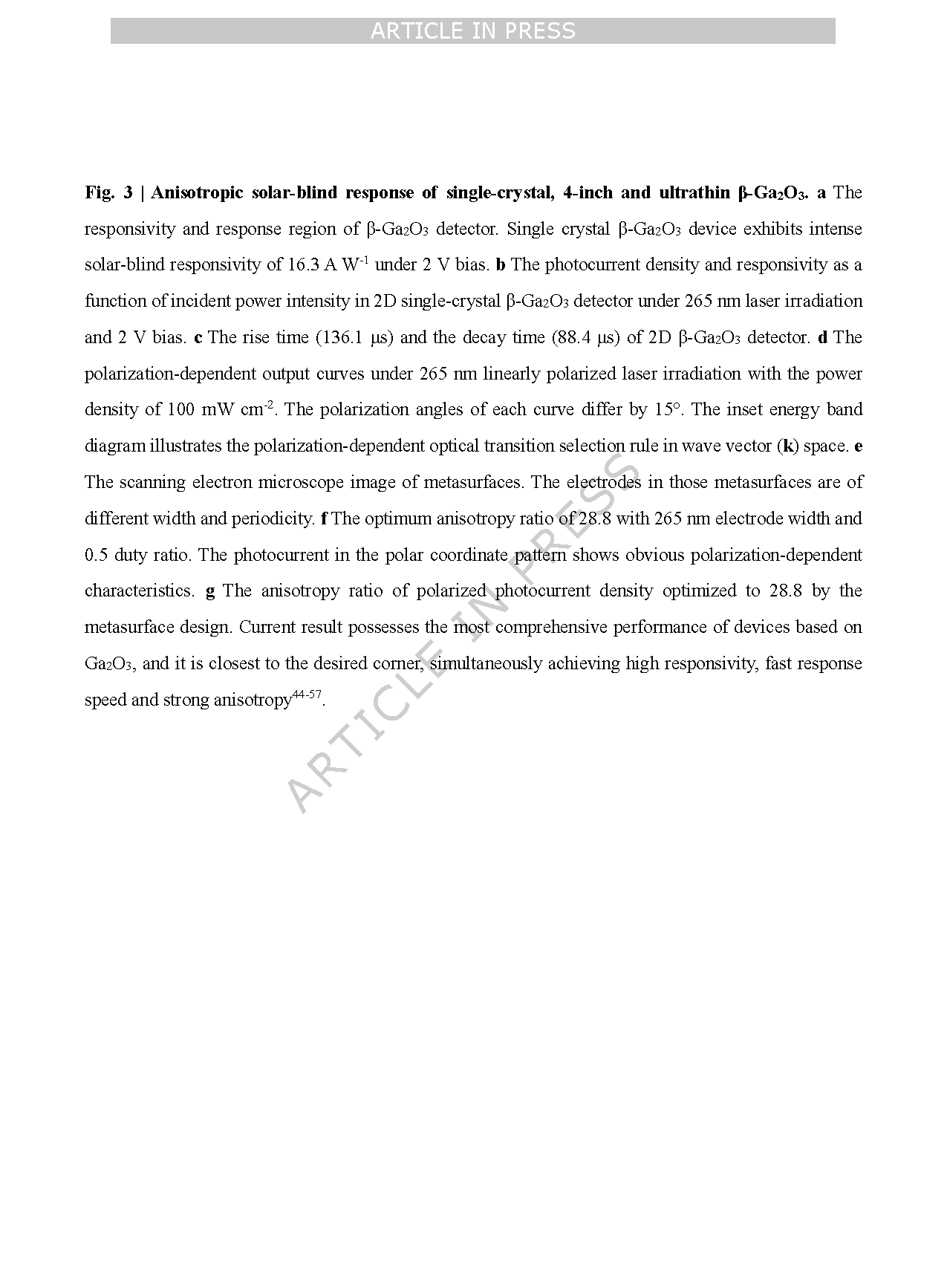
Fig. 3 | Anisotropic solar-blind response of single-crystal, 4-inch and ultrathin β-Ga₂O₃.
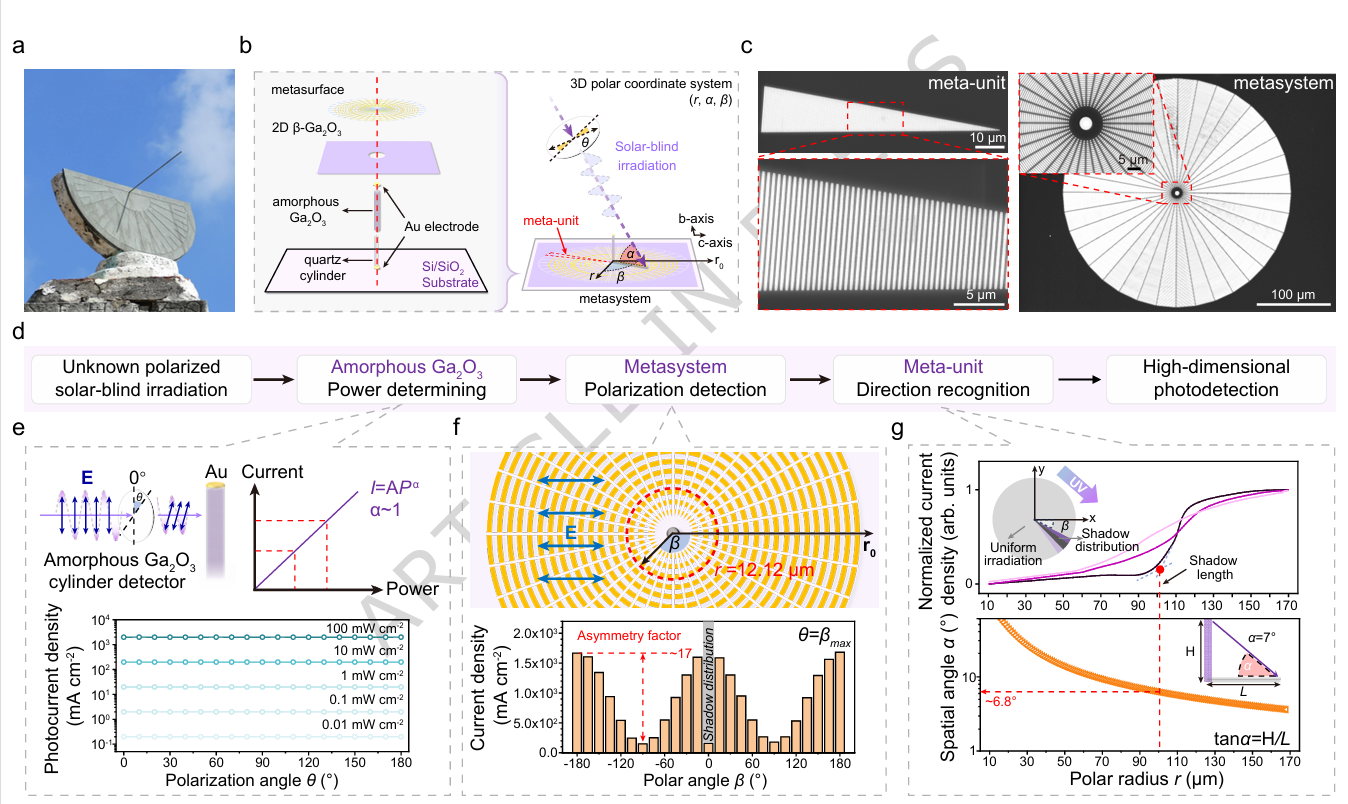
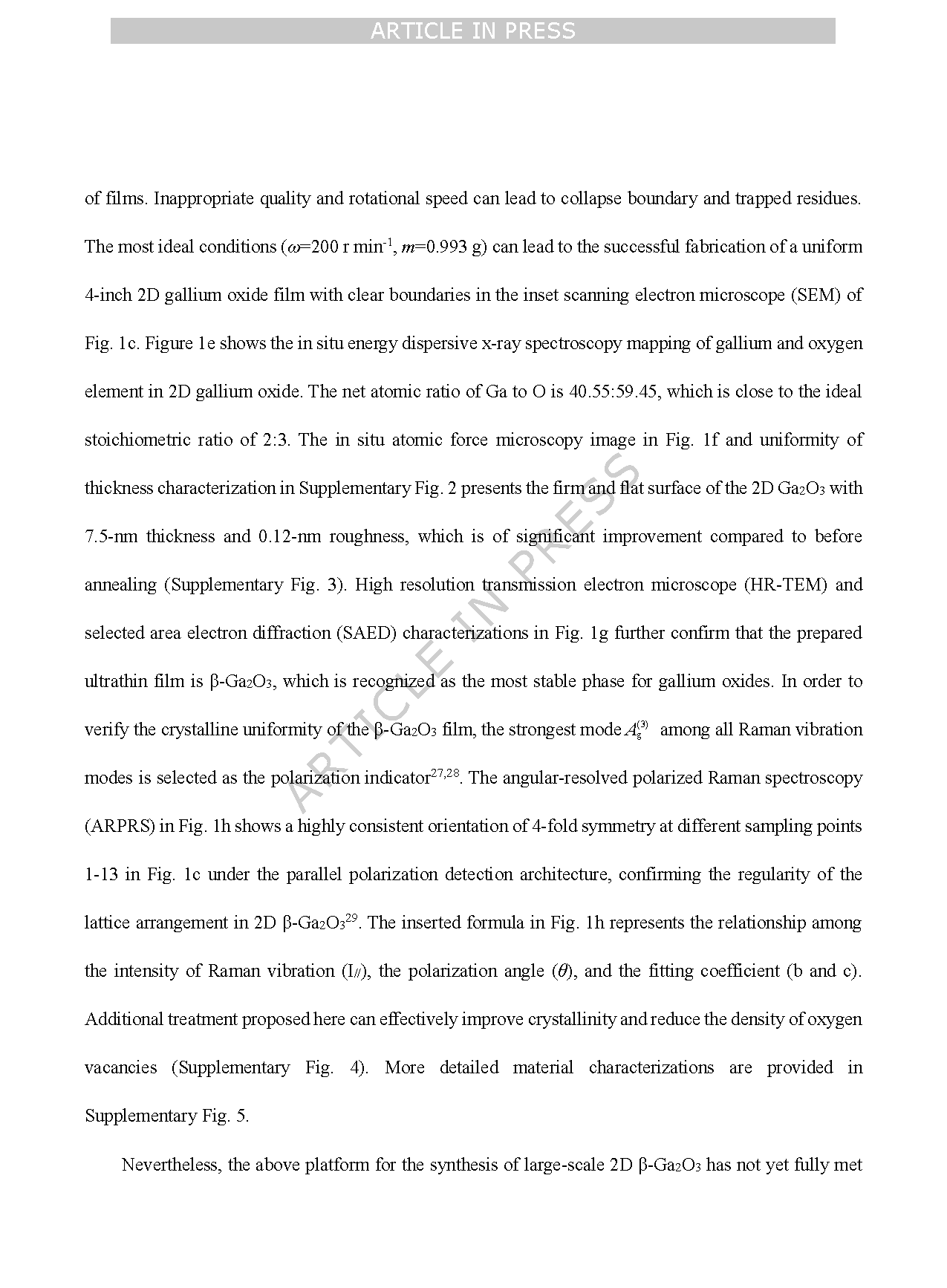
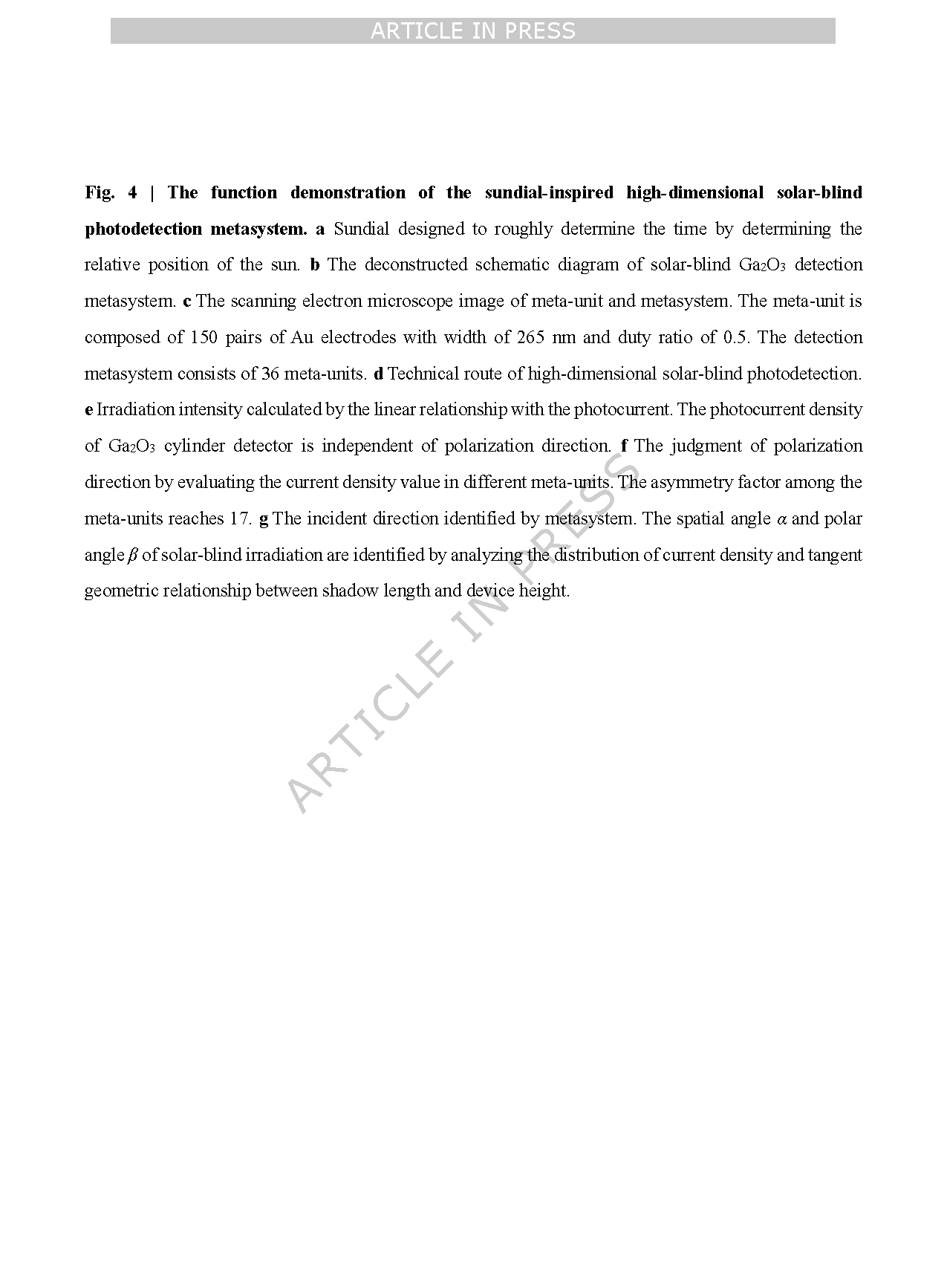
Fig. 4 | The function demonstration of the sundial-inspired high-dimensional solar-blind photodetection metasystem.
DOI:
doi.org/10.1038/s41467-026-75058-w

Instruction
Official Account

Cooperation
Top