


Researchers from the Harbin Institute of Technology and National University of Defense Technology and Jilin University have published a dissertation titled " Two-terminal β-Ga₂O₃ photo-synapse for diversified in-sensor computing via self-trapped holes engineering " in Light: Science & Applications.
Background
The rapid advancement of artificial intelligence has significantly accelerated the development of machine vision, particularly in real-time applications such as autonomous driving, space exploration and ozone layer imaging, where target recognition, classification and motion capture are essential. Traditional machine vision hardware relies on separated von Neumann architecture with physically independent sensing, storage, computing and GPU modules, which causes huge energy consumption, severe signal transmission delay and inherent computational performance limitations. In contrast, human visual system achieves ultra-high efficiency with pJ-level power consumption and highly parallel processing: the retina simultaneously realizes light sensing, noise filtering and feature preprocessing, while optic nerves and brain implement hierarchical visual information processing. Emulating human vision hardware has become a critical research hotspot.
As an ultra-wide bandgap semiconductor, β-Ga₂O₃ owns a bandgap matching solar-blind ultraviolet region, making it an ideal candidate for solar-blind ultraviolet neuromorphic vision hardware. Persistent photocurrent (PPC) effect acts as the fundamental physical basis for synaptic plasticity of β-Ga₂O₃ photo-synapses. Existing research mainly adopts oxygen vacancy (VO) engineering to enhance PPC effect. Under ultraviolet illumination, ionized oxygen vacancies migrate to form conductive filaments, and recapture photogenerated carriers after light removal. This mechanism brings three critical drawbacks: slow photoelectric detection speed originating from sluggish VO migration kinetics; degraded long-term stability and reliability induced by high-density VO deviating films from ideal stoichiometry; high weight update nonlinearity that restricts recognition accuracy of subsequent neural networks.
Previous theoretical studies reveal that holes in β-Ga₂O₃ possess extremely large effective mass, and local lattice distortions can trigger the formation of self-trapped holes (STHs). STHs drastically reduce hole mobility and strengthen PPC effect. However, high-performance β-Ga₂O₃ photo-synapses and complete in-sensor computing systems modulated by STHs have not been systematically developed. Besides, the performance distinction between STH engineering and VO engineering, as well as the practical feasibility of STH-based photo-synapses in multi-tasks including image classification, anti-noise target tracking and motion recognition, lack systematic experimental and system-level verification.
Abstract
The rapid advancement of artificial intelligence has propelled the development of β-Ga₂O₃ photo-synapses for solarblind ultraviolet neuromorphic machine vision systems. However, existing β-Ga₂O₃ photo-synapses not only exhibit reduced stability but also display high weight update nonlinearity. Herein, we propose a novel strategy to construct β-Ga₂O₃ photo-synapses with low weight update nonlinearity based on self-trapped holes, aiming to achieve multilevel in-sensor computing tasks. Theoretical and experimental investigations revealed that the interaction between the larger effective mass of holes and local lattice distortions in β-Ga₂O₃ promoted the formation of self-trapped holes, which significantly reduced hole mobility and enhanced the persistent photocurrent effect. The fabricated β-Ga₂O₃ photo-synapses exhibited excellent short-term plasticity, which could be transited to long-term plasticity by adjusting the characteristics of 252 nm ultraviolet light. Moreover, the devices achieved a low weight update nonlinearity of 0.42, outperforming most previously reported photo-synapses. Finally, β-Ga₂O₃ photo-synapses were integrated into neuromorphic machine vision systems, enabling tasks ranging from low-level image classification to high-level motion recognition, achieving recognition accuracies of 99.48% and 92.70% on the MNIST and Fashion-MNIST datasets. It also maintained 100% target tracking accuracy under 60% Gaussian noise interference and reached a recognition accuracy of 94.94% for 10 motions in UTD-MHAD dataset. These results highlight great potential of β-Ga₂O₃ photo-synapses based on self-trapped holes engineering in the era of artificial intelligence.
Highlights
A novel self-trapped hole (STHs) modulation strategy is proposed to replace conventional oxygen vacancy (VO) engineering for fabricating β-Ga₂O₃ solar-blind ultraviolet photo-synapses, overcoming critical drawbacks of traditional devices including poor stability, high weight update nonlinearity and slow detection speed. Atomic peening effect induced by increased sputtering power introduces local lattice distortion to precisely boost STH concentration, while the film stoichiometry and VO density remain nearly unchanged without extra defects.
First-principles calculations combined with KPFM and PL characterizations fully reveal the physical mechanism of STH-enhanced persistent photocurrent (PPC). Holes with large effective mass are trapped by lattice distortion to form STHs; the huge energy barrier difference between trapping and detrapping drastically suppresses hole mobility, and hopping transport further slows carrier recombination. The decay time rises by 4604.92% with only a 35.61% increase in rise time, balancing fast detection speed and prominent PPC effect simultaneously.
Two-terminal β-Ga₂O₃ photo-synapses realize comprehensive biological synaptic emulation including PPF, SRDP, reversible STP-LTP transition and learning-forgetting behavior. The weight update nonlinearity reaches an ultralow value of 0.42, superior to most reported optoelectronic synapses, with outstanding cycling stability, long-term storage stability and uniform device-to-device performance.
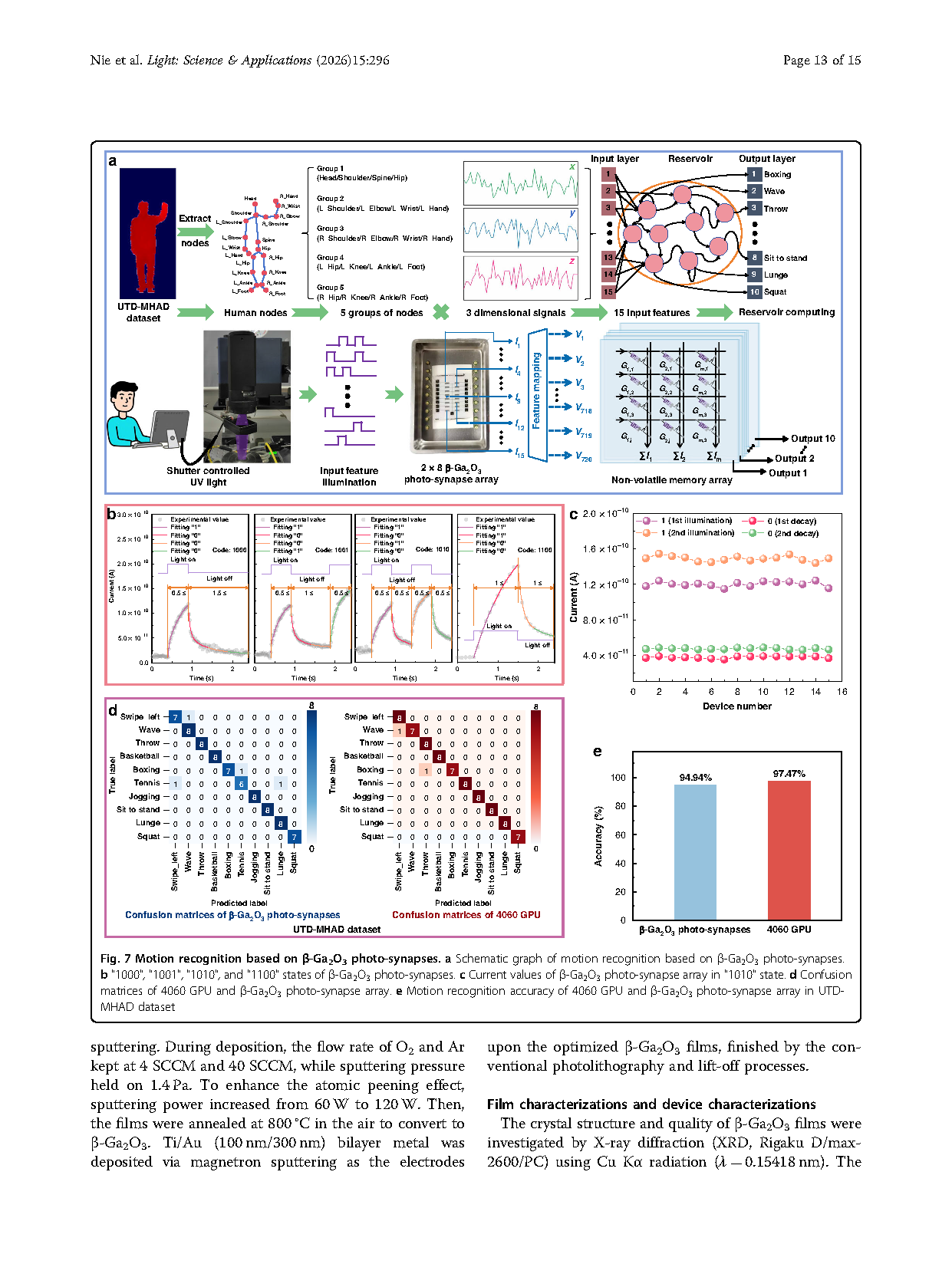
A complete solar-blind ultraviolet in-sensor computing neuromorphic vision system is constructed based on the proposed photo-synapses. Combined with CNN and reservoir computing (RC), multi-level visual tasks are successfully implemented: 99.48% classification accuracy on MNIST dataset, 92.70% on Fashion-MNIST dataset; 100% target tracking accuracy under 60% Gaussian noise without additional denoising algorithms; 94.94% recognition accuracy for 10 human motions on UTD-MHAD dataset, exhibiting intrinsic anti-interference imaging capability.
The devices belong to pure charge-trapping photo-synapses without ion migration, leading to much more linear conductance response than filament-type VO-based synapses. The fabrication process is simple and compatible with large-scale industrial manufacturing.
Conclusion
In this work, β-Ga₂O₃ photo-synapses with low weight update nonlinearity of 0.42 were developed by enhancing the concentration of self-trapped holes, thereby achieving multi-level in-sensor computing tasks. Theoretical and experimental investigations revealed that the interaction between the larger effective mass of holes and local lattice distortions in β-Ga₂O₃ promotes the formation of selftrapped holes, which significantly reduces hole mobility and enhances PPC effect. β-Ga₂O₃ films with a high concentration of self-trapped holes were prepared by increasing sputtering power from 60 W to 120 W, resulting in reduced hole mobility and a sustained high level of hole surface potential after 20 minutes decay, as revealed by KPFM measurements. The fabricated β-Ga₂O₃ photosynapses demonstrated synaptic behaviors, including short-term plasticity with rapid decay time of 0.34 s and a slow decay time of 6.43 s, respectively, as well as the ability to transition from paired pulse facilitation to spike ratedependent plasticity. By regulating light intensity, illumination duration, and frequency of 252 nm ultraviolet light, STP can be transformed into LTP, effectively simulating the learning-experience behavior of human brain. Meanwhile, the response peak and detective speed of the β-Ga₂O₃ photo-synapse remained unaffected. In practical β-Ga₂O₃ photo-synapses achieved remarkable performance in image classification, anti-noise target tracking, and motion recognition, to validate its capability in in-sensor computing. For the image classification, the testing accuracy reached 99.48% on the MNIST dataset and 92.70% on the Fashion-MNIST dataset, closely matching the performance of commercial GPUs. In target tracking, the accuracy remained at 100% even under 60% noise intensity. Furthermore, a physical reservoir computing system based on a 2 ×8 β-Ga₂O₃ photo-synapses array achieved a recognition accuracy of 94.94% for 10 actions in UTD-MHAD dataset, approaching the 97.47% accuracy of commercial GPUs. This work highlights significant potential of β-Ga₂O₃ photo-synapses in neuromorphic in-sensor computing systems via self-trapped holes engineering, emphasizing the advantages in simple fabrication, low weight update nonlinearity, and suitability for industrial-scale applications. Our findings pave the way for the development of advanced neuromorphic devices with enhanced performance and practicality.
Project
This work was financially supported by the National Natural Science Foundation of China (Grant No. 62174042), Scientific Research Projects of National University of Defense Technology (22-ZZCX-07), Hefei Comprehensive National Science Center (Intelligent Governance System for Network Security Threats KY23C503).
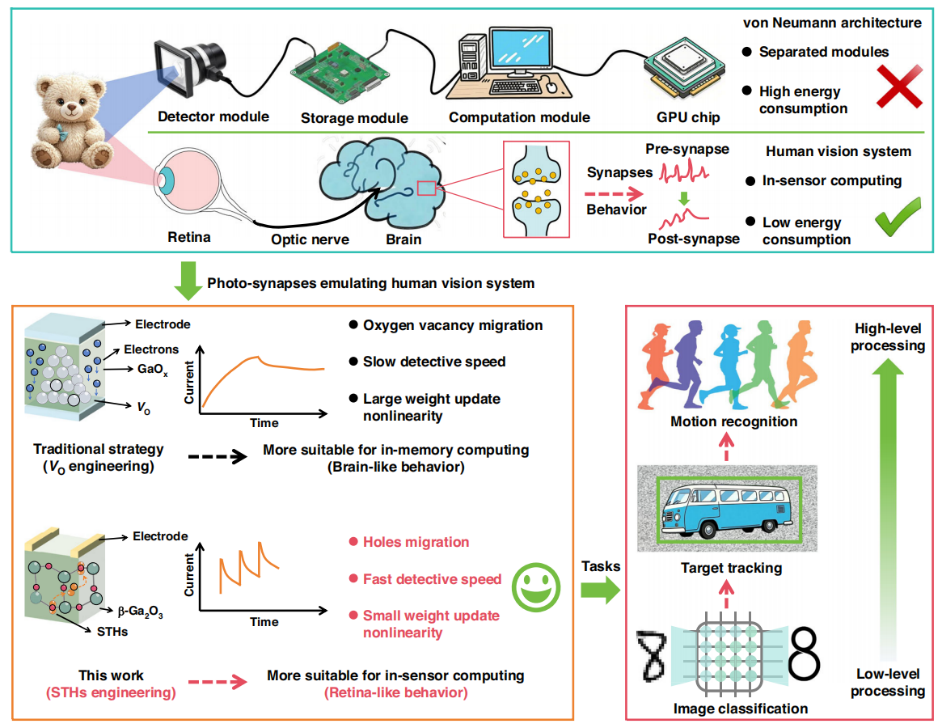
Fig. 1 Schematic graph of β-Ga₂O₃ photo-synapses for in-sensor computing
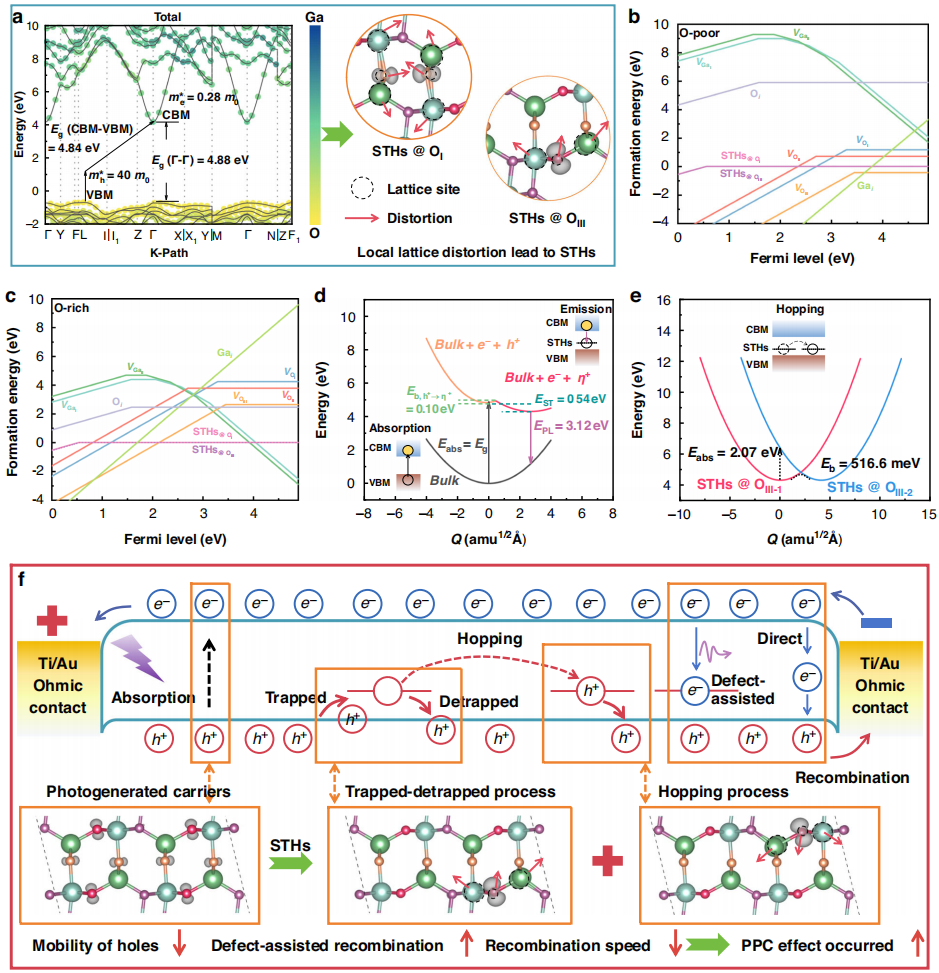
Fig. 2 Properties of self-trapped holes in β-Ga₂O₃. a Formation mechanism of STHs. Formation energy of intrinsic defects of β-Ga₂O₃ under b O-poor limit and c O-rich limit. d Trapped-detrapped process of STHs on OⅢ atoms. e Configuration coordinate diagrams of hopping process between two neighboring OⅢ atoms. f Mechanism of PPC effect induced by STHs
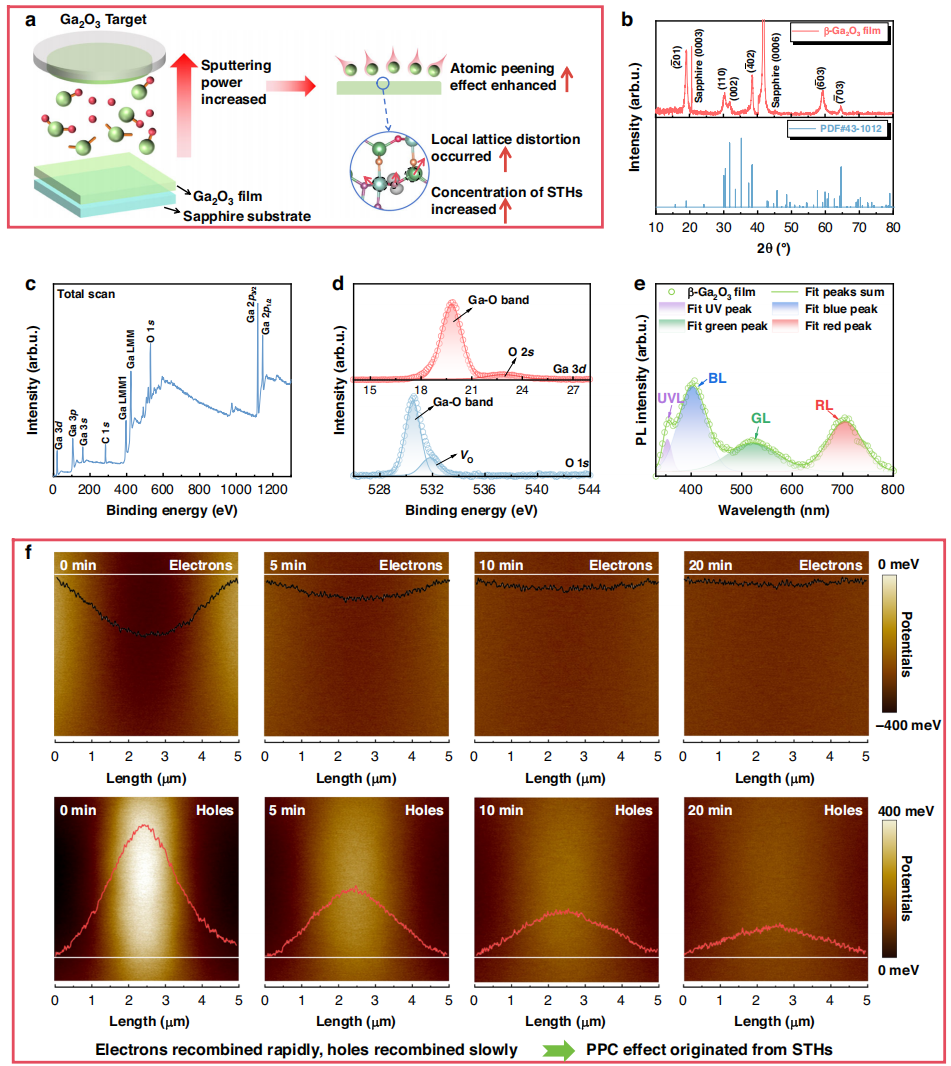
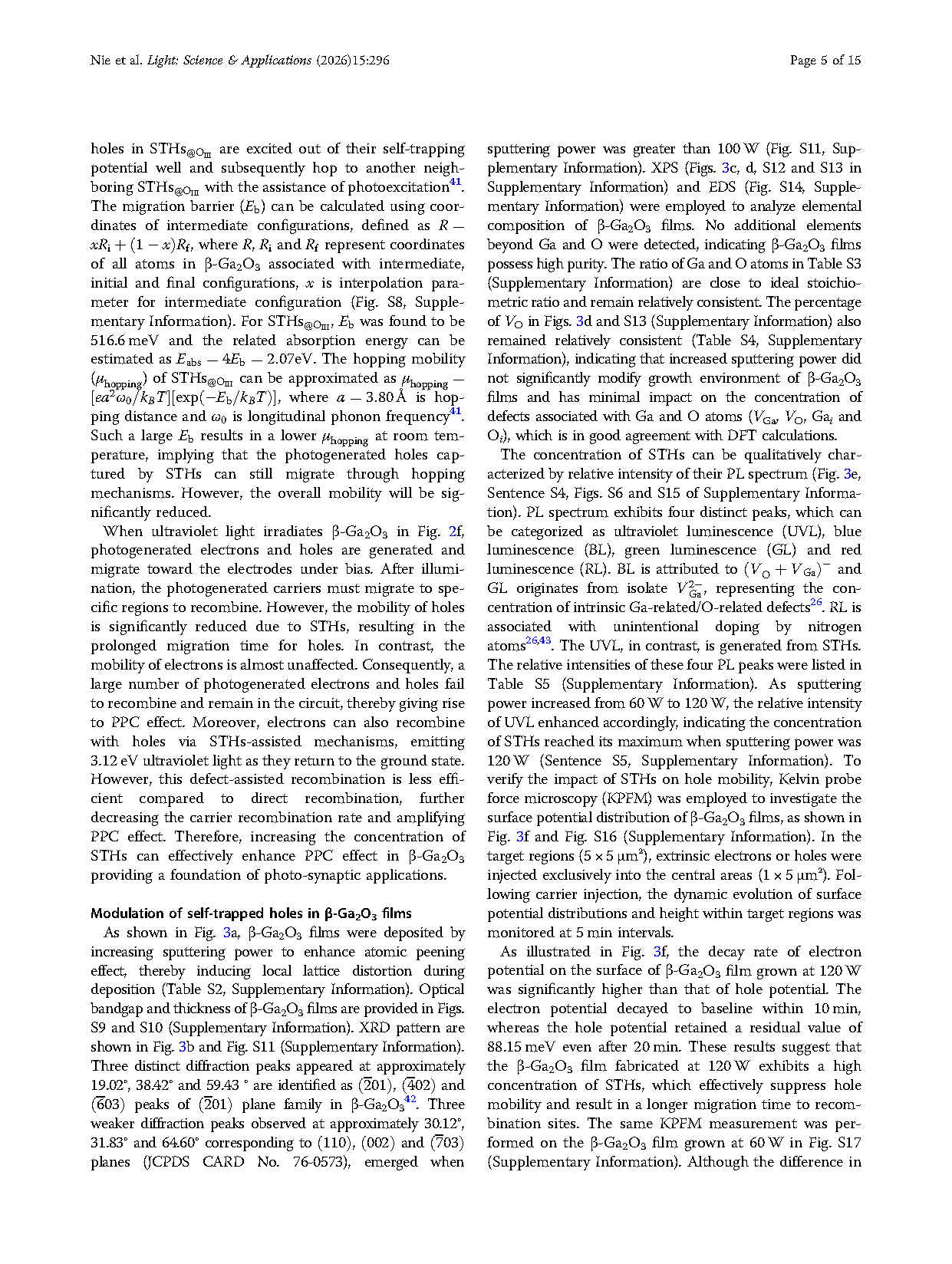
Fig. 3 Preparation and film-analysis of β-Ga₂O₃. a Increasing STHs by atomic peening effect. b XRD, c XPS total scan, d Ga 3d and O 1s, e PL spectrum, f KPFM of β-Ga₂O₃ surface after injecting electrons and holes
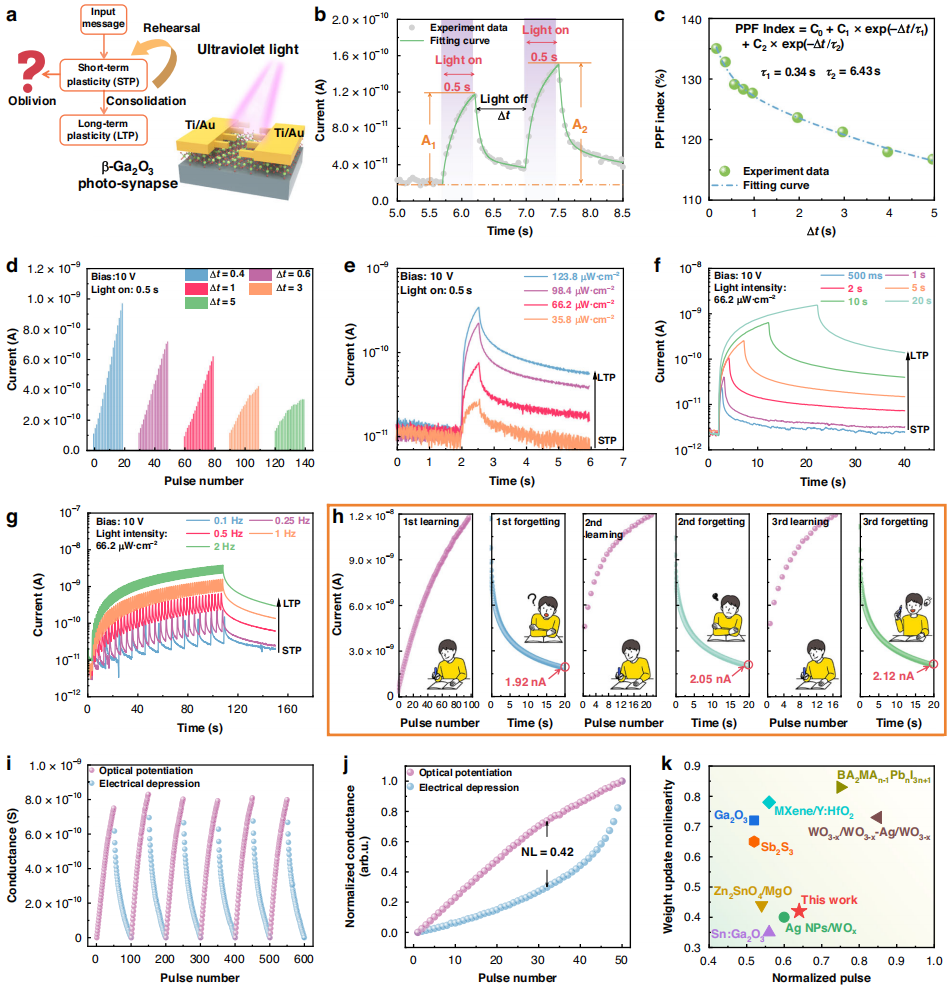
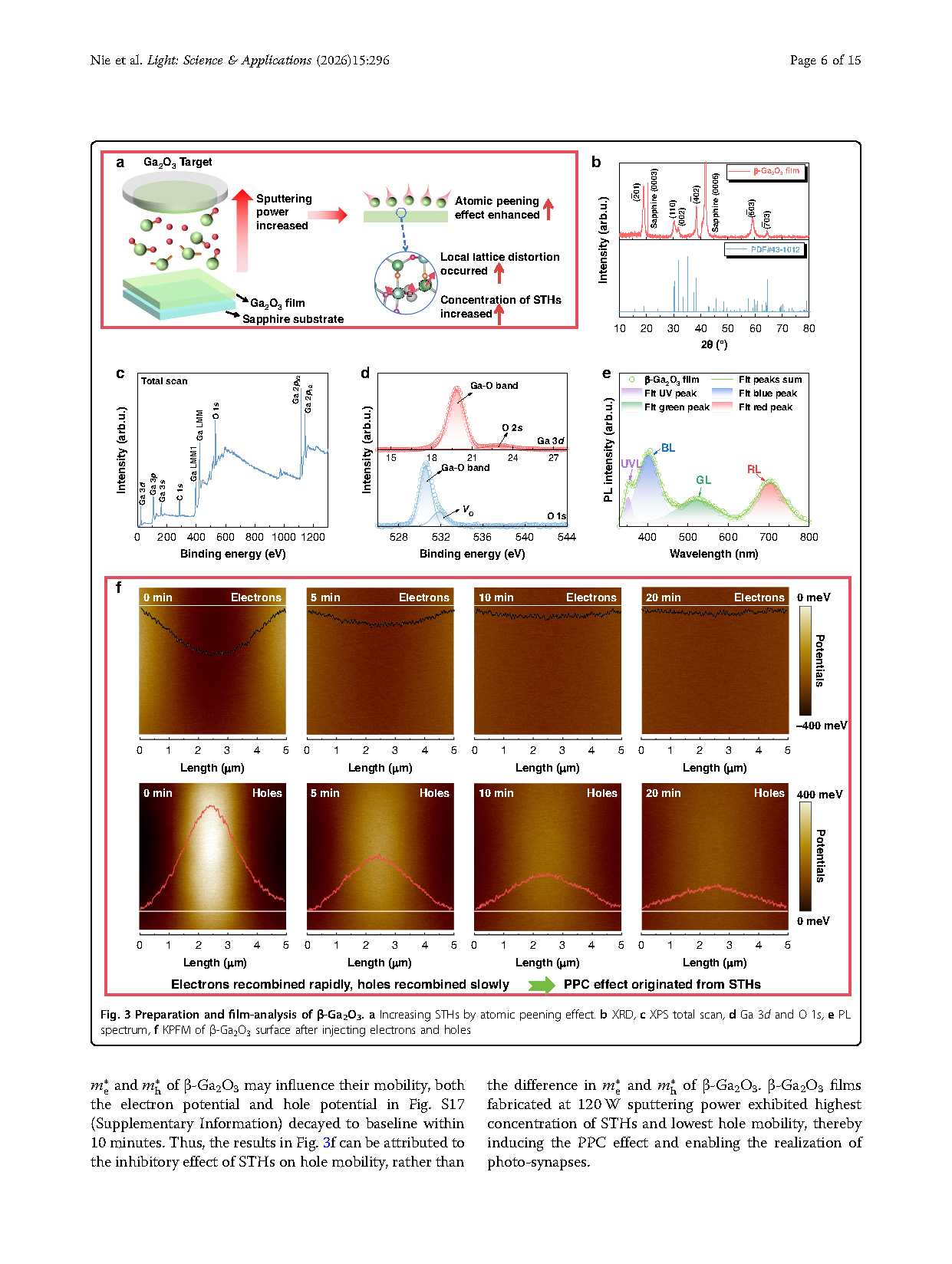
Fig. 4 Performance of two-terminal β-Ga₂O₃ photo-synapses. a Schematic graph of two-terminal β-Ga₂O₃ photo-synapses. b PPF behavior of β-Ga₂O₃ photo-synapse triggered by a pair of successive optical pulses (Δt=800 ms) c PPF index as a function of Δt. d Spike rate dependent plasticity of β-Ga₂O₃ photo-synapses. e STP-to-LTP transition induced by light intensity, f duration time, g frequencies. h Learning-experience behavior of β-Ga₂O₃ photo-synapse. i Long-term conductance under UV optical potentiations and electronic depressions. j Weight update nonlinearity under the optical potentiation and electrical depression behaviors. k Summary of weight update nonlinearity of various photo-synapses
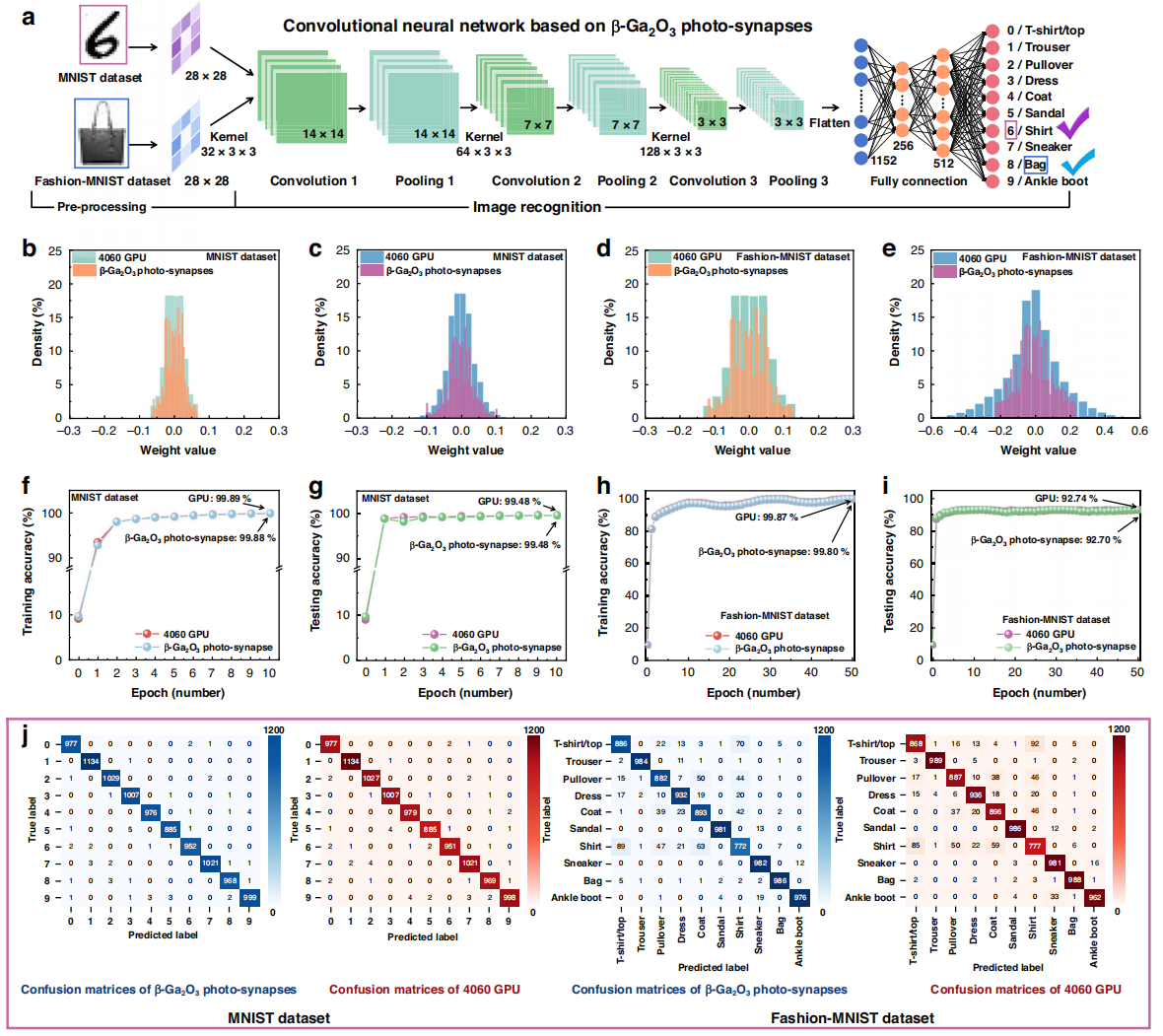
Fig. 5 Image classification based on β-Ga₂O₃ photo-synapses. a Schematic graph of convolutional neural network based on β-Ga₂O₃ photo-synapses. b Initial weight values and c final weight values of 4060 GPU and β-Ga₂O₃ photo-synapses in MNIST dataset training. d Initial weight values and e final weight values of 4060 GPU and β-Ga₂O₃ photo-synapses in Fashion-MNIST dataset training. f Training accuracy and g testing accuracy of 4060 GPU and β-Ga₂O₃ photo-synapses in MNIST dataset. h Training accuracy and i testing accuracy of 4060 GPU and β-Ga₂O₃ photo-synapses in Fashion-MNIST dataset. j Confusion matrices of 4060 GPU and β-Ga₂O₃ photo-synapses in MNIST dataset and Fashion-MNIST dataset
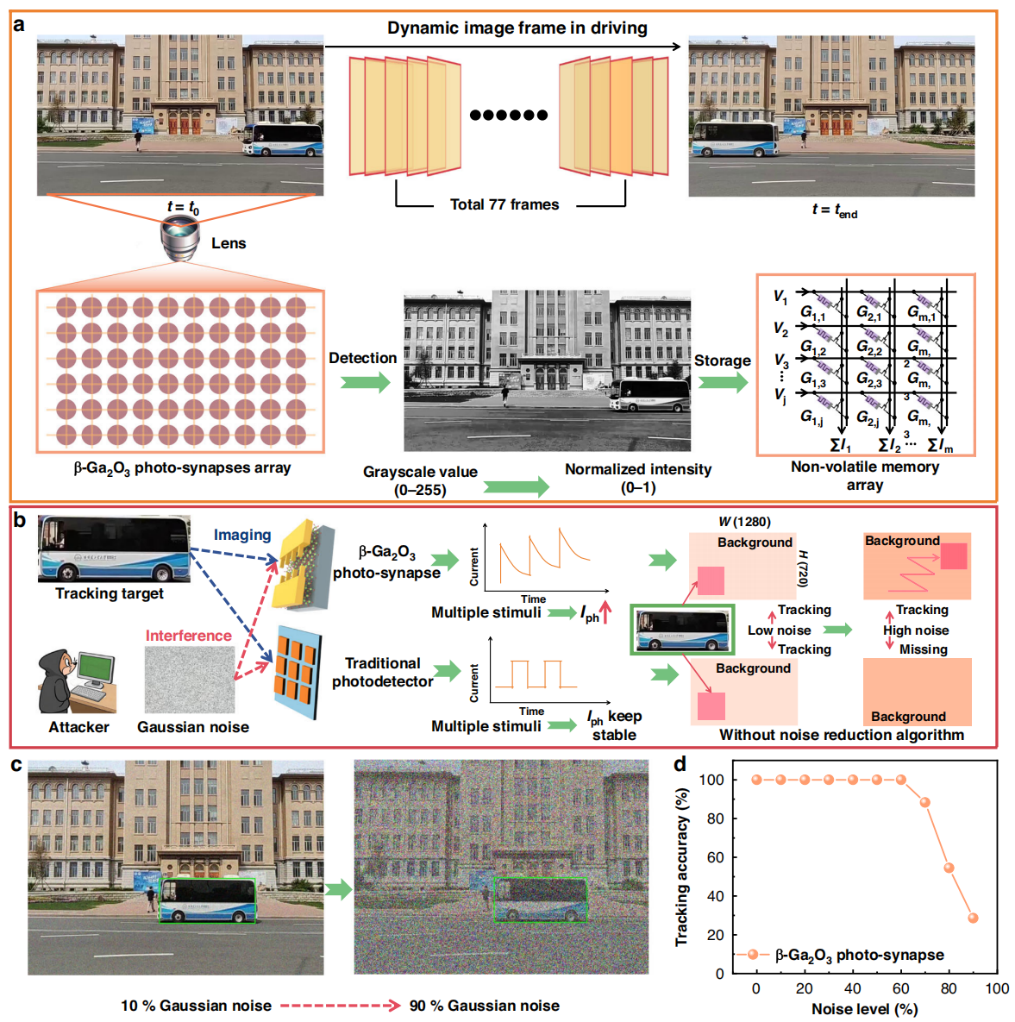
Fig. 6 Object tracking based on β-Ga₂O₃ photo-synapses. a Schematic graph of object tracking based on β-Ga₂O₃ photo-synapses. b Difference in noise resistance between traditional photodetectors and β-Ga₂O₃ photo-synapse based in-sensor computing system in object tracking. c Object tracking results of β-Ga₂O₃ photo-synapse based in-sensor computing system with various background Gaussian noises. d Tracking accuracy of β-Ga₂O₃ photo-synapse based in-sensor computing system under various background Gaussian noise level
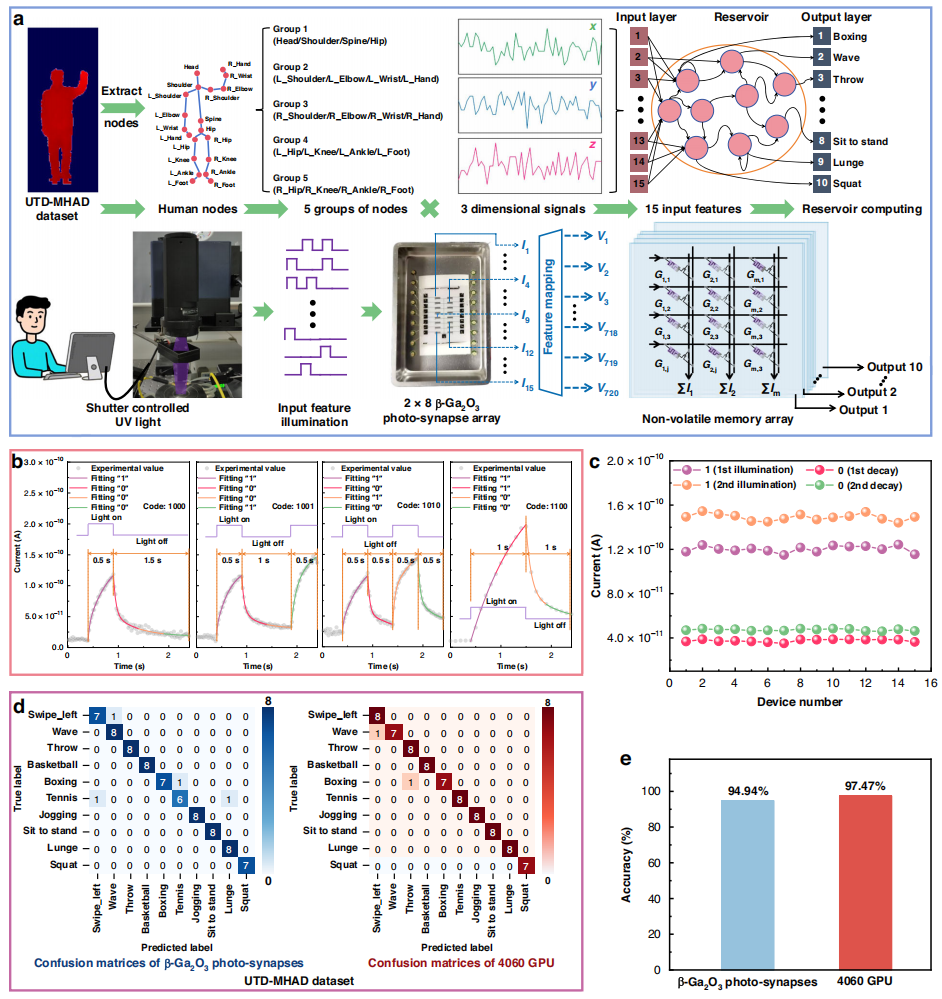
Fig. 7 Motion recognition based on β-Ga₂O₃ photo-synapses. a Schematic graph of motion recognition based on β-Ga₂O₃ photo-synapses. b “1000”, “1001”, “1010”, and “1100” states of β-Ga₂O₃ photo-synapses. c Current values of β-Ga₂O₃ photo-synapse array in “1010” state. d Confusion matrices of 4060 GPU and β-Ga₂O₃ photo-synapse array. e Motion recognition accuracy of 4060 GPU and β-Ga₂O₃ photo-synapse array in UTDMHAD dataset
DOI :
10.1038/s41377-026-02298-2
Instruction
Official Account

Cooperation
Top