


Researchers from Changchun University of Technology and Jilin Jianzhu University have published a dissertation titled "β-Ga₂O₃-based ultraviolet photodetector with GZO/Cu/GZO sandwich composite electrodes for solar-blind imaging" in Journal of Alloys and Compounds.
Background
Solar-blind ultraviolet detection plays an important role in missile tracking, space communication, flame detection and other fields. β-Ga₂O₃ is an ideal material for solar-blind photodetectors due to its suitable bandgap, excellent chemical stability, thermal stability and radiation resistance. Most conventional β-Ga₂O₃ photodetectors adopt metal-semiconductor structure. Traditional metal electrodes have poor light transmittance, while transparent conductive oxides suffer from low conductivity. TCO/metal/TCO sandwich electrodes combine high transmittance and conductivity and are widely used in energy storage devices. However, the application of such composite electrodes in β-Ga₂O₃ solar-blind imaging photodetectors is rarely reported. It is difficult to achieve low dark current, high sensitivity and excellent imaging uniformity with existing technologies, so it is urgent to develop novel composite electrodes and corresponding photodetectors for practical use.
Abstract
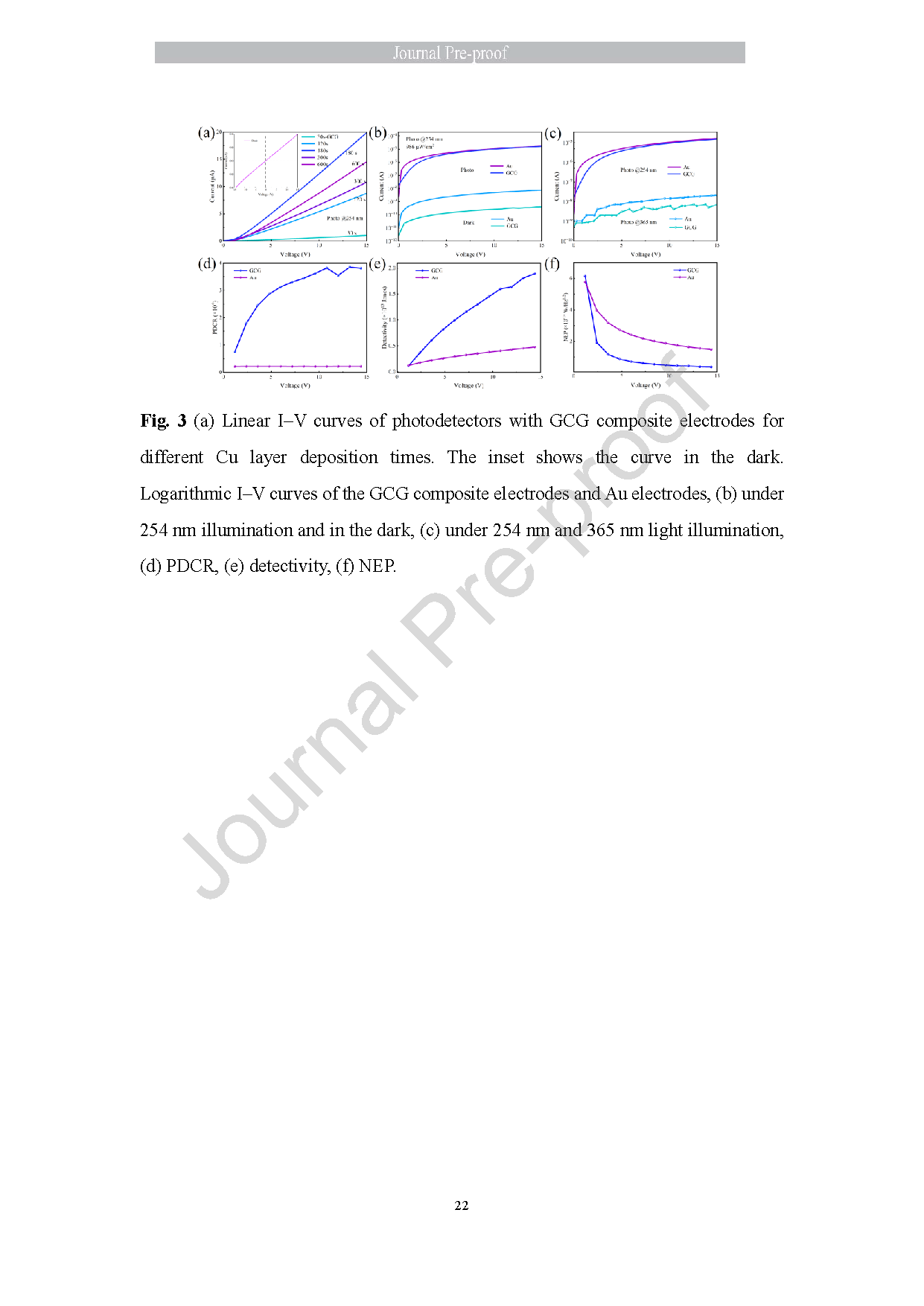
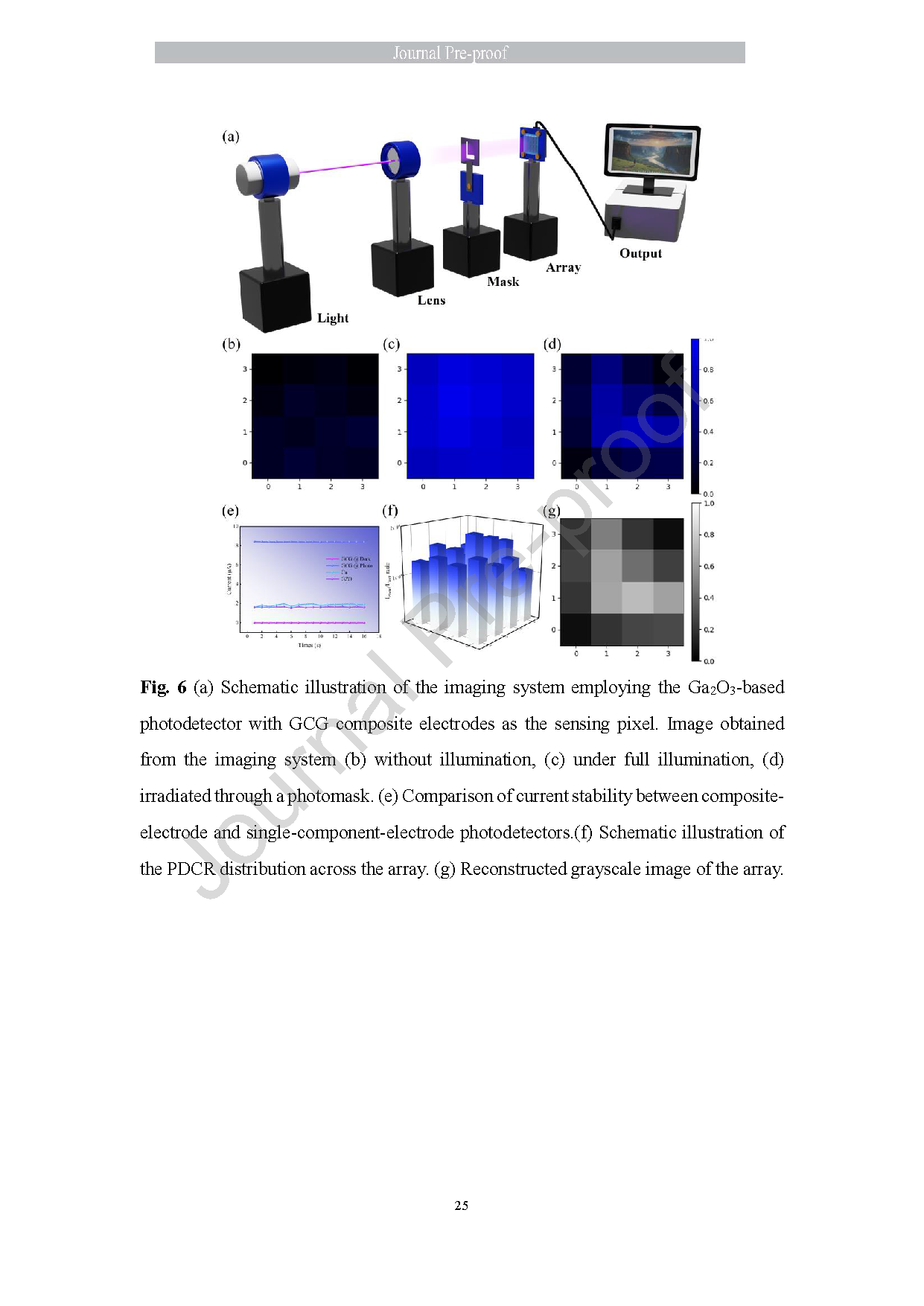
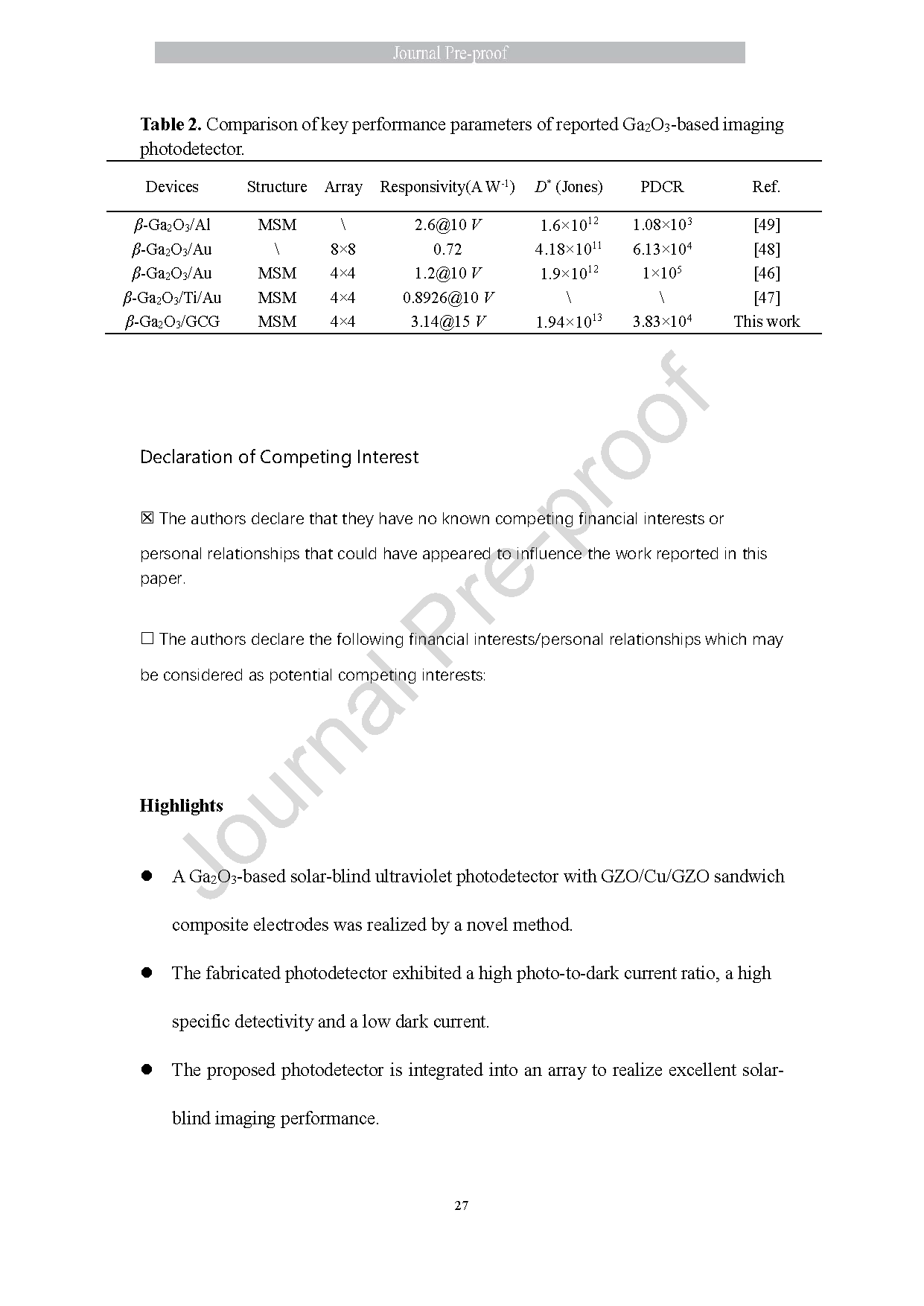
The β-Ga₂O₃-based solar-blind ultraviolet (UV) photodetector has received intensive attention owing to its promising application potential. In this study, we designed and fabricated, for the first time, a solar-blind UV photodetector suitable for imaging applications. The device employs sandwich composite GZO/Cu/GZO electrodes on a β-Ga₂O₃ thin film. The β-Ga₂O₃ layer was epitaxially grown on a sapphire substrate through metal-organic chemical vapor deposition (MOCVD), with sandwich composite electrodes subsequently deposited onto its surface by magnetron sputtering. The optimized device was further compared with one employing conventional Au electrodes. Our device shows a low dark current of 0.4 nA, a superb photo-to-dark current ratio of 3.83 ×10⁴, and a high specific detectivity of 1.94 ×10¹³ Jones at 15 V under 254 nm illumination, confirming excellent UV detection capability. To verify the practicality of transparent detectors for solar-blind imaging, we assembled a 4 × 4 photodetector array that produced a high-contrast image of the target object. This work offers a feasible route for designing Ga₂O₃-based photodetectors with advanced composite electrodes, facilitating their practical application in solar-blind UV imaging and optoelectronic integration.
Highlights
A Ga₂O₃-based solar-blind ultraviolet photodetector with GZO/Cu/GZO sandwich composite electrodes was realized by a novel method.
The fabricated photodetector exhibited a high photo-to-dark current ratio, a high specific detectivity and a low dark current.
The proposed photodetector is integrated into an array to realize excellent solar-blind imaging performance.
Conclusion
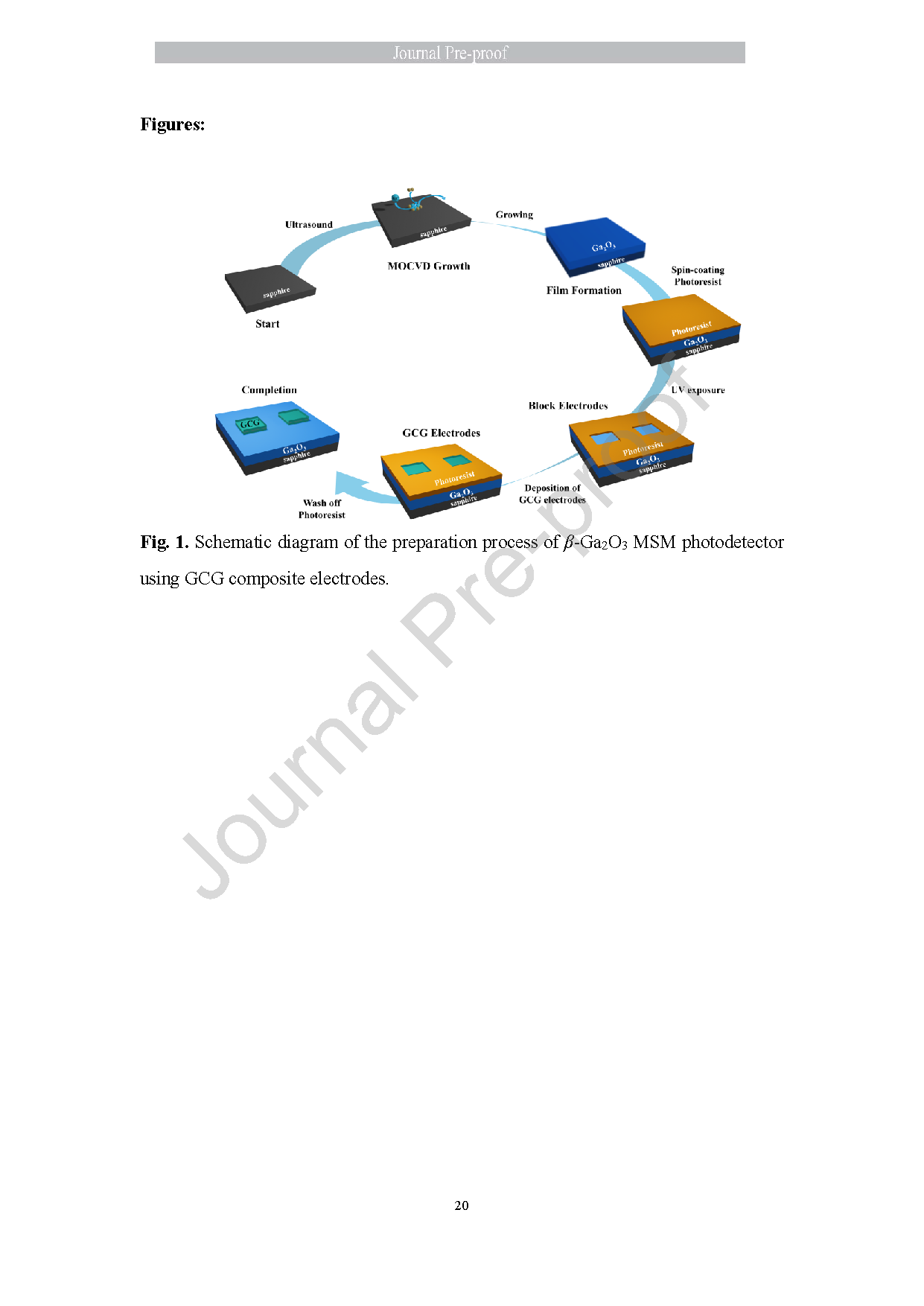
In summary, we have constructed MSM β-Ga₂O₃ UV photodetectors with GZO/Cu/GZO sandwich composite transparent electrodes for solar-blind imaging for the first time. Using MOCVD and subsequent magnetron sputtering with a multilayer growth approach, a β-Ga₂O₃ thin film was grown on a sapphire substrate and then coated with sandwich composite electrodes. The photodetector exhibits a low dark current of 0.4 nA, a high photo-to-dark current ratio of 3.83 ×10⁴ and a large detectivity of 1.94 ×10¹³ Jones at 15 V bias, which can be attributed to the surface passivation effect of the interface. A 4 × 4 photodetector array is constructed to evaluate the solar blind UV imaging ability, and high-contrast images of the aim object were obtained. This work presents a novel method for fabricating Ga₂O₃-based photodetectors with sandwich composite electrodes and demonstrates their promising application in solarblind light imaging systems.
Project Support
This work is supported by the Natural Science Foundation of Jilin Province (Grant No.YDZJ202501ZYTS638), the Fund of Education Department of Jilin Province (Grant Nos.JJKH20250694KJ, JJKH20250695KJ).
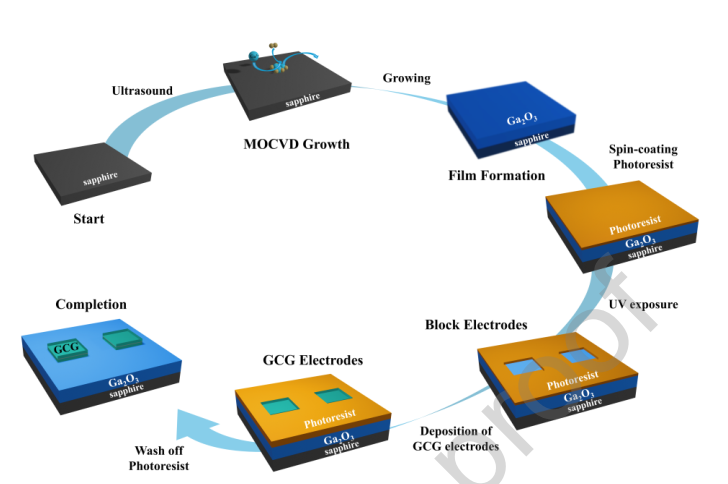
Fig. 1. Schematic diagram of the preparation process of β-Ga₂O₃ MSM photodetector using GCG composite electrodes.
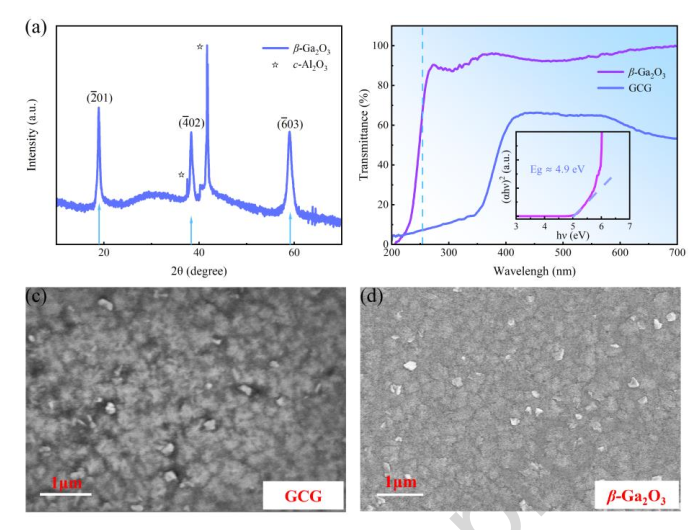
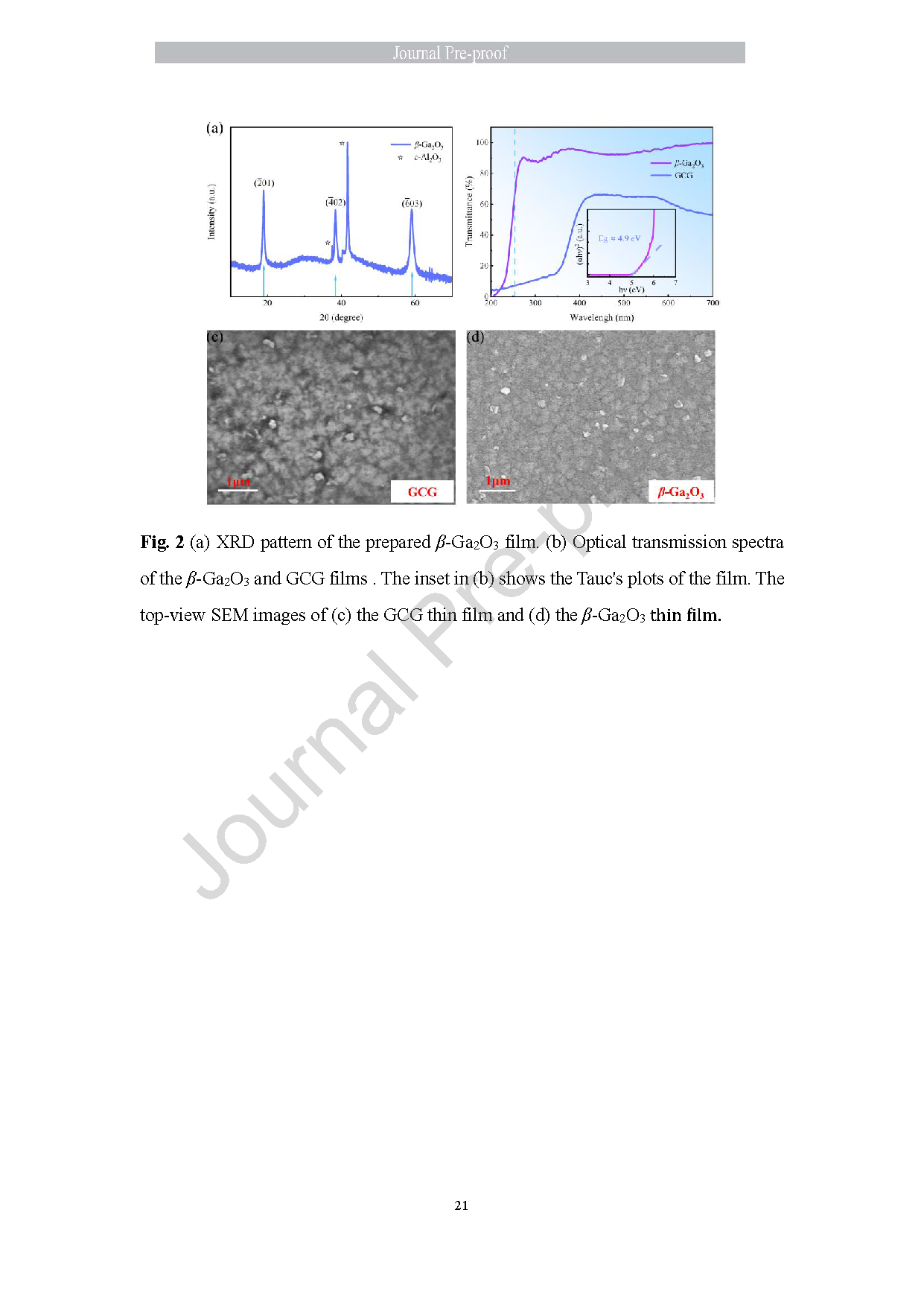
Fig. 2 (a) XRD pattern of the prepared β-Ga₂O₃ film. (b) Optical transmission spectra of the β-Ga₂O₃ and GCG films . The inset in (b) shows the Tauc's plots of the film. The top-view SEM images of (c) the GCG thin film and (d) the β-Ga₂O₃ thin film.
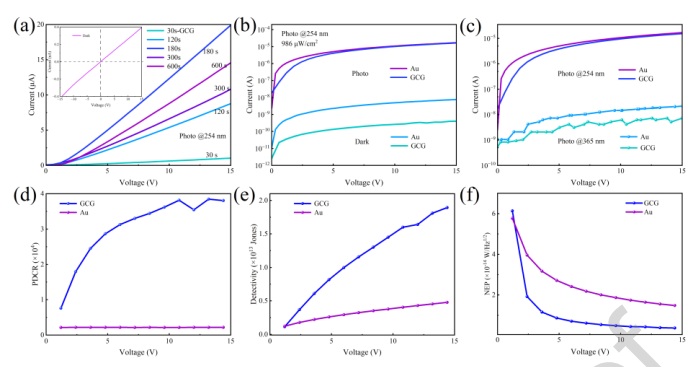
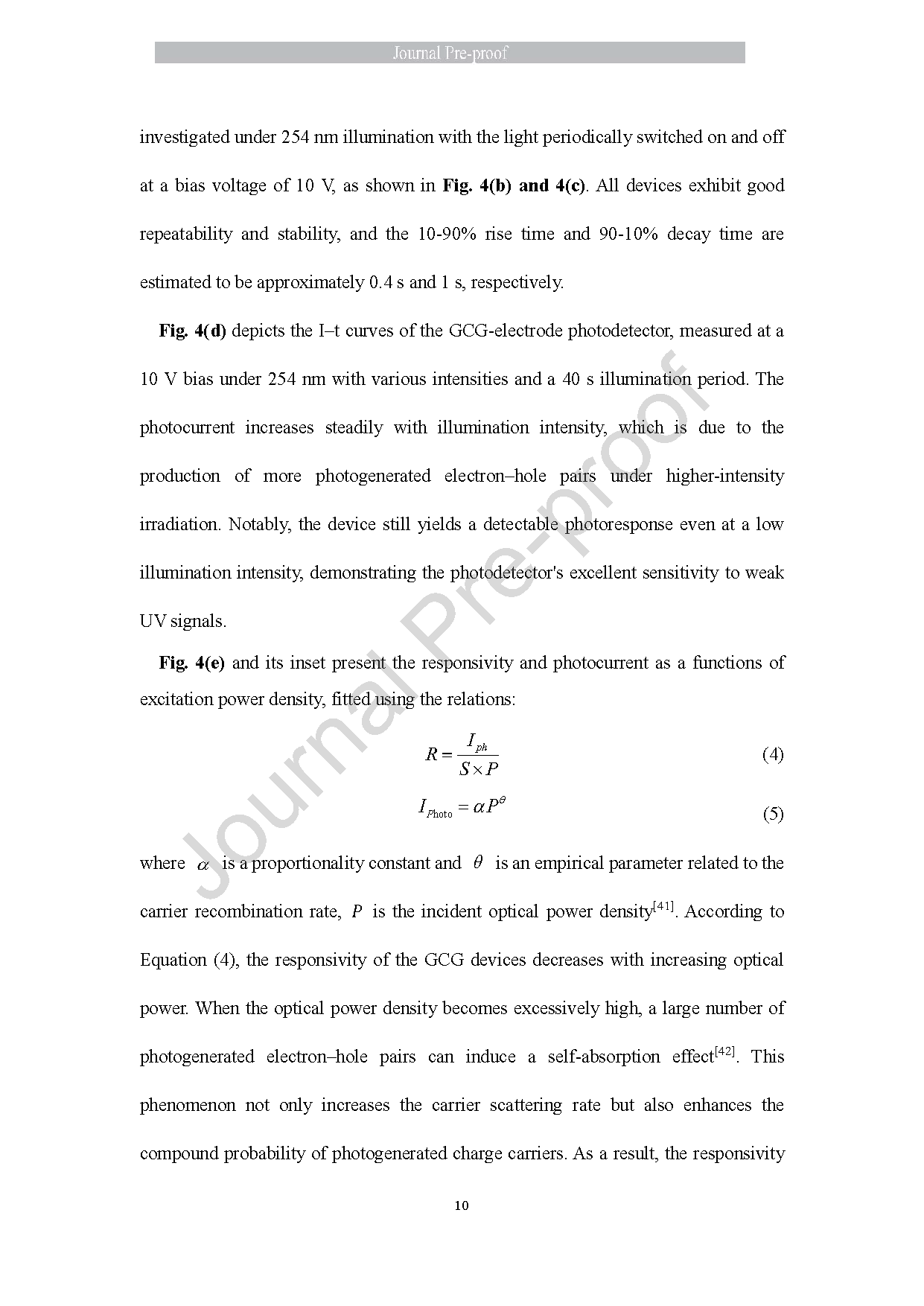
Fig. 3 (a) Linear I–V curves of photodetectors with GCG composite electrodes for different Cu layer deposition times. The inset shows the curve in the dark. Logarithmic I–V curves of the GCG composite electrodes and Au electrodes, (b) under 254 nm illumination and in the dark, (c) under 254 nm and 365 nm light illumination, (d) PDCR, (e) detectivity, (f) NEP.
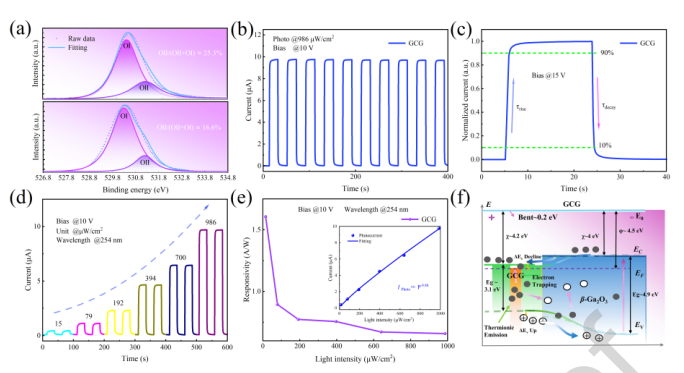
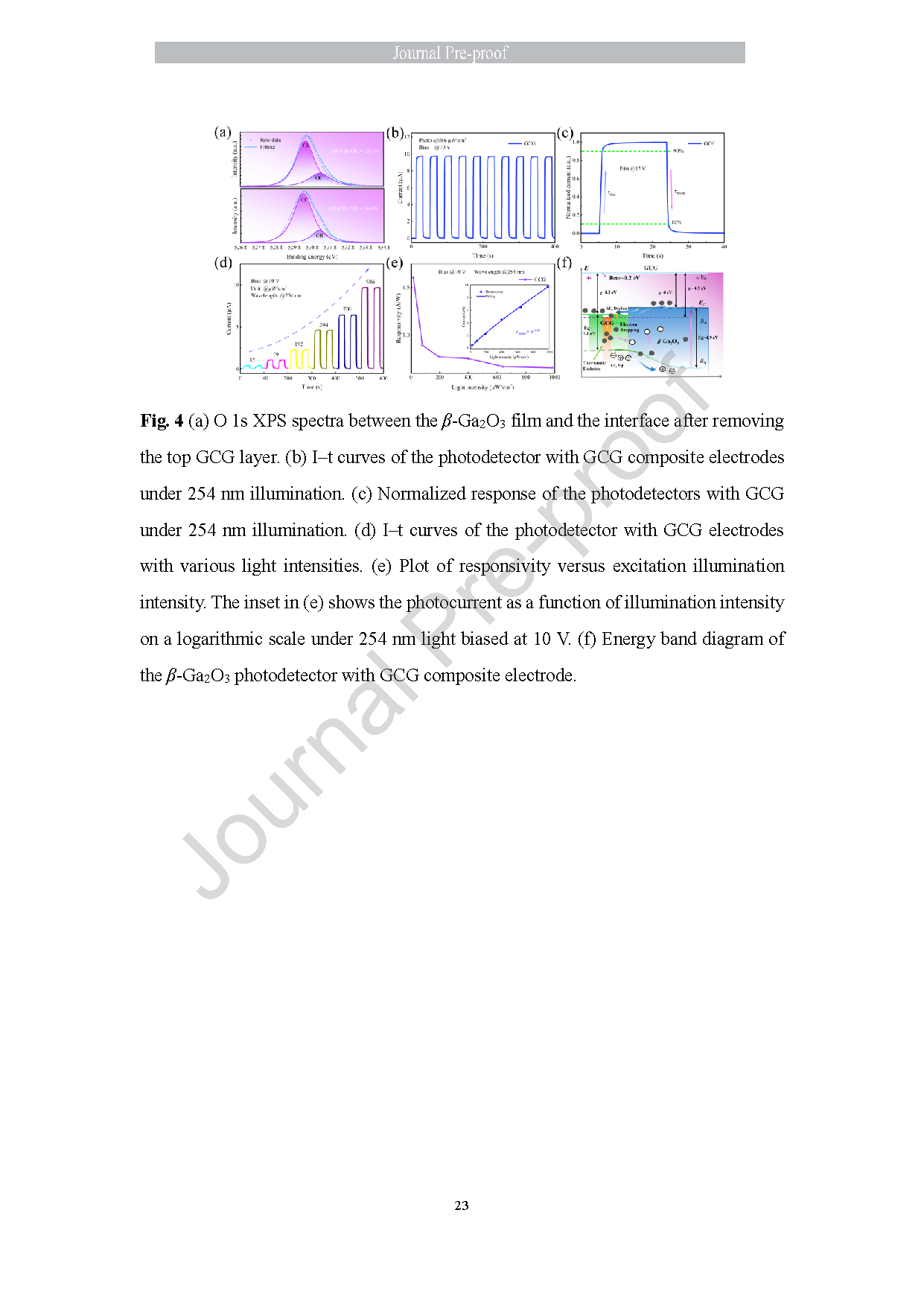
Fig. 4 (a) O 1s XPS spectra between the β-Ga₂O₃ film and the interface after removing the top GCG layer. (b) I–t curves of the photodetector with GCG composite electrodes under 254 nm illumination. (c) Normalized response of the photodetectors with GCG under 254 nm illumination. (d) I–t curves of the photodetector with GCG electrodes with various light intensities. (e) Plot of responsivity versus excitation illumination intensity. The inset in (e) shows the photocurrent as a function of illumination intensity on a logarithmic scale under 254 nm light biased at 10 V. (f) Energy band diagram of the β-Ga₂O₃ photodetector with GCG composite electrode.
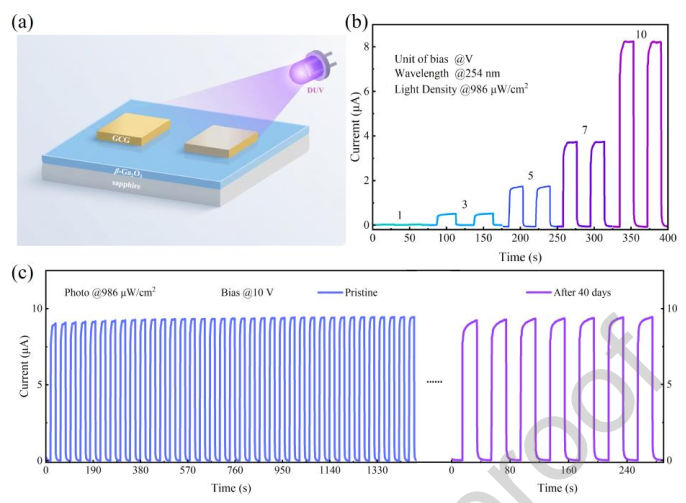
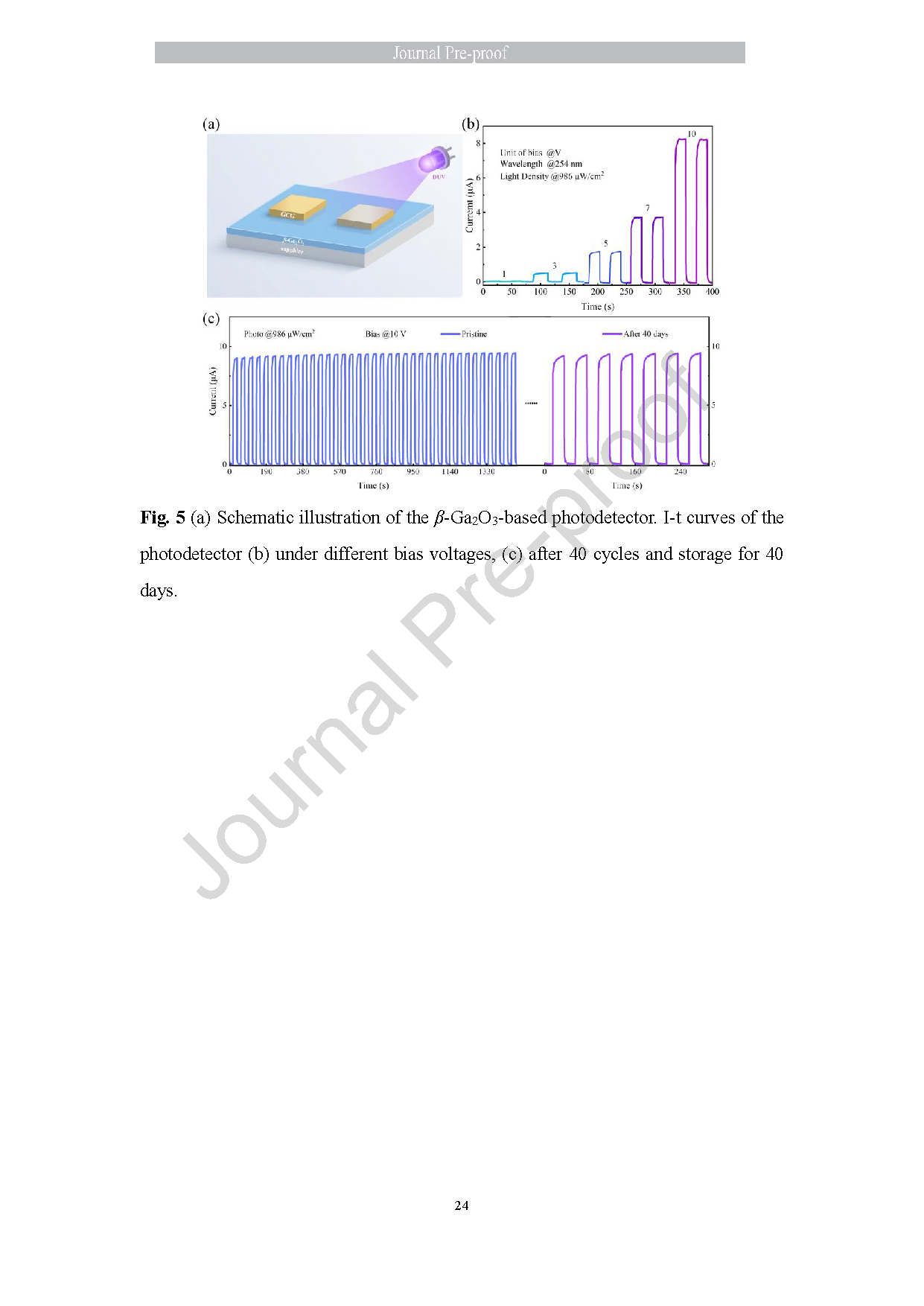
Fig. 5 (a) Schematic illustration of the β-Ga₂O₃-based photodetector. I-t curves of the photodetector (b) under different bias voltages, (c) after 40 cycles and storage for 40 days.
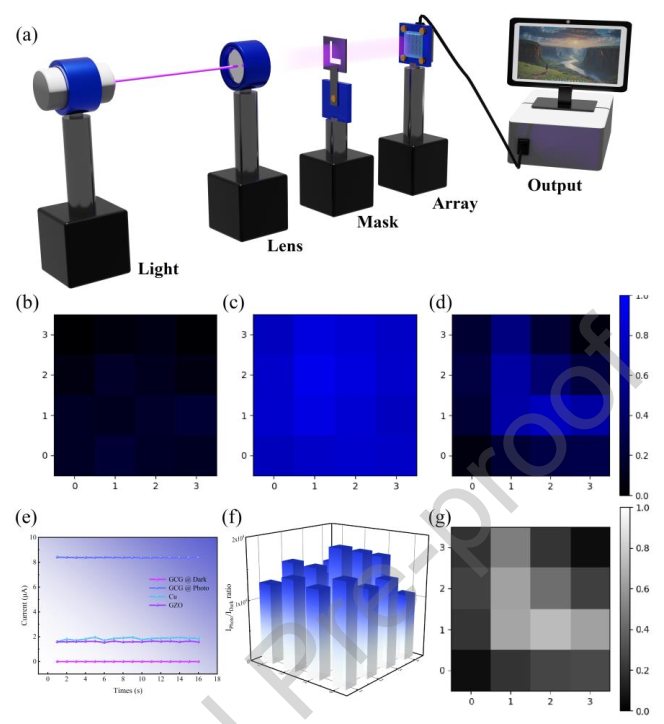
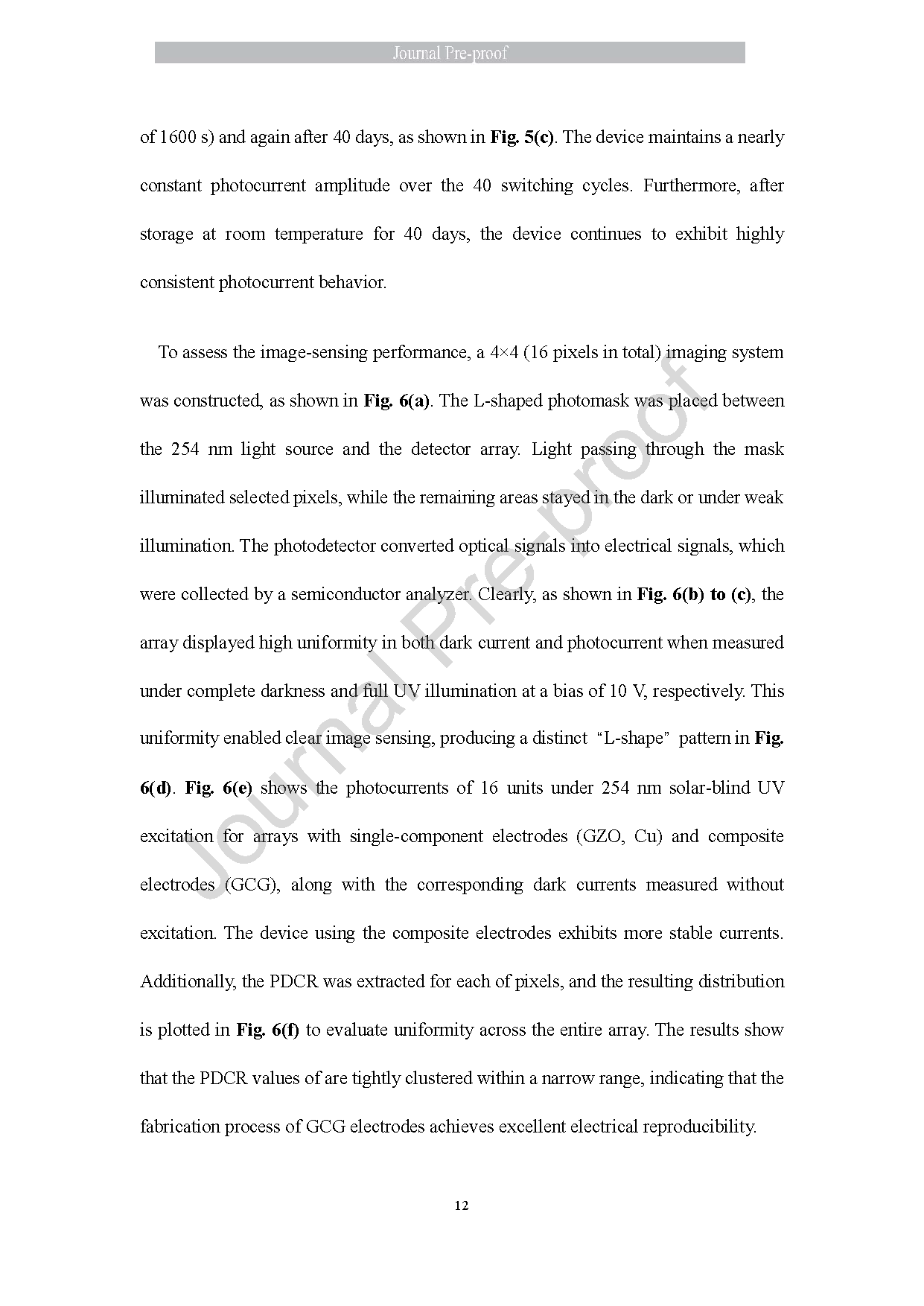
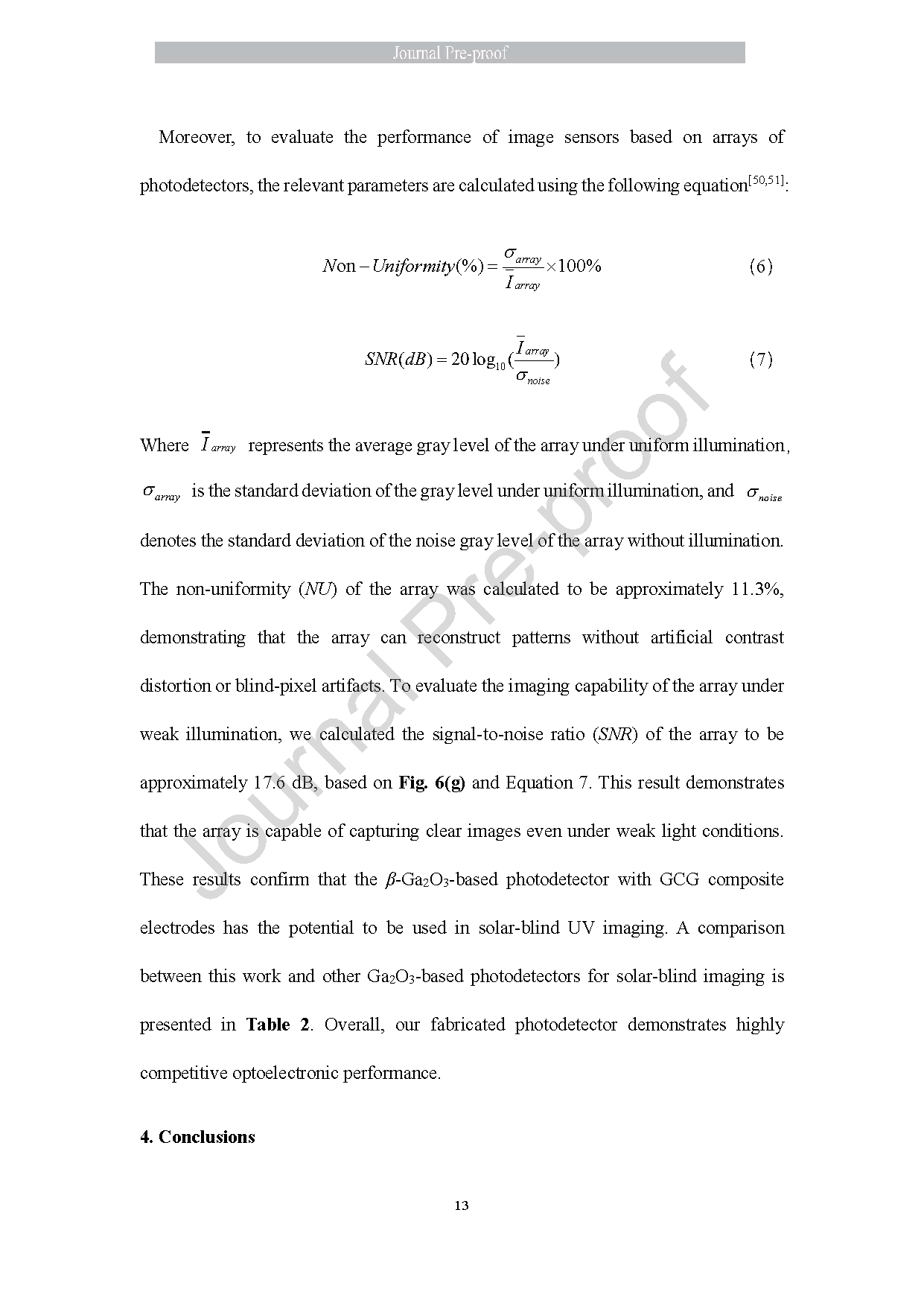
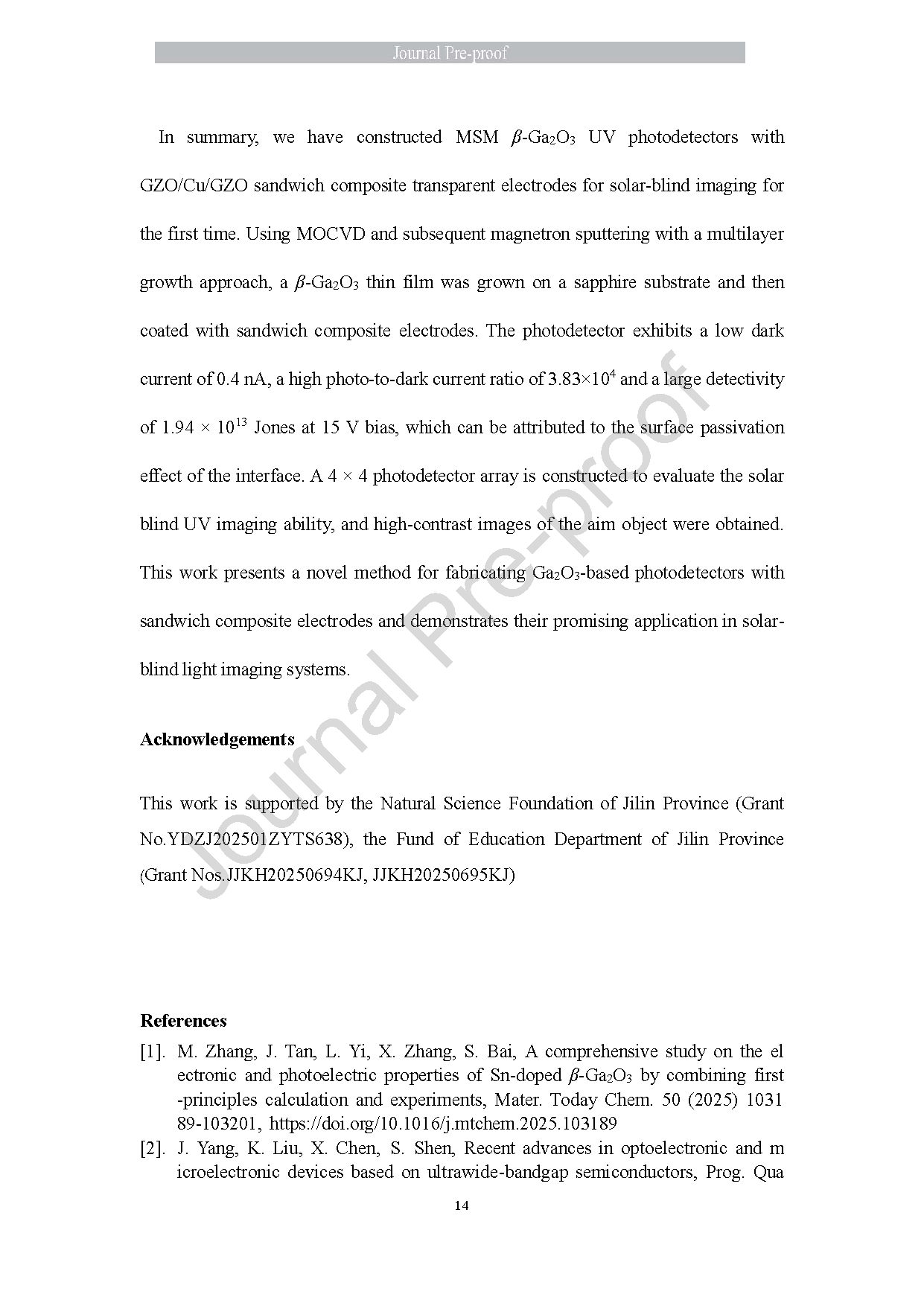
Fig. 6 (a) Schematic illustration of the imaging system employing the Ga₂O₃-based photodetector with GCG composite electrodes as the sensing pixel. Image obtained from the imaging system (b) without illumination, (c) under full illumination, (d) irradiated through a photomask. (e) Comparison of current stability between compositeelectrode and single-component-electrode photodetectors.(f) Schematic illustration of the PDCR distribution across the array. (g) Reconstructed grayscale image of the array.
DOI:
doi.org/10.1016/j.jallcom.2026.189105










Instruction
Official Account

Cooperation
Top