


Researchers from the Xidian University have published a dissertation titled " Kinetic Monte Carlo Simulation of (010) β-Ga2O3 Growth via Metalorganic Chemical Vapor Deposition " in Vacuum.
Background
As an ultra-wide bandgap semiconductor material, β-Ga₂O₃ has a bandgap as high as 4.8 eV and a breakdown electric field of approximately 8 MV/cm, showing broad application prospects in power electronic devices and deep ultraviolet optoelectronic devices. It crystallizes in the monoclinic system with space group C2/m, and the common epitaxial orientations include (100), (010), and (001). Among them, the (010) plane is the most thermodynamically stable cleavage plane of β-Ga₂O₃. However, due to the strong structural anisotropy, the surface diffusion of adatoms varies greatly along different crystal directions. Severe surface roughness easily occurs during metalorganic chemical vapor deposition (MOCVD) homoepitaxy, making it difficult to obtain atomically flat epitaxial layers and severely restricting the development of high-performance devices based on this crystal plane.
MOCVD is one of the mainstream preparation technologies for β-Ga₂O₃ homoepitaxy, with prominent advantages including large-area multi-wafer simultaneous growth, facile control over film composition and crystal structure, high doping precision and excellent high-temperature stability. At present, extensive homoepitaxial research has been carried out on β-Ga₂O₃ substrates with (100) and (001) orientations, and stable step-flow growth can be realized on vicinal (100) substrates. Nevertheless, the MOCVD growth kinetics of (010)-oriented β-Ga₂O₃ are much more complex, and relevant atomic-scale simulation studies are extremely scarce.
Kinetic Monte Carlo (KMC) simulation can bridge the research gap between microscopic atomic evolution processes and macroscopic film morphologies, and it has been widely adopted and verified in the simulation of various chemical vapor deposition growth processes. However, most existing KMC models for β-Ga₂O₃ simplify the complex gas-phase chemical reactions inside the reactor and ignore the coupling effect between gas-phase reactions and surface deposition processes. These models can only reproduce experimental phenomena semi-quantitatively and present large quantitative prediction errors under wide ranges of temperature and pressure, failing to fully restore the full atomic evolution law of (010) β-Ga₂O₃ MOCVD.
To fill the above research gap, this work establishes a three-dimensional atomic-scale KMC model coupled with gas-phase precursor reactions and surface adsorption-diffusion-nucleation processes, systematically elucidates the regulatory mechanisms of growth temperature and reaction pressure on film growth kinetics, surface morphology and crystal quality, and provides comprehensive theoretical support for the process development of high-quality (010)-oriented β-Ga₂O₃ epitaxial films.
Abstract
Homoepitaxial growth of (010)-oriented β-Ga₂O₃ via Metalorganic Chemical Vapor Deposition (MOCVD) faces great challenges owing to complex surface dynamics. Herein, a three-dimensional atomic-scale Kinetic Monte Carlo (KMC) model is developed, which for the first time simulates the growth kinetics of (010) β-Ga₂O₃ homoepitaxy by coupling Triethylgallium (TEGa) - O₂ gas-phase reactions with surface Ga/O atom adsorption-diffusion-nucleation processes. Results show a three-stage growth pathway: isolated island formation-island coalescence-step flow dynamic equilibrium. Systematic studies reveal temperature (750–900 ◦C) and pressure (15–60 Torr) regulate growth rate via precursor transport and surface reactions, while surface roughness varies non-monotonically with temperature. Multi-objective optimization identifies a favorable near-optimal process window centered at (800 ◦C, 25 Torr), which achieves a balanced performance in growth rate (~1.90 μm/h), surface roughness (RMS ~0.92 nm) and crystalline quality (ordered atom ratio ~0.67). This work clarifies the atomic-scale kinetic mechanism and provides useful theoretical guidance for the fabrication of high-quality epitaxial films.
Highlights
A novel 3D atomic-scale KMC framework fully coupling complete TEGa-O₂gas-phase elementary reactions and surface adatom adsorption-diffusion processes is established for the first time, realizing full-process gas-surface coupling simulation. The prediction error of growth rate under high pressure (>40 Torr) is reduced from 12% (traditional models) to less than 3%.
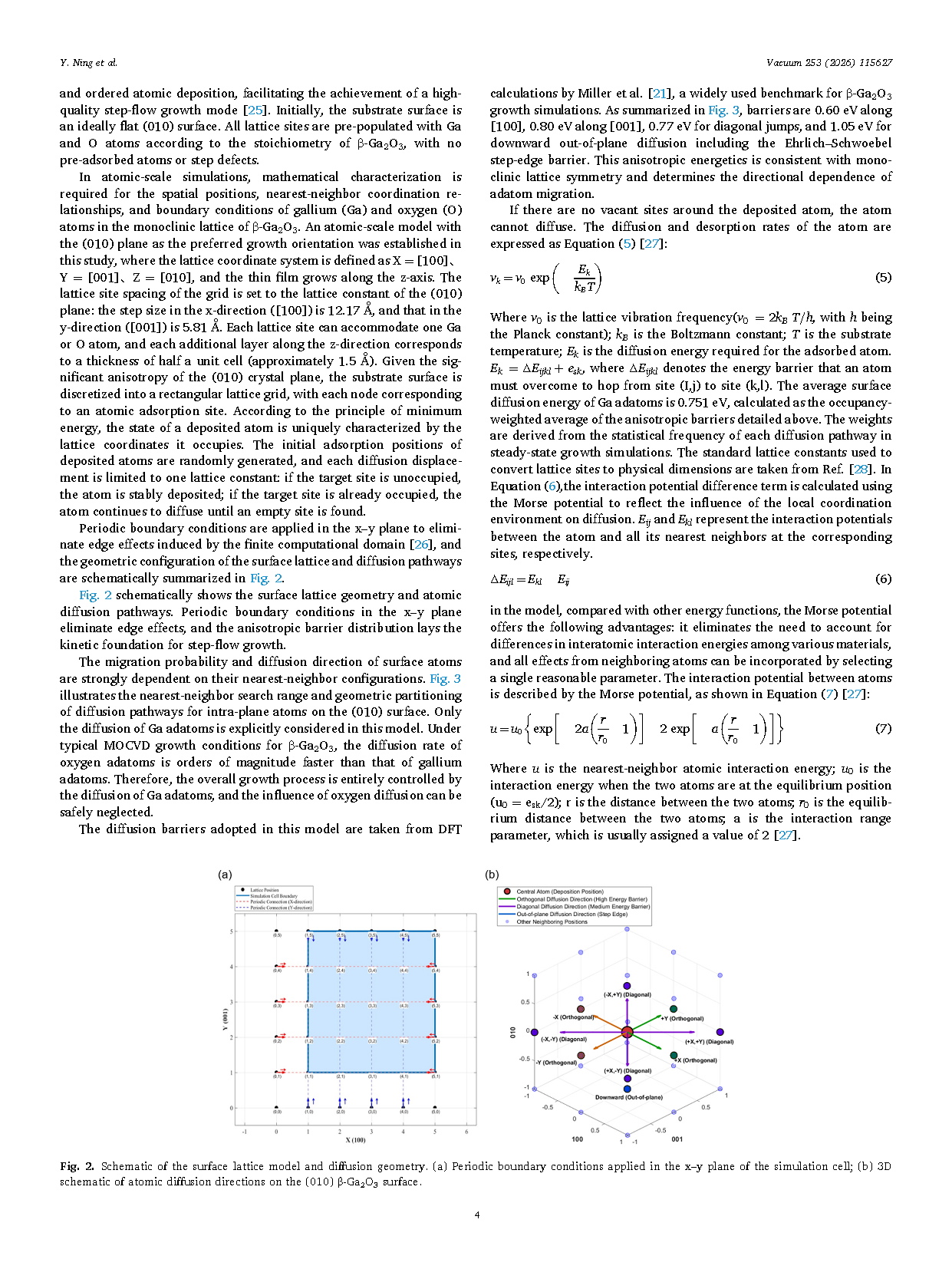
The distinct diffusion difference between Ga and O adatoms on highly anisotropic (010) β-Ga₂O₃surface is fully distinguished, and Ga adatom diffusion is confirmed as the rate-determining step. Anisotropic diffusion energy barriers (0.60 eV along [100], 0.80 eV along [001], 1.05 eV step-edge barrier) are adopted to accurately reproduce anisotropic island morphology of epitaxial films.
Ordered atom ratio (OAR) is proposed to quantitatively characterize crystalline quality of films. Entropy weight method-based multi-objective optimization combining growth rate and RMS roughness is carried out, and the optimal process window (800 ℃, 25 Torr) balancing growth efficiency, flatness and crystallinity is determined.
Three-stage growth evolution mechanism of (010) β-Ga₂O₃ is fully clarified: isolated island nucleation → island coalescence → steady-state step-flow growth. Atomic-scale step-terrace flat morphology under optimal conditions is directly observed via simulation, verifying ideal step-flow growth mode.
Conclusion
By establishing a 3D kinetic Monte Carlo (KMC) model coupled with gas-surface interactions, this study has systematically simulated and revealed the physical mechanisms underlying the MOCVD homoepitaxial growth of (010) β-Ga₂O₃ films at the atomic scale. This model innovatively integrates the chemical reaction kinetics of TEGa-O₂ precursor decomposition with anisotropic surface diffusion processes, enabling atomic-scale simulation of the dominant growth processes ranging from gas-phase decomposition, surface adsorption, migration, and nucleation to film morphological evolution. The results demonstrate that the homoepitaxial growth of (010) β-Ga₂O₃ is dominated by atomic diffusion and step propagation, and its morphological evolution follows a mixed growth mode of layer-by-layer and 3D island growth. Temperature and pressure synergistically regulate precursor decomposition, atomic migration, and surface reaction equilibrium, thereby exerting a significant influence on growth kinetics and film quality: the growth rate increases moderately with temperature and decreases approximately linearly with pressure; the surface roughness exhibits a non-monotonic variation with temperature, which is mainly attributed to the competition between atomic diffusion ability and precursor reaction efficiency; the crystalline quality reaches a near-optimum under the condition of moderate temperature and moderate pressure (800 ◦C, 25 Torr).
Project Support
This research did not receive any specific grant from funding agencies in the public, commercial, or not-for-profit sectors. Computational resources are provided by the Super Computing Network.
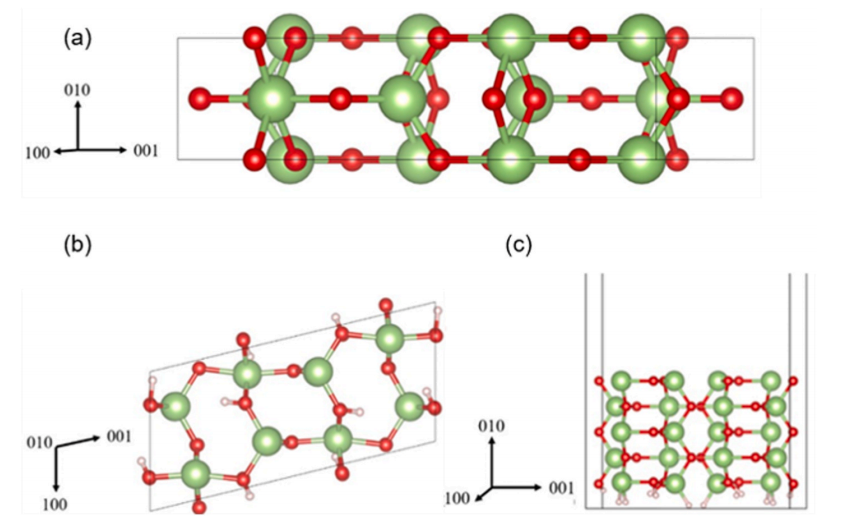
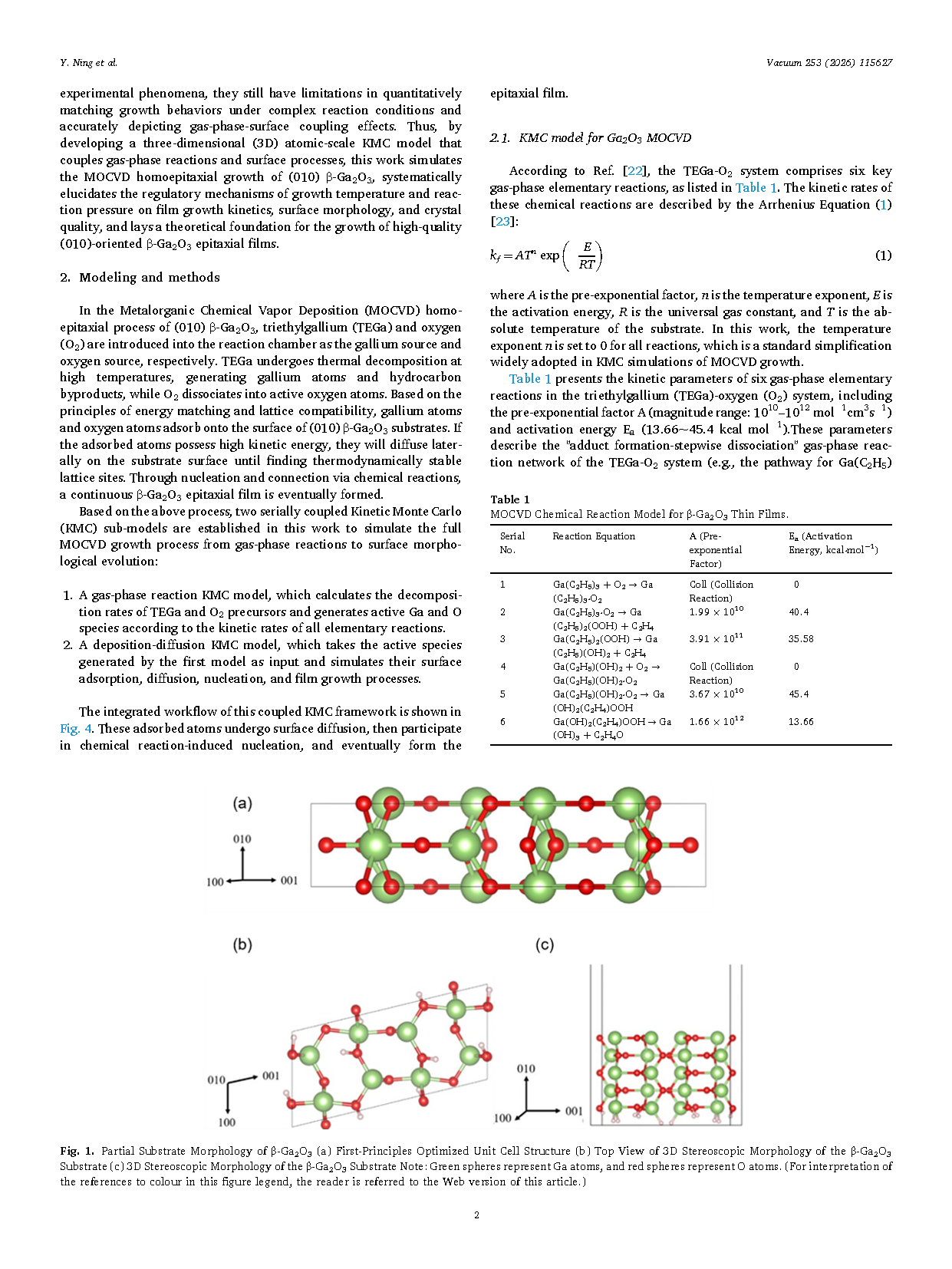
Fig. 1. Partial Substrate Morphology of β-Ga₂O₃ (a) First-Principles Optimized Unit Cell Structure (b) Top View of 3D Stereoscopic Morphology of the β-Ga₂O₃ Substrate (c) 3D Stereoscopic Morphology of the β-Ga₂O₃ Substrate Note: Green spheres represent Ga atoms, and red spheres represent O atoms. (For interpretation of the references to colour in this figure legend, the reader is referred to the Web version of this article.)
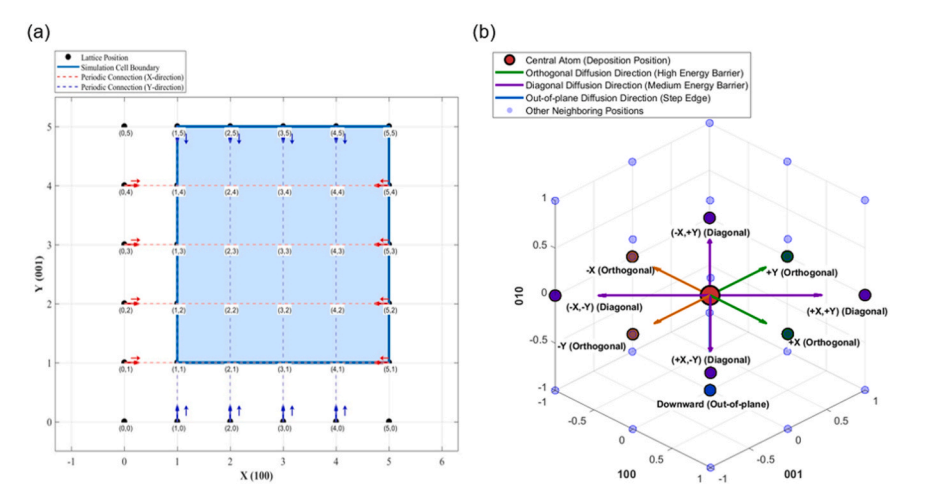
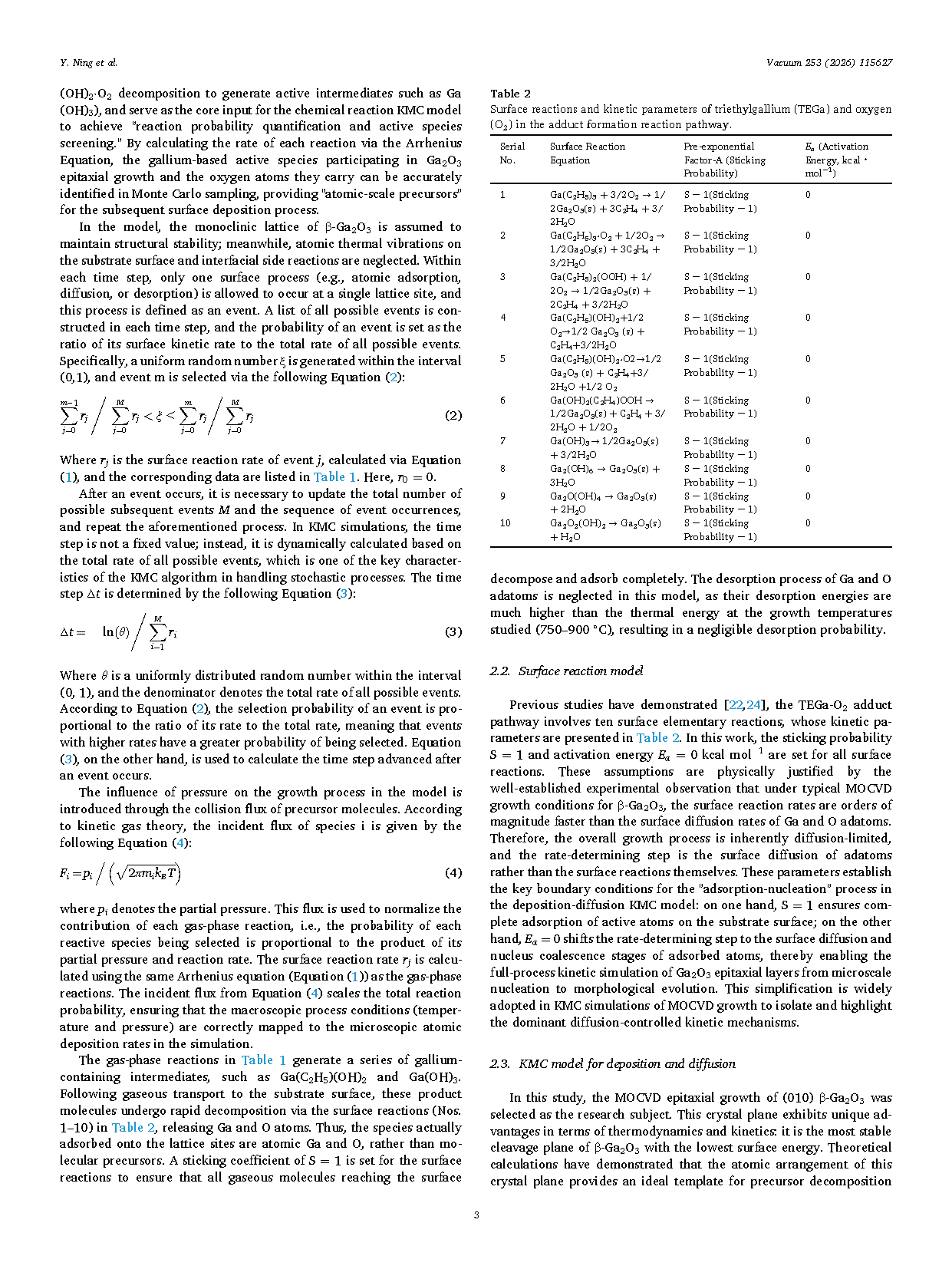
Fig. 2. Schematic of the surface lattice model and diffusion geometry. (a) Periodic boundary conditions applied in the x-y plane of the simulation cell; (b) 3D schematic of atomic diffusion directions on the (010) β-Ga₂O₃ surface.
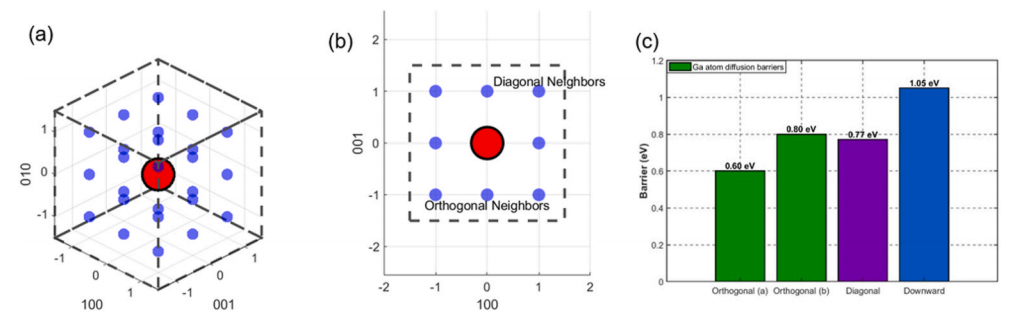
Fig. 3. Nearest-Neighbor Search and Diffusion Mechanism on β-Ga₂O₃ (010) Surface (a) Schematic diagram of 3D nearest-neighbor search range (b) Top view along the b-axis [010] direction, showing the distribution of intra-plane nearest-neighbor sites in the a-c plane (c) Comparison of barrier heights for different diffusion pathways: orthogonal directions along the a-axis (0.6 eV) and c-axis (0.8 eV), diagonal directions (average 0.77 eV), and downward diffusion (including step-edge barrier, 1.05 eV).
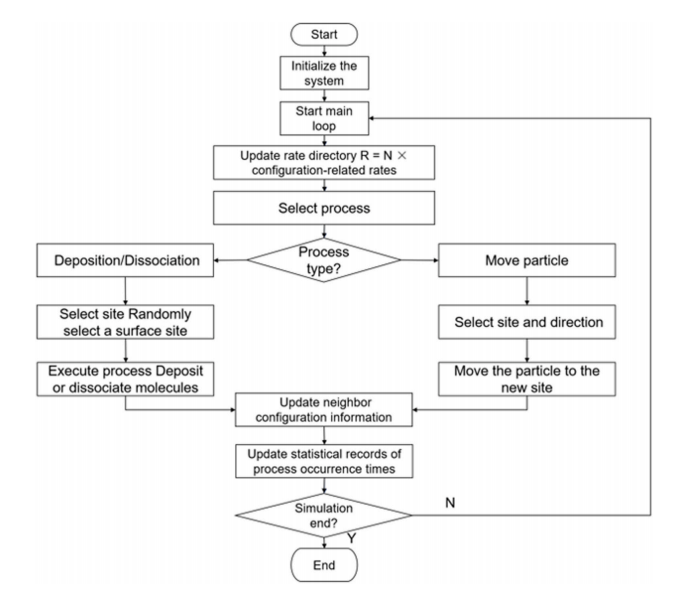
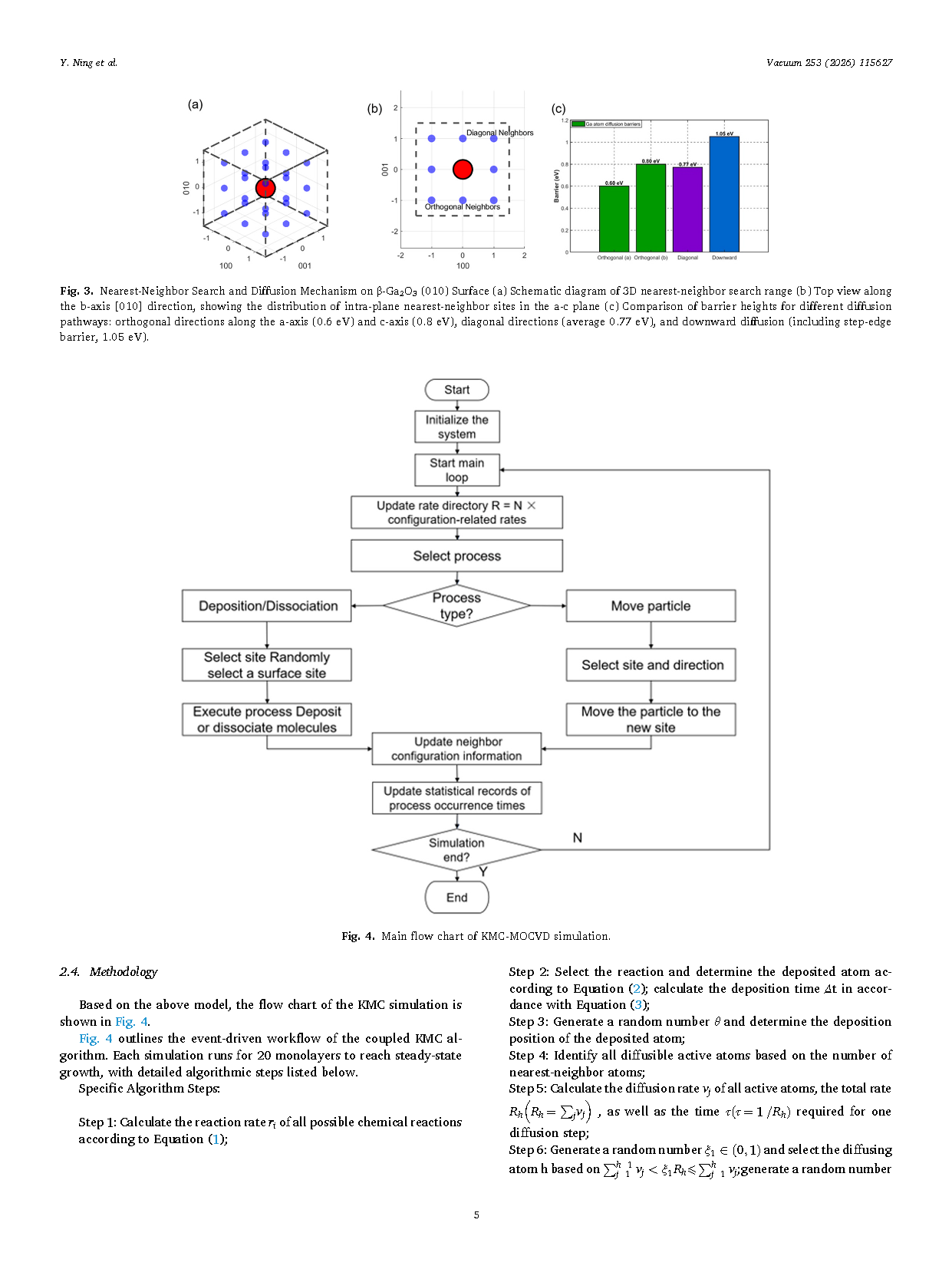
Fig. 4. Main flow chart of KMC-MOCVD simulation.
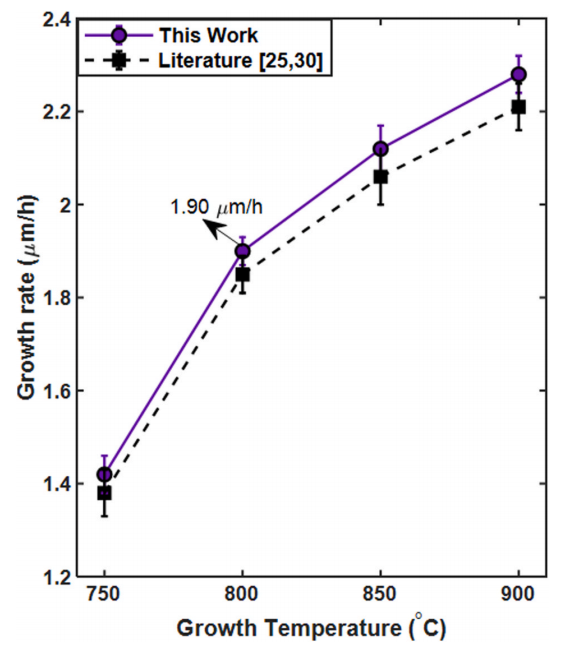
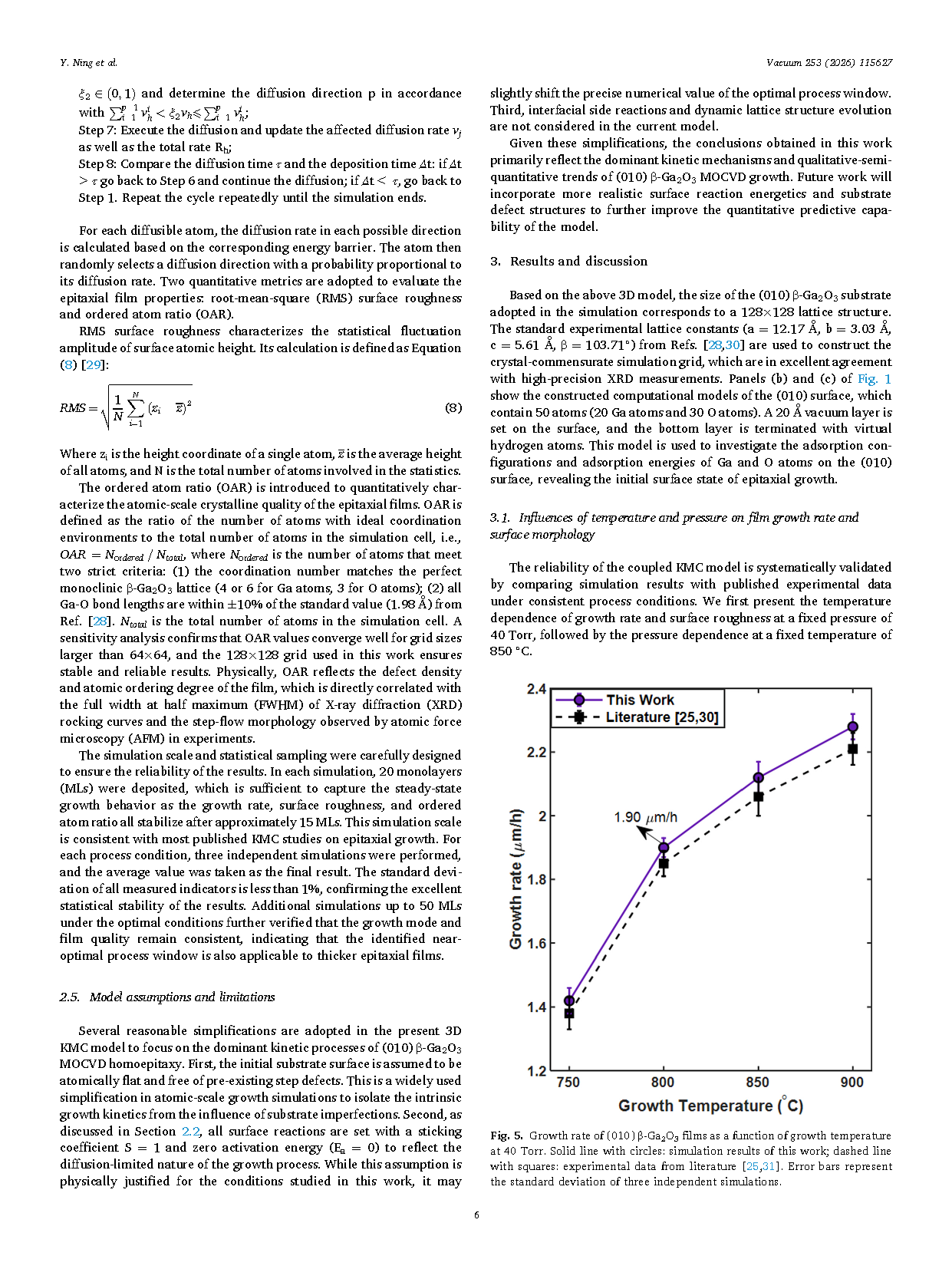
Fig. 5. Growth rate of (010) β-Ga₂O₃ films as a function of growth temperature at 40 Torr. Solid line with circles: simulation results of this work; dashed line with squares: experimental data from literature [25,31]. Error bars represent the standard deviation of three independent simulations.
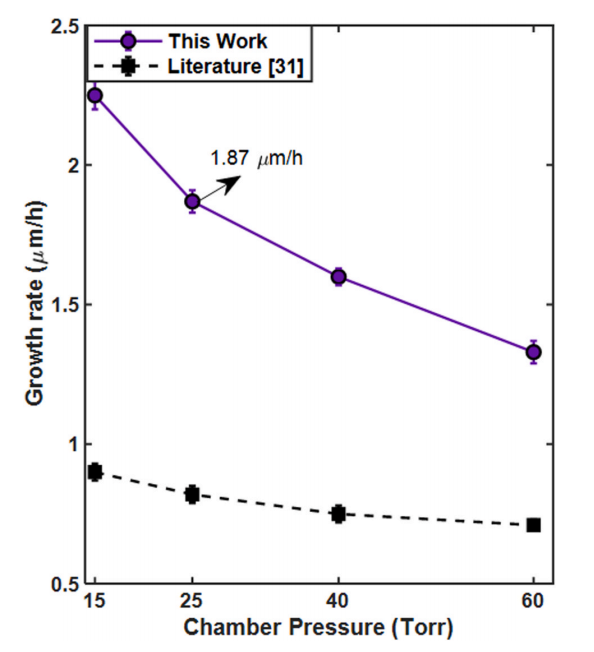
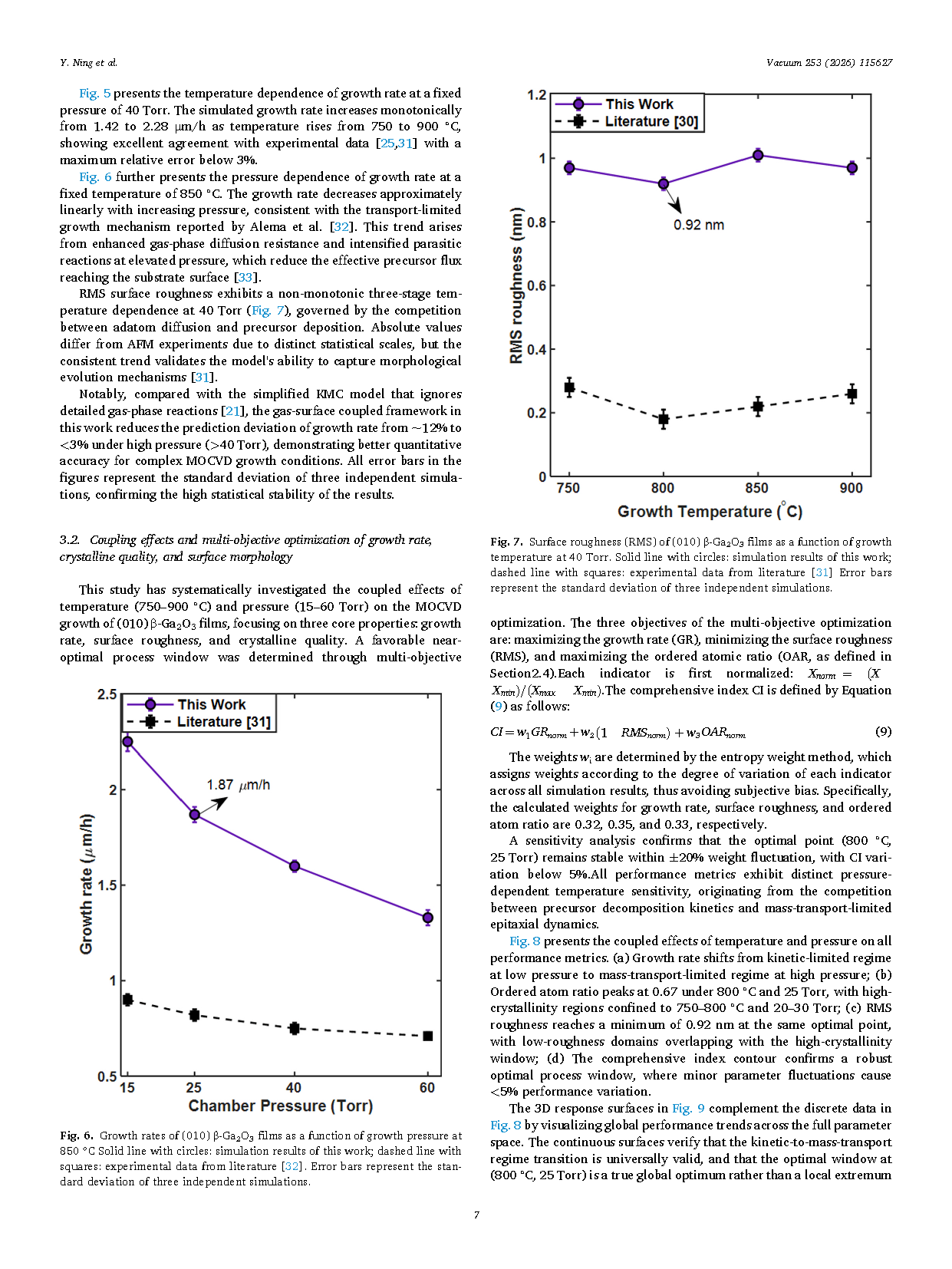
Fig. 6. Growth rates of (010) β-Ga₂O₃ films as a function of growth pressure at 850 ◦C Solid line with circles: simulation results of this work; dashed line with squares: experimental data from literature [32]. Error bars represent the standard deviation of three independent simulations.
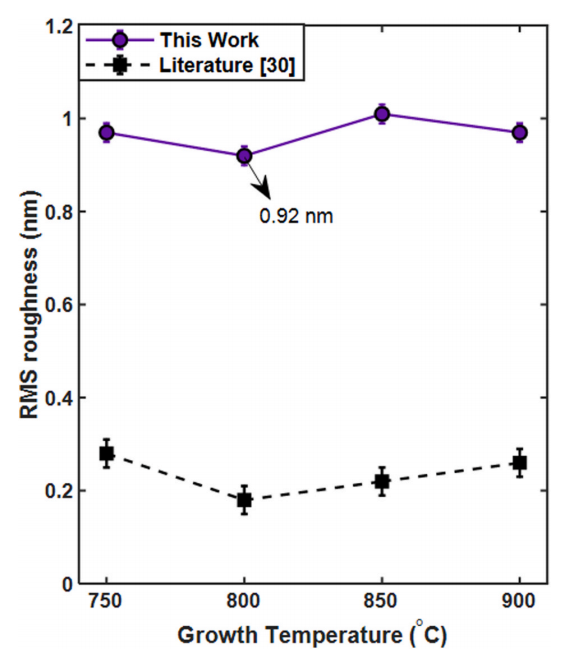
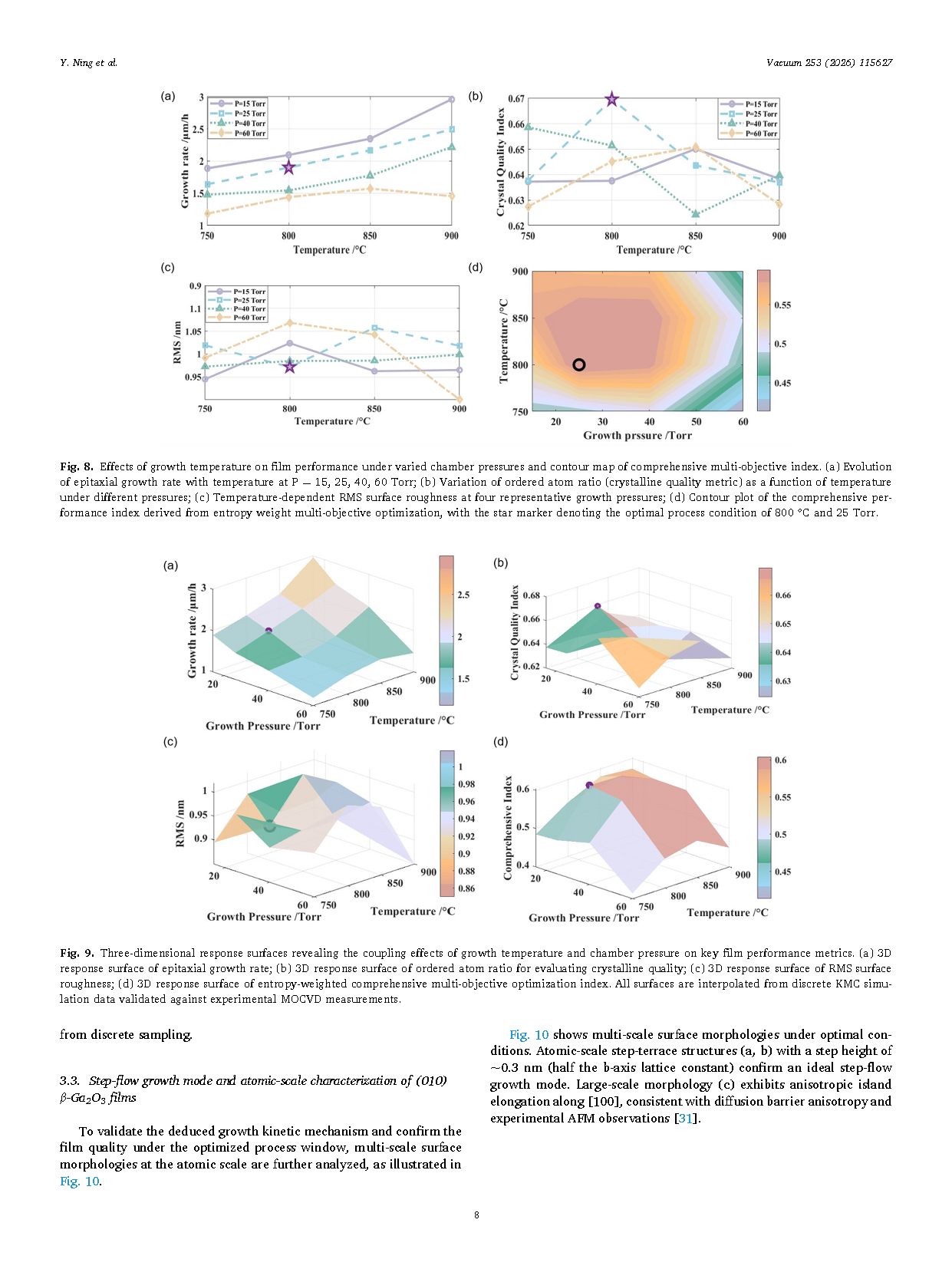
Fig. 7. Surface roughness (RMS) of (010) β-Ga₂O₃ films as a function of growth temperature at 40 Torr. Solid line with circles: simulation results of this work; dashed line with squares: experimental data from literature [31]. Error bars represent the standard deviation of three independent simulations.
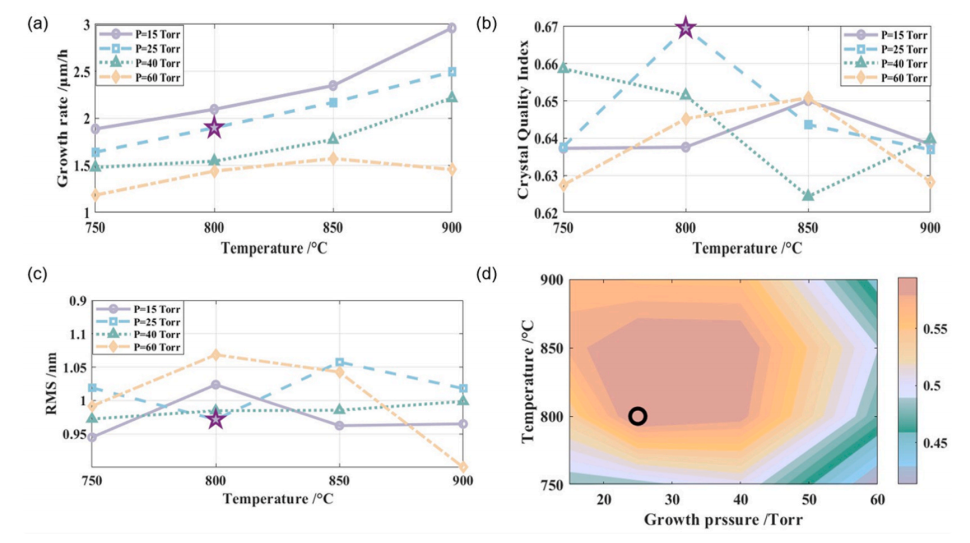
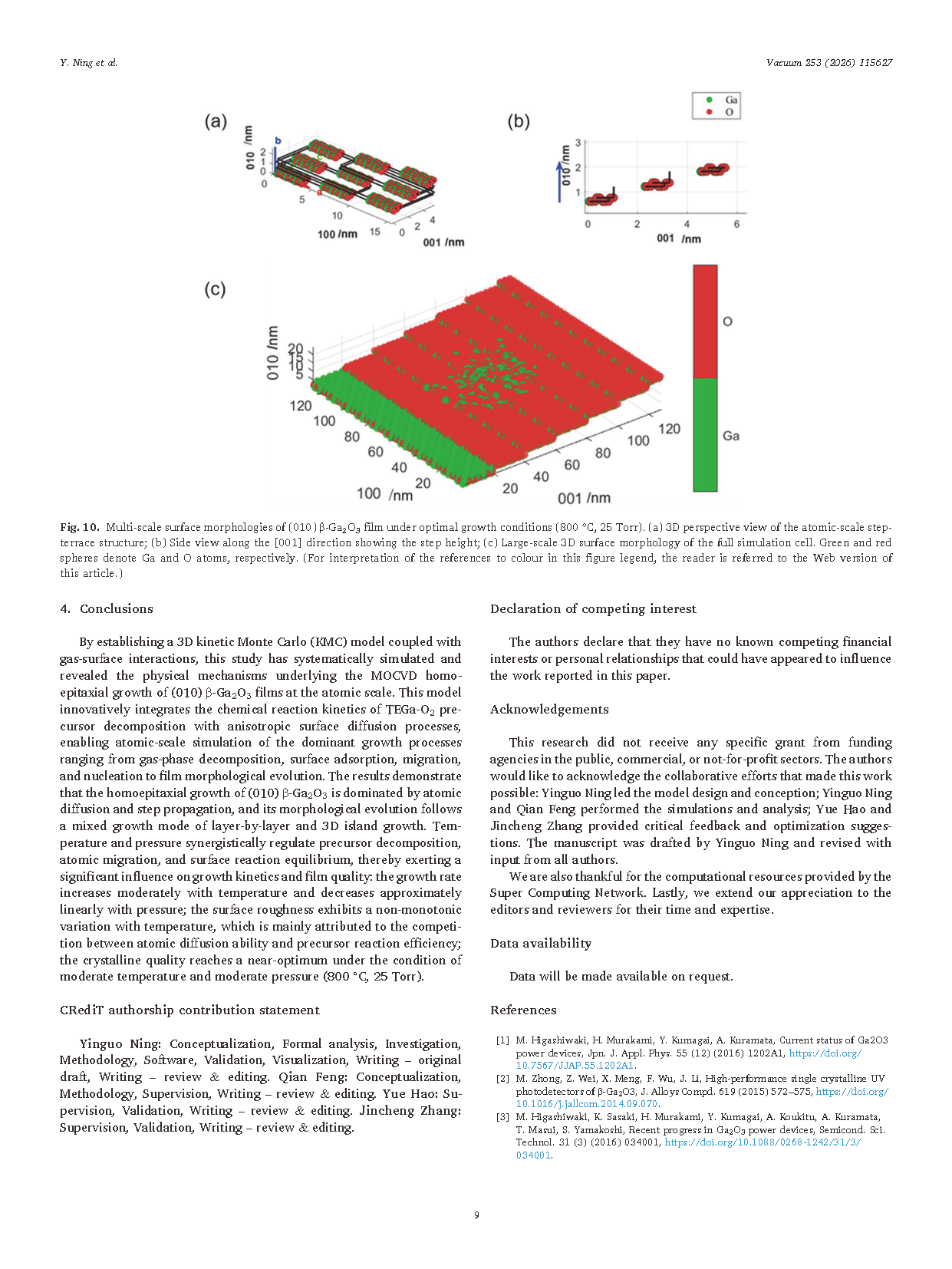
Fig. 8. Effects of growth temperature on film performance under varied chamber pressures and contour map of comprehensive multi-objective index. (a) Evolution of epitaxial growth rate with temperature at P=15, 25, 40, 60 Torr; (b) Variation of ordered atom ratio (crystalline quality metric) as a function of temperature under different pressures; (c) Temperature-dependent RMS surface roughness at four representative growth pressures; (d) Contour plot of the comprehensive performance index derived from entropy weight multi-objective optimization, with the star marker denoting the optimal process condition of 800 ◦C and 25 Torr.
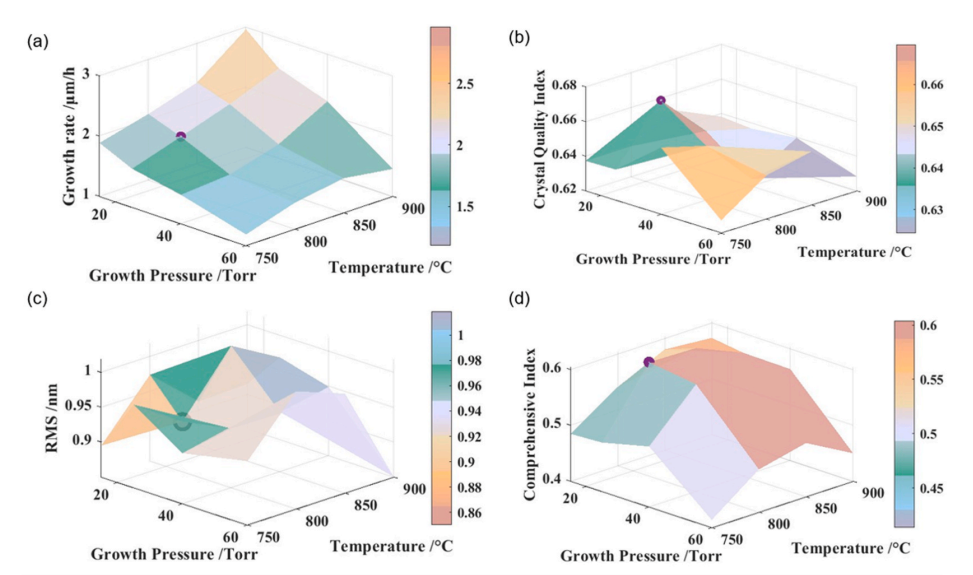
Fig. 9. Three-dimensional response surfaces revealing the coupling effects of growth temperature and chamber pressure on key film performance metrics. (a) 3D response surface of epitaxial growth rate; (b) 3D response surface of ordered atom ratio for evaluating crystalline quality; (c) 3D response surface of RMS surface roughness; (d) 3D response surface of entropy-weighted comprehensive multi-objective optimization index. All surfaces are interpolated from discrete KMC simulation data validated against experimental MOCVD measurements.
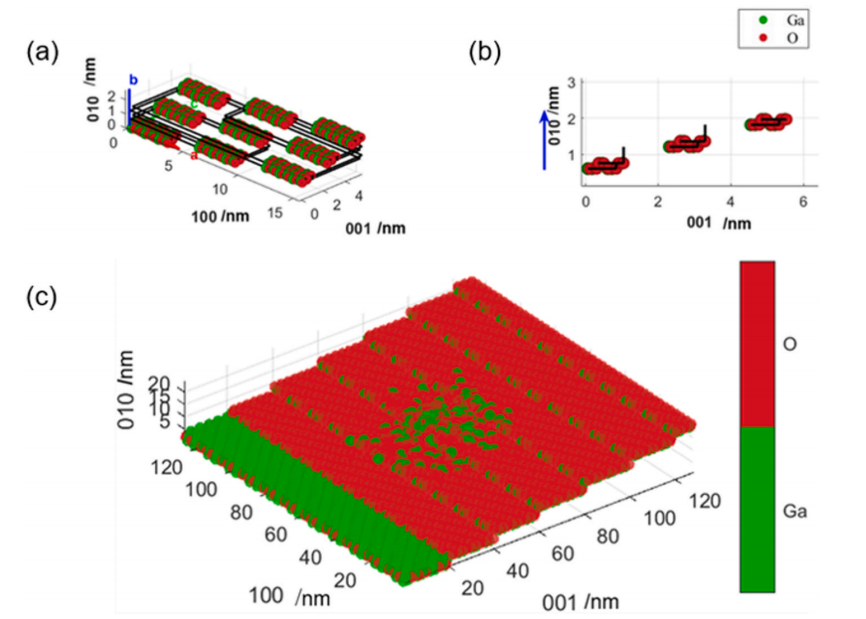
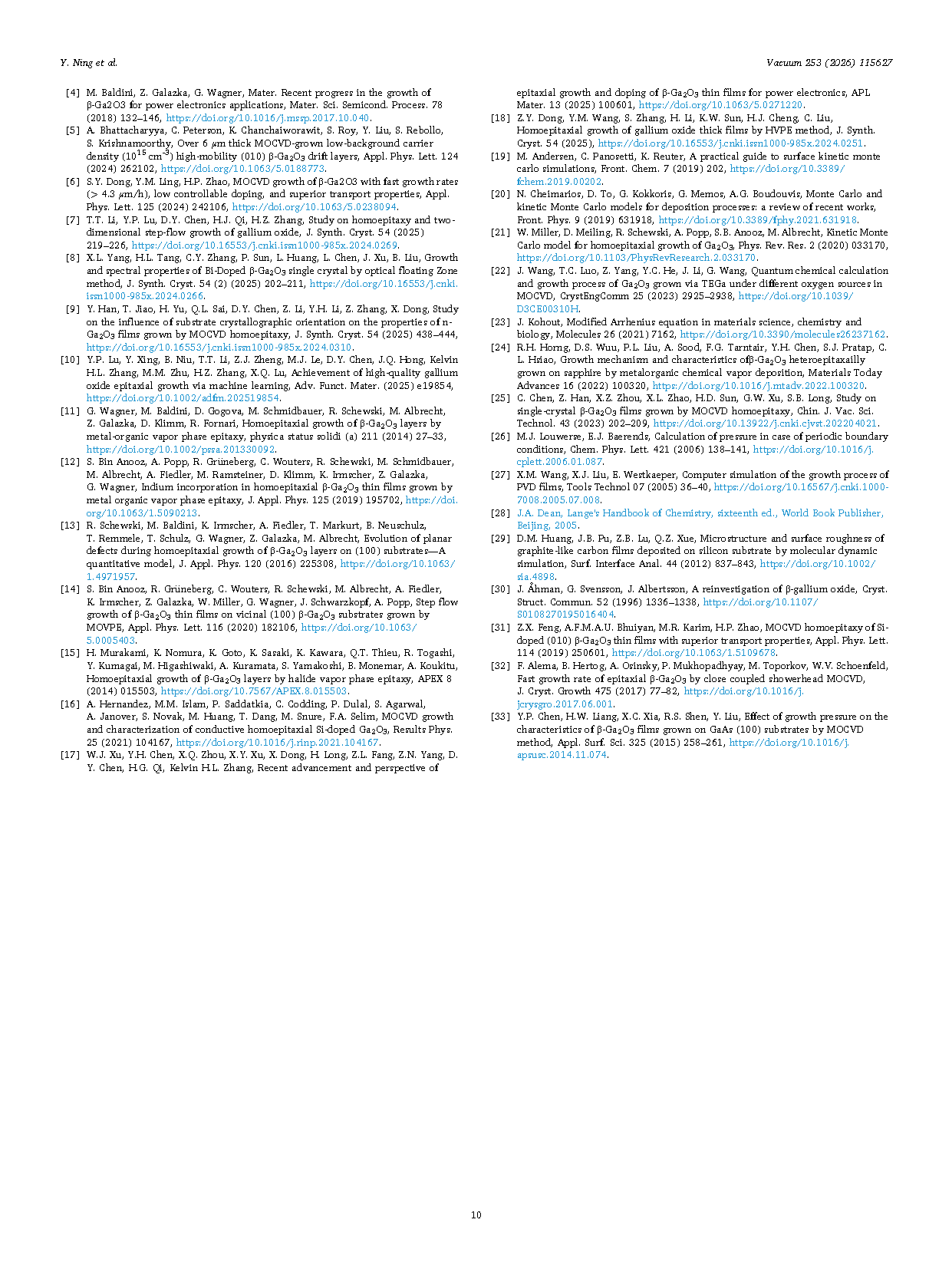
Fig. 10. Multi-scale surface morphologies of (010) β-Ga₂O₃ film under optimal growth conditions (800 ◦C, 25 Torr). (a) 3D perspective view of the atomic-scale step-terrace structure; (b) Side view along the [001] direction showing the step height; (c) Large-scale 3D surface morphology of the full simulation cell. Green and red spheres denote Ga and O atoms, respectively. (For interpretation of the references to colour in this figure legend, the reader is referred to the Web version of this article.)
Instruction
Official Account

Cooperation
Top