



Researchers from the Hubei University have published a dissertation titled "Boosting interface band alignment via synergistic supercritical fluid post-treatment and SAM functionalization for Ga₂O₃-hybrid solar-blinddetectors" in Science China Materials.
Background
Solar-blind ultraviolet detection technology covers the spectral range of 200–280 nm, showing remarkable application value in ozone environmental monitoring, flame alarm, missile early warning, secure space optical communication and biochemical trace detection. Wide-bandgap semiconductors act as core candidates for fabricating high-performance solar-blind photodetectors. Typical materials including AlN, GaN, ZnO, 4H-SiC and diamond have been extensively investigated. As a representative fourth-generation ultra-wide bandgap semiconductor, β-Ga₂O₃ possesses an intrinsic bandgap of 4.4–5.2 eV, high ultraviolet transmittance, strong UV absorption coefficient and outstanding thermal and chemical stability, making it an ideal candidate for solar-blind photodetection. Intrinsic oxygen vacancy defects endow Ga₂O₃ with native n-type conductivity, so constructing p-n heterojunctions has become a mainstream strategy to boost device performance.
Conventional all-inorganic p-n heterojunctions suffer severe lattice mismatch, generating high-density interfacial defects that trap photogenerated carriers, drastically suppressing carrier transport efficiency and degrading device performance. Organic-inorganic hybrid heterojunctions constructed by p-type organic semiconductors and n-type Ga₂O₃ can eliminate lattice matching constraints and greatly reduce interfacial defect sources. Existing hybrid devices based on CuPc, PEDOT:PSS, CoPc and PCDTBT/Ga₂O₃ realize self-powered operation, yet their responsivity remains limited due to two critical bottlenecks. First, abundant oxygen vacancy defects inside Ga₂O₃ thin films induce premature bulk recombination of photogenerated carriers. Second, non-ideal energy band alignment at organic/inorganic interfaces fails to build sufficient built-in electric field for efficient carrier separation. The above two drawbacks jointly restrict the performance breakthrough of hybrid photodetectors.
Previous reports only optimize thin-film crystallinity or modify interfacial energy levels separately, lacking a synergistic strategy combining bulk film modification and precise interfacial band regulation to simultaneously address bulk defects and interfacial band misalignment. Therefore, an integrated synergistic modification route is urgently required to synchronously optimize intrinsic Ga₂O₃ film quality and heterojunction interfacial band structure, and achieve performance leap of self-powered solar-blind photodetectors.
Abstract
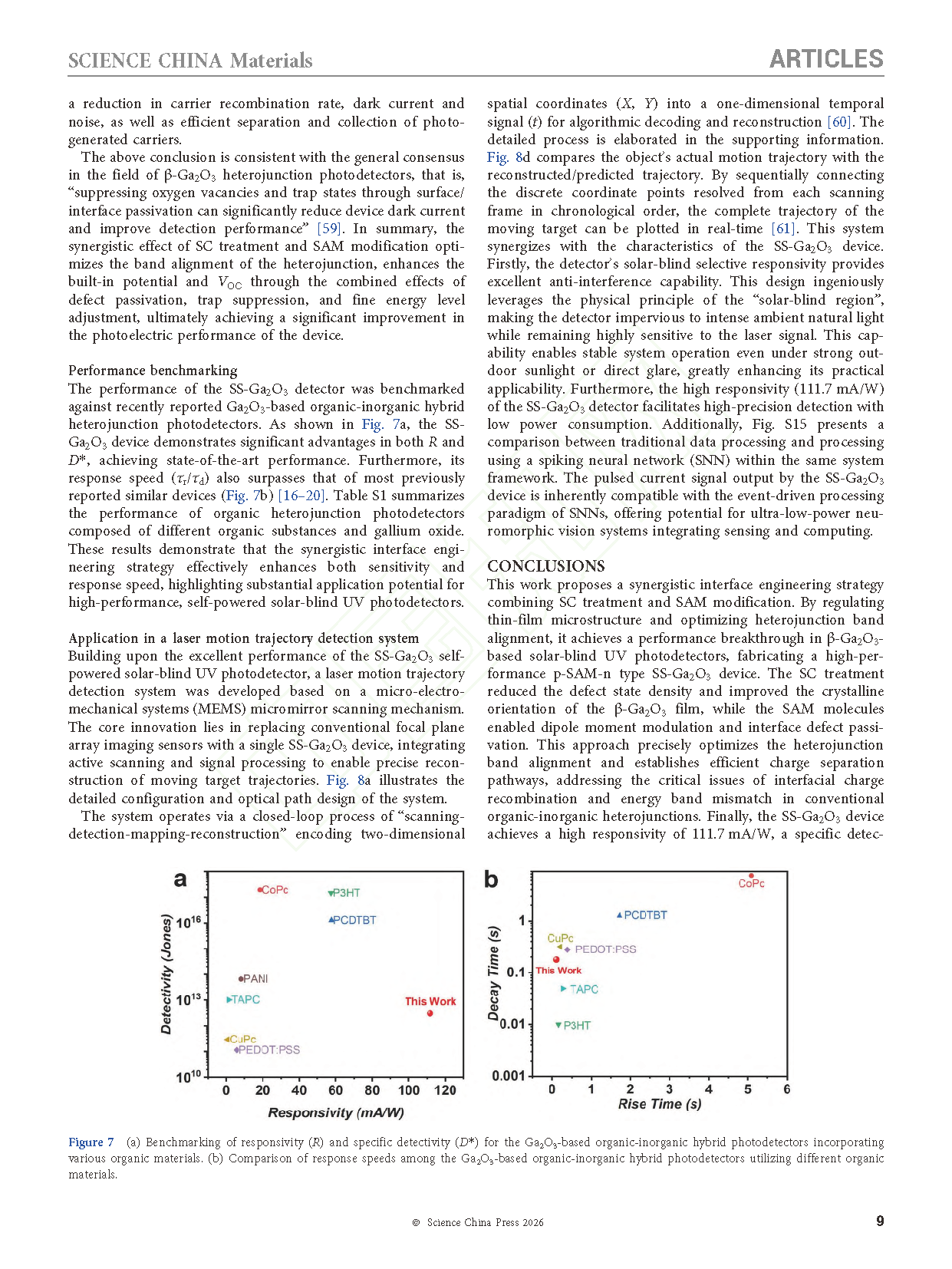
p-n heterojunction solar-blind photodetectors, based on p-type materials and n-type Ga₂O₃, have attracted significant attention in the optoelectronics field due to their inherent low dark current and self-powered operation. Among various constructions, organic-inorganic hybrid heterojunctions formed by integrating P-type organic materials with n-type Ga₂O₃ offer a promising solution to overcome the lattice mismatch, opening new avenues for device performance breakthroughs. In this work, the Ga₂O₃ thin films are treated via a supercritical fluid technique (SC), which significantly reduced defect state density while improving crystallinity and surface uniformity of films, thereby laying a crucial foundation for heterojunction interface optimization. Simultaneously, a self-assembled monolayer (SAM) was introduced at the organic-inorganic heterojunction interface. Notably, the high-quality Ga₂O₃ surface engineered via the supercritical fluid treatment facilitated the highly efficient, oriented self-assembly of SAM molecules, enabling precise modulation of the interfacial energy band alignment and promoting the separation and transport dynamics of photogenerated carriers. Benefiting from the synergistic effects of supercritical fluid modification and SAM functionalization, the fabricated solar-blind photodetector achieves a highest responsivity of 111.7 mA/W and a specific detectivity of 1.02 ×10¹¹ Jones under zero bias (self-powered mode) and weak 254 nm light with an intensity of 5 μW/cm².
Highlights
A novel synergistic interface engineering strategy combining supercritical CO₂ fluid post-treatment and zwitterionic SAM interfacial functionalization is proposed, which simultaneously addresses three core challenges: bulk oxygen vacancy defects in Ga₂O₃ thin films, organic-inorganic lattice mismatch and mismatched interfacial band alignment;
Low-temperature supercritical fluid (SC) treatment induces secondary grain growth of Ga₂O₃, greatly reduces surface roughness and suppresses oxygen vacancy defects, yielding Ga³⁺-enriched surfaces with high activity and high ordering to serve as ideal substrates for oriented and dense SAM self-assembly;
Zwitterionic Z14 SAM molecules are selected, which coordinate with surface Ga³⁺ via sulfonate groups to generate tunable interfacial dipoles, precisely elevate Ga₂O₃ work function and strengthen heterojunction built-in electric field for highly efficient separation and collection of photogenerated carriers;
The synergistically modified SS-Ga₂O₃ self-powered solar-blind photodetector achieves state-of-the-art comprehensive detection performance with responsivity of 111.7 mA/W and specific detectivity of 1.02 ×10¹¹ Jones; its response speed, photo-to-dark current ratio and solar-blind rejection ratio outperform most reported organic/Ga₂O₃ hybrid counterparts;
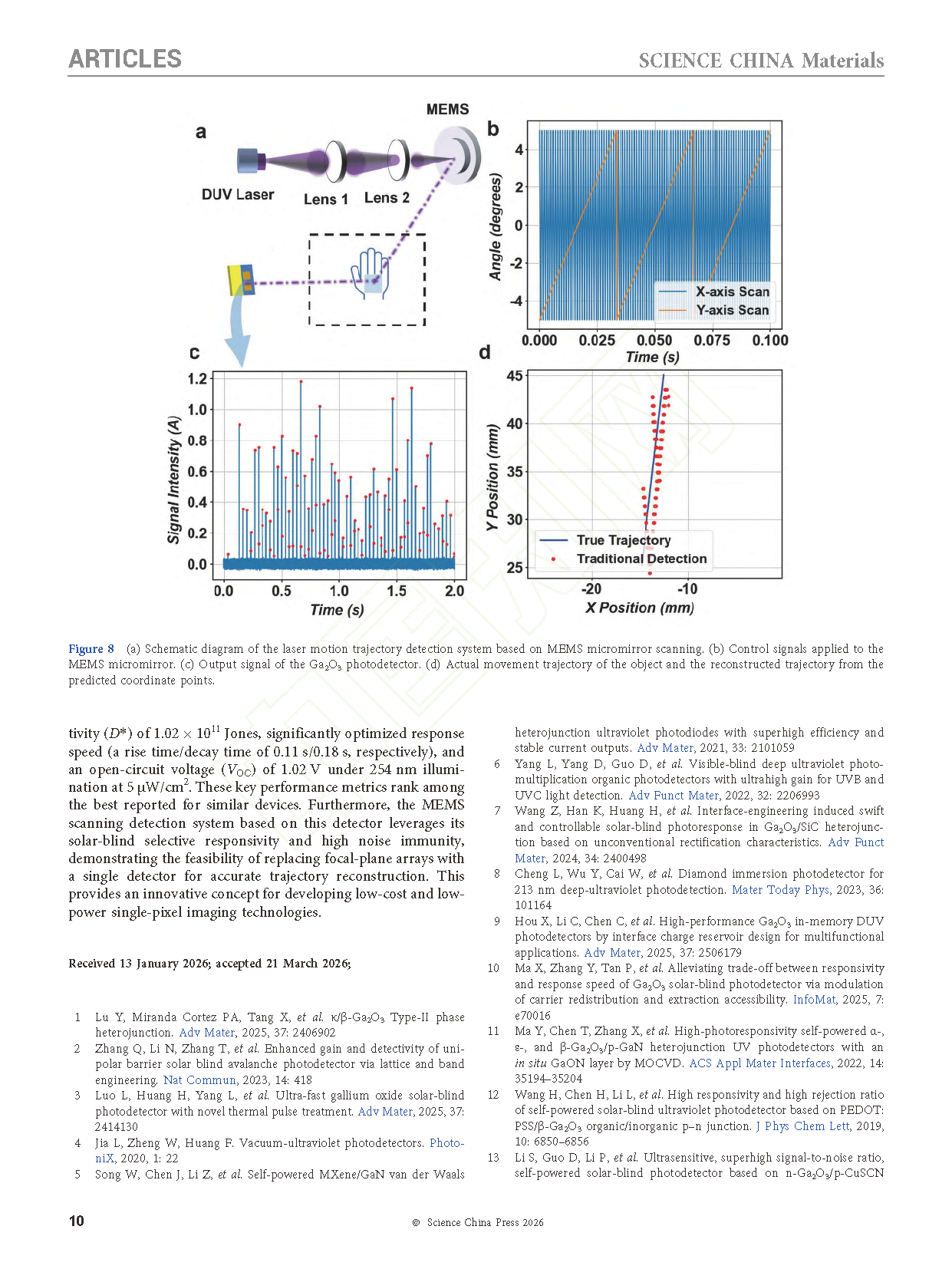
A MEMS micromirror scanning laser trajectory detection system is constructed based on this single-pixel photodetector. Benefiting from its solar-blind anti-interference capability against ambient sunlight, low-cost single-pixel imaging without focal plane arrays is realized, expanding applications in neuromorphic vision and spatial trajectory detection.
Conclusion
This work proposes a synergistic interface engineering strategy combining SC treatment and SAM modification. By regulating thin-film microstructure and optimizing heterojunction band alignment, it achieves a performance breakthrough in β-Ga₂O₃-based solar-blind UV photodetectors, fabricating a high-performance p-SAM-n type SS-Ga₂O₃ device. The SC treatment reduced the defect state density and improved the crystalline orientation of the β-Ga₂O₃ film, while the SAM molecules enabled dipole moment modulation and interface defect passivation. This approach precisely optimizes the heterojunction band alignment and establishes efficient charge separation pathways, addressing the critical issues of interfacial charge recombination and energy band mismatch in conventional organic-inorganic heterojunctions. Finally, the SS-Ga₂O₃ device achieves a high responsivity of 111.7 mA/W, a specific detectivity (D*) of 1.02 ×10¹¹ Jones, significantly optimized response speed (a rise time/decay time of 0.11 s/0.18 s, respectively), and an open-circuit voltage (VOC) of 1.02 V under 254 nm illumination at 5 μW/cm². These key performance metrics rank among the best reported for similar devices. Furthermore, the MEMS scanning detection system based on this detector leverages its solar-blind selective responsivity and high noise immunity, demonstrating the feasibility of replacing focal-plane arrays with a single detector for accurate trajectory reconstruction. This provides an innovative concept for developing low-cost and low-power single-pixel imaging technologies.
Project Support
This work was supported by the Major Program of Hubei Province (2023BAA009).
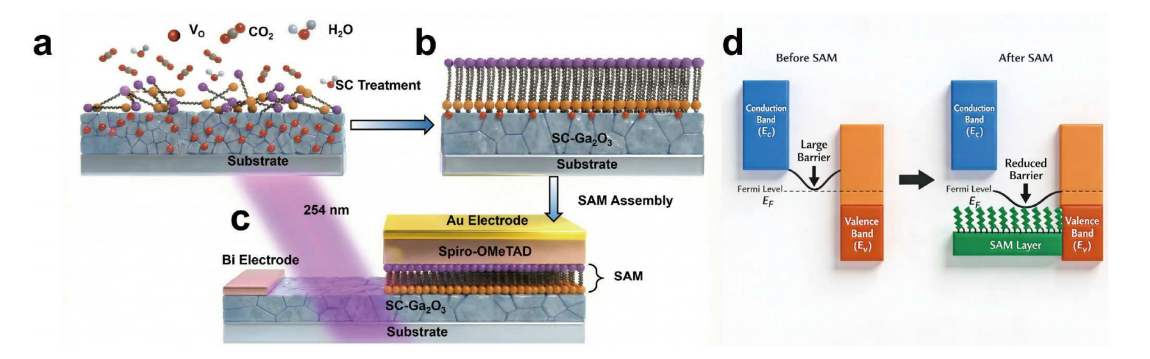
Fig. 1 Schematic diagrams illustrating the surface morphology, oxygen defect distribution of Ga₂O₃ thin films, and the assembly mode of the SAM layer before (a) and after (b) supercritical fluid treatment, respectively. (c) Schematic diagram of the device structure after supercritical treatment and spin-coating of SAM molecules. (d) Simplified schematic diagram of the energy band structure of gallium oxide thin films before and after SAM layer addition.
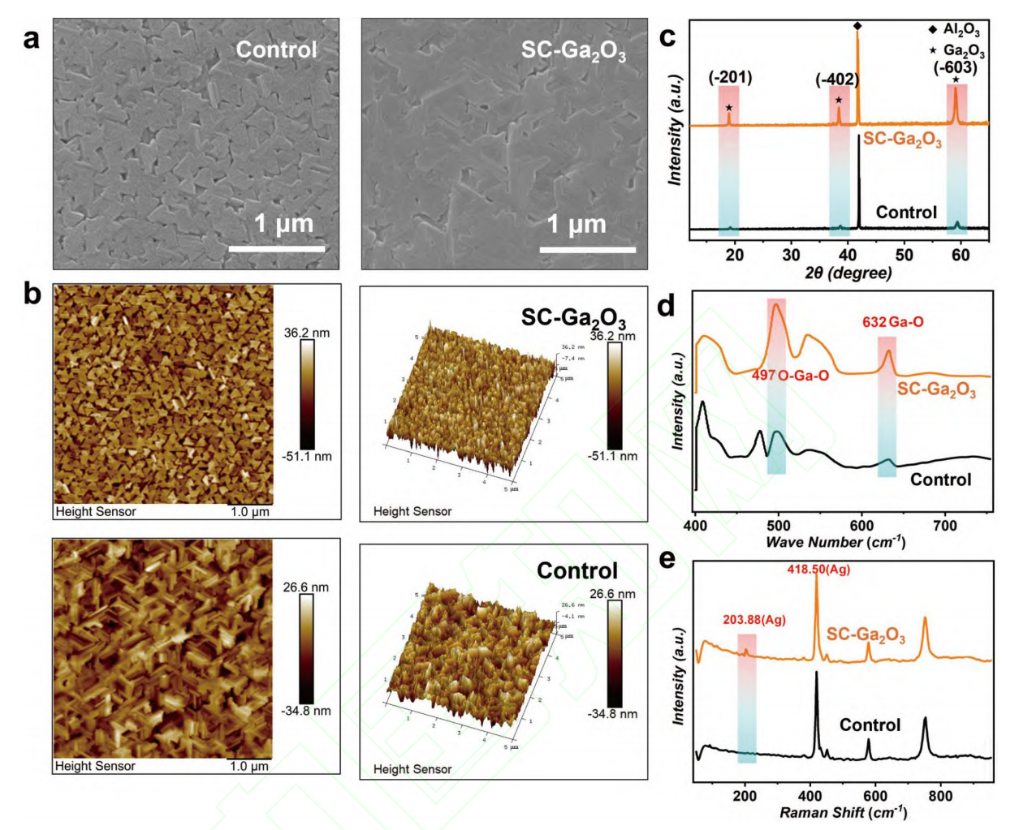
Fig. 2 (a) SEM images of the Ga₂O₃ film before and after supercritical fluid treatment. (b) AFM images for the samples pre- and post-treatment. (c) Comparison of XRD patterns for the two samples. (d) FTIR and (e) Raman spectra of the samples before and after supercritical fluid treatment.
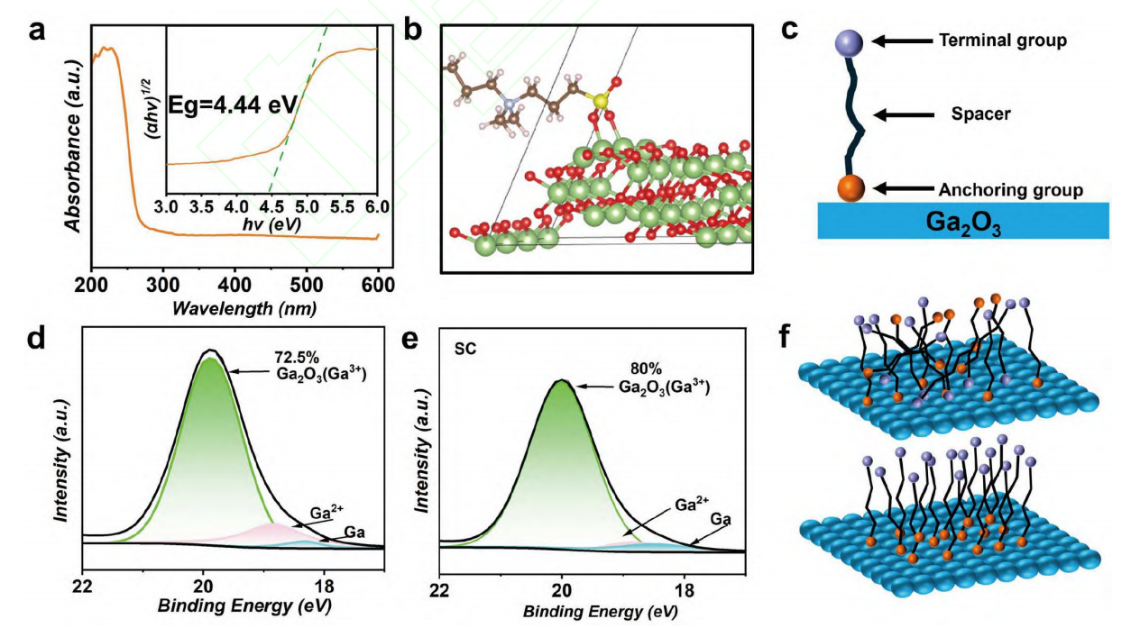
Fig. 3 (a) UV-Vis absorption spectrum and derived optical bandgap of the Ga₂O₃ thin film. (b) Calculated binding configuration between the Ga₂O₃ surface model and the SAM molecule. (c) Schematic illustration of the SAM molecules anchored on the Ga₂O₃ surface. (d, e) Ga 3d core-level XPS spectra of the Ga₂O₃ film before and after supercritical fluid treatment, respectively. (f) Schematic depiction of the enhanced SAM anchoring on the Ga₂O₃ surface following supercritical treatment.
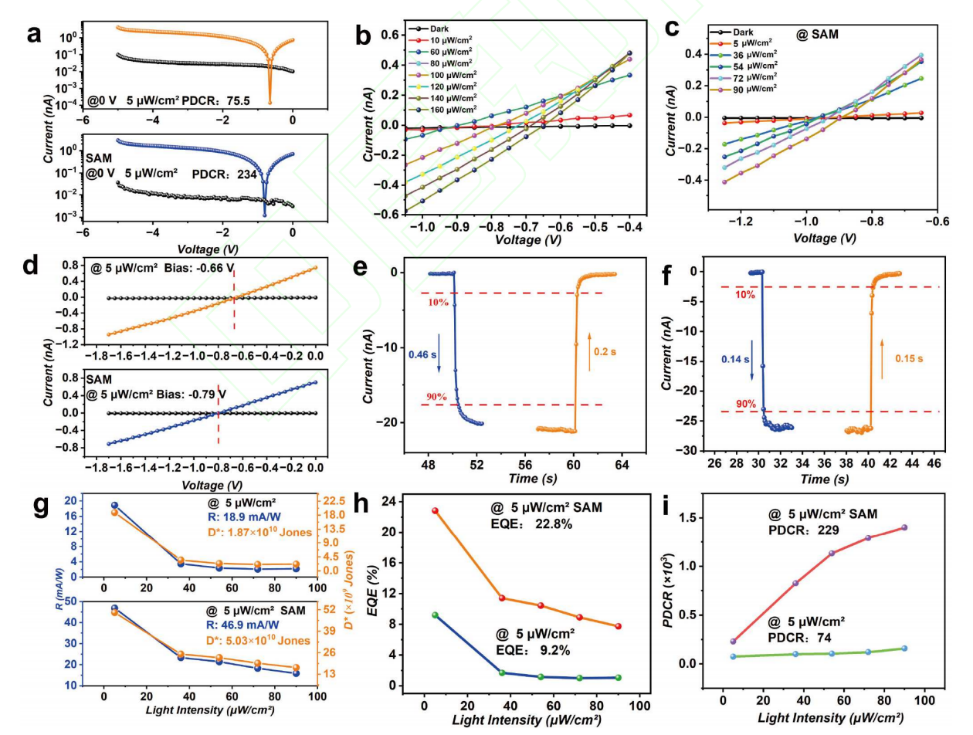
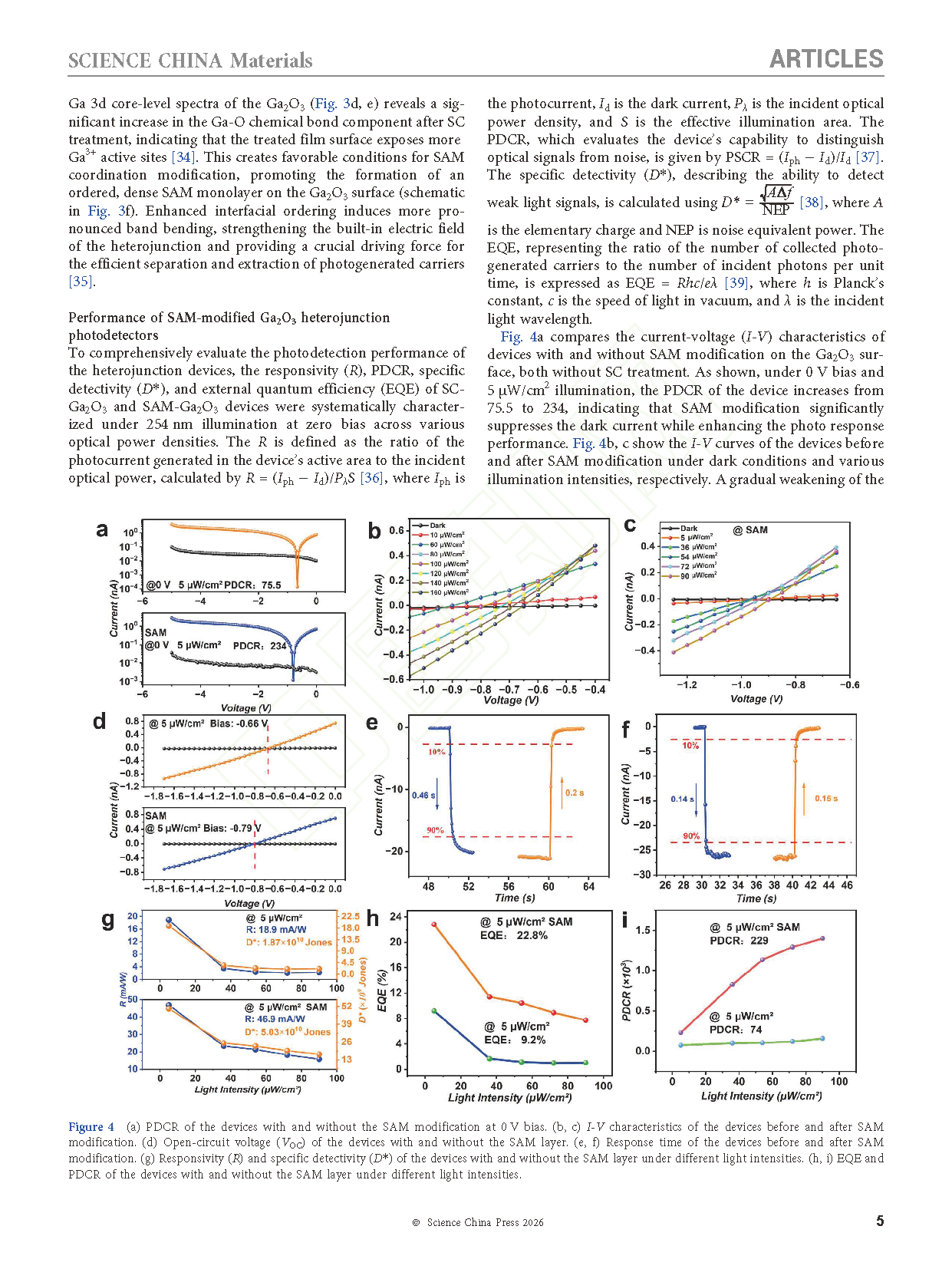
Fig. 4 (a) PDCR of the devices with and without the SAM modification at 0 V bias. (b, c) I-V characteristics of the devices before and after SAM modification. (d) Open-circuit voltage (VOC) of the devices with and without the SAM layer. (e, f) Response time of the devices before and after SAM modification. (g) Responsivity (R) and specific detectivity (D*) of the devices with and without the SAM layer under different light intensities. (h, i) EQE and PDCR of the devices with and without the SAM layer under different light intensities.
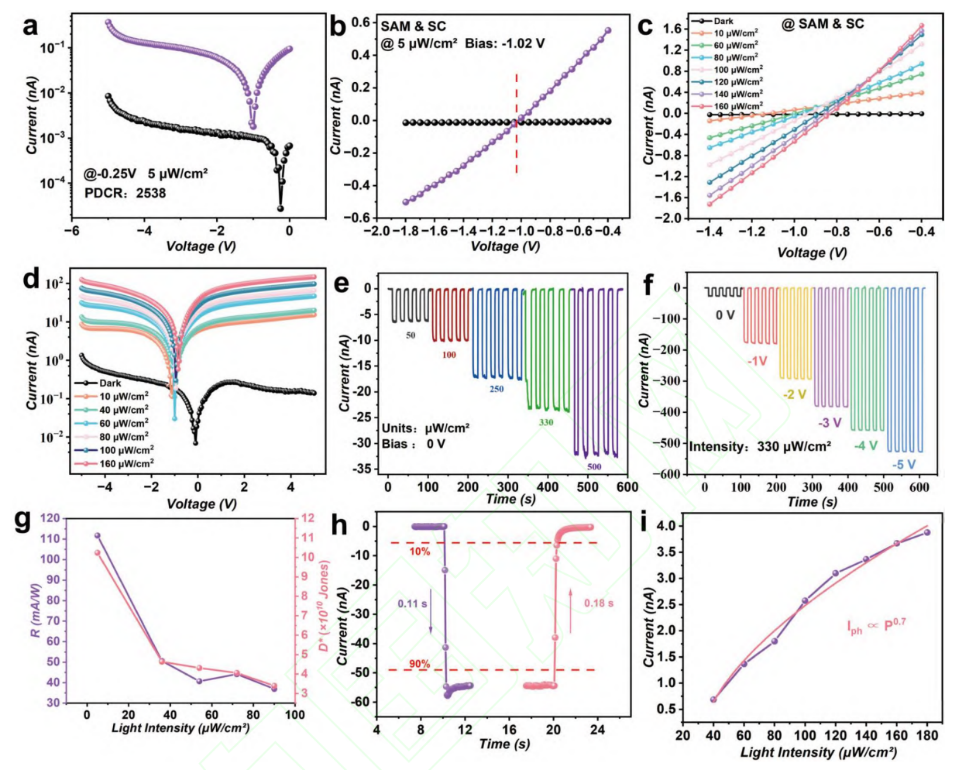
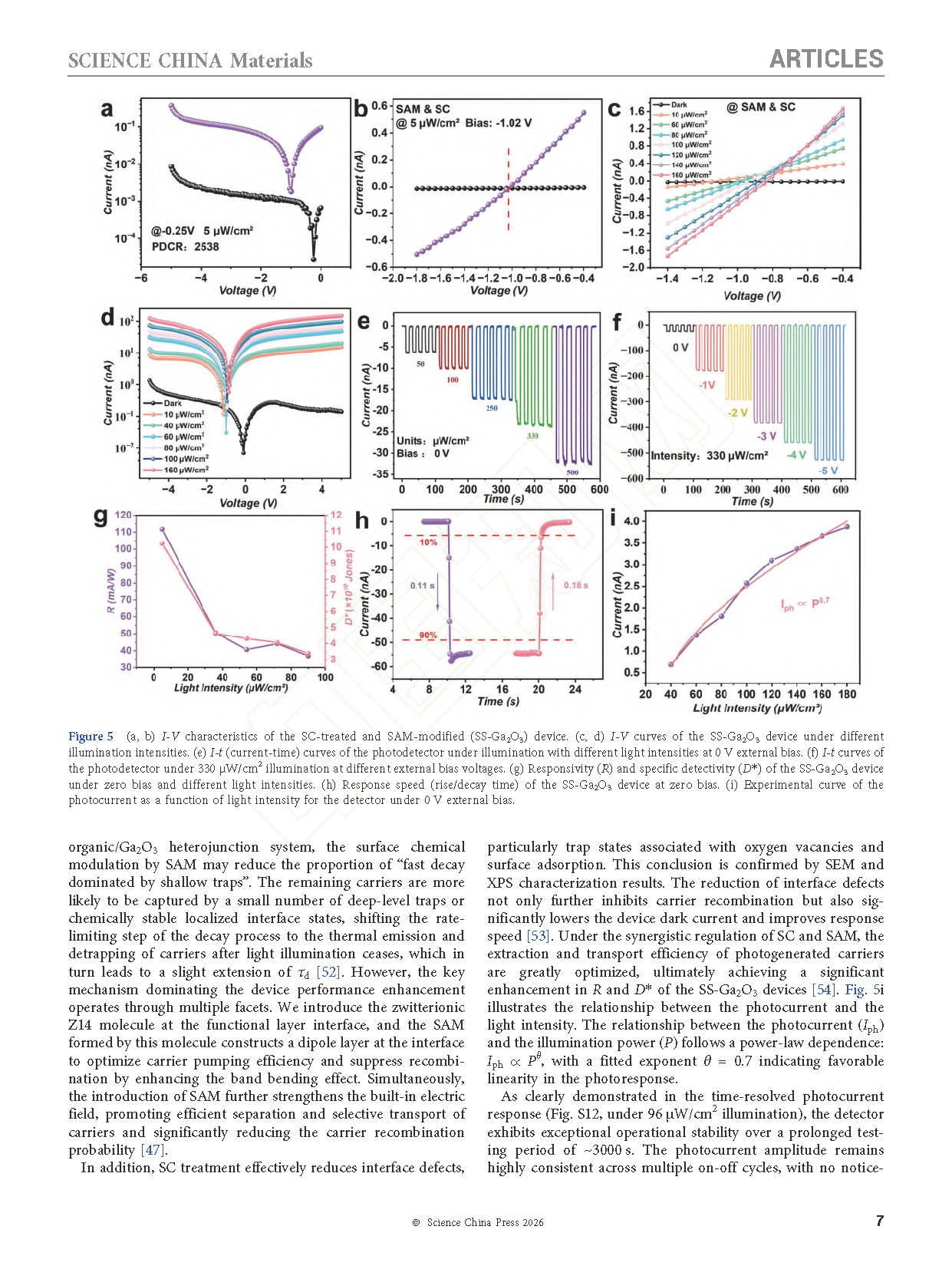
Fig. 5 (a, b) I-V characteristics of the SC-treated and SAM-modified (SS-Ga₂O₃) device. (c, d) I-V curves of the SS-Ga₂O₃ device under different illumination intensities. (e) I-t (current-time) curves of the photodetector under illumination with different light intensities at 0 V external bias. (f) I-t curves of the photodetector under 330 μW/cm² illumination at different external bias voltages. (g) Responsivity (R) and specific detectivity (D*) of the SS-Ga₂O₃ device under zero bias and different light intensities. (h) Response speed (rise/decay time) of the SS-Ga₂O₃ device at zero bias. (i) Experimental curve of the photocurrent as a function of light intensity for the detector under 0 V external bias.
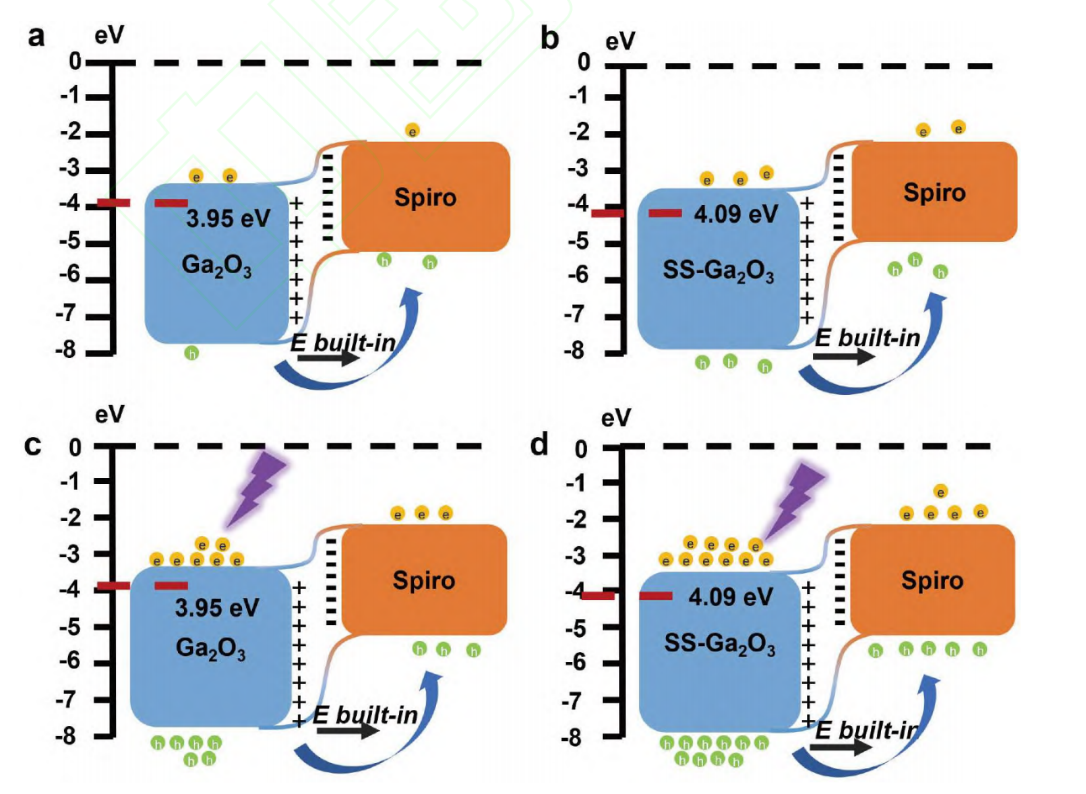
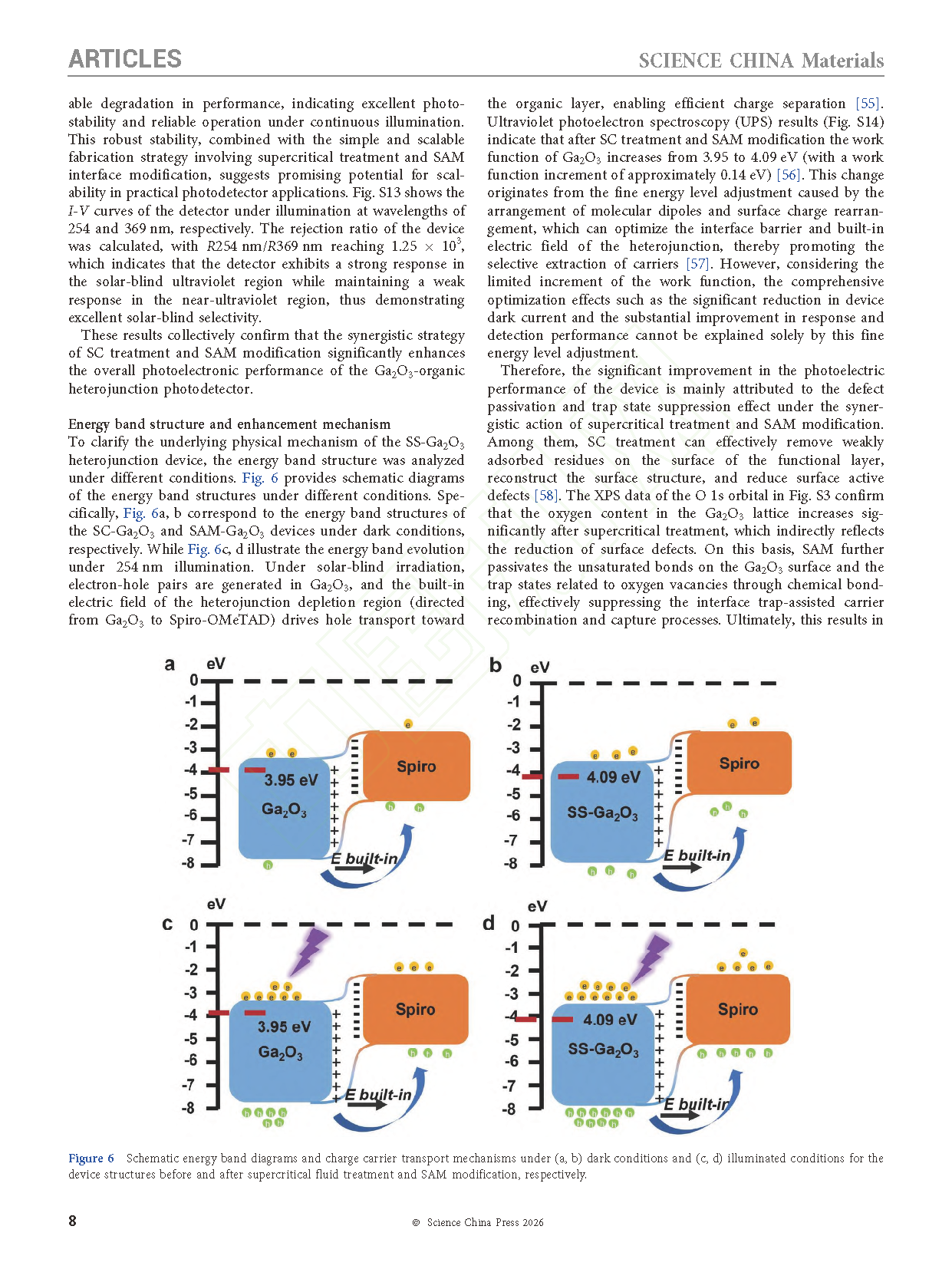
Fig. 6 Schematic energy band diagrams and charge carrier transport mechanisms under (a, b) dark conditions and (c, d) illuminated conditions for the device structures before and after supercritical fluid treatment and SAM modification, respectively.
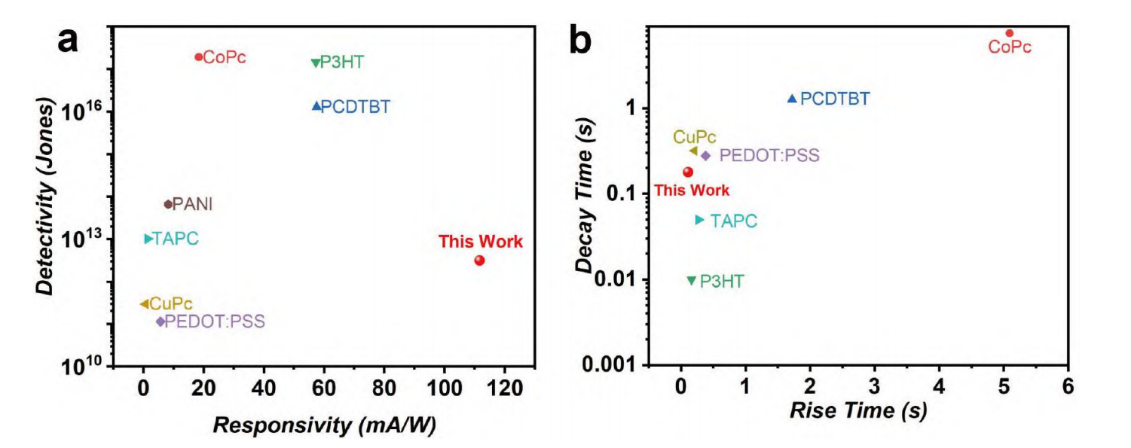
Fig. 7 (a) Benchmarking of responsivity (R) and specific detectivity (D*) for the Ga₂O₃-based organic-inorganic hybrid photodetectors incorporating various organic materials. (b) Comparison of response speeds among the Ga₂O₃-based organic-inorganic hybrid photodetectors utilizing different organic materials.
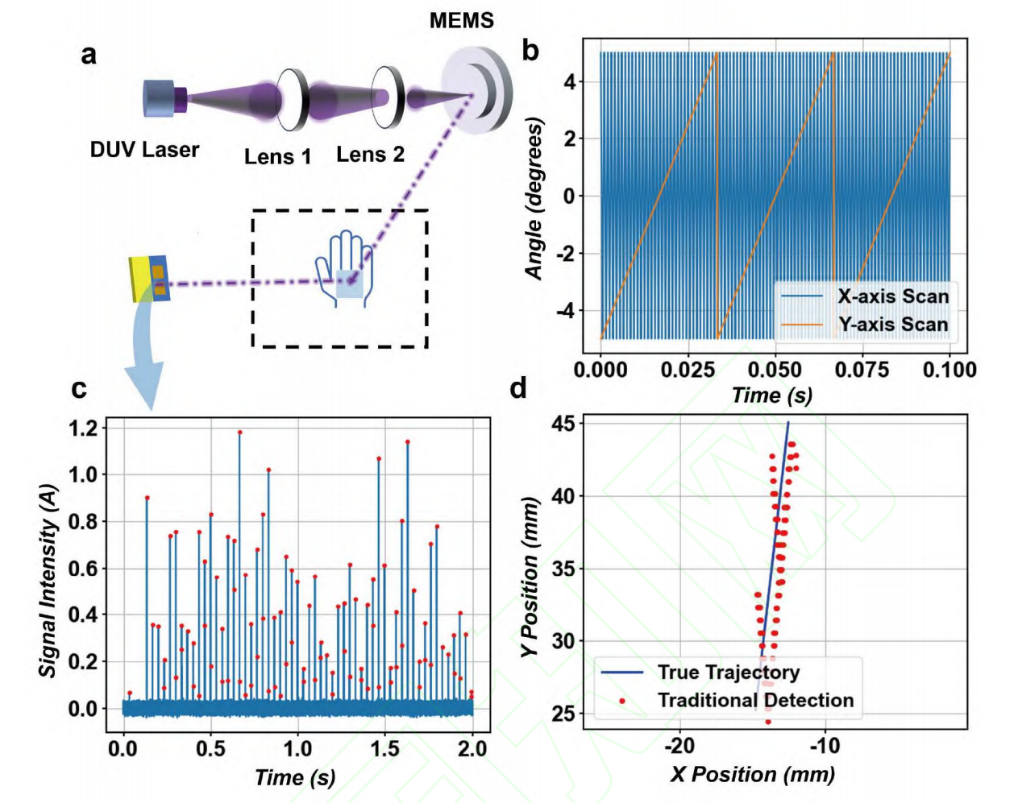
Fig. 8 (a) Schematic diagram of the laser motion trajectory detection system based on MEMS micromirror scanning. (b) Control signals applied to the MEMS micromirror. (c) Output signal of the Ga₂O₃ photodetector. (d) Actual movement trajectory of the object and the reconstructed trajectory from the predicted coordinate points.
DOI :
10.1007/s40843-026-4131-3
Instruction
Official Account

Cooperation
Top