


Researchers from MIRISE Technologies Corporation, Kyoto Institute of Technology have published a dissertation titled "Suppression and control of implanted Mg diffusion in β-Ga₂O₃ by O co-implantation" in Applied Physics Express.
Background
β-Ga₂O₃ with a 4.6 eV ultra-wide bandgap is critical for automotive high-power switches. Edge termination technology directly determines the breakdown voltage of vertical power devices. Mg ion implantation for p-type doping suffers severe undesired diffusion during high-temperature annealing, degrading device blocking capability. The Mg/O co-implantation method proved in GaN cannot be directly applied to Ga₂O₃, and quantitative analysis of Mg diffusion and surface morphology under various Mg/O ratios is insufficient. Existing studies only discuss single ion implantation without integrated edge termination solutions that simultaneously control Mg diffusion and maintain smooth surface. The correlation between oxygen vacancies and Mg interstitial diffusion has not been clarified, hindering mass production of high-voltage β-Ga₂O₃ power devices and forming an obvious research gap.
Abstract
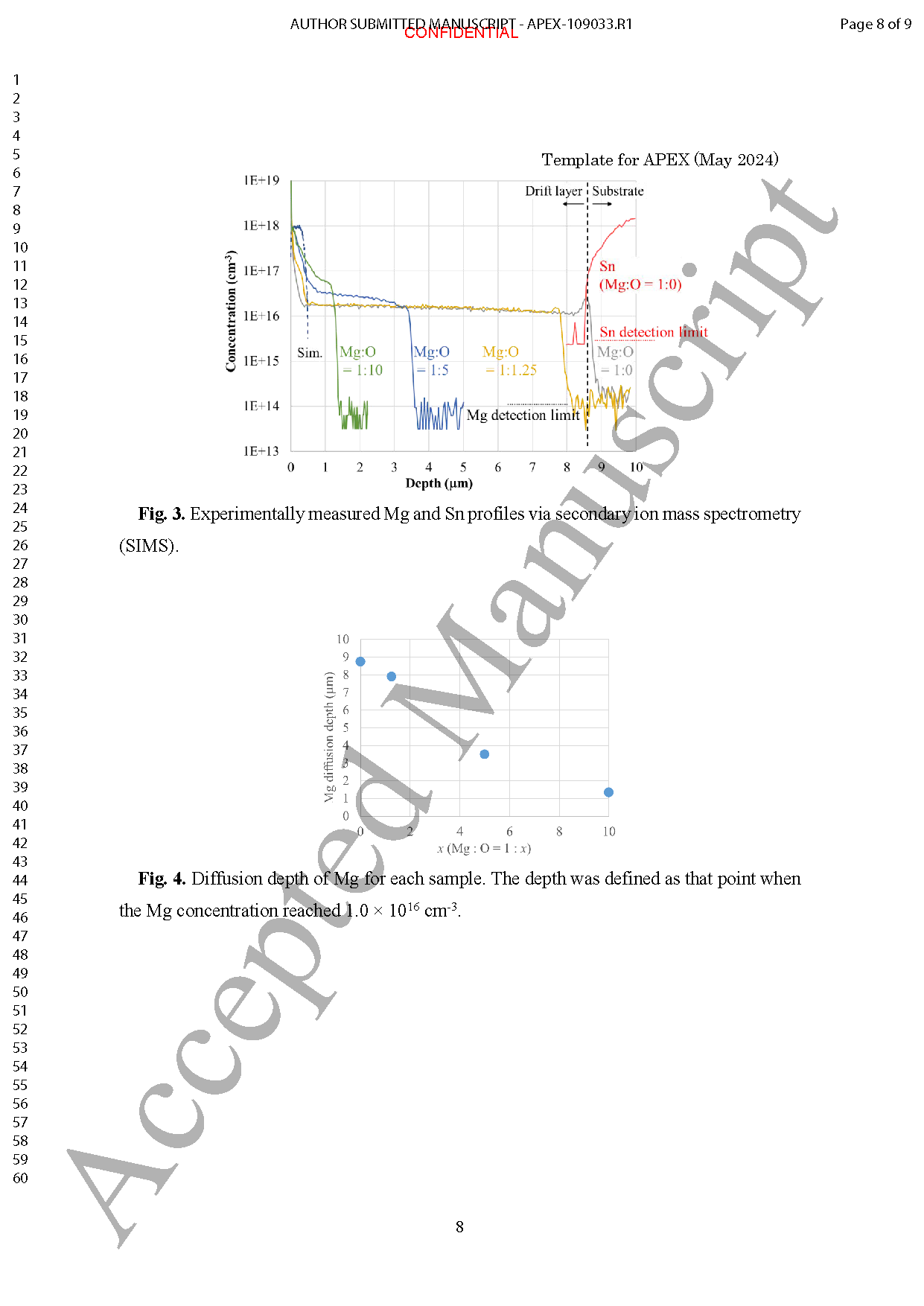
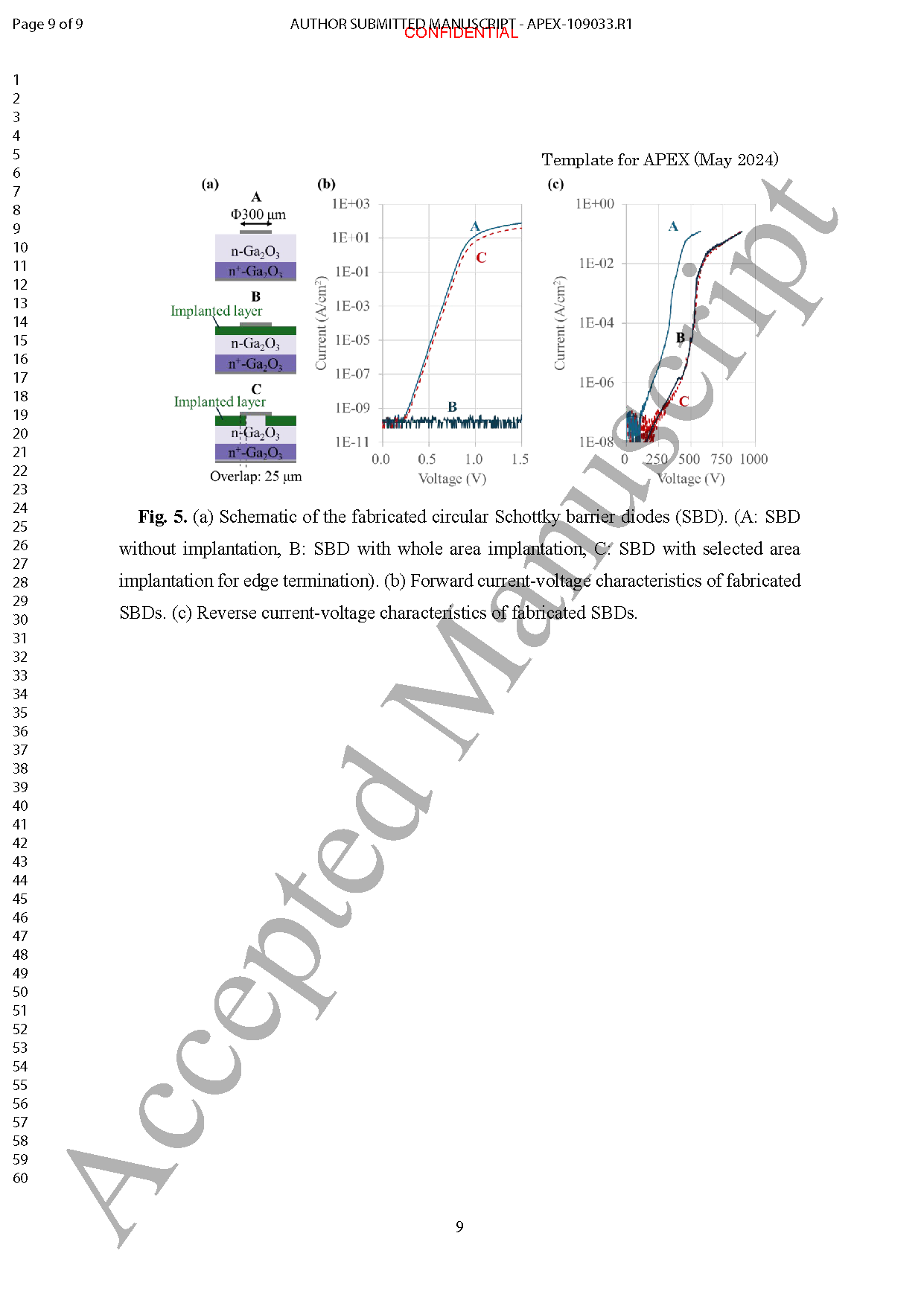
We developed and characterized a technique for the controllable implantation of Mg into β-Ga₂O₃. Oxygen co-implanted with Mg reduced O vacancies and unintentional Mg diffusion. By employing Mg/O co-implantation, the Mg diffusion depth could be successfully modulated and suppressed. Characterization results revealed that the Mg:O ratio determines the diffusion depth of the implanted Mg after high-temperature activation annealing. Coimplantation with an Mg:O=1:10 concentration ratio produced the best Mg diffusion suppression among all samples. Fabricated Ga₂O₃ Schottky diodes with Mg/O co-implanted edge terminations clearly show improved breakdown characteristics, indicating that O coimplantation with Mg is effective for edge termination.
Highlights
Propose Mg/O co-implantation strategy to restrain vacancy-assisted Mg diffusion in β-Ga₂O₃after high-temperature annealing.
Quantitatively reveal the monotonic decreasing relationship between Mg diffusion depth and co-implanted O concentration.
Verify Mg:O=1:10 is the optimal ratio to minimize Mg diffusion while keeping ultra-smooth substrate surface (Ra<0.15 nm).
Realize high-breakdown Ga₂O₃ Schottky diodes via selective-area Mg/O co-implant edge termination.
Conclusion
In conclusion, we successfully suppressed the Mg diffusion depth by Mg/O coimplantation. A Mg:O ratio of 1:10 effectively suppressed Mg diffusion in Ga₂O₃ without altering its morphology. Ga₂O₃ Schottky diodes with Mg/O-co-implanted edge terminations clearly exhibited improved breakdown characteristics. Therefore, O co-implantation facilitates Mg-implantation-based edge termination.
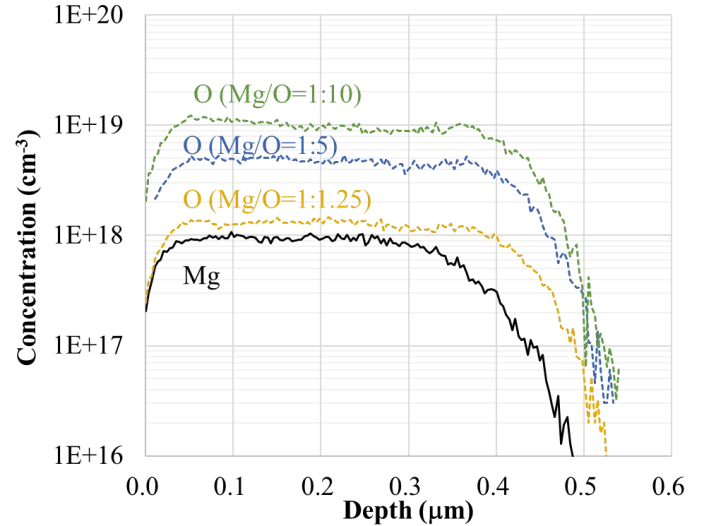
Fig. 1. Simulated Mg:O profile using ScatGUI. The peak Mg concentration was kept at 1 × 10¹⁸ cm⁻³, whereas O concentrations were 0, 1.25 × 10¹⁸, 5 × 10¹⁸, 1 × 10¹⁹ cm⁻³ to produce Mg:O ratios of 1:0, 1:1.25, 1:5, 1:10, respectively.
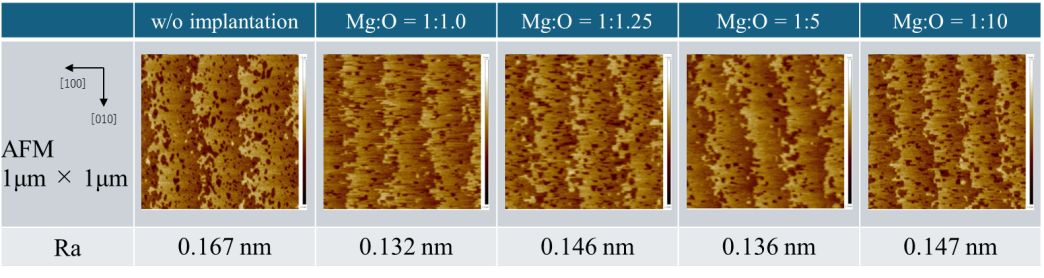
Fig. 2. Morphology of each sample of implanted Mg:O measured by atomic force microscopy (AFM).
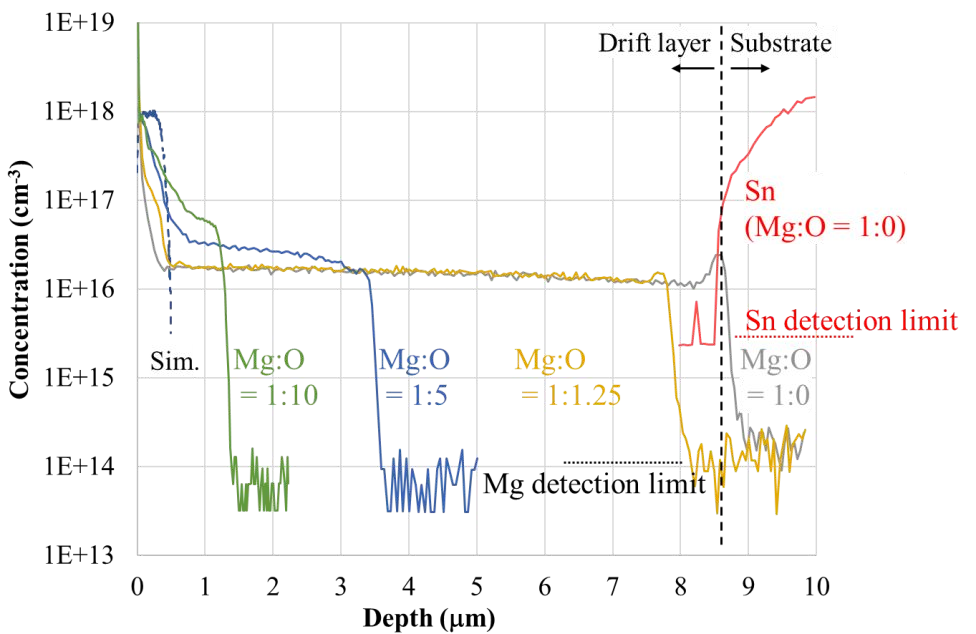
Fig. 3. Experimentally measured Mg and Sn profiles via secondary ion mass spectrometry (SIMS).
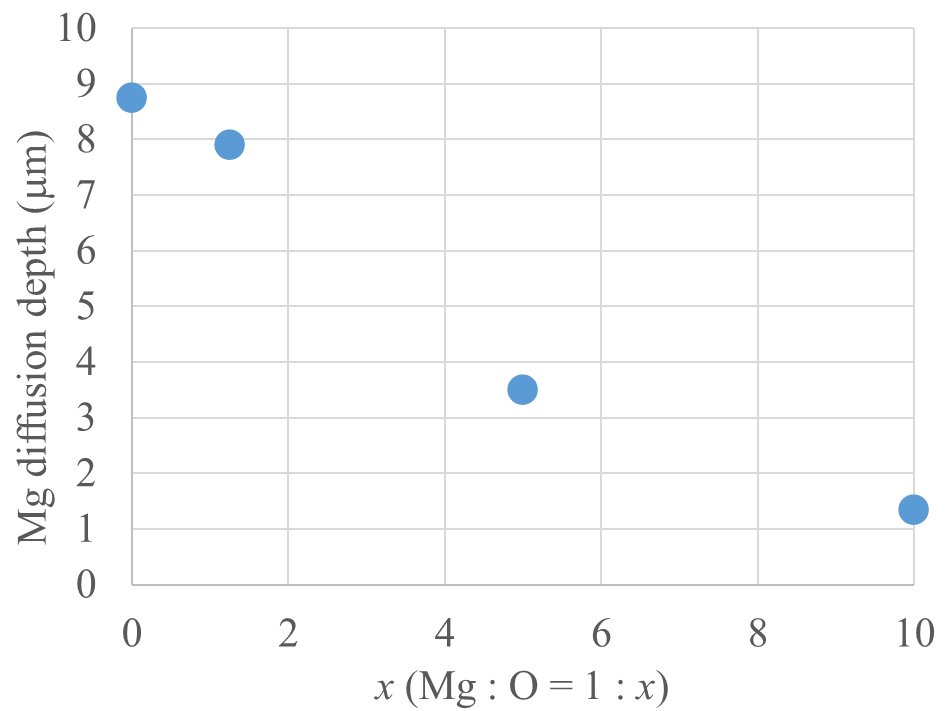
Fig. 4. Diffusion depth of Mg for each sample. The depth was defined as that point when the Mg concentration reached 1.0 × 10¹⁶ cm⁻³.
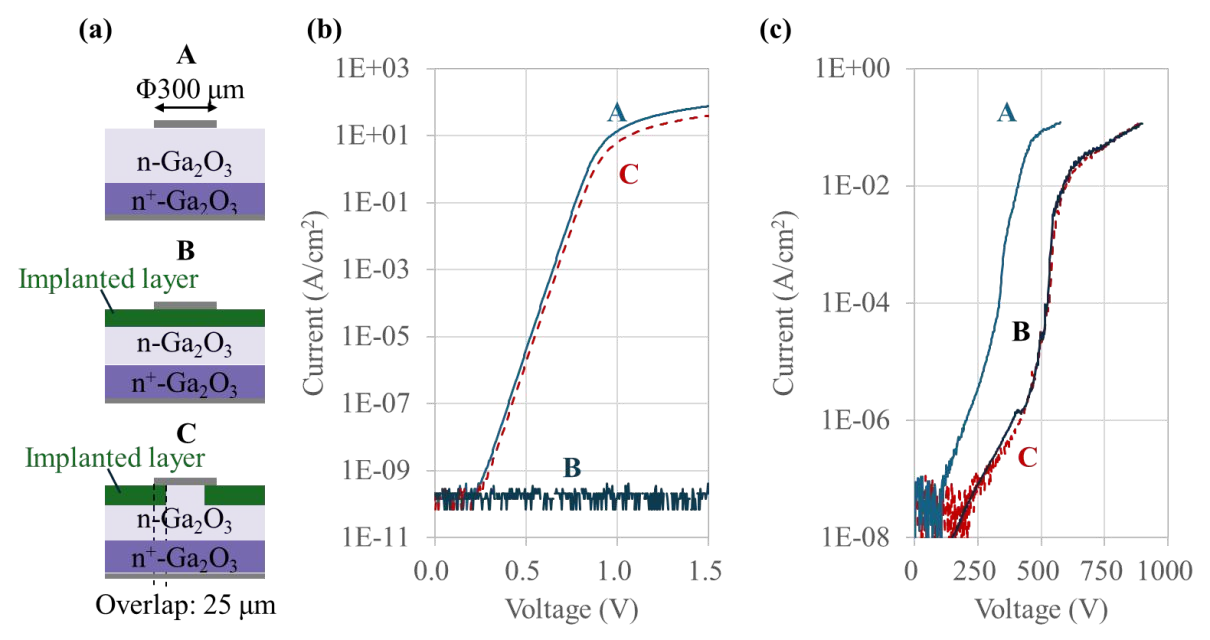
Fig. 5. (a) Schematic of the fabricated circular Schottky barrier diodes (SBD). (A: SBD without implantation, B: SBD with whole area implantation, C: SBD with selected area implantation for edge termination). (b) Forward current–voltage characteristics of fabricated SBDs. (c) Reverse current–voltage characteristics of fabricated SBDs.
DOI:
doi.org/10.35848/1882-0786/ae8efe
Instruction
Official Account

Cooperation
Top