

The research team led by Associate Professor Zhimei Yang at Sichuan University published an paper entitled “Synergistic Effects of Oxygen Annealing and Low-fluence Kr Ion Irradiation on 4H-SiC and β-Ga2O3” in IEEE Transactions on Electron Devices.
Background
The wide-bandgap semiconductor 4H-SiC and the ultra-wide-bandgap semiconductor β-Ga2O3, owing to their high critical breakdown electric fields, wide bandgaps, and excellent potential for operation at high-temperature and high voltage, have emerged as promising materials for next-generation high-power electronic devices. Schottky barrier diodes (SBDs) offer simple structures and fast switching, and are promising for radiation-intensive applications including space power systems, nuclear electronics, and particle detectors. However, their metal-semiconductor (M-S) interfaces and bulk deep-level defects are highly sensitive to high-energy particle irradiation, which can increase the ideality factor (n) and leakage current (IR), while decrease the carrier concentration (ND), thereby compromising long-term devices reliability.
Previous studies have generally regarded irradiation primarily as a source of device degradation. However, recent studies indicate that appropriately controlled low-fluence heavy-ion irradiation can modify interface states and defect-charge distributions, thereby improving the forward-conduction and reverse-leakage characteristics of devices. Meanwhile, O2 annealing can improve material quality and device performance by reducing interface defects in 4H-SiC and passivating or compensating oxygen vacancies (VO) in β-Ga2O3. Nevertheless, the evolution of interface defects, bulk defects, and carrier-transport behavior under the combined effects of O2 annealing and low-fluence heavy-ion irradiation remains insufficiently understood. In particular, few studies have directly compared of the improvement mechanisms of 4H-SiC and β-Ga2O3 devices subjected to identical treatment conditions. This knowledge gap hinders material-specific process optimization and limits the further development of highly reliable power devices for extreme radiation environments.
Abstract
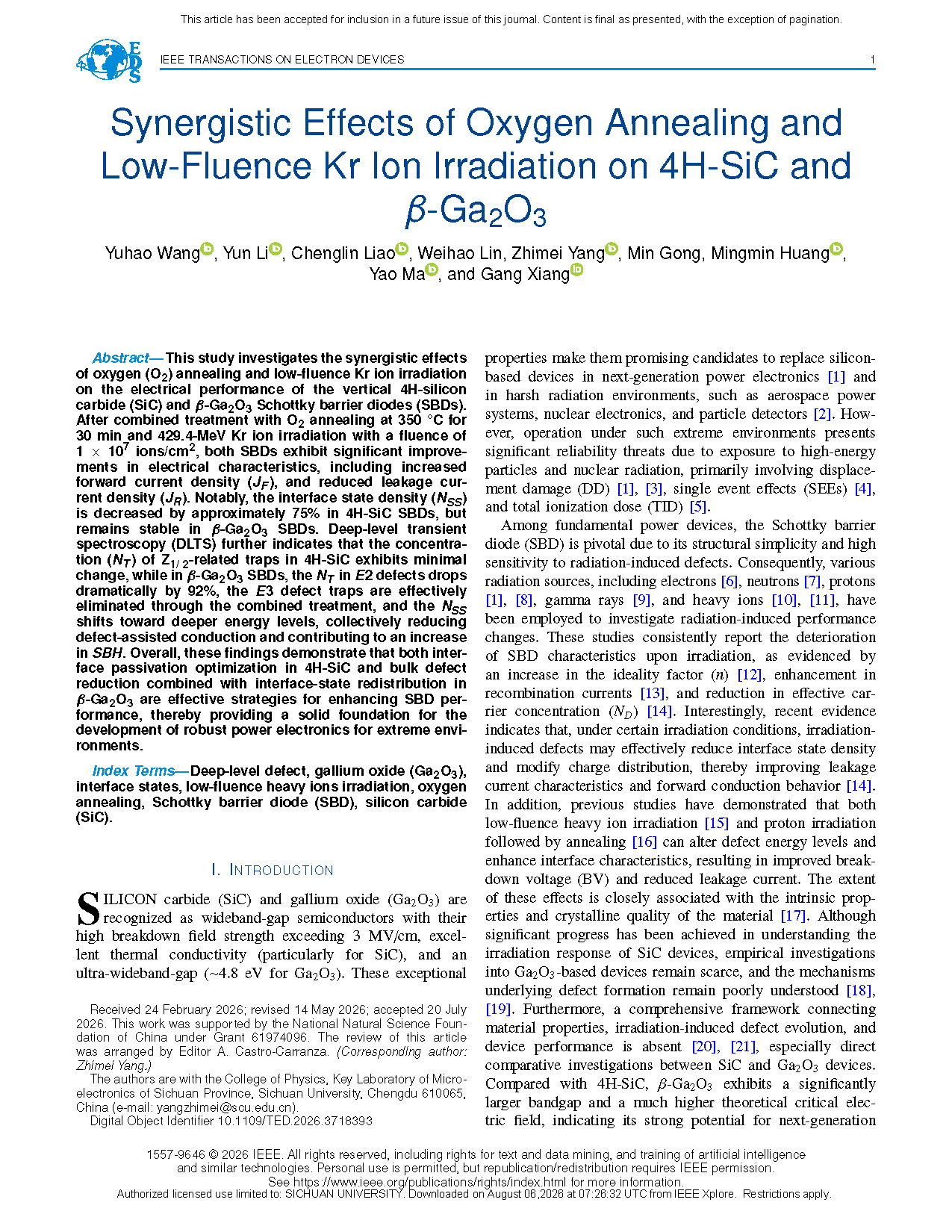
This study systematically elucidates how O2 annealing and low-fluence Kr ion irradiation synergistically modify the electrical performance of 4H-SiC and β-Ga2O3 SBDs. Both types of vertical SBDs were first annealed in O2 at 350 °C for 30 min, and then irradiated wirh 429.4 MeV Kr ions at a fluence of 1×10⁷ ions/cm2, at room temperature, and zero bias. Following the combined treatment, both types of devices exhibited improved forward-conduction characteristics, lower specific on-resistance (Ron), and decreased reverse leakage current. For the 4H-SiC SBD, the current density (JF) at a forward bias of 3 V increased to 8.28 A/cm2, wheras the leakage current density (JR) at a reverse bias of 40 V decreased to 2.94×10⁻7 A/cm2. For the β-Ga2O3 SBD, the JF increased by nearly two orders of magnitude to 0.51 A/cm2, while the JR decreased by nearly two orders of magnitude to 1.6×10⁻8 A/cm2.
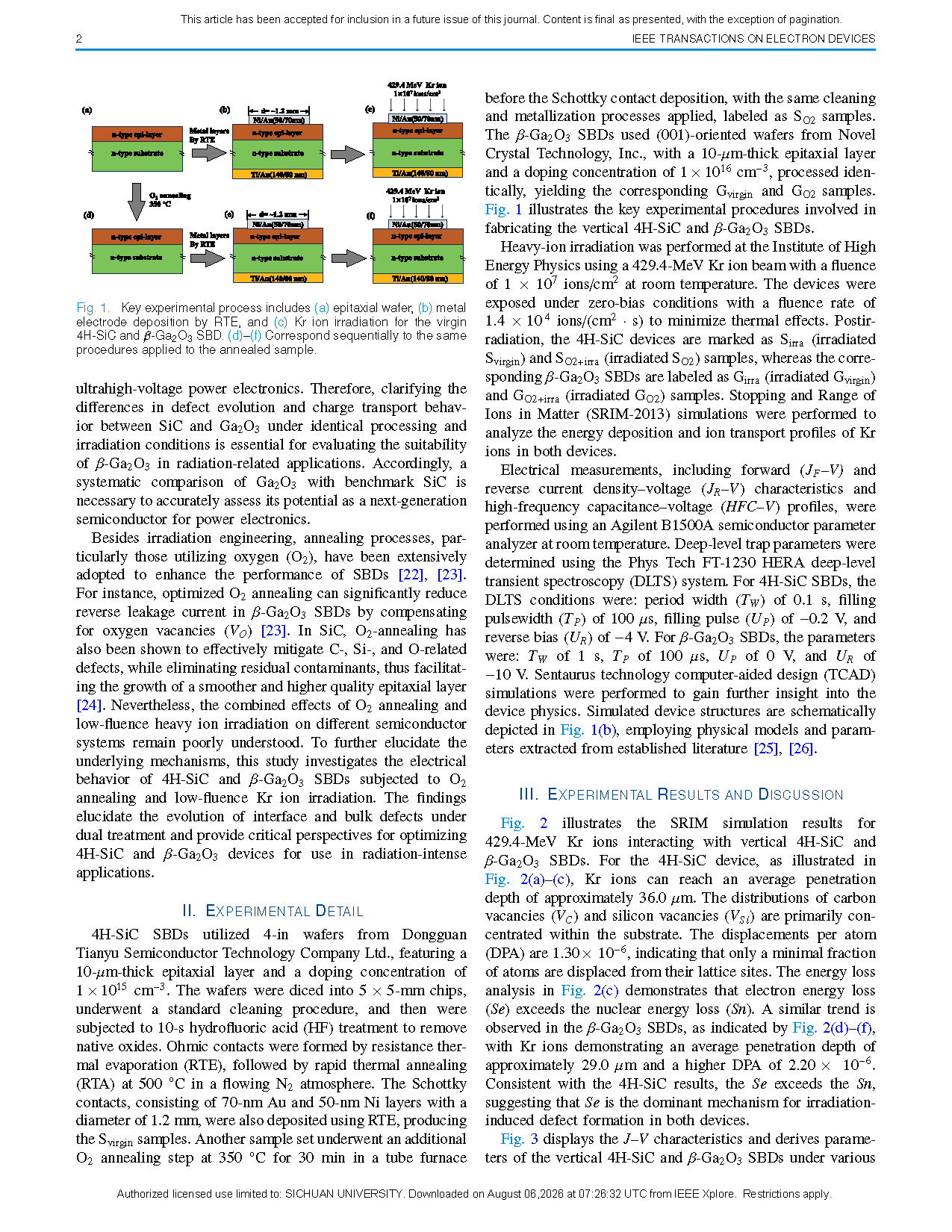
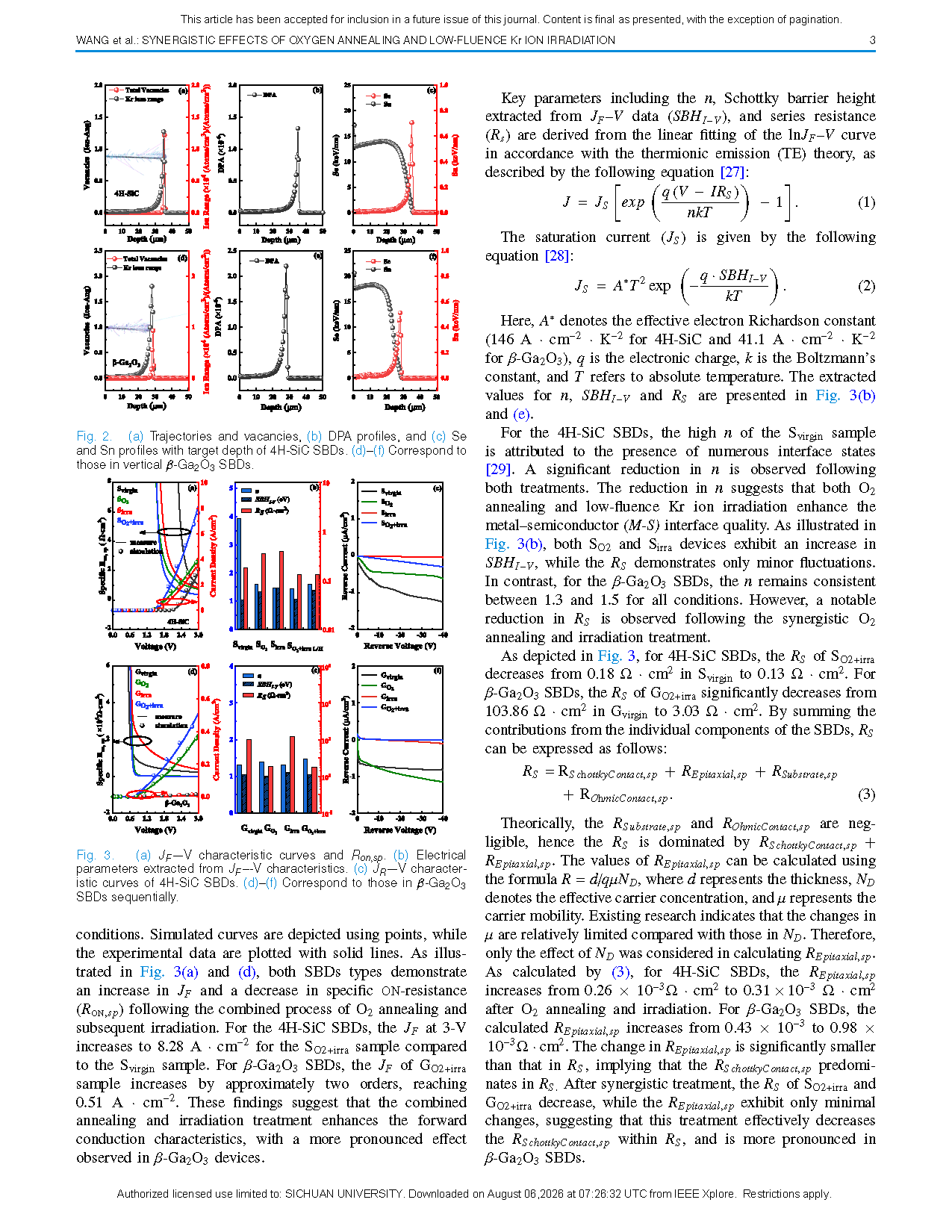
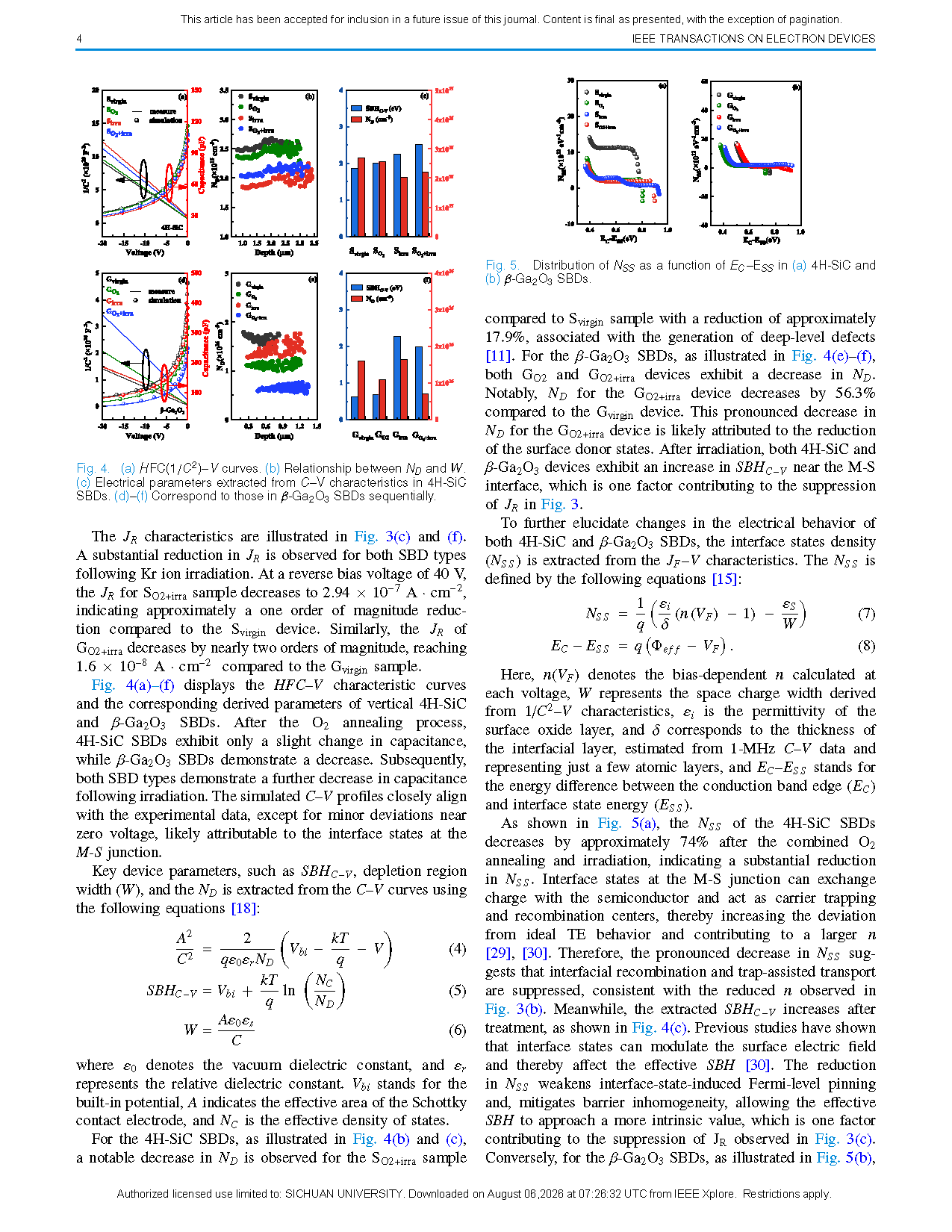
High-frequency C-V measurements, interface-state density (NSS) extraction, and deep-level transient spectroscopy (DLTS) analysis reveal that although the two types of devices exhibit similar performance improvements, their dominant mechanisms differ significantly. For the 4H-SiC devices, the combined treatment reduced the NSS at the M-S interface by approximately 74%, thereby mitigating Fermi-level pinning and barrier inhomogeneity and suppressing interface recombination and trap-assisted transport. Meanwhile, the concentration of bulk Z1/2 defects remained essentially unchanged, indicating that the improvement in device performance was primarily attributable to enhanced interface quality. In contrast, the NSS of the β-Ga2O3 devices remained essentially unchanged, whereas the interface-state energy range shifted from EC-(0.14~0.16) eV below the conduction band (EC) to the deeper EC-(0.18~0.20) eV range. Simultaneously, the concentration of VO-related E2 defects decreased by approximately 92%, and the E3 defect peak was no longer detectable. These changes effectively suppressed defect-assisted conduction and carrier-excitation processes, and contributed to an increase in the Schottky barrier height.
On this basis, this study establishes a material-dependent framework for synergistic defect engineering in different wide-bandgap semiconductors. The performance improvement in 4H-SiC mainly originates from interface passivation, whereas that in β-Ga2O3 is mainly associated with the passivation of VO-related bulk defects and redistribution of interface-state energies. These findings provide a basis for material-specific process optimization and the reliable application of wide-bandgap power devices in extreme radiation environments, including space and nuclear electronic systems.
Highlights
Establishment of a direct comparative framework for 4H-SiC andβ-Ga2O3 SBDs under identical processing and irradiation conditions.By integrating SRIM simulations, I-V and C-V measurements, DLTS, and TCAD simulations, the relationships among energy deposition, defect evolution, and electrical performance were systematically established. This framework clarifies the physical origins of the distinct responses observed in the two wide-bandgap materials under identical treatment conditions.
Identify the distinct physical mechanisms underlying the performance improvements. In 4H-SiC, interface-state passivation, reflected by an approximately 74% reduction in Nss, is the dominant mechanism, mitigating Fermi-level pinning and barrier-height inhomogeneity. In β-Ga₂O₃, a dual mechanism—bulk oxygen-vacancy (VO) passivation, evidenced by an approximately 92% reduction in the E2 trap concentration, together with a shift in the interface-state energy level from 0.14 to 0.20 eV—jointly suppresses trap-assisted and field-enhanced leakage pathways. This mechanistic analysis provides a clear physical explanation for the simultaneous improvements in forward and reverse characteristics.
Based on these findings, we propose a material-specific optimization framework.Interface engineering should be prioritized for 4H-SiC, whereas bulk-defect passivation combined with interface-state engineering should be emphasized for β-Ga₂O₃. This material-specific strategy provides practical guidance for enhancing the radiation tolerance and operational reliability of wide-bandgap power devices in extreme environments.
Conclusion
This work comparatively investigates the impact of combined O2 annealing and low-fluence Kr ion irradiation on the electrical performance of 4H-SiC and β-Ga₂O₃ SBH. Both devices exhibit a consistent suppression of JR and an improvement in rectification characteristics after the synergistic treatment, demonstrating the effectiveness of the proposed processing. Notably, the magnitude of JR reduction is more pronounced in β-Ga₂O₃ devices, indicating a stronger sensitivity to bulk defect modulation. Detailed NSS extraction and DLTS characterization reveal that the underlying physical mechanisms of the performance improvement are fundamentally different. In the 4H-SiC SBDs, although irradiation induces bulk defects, the dominant factor is the substantial improvement in M-S interface state density quality. In contrast, the enhancement in β-Ga₂O₃ devices is primarily governed by suppression VO-related defects via O2 annealing. These results demonstrate that the combined treatment is advantageous for both material systems but operates through distinct pathways: interface engineering for 4H-SiC and bulk defect passivation for β-Ga2O3.This insight provides crucial guidance for future process optimization and reliability enhancement in wide-bandgap semiconductor devices.
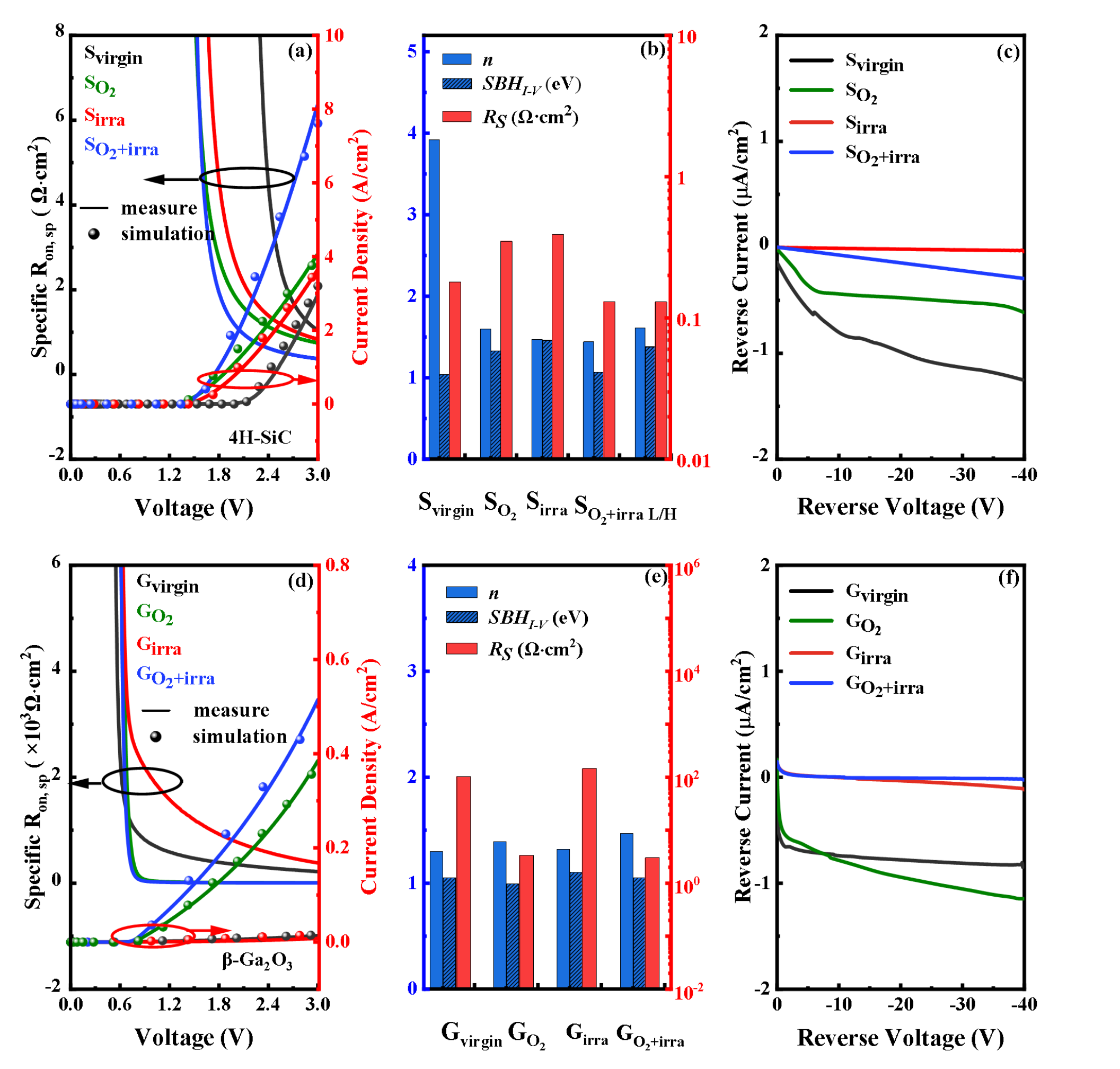
Fig. 1 (a) Forward-conduction characteristics and on-resistance, (b) extracted relevant electrical parameters, and (c) reverse leakage current of the 4H-SiC SBDs; (d), (e), and (f) are the corresponding measurement results and extracted relevant electrical parameters of the β-Ga2O3 SBDs, respectively.
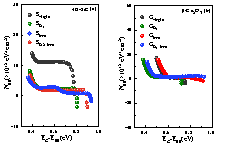
Fig. 2 Relationship between NSS~EC-ESS (a) 4H-SiC and (b) β-Ga2O3 SBDs.
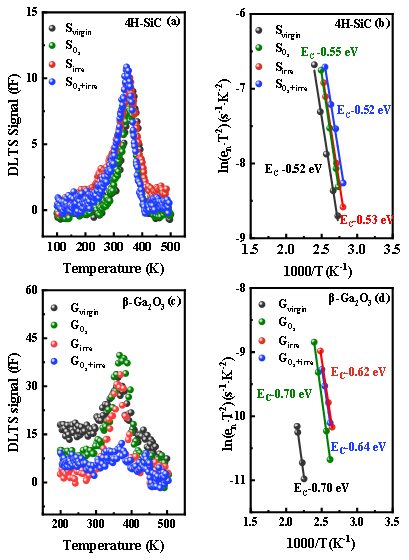
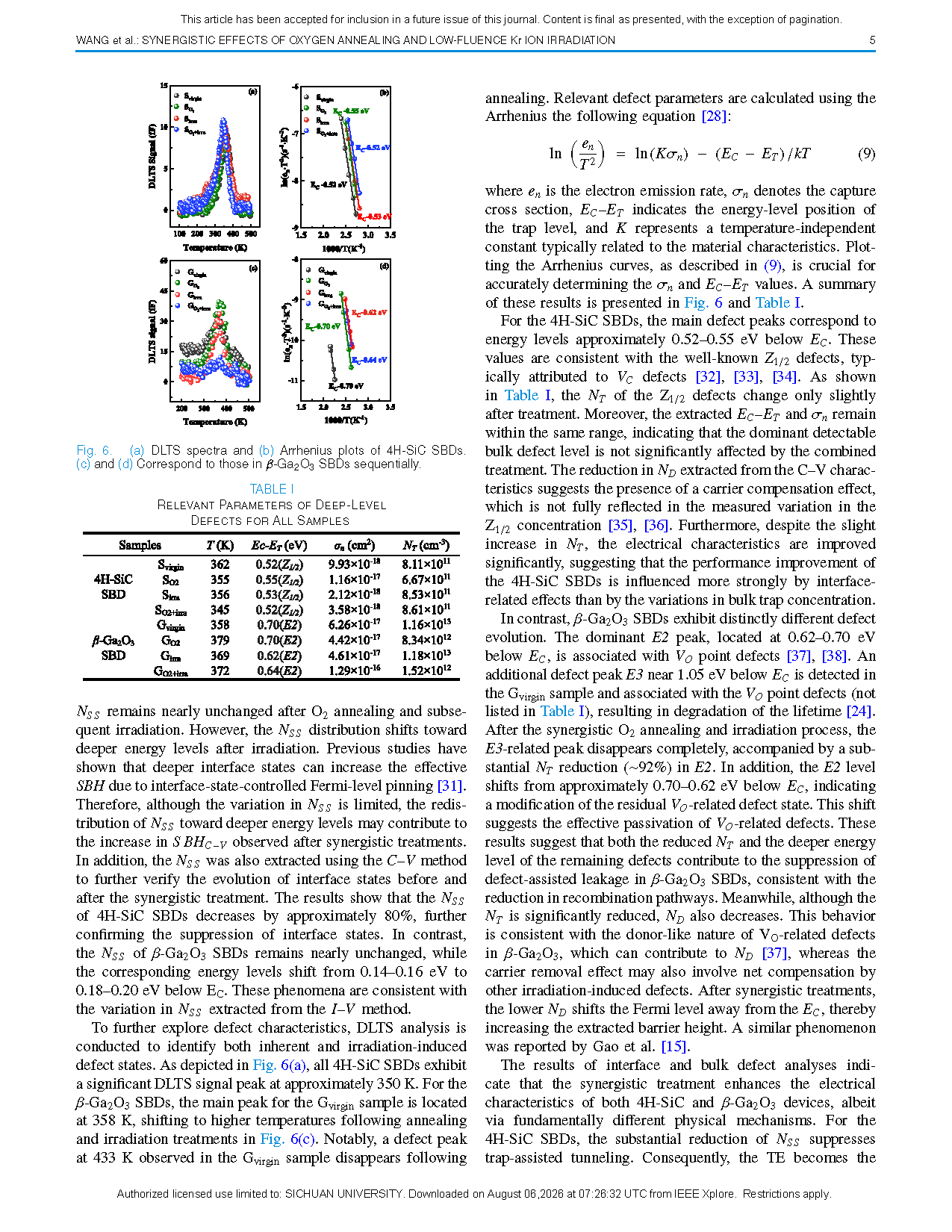
Fig. 3 (a) DLTS spectra and (b) Arrhenius plots of the 4H-SiC SBDs; (c) DLTS spectra and (d) Arrhenius plots of the β-Ga2O3 SBDs.
DOI:
doi.org/10.1109/TED.2026.3718393
Instruction
Official Account

Cooperation
Top