


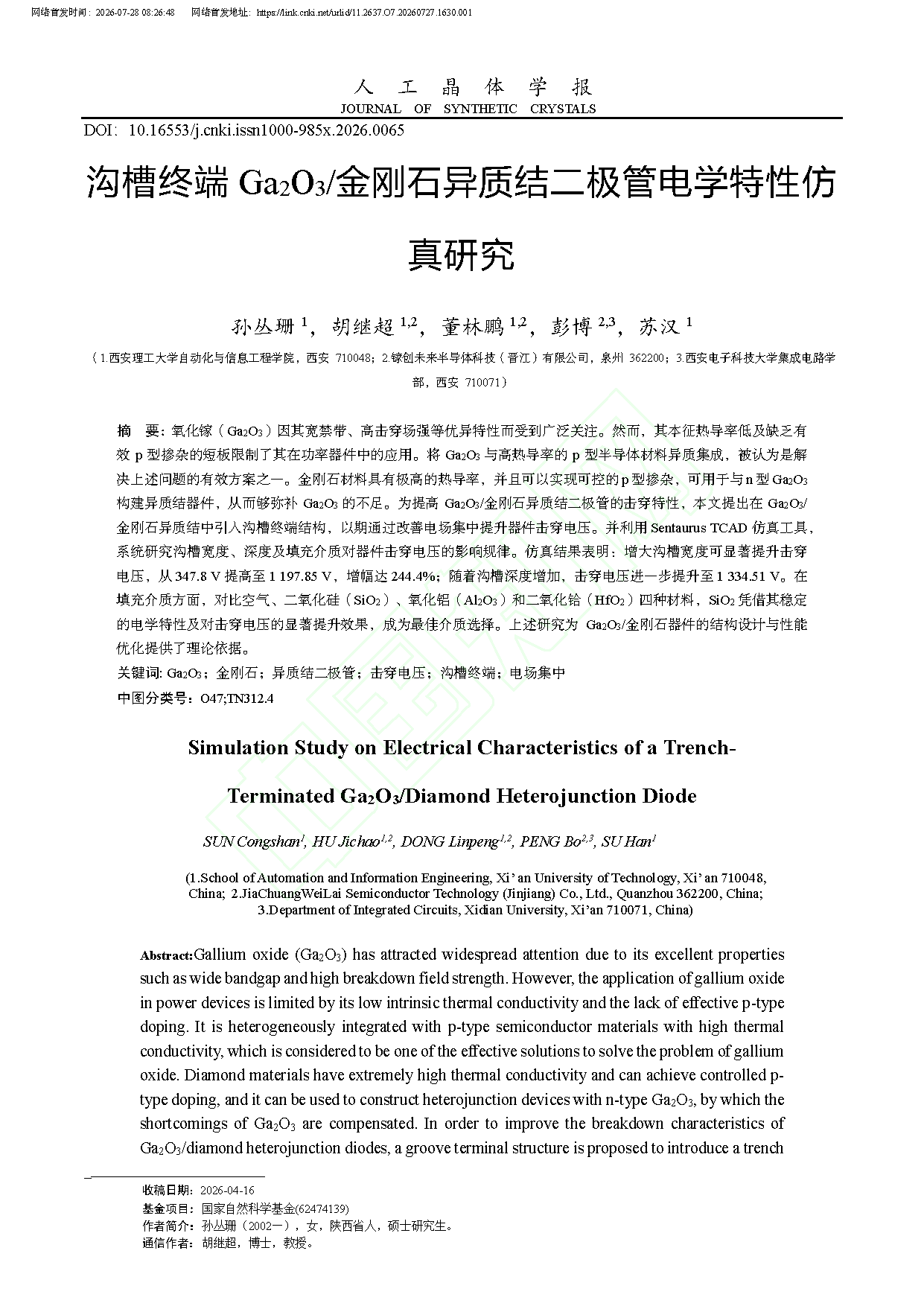
Researchers from Xi'an University of Technology and Xidian University have published a dissertation titled " Simulation study on electrical characteristics of Ga₂O₃/diamond heterojunction diode with trench termination " in 《人工晶体学报》。
Background
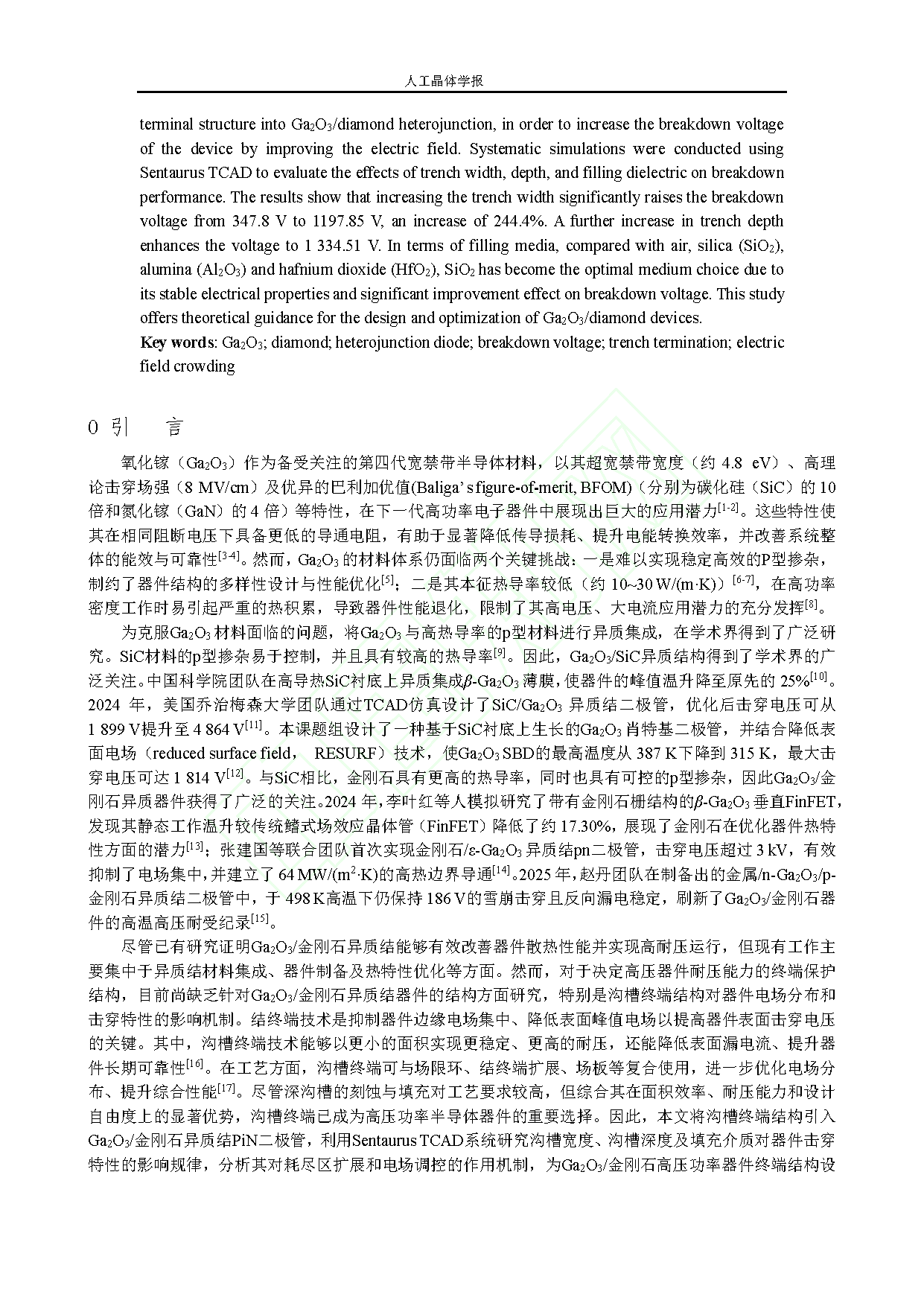
Gallium oxide (Ga₂O₃), as a fourth-generation ultra-wide bandgap semiconductor, possesses advantages such as a wide bandgap and high breakdown field strength, making it suitable for high-voltage power devices. However, it faces challenges in achieving effective p-type doping and has an extremely low intrinsic thermal conductivity. Integrating it with diamond, which has high thermal conductivity and controllable p-type doping, can simultaneously address the issues of heat dissipation and doping. Existing research has primarily focused on the preparation of heterostructured films and thermal characteristic optimization, lacking studies on the terminal protection structures that determine the device's voltage resistance. Trench termination structures can effectively alleviate edge electric field concentration and enhance voltage resistance. Therefore, this paper introduces trench termination structures and employs Sentaurus TCAD simulation to explore the regulation of trench geometry and filling medium on the breakdown characteristics of Ga₂O₃-diamond heterojunction PiN diodes.
Abstract
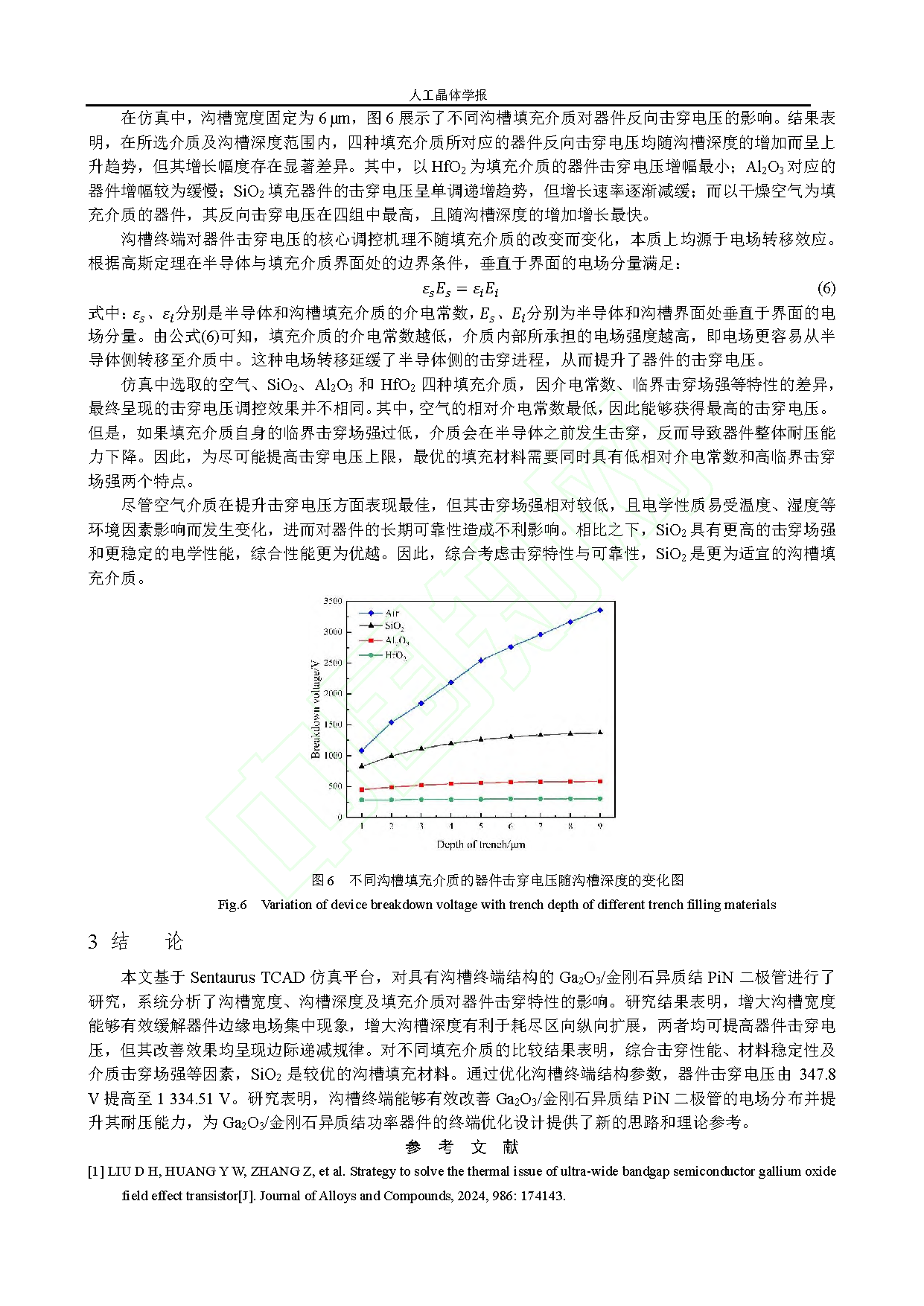
Gallium oxide (Ga₂O₃) has attracted widespread attention due to its excellent properties such as wide bandgap and high breakdown field strength. However, the application of gallium oxide in power devices is limited by its low intrinsic thermal conductivity and the lack of effective p-type doping. It is heterogeneously integrated with p-type semiconductor materials with high thermal conductivity, which is considered to be one of the effective solutions to solve the problem of gallium oxide. Diamond materials have extremely high thermal conductivity and can achieve controlled p type doping, and it can be used to construct heterojunction devices with n-type Ga₂O₃, by which the shortcomings of Ga₂O₃ are compensated. In order to improve the breakdown characteristics of Ga₂O₃/diamond heterojunction diodes, a groove terminal structure is proposed to introduce a trench terminal structure into Ga₂O₃/diamond heterojunction, in order to increase the breakdown voltage of the device by improving the electric field. Systematic simulations were conducted using Sentaurus TCAD to evaluate the effects of trench width, depth, and filling dielectric on breakdown performance. The results show that increasing the trench width significantly raises the breakdown voltage from 347.8 V to 1197.85 V, an increase of 244.4%. A further increase in trench depth enhances the voltage to 1334.51 V. In terms of filling media, compared with air, silica (SiO₂), alumina (Al₂O₃) and hafnium dioxide (HfO₂), SiO₂ has become the optimal medium choice due to its stable electrical properties and significant improvement effect on breakdown voltage. This study offers theoretical guidance for the design and optimization of Ga₂O₃/diamond devices.
Conclusion
Based on the Sentaurus TCAD simulation platform, this paper investigates the Ga₂O₃/diamond heterojunction PiN diode with a trench termination structure. It systematically analyzes the impact of trench width, trench depth, and filling medium on the breakdown characteristics of the device. The research results indicate that increasing the trench width can effectively alleviate the electric field concentration at the device edge, and increasing the trench depth facilitates the longitudinal expansion of the depletion region. Both of these factors can enhance the breakdown voltage of the device, but their improvement effects follow a marginal diminishing pattern. A comparison of different filling media reveals that, considering comprehensive breakdown performance, material stability, and dielectric breakdown field strength, SiO₂ is a superior trench filling material. By optimizing the trench termination structure parameters, the device breakdown voltage increases from 347.8 V to 1334.51 V. The study demonstrates that trench termination can effectively improve the electric field distribution of the Ga₂O₃/diamond heterojunction PiN diode and enhance its voltage withstanding capability, providing new ideas and theoretical references for the terminal optimization design of Ga₂O₃/diamond heterojunction power devices.
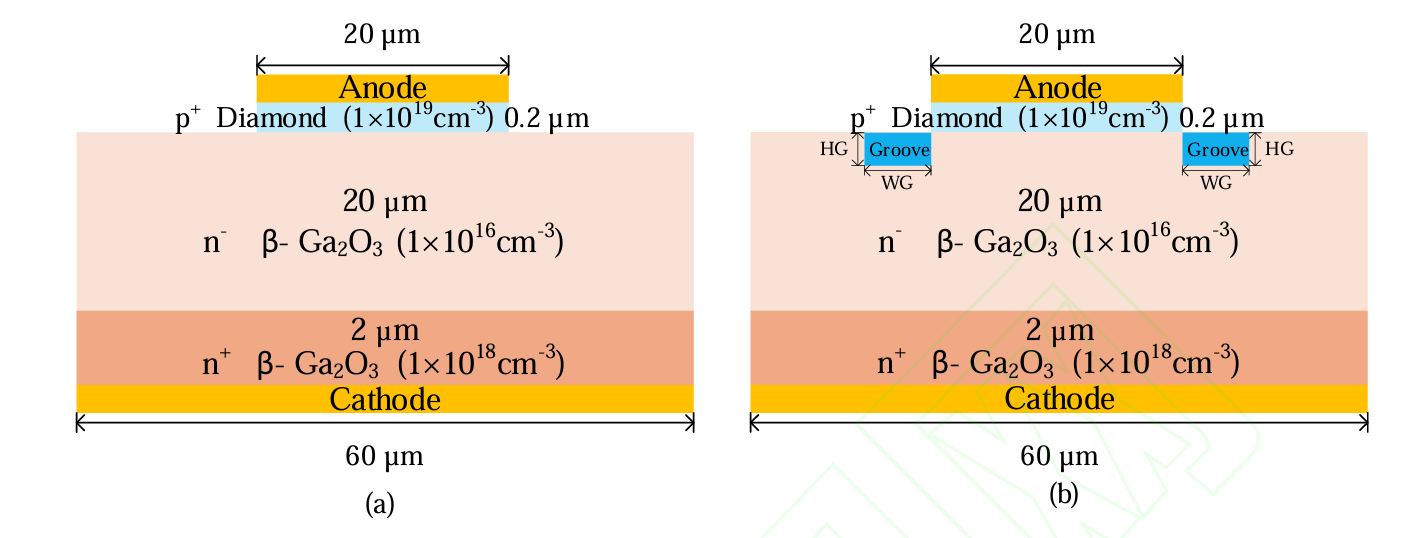
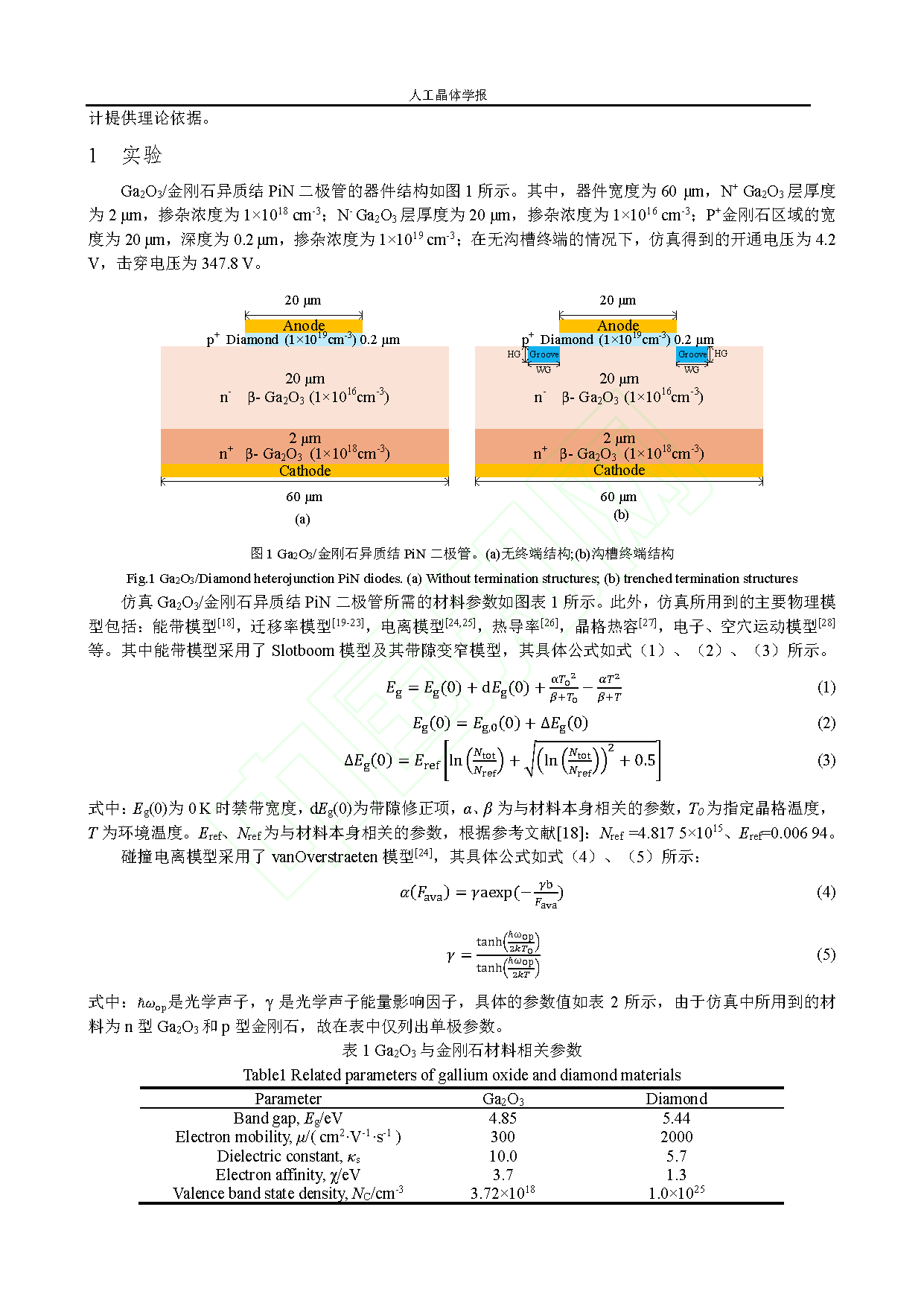
Fig.1 Ga₂O₃/Diamond heterojunction PiN diodes. (a) Without termination structures; (b) trenched termination structures
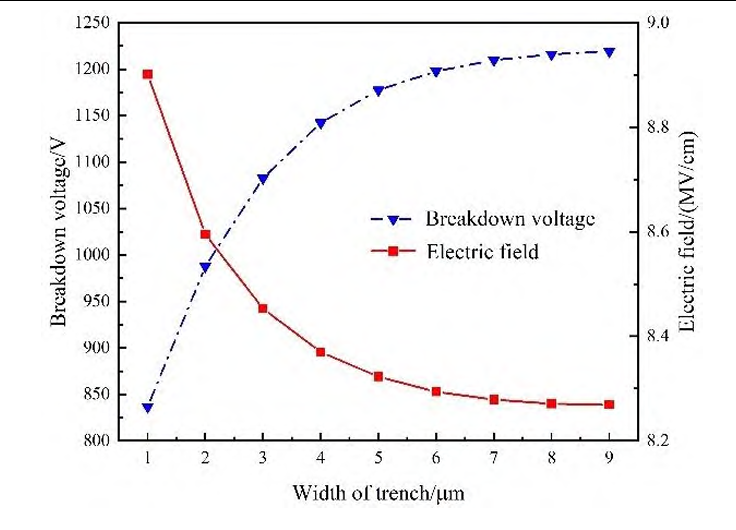
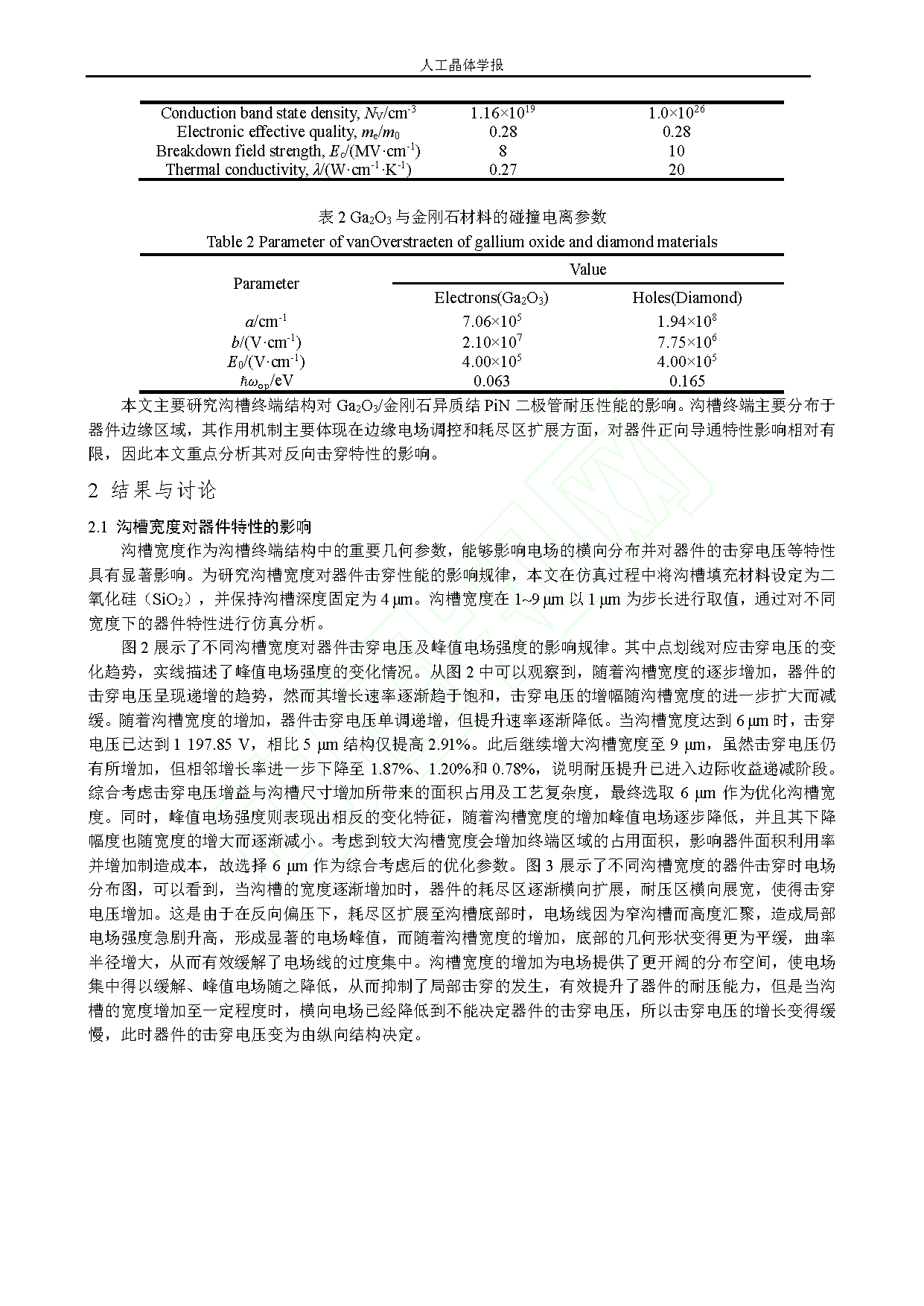
Fig.2 Diagram of the device's breakdown voltage (left axis) and peak electric field strength during breakdown (right axis) with trench width
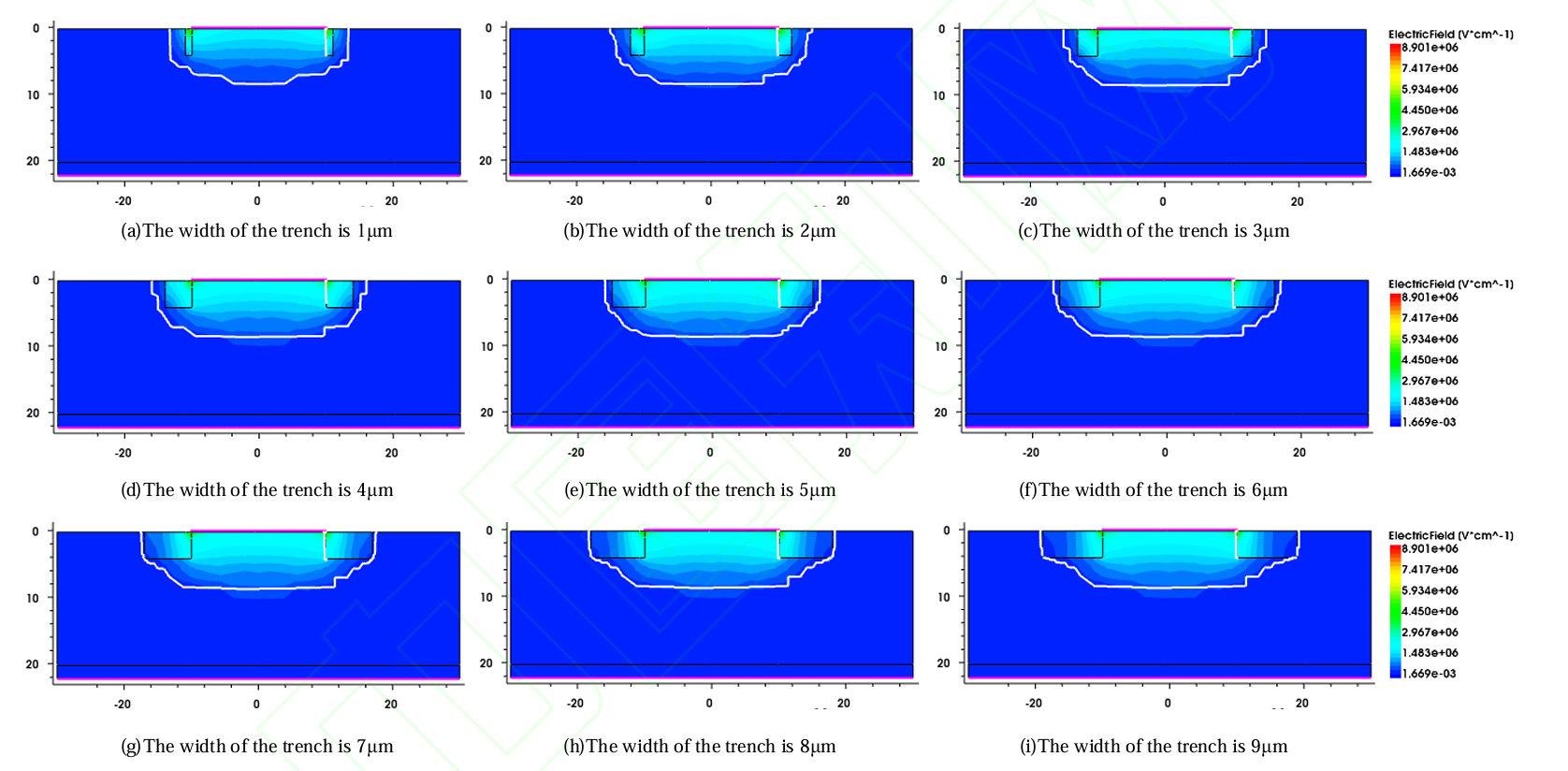
Fig.3 Breakdown electric field distribution diagram of devices with different trench widths
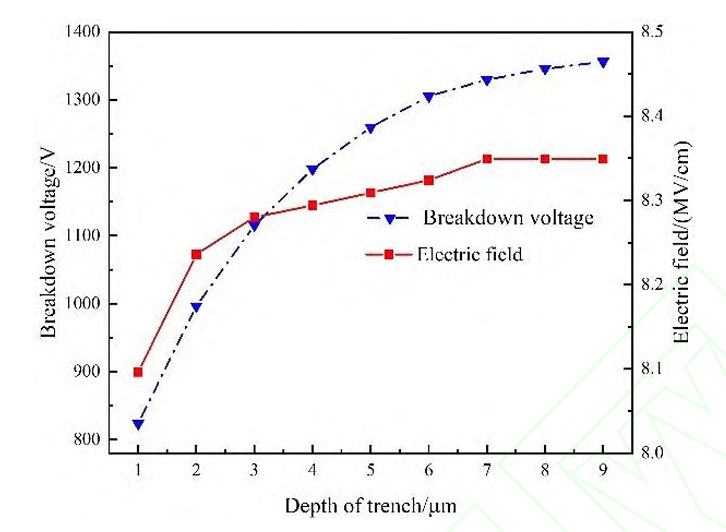
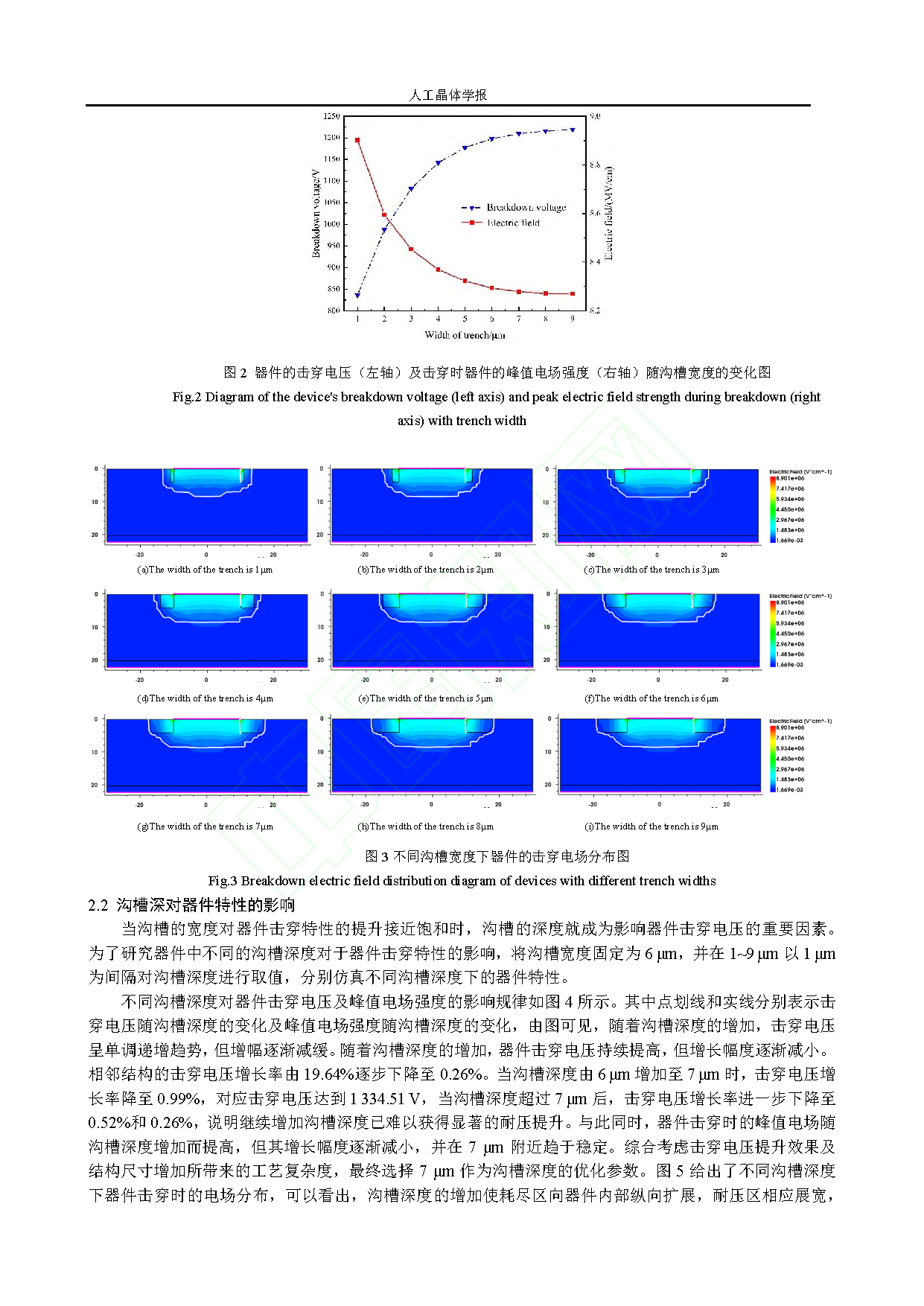
Fig.4 Diagram of the device's breakdown voltage (left axis) and peak electric field strength during breakdown (right axis) with trench depth
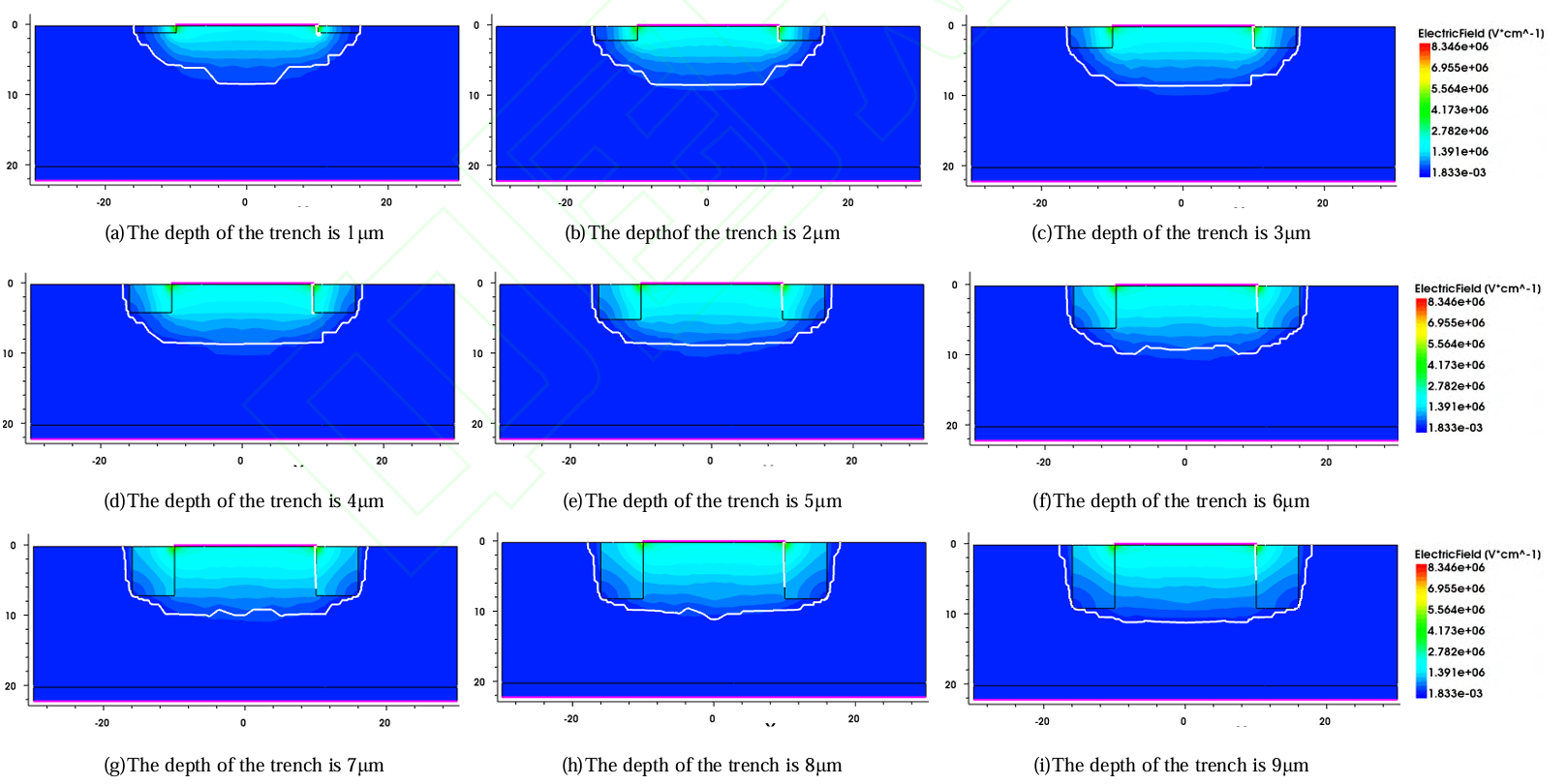
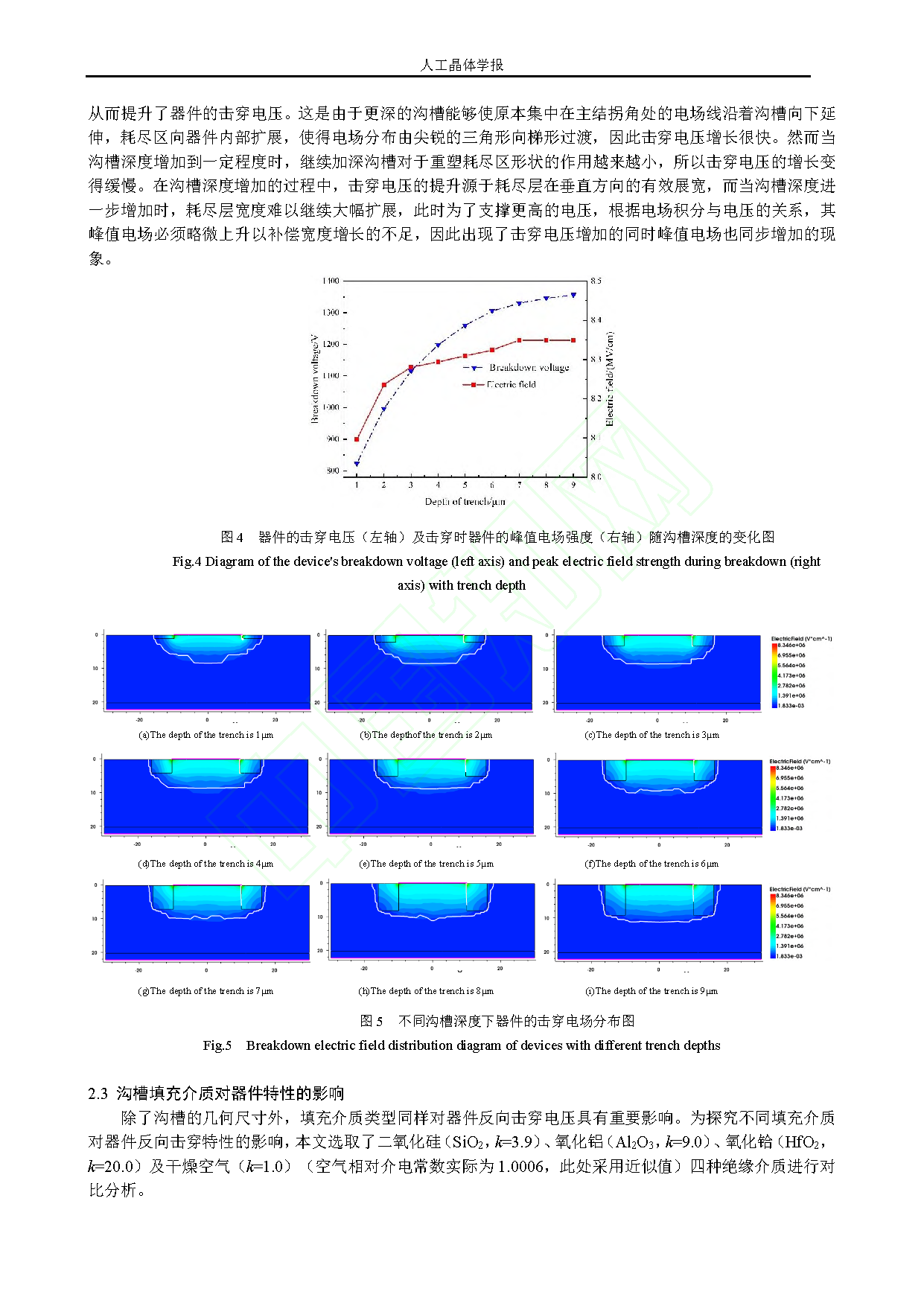
Fig.5 Breakdown electric field distribution diagram of devices with different trench depths
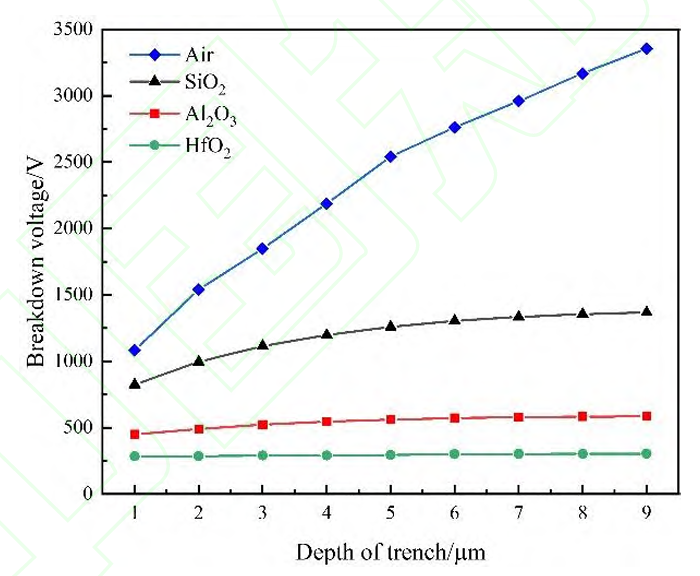
Fig.6 Variation of device breakdown voltage with trench depth of different trench filling materials
DOI:
10.16553/j.cnki.issn1000-985x.2026.0065
Instruction
Official Account

Cooperation
Top