

In August 2026, experts, researchers, corporate representatives, and industry professionals from across the global gallium oxide community gathered in Maryland, USA, for the 6th International Workshop on Gallium Oxide and Related Materials (IWGO-6).
From crystal growth and epitaxy to device development and industrialization, the five-day conference brought together the latest advances from different regions around the world, offering a clear view of how gallium oxide is gradually moving beyond cutting-edge laboratory research toward a more defined path to commercialization.
But what a conference leaves behind is far more than presentations, posters, and data.
At IWGO-6, we spoke with experts, researchers, and industry representatives from different countries and regions, hearing their perspectives on technological progress, industrialization, and the future of the industry. These voices from the front lines of the field may offer a deeper understanding than technical performance metrics alone: Where does the global Ga₂O₃ industry stand today, and where is it heading next?
We have captured these perspectives as a snapshot of an industry entering its next stage of development.
Let’s start from IWGO-6 and hear the voices of the global Ga₂O₃ industry.
In this issue, we take a closer look at Novel Crystal Technology, a council chair institution of the Alliance, and hear from President Akito Kuramata as he shares his perspectives on Ga₂O₃ technology development, industrialization, and international collaboration.
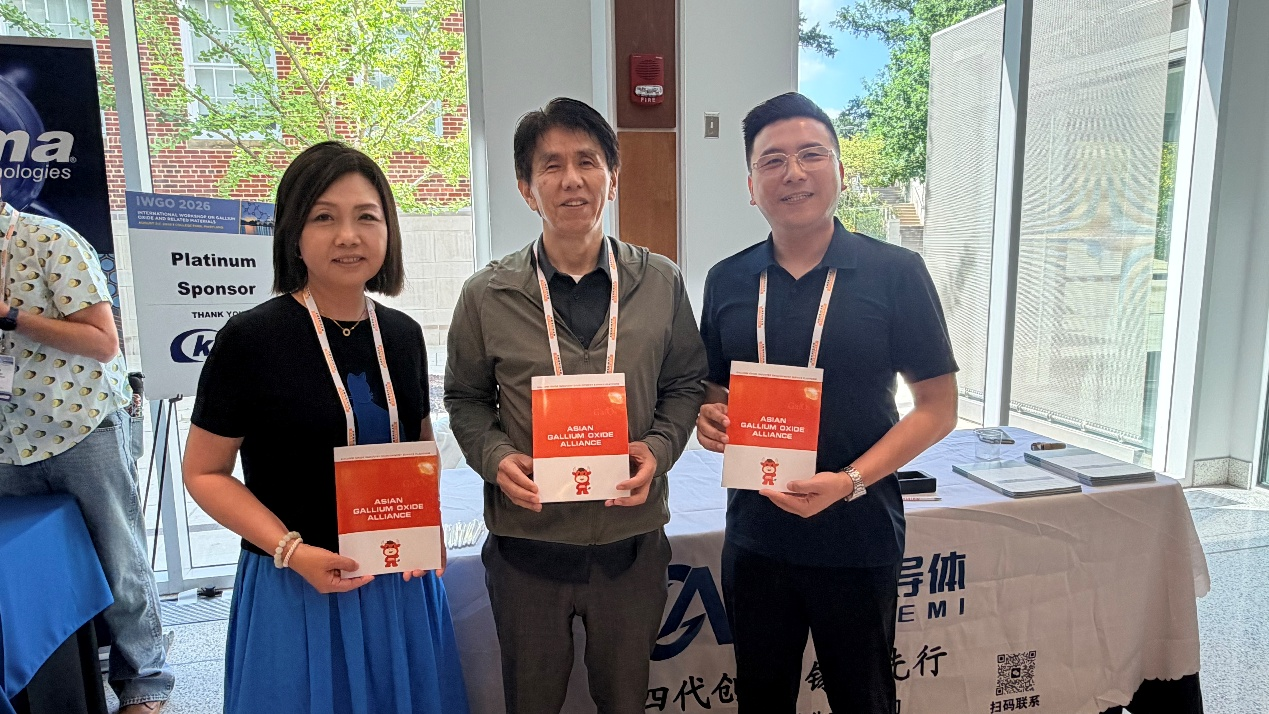
President Akito Kuramata (center) with the Asian Gallium Oxide Alliance (AGOA) team at IWGO 2026.
Reflections on IWGO-6: Rapid Device Development Is Strengthening Industry Confidence

Speaking about his impressions of IWGO-6, President Akito Kuramata first highlighted the rapid development of Ga₂O₃ device technology in recent years. In his view, the research results and technological advances presented at the conference clearly demonstrated that Ga₂O₃ devices are continuing to move forward, with performance and technological maturity steadily improving. In the development of an emerging industry, advances in device technology mean more than improvements in performance metrics—they are also helping to strengthen confidence in the future of Ga₂O₃ among industry participants.
Beyond the technology itself, however, President Kuramata also pointed to one regrettable aspect of this year’s conference: some Chinese researchers were unable to attend and participate in person.
He expressed his deep regret over their absence. In his view, the value of an international conference lies not only in presenting research findings, but also in enabling researchers from different countries and regions to meet face-to-face, discuss technical challenges, exchange experiences, and explore new opportunities for collaboration. The absence of some Chinese researchers meant that some of these potential interactions and exchanges could not take place.
This sense of regret was not limited to Chinese researchers or industry professionals. President Kuramata noted that many other attendees, including researchers from Europe and the United States, also felt that the lack of opportunities to interact fully with their Chinese counterparts was unfortunate. For a global industry developing as rapidly as Ga₂O₃, maintaining continuous and open exchange of information and ideas across countries and regions remains highly important.
Views and Expectations for the Alliance: Continuing to Serve as an Information Bridge for the Global Industry
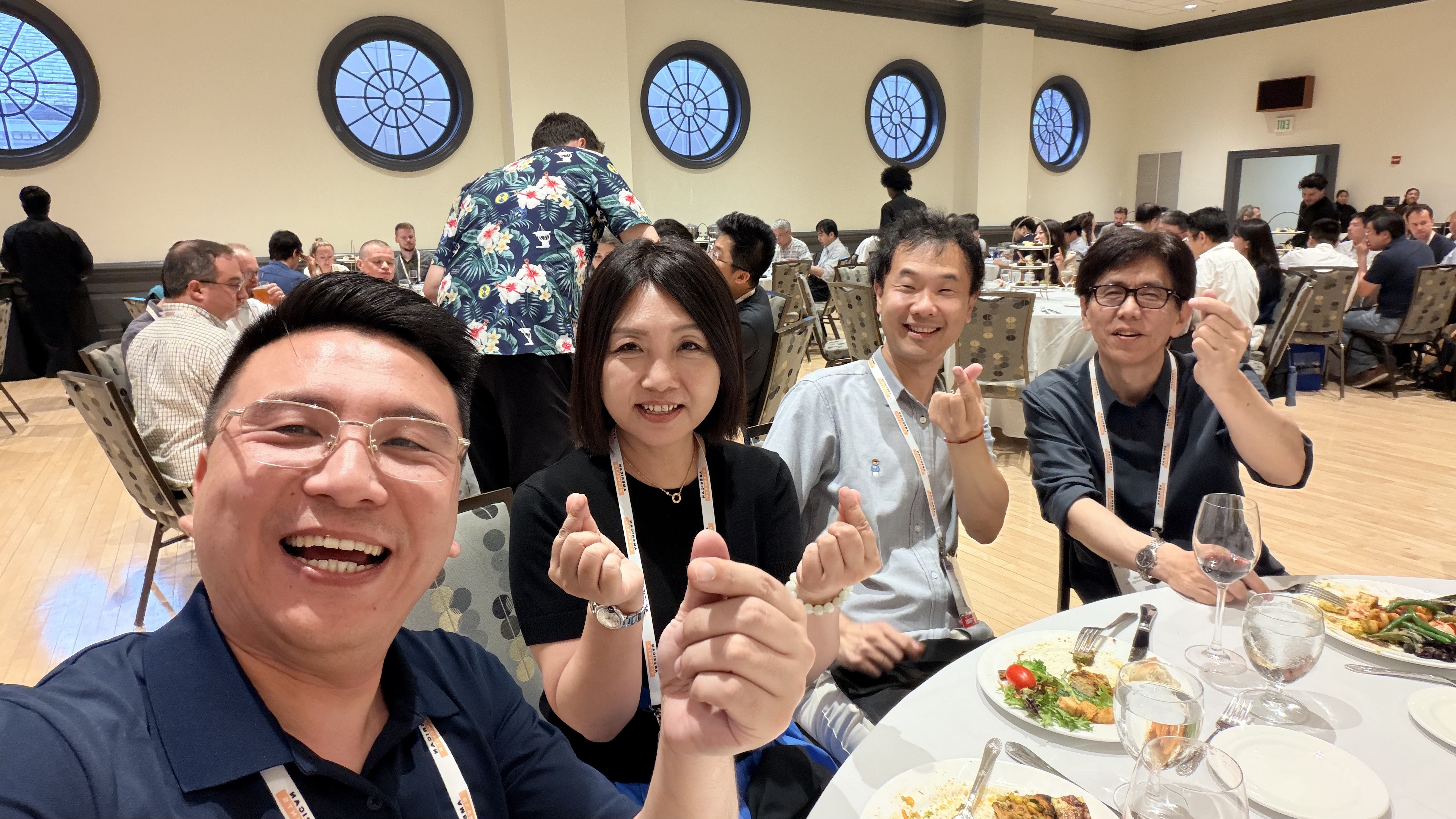
During the conference, President Kuramata also took note of the work of the Asian Gallium Oxide Alliance (AGOA). He said that many attendees had shown strong interest in the Alliance, reflecting the growing demand for information exchange and cross-regional communication as the Ga₂O₃ industry continues to develop.
In his view, one of the Alliance’s important roles is to serve as an information bridge connecting different participants across the industry. Research institutions and companies in different countries and regions around the world are continuing to advance research and development in Ga₂O₃ materials, epitaxy, devices, and industrialization. Timely dissemination of industry information and greater mutual understanding are therefore important to the development of the industry as a whole.
He hopes that the Alliance will continue to facilitate information exchange and communication between China and Europe, between China and Japan, and between China and the United States, enabling research institutions, companies, and industry professionals in different regions to stay better informed about developments elsewhere and creating opportunities for further communication and collaboration.
He also recognized the work the Alliance has already undertaken in disseminating industry information and facilitating communication, and expressed his hope that this cross-regional and cross-border connection can be sustained over the long term.
In his view, facilitating the flow of information is itself an important force driving the development of the industry.
A Message to Industry Peers: After Technical Breakthroughs, the Priority Is to Prepare for Industrialization

Looking ahead to the future of the Ga₂O₃ industry, President Kuramata placed greater emphasis on industrialization.
He said that NCT is already preparing to move toward larger wafer sizes and lower costs. At the same time, epitaxial and device technologies across the industry have continued to make increasingly significant progress.
In his view, the industry may now be closer than ever to entering the era of industrialization. It is no longer a distant or unattainable goal, but rather a matter of taking the “final step.”
That final step is not simply about achieving another breakthrough in a particular technical metric. More importantly, it means ensuring that the entire industry chain is truly prepared for commercialization and mass production. As technological capabilities continue to improve, the factors that will increasingly distinguish companies and technologies will be their industrialization capabilities and level of readiness for large-scale deployment.
He therefore hopes that industry peers will prepare in advance—not only keeping an eye on technological progress in the laboratory, but also thinking about how to achieve larger wafer sizes, lower costs, stable manufacturing, and greater coordination across the supply chain, so that technological achievements can truly move into the market and real-world applications.
In President Kuramata’s view, the Ga₂O₃ industry is undergoing a critical turning point. Technology continues to advance, while the conditions needed for industrialization are gradually taking shape. The next step for the industry is to turn these technological achievements into scalable manufacturing and practical applications.
“The present is merely the final test before daybreak. The first light is already on the horizon, and dawn is steadily approaching.”
He looks forward to working together with colleagues across the global industry to help bring Ga₂O₃ into the era of industrialization and large-scale application.
About Novel Crystal Technology
Novel Crystal Technology, Inc. (NCT) is a leading global company in β-Ga₂O₃ materials and device technologies, and one of the pioneering companies to commercialize and supply β-Ga₂O₃ substrates and epitaxial wafers at scale. Established in Japan in 2015, NCT was spun out as an independent startup from Tamura Corporation and serves as a technology-transfer vehicle for Japan’s National Institute of Information and Communications Technology (NICT). Its technological foundation brings together early Ga₂O₃ research capabilities and expertise from Tamura Corporation, NICT, and Tokyo University of Agriculture and Technology, integrating technological achievements accumulated across industry and academia.
NCT has developed a comprehensive technology chain covering crystal growth, substrate fabrication, epitaxial growth, and power-device R&D and prototyping. The company has played an important role in advancing the industrialization of Ga₂O₃, while continuously pushing the development of larger wafer sizes, higher-quality epitaxial layers, and improved power-device performance, helping drive β-Ga₂O₃ from laboratory research toward industrial and commercial applications.
On the product side, NCT became an early supplier of 100 mm (4-inch) β-Ga₂O₃ substrates in 2021, becoming the first company worldwide to commercially supply 4-inch Ga₂O₃ wafers. The substrates are complemented by high-performance HVPE-grown homoepitaxial wafers, with excellent control over epitaxial-layer thickness and doping concentration, as well as strong wafer yield at an industrial level. These products have been supplied to research institutions and power-device manufacturers worldwide for device development.
To meet the requirements of next-generation production lines, NCT began externally shipping 150 mm (6-inch) β-Ga₂O₃ substrate samples in March 2026, marking a major step forward in large-diameter single-crystal fabrication and compatibility with existing power-semiconductor manufacturing lines. According to its technology roadmap, NCT plans to introduce 150 mm epitaxial samples in 2027, advance toward 150 mm epitaxial wafer mass production in 2029, and pursue the development of 200 mm (8-inch) products over the longer term. On the device side, NCT has developed vertical β-Ga₂O₃ MOSFETs and achieved leading power figure-of-merit performance. The company is also exploring DG crucible-free crystal growth technology, with the goal of substantially reducing substrate manufacturing costs and laying the groundwork for the broader adoption of Ga₂O₃.
Leveraging its integrated materials-to-devices technology chain, NCT has established strong capabilities in β-Ga₂O₃ substrate quality, large-wafer development, epitaxial processes, and power-device prototyping. Its technologies and products provide key material support for high-voltage power applications including rail transit, industrial power supplies, power grids, and new energy, while contributing to the global technological evolution of the Ga₂O₃ industry.
Instruction
Official Account

Cooperation
Top