



Researchers from Zhejiang Sci-Tech University have published a paper titled “Orientation-Engineered β-Ga₂O₃ Optoelectronic Synapses for Polarization-Sensitive Neuromorphic Vision” in Materials Today Physics.
Background
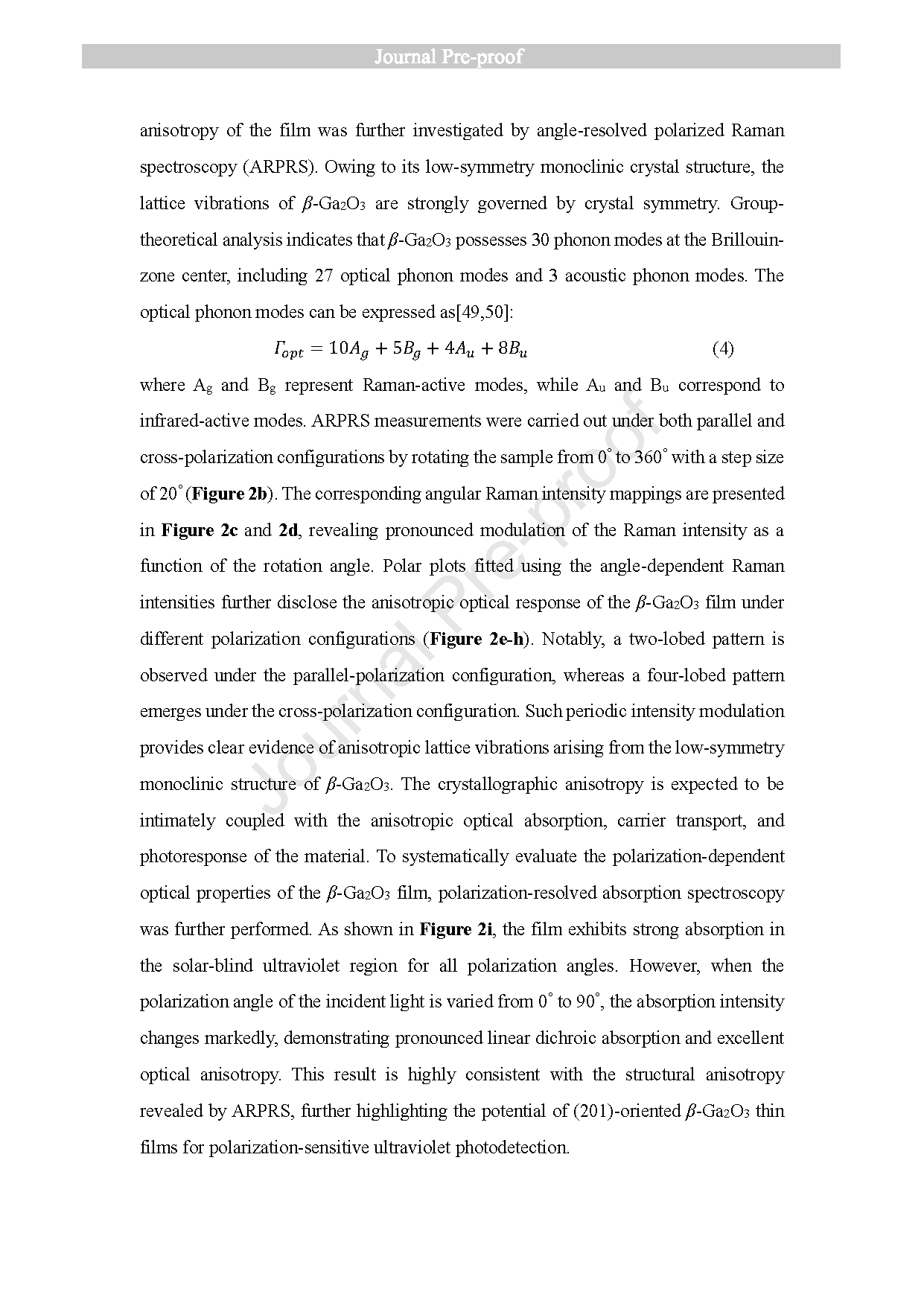
Polarized light carries multi-dimensional optical information beyond intensity and wavelength, which is vital for autonomous navigation, remote sensing and target recognition. Conventional polarization vision systems rely on discrete optical components such as polarizers and wave plates, leading to complicated optical paths, bulky size and poor integration. Anisotropic wide-bandgap semiconductors can directly convert incident polarized light into distinct electrical signals without extra optics, acting as ideal candidates for miniaturized polarization sensors. β-Ga₂O₃ features solar-blind ultraviolet response and intrinsic optical anisotropy originating from low-symmetry monoclinic lattice. However, the dichroic absorption of β-Ga₂O₃ films is highly dependent on crystal orientation, and precise orientation control strategies are still absent for high-performance polarization synaptic devices. In this work, substrate engineering is adopted to epitaxially grow (201)-oriented β-Ga₂O₃ thin films on r-plane sapphire substrates. Theoretical calculation proves the dichroic ratio of (201) plane reaches 3.2. The fabricated device emulates full synaptic plasticity. Furthermore, reservoir computing and convolution neural network visual systems are constructed to realize polarization-enhanced face recognition and noise-resistant handwritten digit classification, offering a novel orientation engineering route for monolithic integrated ultraviolet neuromorphic hardware.
Abstract
Polarization-sensitive neuromorphic visual systems offer a promising route for extracting optical information, yet their practical miniaturization and integration remain limited by the reliance on bulky optical components and separated processing units. Here, we demonstrate an orientation-engineered β-Ga₂O₃ ultraviolet optoelectronic synapse for polarization-sensitive neuromorphic vision. Based on Fermi’s golden rule and optical transition selection rules, the (201) plane of β-Ga₂O₃ is theoretically revealed to exhibit stronger polarization-selective absorption, with a dichroic ratio of 3.2 at 258 nm. (201)-oriented β-Ga₂O₃ epitaxial films are controllably grown on r-plane sapphire substrates through substrate engineering. The device successfully emulates essential polarization sensitivity synaptic, including short-term to long-term memory transition, with stronger learning and memory capability. Furthermore, the polarization-modulated synaptic response is exploited for reservoir-computing-based face recognition, achieving 92% accuracy after 200 training iterations under 0° polarization. Device-derived polarization-modulated convolution kernels are also constructed for image edge enhancement and handwritten digit recognition, maintaining high accuracies of 99%, 99%, and 97% under 10%, 20%, and 50% noise, respectively. This work provides a strategy for β-Ga₂O₃-based polarization-sensitive optoelectronic synapses and offers a promising way for compact ultraviolet neuromorphic visual systems with integrated sensing, memory, and computing functionalities.
Highlights
Theoretical calculation based on Fermi’s golden rule verifies that the (201) plane of β-Ga₂O₃ possesses superior polarization absorption over the (-201) plane, with a high dichroic ratio of 3.2 at 258 nm;
r-plane sapphire substrate is adopted to epitaxially grow highly oriented (201) β-Ga₂O₃ films, greatly enhancing polarization-resolved synaptic current contrast between 0° and 90° polarized light;
The device fully emulates biological synaptic plasticity including paired-pulse facilitation and short-to-long-term memory transition, with tunable learning-forgetting dynamics modulated by light intensity, pulse duration and pulse number;
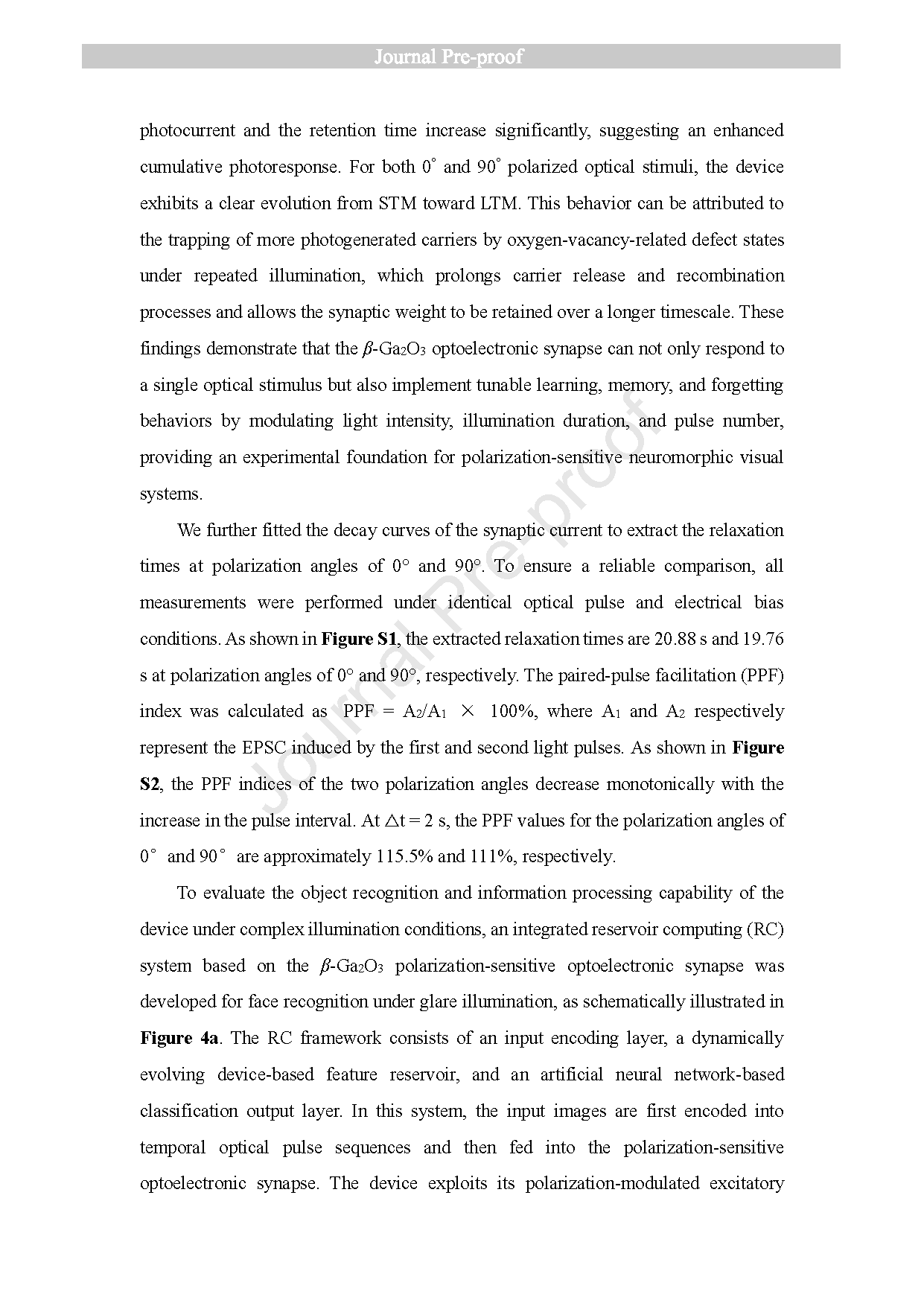
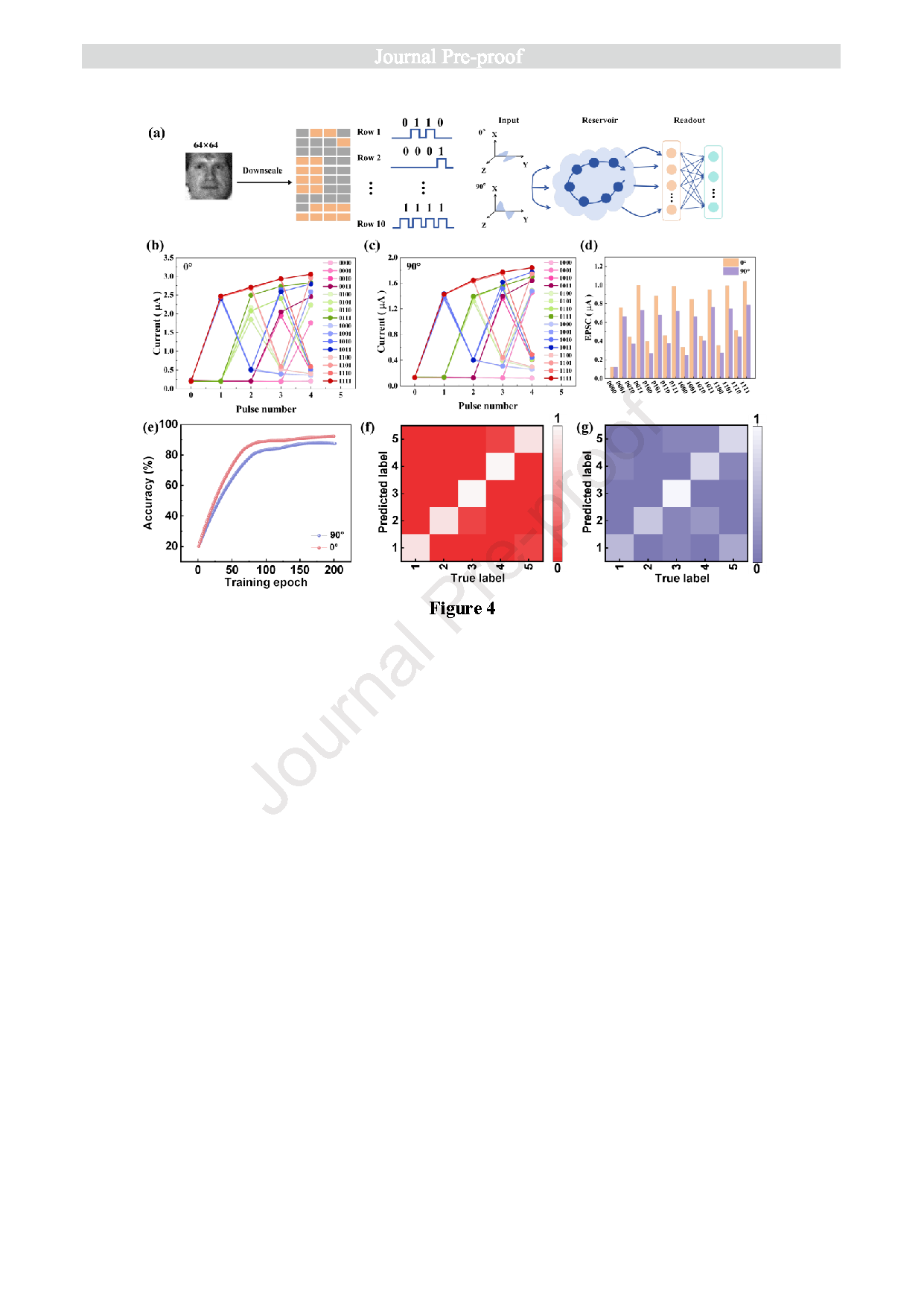
A polarization-modulated reservoir computing system is constructed, reaching 92% face recognition accuracy after 200 training epochs under 0° polarization, outperforming the 90° polarization condition;
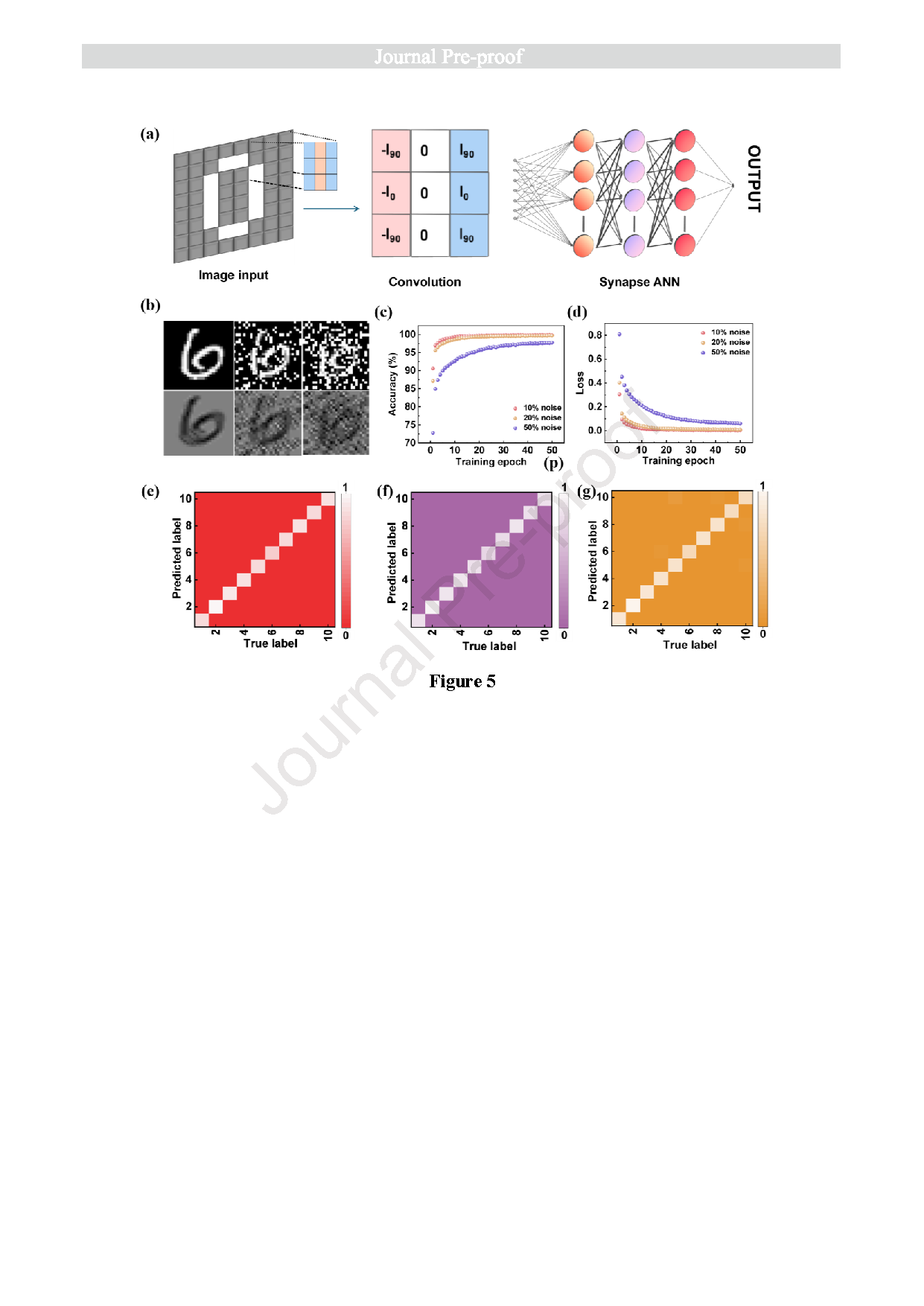
Convolution kernels are built using distinct synaptic responses under 0° / 90° polarization to realize image edge extraction, retaining recognition accuracy above 97% under 10%–50% heavy noise interference.
Conclusion
The resulting device showed clear polarization-dependent EPSC responses under 254 nm illumination and successfully emulated key synaptic functions, including learning, forgetting, tunable memory, and the transition from short-term to long-term memory, mainly enabled by oxygen-vacancy-mediated persistent photoconductivity. Moreover, the polarization-modulated synaptic response was exploited for neuromorphic visual processing, including reservoir-computing-based face recognition and convolution-kernel-assisted handwritten digit recognition. The system maintained high recognition accuracies of 99%, 99%, and 97% under 10%, 20%, and 50% salt-and-pepper noise, respectively. This work highlights β-Ga₂O₃ as a promising materials for integrated ultraviolet polarization perception, synaptic memory, and neuromorphic computing.
Project Support
This work was supported by the National Natural Science Foundation of China (No. 62304205, 62274148, 62374147, U23A20349), Zhejiang Provincial Natural Science Foundation of China (LQ24F040002), the Science Foundation of Zhejiang Sci-Tech University (25062169-Y), the Natural Science Foundation of Hangzhou (No. 2024SZRZDF040001).
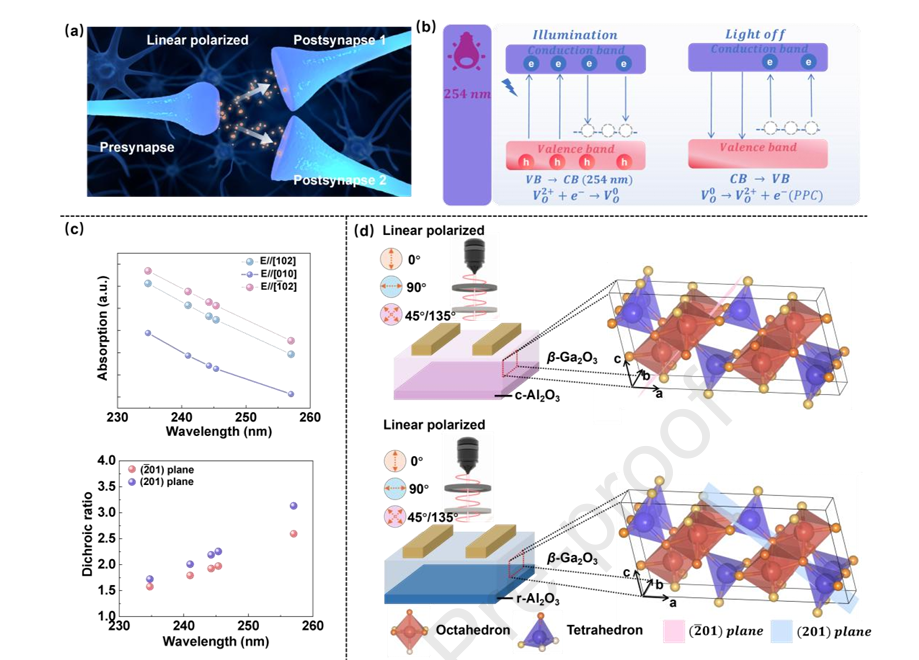
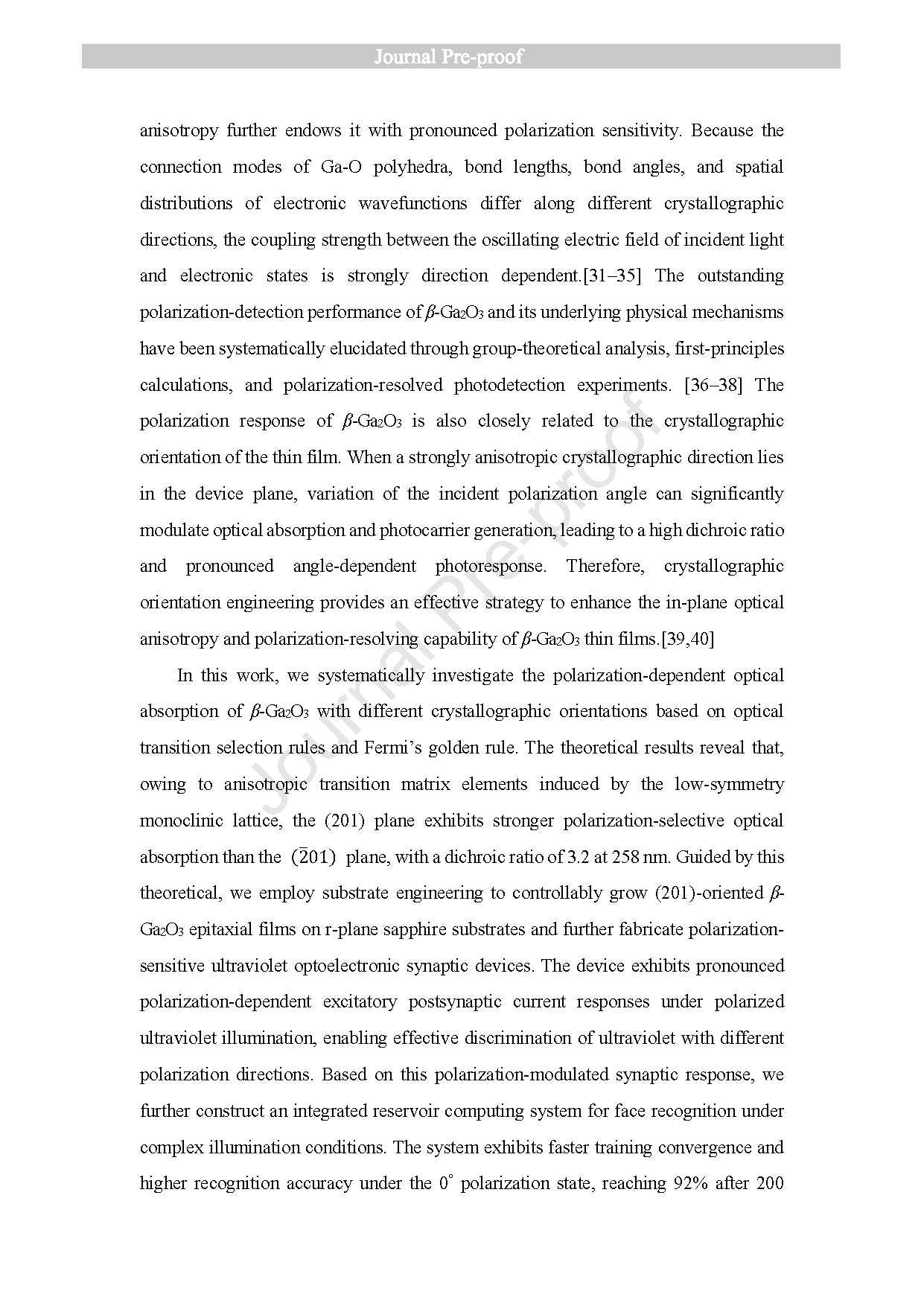
Figure 1 (a) Schematic illustration of polarization-sensitive neuromorphic vision inspired by biological synapses. (b) Oxygen-vacancy-mediated persistent photoconductivity effect band diagram in β-Ga₂O₃. (c) Calculated absorption and dichroic ratio curves of β-Ga₂O₃ with different crystallographic orientations. (d) Schematic illustration of substrate-engineered growth of β-Ga₂O₃ thin films with different orientations on different sapphire substrates
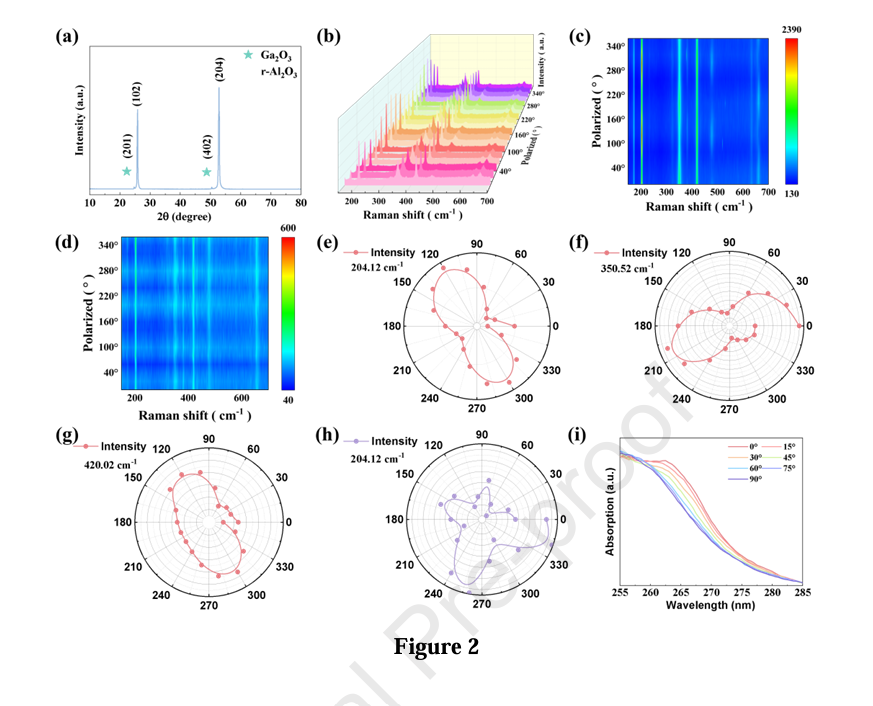
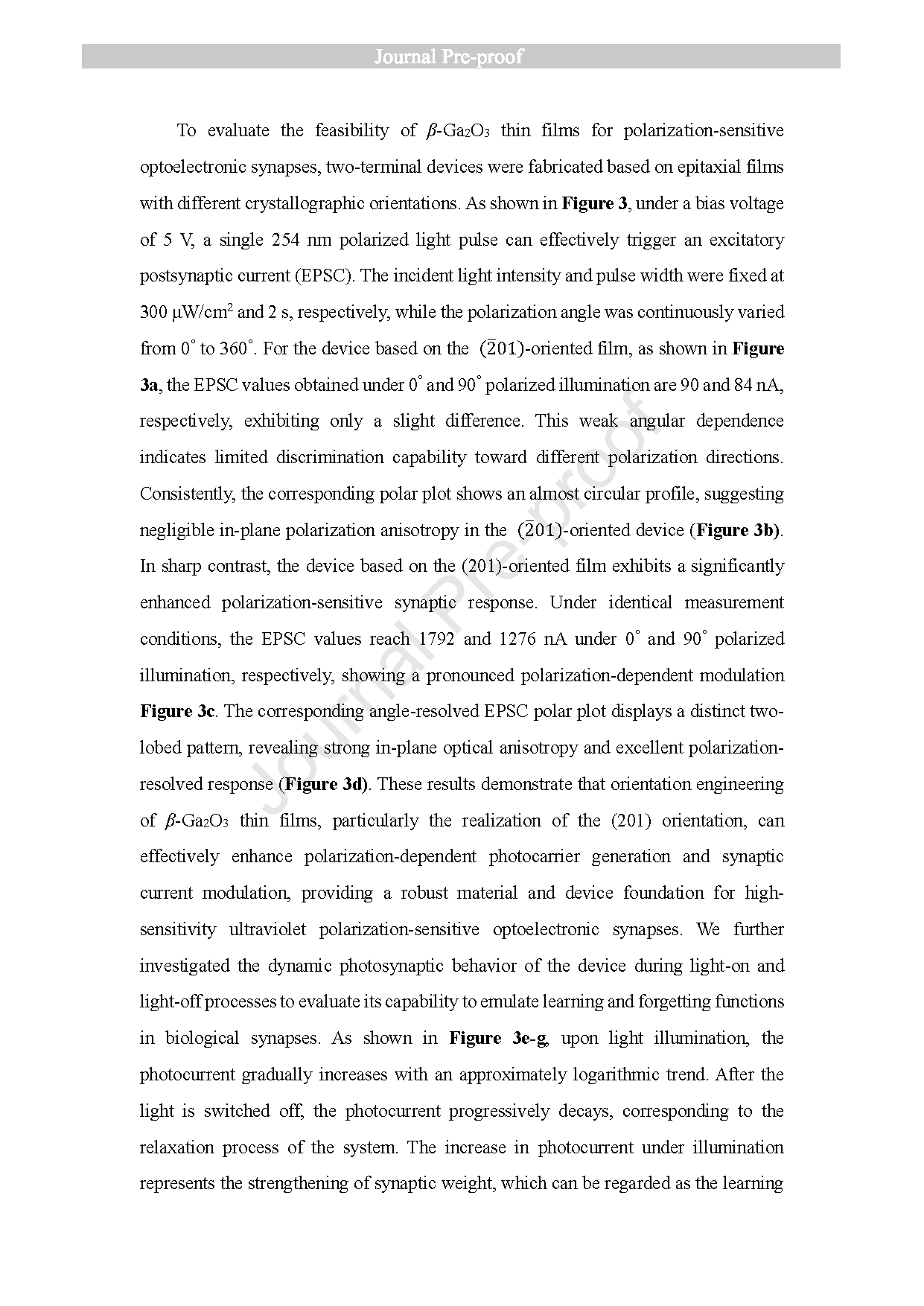
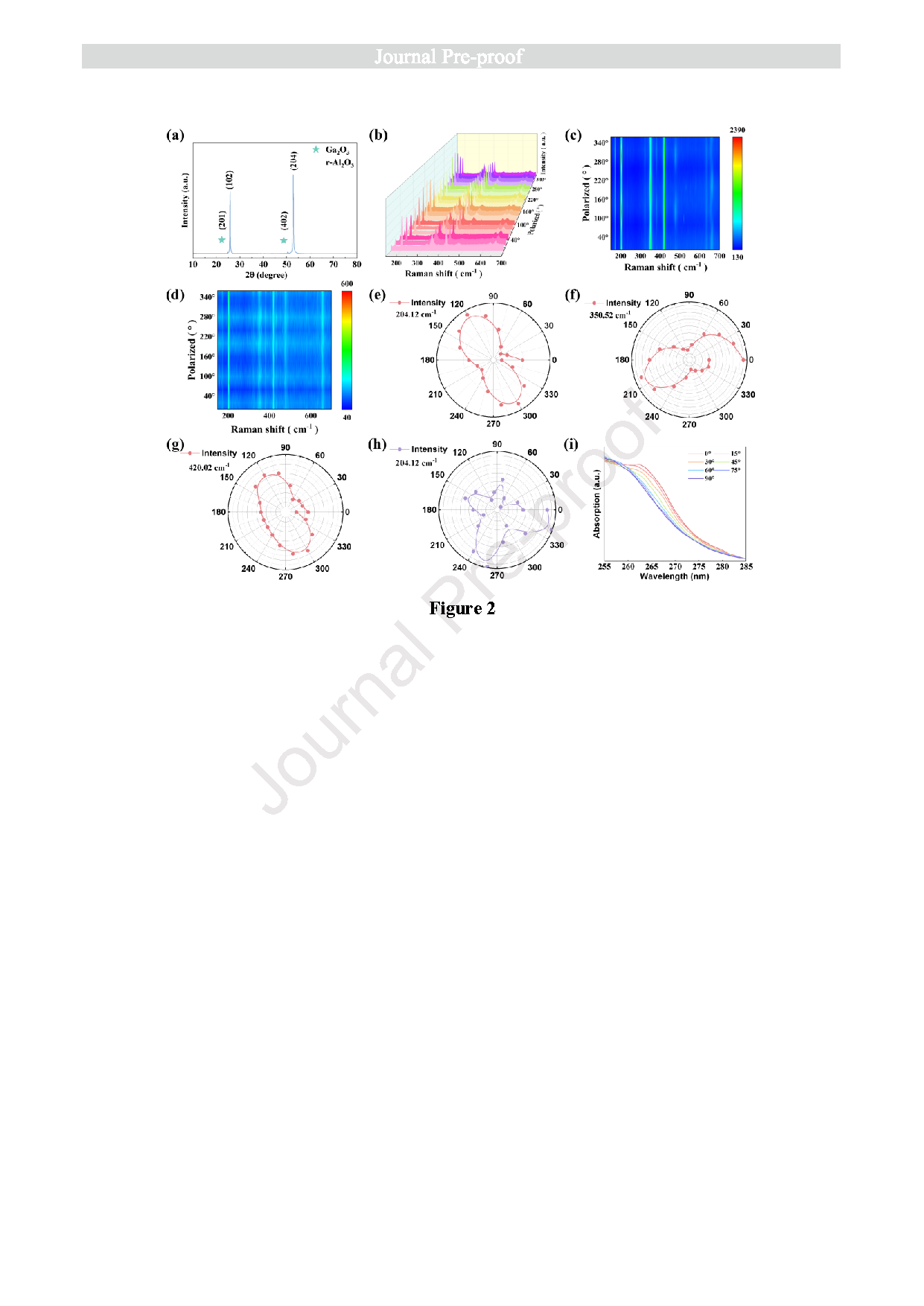
Figure 2 (a) XRD pattern of the β-Ga₂O₃ thin film grown on r-plane Al₂O₃. (b) Polarized Raman spectra of the β-Ga₂O₃ thin film. (c) and (d) Angle-resolved polarized Raman mapping images under parallel and cross-polarization configurations, respectively. (e)-(h) Corresponding polar plots of the Raman intensity under parallel and cross-polarization configurations, respectively. (i) Polarization-resolved absorption spectra of the β-Ga₂O₃ thin film
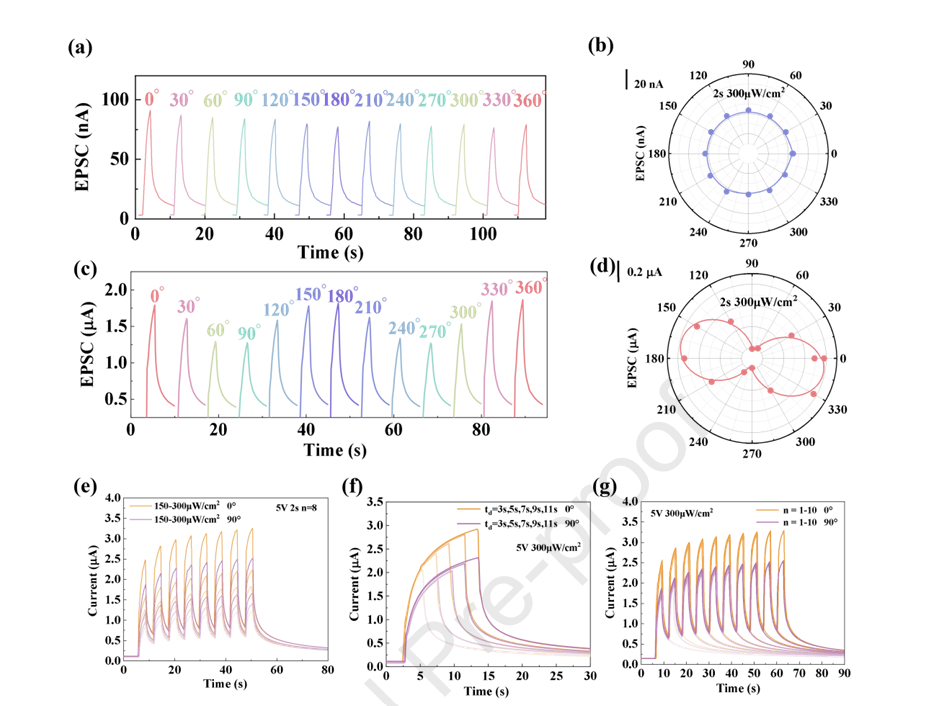
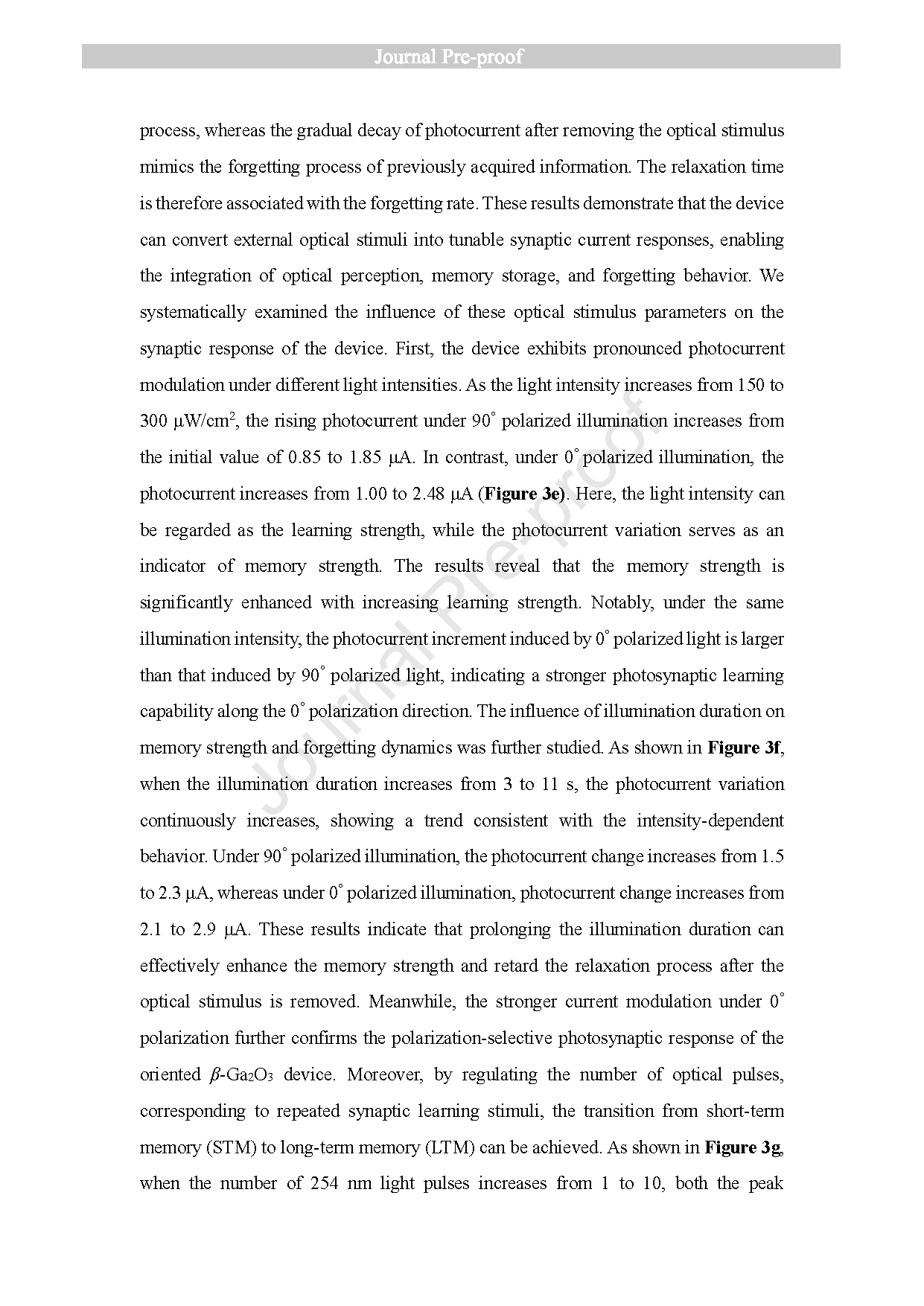
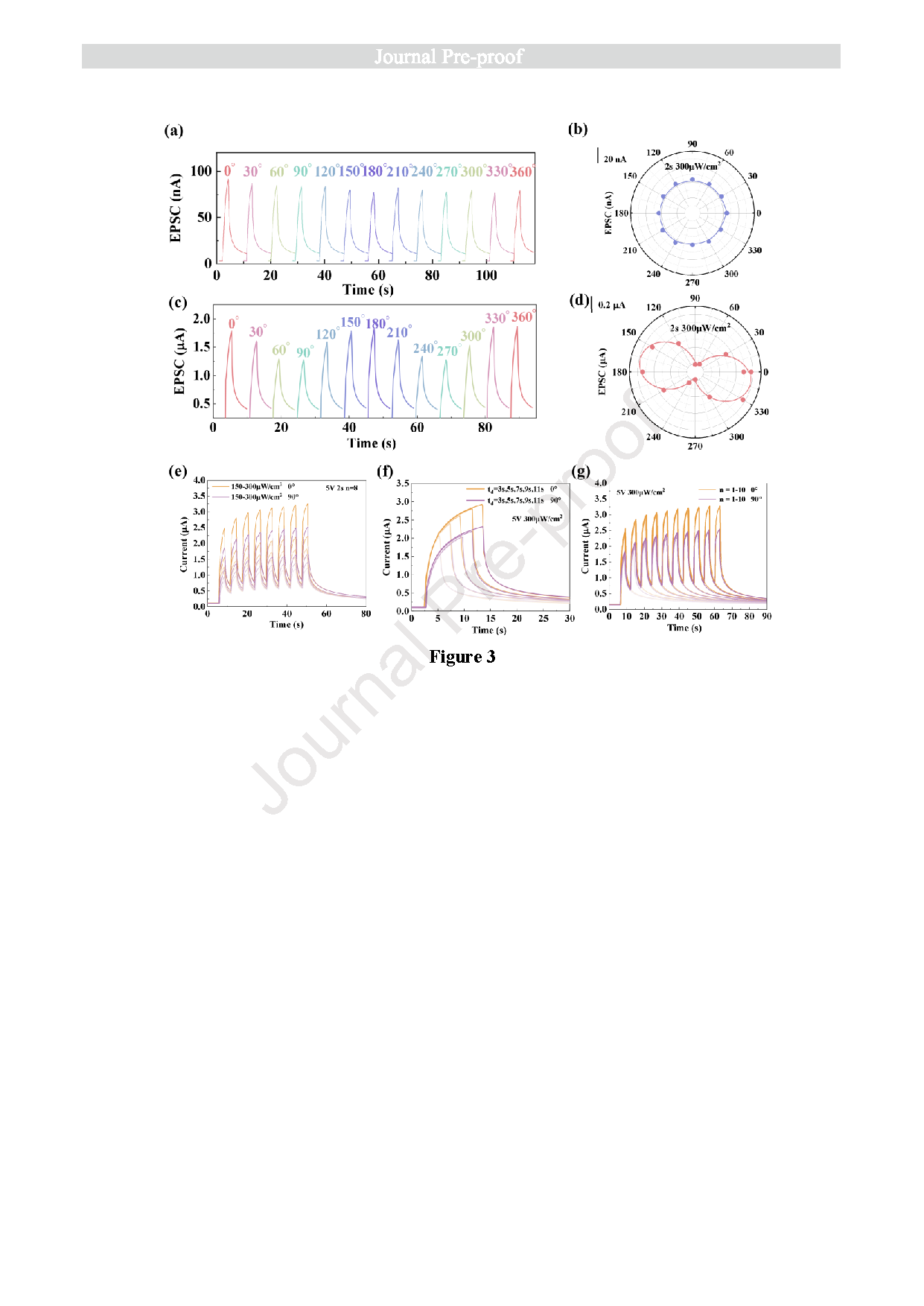
Figure 3 (a) and (b) EPSC responses and corresponding polar plot of the optoelectronic synapse based on the c-plane sapphire-derived β-Ga₂O₃ thin film under different polarization angles. (c) and (d) EPSC responses and corresponding polar plot of the optoelectronic synapse based on the r-plane sapphire-derived β-Ga₂O₃ thin film under different polarization angles. (e)-(g) EPSC responses of the r-plane sapphire-derived β-Ga₂O₃ optoelectronic synapse under different light intensities, pulse durations, and pulse numbers, respectively
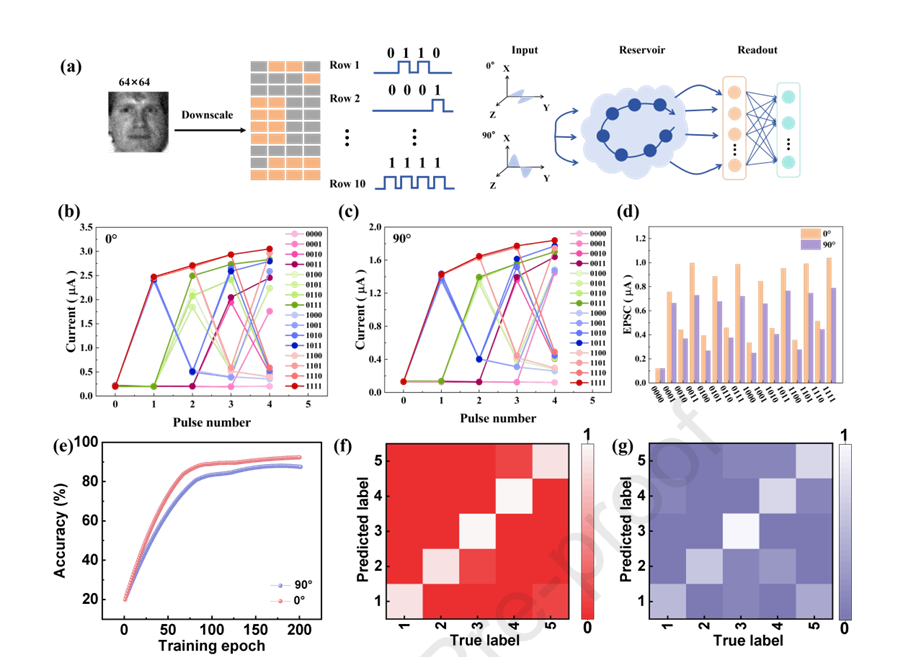
Figure 4 (a) Schematic diagram of the reservoir computing framework for face recognition. (b)-(d) EPSC responses and dynamic reservoir states induced by 4-bit optical pulse sequences under 0° and 90° polarized illumination. (e) Recognition accuracy evolution during training under 0° and 90° polarization states. (f) and (g) Polarization-dependent confusion matrices for face recognition under 0° and 90° polarized illumination, respectively
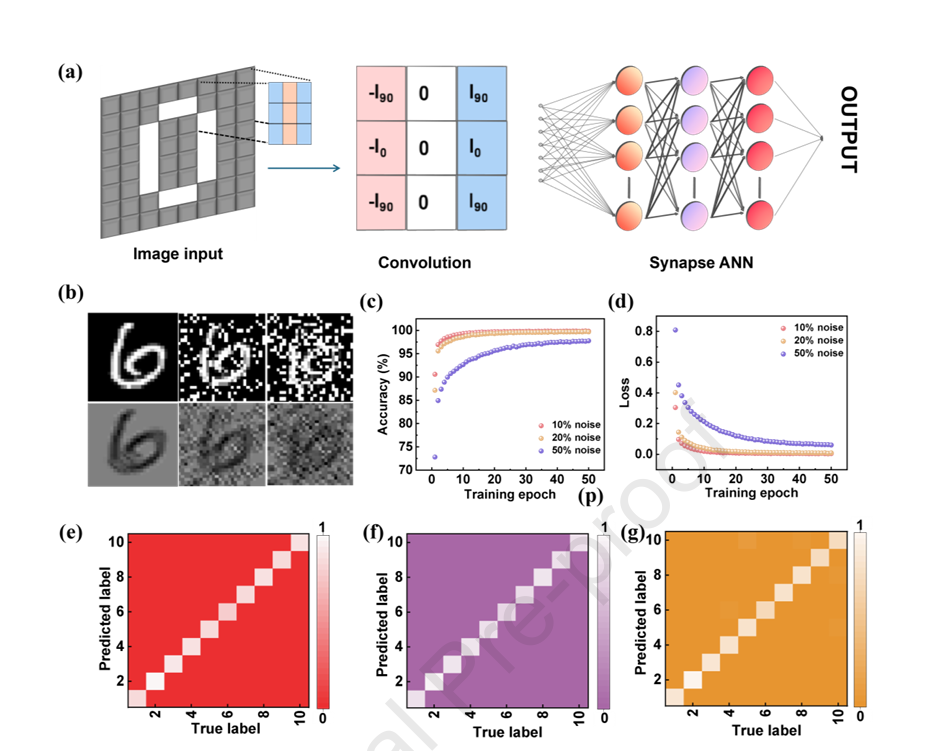
Figure 5 (a) Schematic diagram of the polarization-modulated convolution operation. (b) Comparison of noisy input images and the corresponding processed images after convolution under different noise levels. (c) and (d) Training accuracy and loss curves under different noise conditions. (e)-(g) Confusion matrices of handwritten digit recognition under representative noise conditions
DOI:
doi.org/10.1016/j.mtphys.2026.102176

Instruction
Official Account

Cooperation
Top