


Researchers from the Zhejiang University have published a dissertation titled "First-principles insight into electrical characteristics of rhodium in vertical Bridgman-grown β-Ga₂O₃ with experimental validation" in Journal of Applied Physics.
Background
β-Ga₂O₃, featuring an ultra‑wide bandgap of 4.9 eV and a high breakdown field of 8 MV/cm, is a promising semiconductor for next‑generation high‑power electronics and optoelectronics. Multiple bulk crystal growth approaches including casting, vertical Bridgman (VB), edge‑defined film‑fed growth (EFG), Czochralski (CZ) have been developed. The VB method enables good process control for large‑size high‑quality β-Ga₂O₃ production and provides cost benefits compared with EFG and CZ using iridium crucibles. Nevertheless, rhodium (Rh) from Pt‑Rh alloy crucibles diffuses into melt at high temperature and introduces unintentional doping. Reported Rh concentration in unintentionally doped VB‑grown β-Ga₂O₃ is about 30 ppm and induces pale‑yellow coloration. However, the electrical properties of Rh in β-Ga₂O₃remain controversial. Previous reports gave conflicting conclusions on Rh oxidation state and whether Rh acts as acceptor or donor. Existing theoretical work only focused on projected density of states without comprehensive consideration of defect charge states and local lattice configurations, which cannot correlate with experimental energy levels. Systematic combined theoretical‑experimental investigations are urgently required to clarify Rh impurity behaviors.
Abstract
The vertical Bridgman (VB) method is a promising approach for growing high-quality, large-sized β-Ga₂O₃ single crystals. However, rhodium (Rh) from the Pt-Rh alloy crucible can diffuse substantially into the melt during crystal growth, leading to unintentional doping of the crystal. Herein, first-principles calculations were performed to investigate the incorporation behavior and electronic effects of Rh impurities in β-Ga₂O₃. It was revealed that Rh preferentially occupies the octahedral Ga sites, exerting minimal influence on n-type or semi-insulating β-Ga₂O₃ but acting as a deep-level donor that may inhibit p-type conductivity. Experimental growth of both Fe- and Sn-doped 4-in. β-Ga₂O₃ crystals by the VB method yielded electrical conductivities comparable to crystals grown by other approaches, thereby validating the predicted electrical properties of Rh. Our study elucidates the electrical characteristics of Rh in β-Ga₂O₃ theoretically and experimentally, providing guidance for optimizing VB growth processes and advancing the fabrication of high-performance β-Ga₂O₃-based electronic devices.
Highlights
The team’s first-principles calculations revealed that Rh impurities preferentially substitute for Ga at the octahedral lattice site in β-Ga₂O₃, and this process is spontaneous under oxygen-rich conditions.
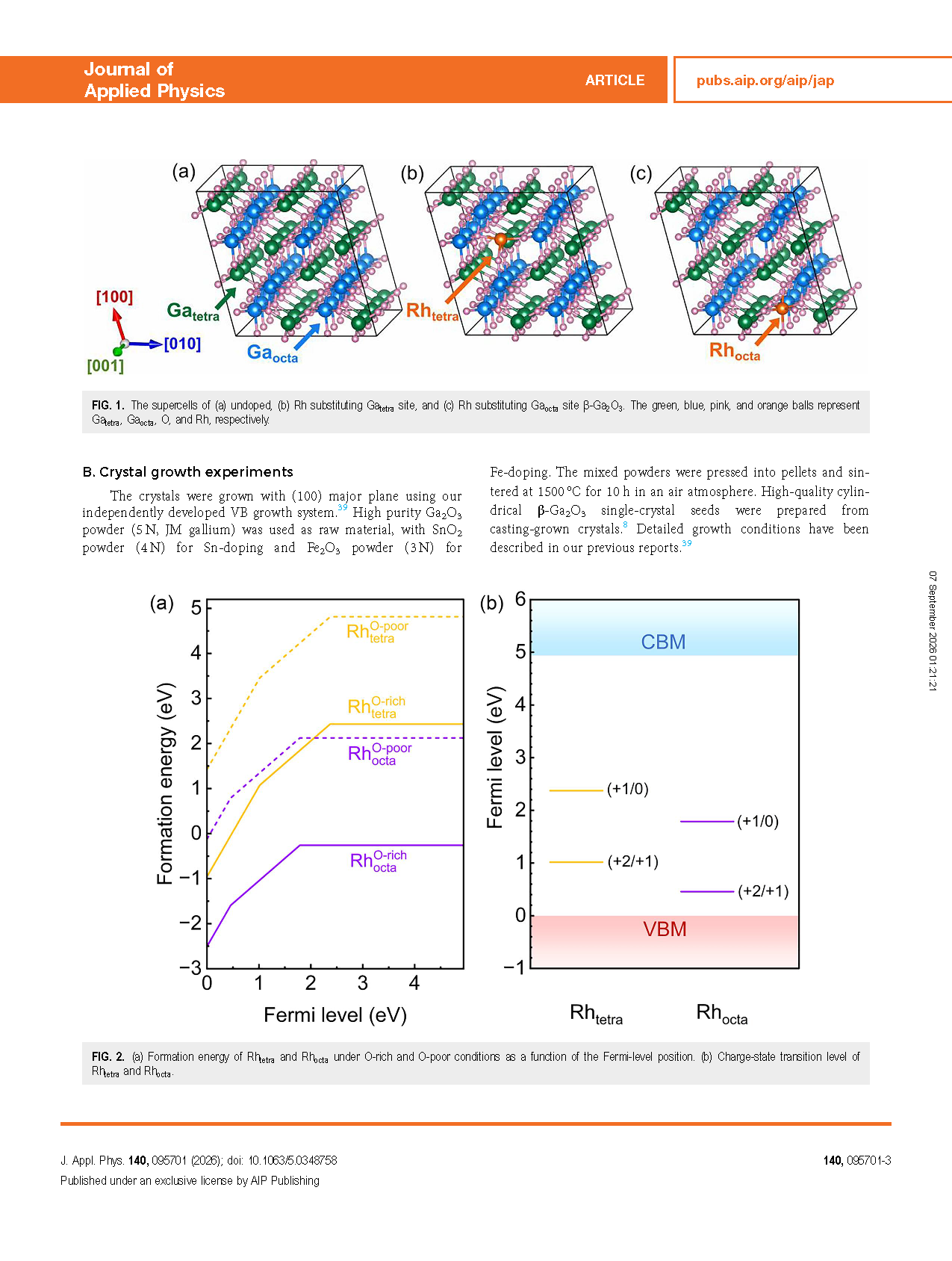
Rh exhibits no acceptor transition levels inside the bandgap. It maintains neutral charge state over a wide Fermi‑level range and imposes negligible impact on n‑type and semi‑insulating β-Ga₂O₃. As a deep‑level donor, Rh hinders p‑type conduction realization for β-Ga₂O₃.
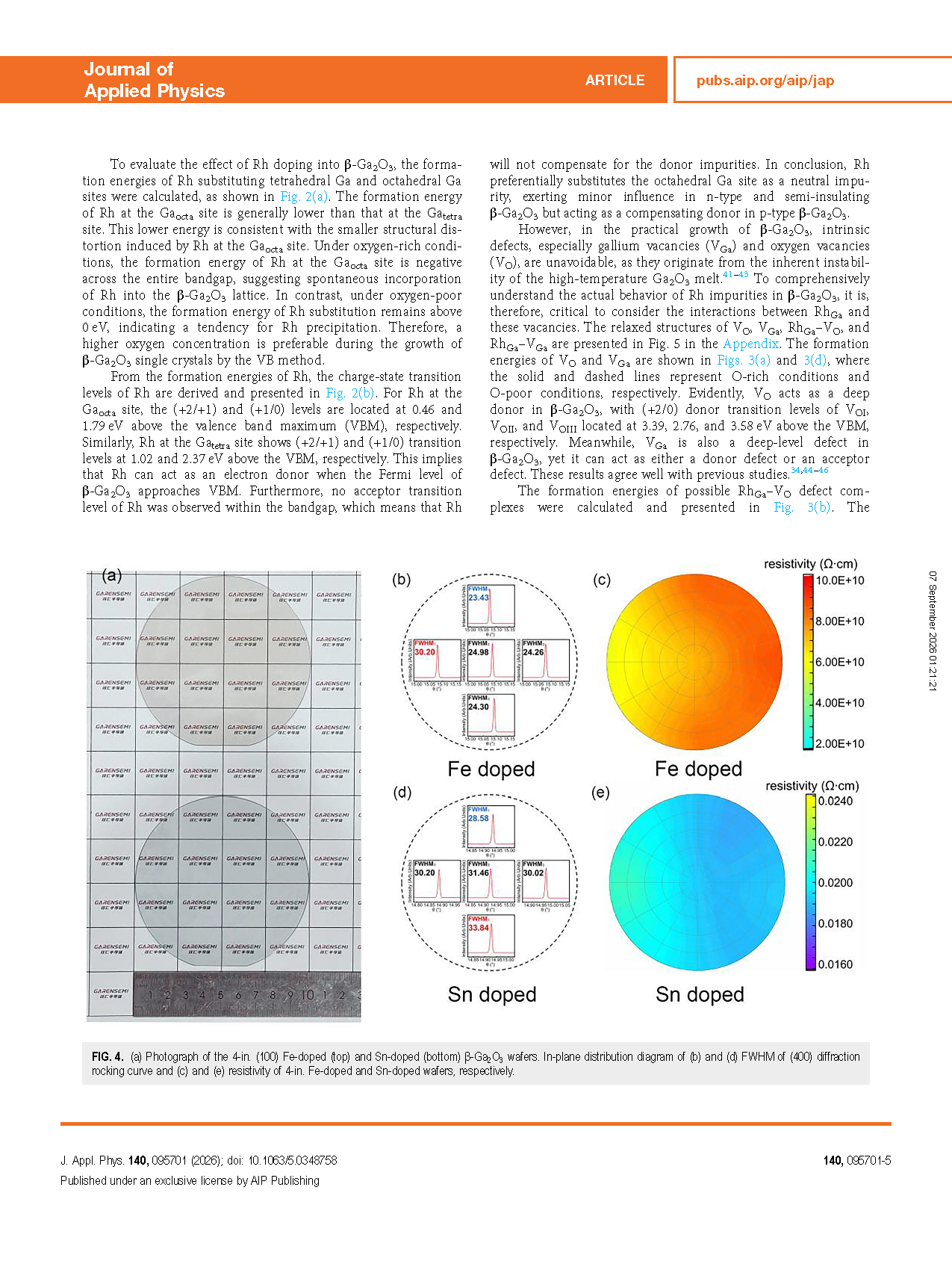
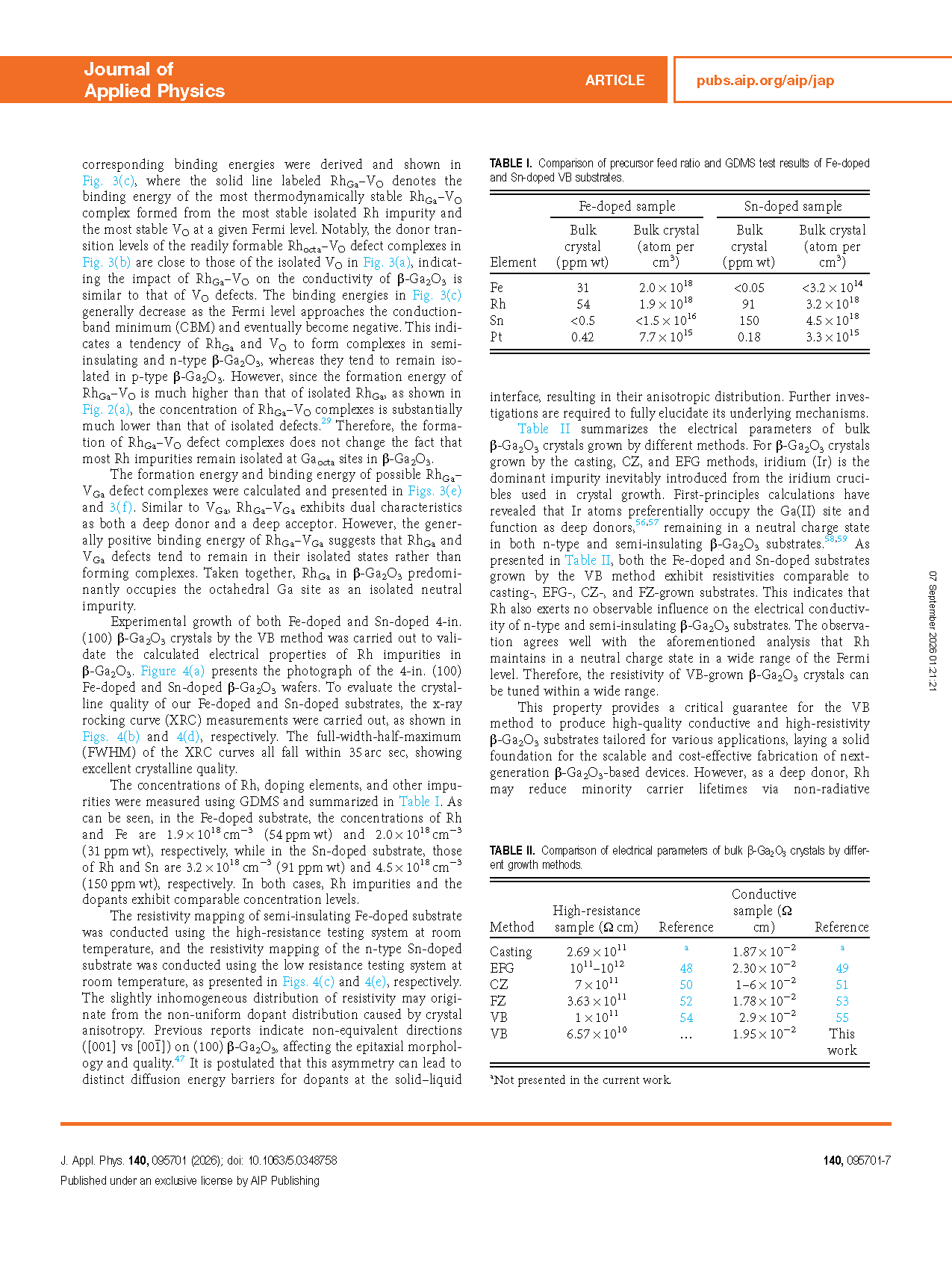
The team successfully grew 4-inch Fe-doped (semi-insulating) and Sn-doped (n-type) β-Ga₂O₃ crystals by the VB method. The resistivities of these crystals were comparable to those grown by casting, EFG, CZ, and FZ methods, directly validating the predicted electrical properties of Rh.
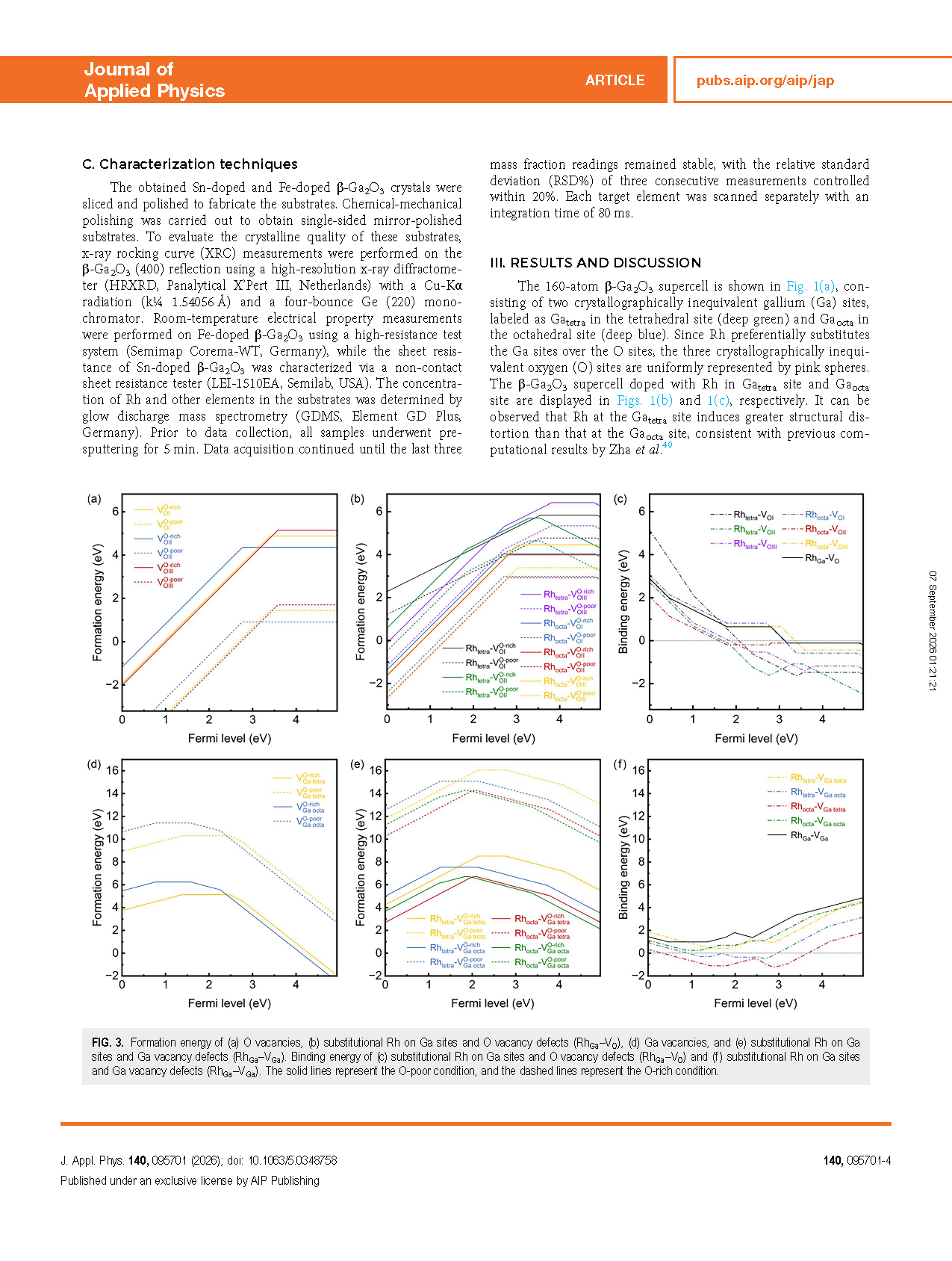
The team systematically investigated the interaction of Rh with intrinsic defects, such as oxygen vacancies (VO) and gallium vacancies (VGa). The results show that while RhGa and VO tend to form complexes under certain conditions, their concentration is much lower than isolated Rh impurities. Conversely, RhGaand VGa tend to remain isolated, further confirming that Rh predominantly exists as an isolated neutral impurity.
Conclusion
In summary, we report a thorough theoretical and experimental investigation of Rh impurities in β-Ga₂O₃ Through hybrid functional calculations, Rh was revealed to preferentially substitute the octahedral Ga sites with the (+1/0) transition level located at 1.79 eV above VBM and no acceptor transition level within the bandgap. This implies that Rh can remain at neutral charge state within a wide range of the Fermi level, exerting few influences on preparing semi-insulating or n-type β-Ga₂O₃ substrates. However, it is possibly detrimental to realizing p-type doping of β-Ga₂O₃. Experimental growth of both Fe-doped and Sn-doped 4-in. β-Ga₂O₃ crystals by the VB method yielded electrical properties comparable to casting, EFG, CZ, and FZ-grown crystals, thereby validating the predicted electrical characteristics of Rh. However, the deep donor behavior of Rh may introduce non-radiative recombination centers in devices, requiring further investigations to minimize the out-diffusion of Rh during epitaxy growth and device fabrication. Our study advances the understanding of Rh impurities in β-Ga₂O₃, providing theoretical guidance to the development of β-Ga₂O₃ materials and devices.
Project Support
This work was supported by the National Key Research and Development Program of China (No. 2024YFE0205300), National Natural Science Foundation of China (NSFC) (No. 22205203), Zhejiang Provincial Postdoctoral Research Project Excellence Funding (No. ZJ2024079), Natural Science Foundation of Zhejiang (No. LZ25E070001), National Program for Support of Top-notch Young Professionals, Leading Innovative and Entrepreneur Team Introduction Program of Hangzhou (No. TD2022012)
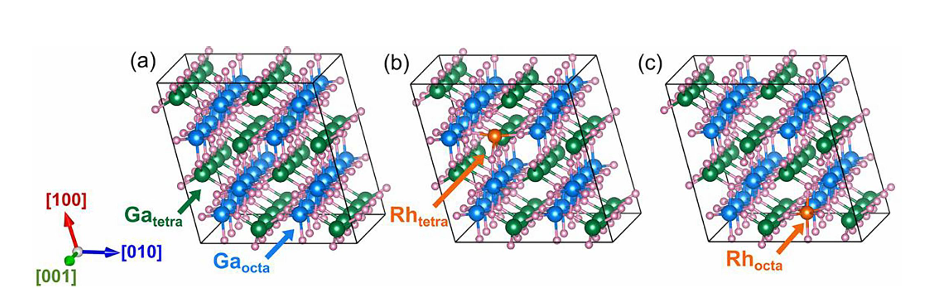
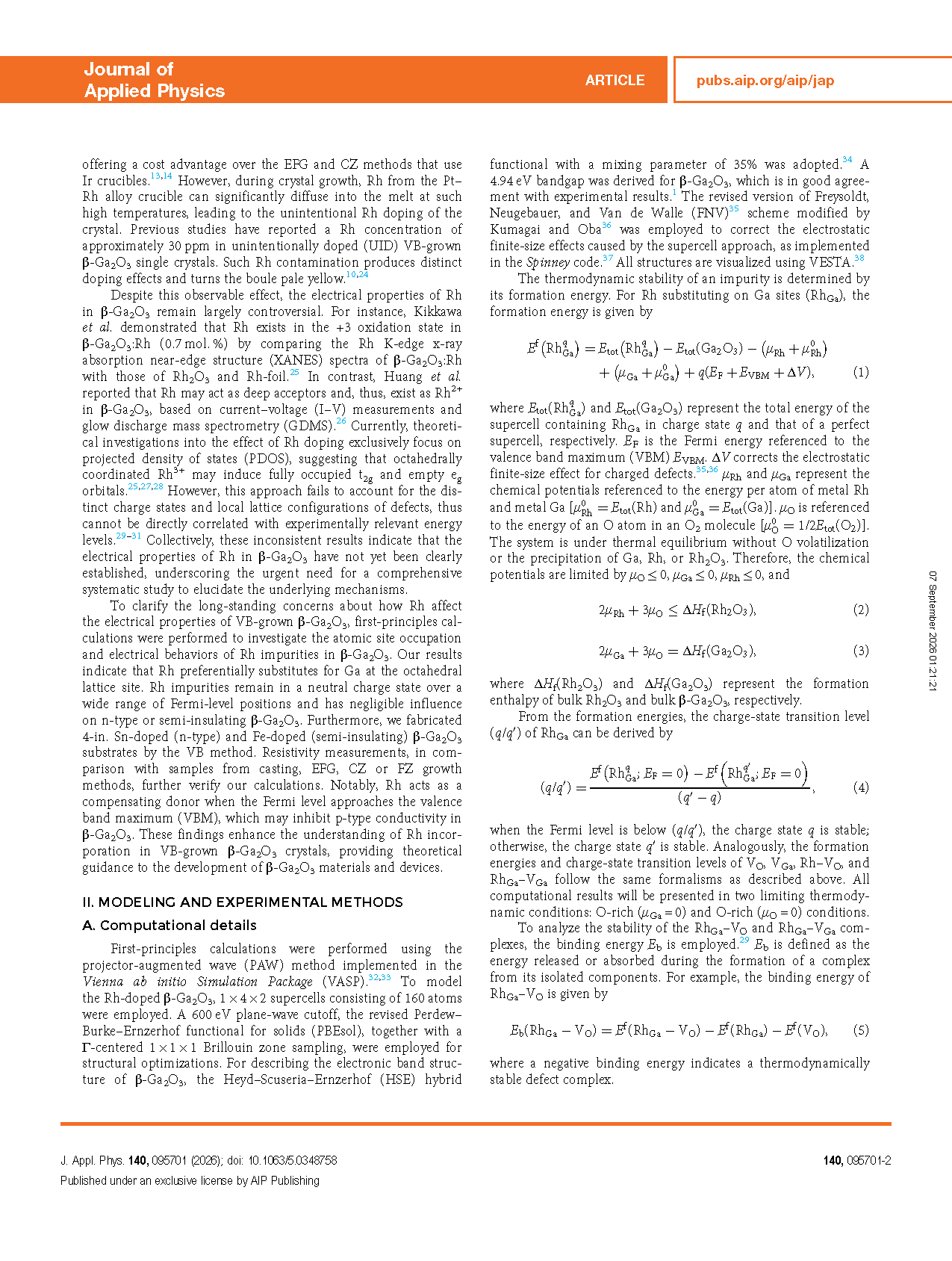
FIG. 1. The supercells of (a) undoped, (b) Rh substituting Gatetra site, and (c) Rh substituting Gaocta site β-Ga₂O₃. The green, blue, pink, and orange balls represent Gatetra ,Gaocta ,O, and Rh,respectively.
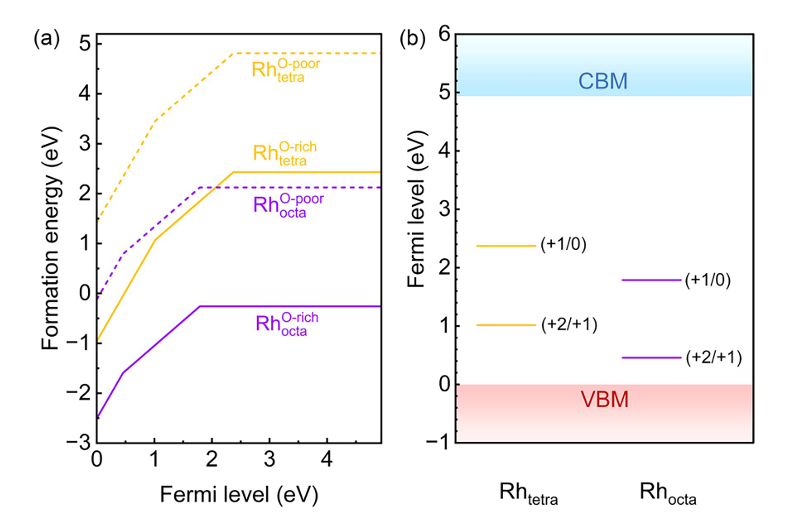
FIG. 2. (a) Formation energy of Rhtetra 和 Rhocta under O-rich and O-poor conditions as a function of the Fermi-level position. (b) Charge-state transition level of Rhtetra 和 Rhocta.
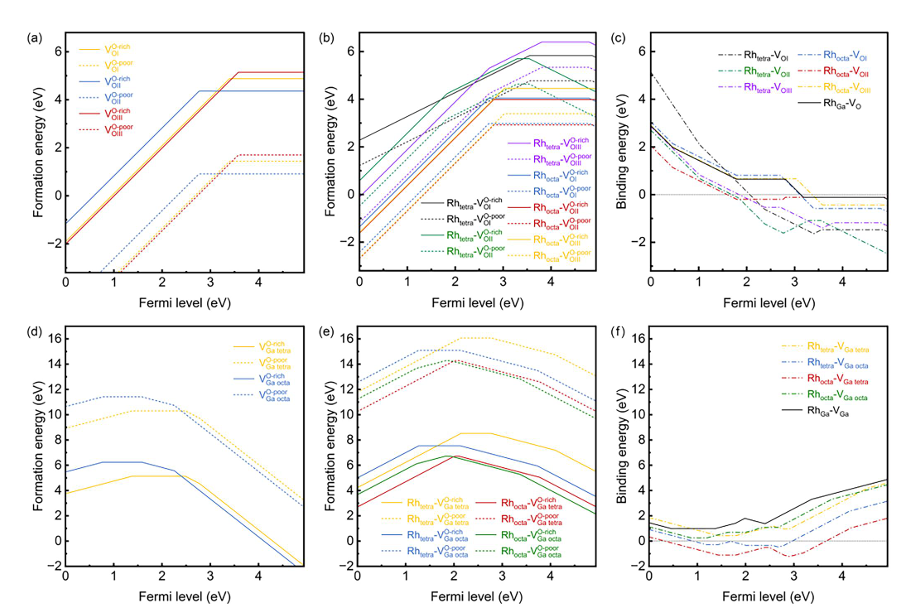
FIG. 3. Formation energy of (a) O vacancies, (b) substitutional Rh on Ga sites and O vacancy defects (RhGa-VO), (d) Ga vacancies, and (e) substitutional Rh on Ga sites and Ga vacancy defects(RhGa-VGa). Binding energy of (c) substitutional Rh on Ga sites and O vacancy defects (RhGa-VO) and (f) substitutional Rh on Ga sites and Ga vacancy defects (RhGa-VGa). The solid lines represent the O-poor condition, and the dashed lines represent the O-rich condition.
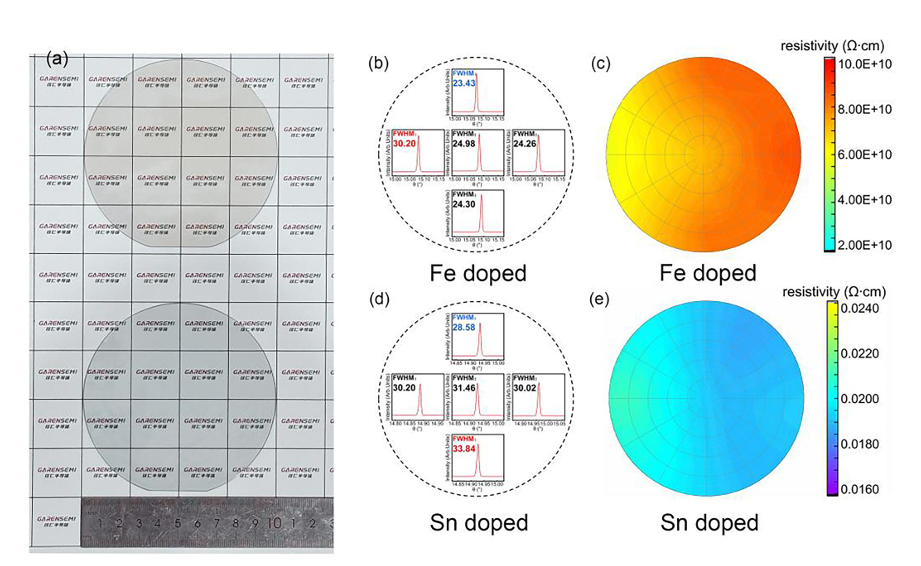
FIG. 4. (a) Photograph of the 4-in. (100) Fe-doped (top) and Sn-doped (bottom) β-Ga₂O₃ wafers. In-plane distribution diagram of (b) and (d) FWHM of (400) diffraction rocking curve and (c) and (e) resistivity of 4-in. Fe-doped and Sn-doped wafers, respectively.
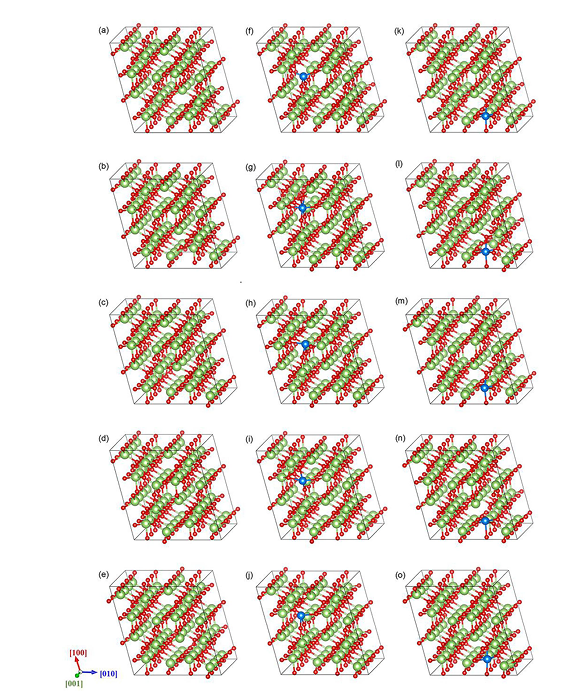
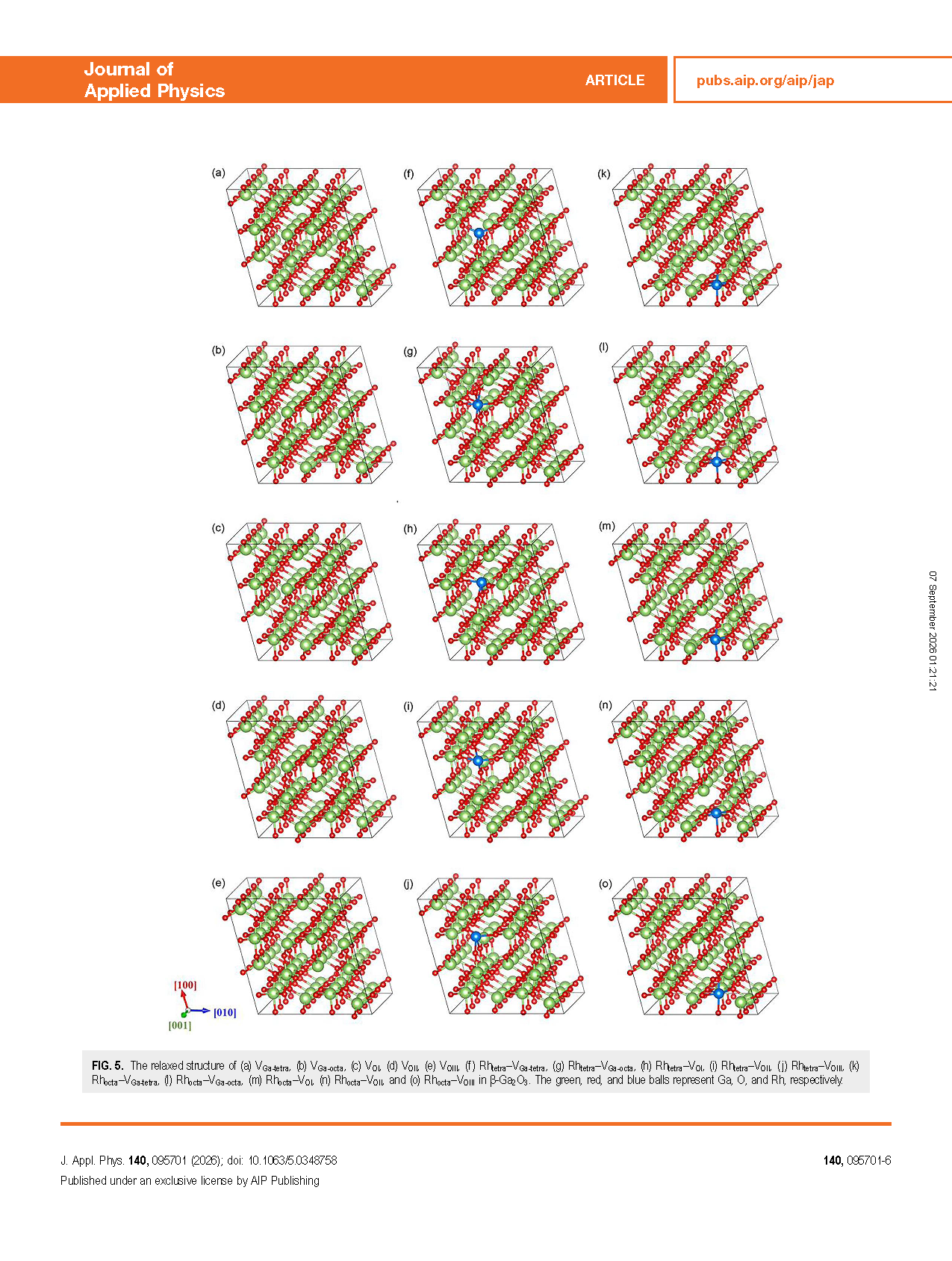
FIG. 5. The relaxed structure of (a) VGa-tetra, (b) VGa-octa, (c) VOI, (d) VOII, (e) VOIII, (f) Rhtetra–VGa-tetra, (g) Rhtetra–VGa-octa, (h) Rhtetra–VOI, (i) Rhtetra–VOII, (j) Rhtetra–VOIII, (k) Rhocta–VGa-tetra, (l) Rhocta–VGa-octa, (m) Rhocta–VOI, (n) Rhocta–VOII, and (o) Rhocta–VOIII in β-Ga2O3. The green, red, and blue balls represent Ga, O, and Rh, respectively.
DOI:
10.1063/5.0348758
Instruction
Official Account

Cooperation
Top