


A research team led by Professor Tao Xu from Southeast University has published a research article in Nano Research entitled “Synergistic photovoltaic-pyroelectric coupling in a Ga₂O₃/BaTiO₃ heterojunction for highly sensitive solar-blind ultraviolet photodetection.” The study develops a Ga₂O₃/BaTiO₃ heterojunction photodetector that synergistically couples photovoltaic and pyroelectric effects by leveraging the type-II band alignment of the heterojunction and the spontaneous polarization of BaTiO₃. The researchers elucidate how light-induced modulation of pyroelectric polarization dynamically regulates the interfacial built-in electric field and carrier separation. This work provides new insights into the design of highly sensitive, self-powered solar-blind ultraviolet photodetectors.
Background
Solar-blind ultraviolet (UV) photodetection is of significant importance in applications such as flame monitoring, corona discharge detection in power systems, missile warning, space communication, and high-temperature industrial process monitoring. The solar-blind UV region (approximately 200–280 nm) is strongly absorbed by atmospheric ozone, resulting in minimal solar background radiation and making it a key spectral range for UV detection. Gallium oxide (Ga₂O₃), with its wide bandgap of approximately 4.9 eV, excellent UV response characteristics, and good environmental stability, is a promising candidate for solar-blind UV photodetectors. However, conventional Ga₂O₃ photodetectors still face challenges, including insufficient photogenerated carrier separation and transport efficiency, a trade-off between response speed and photoconductive gain, and the need for improved low-power and self-powered operation. Therefore, introducing new physical modulation mechanisms to achieve efficient separation and dynamic regulation of photogenerated carriers while retaining the intrinsic advantages of Ga₂O₃ is an important approach to further improving solar-blind UV photodetection performance.
Abstract
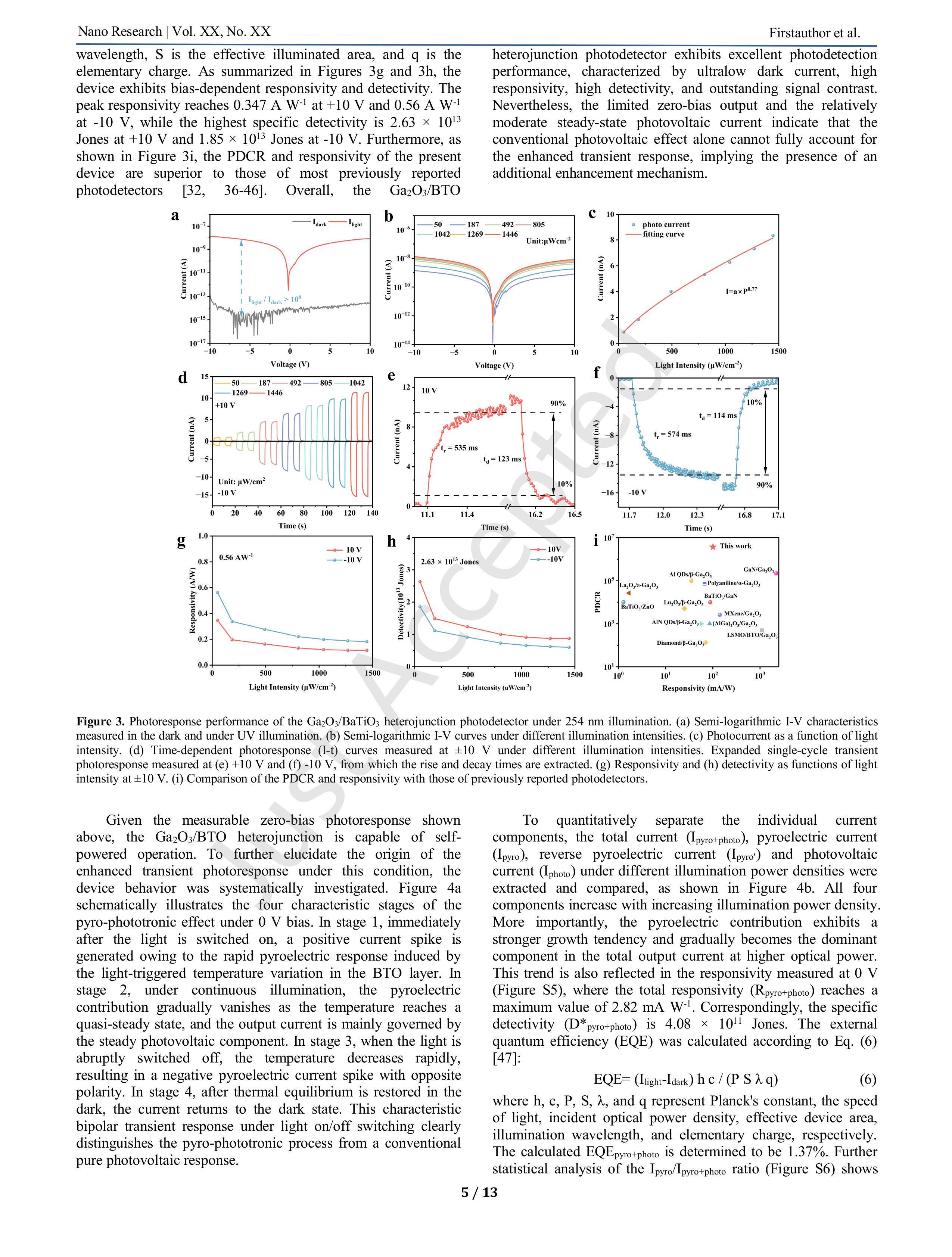
This study develops a Ga₂O₃/BaTiO₃ (BTO) heterojunction photodetector that enables highly sensitive, self-powered detection of transient optical events through the synergistic coupling of photovoltaic and pyroelectric effects. Benefiting from the type-II band alignment of the heterojunction and the spontaneous polarization of BTO, the device exhibits an ultralow dark current on the order of 10⁻¹³A, a photo-to-dark current ratio exceeding 10⁶, and a specific detectivity of 2.63 × 10¹³ Jones. Under zero-bias and low-bias conditions, light-induced modulation of pyroelectric polarization generates pronounced bipolar transient current pulses, making a significant contribution to the self-powered photoresponse. Furthermore, the pyroelectric field dynamically enhances interfacial carrier separation, thereby further improving the overall photoresponse of the device. This study provides a promising approach to developing intelligent solar-blind ultraviolet photodetection systems that integrate event-driven detection, self-powered operation, and hardware-level information security.
Highlights
Construction of a photovoltaic–pyroelectric coupled Ga₂O₃/BaTiO₃ heterojunction. By combining the solar-blind ultraviolet response of Ga₂O₃ with the polarization and pyroelectric properties of BaTiO₃, this work expands the available modulation strategies for conventional heterojunction photodetectors.
Investigation of the dynamic modulation of the interfacial electric field by pyroelectric polarization. Temperature variations induced by illumination are used to modulate the polarization state of BaTiO₃. Their effects on the interfacial potential distribution and photogenerated carrier separation are analyzed, elucidating the coupling between the photovoltaic and pyroelectric effects.
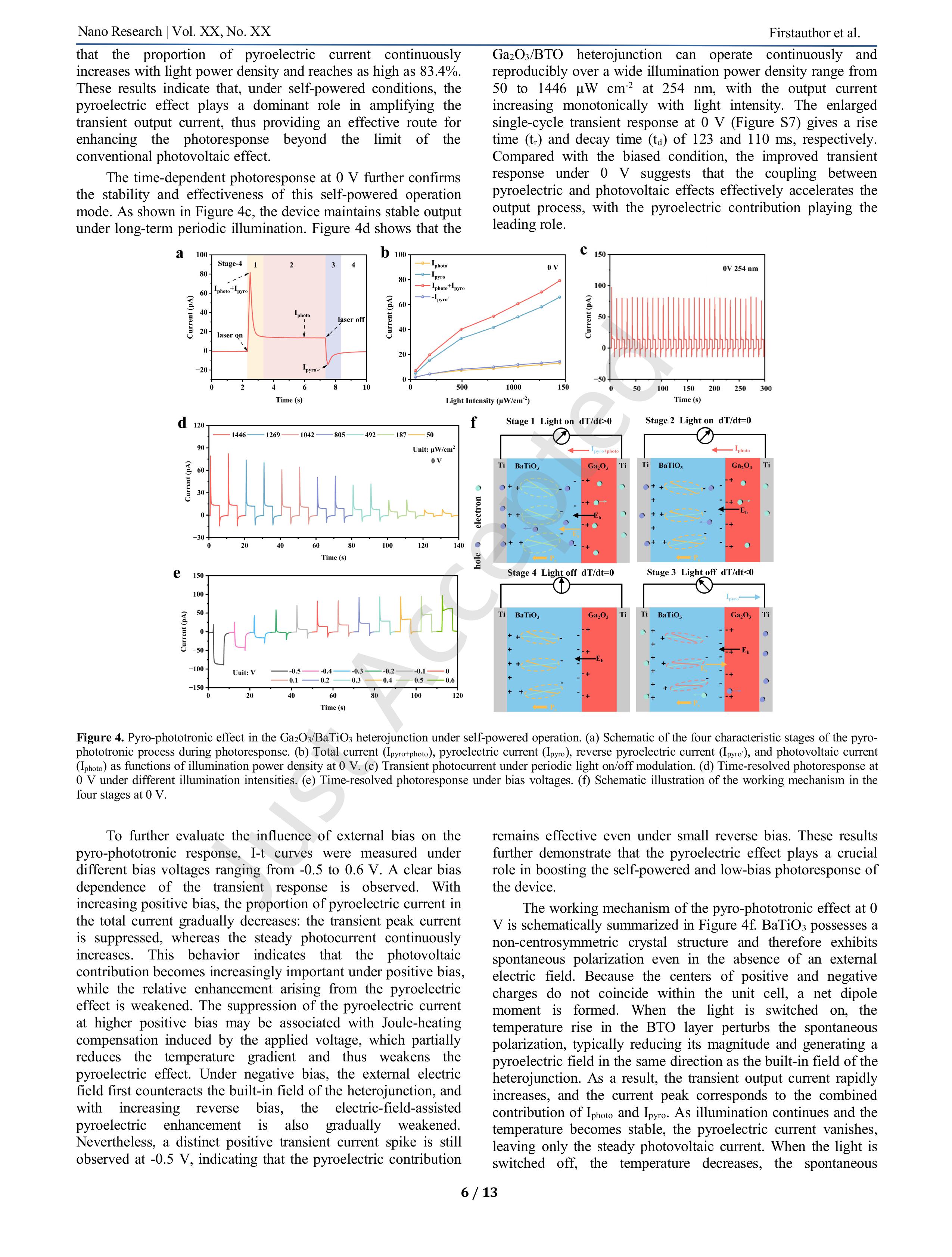
Elucidation of the synergistic contributions of photovoltaic and pyroelectric effects to the zero-bias transient photoresponse. By analyzing the transient photocurrent behavior of the device, this work investigates how the two physical effects contribute to photoresponse generation, providing experimental evidence to guide the design of polarization-engineered, self-powered solar-blind ultraviolet photodetectors.
Conclusion
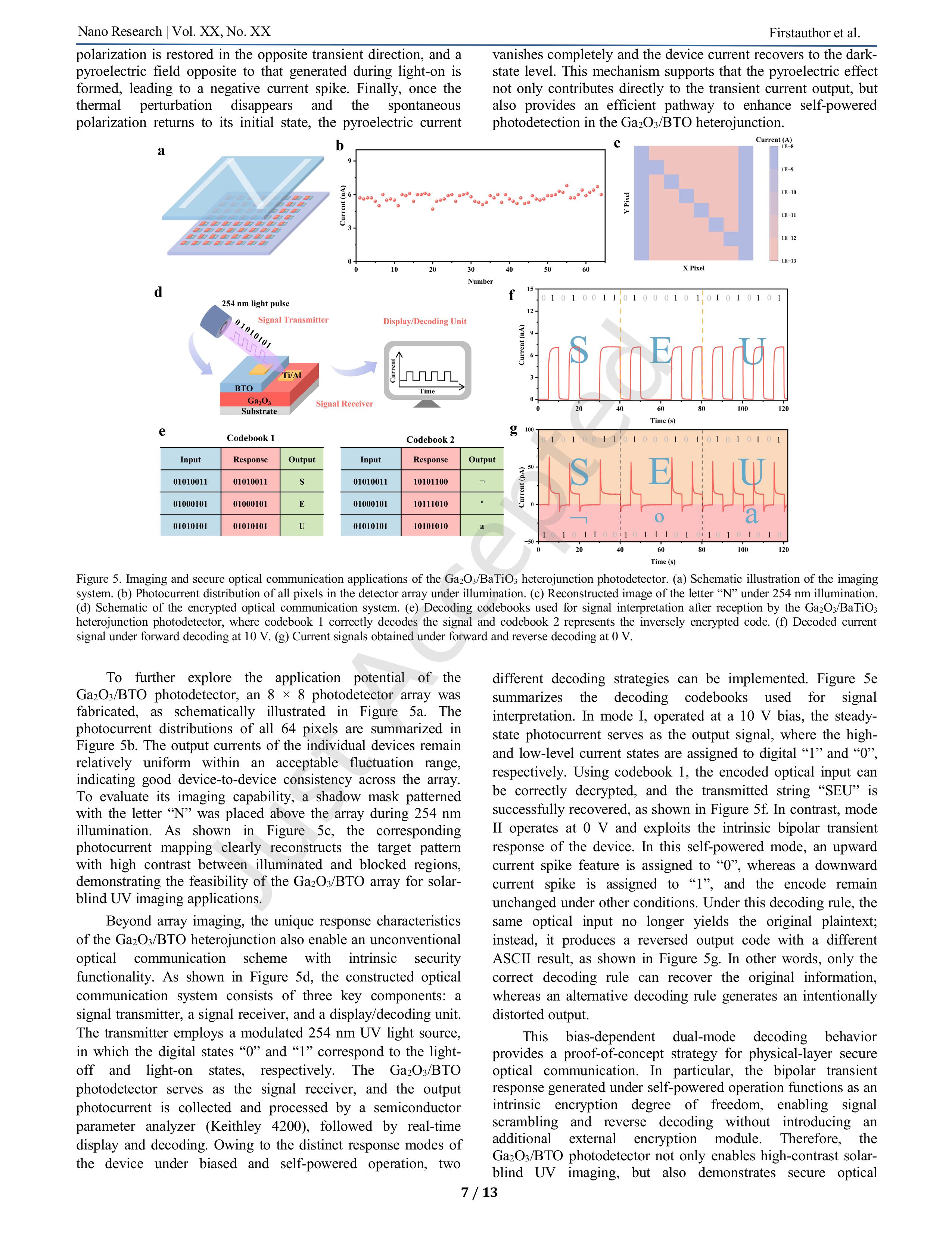
This study develops a Ga₂O₃/BaTiO₃ heterojunction photodetector that synergistically integrates photovoltaic and pyroelectric effects by leveraging the type-II band alignment and spontaneous polarization of BaTiO₃. The dynamic modulation of the interfacial built-in electric field and carrier separation by pyroelectric polarization is elucidated, enabling transient ultraviolet detection under zero-bias conditions. The device is further demonstrated for array imaging and secure optical communication, providing new insights into the design of multifunctional, multiphysics-coupled solar-blind ultraviolet photodetectors.
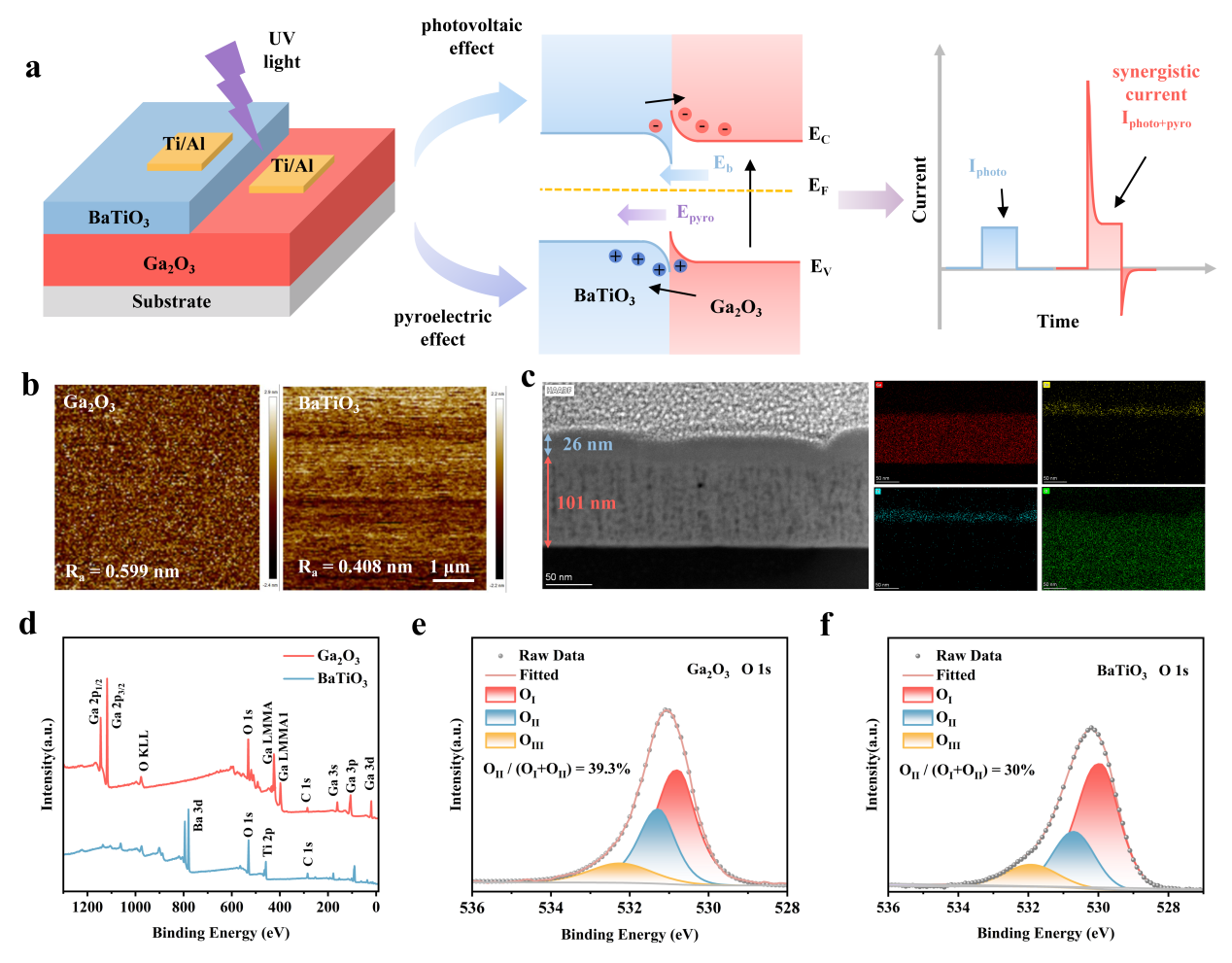
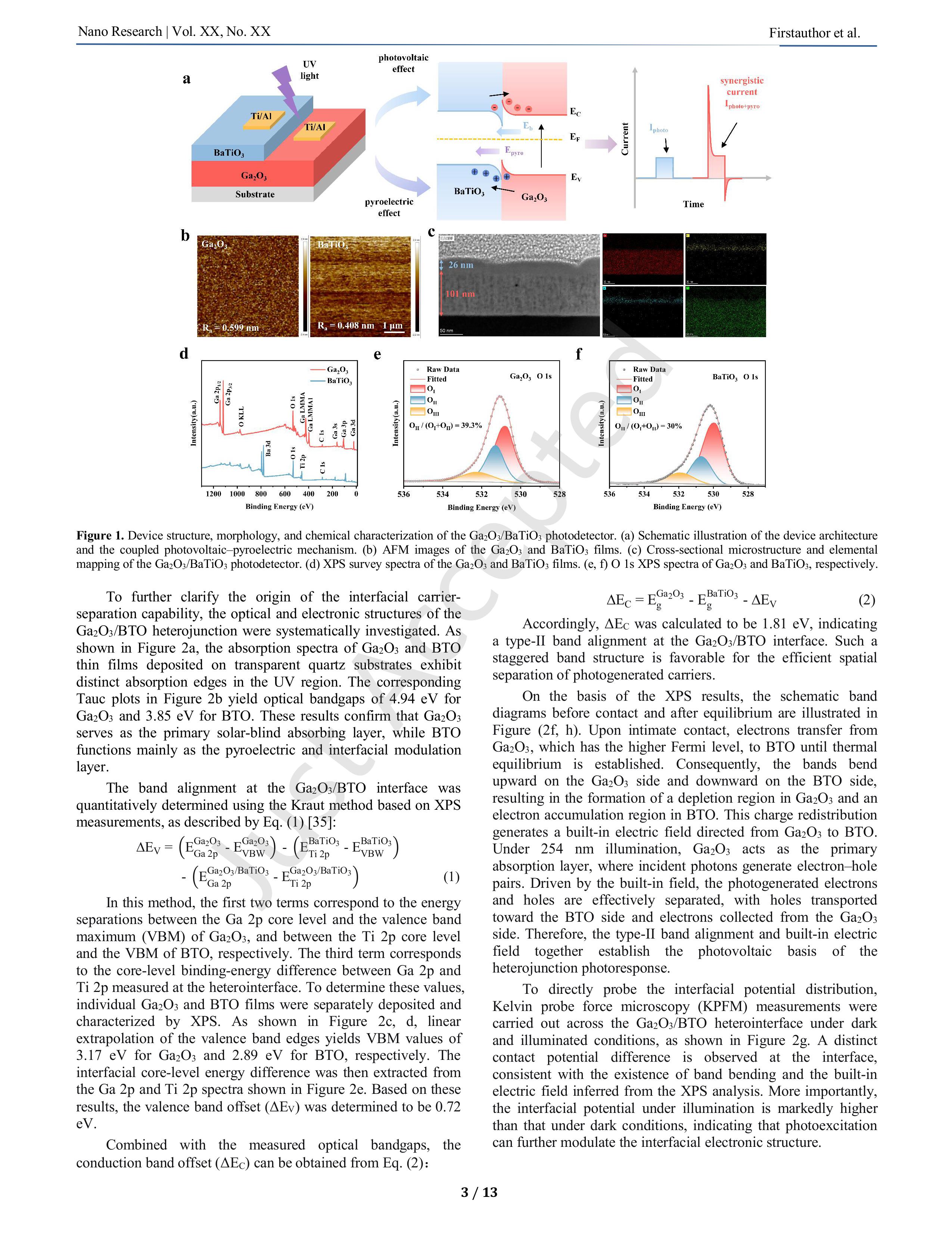
Figure 1. Device structure, morphology, and chemical characterization of the Ga₂O₃/BaTiO₃ photodetector.
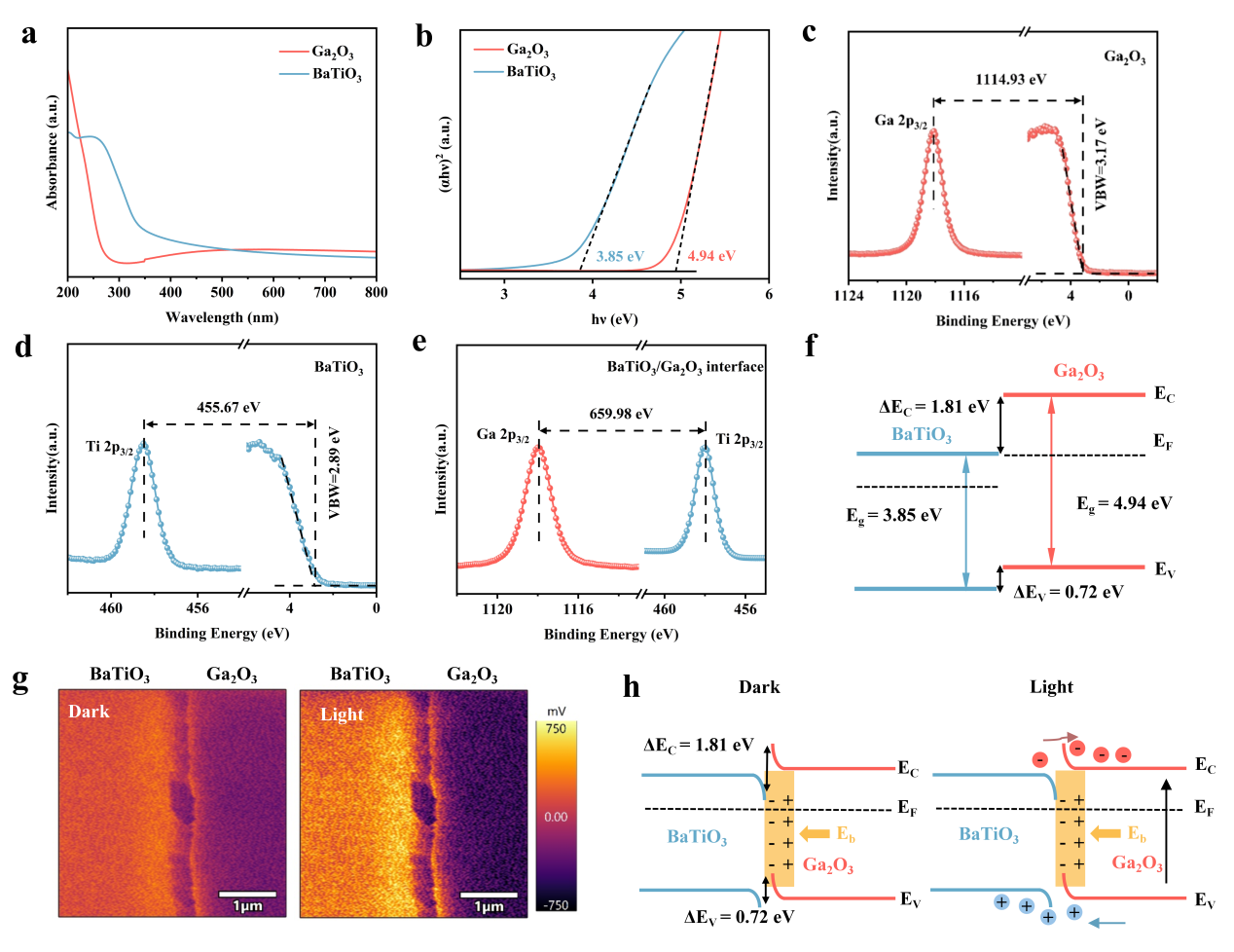
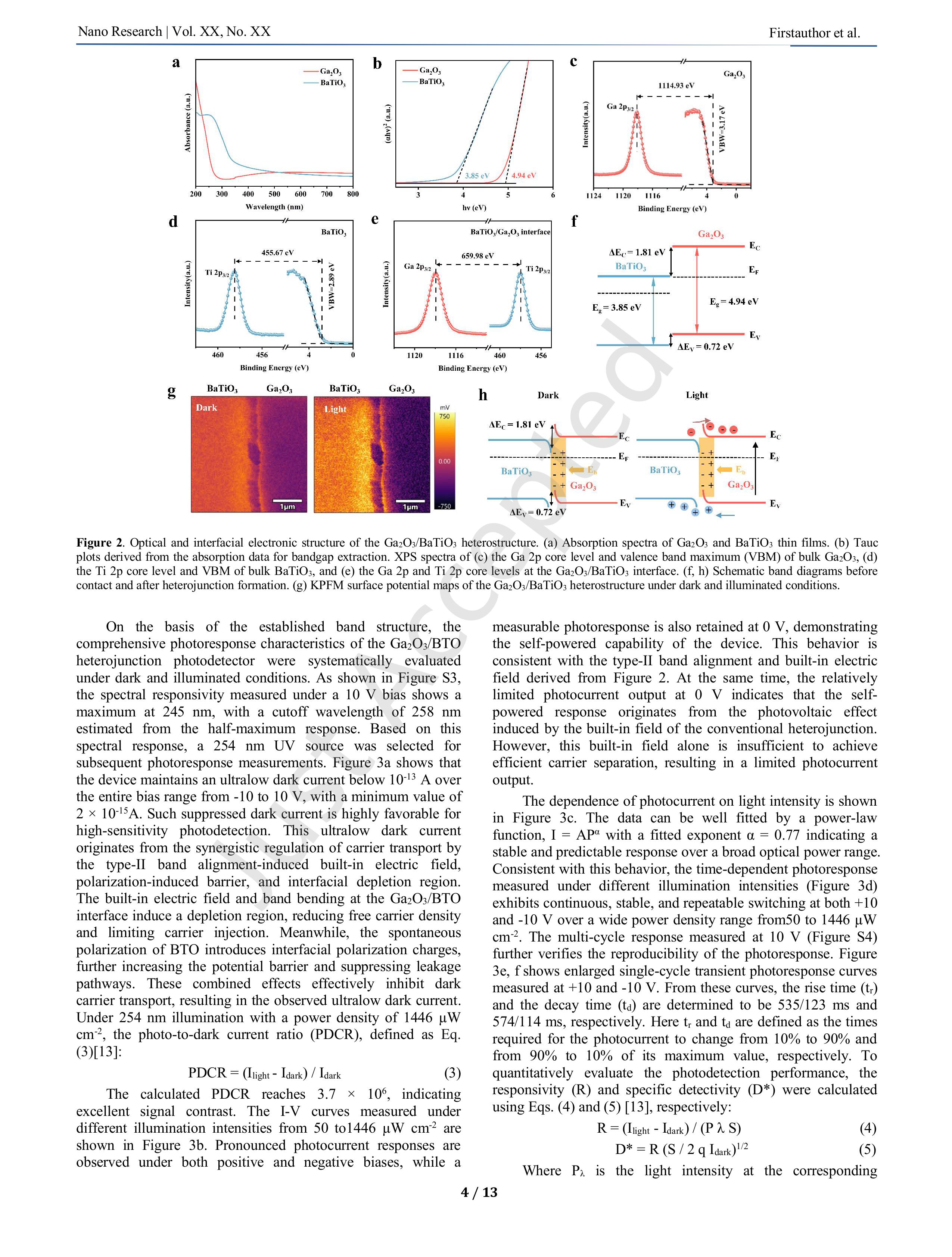
Figure 2. Optical and interfacial electronic structure of the Ga₂O₃/BaTiO₃ heterostructure.
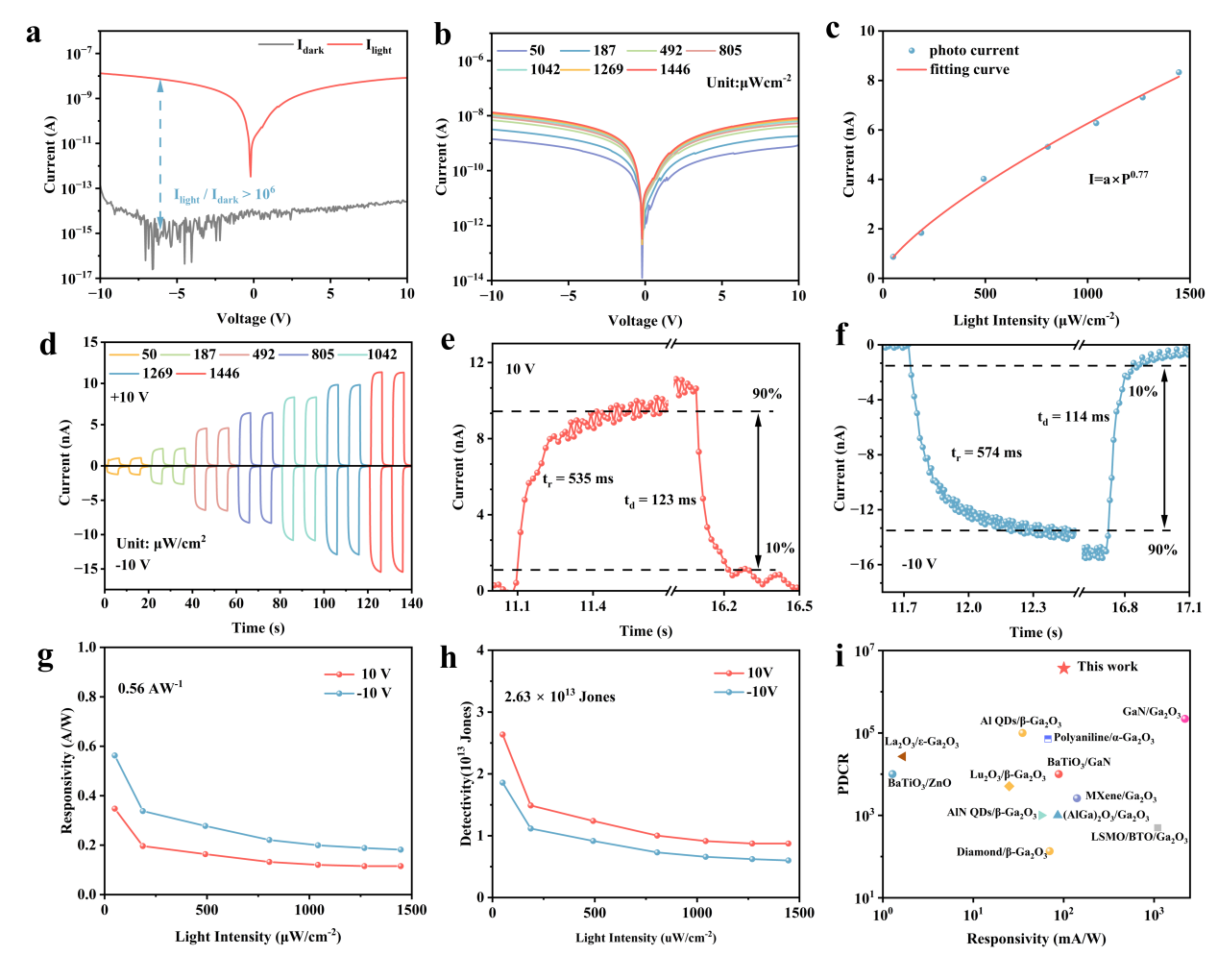
Figure 3. Photoresponse performance of the Ga₂O₃/BaTiO₃ heterojunction photodetector under 254 nm illumination.
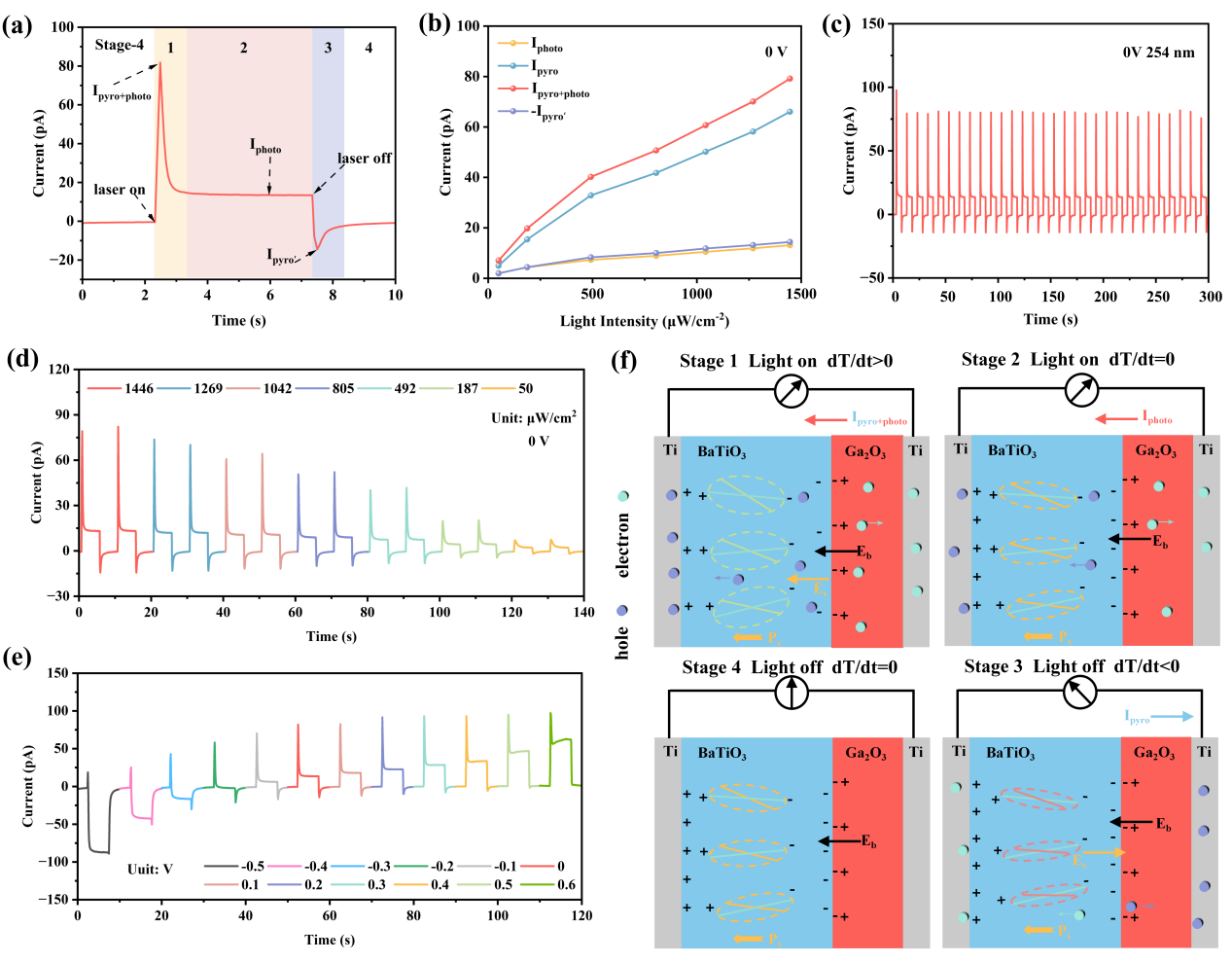
Figure 4. Pyro-phototronic effect in the Ga₂O₃/BaTiO₃ heterojunction under self-powered operation.
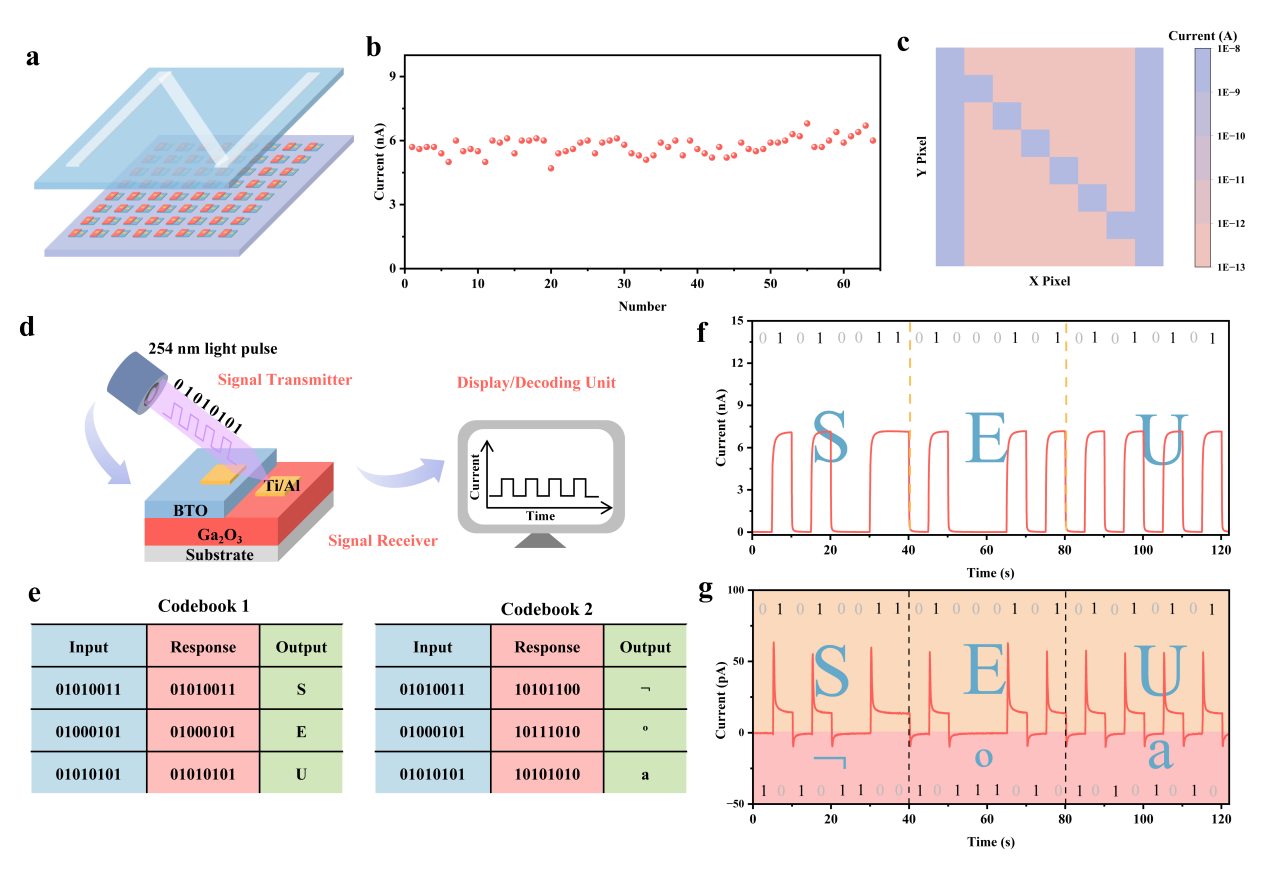
Figure 5. Imaging and secure optical communication applications of the Ga₂O₃/BaTiO₃ heterojunction photodetector.
DOI:
doi.org/10.26599/NR.2026.94909046
Instruction
Official Account

Cooperation
Top