


Researchers from the Wuhan University and University of Illinois Urbana−Champaign have published a dissertation titled "Reversible Ferroelastic Strain Engineering Enables Stabilization of a Hidden Ga₂O₃ Polymorph" in ACS Nano.
Background
Strain engineering provides an effective approach to access hidden structural phases and regulate functional properties in low-dimensional materials, where enhanced lattice flexibility enables reversible structural transformations. In bulk materials, mechanical strain typically leads to dislocation slip, twinning, grain-boundary motion, or transformation-induced plasticity, which are usually irreversible or only partially reversible. Fully reversible strain-driven structural transitions are therefore restricted to a limited class of systems, such as martensitic shape-memory alloys and ferroelastic materials. More recently, Zheng et al. reported a ε-to-γ-phase transformation in GaSe single crystals under tensile loading along nonbasal directions, demonstrating that cooperative delocalized interlayer shear can drive reversible structural phase transitions with exceptional tensile ductility exceeding 40% uniform elongation. Achieving the reversible strain-induced phase transformations in bulk semiconductors remains highly challenging, despite their enormous potential for next-generation power electronic and flexible electronic technologies. Here, we reveal that single-crystalline gallium oxide (Ga₂O₃) can undergo a strain-driven and reversible structural transformation. This finding extends reversible strain engineering from metallic or classical ferroelastic materials to bulk semiconductor crystals with a microscopic mechanism distinct from the irreversible slip or plastic responses commonly observed in polycrystalline or composite materials and further reveals the formation pathway of a previously hidden metastable phase in Ga₂O₃.
Abstract
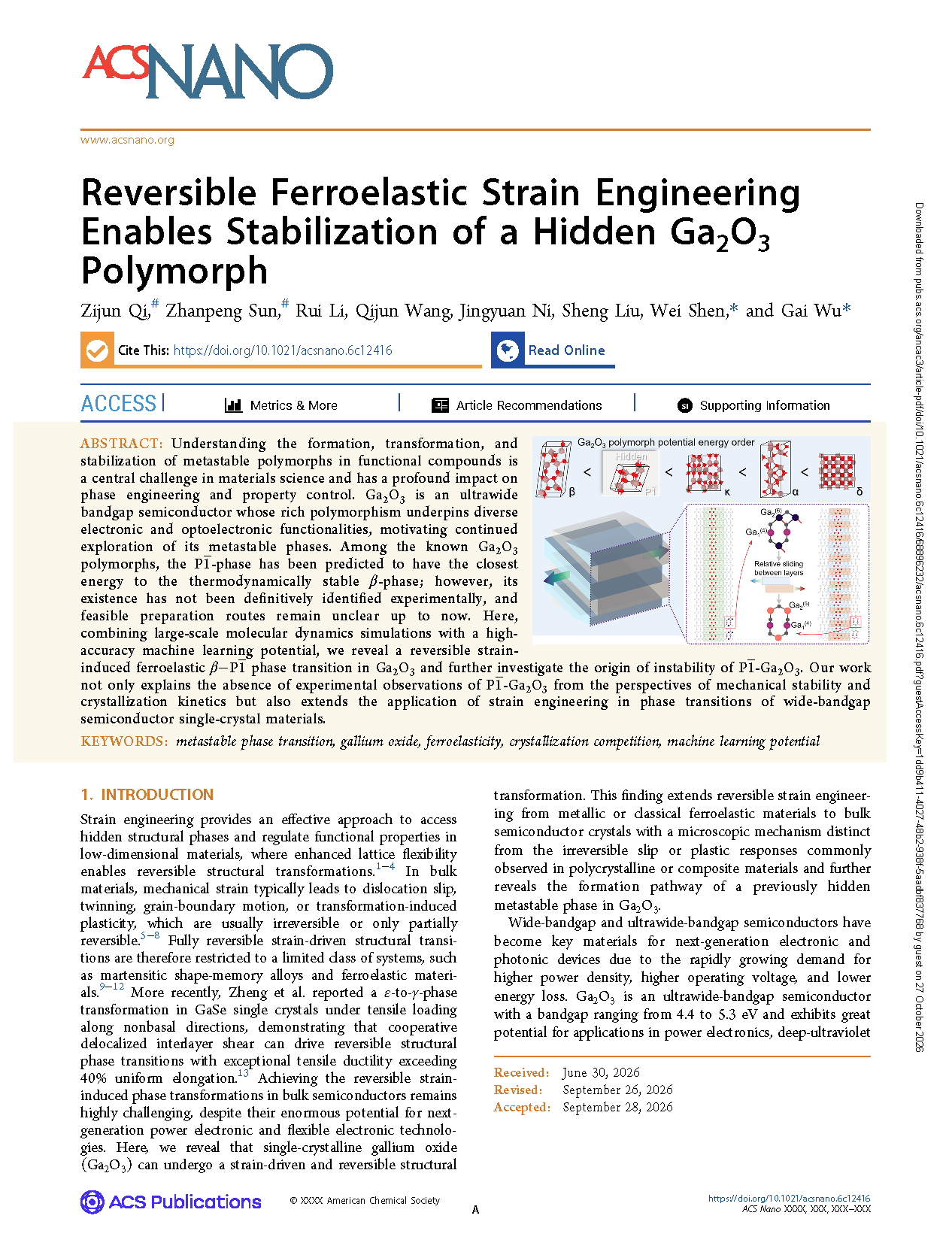
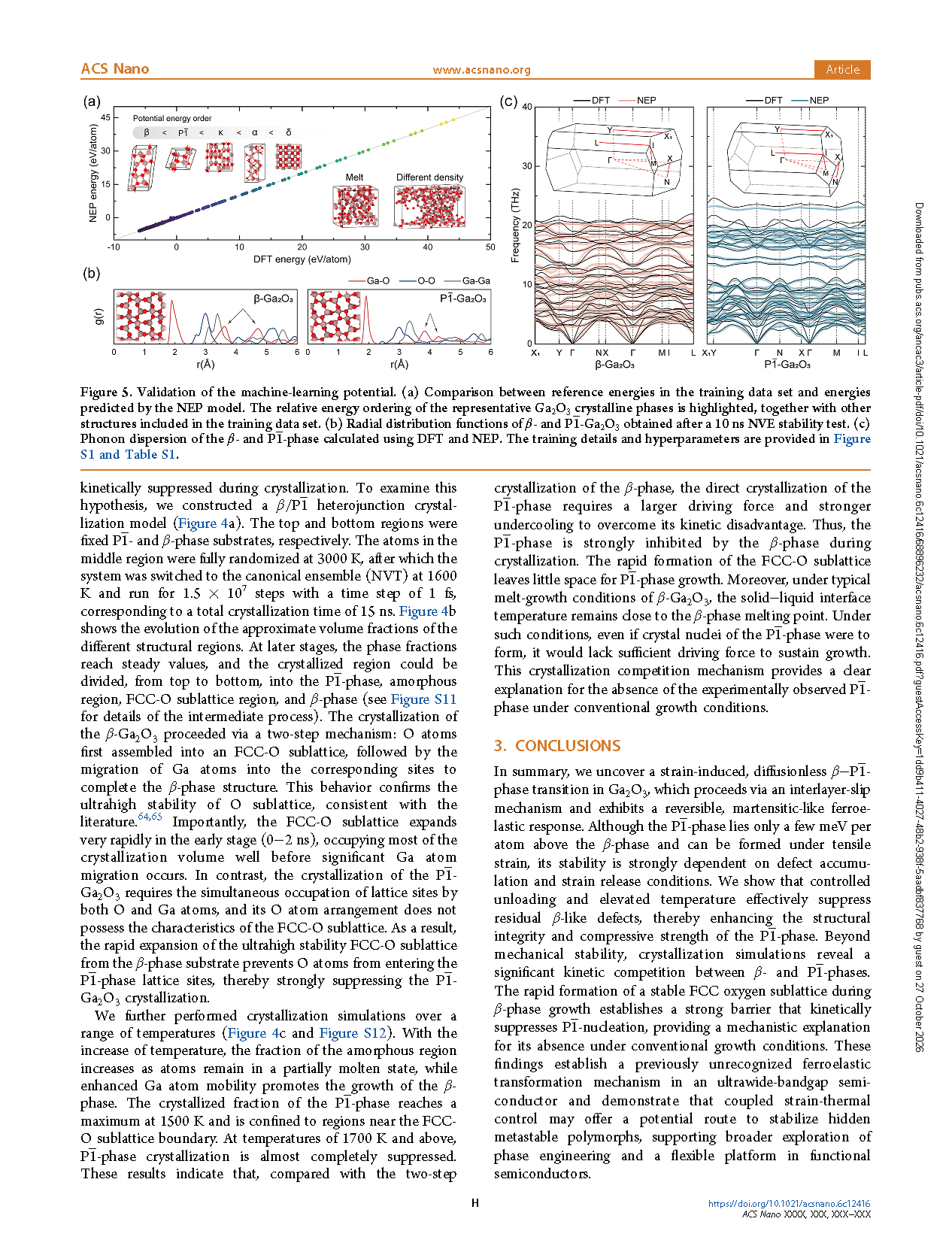
Understanding the formation, transformation, and stabilization of metastable polymorphs in functional compounds is a central challenge in materials science and has a profound impact on phase engineering and property control. Ga₂O₃ is an ultrawide bandgap semiconductor whose rich polymorphism underpins diverse electronic and optoelectronic functionalities, motivating continued exploration of its metastable phases. Among the known Ga₂O₃ polymorphs, the P-1-phase has been predicted to have the closest energy to the thermodynamically stable β-phase; however, its existence has not been definitively identified experimentally, and feasible preparation routes remain unclear up to now. Here, combining large-scale molecular dynamics simulations with a high-accuracy machine learning potential, we reveal a reversible strain-induced ferroelastic β–P-1 phase transition in Ga₂O₃ and further investigate the origin of instability of P-1-Ga₂O₃. Our work not only explains the absence of experimental observations of P-1-Ga₂O₃ from the perspectives of mechanical stability and crystallization kinetics but also extends the application of strain engineering in phase transitions of wide-bandgap semiconductor single-crystal materials.
Highlights
Large-scale molecular dynamics simulations have revealed that, when tensile strain is applied along a specific direction, β–Ga₂O₃undergoes a reversible, martensitic-like ferroelasticphase transition via a diffusion-free interlayer slip mechanism, thereby successfully stabilising the hidden P-1 metastable phase.
The study indicates that the P-1 phase is prone to destabilisation upon unloading at room temperature due to internal stresses and residual β-phase defects; however, the introduction of high-temperature assistance or controlled stress release can effectively suppress residual defects, enhance compressive stress resistance, and achieve effective stabilisation of the P-1 phase.
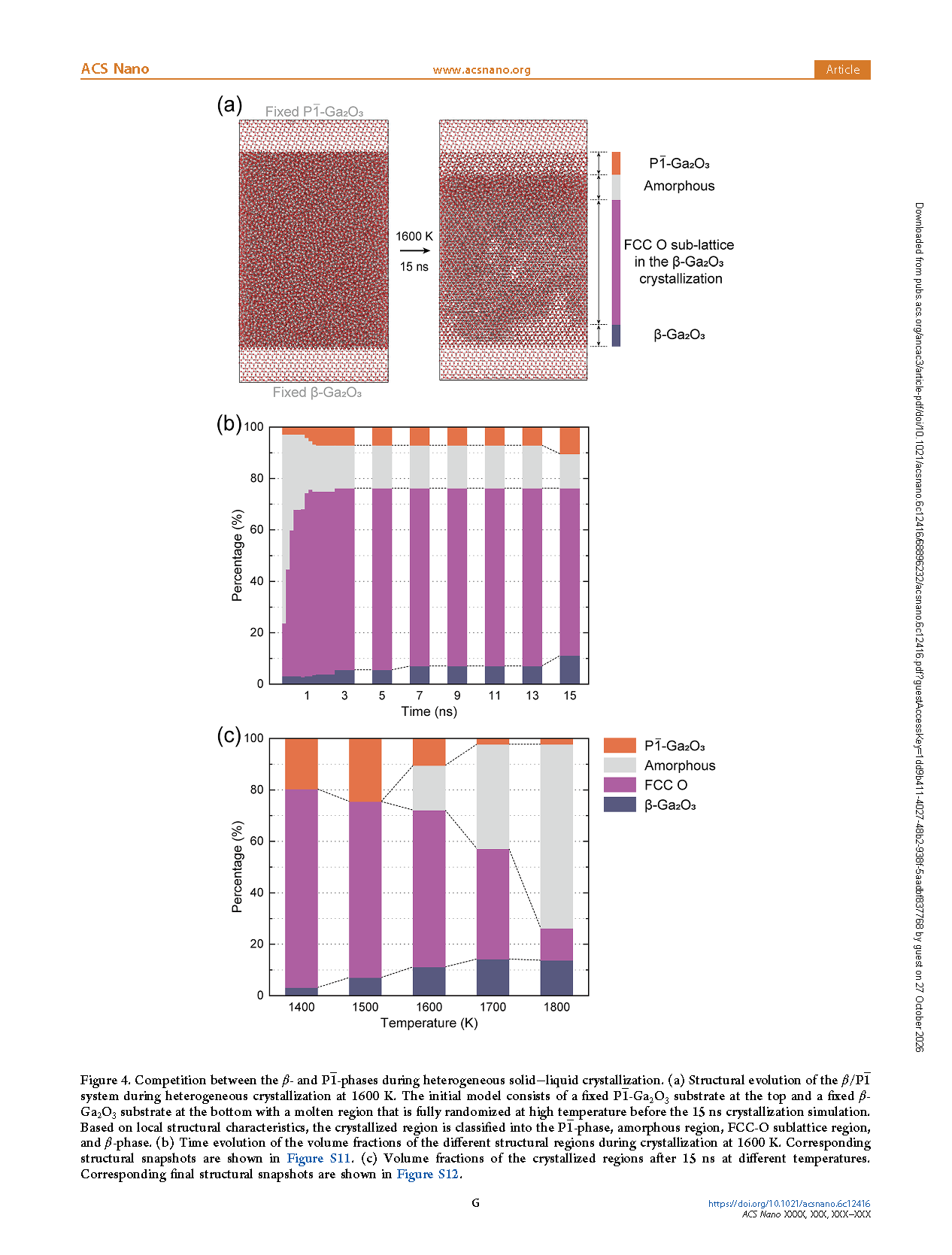
Simulations of solid–liquid heterojunction crystallisation revealed that the rapid expansion of the metastable FCC oxygen sublattice during β-phase growth occupies space, thereby strongly inhibiting the nucleation and crystallisation of the P-1 phase kinetically. This provides a reasonable explanation, from both thermodynamic and kinetic perspectives, for the long-standing difficulty in directly observing P-1–Ga₂O₃ in experiments.
Conclusions
In summary, we uncover a strain-induced, diffusionless β−P-1- phase transition in Ga₂O₃, which proceeds via an interlayer-slip mechanism and exhibits a reversible, martensitic-like ferroelastic response. Although the P-1-phase lies only a few meV per atom above the β-phase and can be formed under tensile strain, its stability is strongly dependent on defect accumulation and strain release conditions. We show that controlled unloading and elevated temperature effectively suppress residual β-like defects, thereby enhancing the structural integrity and compressive strength of the P-1-phase. Beyond mechanical stability, crystallization simulations reveal a significant kinetic competition between β- and P-1-phases. The rapid formation of a stable FCC oxygen sublattice during β-phase growth establishes a strong barrier that kinetically suppresses P-1-nucleation, providing a mechanistic explanation for its absence under conventional growth conditions. These findings establish a previously unrecognized ferroelastic transformation mechanism in an ultrawide-bandgap semiconductor and demonstrate that coupled strain-thermal control may offer a potential route to stabilize hidden metastable polymorphs, supporting broader exploration of phase engineering and a flexible platform in functional semiconductors.
Project Support
This work is supported by the National Natural Science Foundation of China (Grant Nos. 92473102, 62004141, 52202045), the Shenzhen Science and Technology Program (Grant No. JCYJ20240813175906008), the Guangdong Basic and Applied Basic Research Fund (Grant No. 2026A1515012747), the State Key Laboratory of Micronano Engineering Science (Grant No. MES202608), and the Open Fund of Hubei Key Laboratory of Electronic Manufacturing and Packaging Integration (Wuhan University) (Grant No. EMPI2025007).
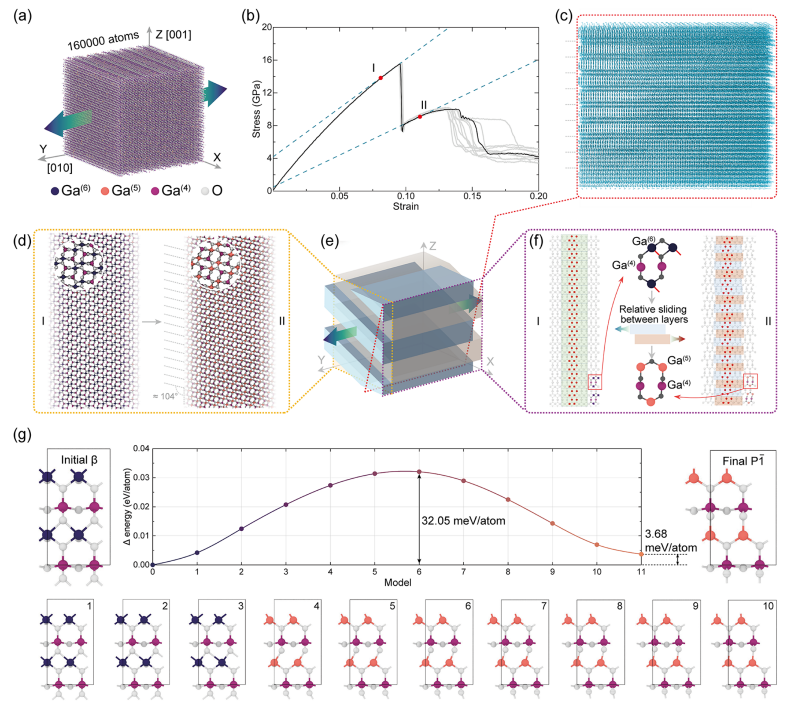
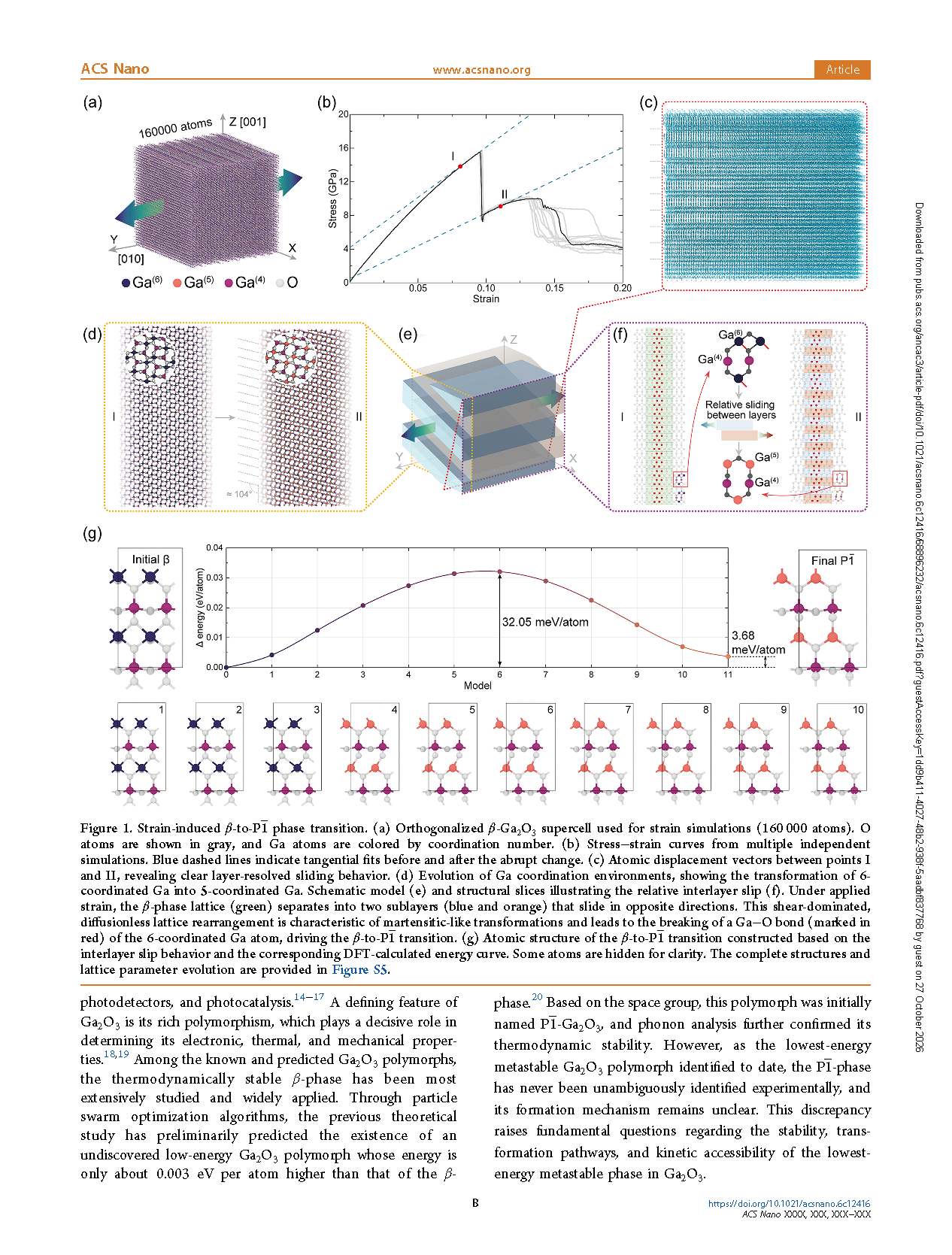
Figure 1. Strain-induced β-to-P-1phase transition. (a) Orthogonalized β-Ga₂O₃ supercell used for strain simulations (160 000 atoms). O atoms are shown in gray, and Ga atoms are colored by coordination number. (b) Stress−strain curves from multiple independent simulations. Blue dashed lines indicate tangential fits before and after the abrupt change. (c) Atomic displacement vectors between points I and II, revealing clear layer-resolved sliding behavior. (d) Evolution of Ga coordination environments, showing the transformation of 6- coordinated Ga into 5-coordinated Ga. Schematic model (e) and structural slices illustrating the relative interlayer slip (f). Under applied strain, the β-phase lattice (green) separates into two sublayers (blue and orange) that slide in opposite directions. This shear-dominated, diffusionless lattice rearrangement is characteristic of martensitic-like transformations and leads to the breaking of a Ga−O bond (marked in red) of the 6-coordinated Ga atom, driving the β-to-P-1transition. (g) Atomic structure of the β-to-P-1transition constructed based on the interlayer slip behavior and the corresponding DFT-calculated energy curve.
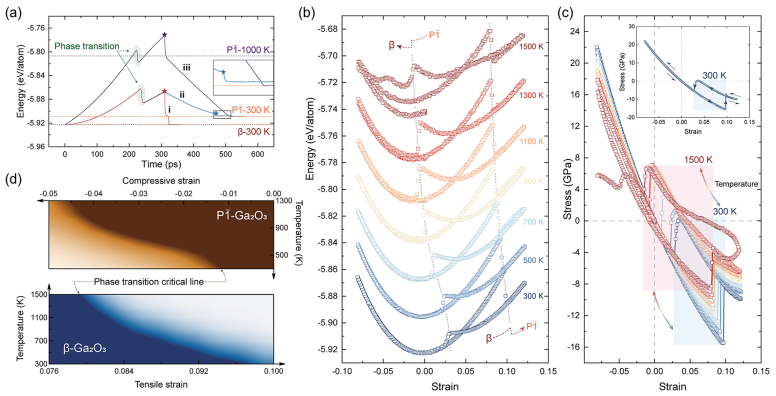
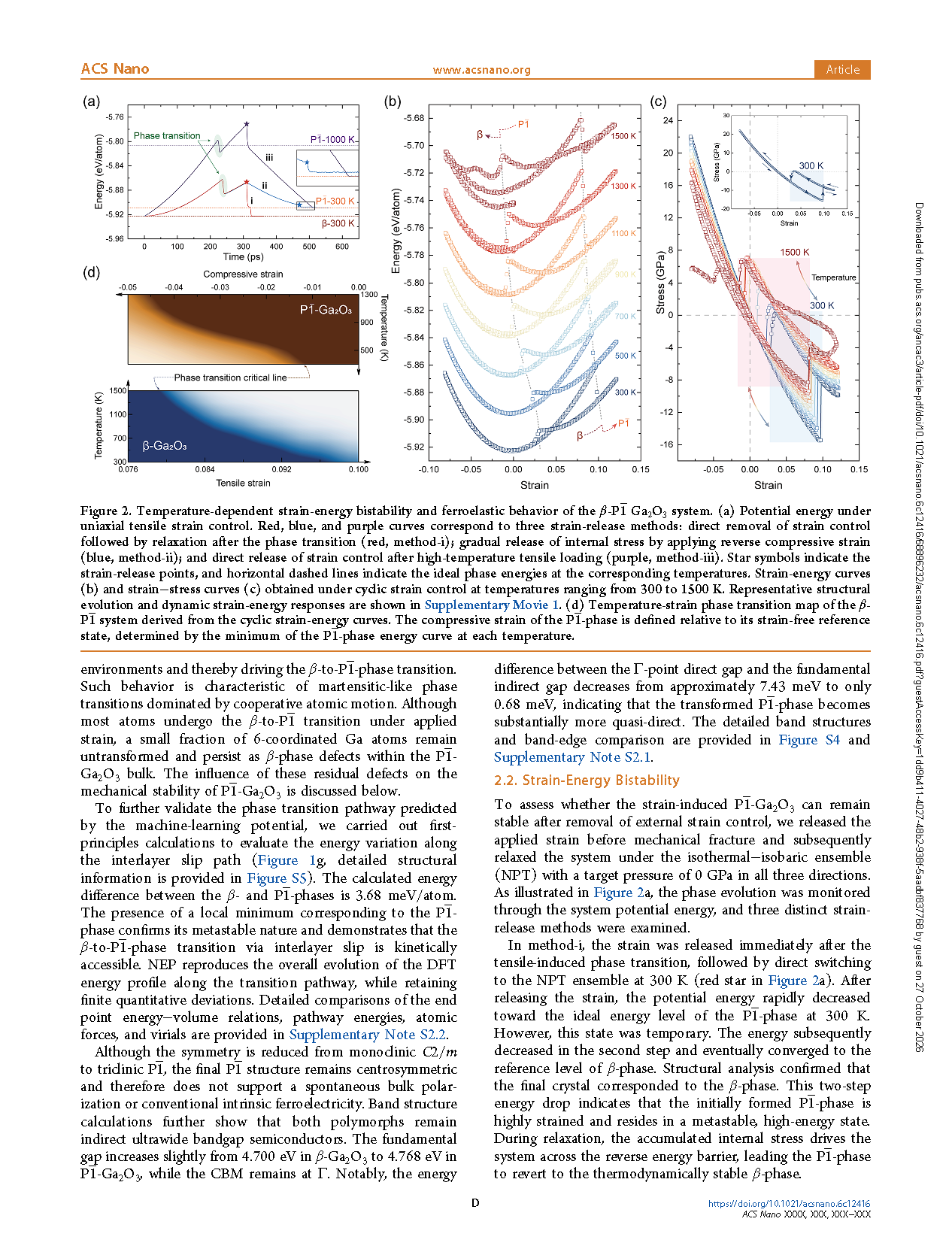
Figure 2. Temperature-dependent strain-energy bistability and ferroelastic behavior of the β-P-1 Ga₂O₃ system. (a) Potential energy under uniaxial tensile strain control. Red, blue, and purple curves correspond to three strain-release methods: direct removal of strain control followed by relaxation after the phase transition (red, method-i); gradual release of internal stress by applying reverse compressive strain (blue, method-ii); and direct release of strain control after high-temperature tensile loading (purple, method-iii). Star symbols indicate the strain-release points, and horizontal dashed lines indicate the ideal phase energies at the corresponding temperatures. Strain-energy curves (b) and strain−stress curves (c) obtained under cyclic strain control at temperatures ranging from 300 to 1500 K. (d) Temperature-strain phase transition map of the β-P-1system derived from the cyclic strain-energy curves. The compressive strain of the P-1-phase is defined relative to its strain-free reference state, determined by the minimum of the P-1-phase energy curve at each temperature.
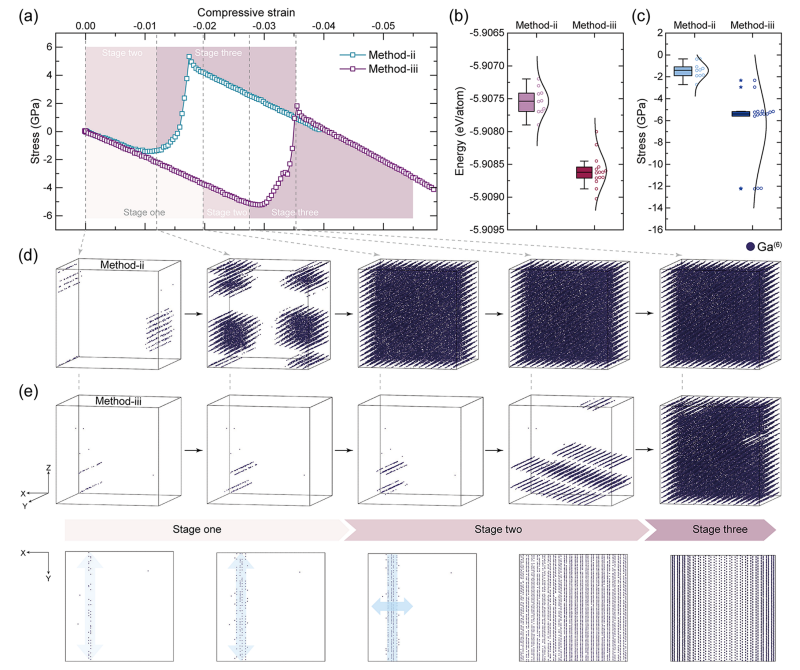
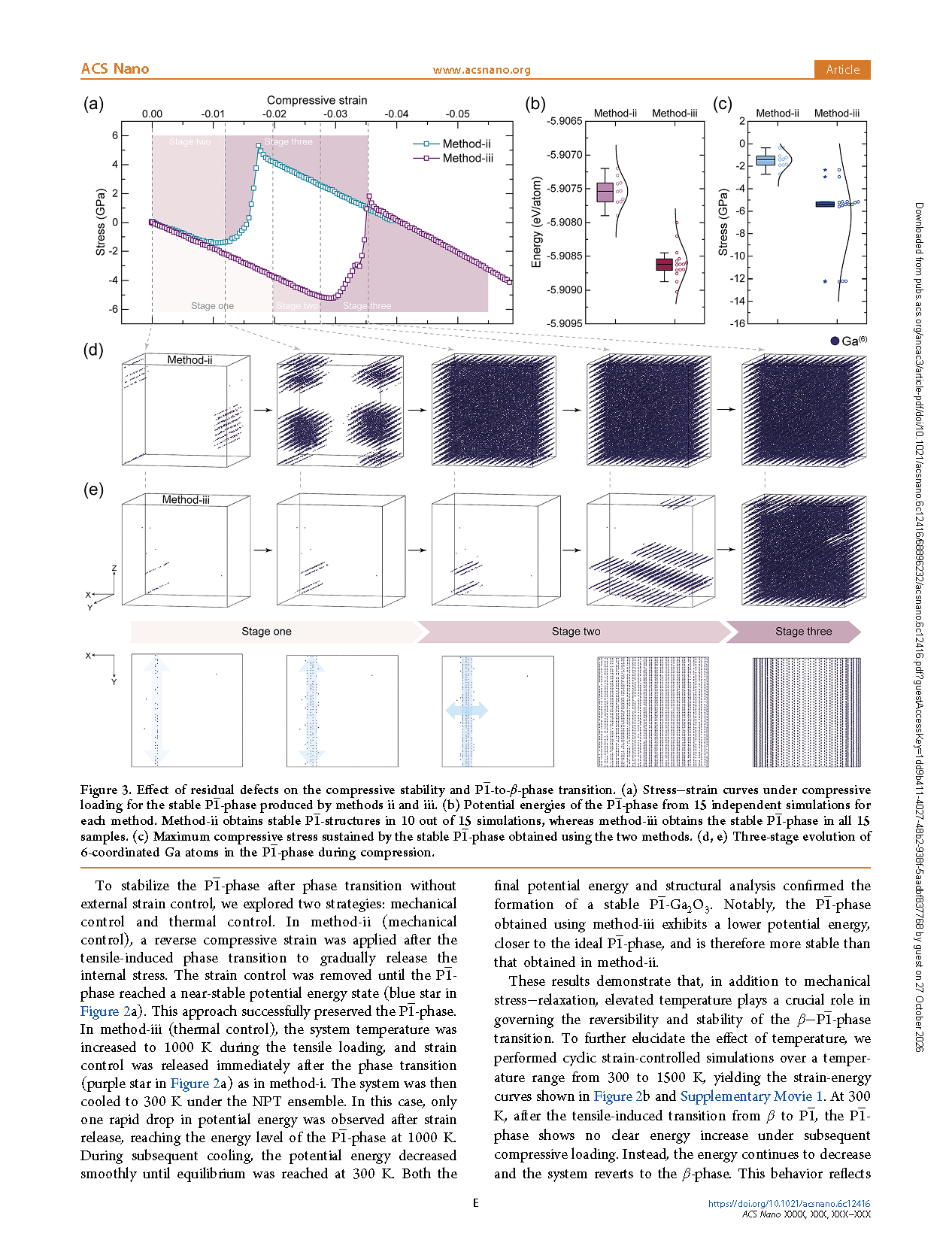
Figure 3. Effect of residual defects on the compressive stability and P-1-to-β-phase transition. (a) Stress−strain curves under compressive loading for the stable P-1-phase produced by methods ii and iii. (b) Potential energies of the P-1-phase from 15 independent simulations for each method. Method-ii obtains stable P-1-structures in 10 out of 15 simulations, whereas method-iii obtains the stable P-1-phase in all 15 samples. (c) Maximum compressive stress sustained by the stable P-1-phase obtained using the two methods. (d, e) Three-stage evolution of 6-coordinated Ga atoms in the P-1-phase during compression.
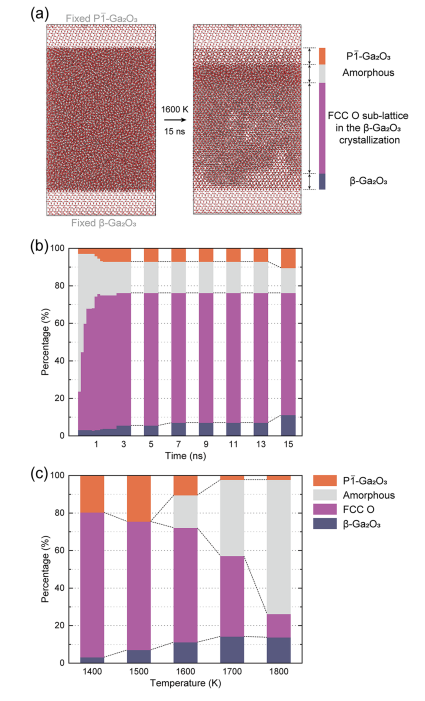
Figure 4. Competition between the β- and P-1-phases during heterogeneous solid−liquid crystallization. (a) Structural evolution of the β/P-1 system during heterogeneous crystallization at 1600 K. The initial model consists of a fixed P-1-Ga₂O₃ substrate at the top and a fixed β-Ga₂O₃ substrate at the bottom with a molten region that is fully randomized at high temperature before the 15 ns crystallization simulation. Based on local structural characteristics, the crystallized region is classified into the P-1-phase, amorphous region, FCC-O sublattice region, and β-phase. (b) Time evolution of the volume fractions of the different structural regions during crystallization at 1600 K. (c) Volume fractions of the crystallized regions after 15 ns at different temperatures.
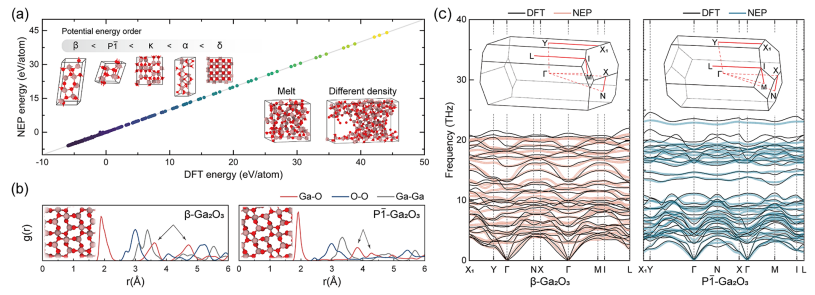
Figure 5. Validation of the machine-learning potential. (a) Comparison between reference energies in the training data set and energies predicted by the NEP model. The relative energy ordering of the representative Ga₂O₃ crystalline phases is highlighted, together with other structures included in the training data set. (b) Radial distribution functions of β- and P-1-Ga₂O₃ obtained after a 10 ns NVE stability test. (c) Phonon dispersion of the β- and P-1-phase calculated using DFT and NEP.
DOI:
doi.org/10.1021/acsnano.6c12416
Instruction
Official Account

Cooperation
Top