


Researchers from the Sun Yat-Sen University have published a dissertation titled " Co-engineering of tellurium doping and strain modulation for effective p-type achieve in β-Ga2O3" in Computational Materials Science.
Project Support
This work was supported in part by the National Key Research and Development Program of China (2024YFE0205300), Science and Technology Development Plan Project of Jilin Province, China (YDZJ202303CGZH022),Shenzhen Science and Technology Program (No. 20231127114207001), Open Fund of the State Key Laboratory of Optoelectronic Materials and Technologies (OEMT-2023-KF-05), respectively.
Background
p-type doping in wide band gap semiconductors poses a significant challenge for next-generation electronic and optoelectronic devices due to the low valence band energies that hinder efficient hole carrier formation. Among these materials, β-Ga2O3 has emerged as a promising candidate for high-power electronics, ultraviolet photodetectors, and energy storage applications owing to its excellent chemical and thermal stability. Doping engineering is a key method for modifying the electronic structures of wide bandgap semiconductors. The ntype conductivity can be reliably achieved through group-IV substitutions on Ga sites. However, efforts to realize p-type conduction have faced limitations, as traditional dopants often introduce deep acceptor levels that are ineffective for hole activation.
Abstract
Effective p-type doping in wide band gap semiconductors remains a critical challenge, limiting the performance of next-generation electronic and optoelectronic devices. Herein, we present a comprehensive first-principles calculation on p-type doping in β-Ga2O3 through a dual strategy: tellurium (Te) substitution and strain engineering. Notably, under tensile strain, Te-induced defect levels are systematically shifted upward toward the valence band maximum (VBM), effectively transforming deep acceptor states into shallow levels that promote hole conduction. In contrast, compressive strain deepens the defect levels and widens the band gap. Detailed analyses including electronic band structure, partial density of states (PDOS), formation energy, and bond-length evolution offer mechanistic insights into the interaction between local structural distortions and strain effects. These findings suggest that a careful combination of dopant selection and strain modulation may provide a viable pathway for overcoming the longstanding limitations of p-type doping in β-Ga2O3 and similar wide band gap oxides.
Highlights
Te substitution effectively introduces acceptor states in β-Ga2O3.
Tensile strain shifts Te defect levels toward the valence band maximum, enabling shallow acceptor behavior.
The Compressive strain deepens defect levels and expands band gap, suppressing p-type conductivity.
Co-engineering dopant selection and strain modulation offers a viable strategy to achieve effective p-type doping in wide band gap oxides.
Conclusions
In summary, our first-principles study demonstrates that Te doping combined with strain engineering offers a promising route to achieve efficient p-type conduction in β-Ga2O3. Te preferentially occupies the Ga-II site, where it introduces a deep acceptor level that can be shifted upward toward the VBM by applying tensile strain. This upward shift, driven by enhanced Te 5p and O 2p orbital hybridization, effectively converts deep levels into shallow ones that favor hole conduction. In contrast, compressive strain narrows the bond lengths, deepening the defect levels, thus hindering hole activation. Analyses of bond lengths, PDOS, and formation energies show that tensile strain narrows the band gap and improves the thermodynamic stability of the doped system. This co-engineering approach provides valuable mechanistic insights and a viable pathway for overcoming the current limitations of p-type doping in wide band gap oxides.
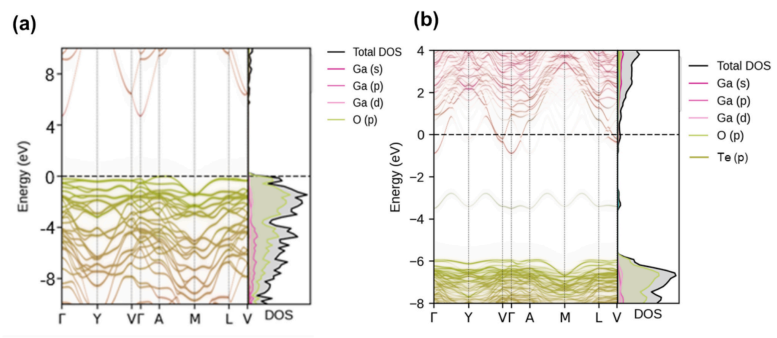
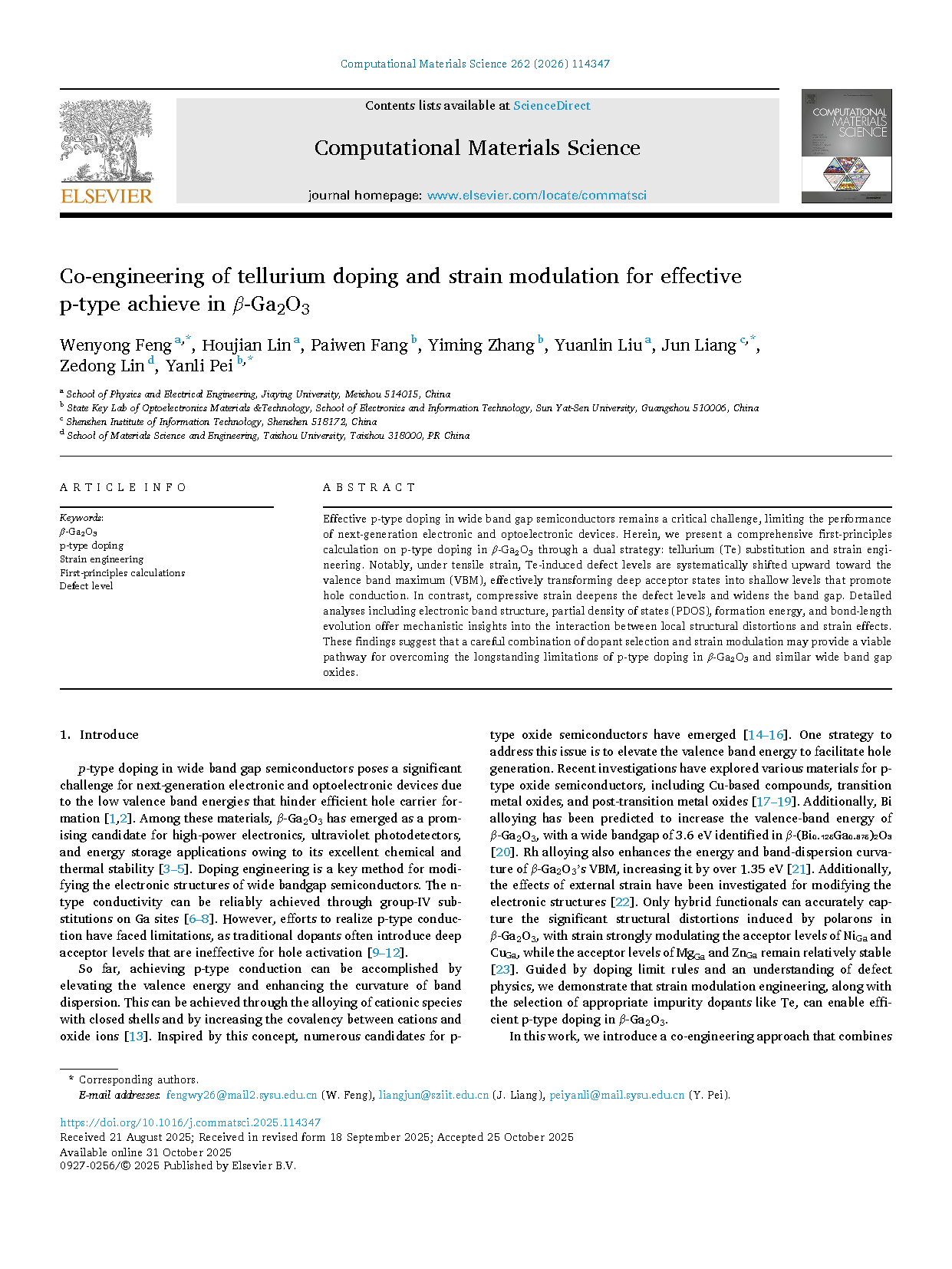
Fig. 1. (a) Electronic band structure and PDOS of β-Ga2O3 based on its primitive cell. (b) Electronic band structure and PDOS of unstrain Te-doped β-Ga2O3 with 120 atoms supercell.
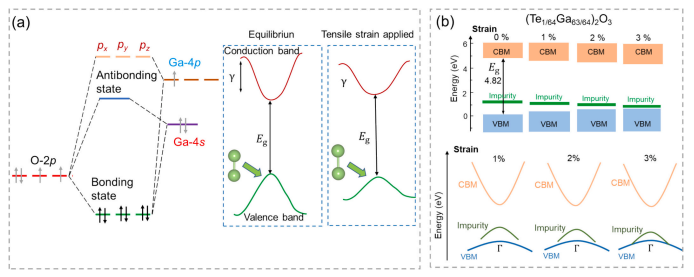
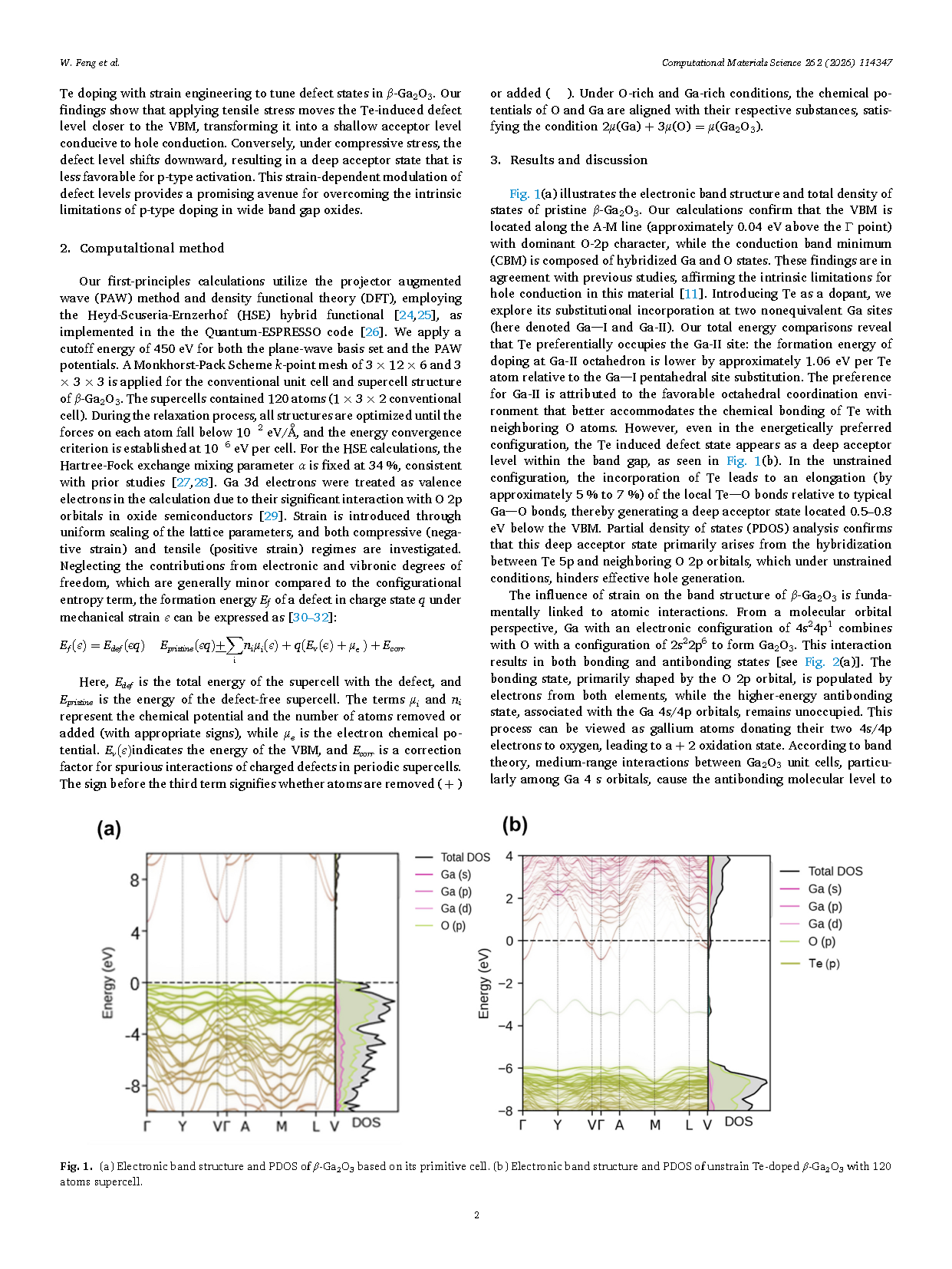
Fig. 2. (a) Schematics showing how strain modifies the band dispersion structure in Ga2O3 from a molecular orbital point of view. Schematics illustrate how tensile strain alters the band dispersion in Ga2O3 from a molecular orbital perspective. Consequently, the band dispersion due to the atomic orbital overlap interaction becomes weaken, leading to a narrowed bandwidth (γ), widened bandgap (Eg), and increased band effective mass. (b) Schematic representation of the electronic band structure of β-(Te1/64Ga63/64)2O3 with different strain, compared to that of β-Ga2O3.
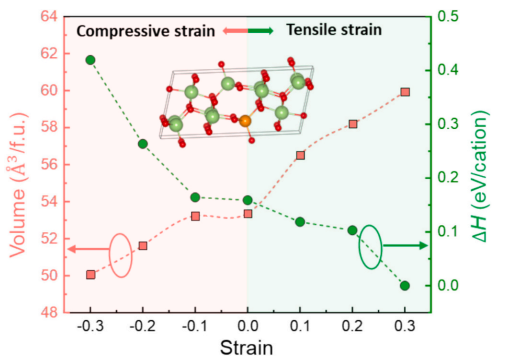
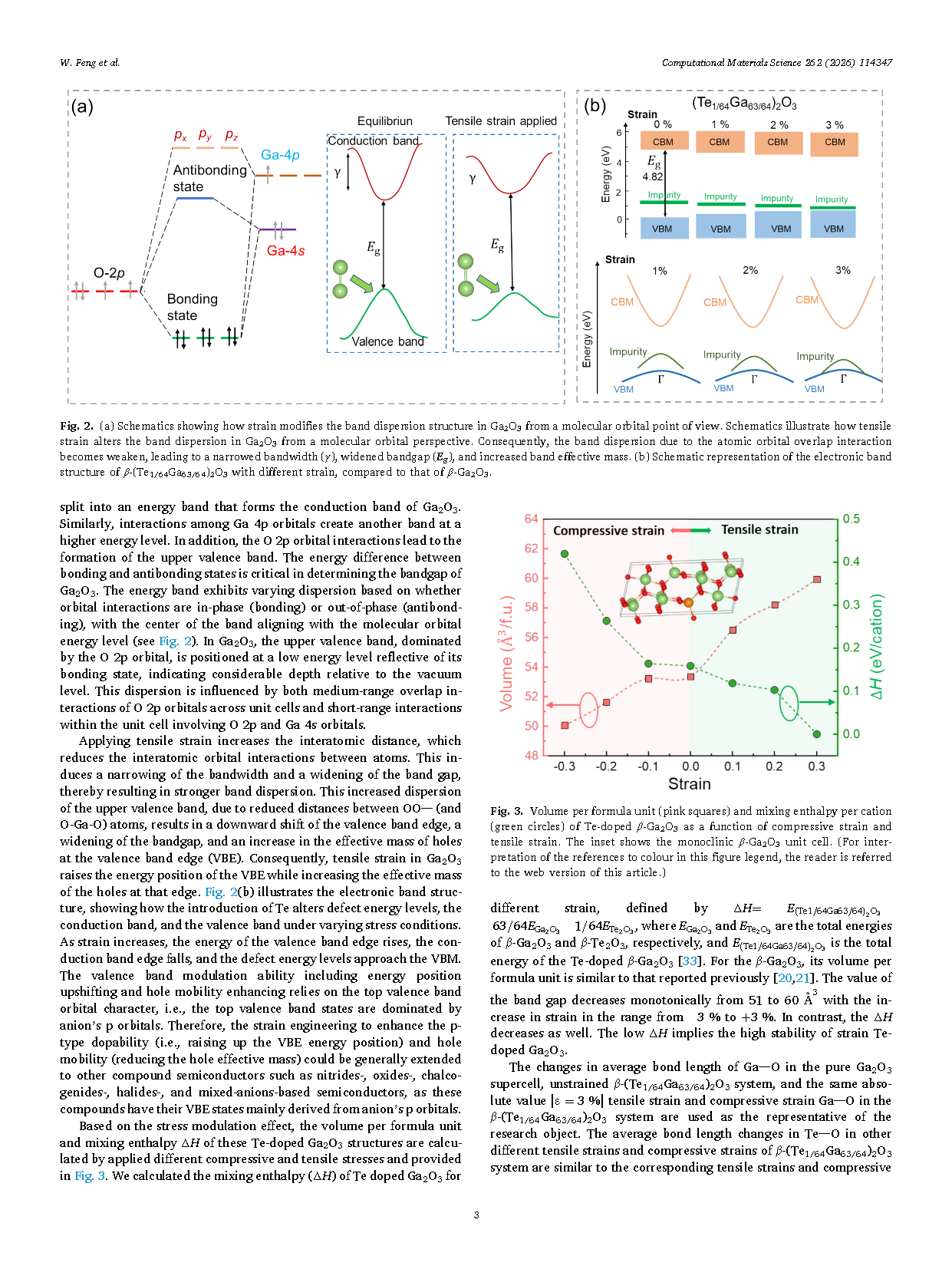
Fig. 3. Volume per formula unit (pink squares) and mixing enthalpy per cation (green circles) of Te-doped β-Ga2O3 as a function of compressive strain and tensile strain. The inset shows the monoclinic β-Ga2O3 unit cell. (For interpretation of the references to colour in this figure legend, the reader is referred to the web version of this article.)

Fig. 4. Partial density of states of β-(Te1/64Ga63/64)2O3 under isotropic strain, with the Te-5p and O-2p orbital curves accentuated in bold for comparison. (a) Compressive strain at − 1 %. (b) Compressive strain at − 2 %. (c) Compressive strain at − 3 %. (d) Tensile strain at 1 %. (e) Tensile strain at 2 %. (f) Tensile strain at 3 %.
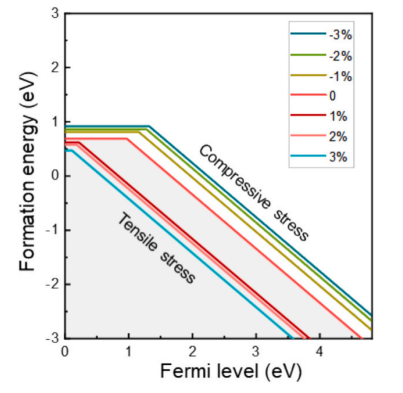
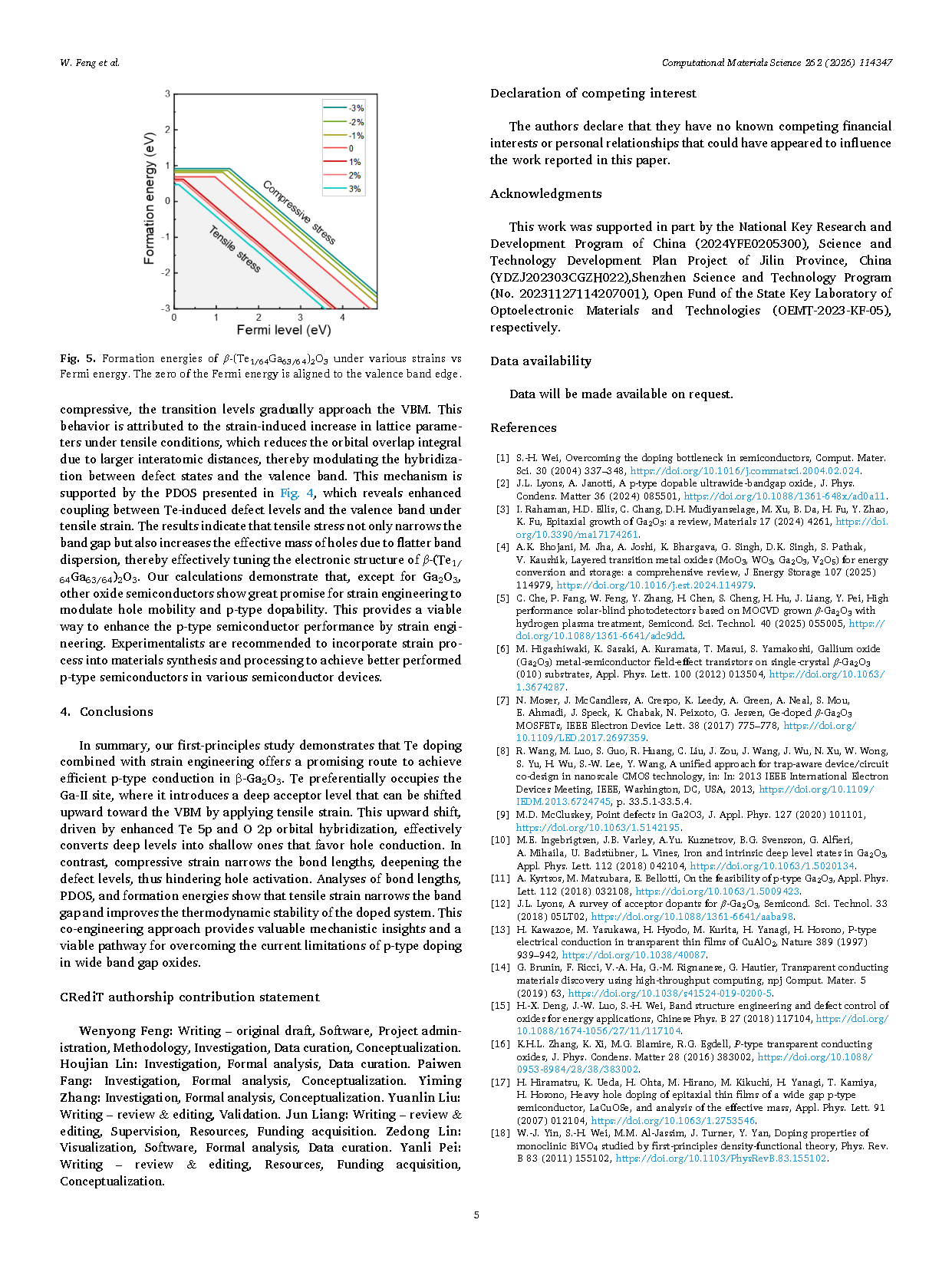
Fig. 5. Formation energies of β-(Te1/64Ga63/64)2O3 under various strains vs Fermi energy. The zero of the Fermi energy is aligned to the valence band edge.
DOI:
doi.org/10.1016/j.commatsci.2025.114347

Instruction
Official Account

Cooperation
Top