


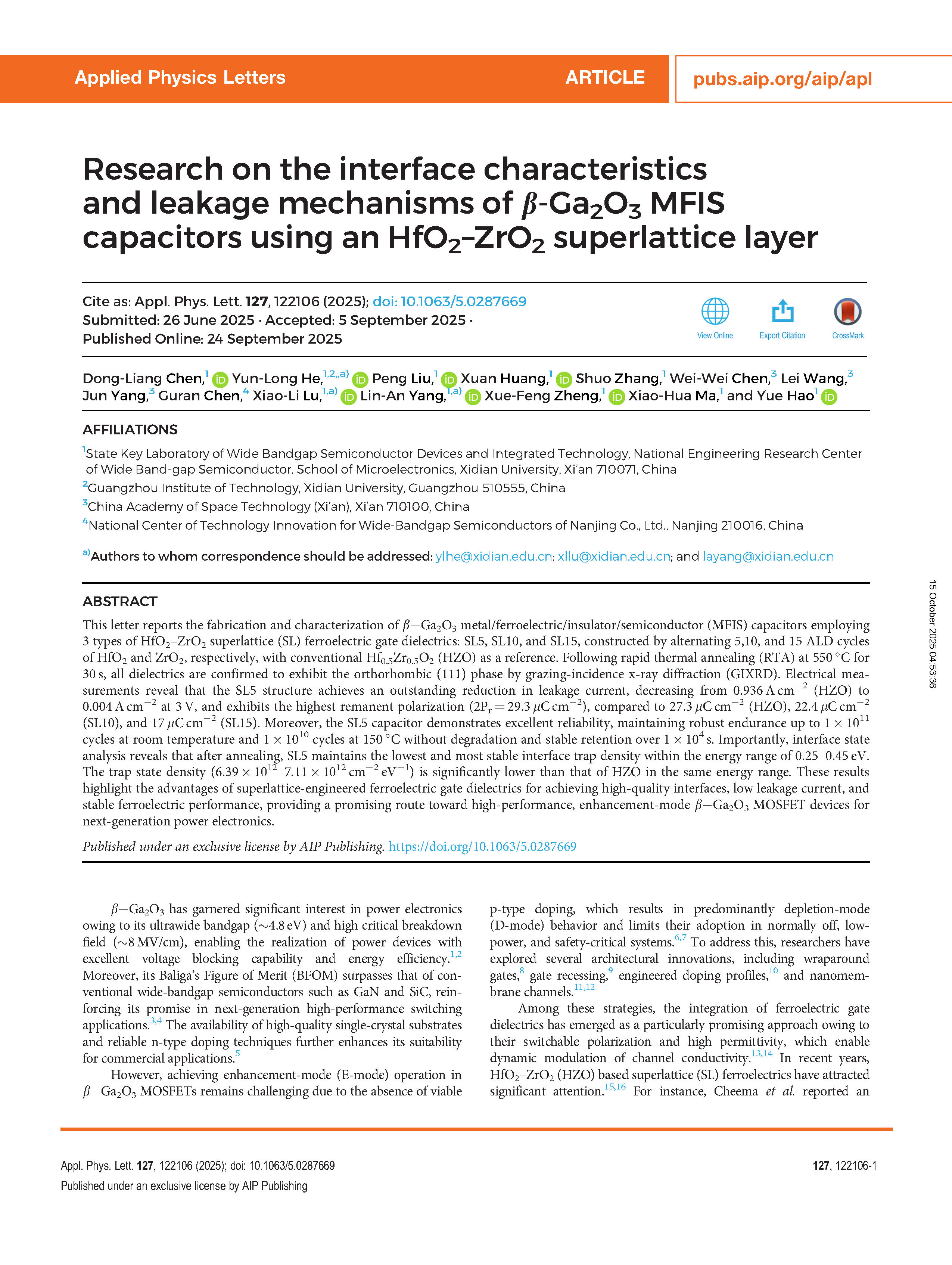
Researchers from the Xidian University have published a dissertation titled "Research on the interface characteristics and leakage mechanisms of β-Ga2O3 MFIS capacitors using an HfO2–ZrO2 superlattice layer" in Applied Physics Letters.
Project Support
This work was supported by the National Natural Science Foundation of China under Grant Nos. 62474133 and U2241220, the open foundation of State Key Laboratory of wide bandgap semiconductor devices and integrated technology of China under Grant No. 2413S111, the Guangdong Basic and Applied Basic Research Foundation under Grant No. 2025A1515011176, and the fundamental research funds for the central universities of China under Grant No. QTZX23019.
Background
β-Ga2O3 has garnered significant interest in power electronics owing to its ultrawide bandgap (~4.8 eV) and high critical breakdown field (~8 MV/cm), enabling the realization of power devices with excellent voltage blocking capability and energy efficiency. Moreover, its Baliga’s Figure of Merit (BFOM) surpasses that of conventional wide-bandgap semiconductors such as GaN and SiC, reinforcing its promise in next-generation high-performance switching applications. The availability of high-quality single-crystal substrates and reliable n-type doping techniques further enhances its suitability for commercial applications.
Abstract
This letter reports the fabrication and characterization of β−Ga2O3 metal/ferroelectric/insulator/semiconductor (MFIS) capacitors employing 3 types of HfO2–ZrO2 superlattice (SL) ferroelectric gate dielectrics: SL5, SL10, and SL15, constructed by alternating 5,10, and 15 ALD cycles of HfO2 and ZrO2, respectively, with conventional Hf0.5Zr0.5O2 (HZO) as a reference. Following rapid thermal annealing (RTA) at 550 °C for 30 s, all dielectrics are confirmed to exhibit the orthorhombic (111) phase by grazing-incidence x-ray diffraction (GIXRD). Electrical measurements reveal that the SL5 structure achieves an outstanding reduction in leakage current, decreasing from 0.936 A cm−2 (HZO) to 0.004 A cm−2 at 3 V, and exhibits the highest remanent polarization (2Pr = 29.3 μC cm−2), compared to 27.3 μC cm−2 (HZO), 22.4 μC cm−2 (SL10), and 17 μC cm−2 (SL15). Moreover, the SL5 capacitor demonstrates excellent reliability, maintaining robust endurance up to 1 × 10¹¹ cycles at room temperature and 1 × 10¹⁰ cycles at 150 °C without degradation and stable retention over 1 × 10⁴ s. Importantly, interface state analysis reveals that after annealing, SL5 maintains the lowest and most stable interface trap density within the energy range of 0.25–0.45 eV. The trap state density (6.39 × 10¹²–7.11 × 1012 cm−2 eV−1) is significantly lower than that of HZO in the same energy range. These results highlight the advantages of superlattice-engineered ferroelectric gate dielectrics for achieving high-quality interfaces, low leakage current, and stable ferroelectric performance, providing a promising route toward high-performance, enhancement-mode β−Ga2O3 MOSFET devices for next-generation power electronics.
Conclusion
In summary, this work systematically elucidates the advantages of employing HZO SL ferroelectric gate dielectrics in β-Ga2O3 MFIS capacitors, benchmarked against conventional HZO and the thicker-period SL10 and SL15 counterparts. After PMA at 550 C, the SL5 device achieves a pronounced reduction in leakage current (from 0.936 A cm-2 for HZO to 0.004 A cm-2 at 3 V) while maintaining the largest remanent polarization (2Pr = 29.3 μC cm-2, vs 27.3, 22.4, and 17 μC cm-2 for HZO, SL10, and SL15, respectively). Moreover, SL5 exhibits the lowest and most stable interface trap density (Dit reduced from 6.78 × 10¹²–8.43 × 10¹² to 6.39 × 10¹²–7.11 × 1012 cm-2 eV-1 after annealing), as well as outstanding reliability, sustaining >1 × 10¹¹ switching cycles at room temperature and >1 × 10¹⁰ cycles at 150 °C, together with stable polarization retention over 1 × 10⁴ s. These results highlight that superlattice engineering—particularly with the SL5 architecture—enables the simultaneous realization of high polarization, suppressed leakage, reduced interface traps, and excellent endurance and retention, thereby establishing a promising pathway toward reliable, high-performance, normally off β-Ga2O3 power electronics.
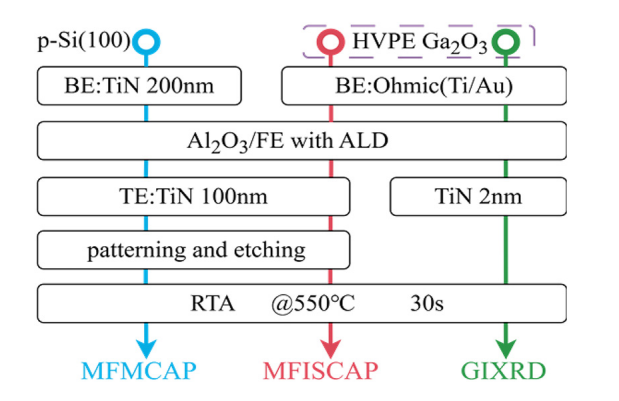
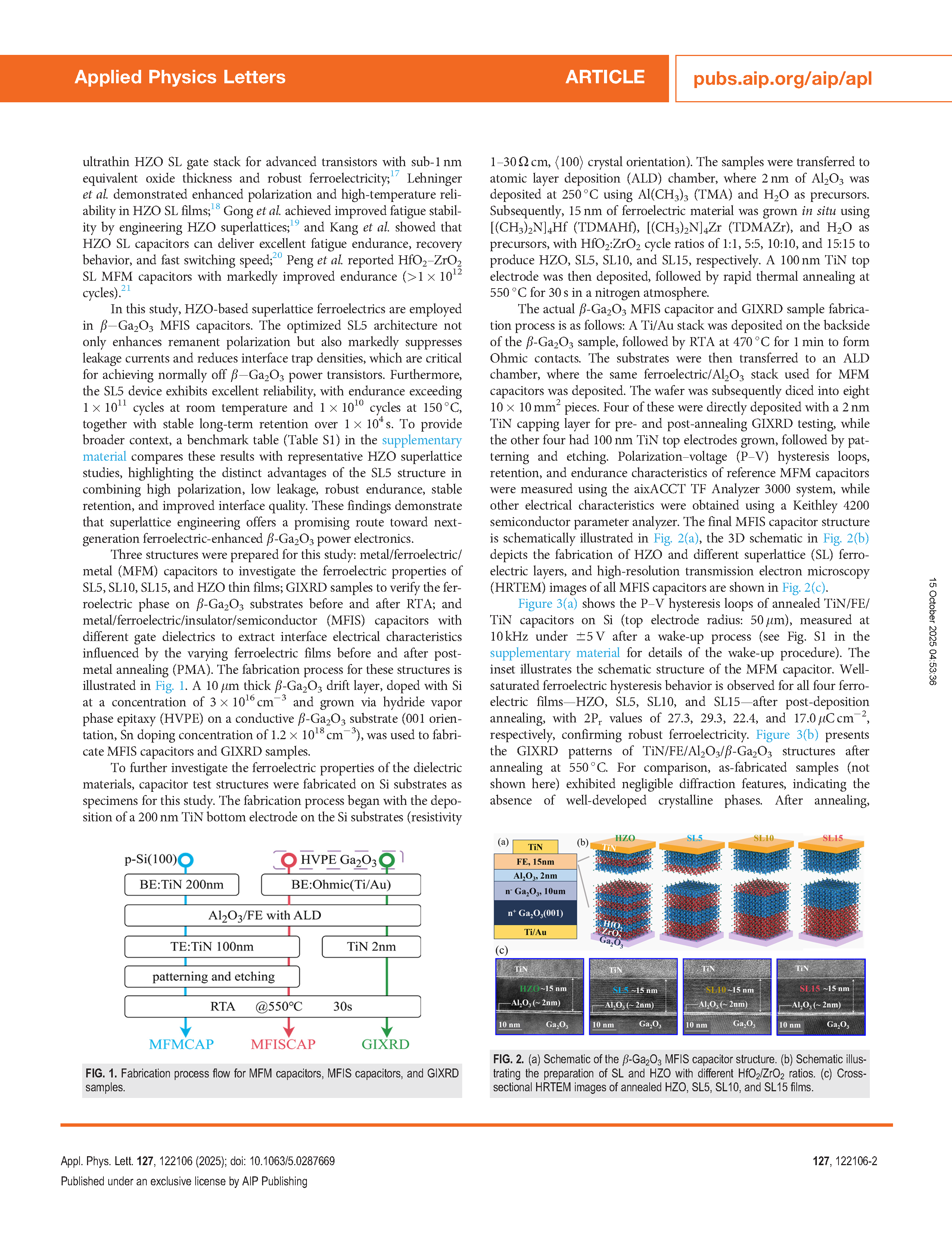
FIG. 1. Fabrication process flow for MFM capacitors, MFIS capacitors, and GIXRD samples.
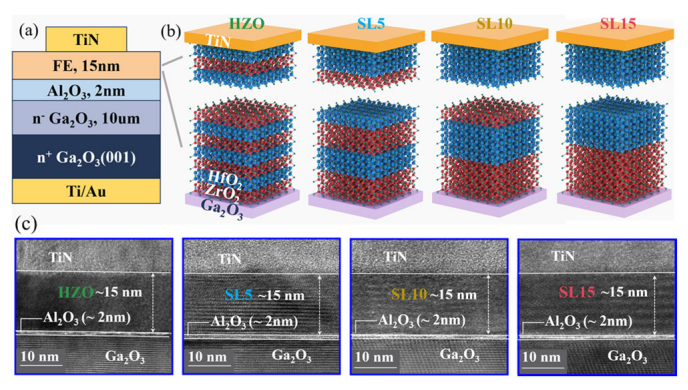
FIG. 2. (a) Schematic of the β-Ga2O3 MFIS capacitor structure. (b) Schematic illustrating the preparation of SL and HZO with different HfO2/ZrO2 ratios. (c) Crosssectional HRTEM images of annealed HZO, SL5, SL10, and SL15 films.
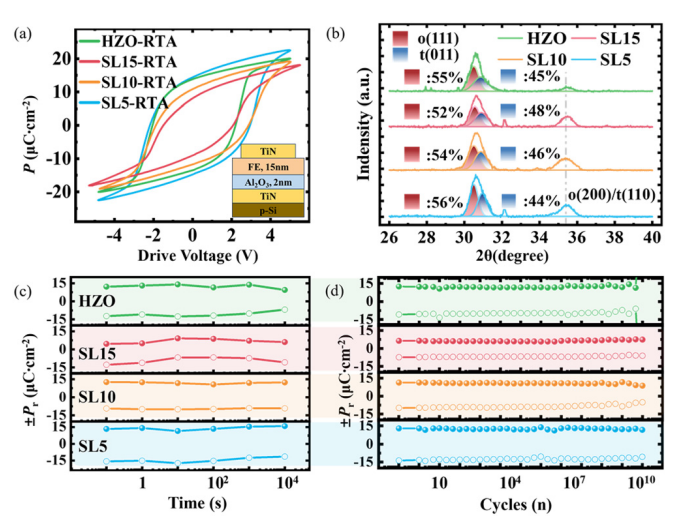
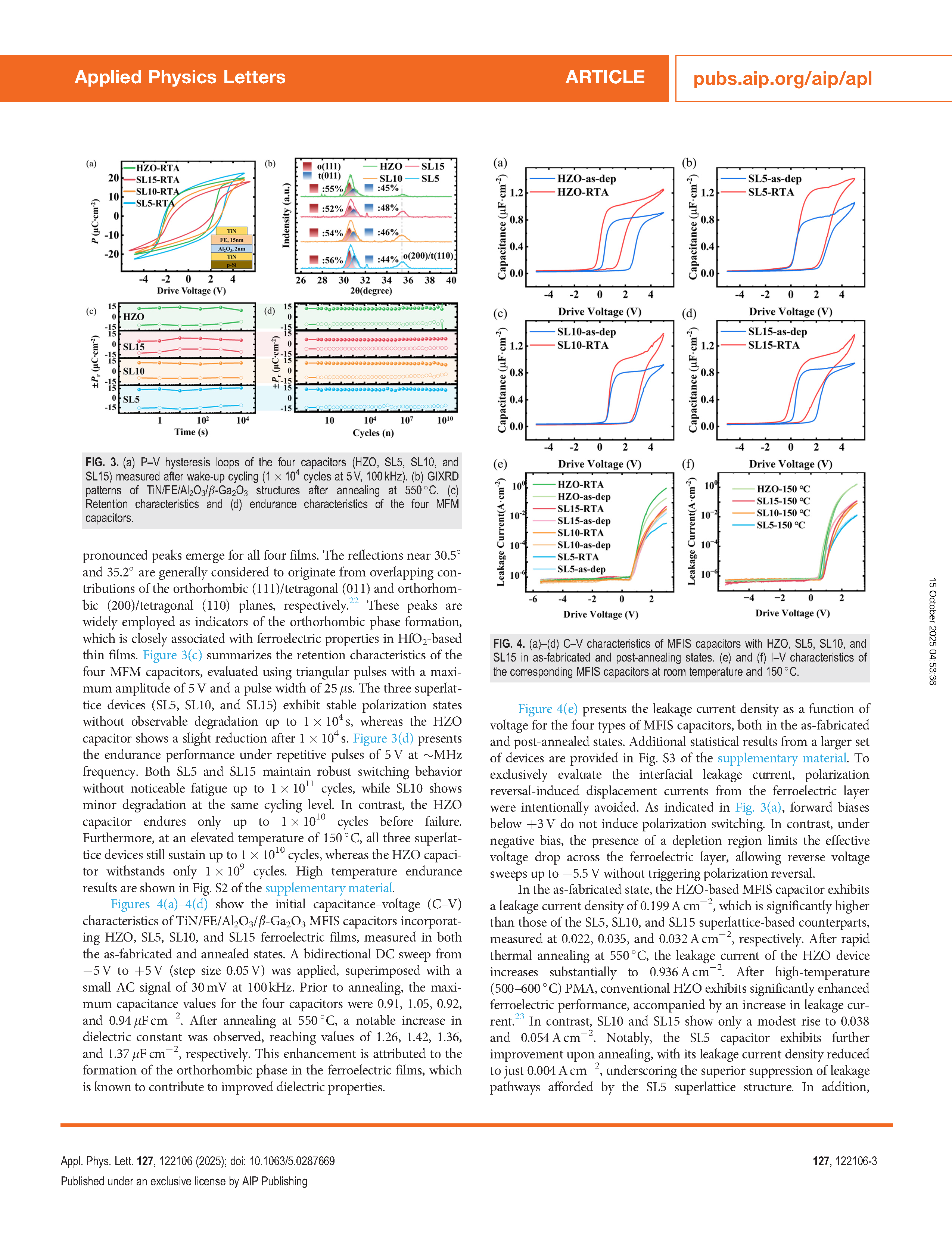
FIG. 3. (a) P–V hysteresis loops of the four capacitors (HZO, SL5, SL10, and SL15) measured after wake-up cycling (1 × 10⁴ cycles at 5 V, 100 kHz). (b) GIXRD patterns of TiN/FE/Al2O3/β-Ga2O3 structures after annealing at 550 C. (c) Retention characteristics and (d) endurance characteristics of the four MFM capacitors.
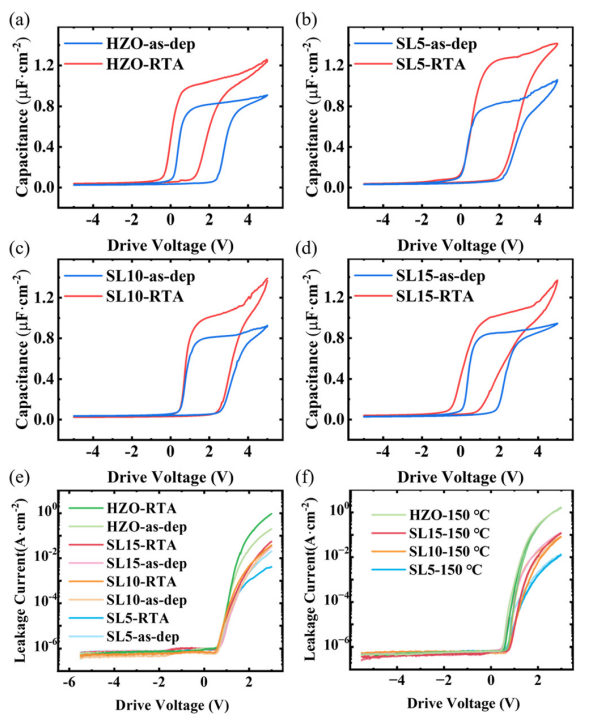
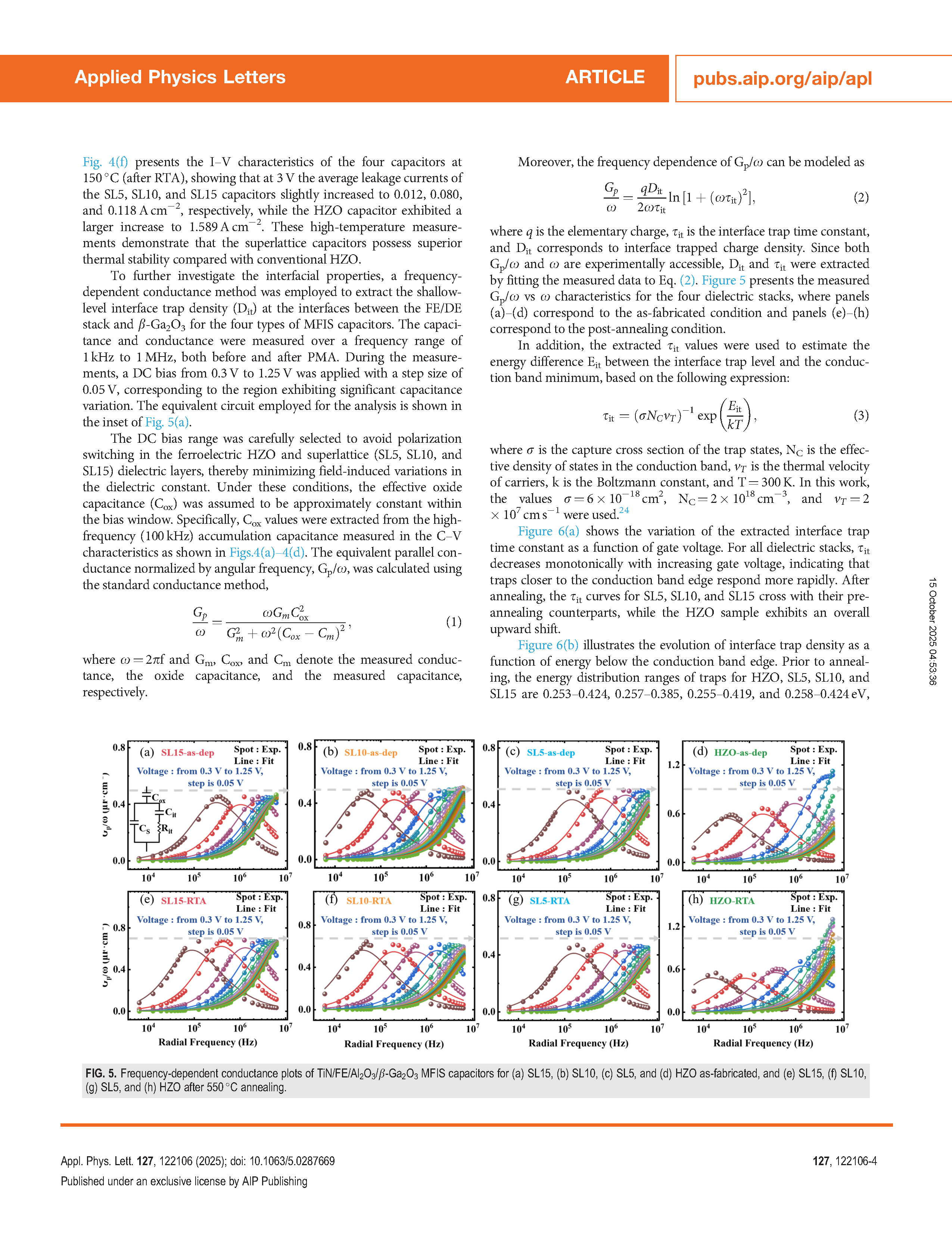
FIG. 4. (a)–(d) C–V characteristics of MFIS capacitors with HZO, SL5, SL10, and SL15 in as-fabricated and post-annealing states. (e) and (f) I–V characteristics of the corresponding MFIS capacitors at room temperature and 150 C.
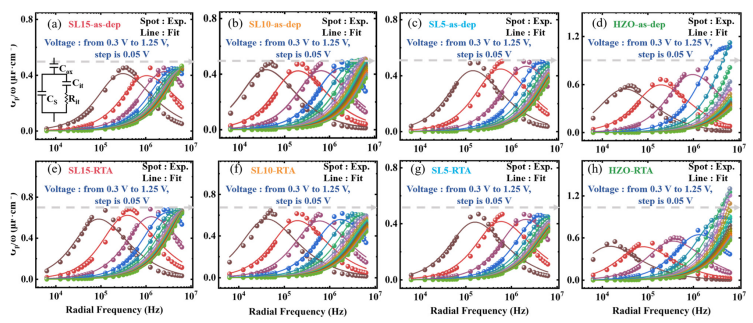
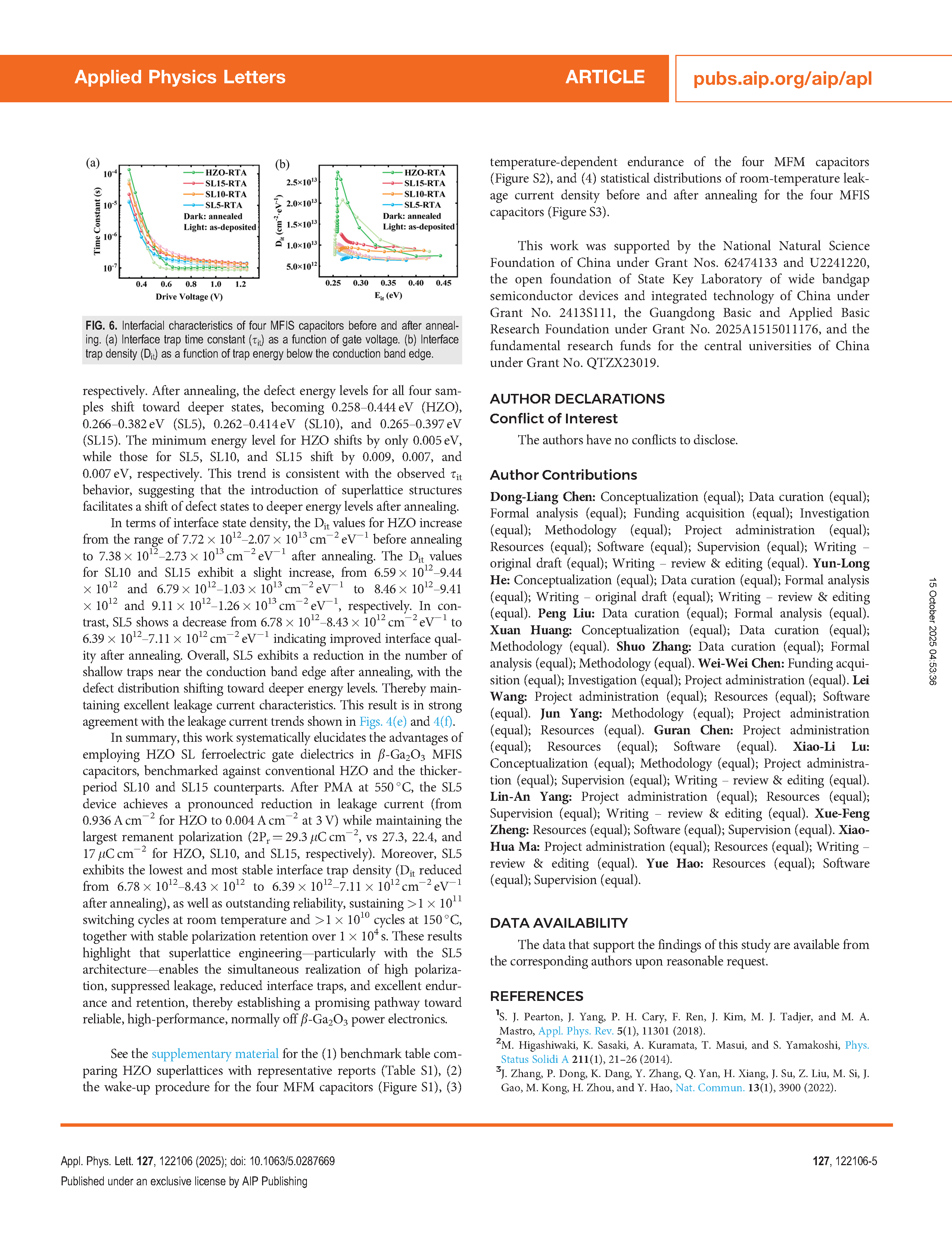
FIG. 5. Frequency-dependent conductance plots of TiN/FE/Al2O3/β-Ga2O3 MFIS capacitors for (a) SL15, (b) SL10, (c) SL5, and (d) HZO as-fabricated, and (e) SL15, (f) SL10, (g) SL5, and (h) HZO after 550 °C annealing.
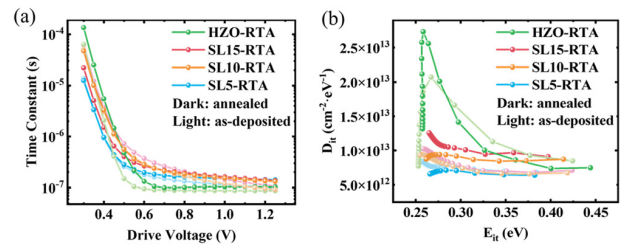
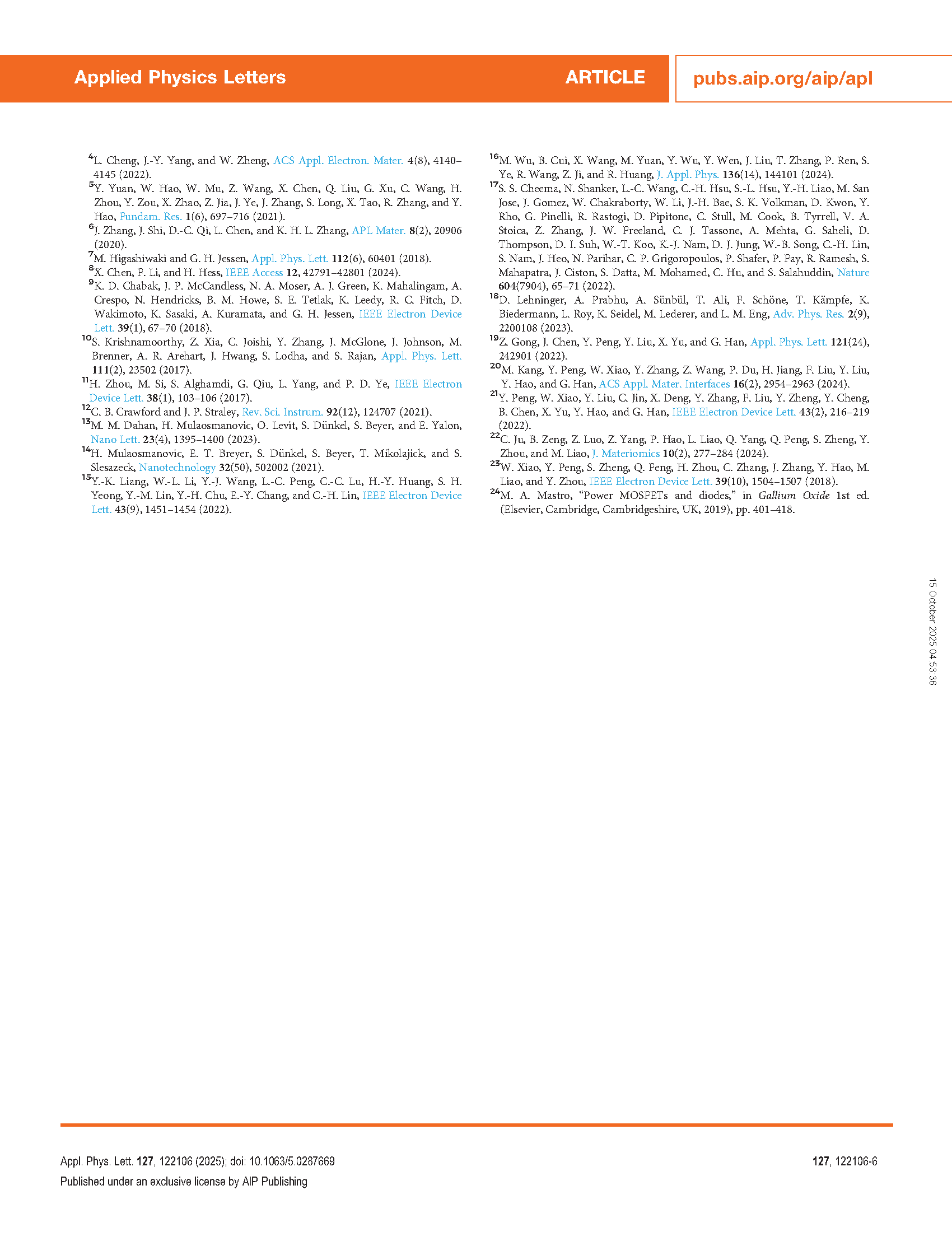
FIG. 6. Interfacial characteristics of four MFIS capacitors before and after annealing. (a) Interface trap time constant (τit) as a function of gate voltage. (b) Interface trap density (Dit) as a function of trap energy below the conduction band edge.
DOI:
doi.org/10.1063/5.0287669
Instruction
Official Account

Cooperation
Top