


Recently, the research team led by Professor Jiangang Ma and Associate Professor Peng Li from the School of Physics at Northeast Normal University and the National Key Laboratory of Integrated Optoelectronics has made significant progress in ultraviolet detection and imaging. Solar-blind UV detection (200–280 nm) holds important applications in fields such as high-voltage transmission monitoring and fire detection. Focusing on improving key detector performance metrics—responsivity, detectivity, and response speed—as well as exploring new applications including single-pixel imaging and biomimetic vision, the team has achieved a series of original research outcomes in Ga₂O₃-based solar-blind UV detection and imaging. Their results have been continuously published in internationally renowned journals such as Nature Communications and IEEE Electron Device Letters.
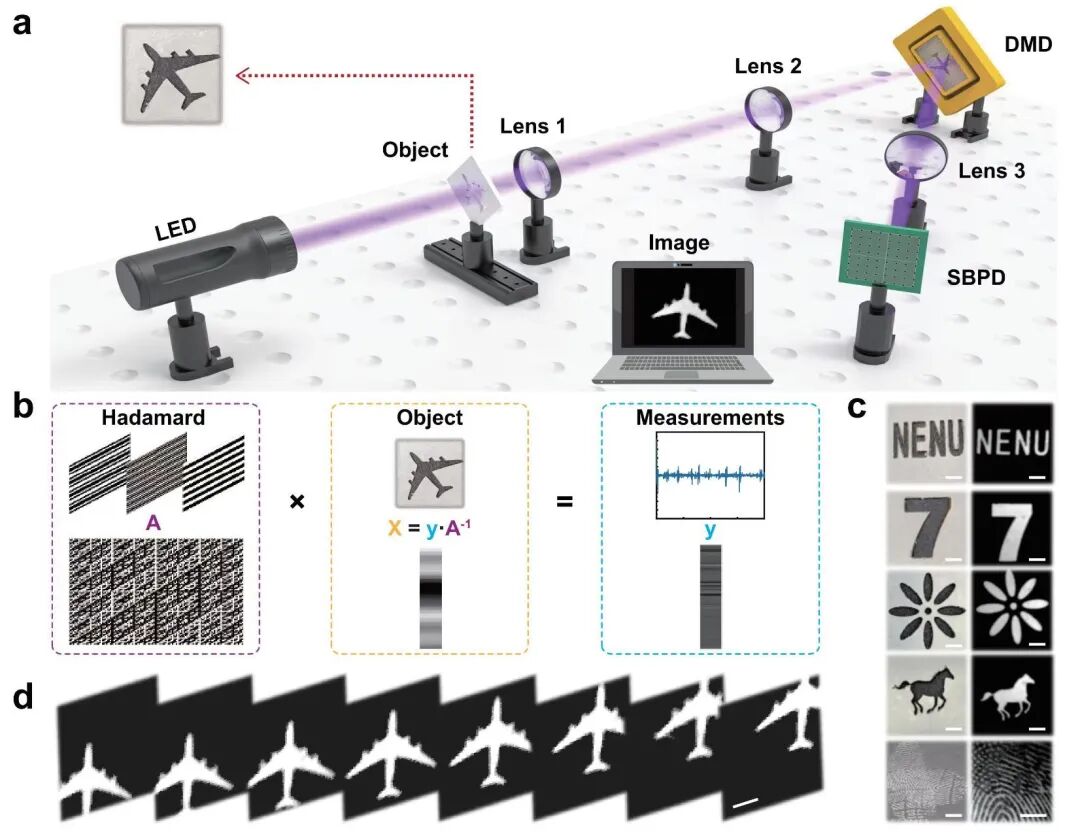
Figure 1. Solar-blind UV Single-Pixel Imaging System and Its Imaging of Static and Dynamic Objects
The team designed a solar-blind UV photodetector based on a Ga₂O₃/AlN/AlGaN:Si heterojunction, leveraging the spontaneous polarization field at the N-polar AlN/AlGaN:Si interface to accelerate the separation and transport of photogenerated carriers. Under 245 nm illumination and zero bias, the detector simultaneously achieves high responsivity (0.73 A/W), high detectivity (>10¹¹ Jones), and fast response speed (rise time ~60 ns, decay time ~56 μs).
In collaboration with Professor Cheng Zhou from the School of Physics, the team built a solar-blind UV single-pixel imaging system. Through device–algorithm co-optimization, they successfully realized clear imaging and real-time demonstrations of both static and moving targets.
The related work, titled “High-sensitivity and fast-response solar-blind photodetectors via band offset engineering for motion tracking”, was published in Nature Communications. Prof. Hongbin Wang (Postdoctoral Researcher, School of Physics) is the first author, and Associate Professor Peng Li, Professor Jiangang Ma, and Professor Haiyang Xu are the corresponding authors.
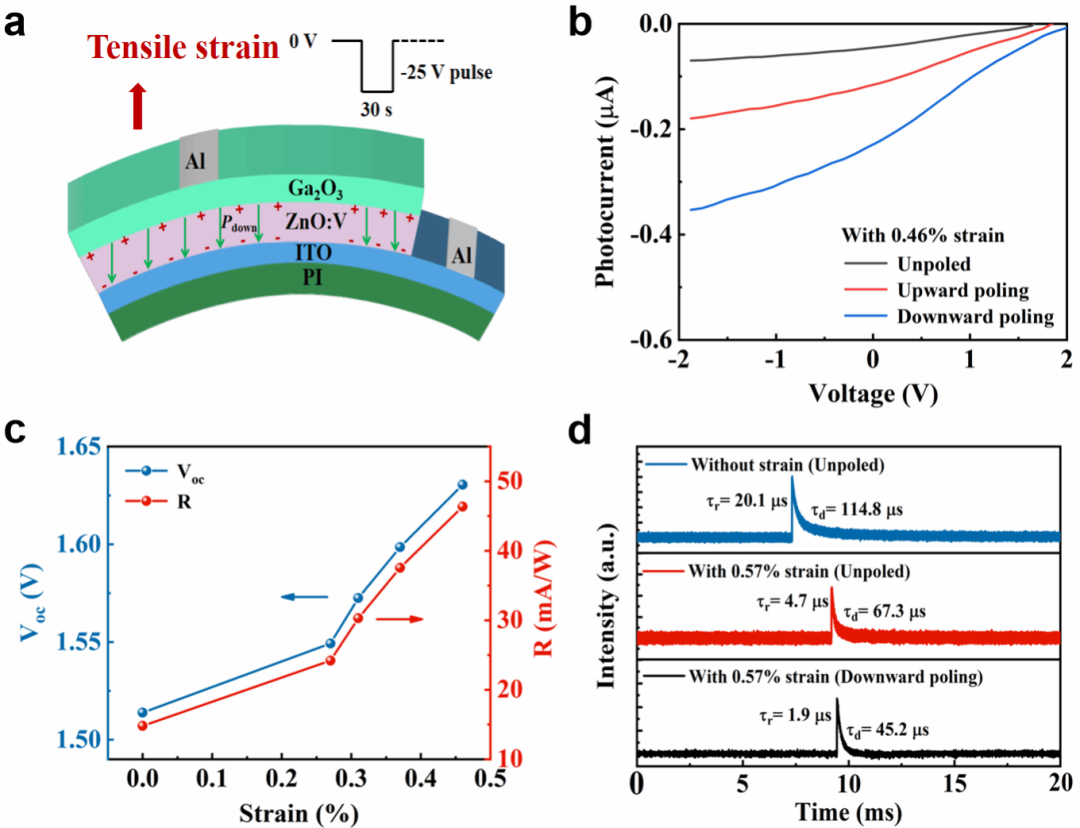
Figure 2. Coupling Ferroelectric and Piezoelectric Effects to Regulate Photodetector Performance
The team developed a self-powered solar-blind UV photodetector based on a Ga₂O₃/ZnO:V heterojunction, where the coupling of piezoelectricity and ferroelectric polarization enhances the built-in electric field and improves the separation efficiency of photogenerated carriers.
Under 260 nm illumination and zero bias, the detector achieves a responsivity of 64.5 mA/W, a detectivity of 3.8 × 10¹⁰ Jones, and rise/decay times of 1.9 μs / 45.2 μs.
This work, titled “Enhanced Performance of Self-Powered Ga2O3/ZnO:V Heterojunction Solar-Blind Ultraviolet Photodetectors by Coupling Ferroelectricity and Piezoelectricity”, was published in ACS Applied Materials & Interfaces. Prof. Hongbin Wang is the first author, and Associate Professor Peng Li and Professor Jiangang Ma are the corresponding authors.
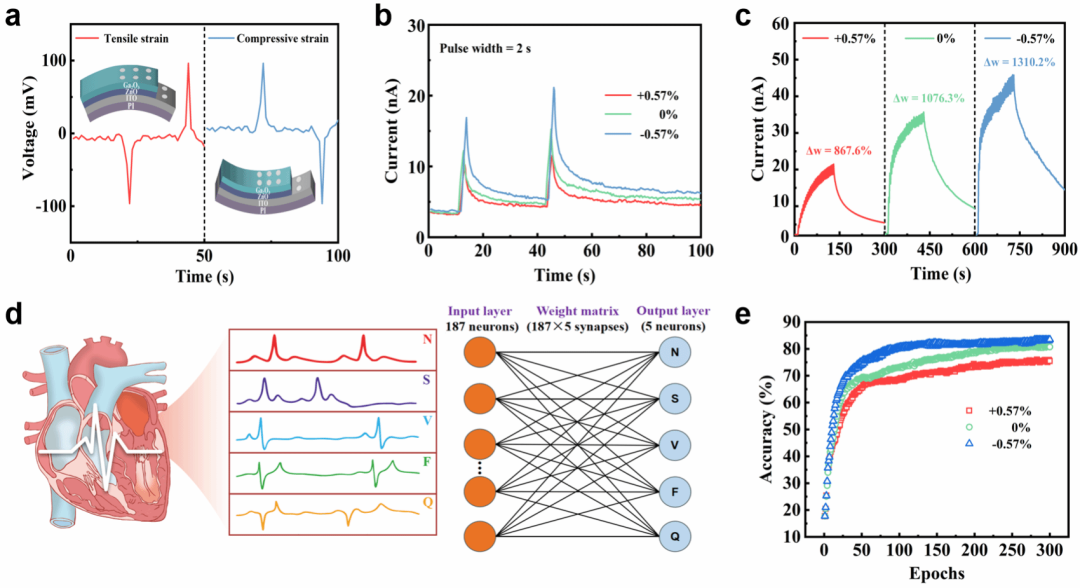
Figure 3. Piezoelectric Modulation of Synaptic Plasticity and ECG Pattern Recognition
The team further developed a flexible optoelectronic synapse based on an a-Ga₂O₃/ZnO heterojunction by combining the persistent photoconductivity of amorphous Ga₂O₃ and the piezoelectric effect of ZnO. Strain-induced piezoelectric polarization modulates band bending and carrier dynamics at the heterointerface. Under –0.57% compressive strain, the synaptic weight increases by 22% (from 1076.3% to 1310.2%).
Using this device, the team demonstrated ECG (electrocardiogram) pattern recognition, with accuracy improved to 83.5% under strain modulation.
The related work, titled “Ga2O3-Based Optoelectronic Synapse With Piezo/Photo-Gated Modulation for Multimodal Perception”, was published in IEEE Electron Device Letters. Prof. Hongbin Wang is the first author, and Associate Professor Peng Li and Professor Jiangang Ma are the corresponding authors.
These research achievements were strongly supported by the National Key R&D Program of China, the National Natural Science Foundation of China (General Program and Young Scientists Fund), and the Jilin Provincial Department of Science and Technology.
Links to the published papers:
https://www.nature.com/articles/s41467-025-63683-w
https://doi.org/10.1021/acsami.4c04747
https://ieeexplore.ieee.org/abstract/document/11087229
Instruction
Official Account

Cooperation
Top