

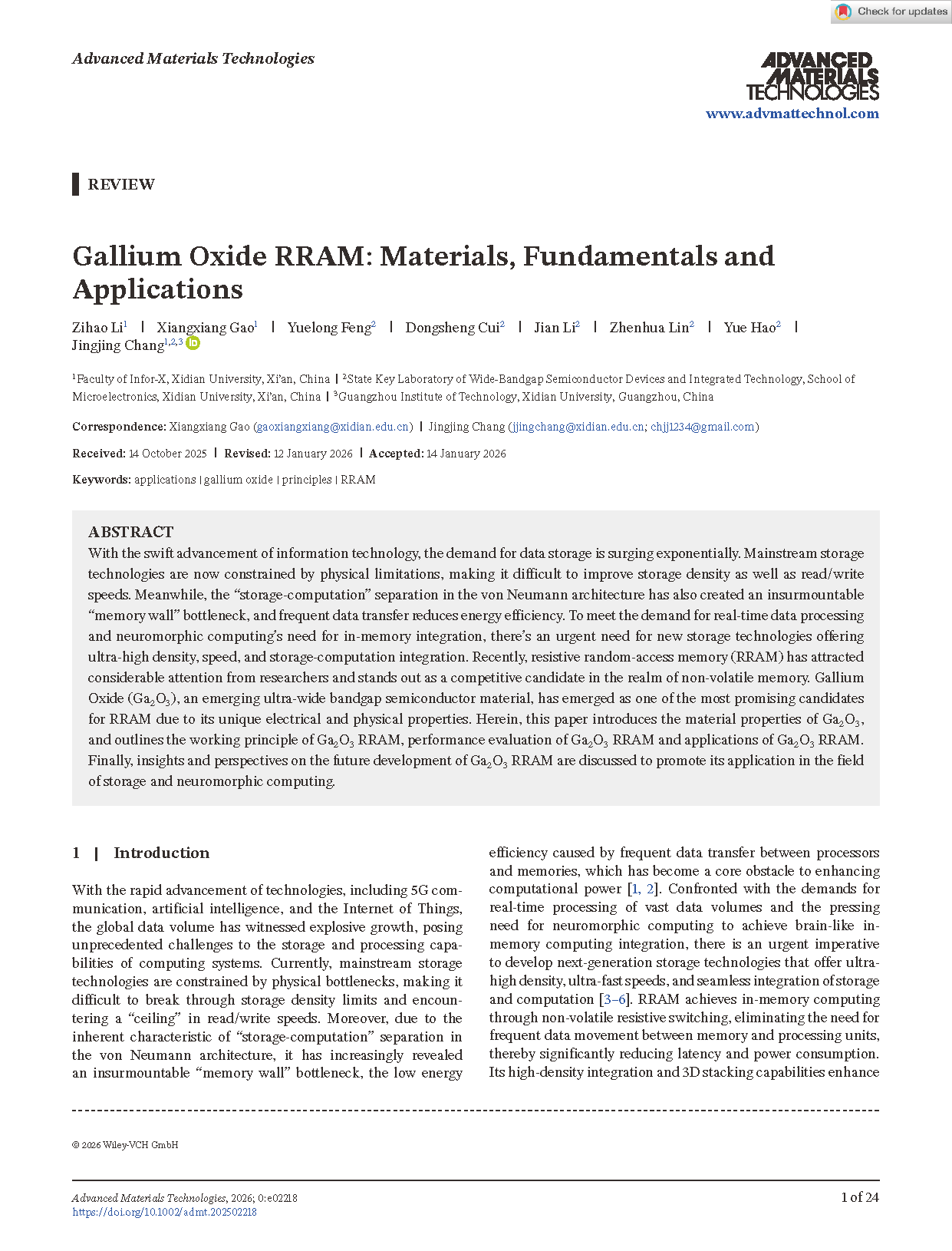
Researchers from the Xidian University have published a dissertation titled "Gallium Oxide RRAM: Materials, Fundamentals and Applications" in Advanced Materials Technologies.
Project Support
This work is supported by the National Natural Science Foundation of China (62304167, 52192610, 62274127, 625B2140, 62421005), the National Key Research and Development Program of China (2021YFA0715600, 2021YFA0717700), Guangdong Basic and Applied Basic Research Fund (2024B1515120035), 2023 Qinchuangyuan Construction Two Chain Integration Special Project (23LLRH0043), Key Research and Development Program of Shaanxi Province (2024GX-YBXM-512).
Background
With the rapid advancement of technologies, including 5G communication, artificial intelligence, and the Internet of Things, the global data volume has witnessed explosive growth, posing unprecedented challenges to the storage and processing capabilities of computing systems. Currently, mainstream storage technologies are constrained by physical bottlenecks, making it difficult to break through storage density limits and encountering a “ceiling” in read/write speeds. Moreover, due to the inherent characteristic of “storage-computation” separation in the von Neumann architecture, it has increasingly revealed an insurmountable “memory wall” bottleneck, the low energy efficiency caused by frequent data transfer between processors and memories, which has become a core obstacle to enhancing computational power. Confronted with the demands for real-time processing of vast data volumes and the pressing need for neuromorphic computing to achieve brain-like in-memory computing integration, there is an urgent imperative to develop next-generation storage technologies that offer ultra-high density, ultra-fast speeds, and seamless integration of storage and computation. RRAM achieves in-memory computing through non-volatile resistive switching, eliminating the need for frequent data movement between memory and processing units, thereby significantly reducing latency and power consumption. Its high-density integration and 3D stacking capabilities enhance storage capacity, while multi-level storage characteristics support efficient data processing. Additionally, its process compatibility facilitates large-scale production, making it an ideal solution for breaking through the memory wall.
Abstract
With the swift advancement of information technology, the demand for data storage is surging exponentially. Mainstream storage technologies are now constrained by physical limitations, making it difficult to improve storage density as well as read/write speeds. Meanwhile, the “storage-computation” separation in the von Neumann architecture has also created an insurmountable “memory wall” bottleneck, and frequent data transfer reduces energy efficiency. To meet the demand for real-time data processing and neuromorphic computing's need for in-memory integration, there's an urgent need for new storage technologies offering ultra-high density, speed, and storage-computation integration. Recently, resistive random-access memory (RRAM) has attracted considerable attention from researchers and stands out as a competitive candidate in the realm of non-volatile memory. Gallium Oxide (Ga2O3), an emerging ultra-wide bandgap semiconductor material, has emerged as one of the most promising candidates for RRAM due to its unique electrical and physical properties. Herein, this paper introduces the material properties of Ga2O3, and outlines the working principle of Ga2O3 RRAM, performance evaluation of Ga2O3 RRAM and applications of Ga2O3 RRAM. Finally, insights and perspectives on the future development of Ga2O3 RRAM are discussed to promote its application in the field of storage and neuromorphic computing.
Conclusion
Ga2O3, as a wide-bandgap semiconductor material, exhibits significant application prospects in the domain of RRAM, attributed to its remarkable electrical, optical, and chemical stability. This paper provides an overview of the characteristics of Ga2O3 materials, the structure, operating characteristics, and mechanisms of Ga2O3 RRAM, as well as the performance evaluation and applications of Ga2O3 RRAM. Significant opportunities and challenges lie ahead in fully leveraging the unique potential of Ga2O3 RRAM. (1) Electrical performance needs further optimization: the operation current is excessively high, and the endurance is inadequate. Specifically, the reset operation current in Ga2O3 RRAM is relatively elevated (usually exceeding 10 µA), which results in heightened power consumption. Moreover, the device is susceptible to resistance drift or failure during cyclic operations, thereby compromising long-term stability. To mitigate these issues, optimizing electrode materials and interface engineering is essential to reduce the operation current. Additionally, improvements in the structure of the RS layer, such as incorporating multi-layer RS layers or nanocomposite materials, can enhance endurance. (2) Challenges in achieving multilevel storage: Ga2O3 RRAM is prone to resistance state overlap or drift during multi-level storage operations, leading to data storage errors. The significant disparity between set and reset voltages adversely affects the precision of multi-level storage. Consequently, the development of novel RS mechanisms, such as interface-type RS, is imperative to improve the stability of resistance states. Furthermore, optimizing the device structure to balance set and reset voltages is also necessary. (3) Thermal management and heat dissipation issues: Ga2O3 exhibits relatively low thermal conductivity (0.27 W/cm⋅K), which can result in local overheating during high-density integration, thereby affecting device performance. These issues can be addressed by optimizing the device structure, introducing heat dissipation channels or high thermal conductivity materials, and developing innovative packaging technologies to enhance heat dissipation efficiency. (4) Multi-functional expansion: beyond its traditional applications in storage and computation, Ga2O3 RRAM holds significant promise in emerging fields such as artificial intelligence and neuromorphic computing. By integrating with technologies like biosensors and wearable devices, it is expected to drive innovation and open up new development avenues in sectors such as medical healthcare and smart wearables.
Ga2O3 RRAM demonstrates tremendous application potential in the next generation of information storage and computing fields due to their multi-level non-volatile storage, logical operation, image processing capabilities, high reliability, multi-function integration, low power consumption, and high-speed characteristics. With the further advancement of material preparation and device fabrication technologies, Ga2O3 RRAMs are expected to become a core component of high-performance electronic systems in the future.
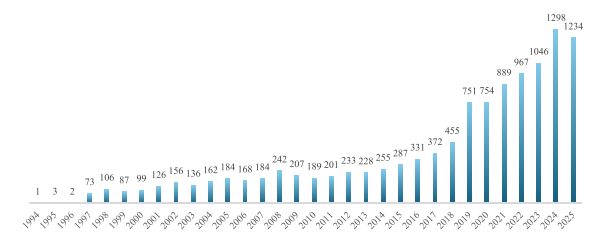
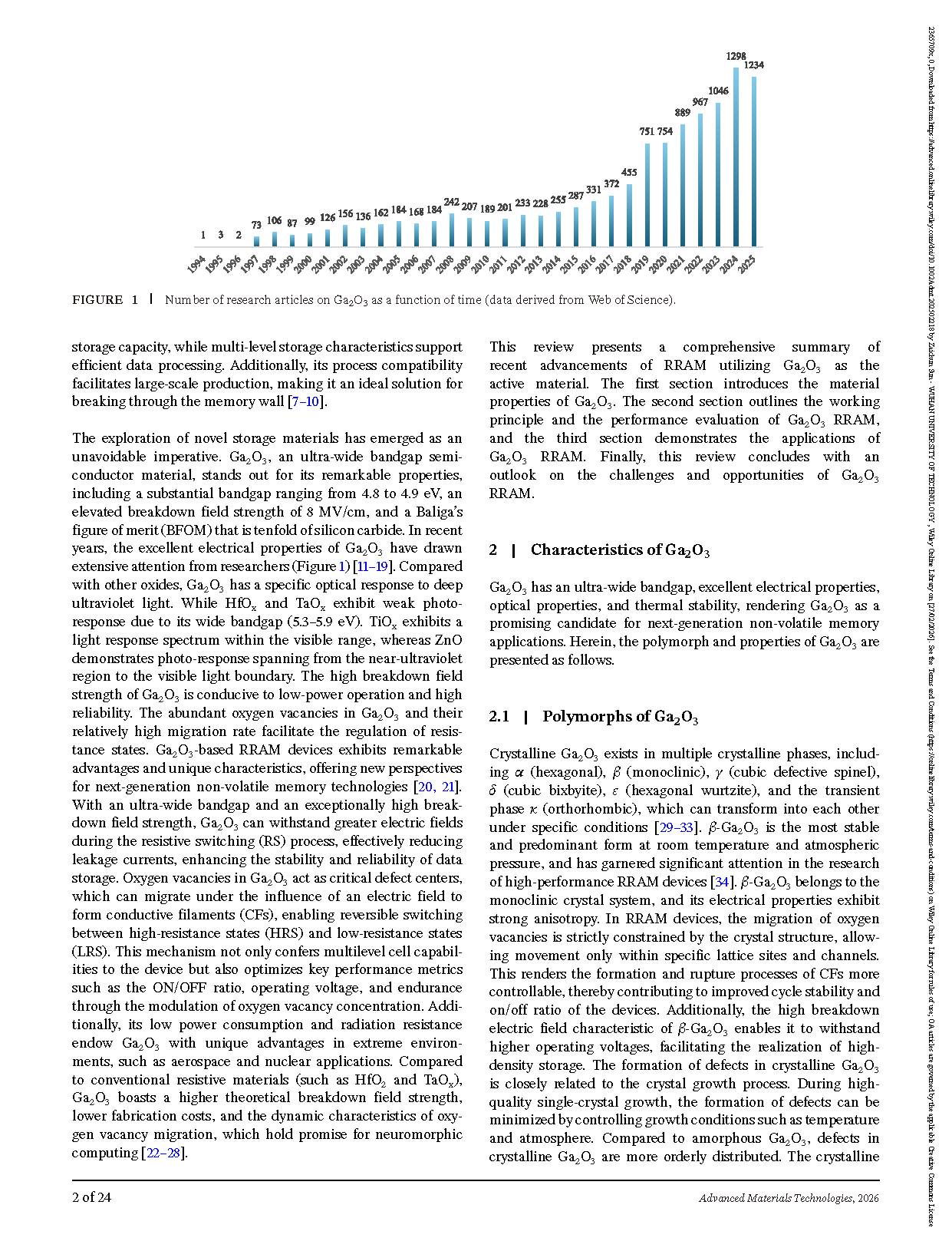
FIGURE 1 Number of research articles on Ga2O3 as a function of time (data derived from Web of Science).
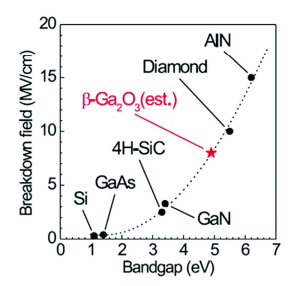
FIGURE 2 The breakdown fields and bandgaps of different semiconductors.
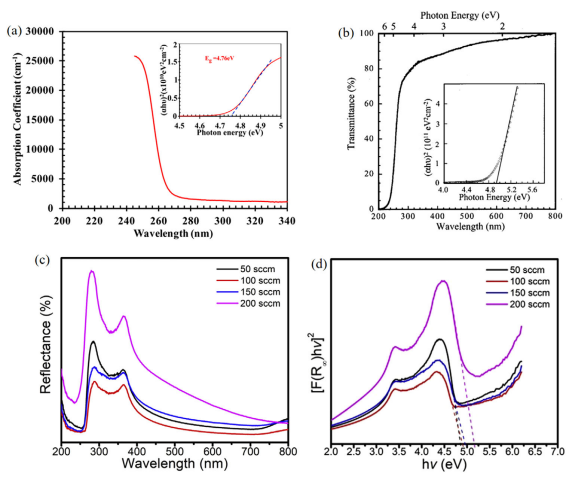
FIGURE 3 The calculation of bandgap width by (a) the absorption spectra. (b) transmission spectra, and (c-d) UV–vis diffuse reflectance spectra.
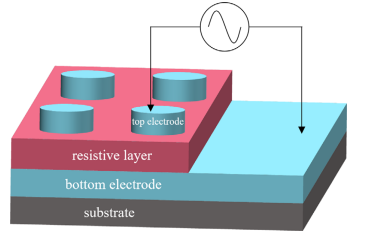
FIGURE 4 Structure diagram of RRAM.
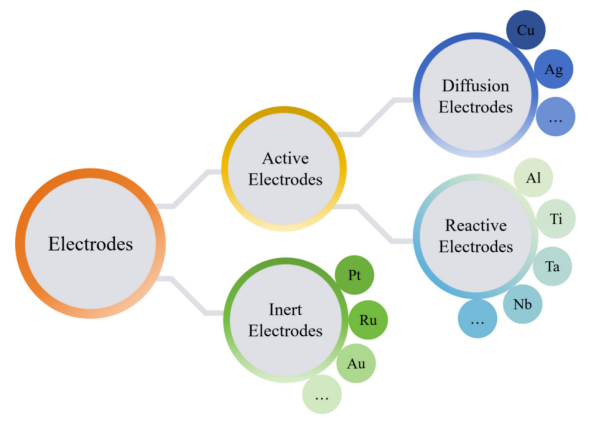
FIGURE 5 Type of RRAM electrodes.
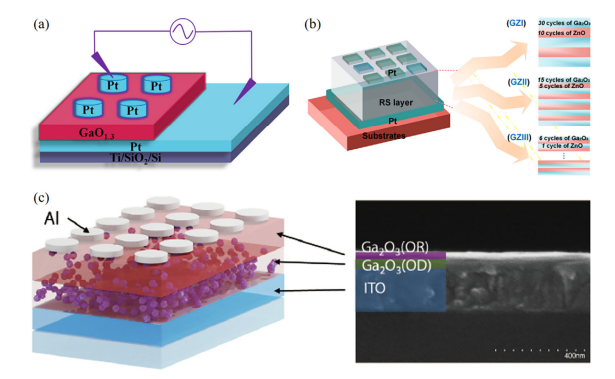
FIGURE 6 Diagram of (a) single-layer Ga2O3 RRAM structure, (b) heterogeneous Ga2O3 RRAM structure, and (c) homogeneous Ga2O3 RRAM structure.
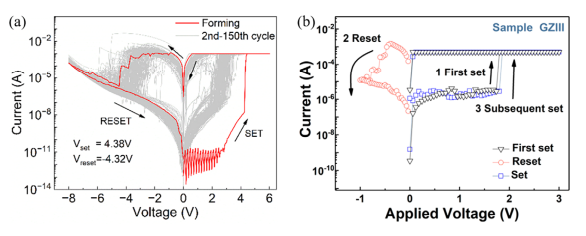
FIGURE 7 Schematic I-V curves of RRAM (a) with forming process. (b) forming-free process.

FIGURE 8 Multilevel switching capability in RRAM of (a) different Icc, (b) different oxygen vacancies and (c) different UV light intensities.
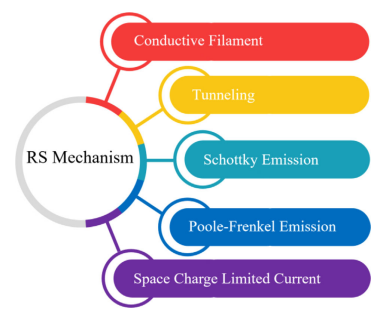
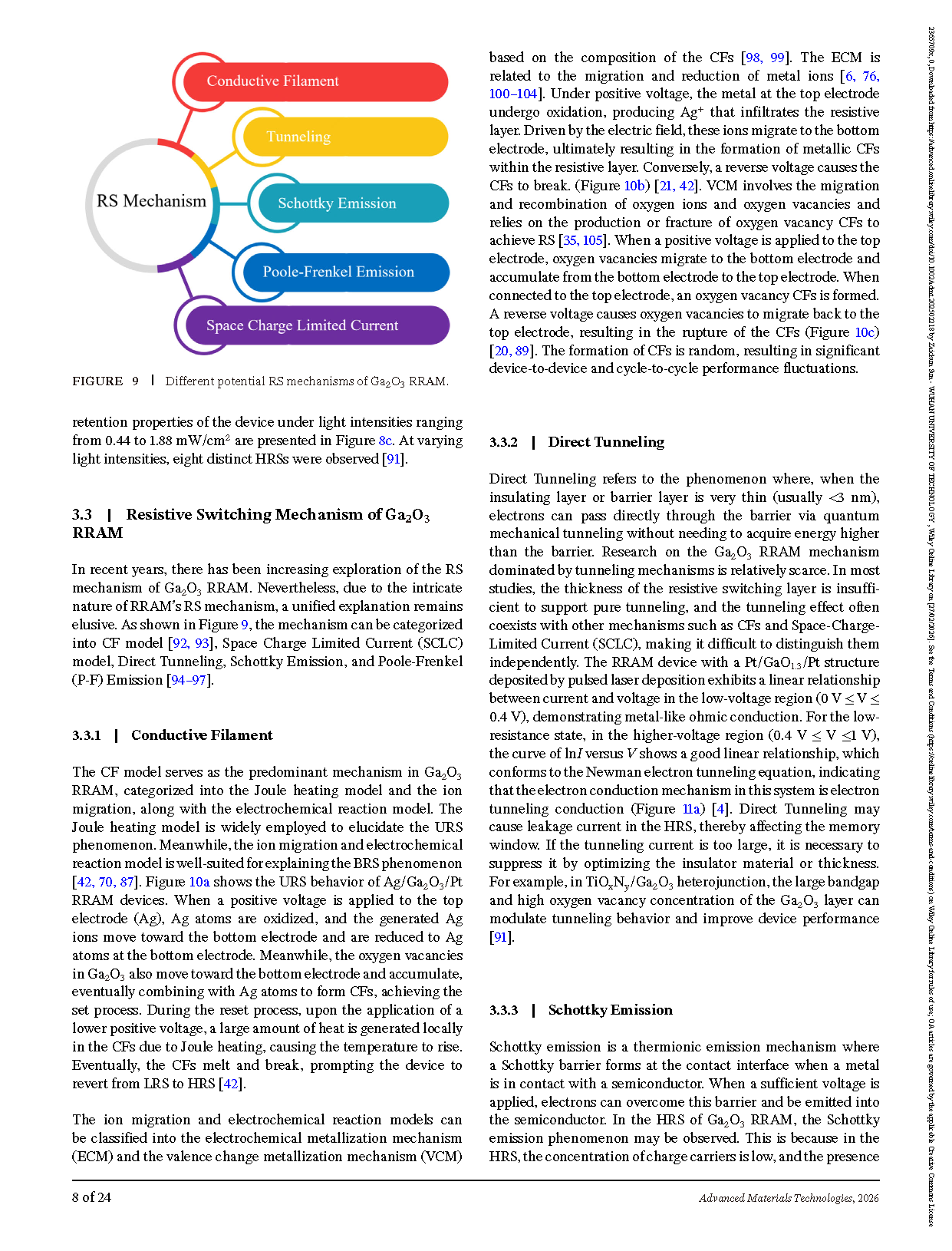
FIGURE 9 Different potential RS mechanisms of Ga2O3 RRAM.

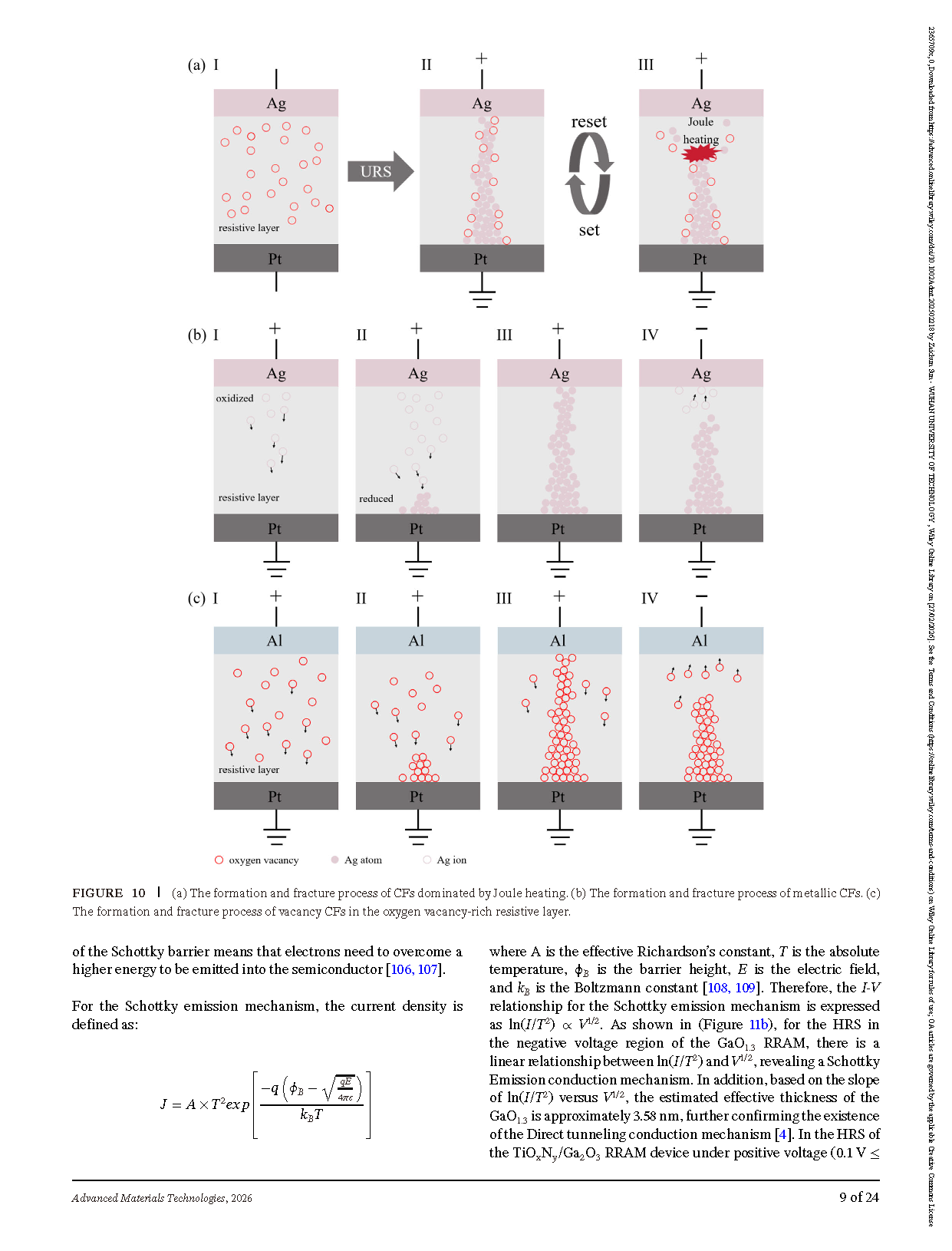
FIGURE 10 (a) The formation and fracture process of CFs dominated by Joule heating. (b) The formation and fracture process of metallic CFs. (c) The formation and fracture process of vacancy CFs in the oxygen vacancy-rich resistive layer.
DOI:
doi.org/10.1002/admt.202502218






Instruction
Official Account

Cooperation
Top