


Researchers from the Tianjin University of Technology have published a dissertation titled "Study of Internal Radiation During β-Ga2O3 Crystal Growth Process by Vertical Bridgman Method" in Journal of Synthetic Crystals.
Background
β-Ga2O3 is a prominent ultra-wide bandgap (UWBG) semiconductor (~4.8 eV) with superior potential for power electronic devices, solar-blind ultraviolet detection, and high-temperature operations. Currently, single-crystal production primarily relies on melt-growth methods such as the Edge-defined Film-fed Growth (EFG) and Czochralski (CZ) methods. Compared to other techniques, the VB method is gaining industry attention due to its relative simplicity, lower requirement for equipment precision, and significant potential for large-scale, high-quality crystal production. With a melting point near 1820°C and high transparency in the near-infrared to visible light spectrum, heat transfer in β-Ga2O3 is not limited to conduction and convection. Internal Radiative Heat Transfer becomes a dominant factor. Because the crystal and melt are semi-transparent to thermal radiation, heat can penetrate the medium directly, causing the thermal field to deviate from conventional fluid dynamics. Failure to accurately simulate and control internal radiation often leads to severe temperature gradient fluctuations, resulting in crystal cracking, increased stress, or distorted solid-liquid (S-L) interfaces.
Abstract
β-phase gallium oxide (β-Ga2O3) crystals have become a key material for high-power devices due to their ultra-wide bandgap characteristics. The vertical Bridgman method is currently the most promising approach for commercial-scale growth of gallium oxide single crystals. However, the semi-transparent nature of gallium oxide crystals and melts can cause significant internal radiation, which affects the temperature and flow fields during crystal growth and thus the crystal quality. Therefore, in this paper, a heat transfer numerical model for the growth process of gallium oxide crystals by the VB method was established using the finite element software Comsol Multiphysics. The influence of internal radiation on the temperature field, melt flow field, melt-crystal interface, and crystal thermal stress was systematically investigated. The numerical simulation results show that the internal radiation in the crystal significantly enhances the thermal transport of the crystal. The radiation heat from the melt-crystal interface can directly penetrate the semi-transparent crystal to the crucible wall, reducing the temperature gradient and thermal stress inside the crystal. This radiation directly cools the melt-crystal interface, causing a downward trend in the temperature at the interface. To maintain the melting point temperature, the melt-crystal interface must move towards the upper high-temperature melt, increasing the convexity of the interface. The internal radiation in the melt also affects the heat transfer in the melt region. The radiation from the hot zone can penetrate the melt to the melt-crystal interface, radiatively heating the interface. Therefore, the melt-crystal interface moves towards the crystal side, and the convexity of the interface shape decreases, presenting a W-shaped distribution. However, since the isothermal lines and thermal stress of the crystal mainly accumulate at the bottom of the crystal, the effect on the temperature gradient and thermal stress inside the crystal is small. In addition, the sensitivity of internal radiation to the absorption coefficients of the crystal and melt was systematically analyzed. It was found that as the absorption coefficient of the crystal decreases, the internal radiation in the crystal increases, the temperature gradients in the melt and crystal decrease, the thermal stress of the crystal decreases, and the convexity of the melt-crystal interface increases, leading to an uneven radial distribution of solutes. As the absorption coefficient of the melt decreases, the internal radiation in the melt increases, the temperature gradient and thermal stress at the bottom of the crystal slightly decrease, the convexity of the melt-crystal interface at the center decreases, the W-shaped distribution becomes more obvious, and the edges are more prone to polycrystalline nucleation, thereby affecting the crystal quality.
Conclusion
At the growth temperature of gallium oxide, internal radiation significantly reduces the internal temperature gradient. While this leads to a more uniform thermal field, it increases the difficulty of controlling the S-L interface curvature. The lower the absorption coefficient (the more transparent the crystal), the stronger the internal radiation effect, causing the S-L interface to become more convex toward the melt. To achieve high-quality, crack-free crystals, the VB furnace's insulation structure and pulling speed must be precisely adjusted in conjunction with internal radiation effects to ensure the S-L interface remains in an ideal slightly convex or flat state.
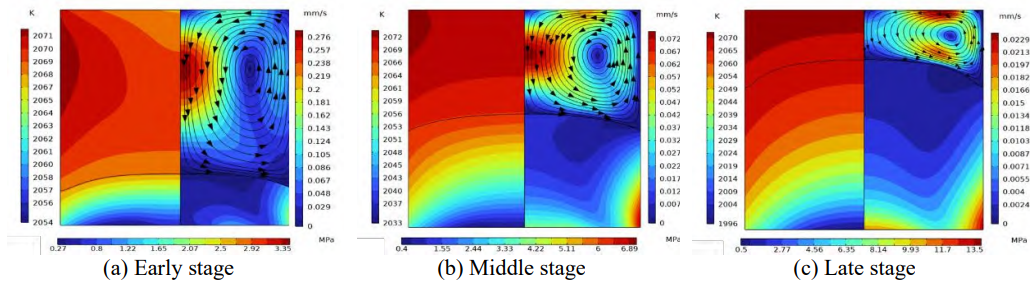
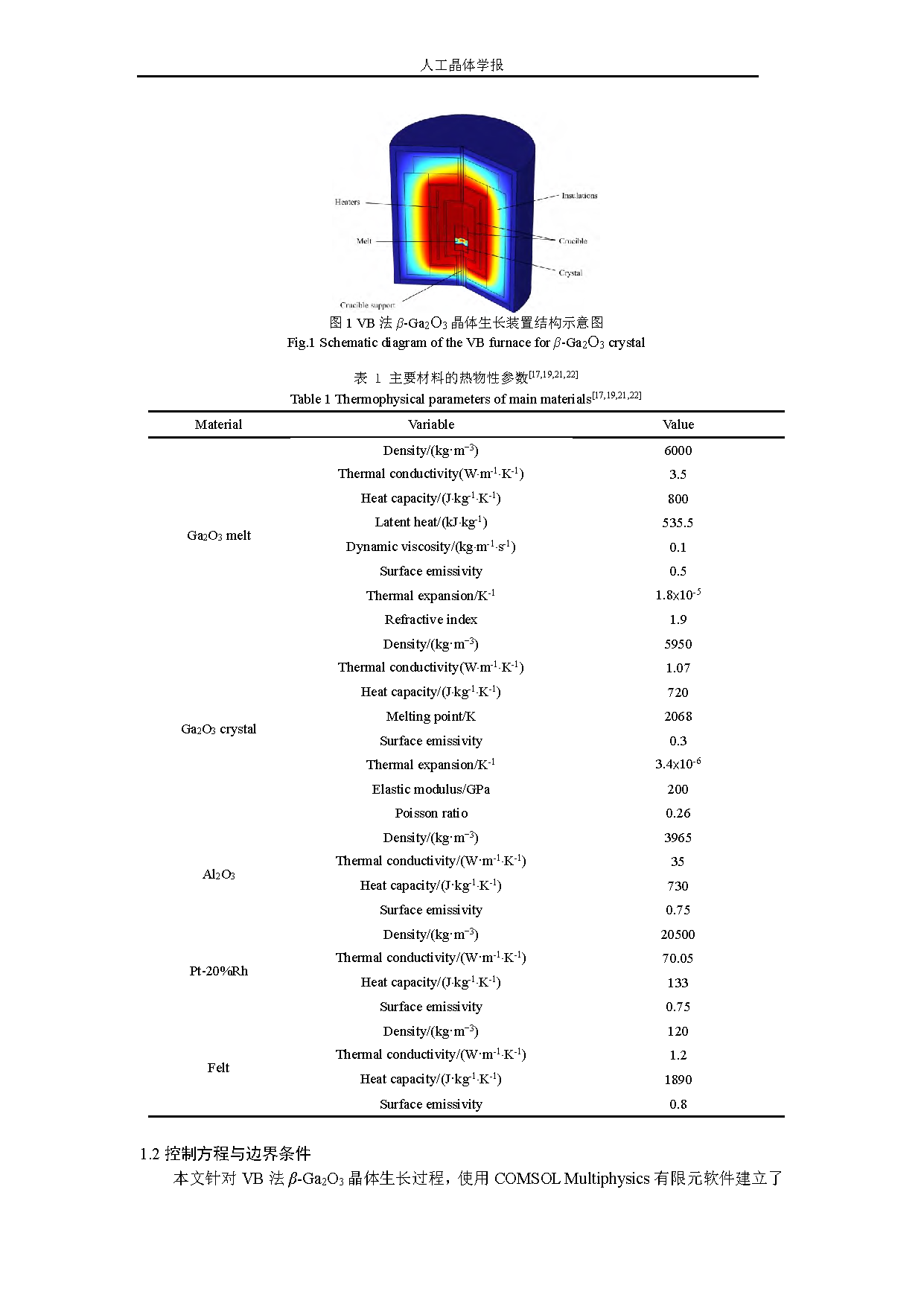
Fig.1 Schematic diagram of the VB furnace for β-Ga2O3 crystal
Fig.2 Temperature fields, flow fields, and Von Mises stress diagrams at different growth stages when both the crystal and the melt are opaque
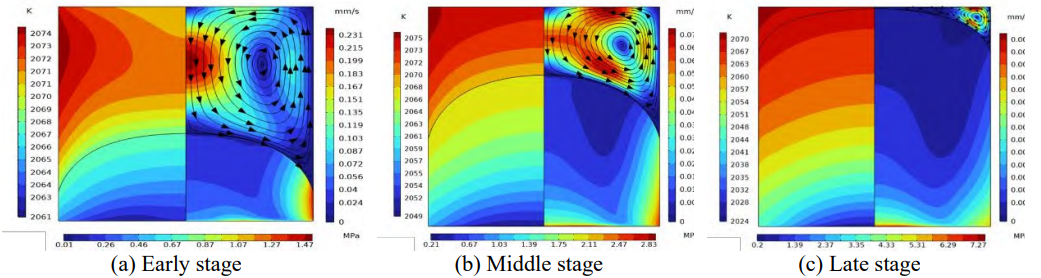
Fig.3 Temperature fields, flow fields, and Von Mises stress diagrams at different growth stages when the crystal is semi-transparent
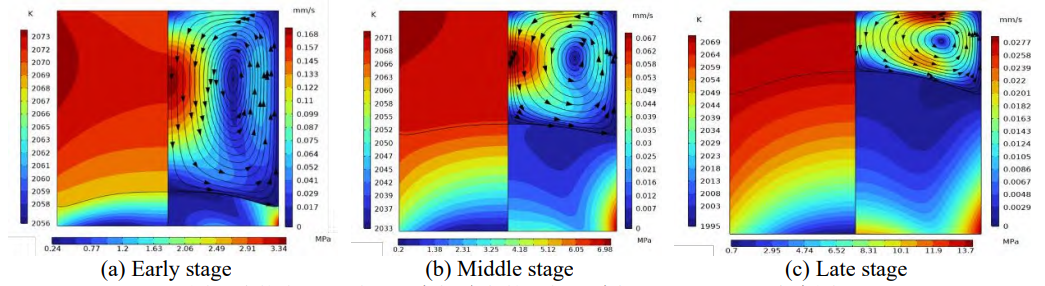
Fig.4 Temperature fields, flow fields, and Von Mises stress diagrams at different growth stages when the melt is semi-transparent
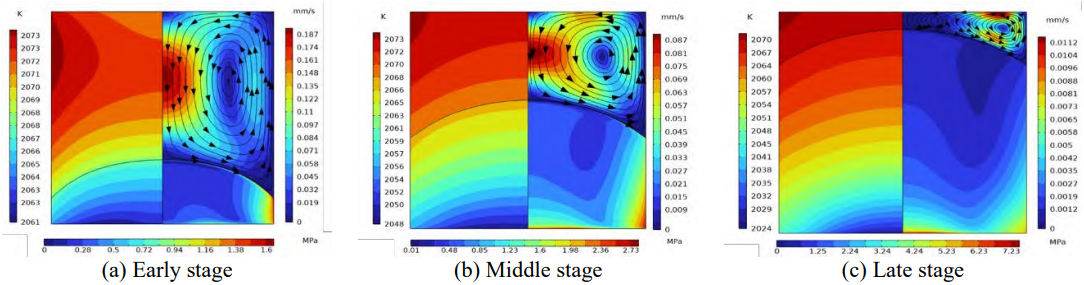
Fig.5 Temperature fields, flow fields, and Von Mises stress diagrams at different growth stages when both the crystal and the melt are semi-transparent
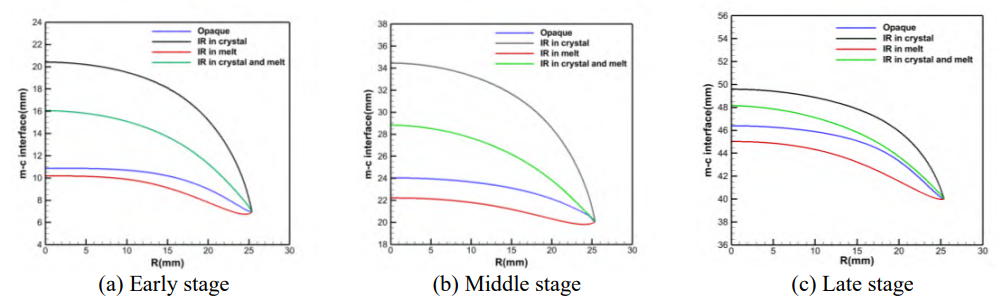
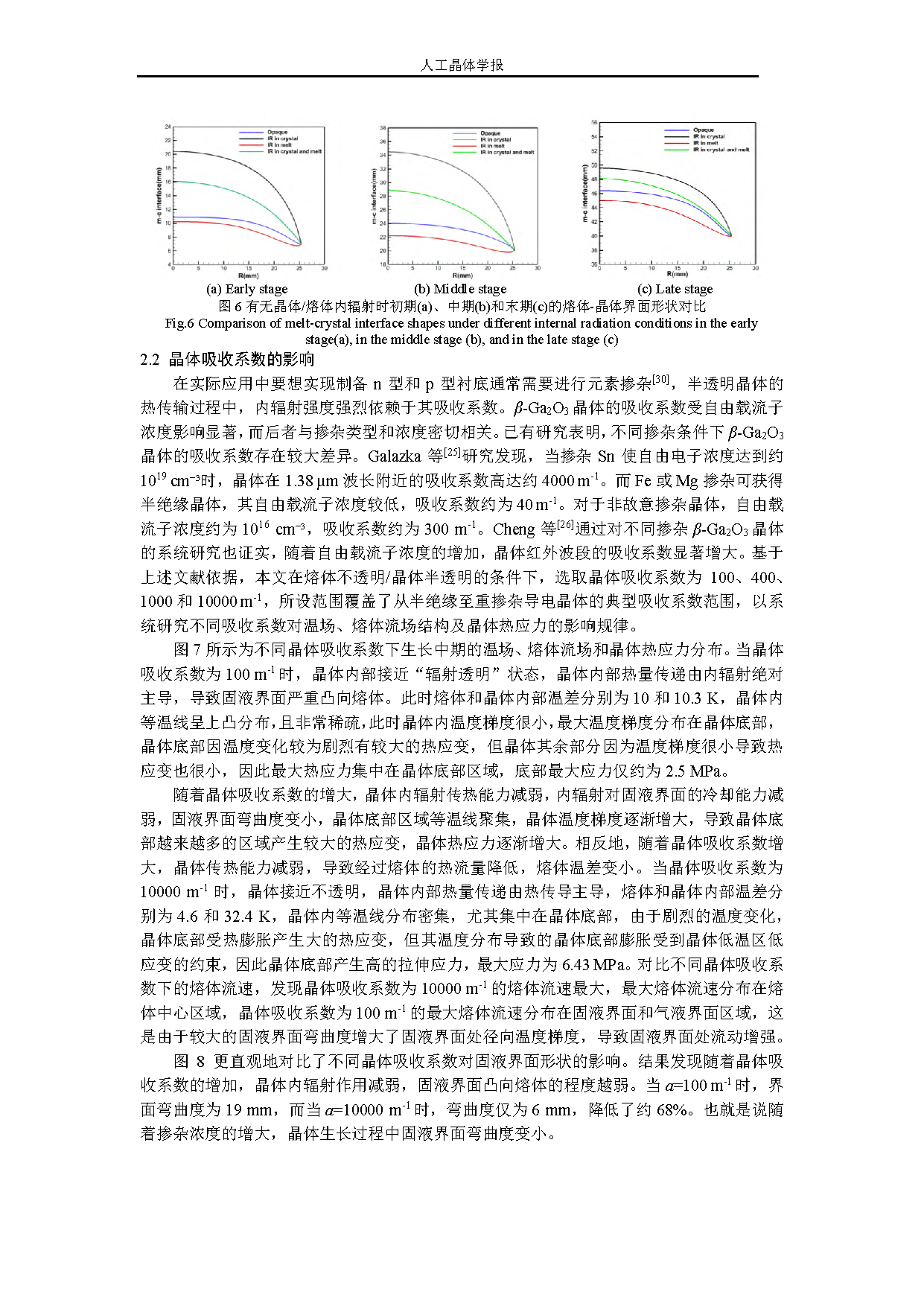
Fig.6 Comparison of melt-crystal interface shapes under different internal radiation conditions in the early stage(a), in the middle stage (b), and in the late stage (c)
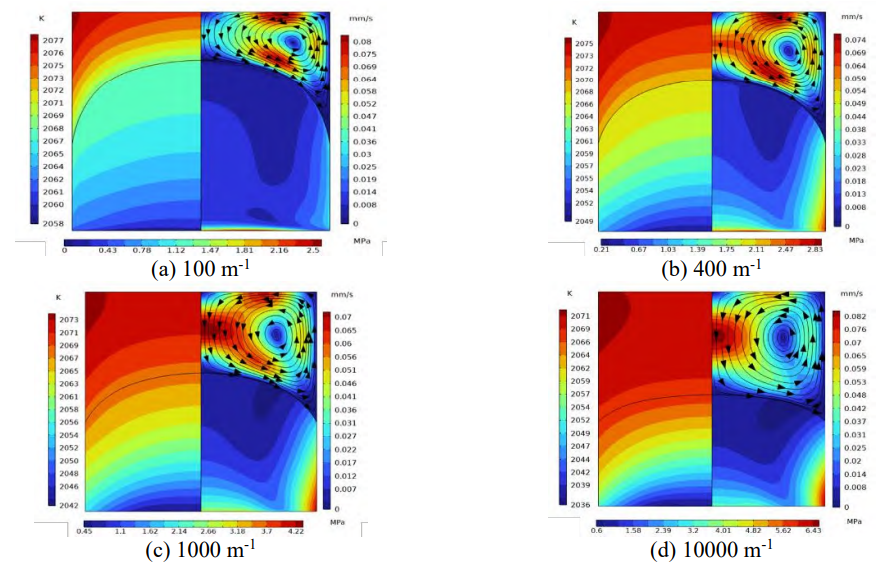
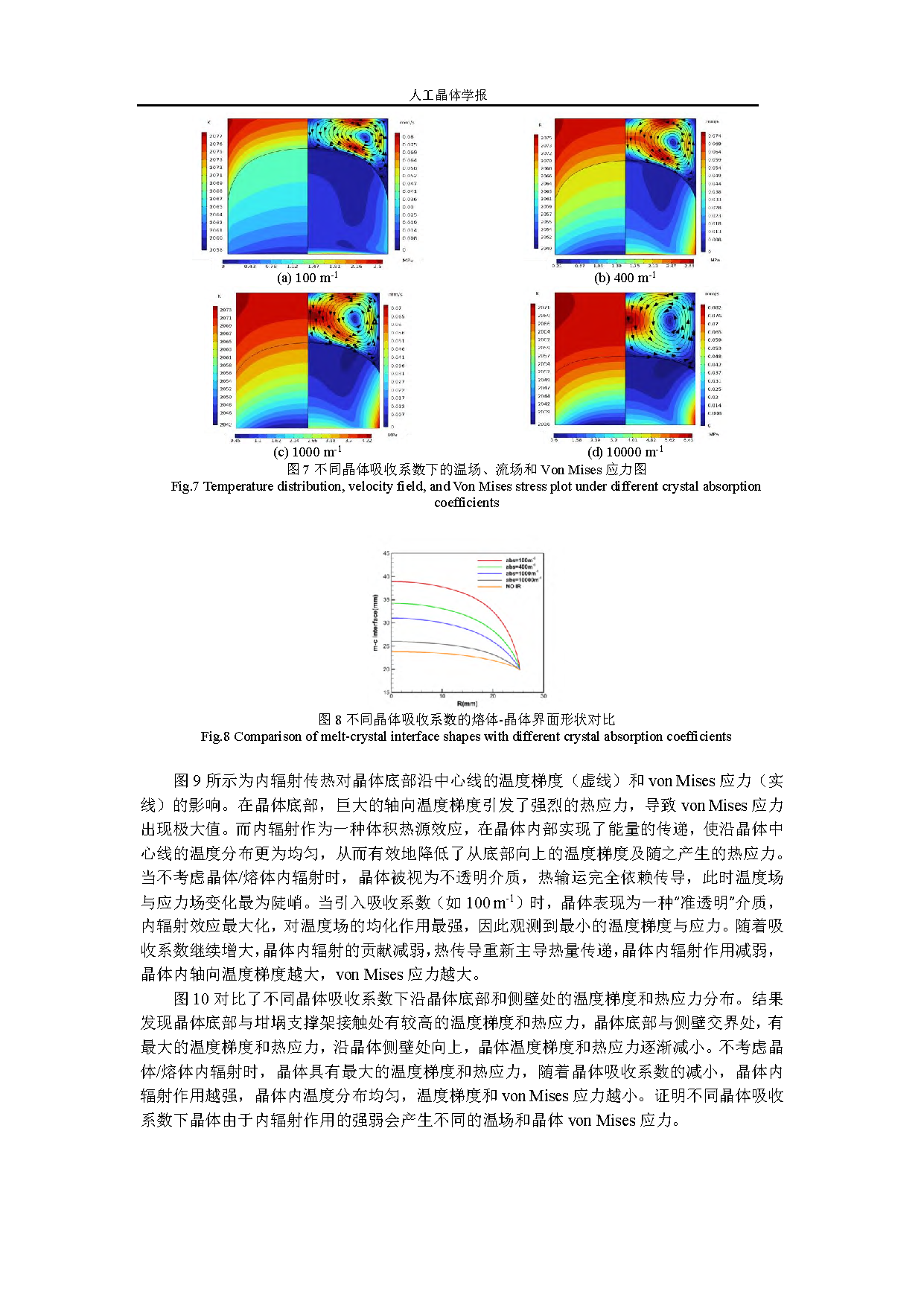
Fig.7 Temperature distribution, velocity field, and Von Mises stress plot under different crystal absorption coefficients
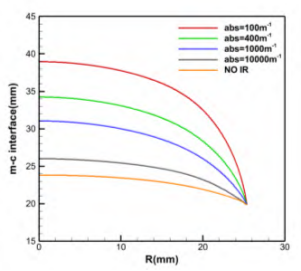
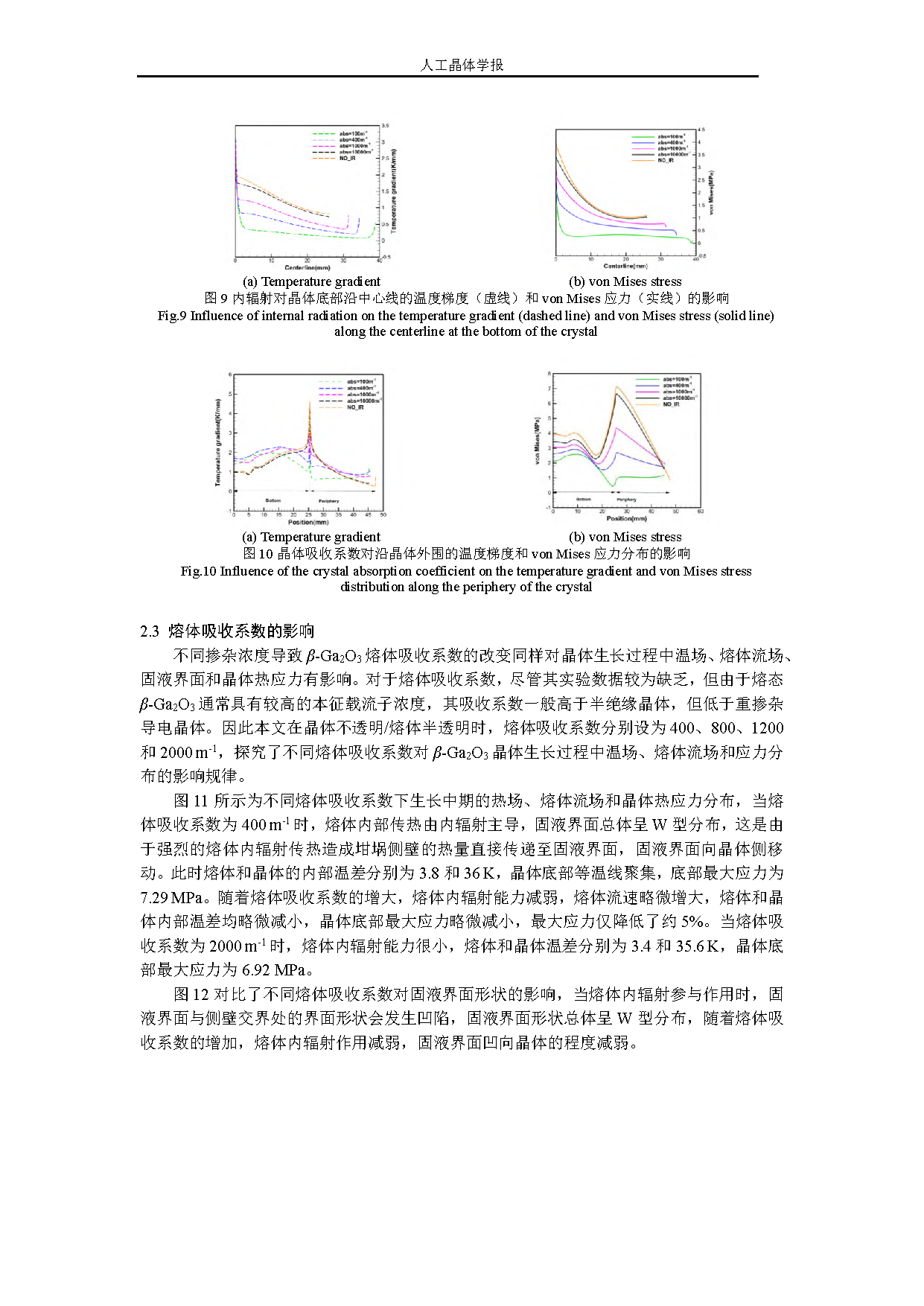
Fig.8 Comparison of melt-crystal interface shapes with different crystal absorption coefficients
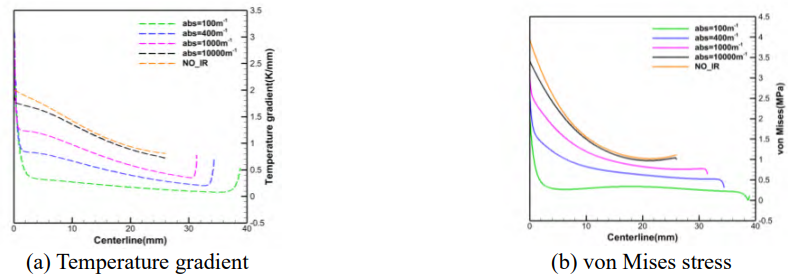
Fig.9 Influence of internal radiation on the temperature gradient (dashed line) and von Mises stress (solid line) along the centerline at the bottom of the crystal
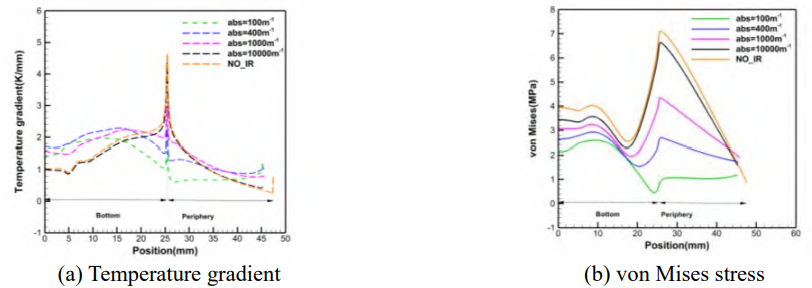
Fig.10 Influence of the crystal absorption coefficient on the temperature gradient and von Mises stress distribution along the periphery of the crystal
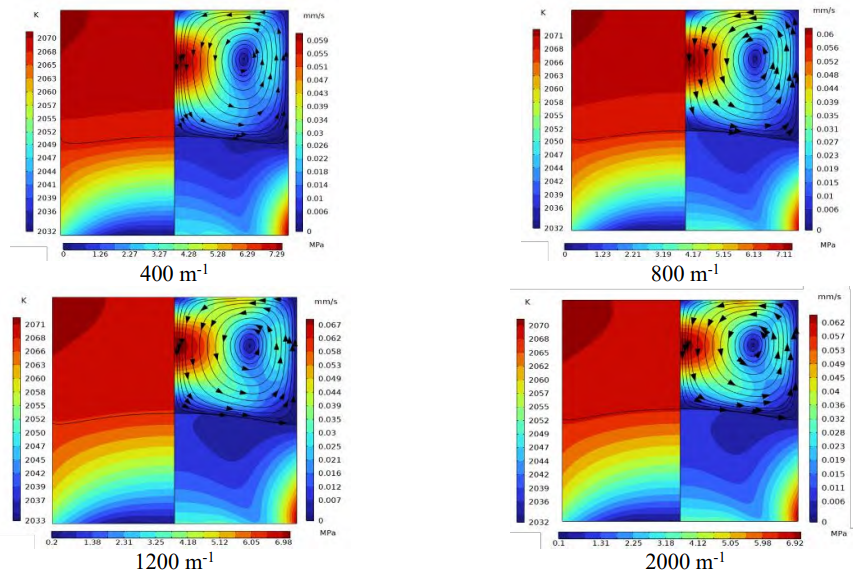
Fig.11 Temperature distribution, velocity field, and Von Mises stress plot under different melt absorption coefficients
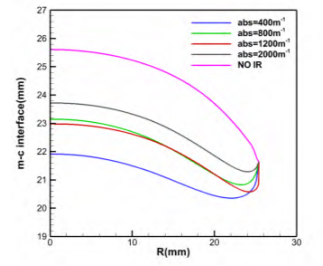
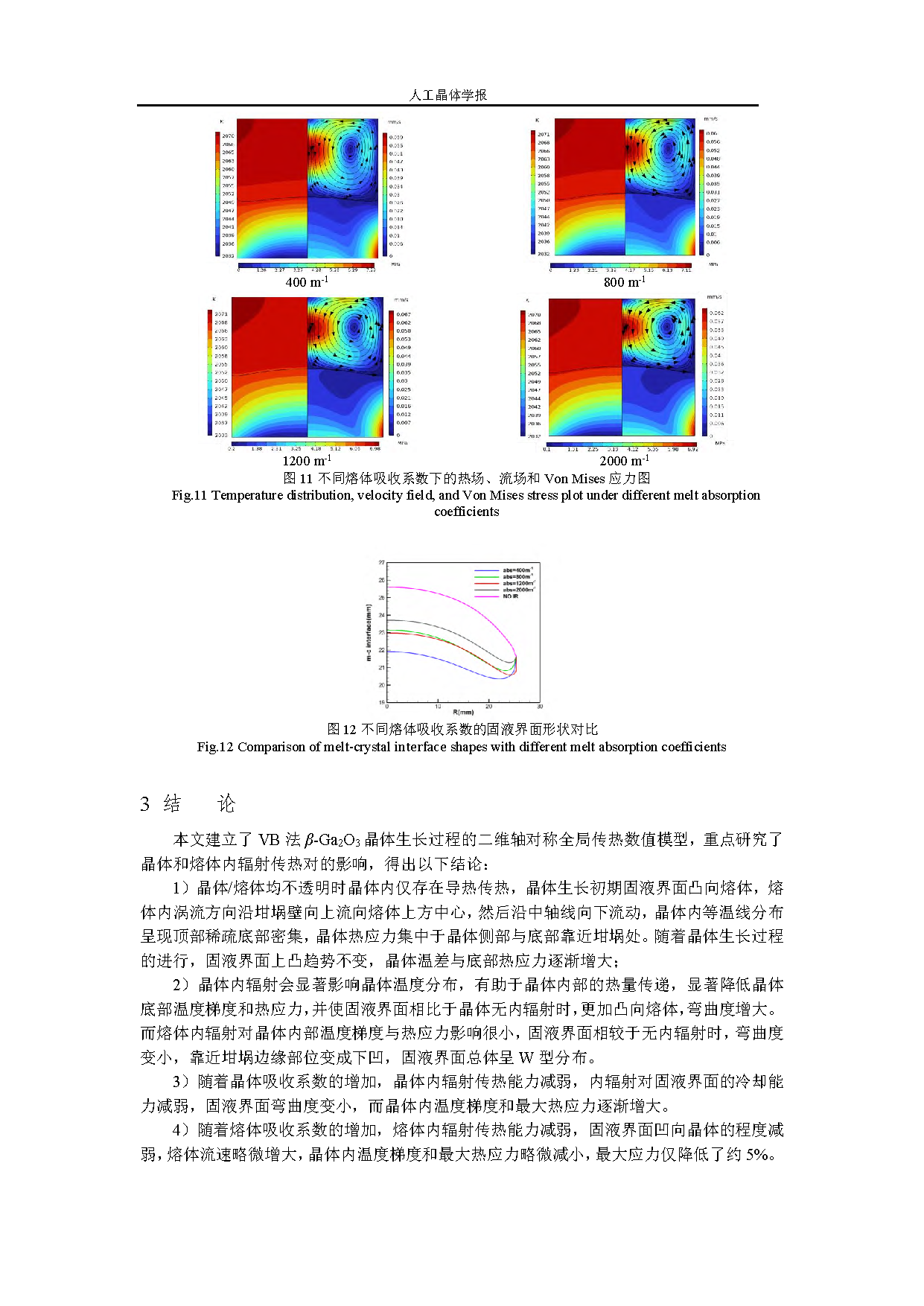
Fig.12 Comparison of melt-crystal interface shapes with different melt absorption coefficients
DOI:
https://link.cnki.net/doi/10.16553/j.cnki.issn1000-985x.2025.0222
Instruction
Official Account

Cooperation
Top