


Researchers from the Wuhan University have published a paper titled " First-principles calculations of screw dislocations in β-Ga2O3" in Journal of Physics D: Applied Physics.
Project Support
This work was funded by the Major Program (JD) of Hubei Province, the National Natural Science Foundation of China, the Shenzhen Science and Technology Program, the State Key Laboratory of Micro-nano Engineering Science, and the Open Fund of Hubei Key Laboratory of Electronic Manufacturing and Packaging Integration (Wuhan University).
Background
Gallium oxide (Ga2O3) is becoming a promising candidate for certain classes of power electronic devices due to its excellent electrical properties, such as an ultra-wide bandgap and ultra-high breakdown voltage. Ga2O3 has at least five polymorphs: α, β, γ, δ, and ε (κ), with the β-polymorph being the stable form under normal conditions. Many high-quality growth methods for β-Ga2O3 have been developed, including edge-defined film-fed growth method (EFG), Czochralski growth method (Cz), hydride vapor phase epitaxy method (HVPE), molecular beam epitaxy method (MBE), and metalorganic chemical vapor deposition method (MOCVD). However, regardless of the growth method used, various defects are inevitably formed during the growth process. These defects may include point defects, line defects, or surface defects. Currently, there is a wealth of reports on the experimental observation and study of various defects in β-Ga2O3. At the same time, theoretical studies of β-Ga2O3 defects are also essential, as they provide insights into their microstructure, formation mechanisms, effects on material properties, and potential control strategies. In recent years, there have been a number of studies on the theoretical calculations of defects in Ga2O3. However, these reports mainly focus on point defects and surface defects, with very few reports addressing line defects. Dislocations are the predominant form of line defects and significantly influence the mechanical and electrical properties of materials.
Abstract
Gallium oxide (Ga2O3) is an ultra-wide bandgap semiconductor with excellent potential for high-power device applications. Some defects will inevitably occur during the growth of Ga2O3. Dislocations, as one of the main defects, have a significant impact on the mechanical and electrical properties of materials. In this work, dislocations in β-Ga2O3 are systematically studied via first principles calculations, with a primary focus on the screw dislocation occurring on the (-201) plane with b = <010>. The concept of Gatetra-Gaocta-dislocation is proposed. The three dislocation core structures, Gaocta-OⅠ-Gatetra-near-dislocation, Gaocta-OⅠ-Gatetra-far-dislocation, and Gaocta-OⅢ-Gaocta-far-dislocation have been verified. The study find that the introduction of dislocations leads to a narrowing of the bandgap. This suggests that the presence of dislocations may reduce the breakdown voltage, radiation resistance, and other related properties of β-Ga2O3. This study provides a new perspective for the theoretical investigation of dislocations in β-Ga2O3, with significant guiding implications. It also reveals the impact of dislocations on the electrical properties of β-Ga2O3, laying a foundation for further research.
Conclusion
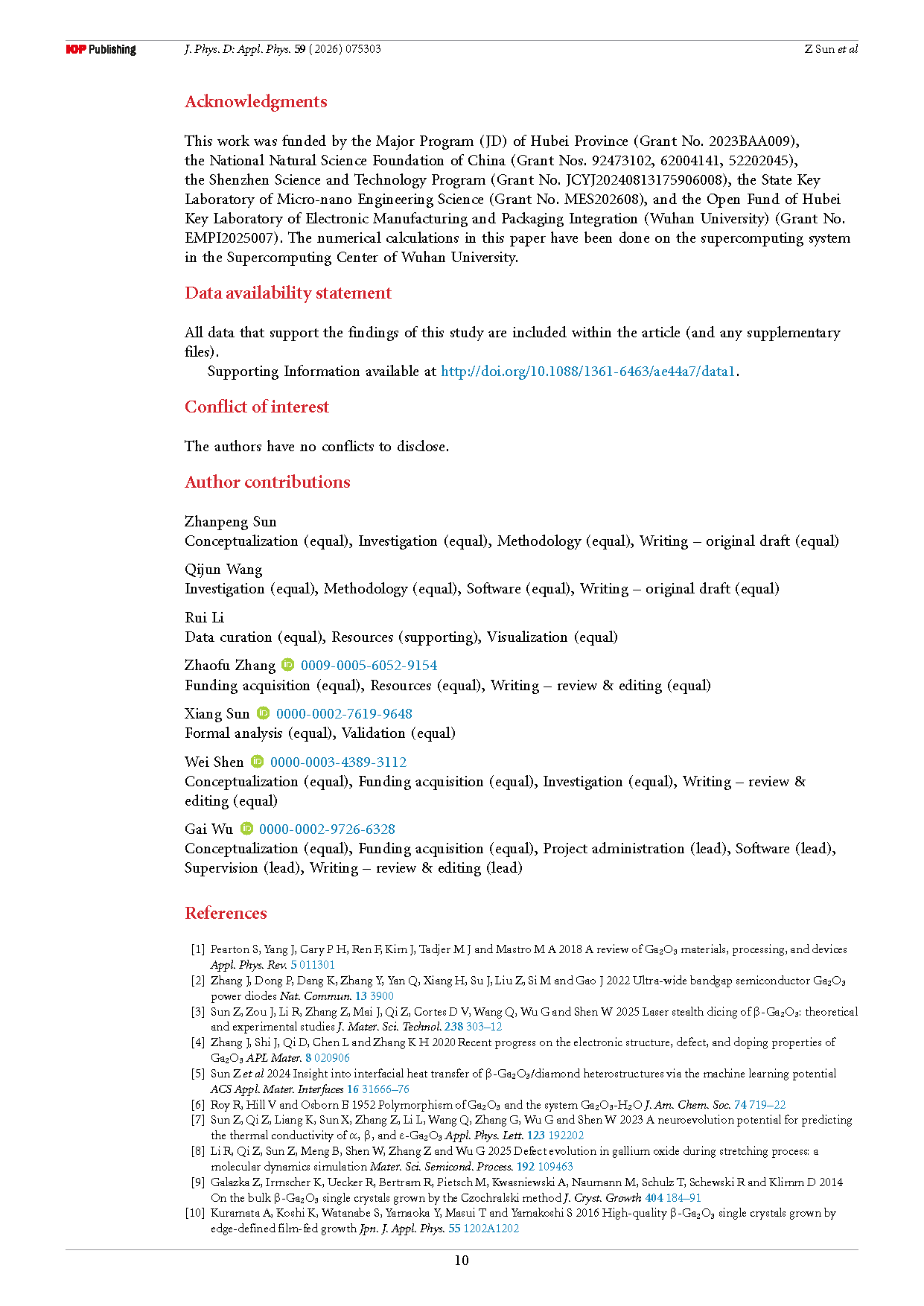
In this work, dislocations in β-Ga2O3 are systematically studied using first-principles calculations, with a primary focus on the screw dislocation characterized by a Burgers vector of b =<010>. The concept of a Gatetra-Gaocta-dislocation on the (-201) plane is further proposed. This concept suggests that the core structure of the screw dislocation occurring on the (-201) plane with b =<010> should not consist solely of Gaocta and O atoms, but rather should be composed of Gatetra, Gaocta, and O atoms. Furthermore, based on this concept, three initial dislocation core structures are constructed. After sufficient relaxation, three stable dislocation core structures are obtained: Gaocta-OI-Gatetra-near-dislocation, Gaocta-OI-Gatetra-far-dislocation, and Gaocta-OIII-Gaocta-far-dislocation. This also validates the correctness of the proposed concept. Finally, the influence of these dislocations on the electrical properties of β-Ga2O3 is analyzed by DOS, and it is found that the introduction of dislocations leads to a narrowing of the bandgap. This implies that the presence of dislocations may degrade the breakdown voltage, radiation resistance, and other related properties of β-Ga2O3. Furthermore, ELF is employed to analyze the charge distribution at the dislocation core structure. It is found that the dislocation core structure leads to a decrease in ELF values for certain atoms at the core region. The decrease in ELF value may be the primary reason for the reduction in bandgap caused by dislocations. This study proposed a different approach for the theoretical investigation of β-Ga2O3 dislocations, offering important guiding significance and laying a foundation for further research.
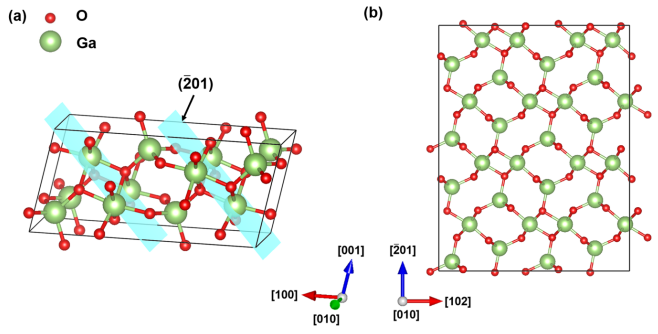
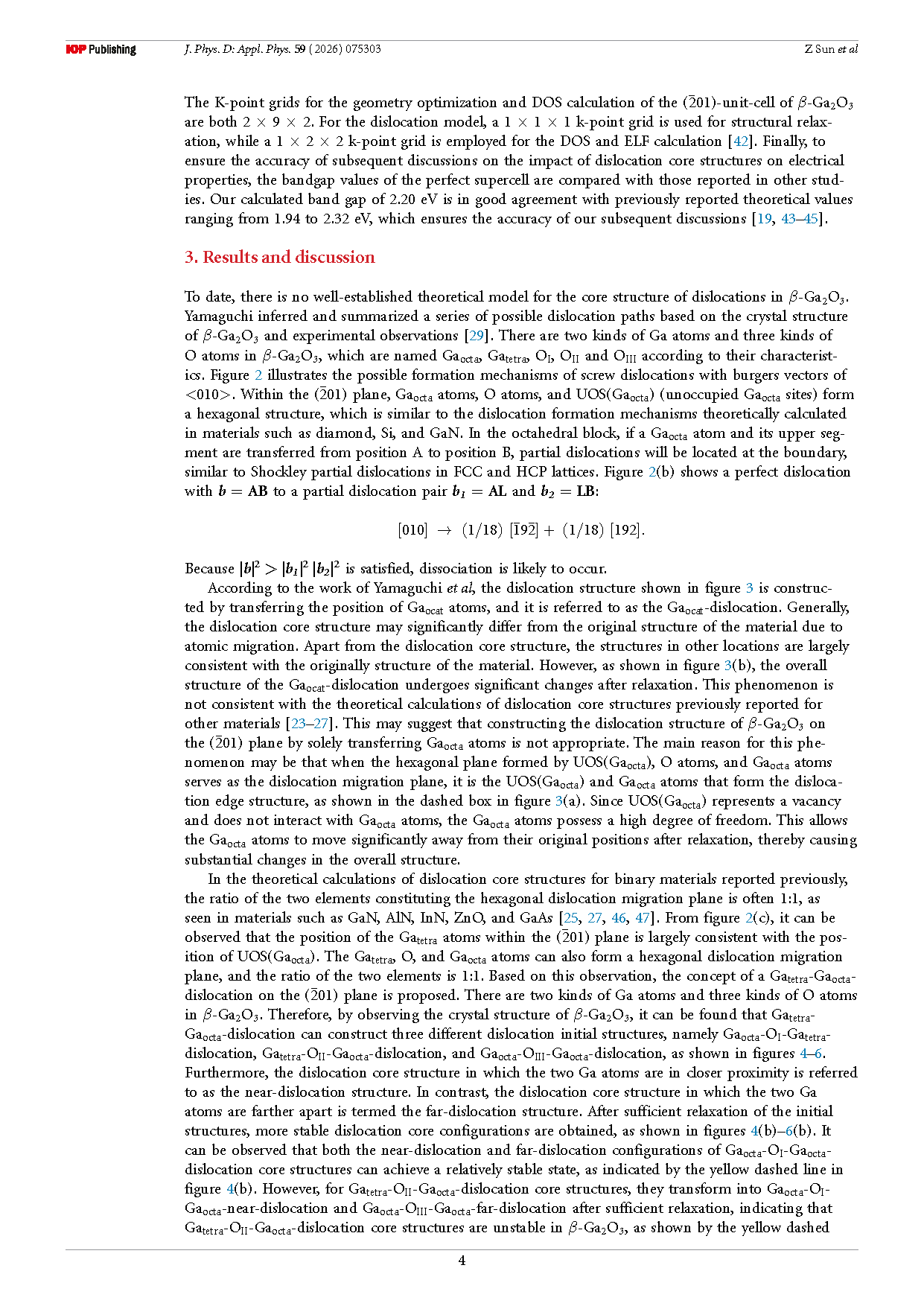
Figure 1 (a) The structure of the conventional unit cell of β-Ga2O3. (b) The structure of (-201)-unit-cell of β-Ga2O3.
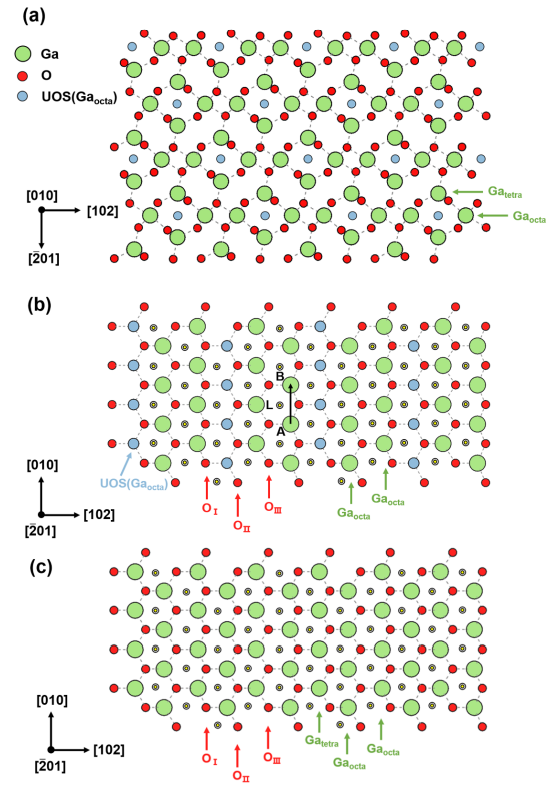
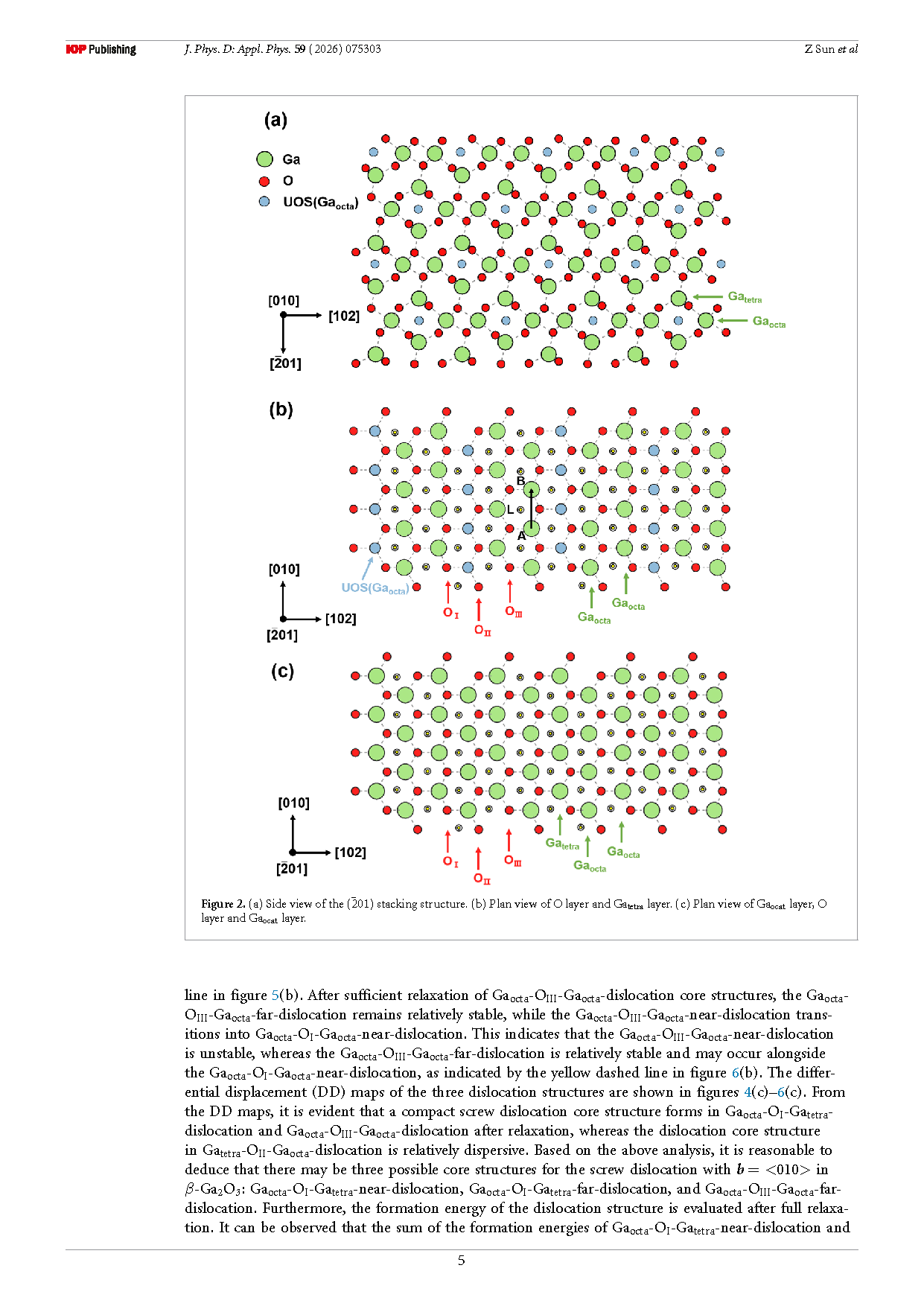
Figure 2 (a) Side view of the (-201) stacking structure. (b) Plan view of O layer and Gatetra layer. (c) Plan view of Gaocat layer, O layer and Gaocat layer.
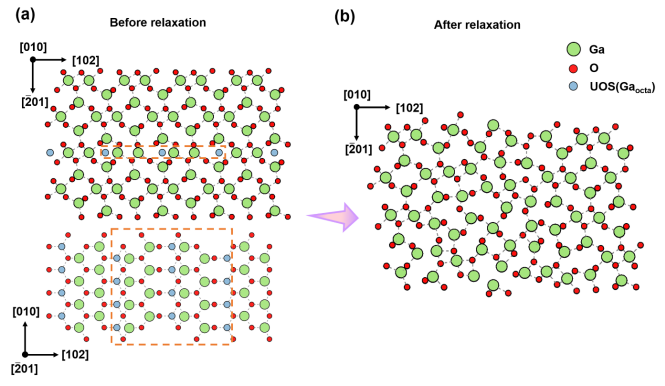
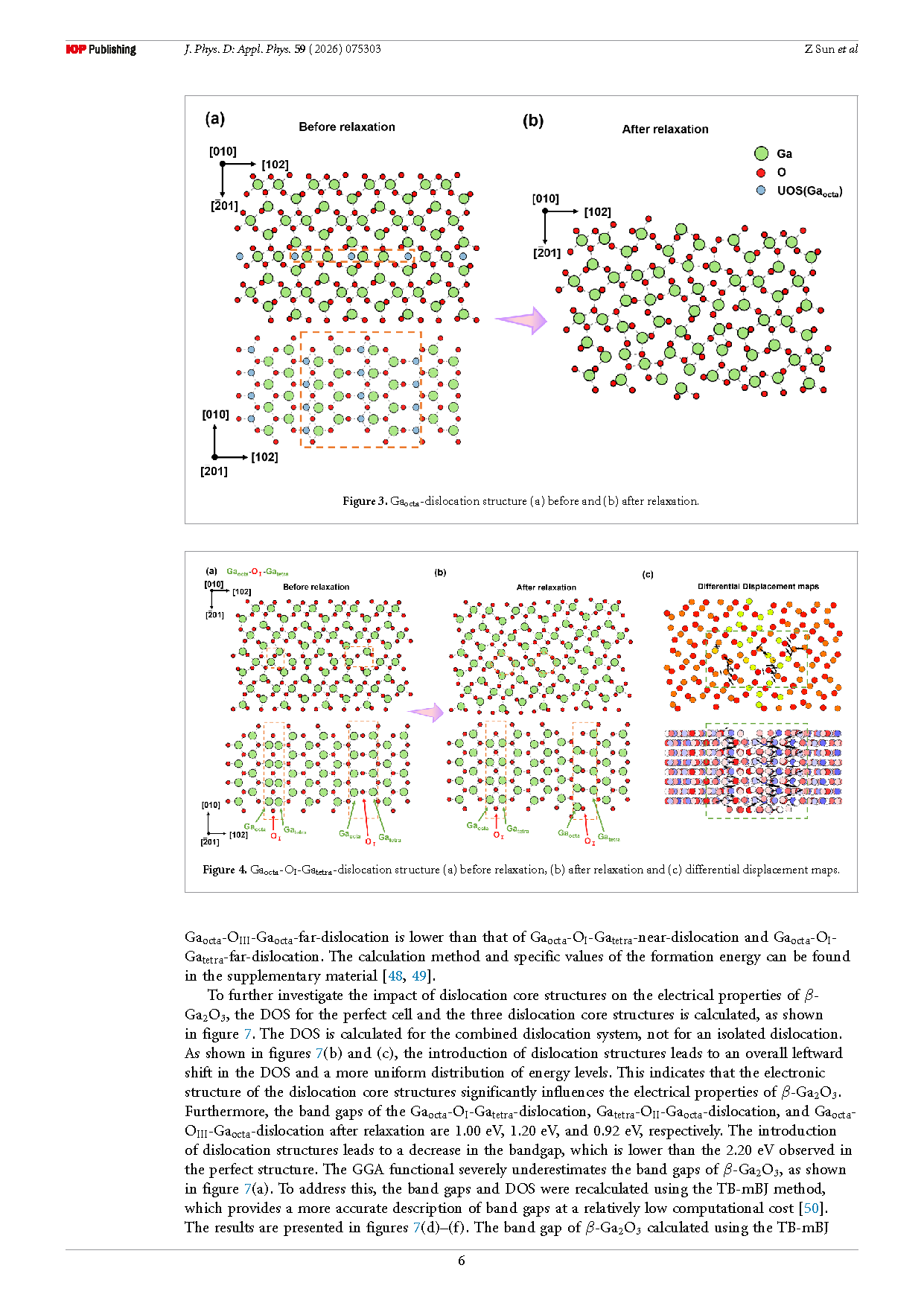
Figure 3 Gaocta-dislocation structure (a) before and (b) after relaxation.
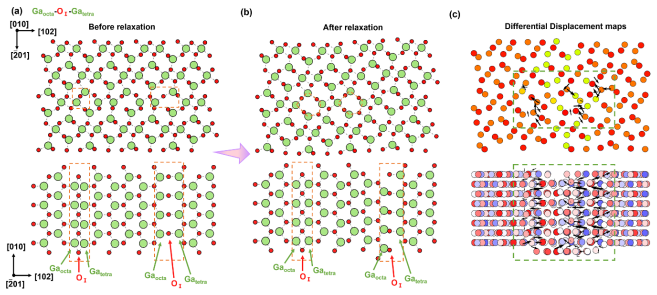
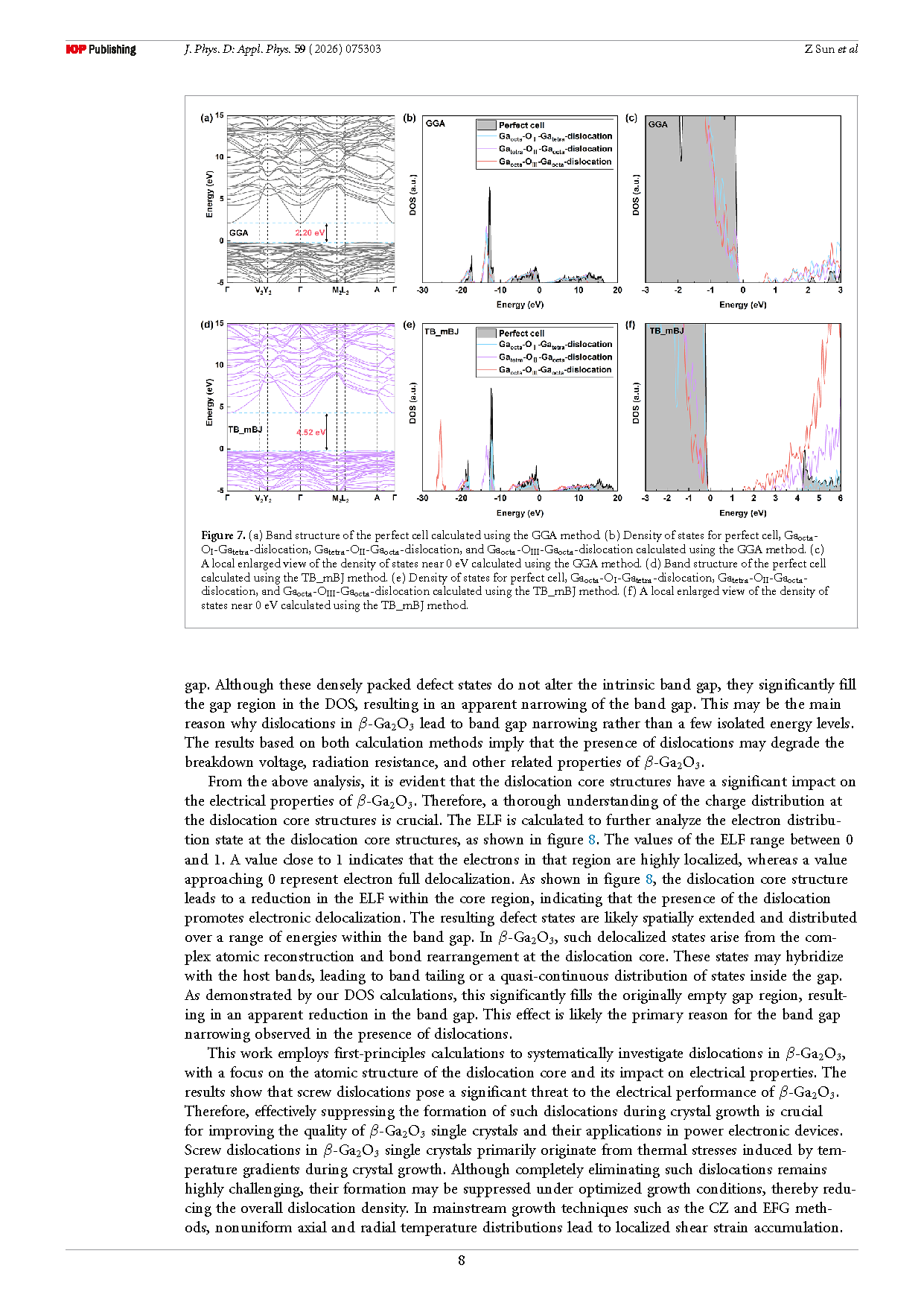
Figure 4 Gaocta-OI-Gatetra-dislocation structure (a) before relaxation, (b) after relaxation and (c) differential displacement maps.
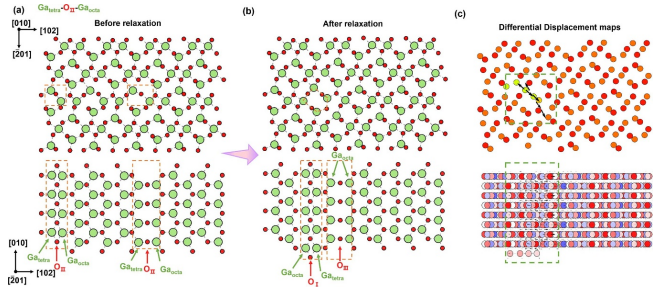
Figure 5 Gatetra-OII-Gaocta-dislocation structure (a) before relaxation, (b) after relaxation and (c) differential displacement maps.
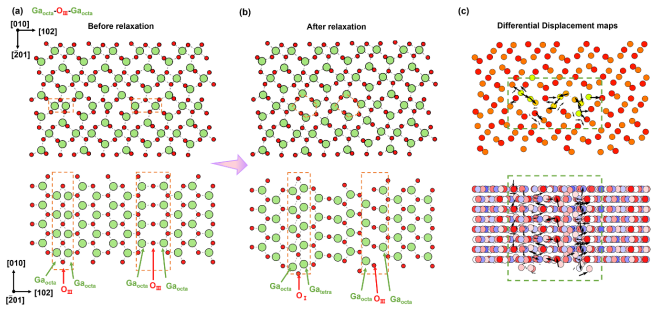
Figure 6 Gaocta-OIII-Gaocta-dislocation structure (a) before relaxation, (b) after relaxation and (c) differential displacement maps.
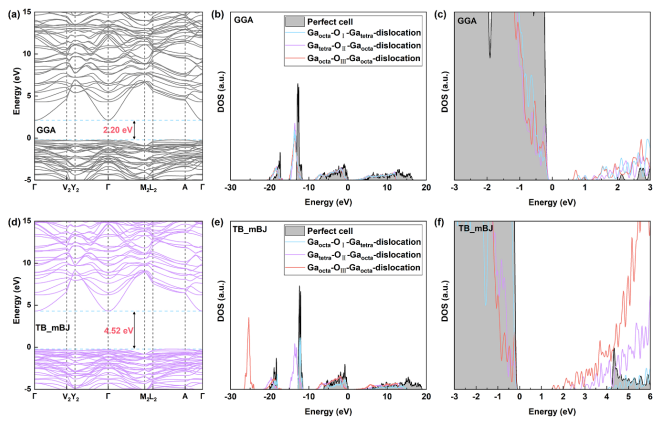
Figure 7 (a) Band structure of the perfect cell calculated using the GGA method. (b) Density of states for perfect cell, Gaocta-OI-Gatetra-dislocation, Gatetra-OII-Gaocta-dislocation, and Gaocta-OIII-Gaocta-dislocation calculated using the GGA method. (c) A local enlarged view of the density of states near 0 eV calculated using the GGA method. (d) Band structure of the perfect cell calculated using the TB_mBJ method. (e) Density of states for perfect cell, Gaocta-OI-Gatetra-dislocation, Gatetra-OII-Gaocta-dislocation, and Gaocta-OIII-Gaocta-dislocation calculated using the TB_mBJ method. (f) A local enlarged view of the density of states near 0 eV calculated using the TB_mBJ method.
Figure 8 (a) Electron localization function for (a) perfect cell, (b) Gaocta-OI-Gatetra-dislocation, (c) Gatetra-OII-Gaocta-dislocation, and (d) Gaocta-OIII-Gaocta-dislocation.
DOI:
doi.org/10.1088/1361-6463/ae44a7


Instruction
Official Account

Cooperation
Top