


Researchers from the Southern University of Science and Technology have published a dissertation titled "Boosting the responsivity of β-Ga2O3 metal–semiconductor–metal solar-blind photodetectors through oxygen-related defect states" in Scientific Reports.
Project Support
This work was supported by the National Key Research and Development Program of China under Grant (Grant No. 2022YFA1405200), Shenzhen Science and Technology Program (Grant No. JCY20240813100810014), Natural Science Foundation of Shandong province (Grant No. ZR2025ZD32 and ZR2022ZD05), the Instrument Improvement Funds of Shandong University Public Technology Platform (Grant No. ts20230207), and Shenzhen Key Laboratory of Deep Sub-wavelength Scale Photonics (ZDSYS20220527171201003).
Background
Solar-blind photodetectors (SBPDs) offer unique advantages, including all-weather operability and high sensitivity, owing to the negligible background noise in the solar-blind spectral region (190-280 nm). These features make them highly desirable for a wide range of civilian and defense applications, such as flame detection, optical communication, and missile warning systems. However, conventional Si-based SBPDs exhibit limited response in this wavelength range and typically rely on costly optical filters to suppress visible and near-UV light. Wide-bandgap semiconductor materials have emerged as promising candidates for next-generation SBPDs. Among these, Ga2O3 has attracted considerable attention owing to its ultra-wide direct bandgap (4.4-5.3 eV), which naturally corresponds to the solar-blind region and eliminates the need for complex alloying to achieve bandgap tuning. Moreover, Ga2O3 exhibits a large ultraviolet-absorption coefficient, remarkable radiation and thermal stability, and chemical robustness under harsh environmental conditions. The feasibility of large-scale Ga2O3 single-crystal growth via melt-based techniques further enhances its cost-effectiveness and industrial potential.
Abstract
Achieving high responsivity is essential for advancing solar-blind photodetectors (SBPDs) in applications such as wireless communication and fire warning systems. In this study, we investigate metal-semiconductor-metal SBPDs based on β-Ga2O3 epitaxial films grown on sapphire substrates by metal-organic chemical vapor deposition at different temperatures. Structural and spectroscopic analyses indicate that growth temperature modulates oxygen-related defect states in β-Ga2O3 films, which correlate with changes in responsivity through defect-assisted photoexcitation processes. Notably, the SBPD fabricated from a Ga2O3 film grown at 900 °C exhibited a responsivity of 4.2⋅104 A/W, a detectivity of 1.2⋅10¹³ Jones, and an exceptional external quantum efficiency of 2.1⋅10⁷%. These findings highlight the important role of oxygen-related defect states in optimizing the photoresponse of β-Ga2O3 based SBPDs.
Conclusions
In summary, SBPDs based on β-Ga2O3 epilayers grown at different temperatures were fabricated and characterized. The optimized device, employing a β-Ga2O3 epilayer grown at 900ºC, exhibited a high R of 4.2´104 A/W, an EQE of 2.1´107%, and a D* of 1.2´1013 Jones under 254 nm illumination at a power density of 64 µW/cm2. Comprehensive structural and compositional analysis, including XRD and XPS, revealed that the defect-related state concentration in β-Ga2O3 epilayers increases with growth temperature. These defect states act as photoionization centers, contributing additional charge carriers and thereby enhancing the device responsivity. The results demonstrate that growth temperature acts as a tuning parameter for defect-related states in β-Ga2O3, thereby influencing the electrical and ultraviolet photodetection characteristics. This study demonstrates that defect-related states play a key role in determining the responsivity and response dynamics of solar-blind photodetectors, providing useful guidance for future device optimization.
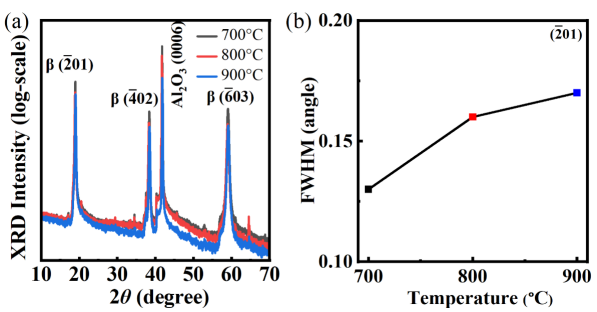
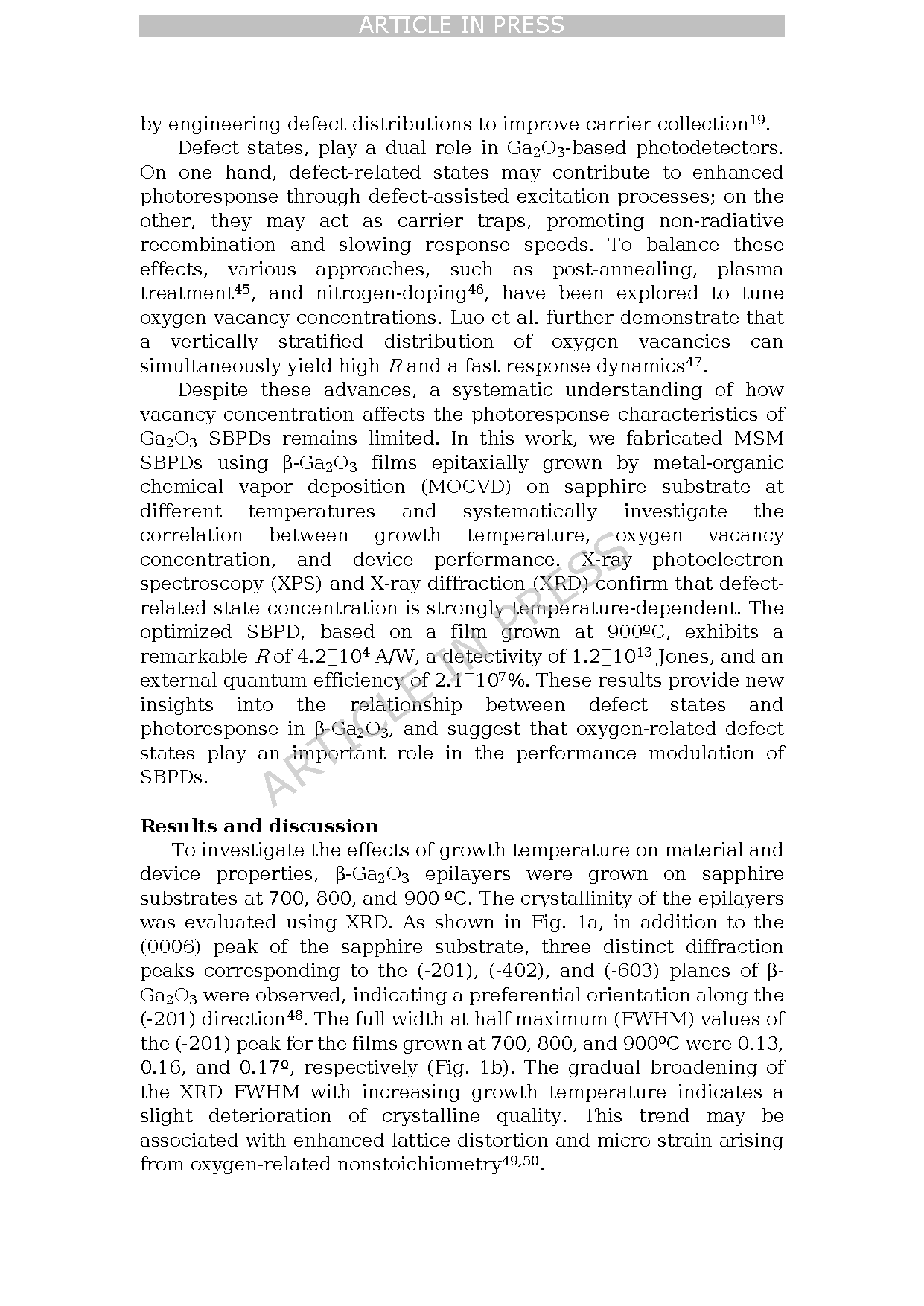
Figure 1. (a) XRD patterns of β-Ga2O3 epilayers grown at different temperatures; (b) FWHM variation of the (-201) peak as a function of growth temperature.
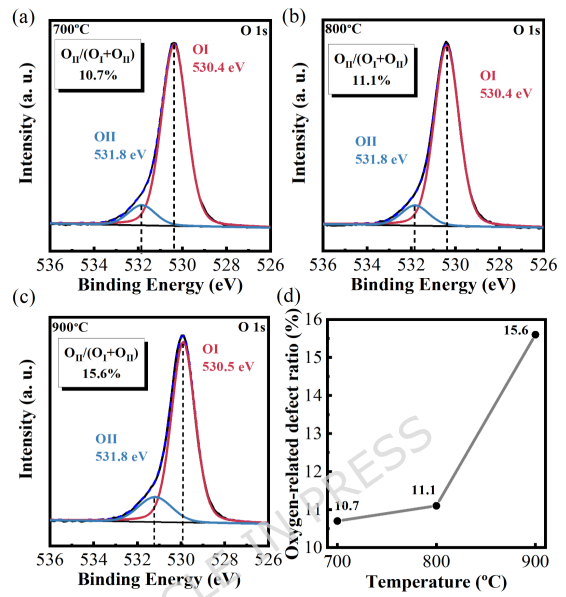
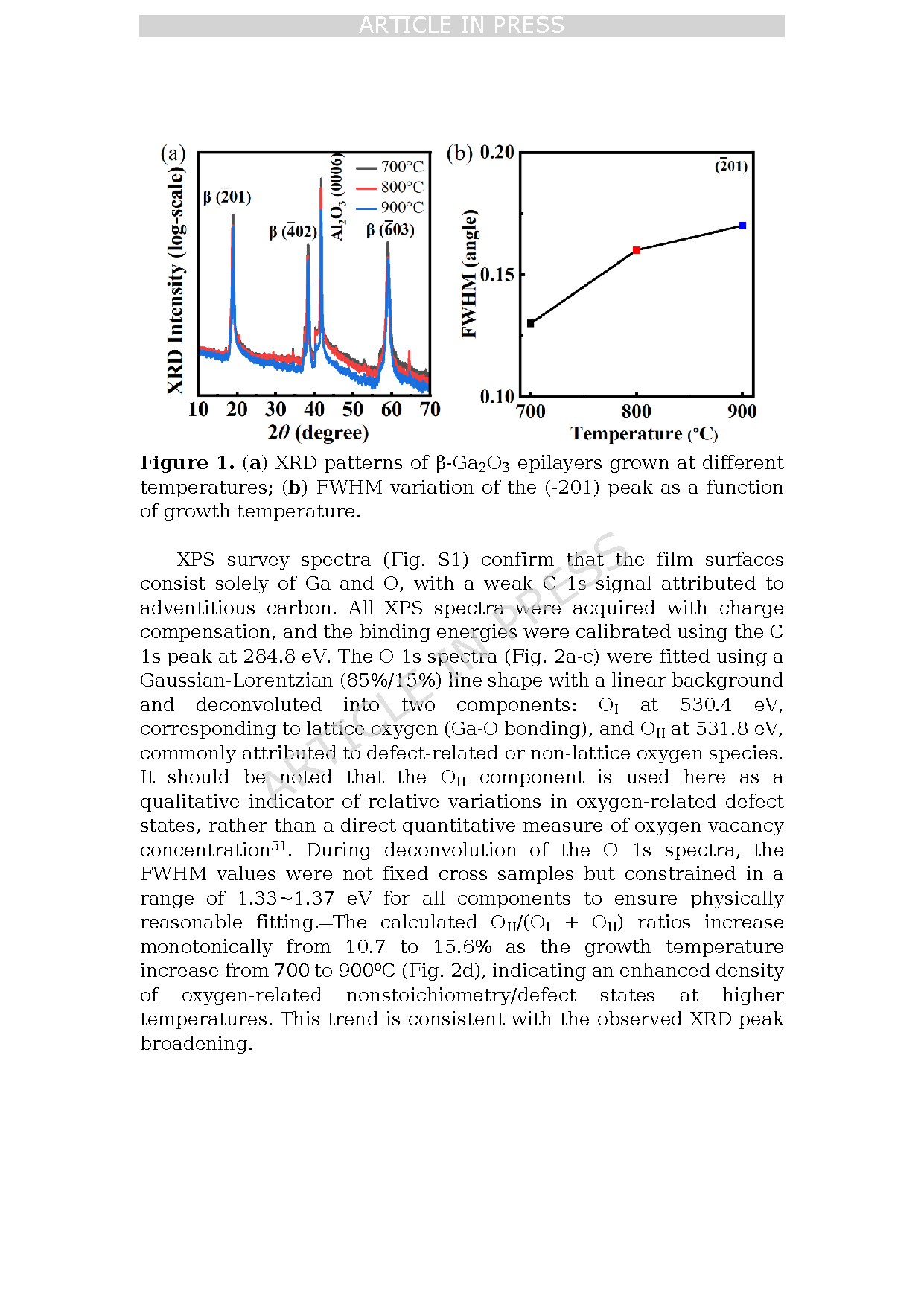
Figure 2. O 1s XPS spectra of β-Ga2O3 epilayers grown at (a) 700ºC, (b) 800ºC, and (c) 900ºC; (d) Oxygen-related defect ratio (OII/(OI + OII)) as a function of growth temperature.
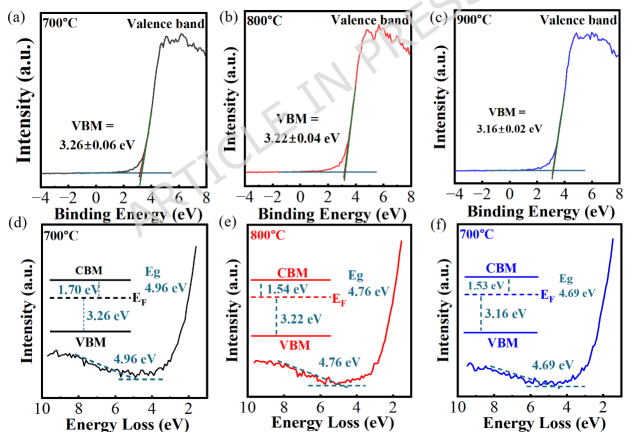
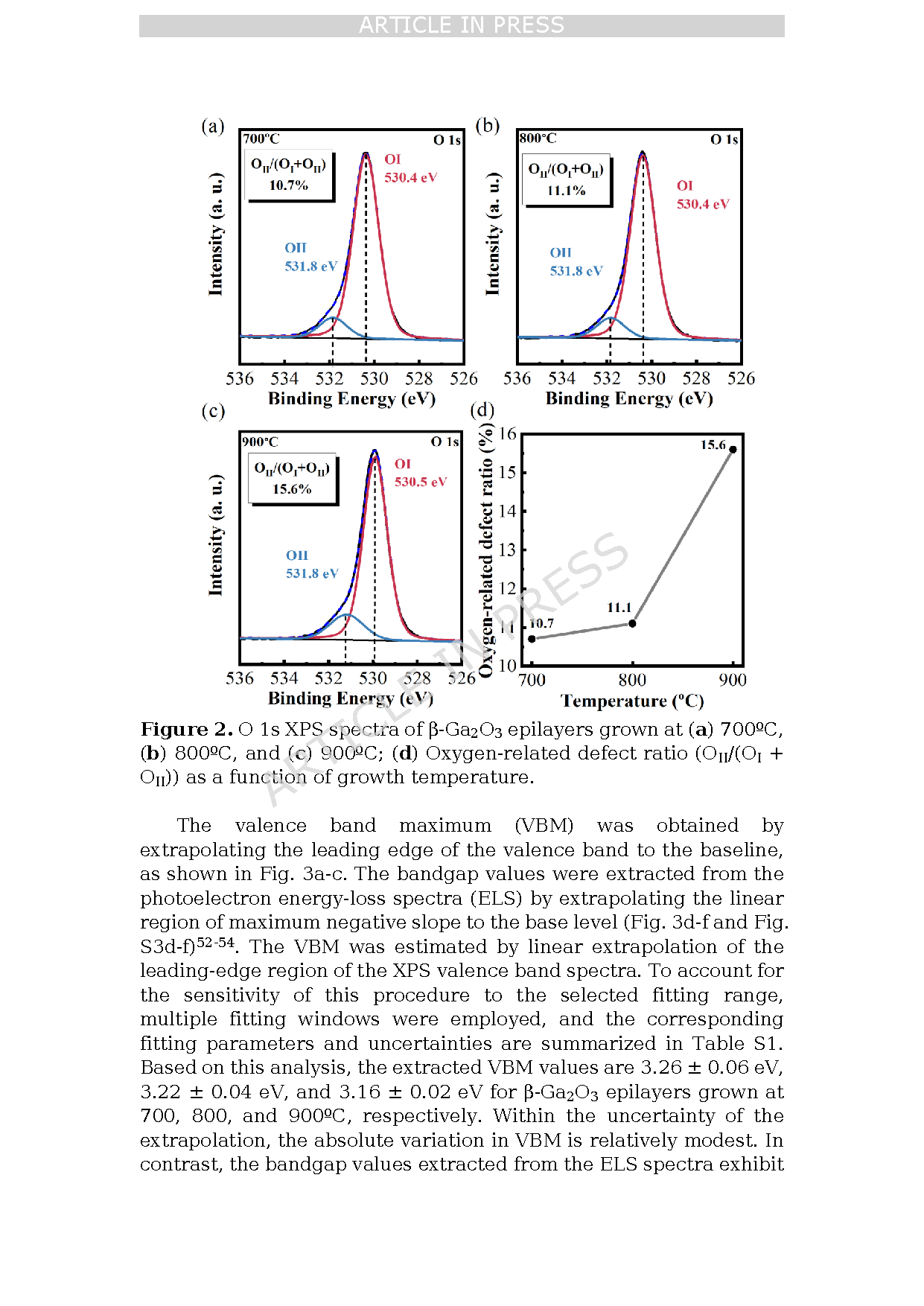
Figure 3. (a-c) Valence band spectra and (d-f) O1s energy loss spectra of β-Ga2O3 epilayers grown at different temperatures.
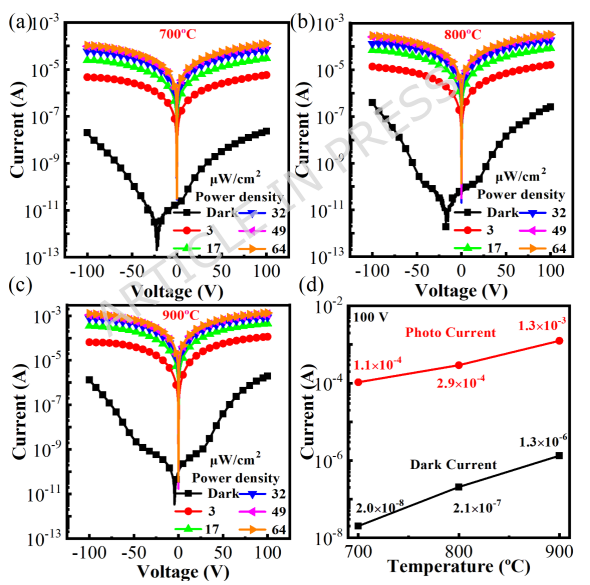
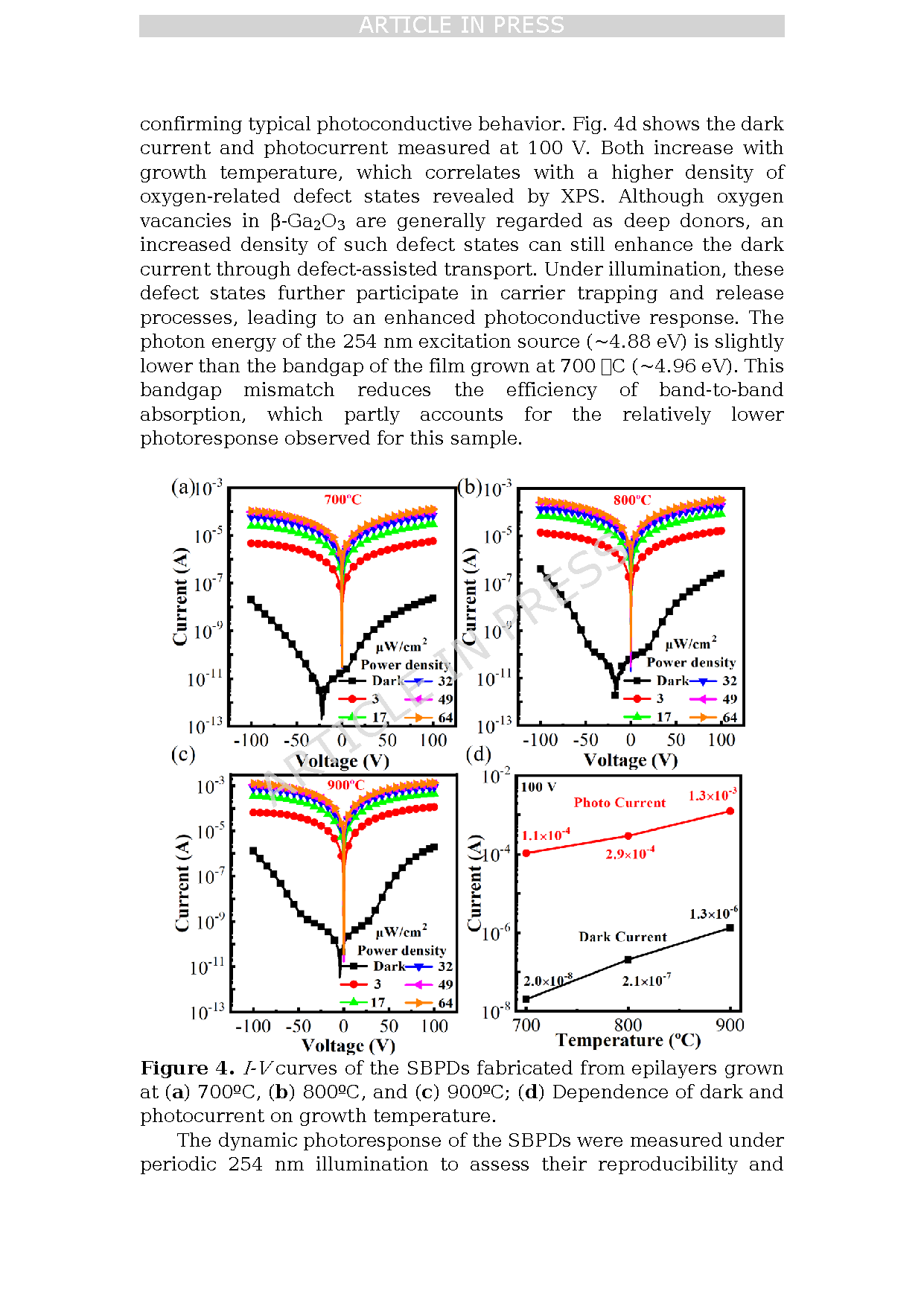
Figure 4. I-V curves of the SBPDs fabricated from epilayers grown at (a) 700ºC, (b) 800ºC, and (c) 900ºC; (d) Dependence of dark and photocurrent on growth temperature.
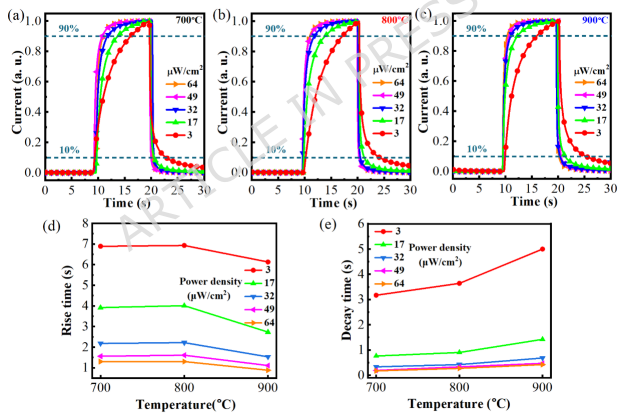
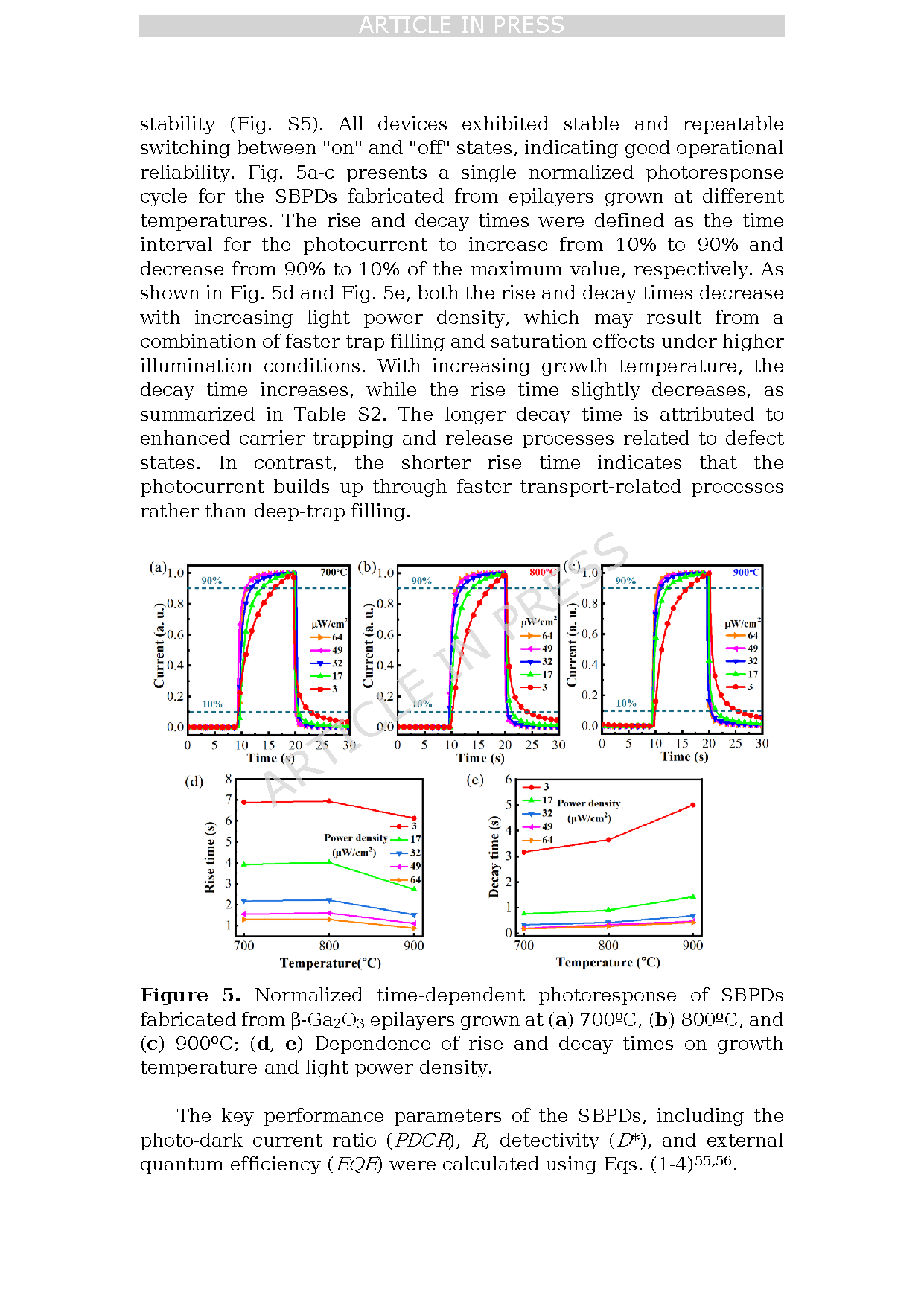
Figure 5. Normalized time-dependent photoresponse of SBPDs fabricated from β-Ga2O3 epilayers grown at (a) 700ºC, (b) 800ºC, and (c) 900ºC; (d, e) Dependence of rise and decay times on growth temperature and light power density.
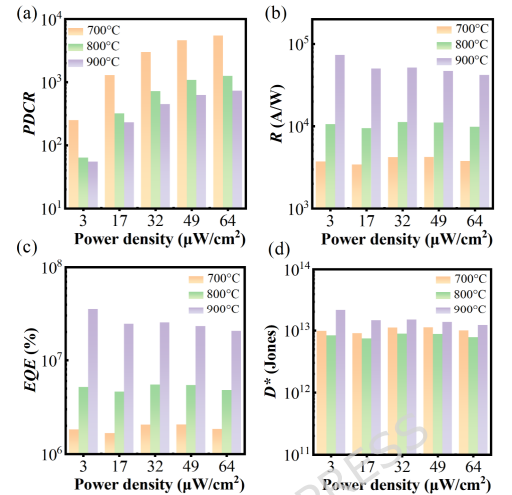
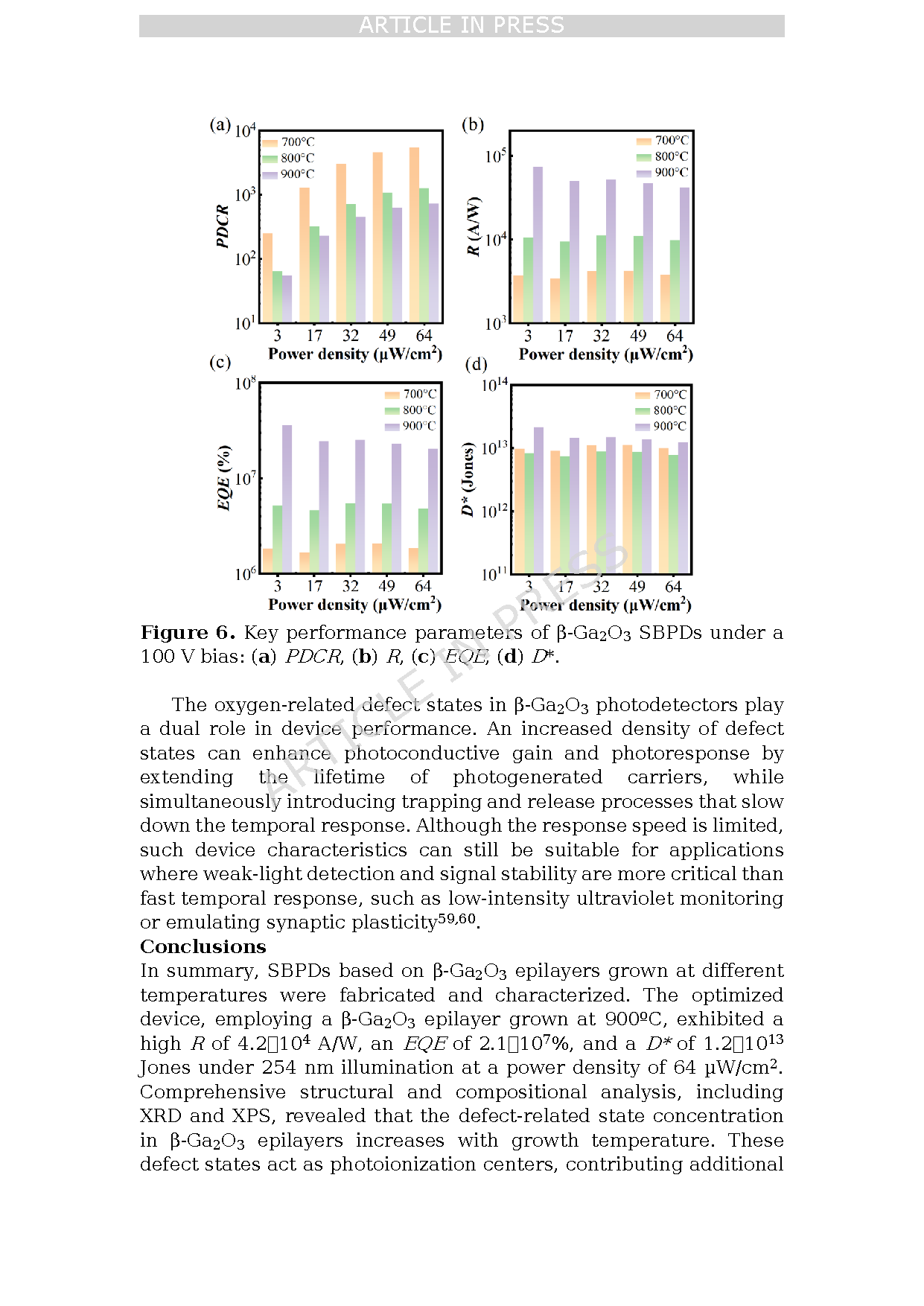
Figure 6. Key performance parameters of β-Ga2O3 SBPDs under a 100 V bias: (a) PDCR, (b) R, (c) EQE, (d) D*.
DOI:
doi.org/10.1038/s41598-026-40487-6
Instruction
Official Account

Cooperation
Top