


Researchers from the Shandong University have published a dissertation titled "First-principles Study on Sn-Doped β-Ga₂O₃ and Its Composite Structures with Intrinsic Vacancy Defect" in Journal of Synthetic Crystals.
Background
Monoclinic β-Ga₂O₃, as a representative of fourth-generation ultra-wide bandgap semiconductors, possesses a bandgap of approximately 4.9 eV and a theoretical critical breakdown field strength as high as 8 MV/cm. Its Baliga’s figure of merit (BFOM) far exceeds that of third-generation semiconductors SiC and GaN, demonstrating significant application potential in high-temperature, high-frequency, and high-power electronic devices, as well as deep-ultraviolet optoelectronic devices.
To achieve high conductivity in power devices, effective n-type doping of β-Ga₂O₃ is essential. Among various dopants, tin (Sn) has become one of the most commonly used donor impurities for realizing controlled n-type conductivity, due to its atomic radius being similar to that of gallium (Ga) and its relatively low formation energy in β-Ga₂O₃.
During crystal growth and thin-film fabrication, intrinsic vacancy defects—such as gallium vacancies and oxygen vacancies—are inevitably introduced into the material under thermodynamic equilibrium or non-equilibrium conditions. These intrinsic vacancies typically act as deep-level centers that trap free carriers, thereby affecting the electrical balance of the material. More importantly, strong interactions can occur between dopant atoms and these intrinsic vacancies, leading to the formation of stable defect complexes.
Although extensive studies have been conducted on single Sn doping, systematic investigations into how complex defect structures—formed by the interaction between Sn atoms and vacancies at different lattice sites—collectively influence the electronic band structure, density of states, and optical properties of β-Ga₂O₃ remain limited. Theoretical simulations of the evolution of these complex structures are therefore of great significance for optimizing crystal growth processes and improving device performance.
Abstract
Beta-gallium oxide (β-Ga₂O₃) has emerged as a highly promising ultra-wide band gap (~4.9 eV) semiconductor for next-generation power electronics and solar-blind ultraviolet photodetectors, owing to its exceptional breakdown electric field strength and high Baliga's figure of merit. However, the intrinsically low native carrier concentration of β-Ga₂O₃ significantly limits its electrical conductivity and practical device performance. While doping engineering, particularly n-type doping with group-IV elements like Sn, has been extensively employed to modulate the electronic and optical properties, the inevitable incorporation of intrinsic point defect during crystal growth can profoundly influence doping efficiency through complex defect-dopant interactions. Despite previous investigations on isolated Sn doping, the synergistic effects between Sn dopants and native vacancy defects, as well as their combined impact on the optoelectronic properties of β-Ga₂O₃, remain insufficiently understood at the atomic scale.
Highlights
• Calculations reveal that Sn atoms preferentially substitute the six-coordinated octahedral Ga2 sites in β-Ga₂O₃. Their formation energy is lower than that at the four-coordinated tetrahedral Ga1 sites, indicating better thermodynamic stability.
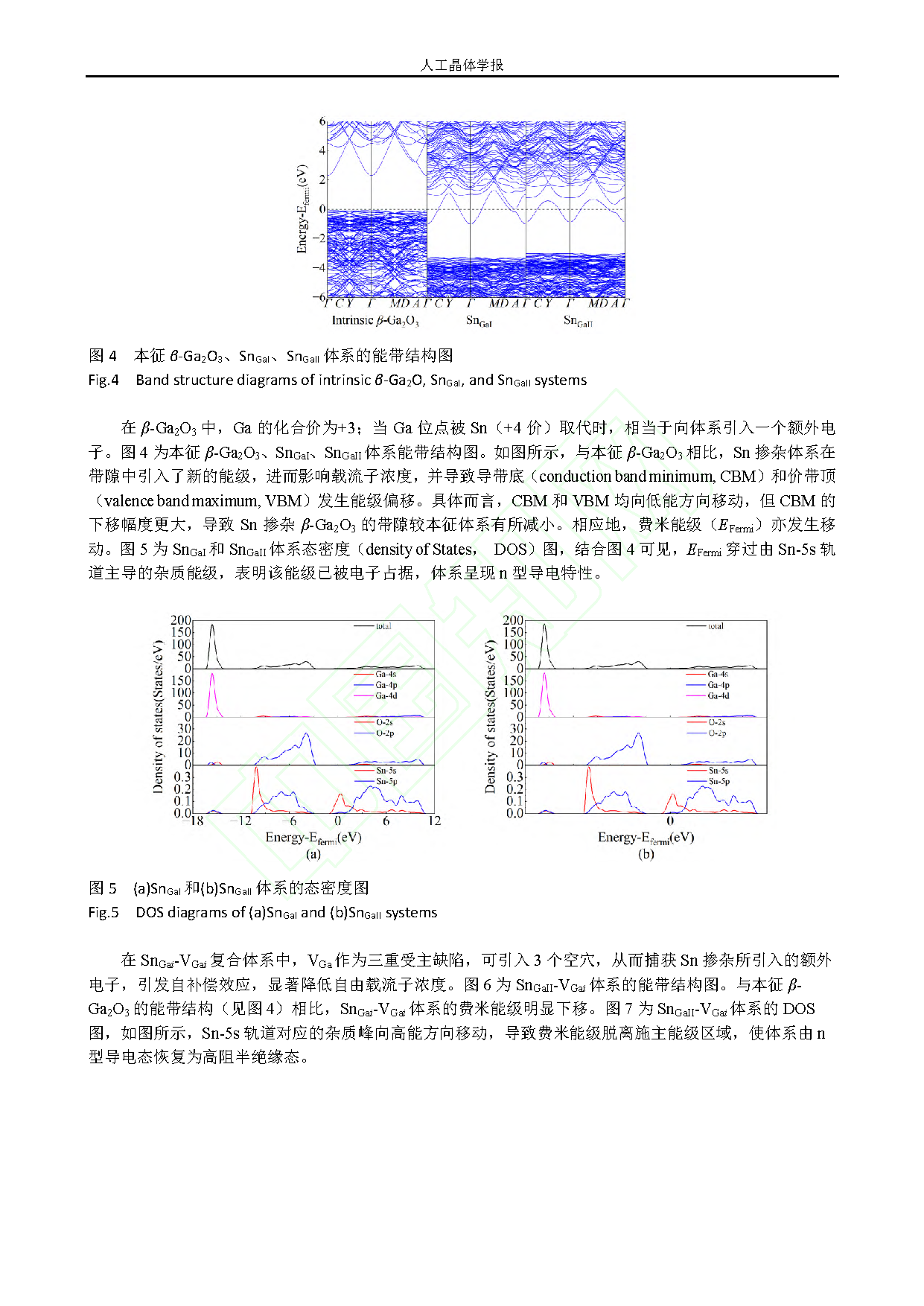
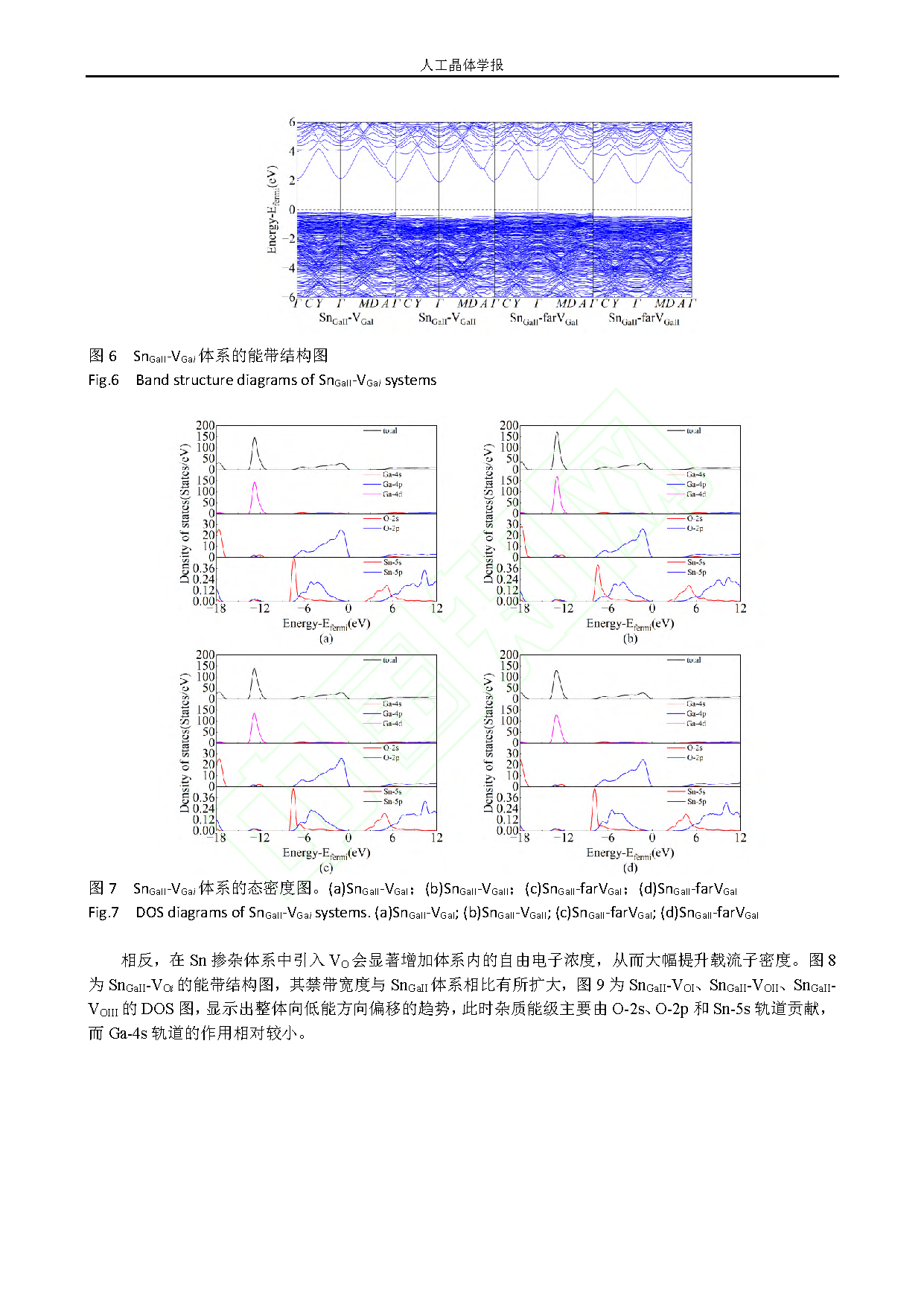
• It is confirmed that Sn doping introduces shallow donor levels near the conduction band minimum, significantly elevating the Fermi level and resulting in pronounced n-type conductivity.
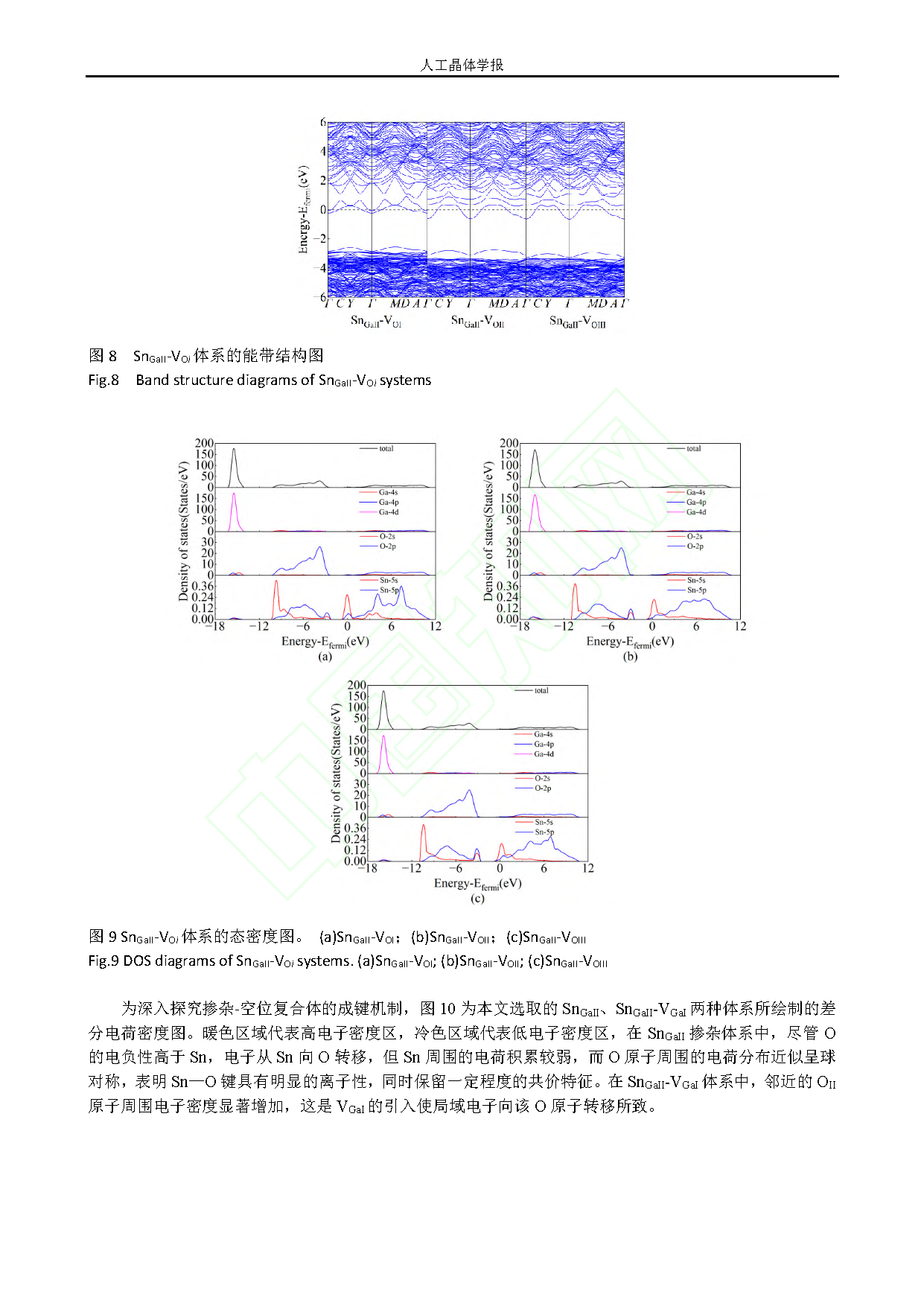
• The study finds that VGa induces a notable band compensation effect, while the introduction of VO further modifies the distribution of sub-bandgap states.
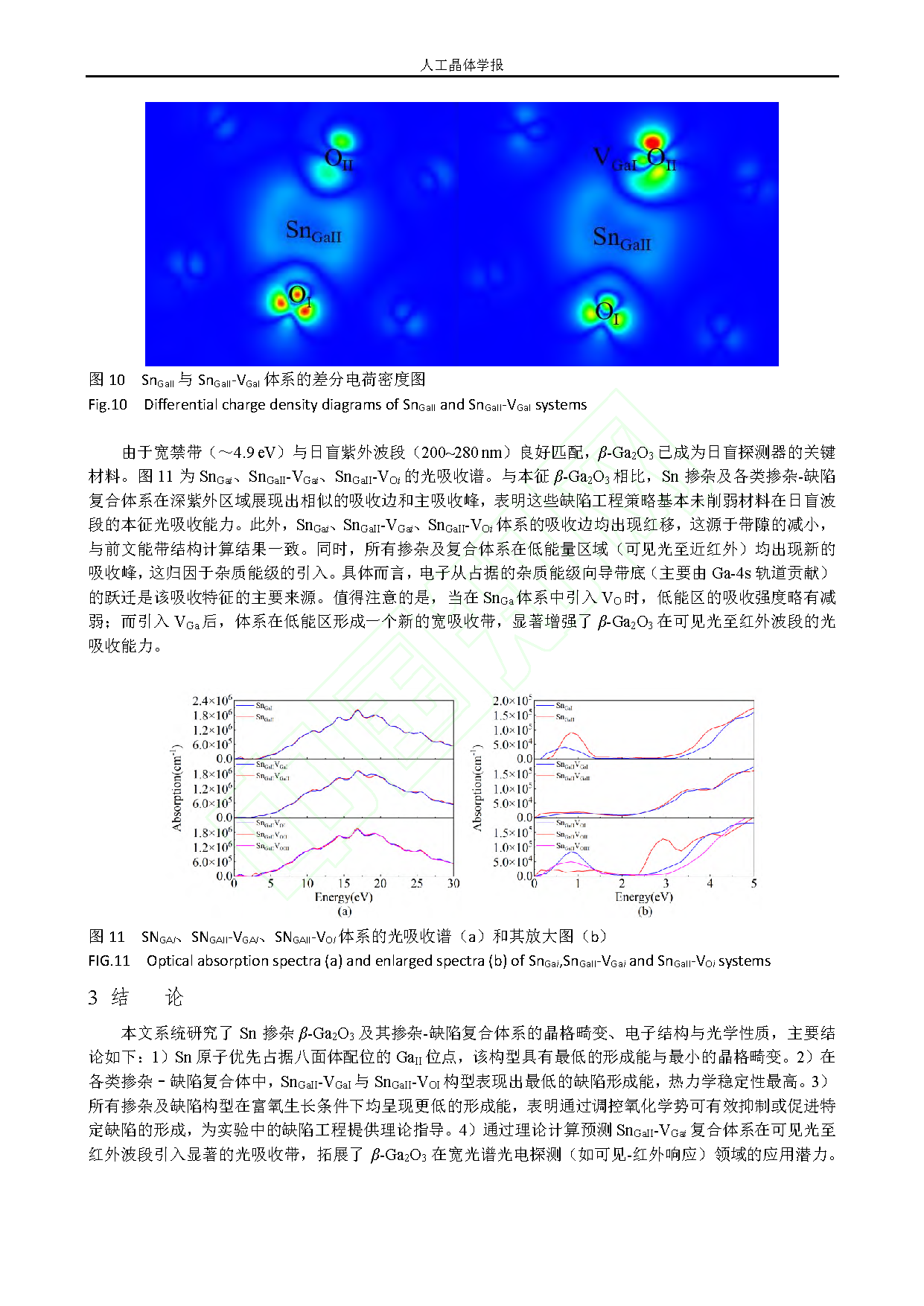
• Results indicate that Sn doping and the presence of defect complexes lead to a redshift of the absorption edge and generate characteristic absorption peaks in the deep-ultraviolet region.
Conclusion
This work systematically investigates the lattice distortion, electronic structure, and optical properties of Sn-doped β-Ga₂O₃ and its dopant–defect complex systems. The main conclusions are as follows:
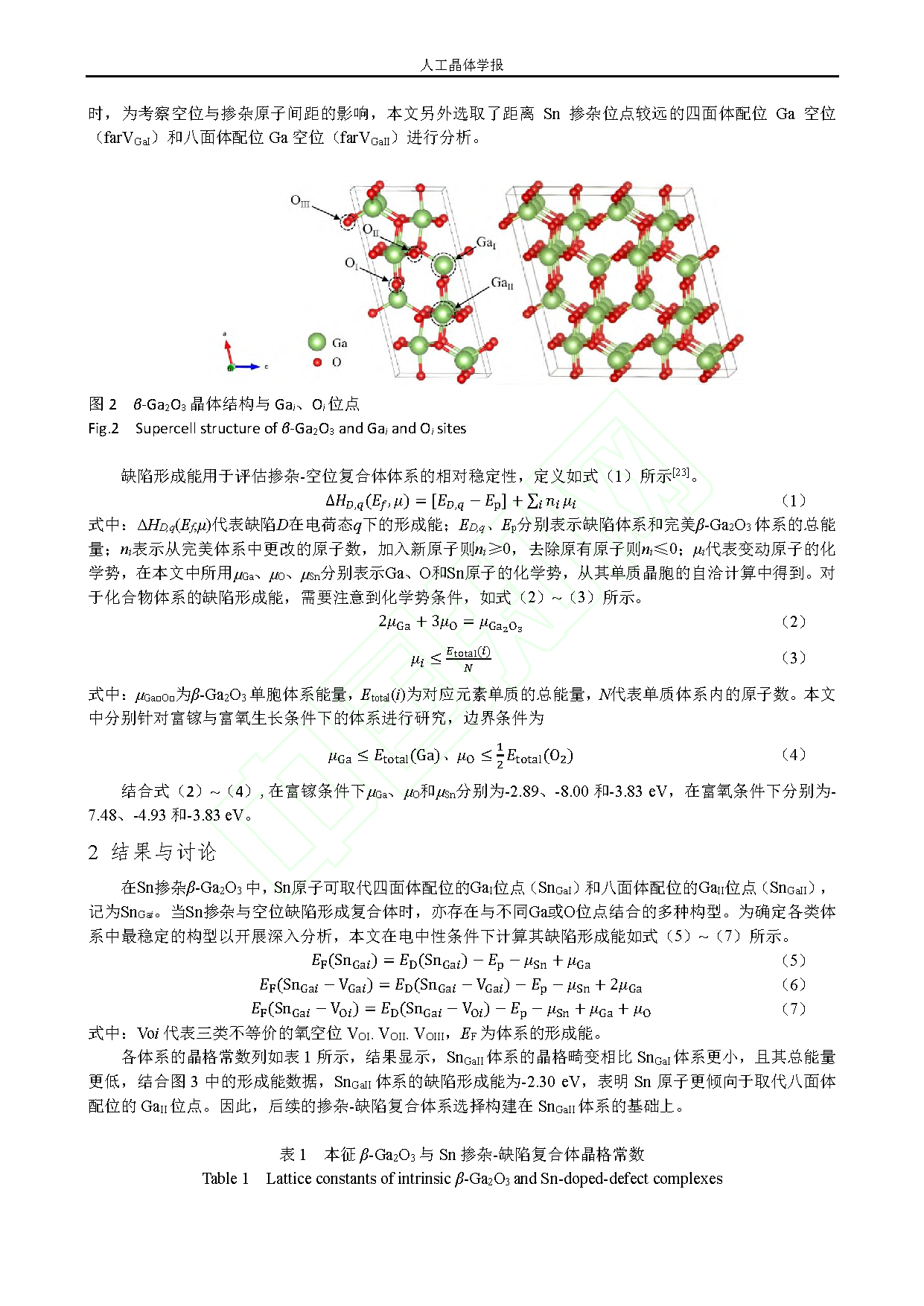
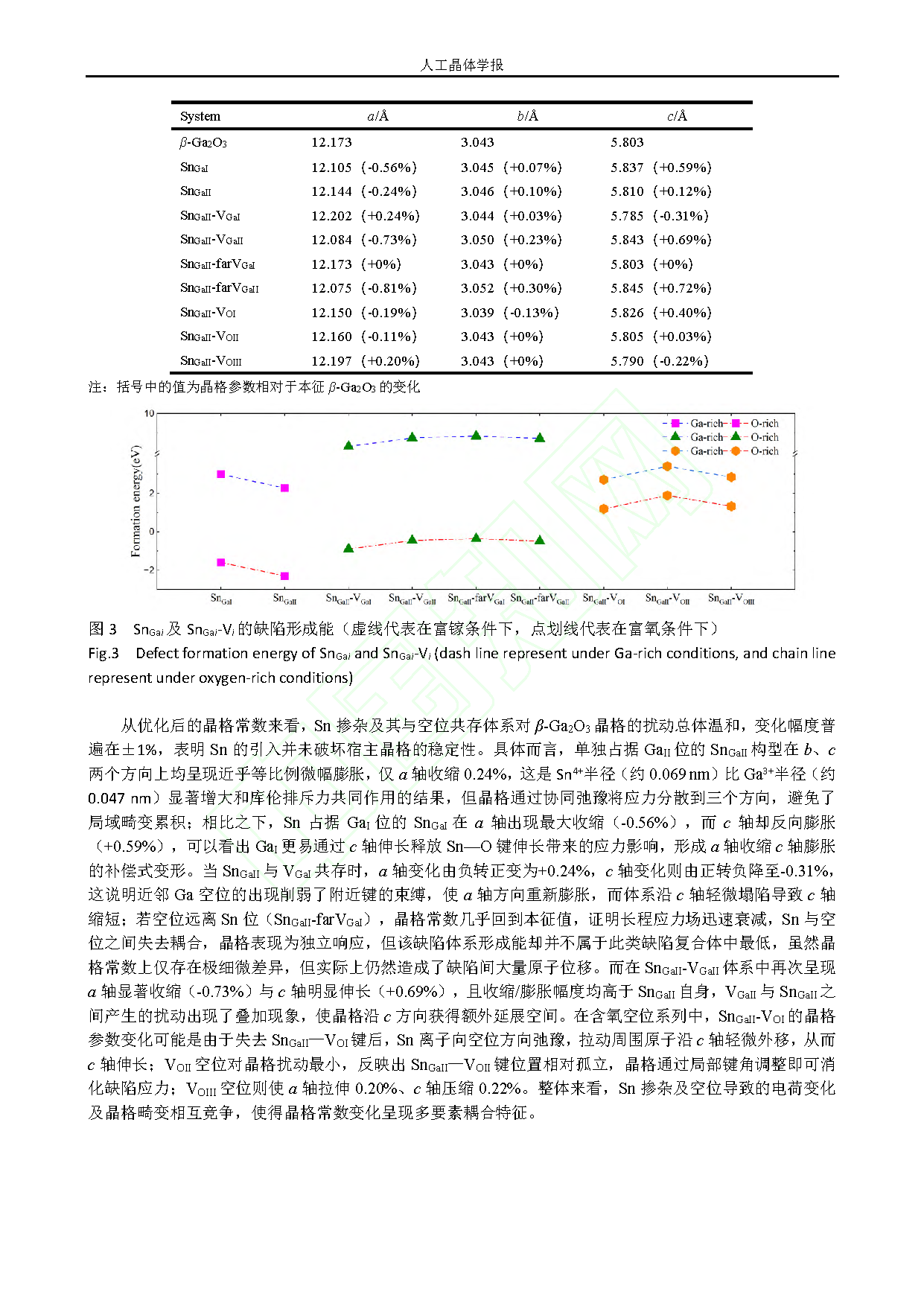
Sn atoms preferentially occupy the octahedrally coordinated GaII sites, which exhibit the lowest formation energy and the smallest lattice distortion.
Among various dopant–defect complexes, the SnGaII-VGaI and SnGaII-VOI configurations show the lowest defect formation energies and the highest thermodynamic stability.
All doping and defect configurations present lower formation energies under oxygen-rich growth conditions, indicating that tuning the oxygen chemical potential can effectively suppress or promote the formation of specific defects, providing theoretical guidance for defect engineering in experiments.
Theoretical calculations predict that the SnGaII-VGaI complex system introduces significant optical absorption bands from the visible to infrared region, thereby extending the application potential of β-Ga₂O₃ in broadband optoelectronic detection (e.g., visible–infrared response).
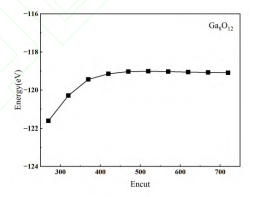
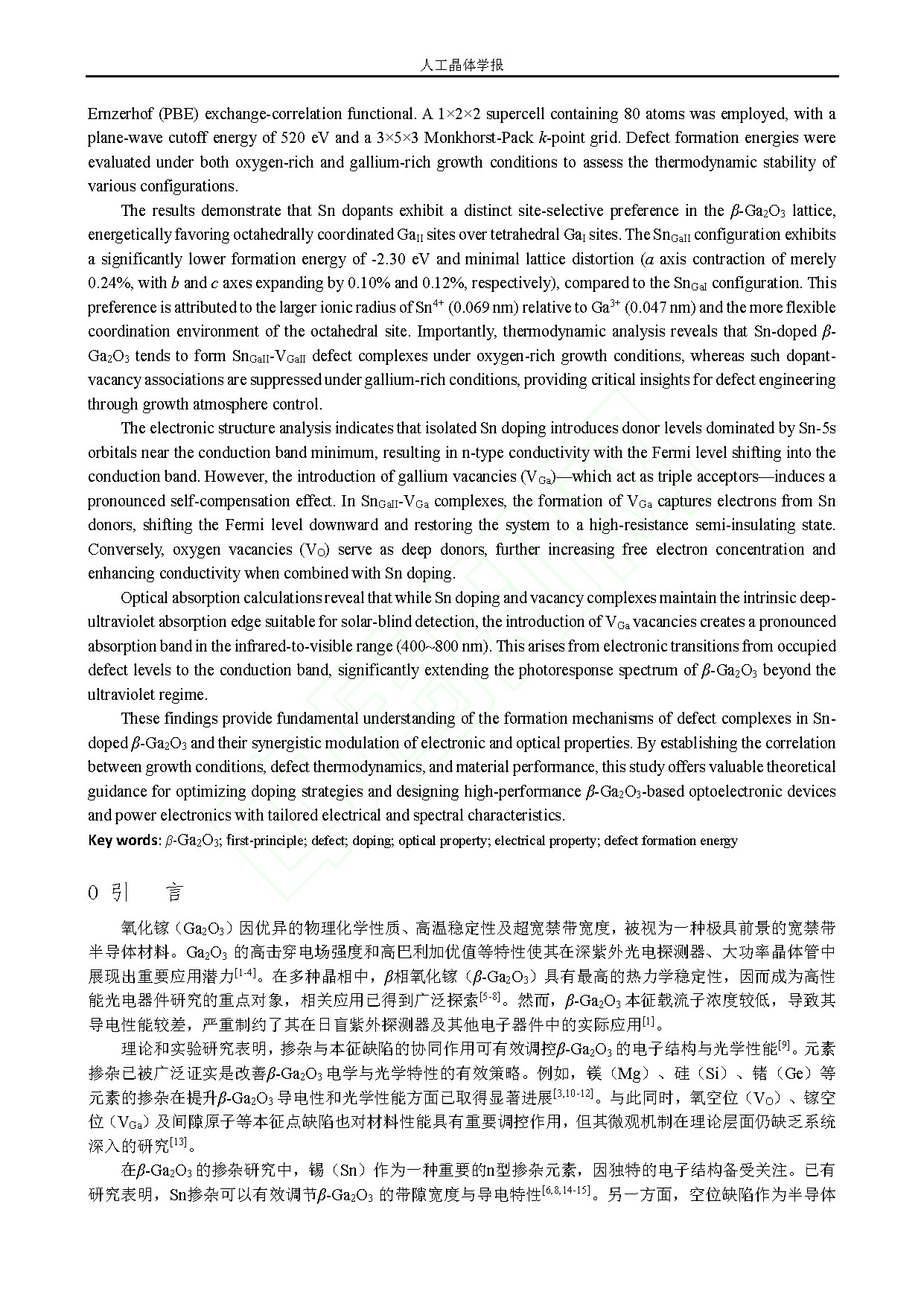
Fig.1 Tests of energy cutoff for Ga8O12
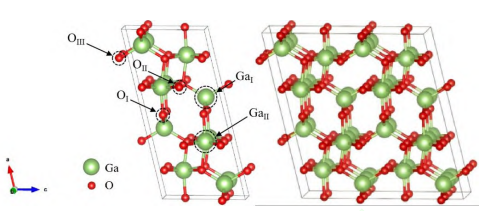
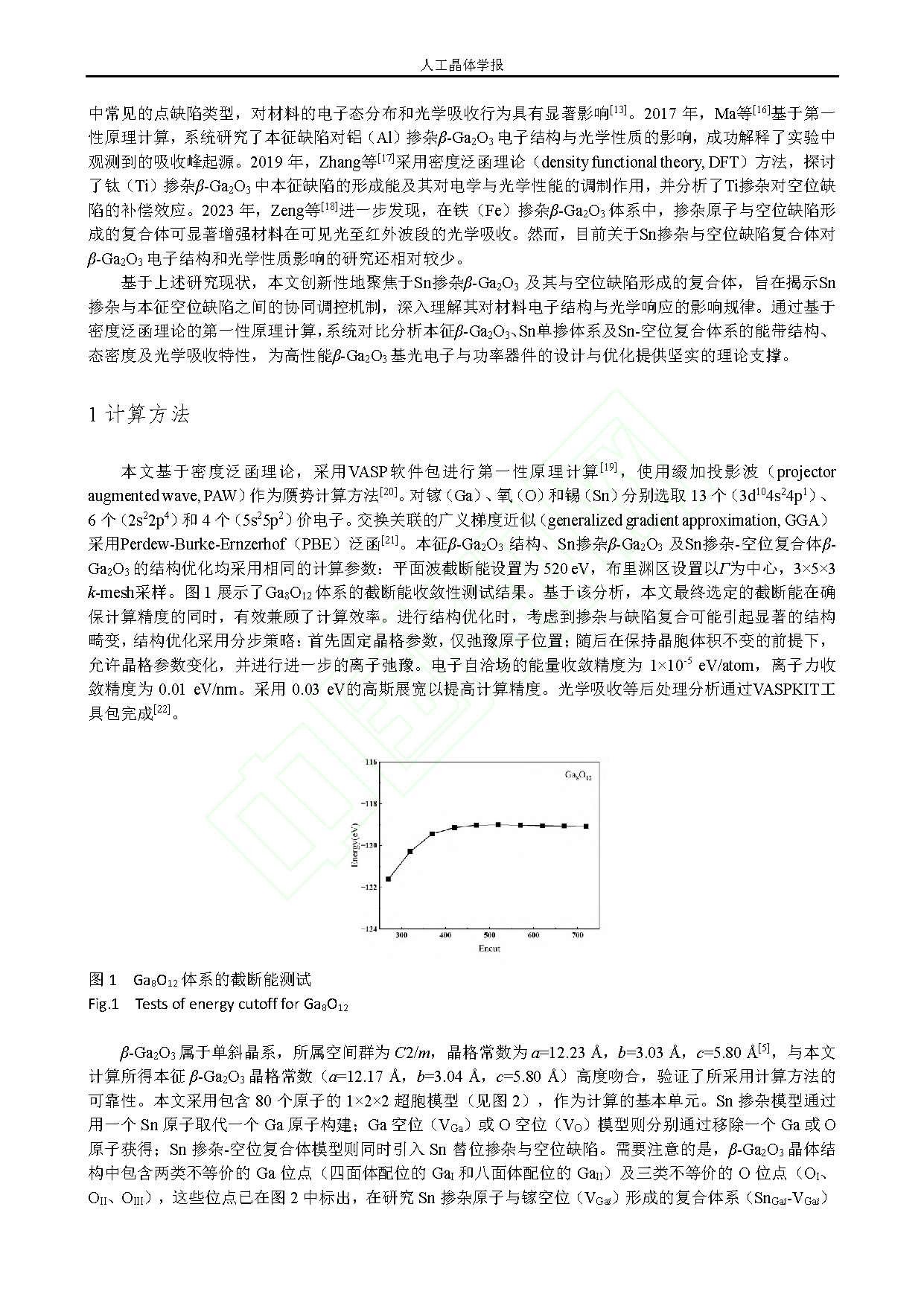
Fig.2 Supercell structure of β-Ga₂O₃ and Gai and Oi sites
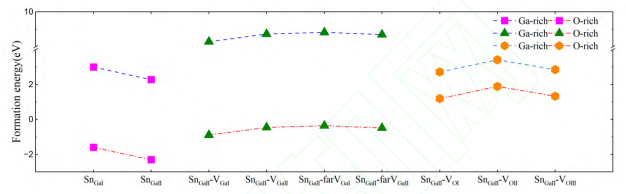
Fig.3 Defect formation energy of SnGai and SnGai-Vi (dash line represent under Ga-rich conditions, and chain line represent under oxygen-rich conditions)
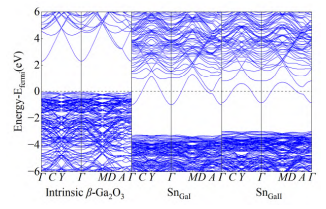
Fig.4 Band structure diagrams of intrinsic β-Ga₂O₃, SnGaI, and SnGaII systems
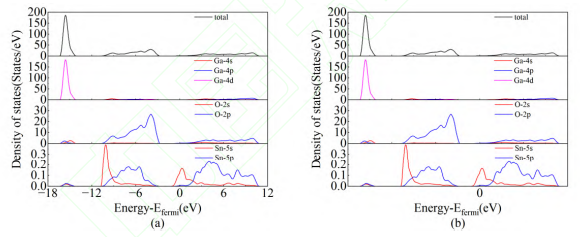
Fig.5 DOS diagrams of (a)SnGaI and (b)SnGaII systems
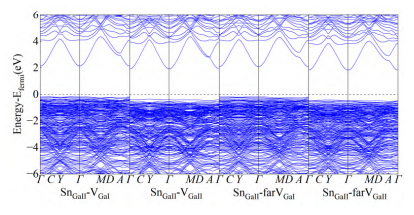
Fig.6 Band structure diagrams of SnGaII-VGai systems
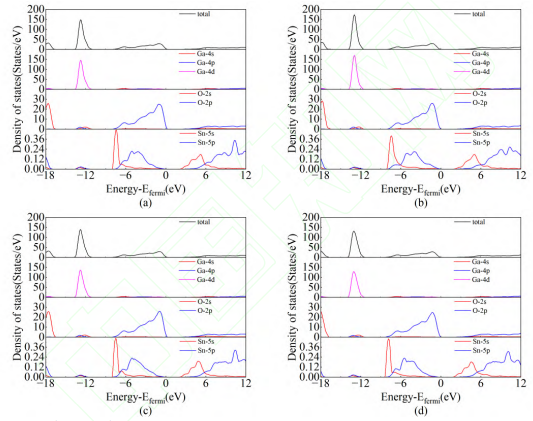
Fig.7 DOS diagrams of SnGaII-VGai systems. (a)SnGaII-VGaI; (b)SnGaII-VGaII; (c)SnGaII-farVGaI; (d)SnGaII-farVGaI
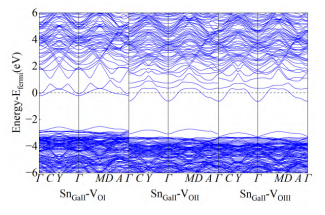
Fig.8 Band structure diagrams of SnGaII-VOi systems
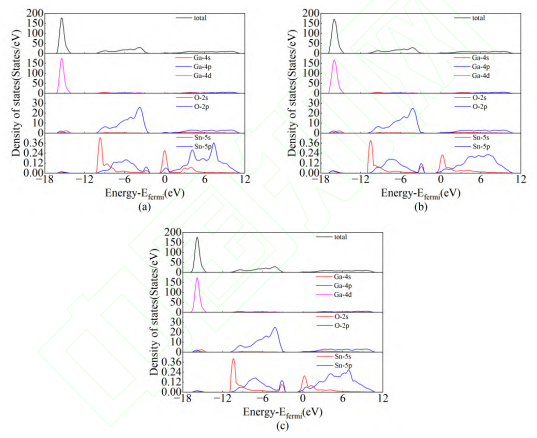
Fig.9 DOS diagrams of SnGaII-VOi systems. (a)SnGaII-VOI; (b)SnGaII-VOII; (c)SnGaII-VOIII
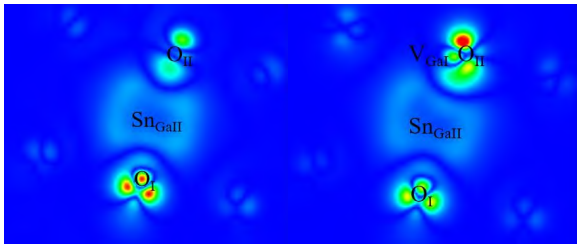
Fig.10 Differential charge density diagrams of SnGaII and SnGaII-VGaI systems
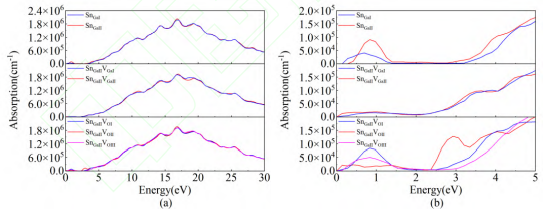
FIG.11 Optical absorption spectra (a) and enlarged spectra (b) of SnGai,SnGaII-VGai and SnGaII-VOi systems
DOI:
doi.org/10.16553/j.cnki.issn1000-985x.2026.0006
Instruction
Official Account

Cooperation
Top