


Researchers from the Northeast Normal University,Jilin Jianzhu University and Jilin Normal University have published a dissertation titled " Influence of Point Defect on the Electronic and Magnetic Properties of β-Ga2O3: A First-Principles Study" in Physica Status Solidi B-basic Solid State Physics.
Background
In recent years, the rapid development of spintronics has promoted the research of diluted magnetic semiconductors (DMSs), which can integrate the charge characteristics of semiconductors and spin characteristics of magnetic materials simultaneously, and have core application value in the fields of information storage, processing and communication. As a fourth-generation ultra-wide-bandgap semiconductor, β‑Ga₂O₃ possesses excellent breakdown electric field, Baliga's figure of merit and photoelectric properties, and is widely used in deep-ultraviolet photodetectors, light-emitting diodes, solar cells and other devices. Previous studies on point defects and metal doping of β‑Ga₂O₃ mostly focused on photoelectric and catalytic properties, while systematic exploration of its magnetic properties was relatively scarce. Ga vacancy and 3d transition metal doping are key means to regulate its electronic structure and magnetism. Therefore, carrying out relevant first-principles research is of great theoretical and application significance for the development of Ga₂O₃-based diluted magnetic semiconductors for spintronics.
Abstract
In this study, first-principles calculations are employed to systematically explore the influence of Ga vacancy and substitutional doping with a series of 3d metallic atoms X, including Ti, V, Cr, Mn, Fe, Co, Ni, and Cu, on the stability, geometric structure, electronic structure, and magnetic properties of β‑Ga₂O₃. We calculated the defect formation energy of Ga vacancy and substitutional 3d metallic atoms X in β‑Ga₂O₃ under O-rich and Ga-rich conditions, respectively. Our results demonstrate that Ga vacancy and X-doped β‑Ga₂O₃ systems are more facile to be synthesized in oxygen-rich environment than in Ga-rich environment. Additionally, β‑Ga₂O₃ with Ga vacancy or Cu doping exhibits p-type semiconducting behavior. Importantly, the spin-polarized state is stable in Ga vacancy and 3d metallic atoms X-doped β‑Ga₂O₃ systems. Specifically, Ga vacancy, Ti, V, Cu, Cr, Ni, Mn, Co, and Fe induce magnetic moments of 0.55, 1.83, 2.02, 2.96, 3.0, 4.0, 4.0, and 5.0 μB, respectively. The magnetic moment mainly arises from dopant atom and relates to the hybridization between neighboring O atoms around vacancy or the dopant atom. This work not only identifies a potential new dilute magnetic semiconductor material for spintronic applications but also expands the application potential of gallium oxide.
Highlights
The defect formation energies of Ga vacancy and nine 3d transition metal doped β‑Ga₂O₃ under O-rich/Ga-rich conditions are systematically compared for the first time, confirming that O-rich environment is more favorable for synthesis;
Ga vacancy and Cu doping endow β‑Ga₂O₃ with p-type conductivity, while other 3d metal doping results in n-type conductivity, and Cu-doped system achieves half-metallic ferromagnetism with 100% spin polarization;
The magnetic moments induced by various defects and doping are accurately quantified, and the magnetism originates from p-d hybridization between dopant 3d orbitals and neighboring O 2p orbitals;
All defective and doped systems are confirmed to have ferromagnetic ground state, providing a new design strategy for β‑Ga₂O₃-based spintronic materials.
Conclusion
In this study, the effect of Ga₁ vacancy and 3d transition metal atom doping on the electronic and magnetic properties of β‑Ga₂O₃ is calculated by using first-principles calculations. The formation energies indicate that the Ga₃₁O₄₈ and Ga₃₁O₄₈X systems are possible under appropriate experimental conditions, with formation easier under O-rich conditions. The magnetic analysis showed that Ga₃₁O₄₈ and Ga₃₁O₄₈X systems all exhibit ferromagnetism, and one Ga vacancy, Ti, V, Cu, Cr, Ni, Mn, Co, and Fe atom induce the magnetic moments of 0.55, 1.83, 2.02, 2.96, 3.0, 4.0, 4.0, and 5.0 μB, respectively. The magnetism originates from the hybridization between dopant and its neighboring O atoms or the hybridization between O and Ga atoms around vacancy. The Ga₃₁O₄₈ and Ga₃₁O₄₈Cu systems show p-type semiconducting as the defect levels above the Fermi energy level near the VBM. Other transition metal atoms doped β‑Ga₂O₃ systems show n-type semiconducting behavior as the Fermi energy level shifts toward conduction band. Our study discovers a viable material for the spintronics applications, but also provides a theoretical reference for designing and preparing new Ga₂O₃-based DMSs.
Project Support
This work was supported by the Natural Science Foundation of Jilin Province, China (Grant No. 20260102240JC, No. YDZJ202501ZYTS656), the National Natural Science Foundation of China (Grant No. 62441402), and the Science and Technology Development Project of Jilin Province, China (Grant No. JJKH20240364KJ).
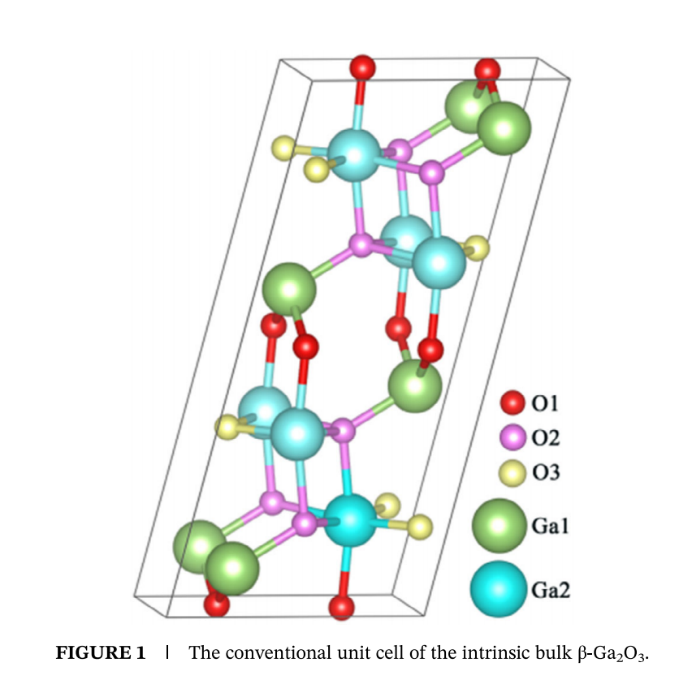
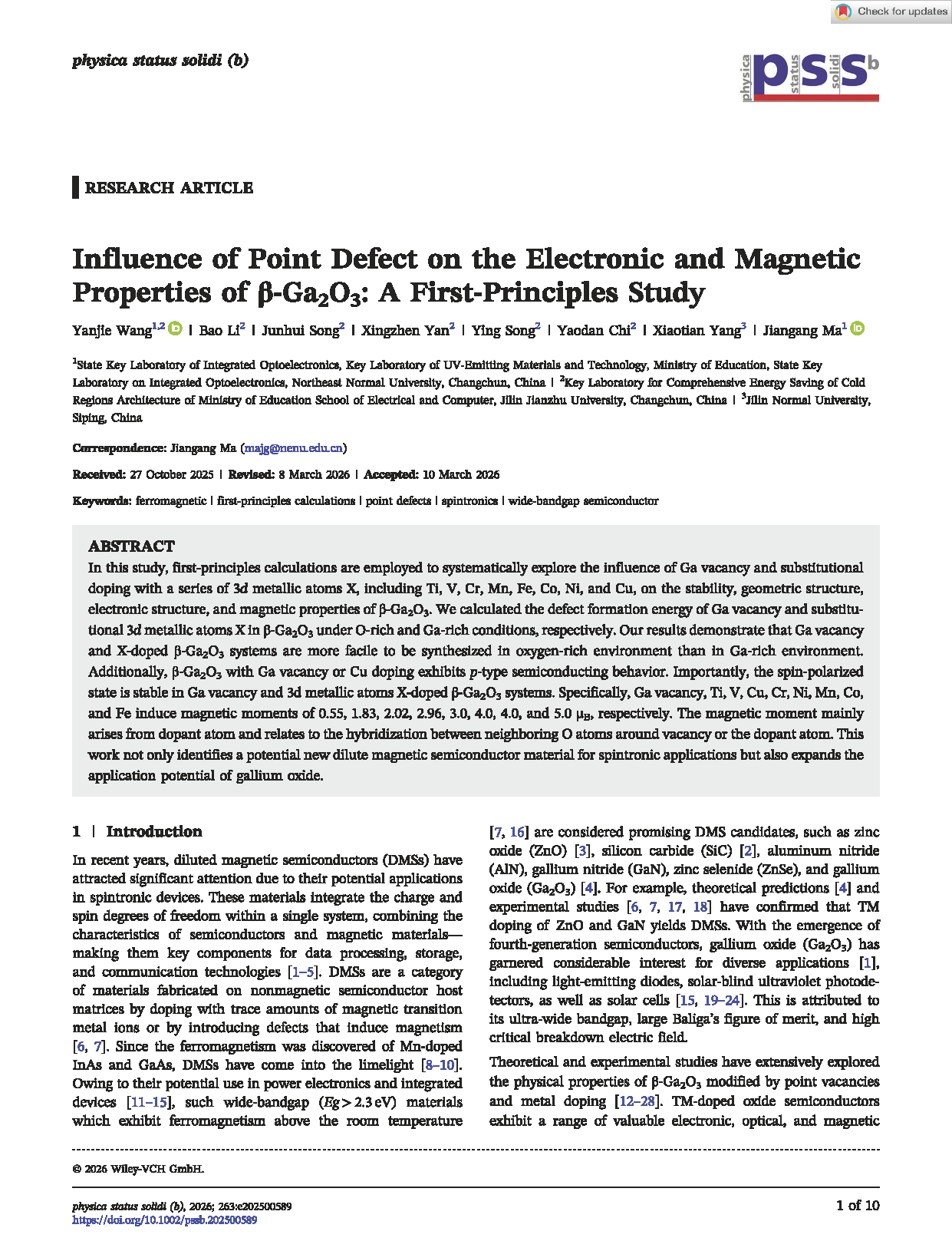
FIGURE 1 The conventional unit cell of the intrinsic bulk β‑Ga₂O₃
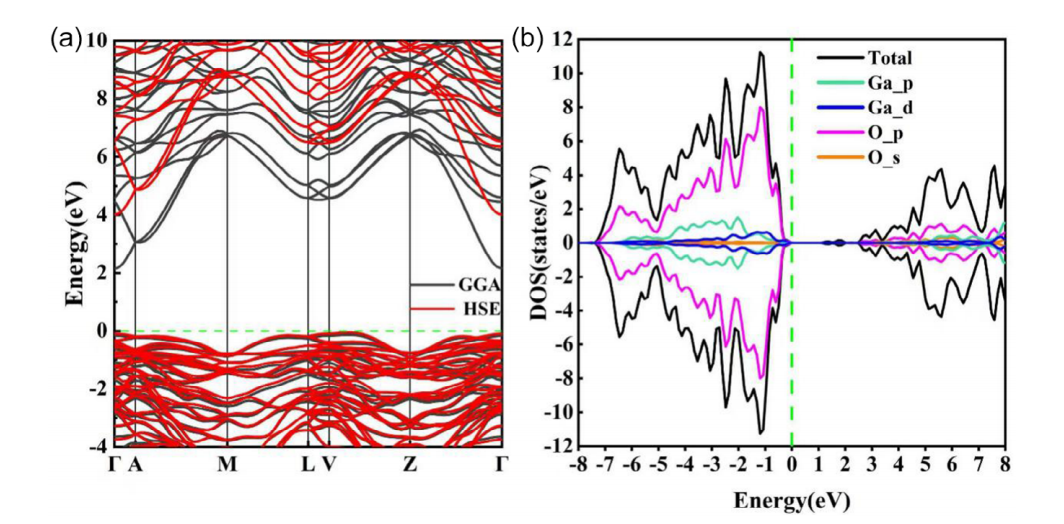
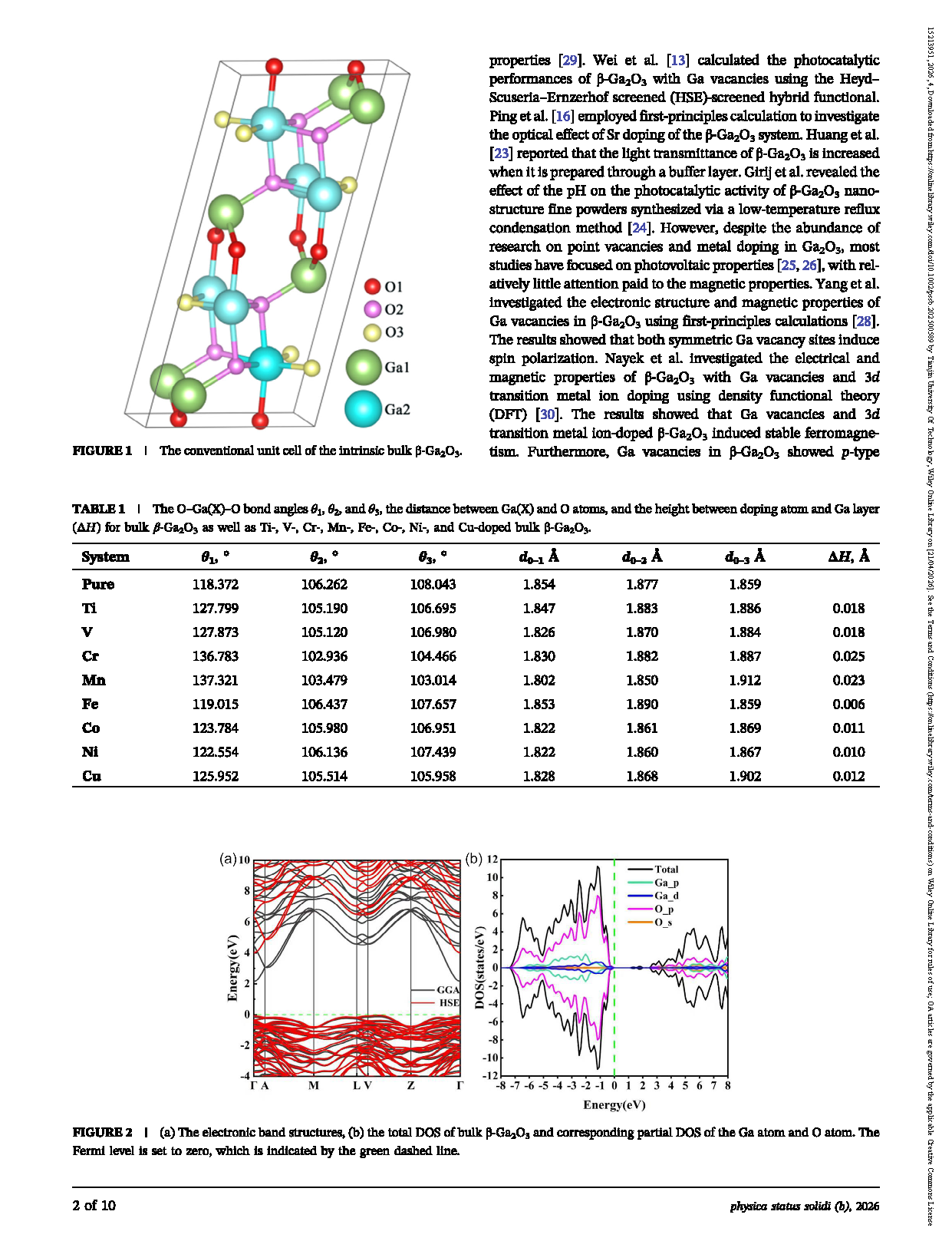
FIGURE 2 (a) The electronic band structures, (b) the total DOS of bulk β‑Ga₂O₃ and corresponding partial DOS of the Ga atom and O atom. The Fermi level is set to zero, which is indicated by the green dashed line.
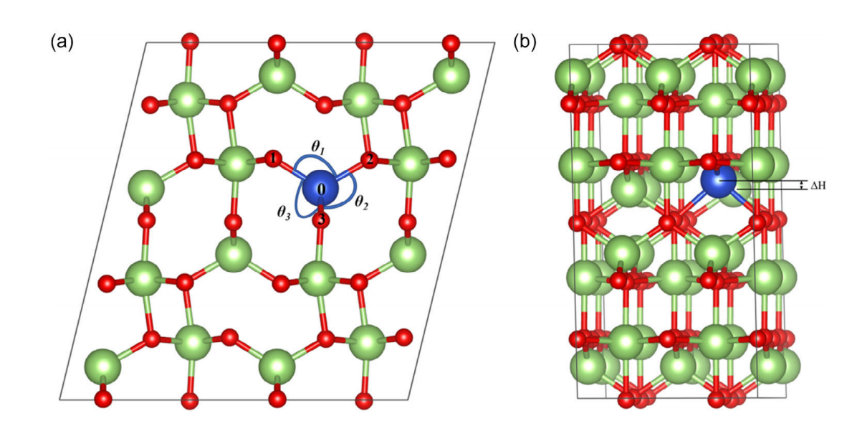
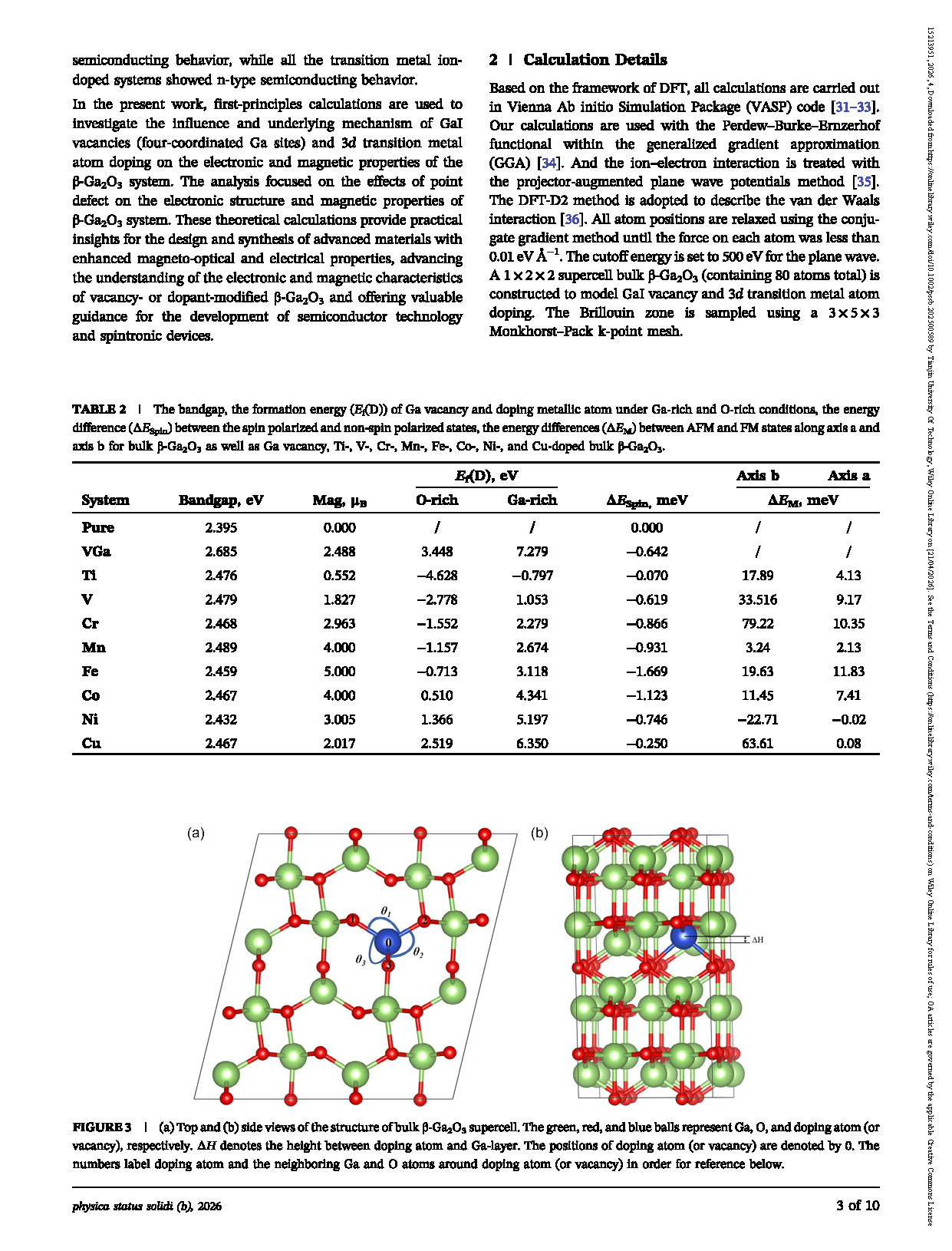
FIGURE 3 (a) Top and (b) side views of the structure of bulk β‑Ga₂O₃ supercell. The green, red, and blue balls represent Ga, O, and doping atom (or vacancy), respectively. ΔH denotes the height between doping atom and Ga-layer. The positions of doping atom (or vacancy) are denoted by 0. The numbers label doping atom and the neighboring Ga and O atoms around doping atom (or vacancy) in order for reference below.
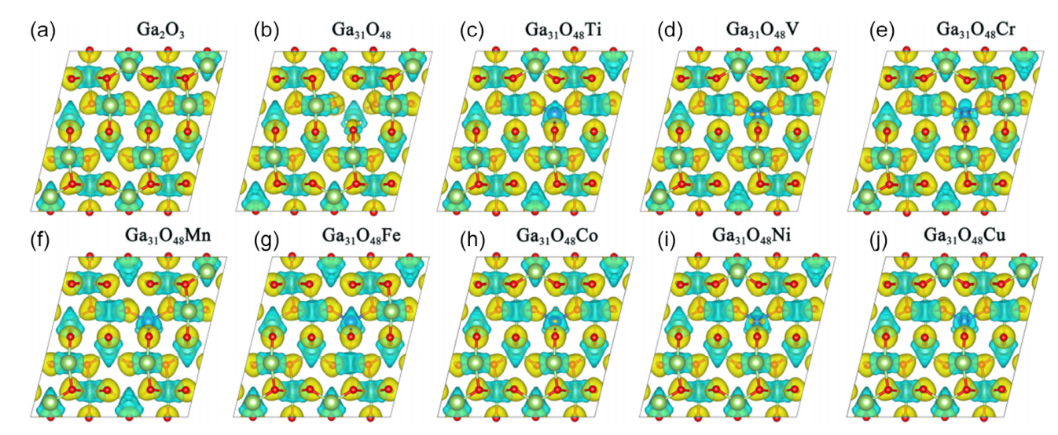
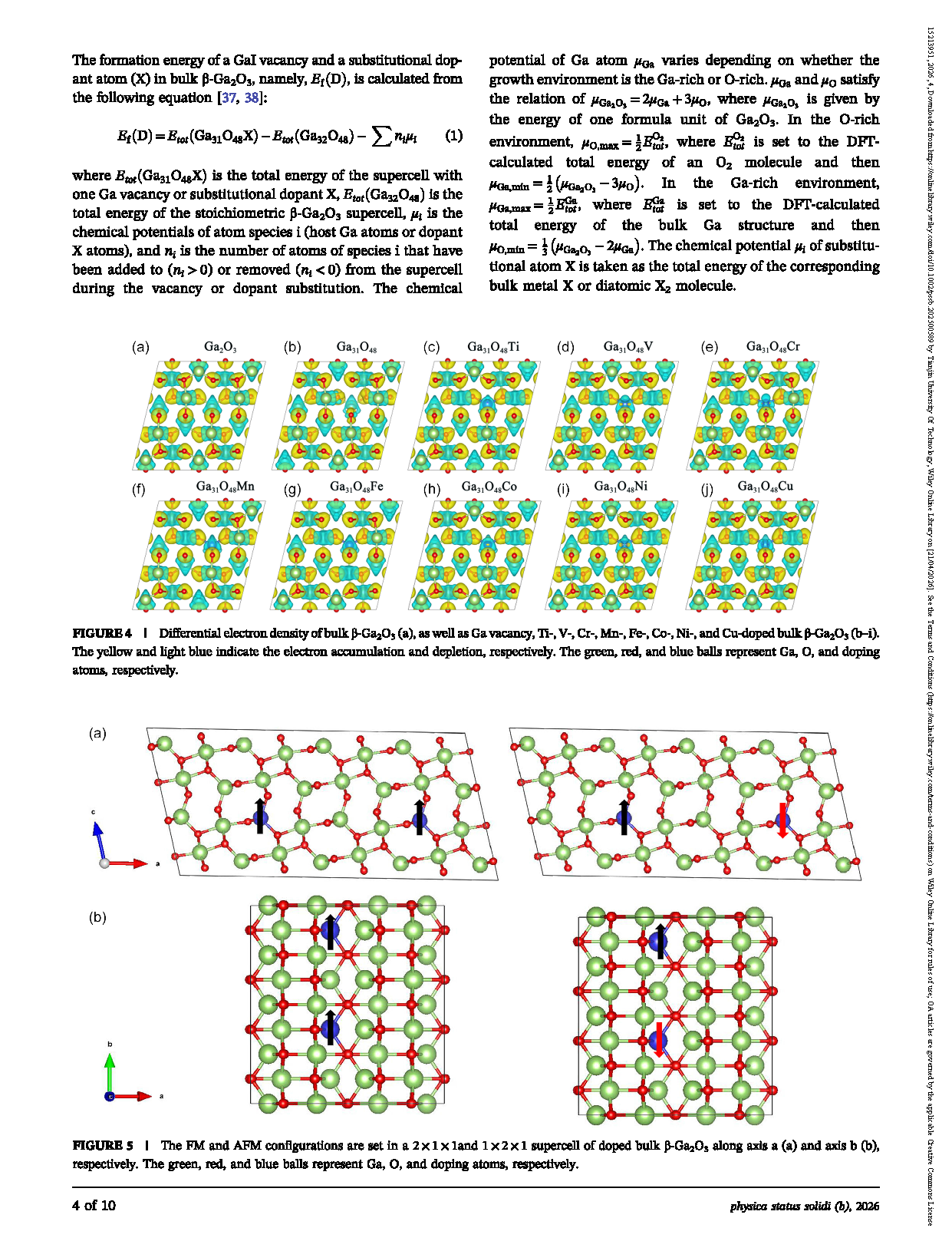
FIGURE 4 Differential electron density of bulk β‑Ga₂O₃ (a), as well as Ga vacancy, Ti-, V-, Cr-, Mn-, Fe-, Co-, Ni-, and Cu-doped bulk β‑Ga₂O₃ (b-i) The yellow and light blue indicate the electron accumulation and depletion, respectively. The green, red, and blue balls represent Ga, O, and doping atoms, respectively.
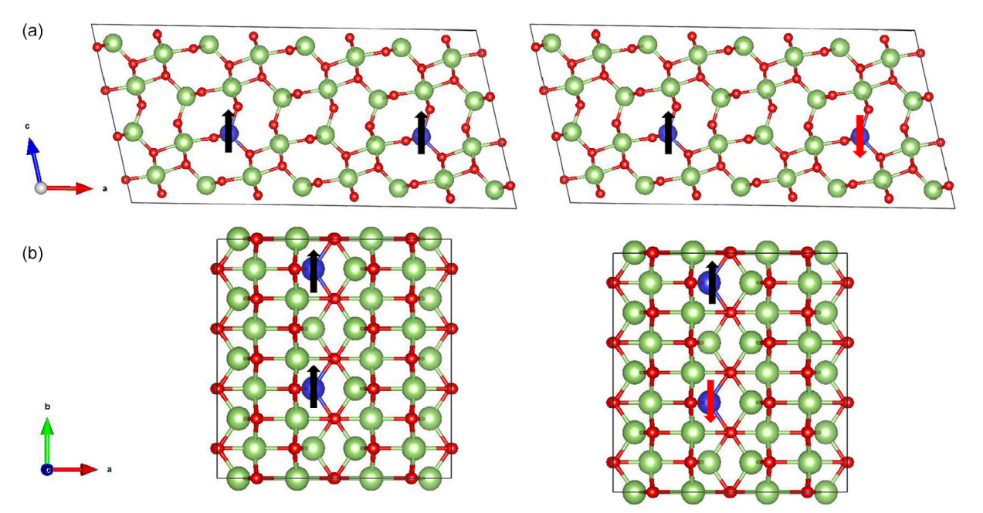
FIGURE 5 The FM and AFM configurations are set in a 2×1×1 and 1×2×1 supercell of doped bulk β‑Ga₂O₃ along axis a (a) and axis b (b), respectively. The green, red, and blue balls represent Ga, O, and doping atoms, respectively.
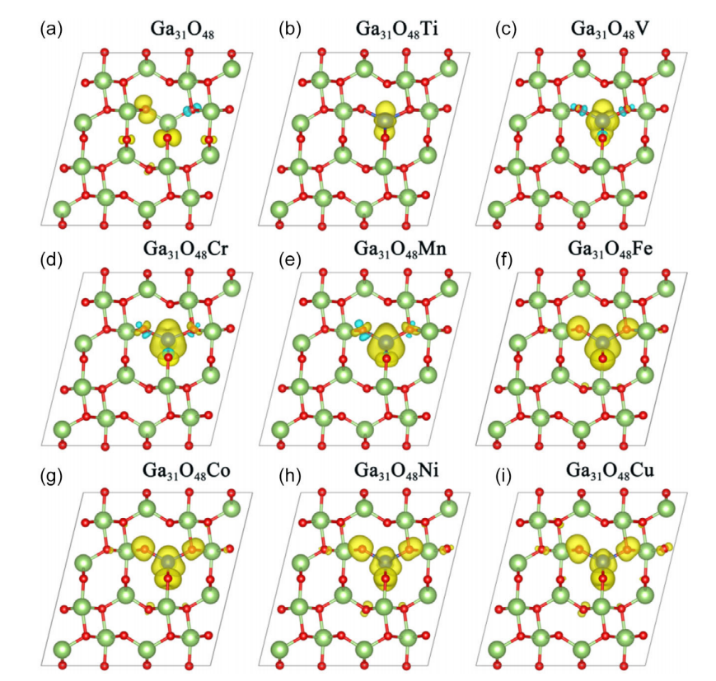
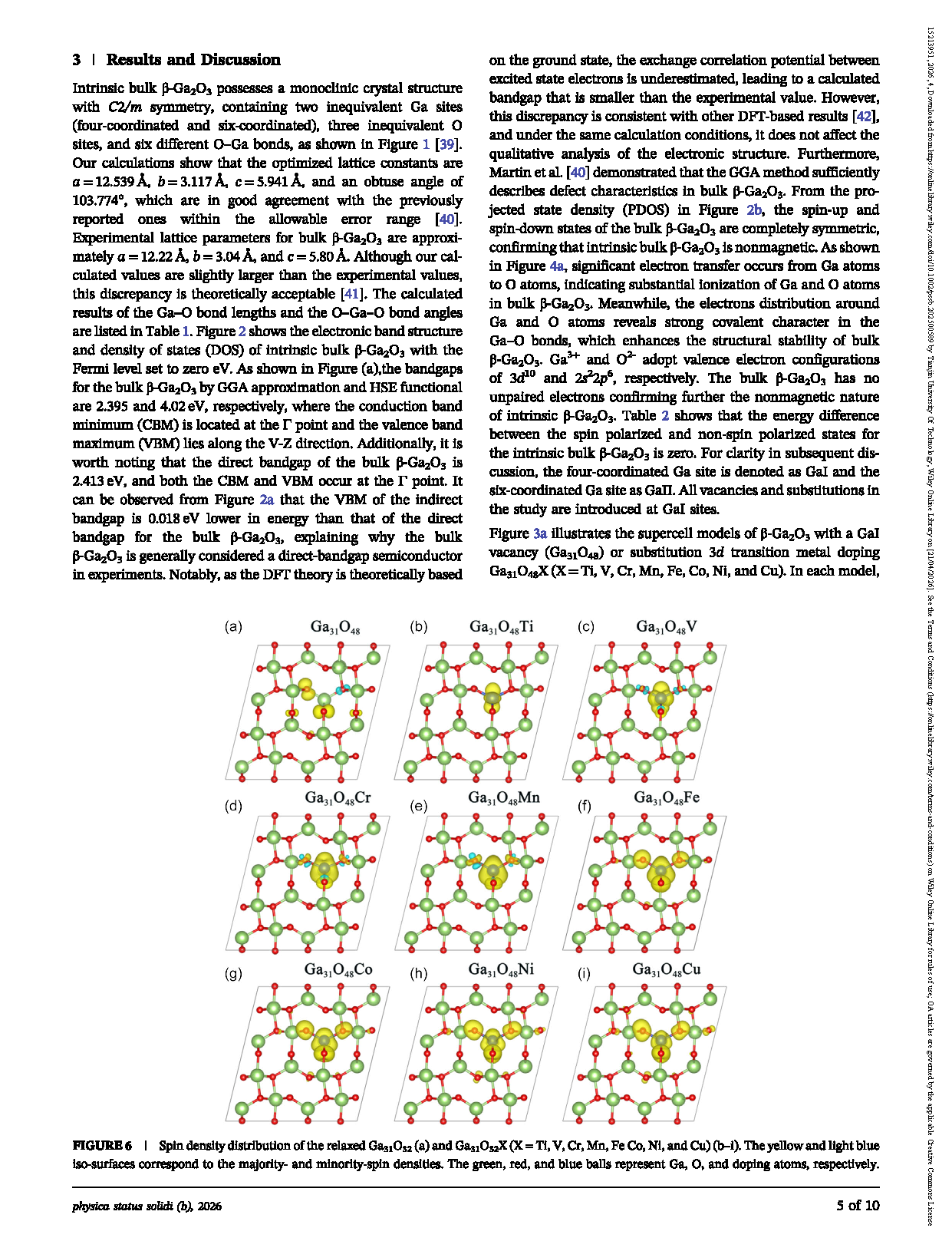
FIGURE 6 Spin density distribution of the relaxed Ga₃₁O₄₈ (a) and Ga₃₁O₄₈X (X=Ti, V, Cr, Mn, Fe Co, Ni, and Cu) (b-i). The yellow and light blue iso-surfaces correspond to the majority- and minority-spin densities. The green, red, and blue balls represent Ga, O, and doping atoms, respectively.
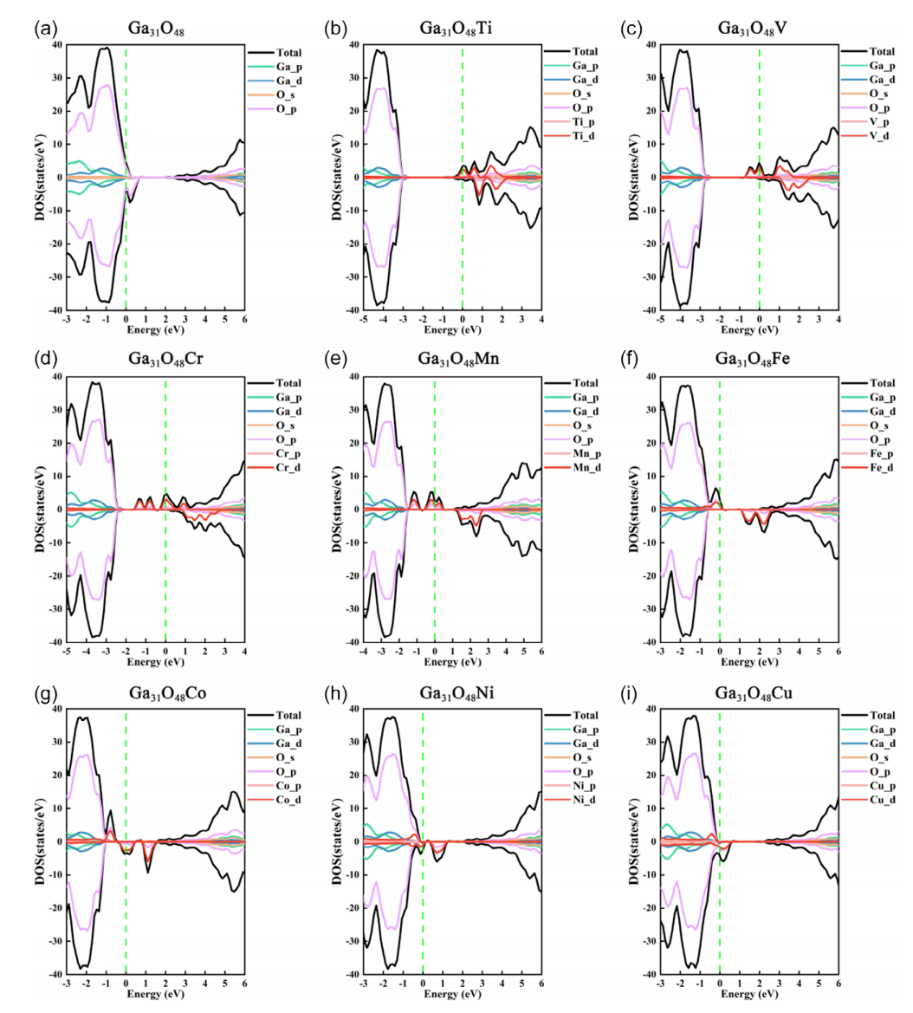
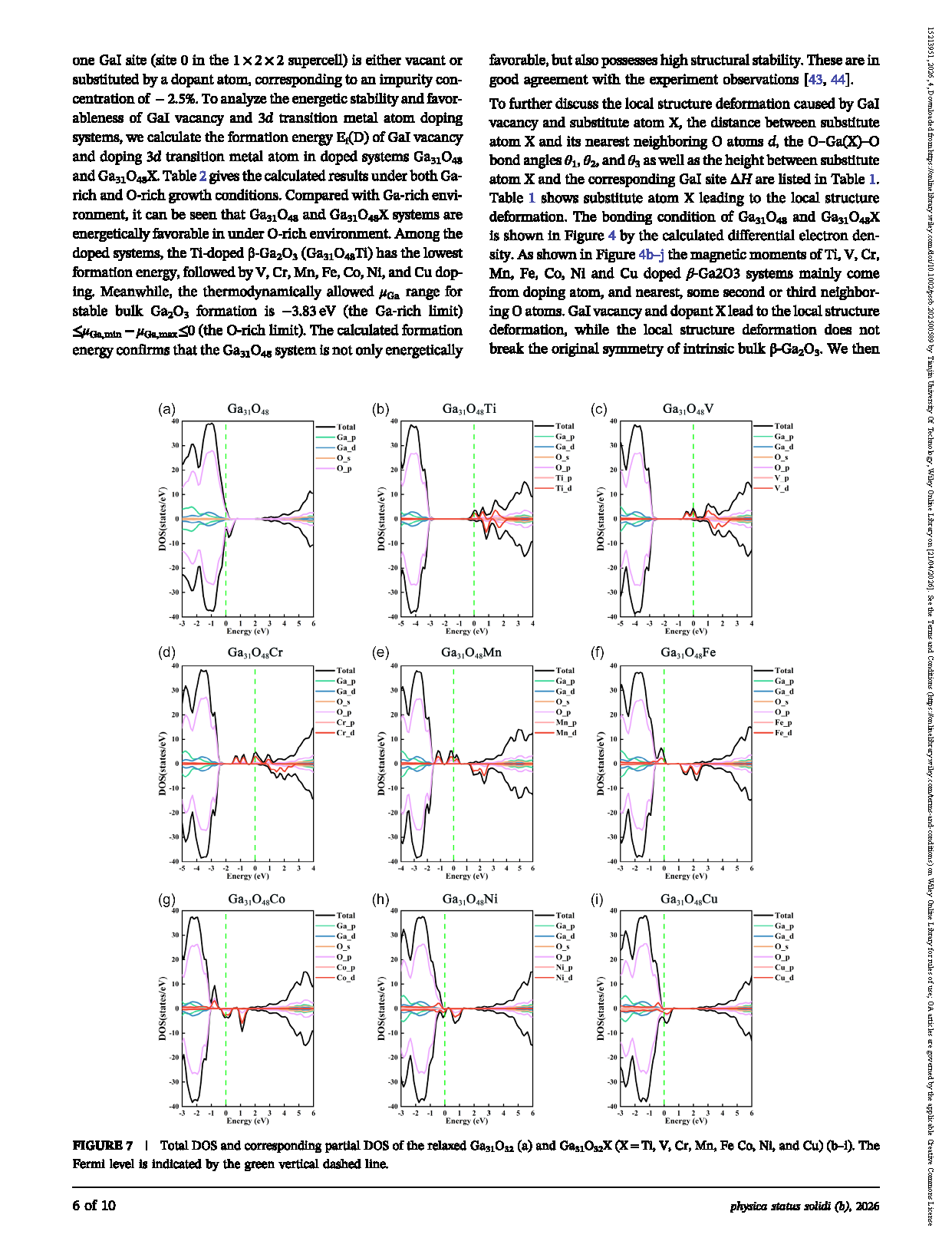
FIGURE 7 Total DOS and corresponding partial DOS of the relaxed Ga₃₁O₃₂ (a) and Ga₃₁O₃₂X (X=Ti, V, Cr, Mn, Fe Co, Ni, and Cu) (b-i). The Fermi level is indicated by the green vertical dashed line.
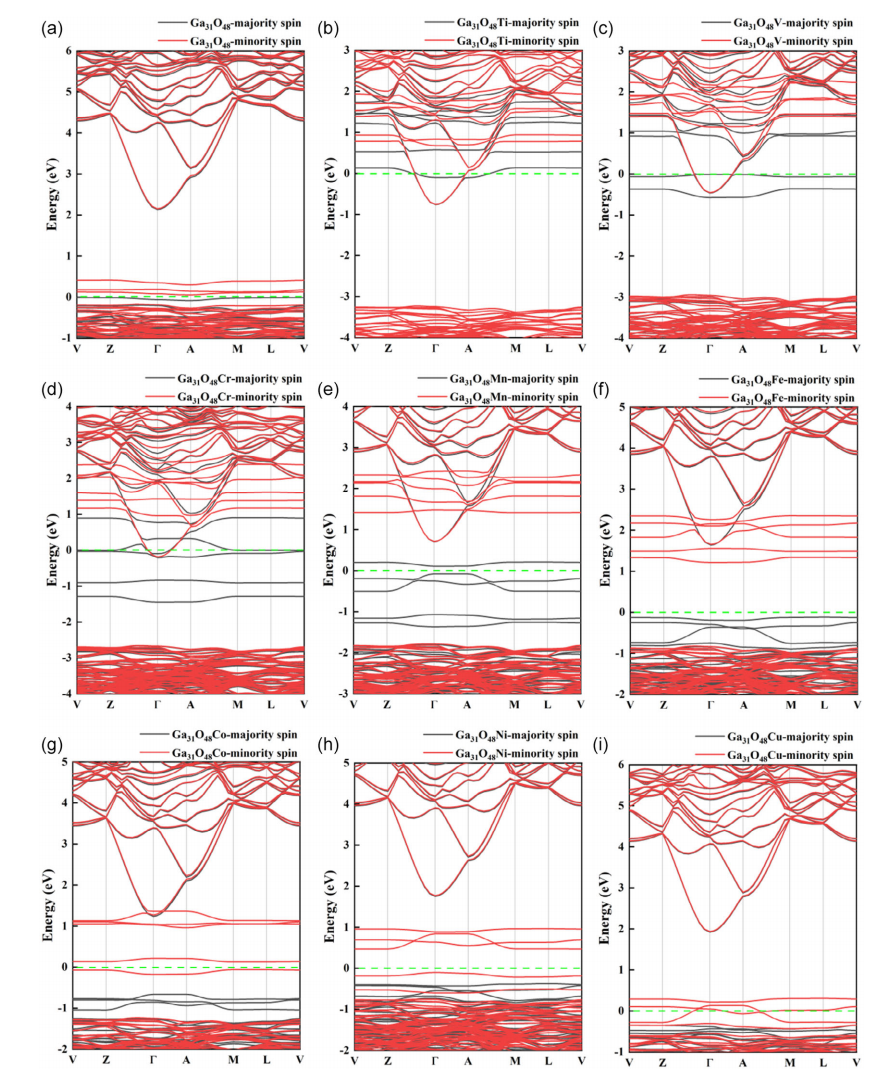
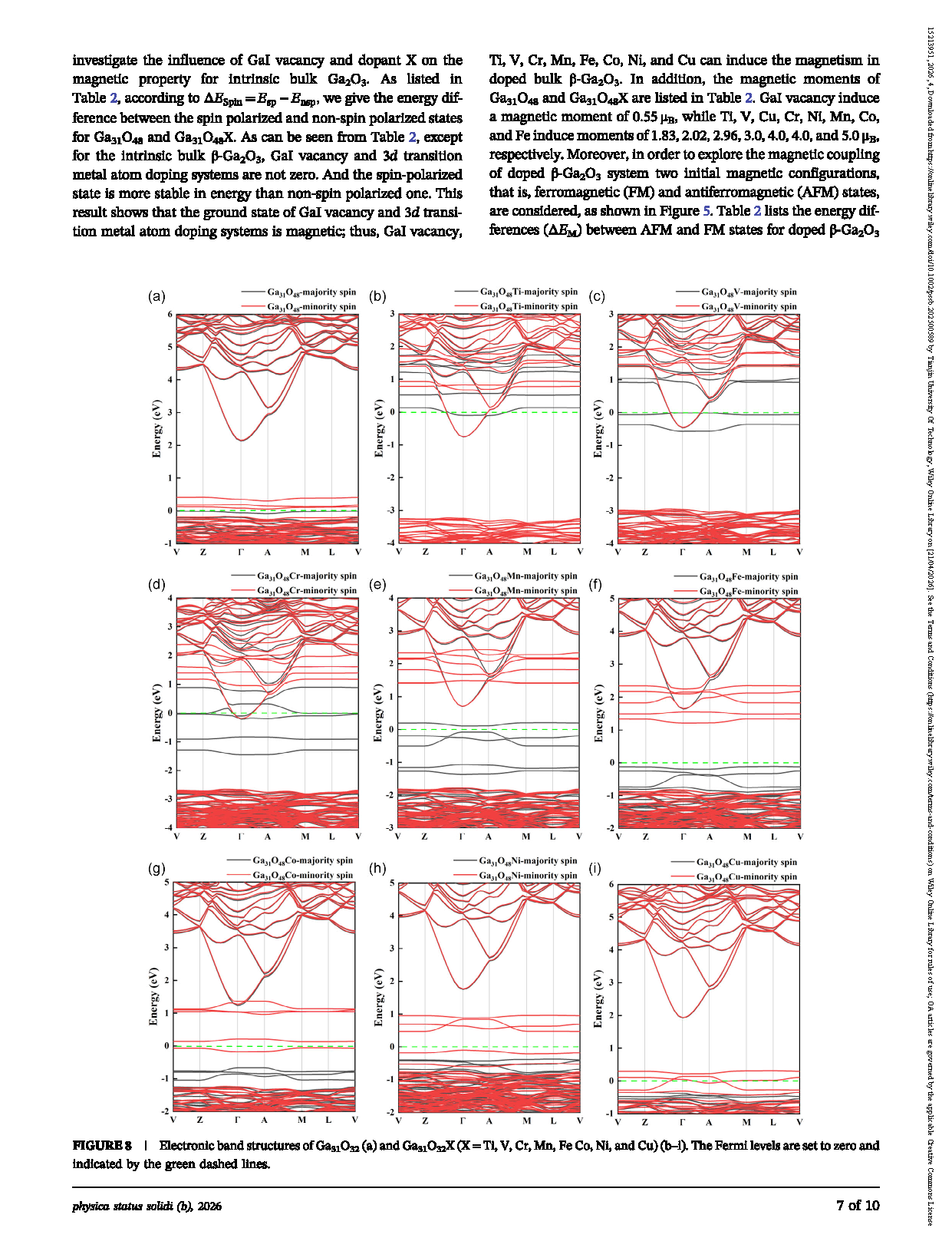
FIGURE 8 Electronic band structures of Ga₃₁O₃₂ (a) and Ga₃₁O₃₂X (X=Ti, V, Cr, Mn, Fe Co, Ni, and Cu) (b-i). The Fermi levels are set to zero and indicated by the green dashed lines.
DOI :
doi.org/10.1002/pssb.202500589
Instruction
Official Account

Cooperation
Top