


Researchers from the College of Electronics & Information, Qingdao University have published a dissertation titled "Visible light-driven photoelectric synaptic transistors based on Ga₂O₃/IGZO heterostructure for neuromorphic computing" in Applied Physics Letters.
Background
The traditional von Neumann architecture has inherent limitations of physical separation between memory and processing units, resulting in low data throughput and high power consumption. Inspired by the highly efficient information processing capability of the human brain, neuromorphic computing aims to emulate the working mechanisms of biological synapses and neurons. Visual information accounts for most of sensory data, and photoelectric synaptic devices are the core of constructing artificial optical neuromorphic systems. Metal–oxide semiconductor-based photoelectric synaptic transistors (PSTs) have advantages of uniformity, mobility and stability, but their wide bandgap makes it difficult to achieve visible light modulation. Existing methods such as doping and quantum dot integration have problems like defect introduction and complex fabrication.
Abstract
Photoelectric synaptic transistors (PSTs) based on metal–oxide semiconductors are endowed with advantages such as stability and scalability. However, they encounter difficulties in the modulation under visible light. In this study, a visible light-driven PST was proposed, in which the indium gallium zinc oxide was employed as the channel and gallium oxide was utilized as the modification layer. All layers of the PST were fabricated using the solution-processed method. The PST device exhibits persistent photoconductivity under illumination at a wavelength of 532 nm, which enables the synaptic plasticity behaviors such as excitatory postsynaptic current, paired-pulse facilitation, and the transition from short-term memory to long-term memory. Moreover, the role of the Ga₂O₃ modification layer was investigated, and the formation of oxygen vacancies is effectively enhanced due to the modification layer. Both the short-term and long-term plasticity of the PST are significantly enhanced, and its cyclic stability is also ensured. An artificial neural network was constructed based on the long-term plasticity of the PST, and 93.1% accuracy is achieved in image recognition tasks. The development of oxide-based PSTs is promoted, and its broad potential in artificial vision technologies is highlighted.
Highlights
First solution-processed visible light-driven photoelectric synaptic transistor with Ga₂O₃/IGZO heterostructure, breaking the visible light response bottleneck of traditional oxide semiconductors.
Ga₂O₃ modification layer significantly increases oxygen vacancy concentration in IGZO channel, enhances persistent photoconductivity and optimizes synaptic plasticity.
Realizes optical programming-electrical erasing dual-mode modulation, successfully simulates multiple core biological synaptic functions.
The constructed artificial neural network achieves 93.1% accuracy in MNIST image recognition, with high stability and low nonlinearity.
Conclusion
In summary, a visible light-driven PST based on Ga₂O₃/IGZO heterostructure was fabricated using the solution-processed method. The synaptic plasticity of the G-IGZO PST under visible light illumination was significantly optimized by the introduction of the Ga₂O₃ modification layer, enabling the realization of optical programming and electrical erasing dual modulation operation. Moreover, the PST successfully emulated the essential synaptic functions, including the EPSC, PPF, the transition from STM to LTM, and the learning–forgetting–relearning behavior. Furthermore, an ANN constructed based on synaptic characteristics of the G-IGZO PST was employed for the digit recognition task, and a recognition accuracy of 93.1% was achieved. These findings demonstrate that G-IGZO PSTs exhibit substantial potential for advancing next-generation light-responsive neuromorphic computing systems.
Project Support
This work was supported by the Natural Science Foundation of Shandong Province under Grant Nos. ZR2023QF047 and ZR2022MF246, the National Key Research and Development Program of China under Grant No. 2019YFE0121800, and the National Natural Science Foundation of China under Grant No. 62405151.
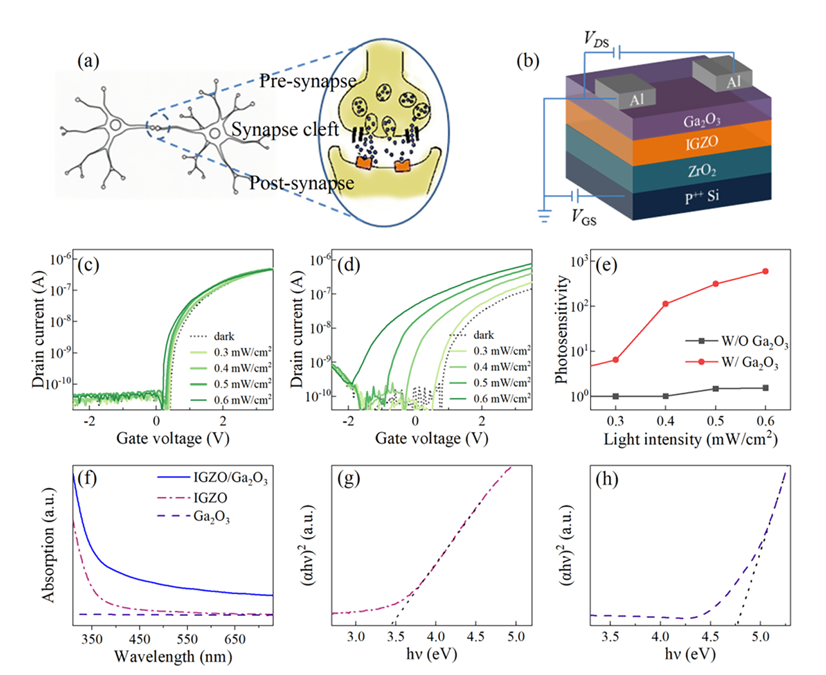
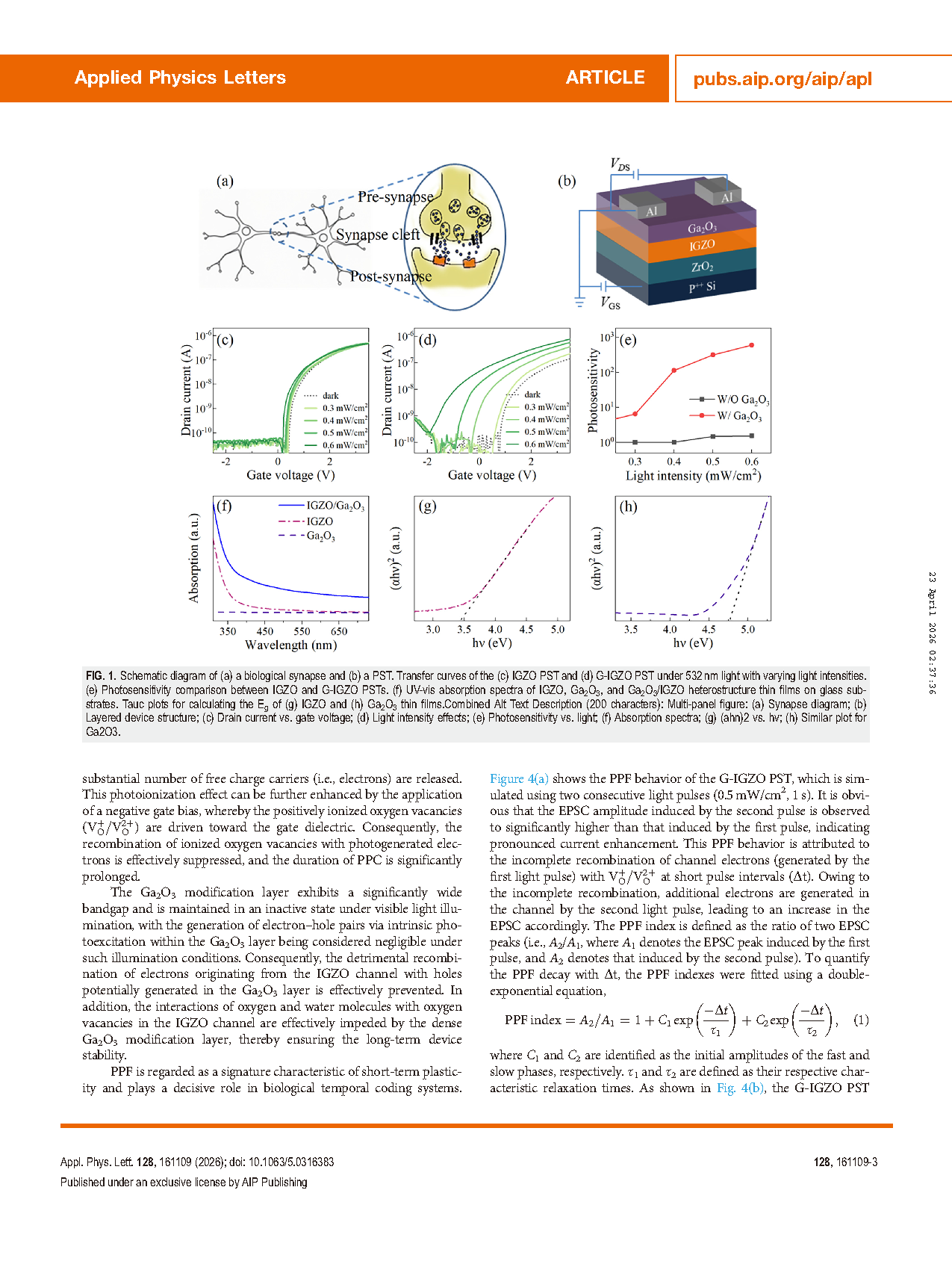
Figure 1 Schematic diagram of (a) a biological synapse and (b) a PST. Transfer curves of the (c) IGZO PST and (d) G-IGZO PST under 532 nm light with varying light intensities. (e) Photosensitivity comparison between IGZO and G-IGZO PSTs. (f) UV-vis absorption spectra of IGZO, Ga₂O₃, and Ga₂O₃/IGZO heterostructure thin films on glass substrates. Tauc plots for calculating the Eg of (g) IGZO and (h) Ga₂O₃ thin films. Combined Alt Text Description (200 characters): Multi-panel figure: (a) Synapse diagram; (b) Layered device structure; (c) Drain current vs. gate voltage; (d) Light intensity effects; (e) Photosensitivity vs. light; (f) Absorption spectra; (g) (αhν)² vs. hν; (h) Similar plot for Ga₂O₃.
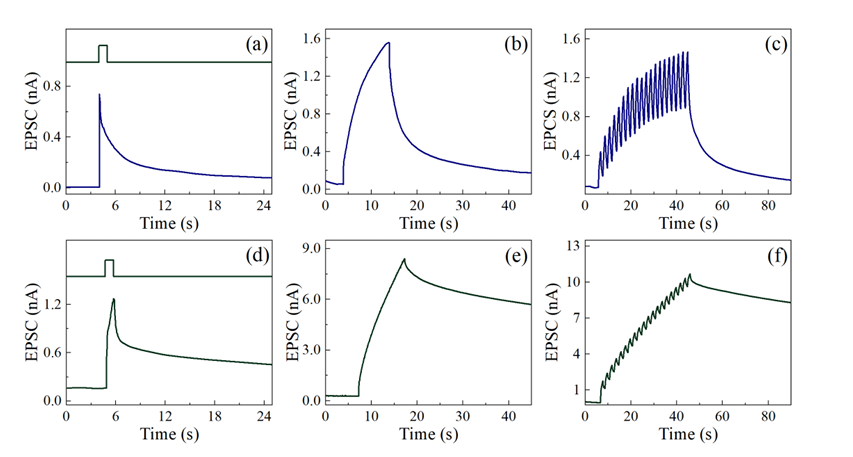
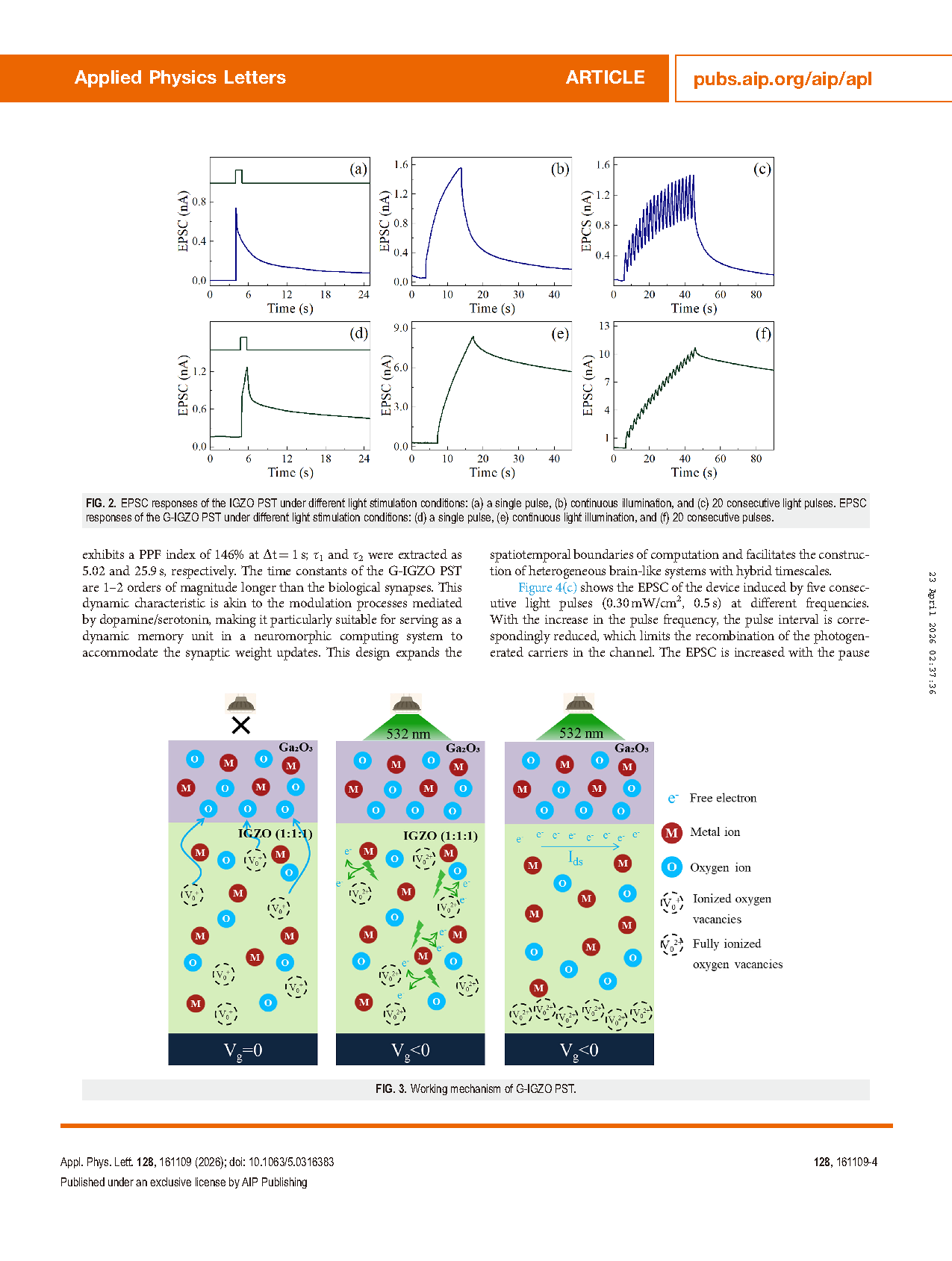
Figure 2 EPSC responses of the IGZO PST under different light stimulation conditions: (a) a single pulse, (b) continuous illumination, and (c) 20 consecutive light pulses. EPSC responses of the G-IGZO PST under different light stimulation conditions: (d) a single pulse, (e) continuous light illumination, and (f) 20 consecutive pulses.
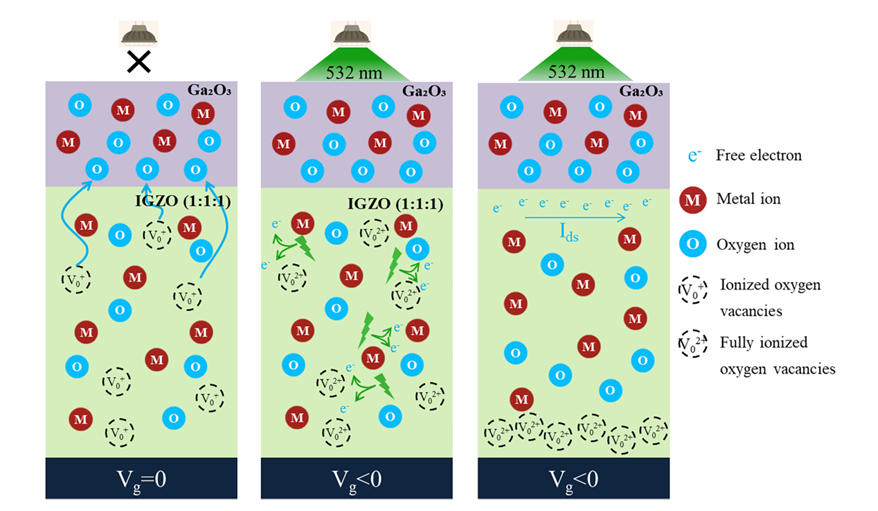
Figure 3 Working mechanism of G-IGZO PST.
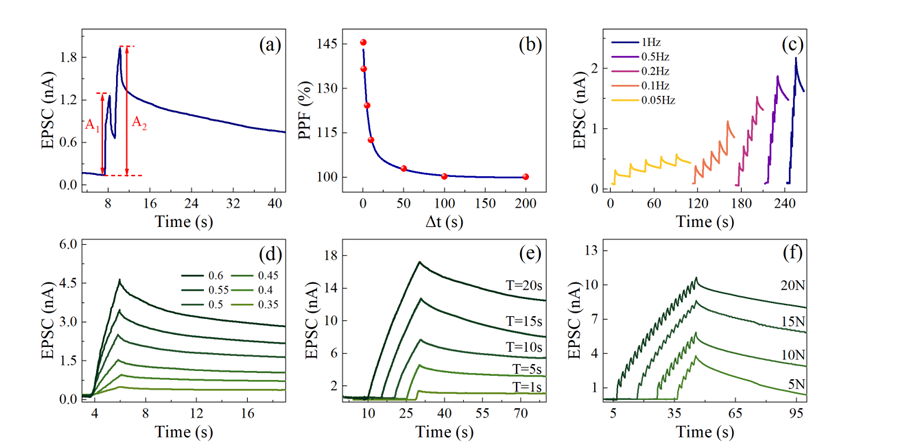
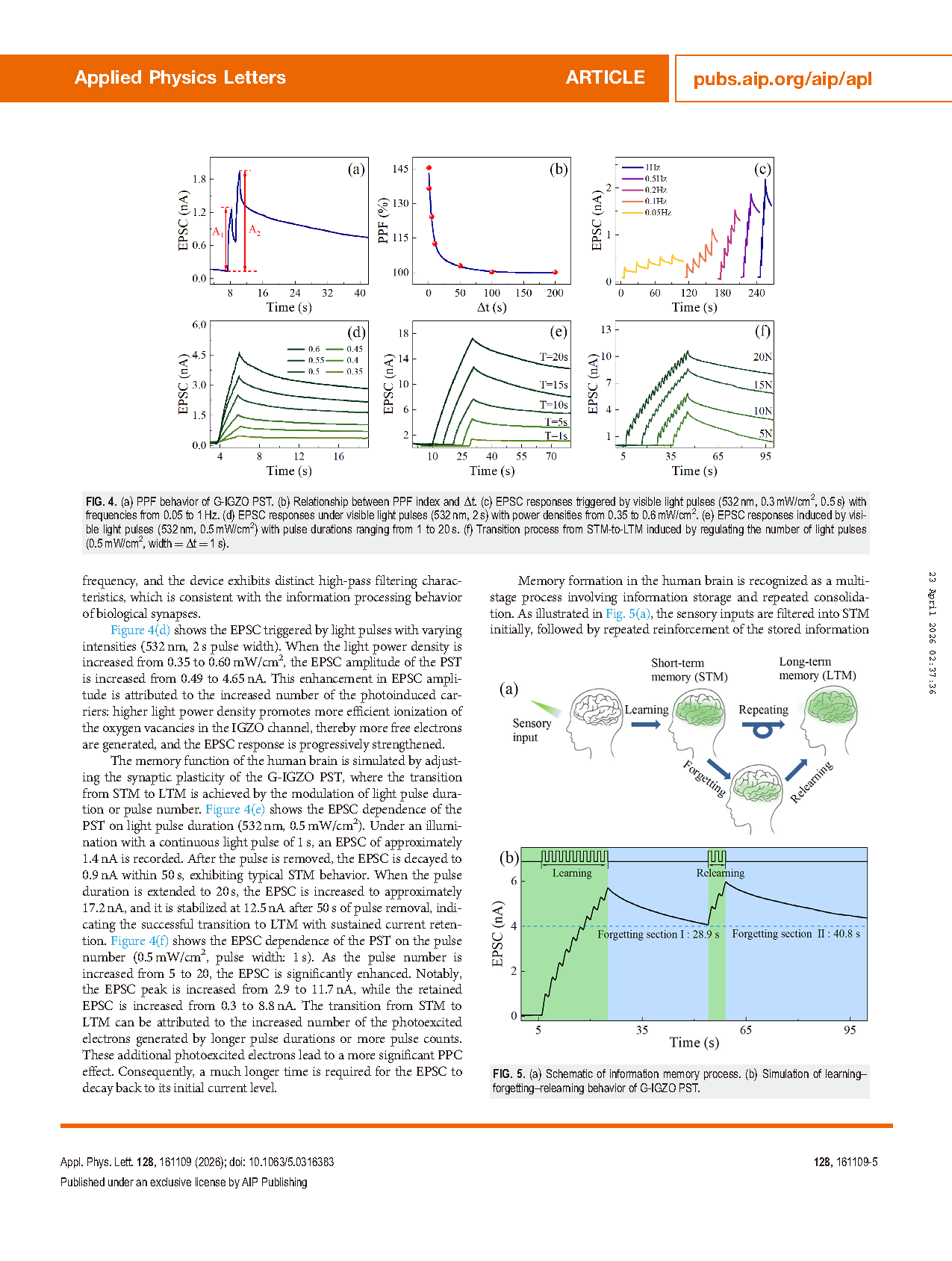
Figure 4 (a) PPF behavior of G-IGZO PST. (b) Relationship between PPF index and Δt. (c) EPSC responses triggered by visible light pulses (532 nm, 0.3 mW/cm², 0.5 s) with frequencies from 0.05 to 1 Hz. (d) EPSC responses under visible light pulses (532 nm, 2 s) with power densities from 0.35 to 0.6 mW/cm². (e) EPSC responses induced by visible light pulses (532 nm, 0.5 mW/cm²) with pulse durations ranging from 1 to 20 s. (f) Transition process from STM-to-LTM induced by regulating the number of light pulses (0.5 mW/cm², width = Δt = 1 s).
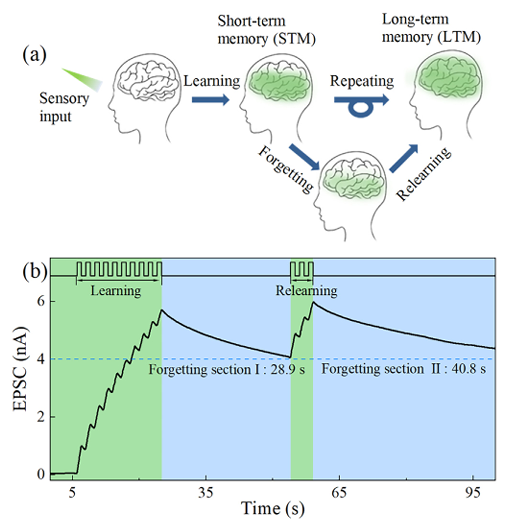
Figure 5 (a) Schematic of information memory process. (b) Simulation of learning–forgetting–relearning behavior of G-IGZO PST.
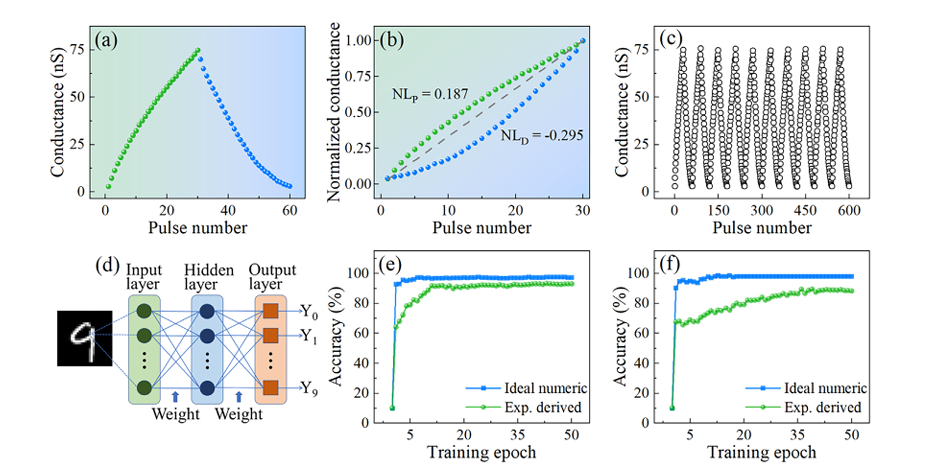
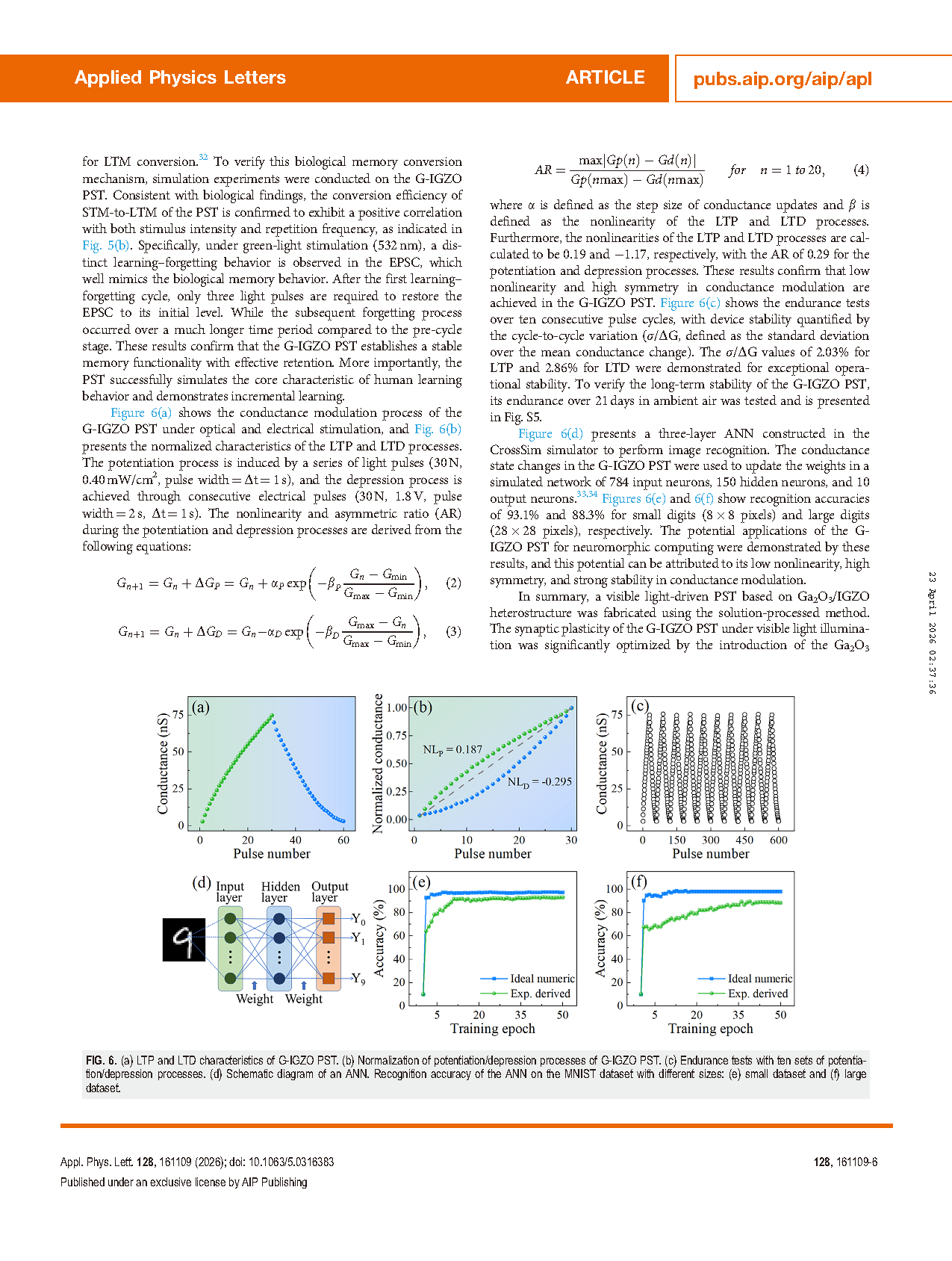
Figure 6 (a) LTP and LTD characteristics of G-IGZO PST. (b) Normalization of potentiation/depression processes of G-IGZO PST. (c) Endurance tests with ten sets of potentiation/depression processes. (d) Schematic diagram of an ANN. Recognition accuracy of the ANN on the MNIST dataset with different sizes: (e) small dataset and (f) large dataset.
DOI:
doi.org/10.1063/5.0316383
Instruction
Official Account

Cooperation
Top