


Researchers from the Chongqing University, Fujian Agriculture and Forestry University, and Swansea University have published a dissertation titled “Breaking the Responsivity–Speed Trade-Off in Ga₂O₃ Solar-Blind Photodetectors via Oxygen-Vacancy Stratification for Underwater Optical Communication and Sensing” in Advanced Functional Materials.
Background
With the rapid advancement of ocean exploration and marine resource utilization, underwater optical sensing and communication technologies have become increasingly critical. Photodetectors, as the core components, play a decisive role in overall system performance. However, the complex underwater optical environment, characterized by strong background light interference, requires detectors with excellent noise suppression capabilities. Solar-blind ultraviolet (SBUV, 200–280 nm) detection offers a unique advantage, as solar radiation in this range is absorbed by atmospheric ozone, resulting in inherently low background noise and high signal-to-noise ratios. This makes SBUV photodetectors highly suitable for applications such as underwater communication and environmental monitoring. Additionally, practical deployment demands self-powered operation and long-term stability.
Gallium oxide (Ga₂O₃), an ultrawide-bandgap semiconductor, has attracted significant attention due to its excellent chemical stability and suitability for SBUV detection. Nevertheless, its performance is fundamentally limited by oxygen-vacancy-mediated carrier dynamics, leading to a trade-off between responsivity and response speed. Overcoming this responsivity–speed (RS) trade-off has therefore become a key scientific challenge and the primary motivation for this study.
Abstract
Underwater optical sensing and communication place stringent requirements on photodetectors, which need to simultaneously deliver high responsivity and rapid temporal response. Gallium oxide (Ga₂O₃) is an attractive semiconductor for underwater solar-blind ultraviolet photodetection owing to its ultrawide bandgap and chemical stability; however, their performance remains strongly constrained by oxygen-vacancy-mediated carrier dynamics in Ga₂O₃, which underlie the responsivity–speed (RS) dilemma. Here, we report a pioneering oxygen-vacancy stratification strategy that vertically integrates vacancy-rich and vacancy-poor Ga₂O₃ layers to establish a built-in electric field. This field accelerates carrier separation and transport while simultaneously achieving high photogain and rapid response, thereby overcoming the RS trade-off. Under 255 nm illumination at zero bias, the device achieves a responsivity of 93.53 mA/W with rise and decay times of 8.7 and 2.8 ms, respectively, delivering the best combined responsivity–speed performance among reported Ga₂O₃-based self-powered underwater photodetectors. Leveraging this performance, the device enables high-speed underwater optical communication and, when integrated with a support vector machine classifier, supports simultaneous detection and identification of heavy-metal ions, including Pb²⁺, Cu²⁺, and Fe²⁺. These results establish oxygen-vacancy stratification as a general route to engineer carrier dynamics in wide-bandgap oxides and advance high-performance optoelectronic sensing and communication systems.
Highlights
Propose a pioneering oxygen-vacancy stratification strategy for the first time, vertically integrating vacancy-rich and vacancy-poor Ga₂O₃ layers to construct a built-in electric field, breaking the inherent responsivity-speed trade-off of solar-blind photodetectors.
Achieve high responsivity of 93.53 mA/W and ultra-fast response speed of 8.7/2.8 ms at zero bias, with detectivity of 1.038×10¹³ Jones and external quantum efficiency of 48.51%, representing the best performance among reported Ga₂O₃-based self-powered underwater photodetectors.
The device can be applied to high-speed underwater optical communication, and combined with SVM algorithm to realize accurate identification of Pb²⁺, Cu²⁺, Fe²⁺ heavy metal ions in water and water quality assessment.
Simple preparation process (stepwise oxygen control by magnetron sputtering), stable operation in real seawater environment, with practical potential for deep-sea detection.
Conclusion
In summary, we demonstrate a Ga₂O₃-based underwater solar-blind photodetector that simultaneously achieves high responsivity and fast response speed by introducing a stratified oxygen vacancy modulation strategy, thereby effectively resolving the long-standing “RS dilemma” in this field. The performance enhancement arises from the rational vertical integration of rich-vacancy and poor-vacancy layers, which establishes an internal built-in electric field at their interface to promote efficient separation and directional transport of photogenerated carriers, while synergistically combining the high optical gain of the rich-vacancy region with the rapid carrier recombination dynamics of the poor-vacancy region. As a result, the device achieves a high responsivity of 93.53 mA/W, a rise time of 8.7 ms, a decay time of 2.8 ms, a detectivity of 1.038×10¹³ Jones, and an external quantum efficiency of 48.51% under 255 nm illumination at zero bias, significantly outperforming other reported counterparts. The detector enables high-speed underwater optical communication and, combined with an SVM machine learning approach, effectively distinguishes Pb²⁺, Cu²⁺, and Fe²⁺ ions in water while assessing water quality, highlighting its potential for intelligent marine sensing and real-time environmental monitoring. This work not only provides a viable technical pathway to overcome the persistent challenge of the “RS dilemma” in Ga₂O₃-based photodetectors but also demonstrates the broad application prospects of the stratified oxygen vacancy modulation strategy in high-performance underwater optoelectronic devices, offering new insights for the development of advanced marine exploration and environmental monitoring technologies.
Project Support
This work was financially supported by the Natural Science Foundation of Fujian Province for Distinguished Young Scholars (2025J010026), the National Natural Science Foundation of China (42577350, 62405056, 42377310), and Fujian Provincial University-Industry-Research Joint Innovation Project (2024N5010).
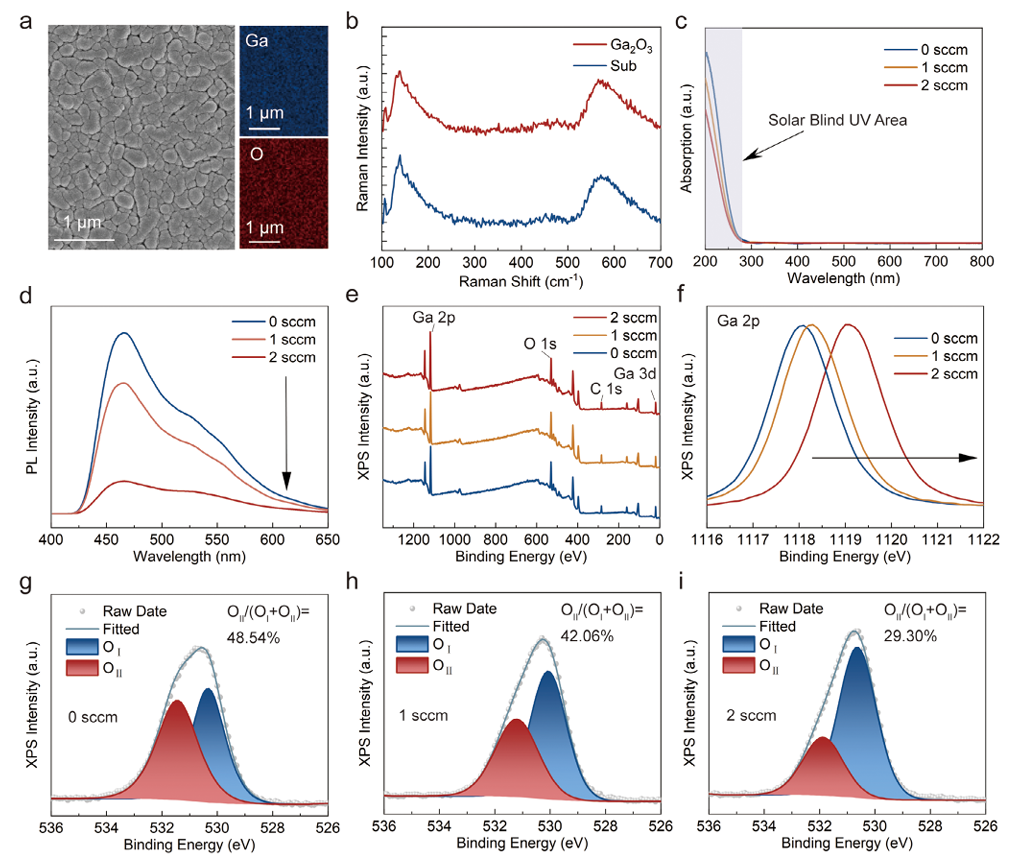
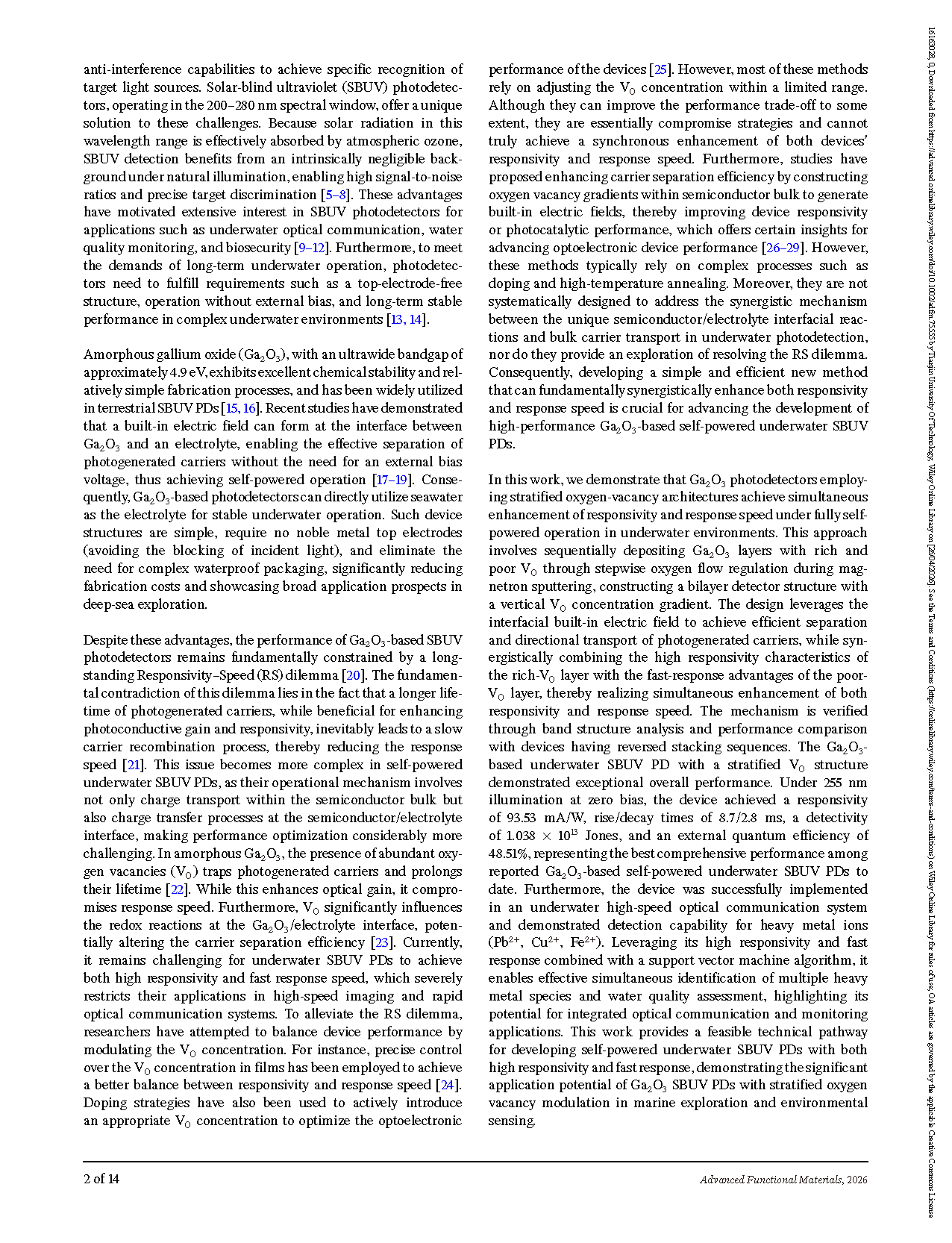
Figure 1 Characterization results of Ga₂O₃ films. (a) Surface morphology and mapping elemental analysis results of the Ga₂O₃ film revealed by SEM, together with corresponding EDS elemental maps showing the uniform distribution of Ga and O. (b) Raman spectrum of the Ga₂O₃ and substrate. (c) UV–vis absorption spectra, (d) PL spectra, (e) XPS survey spectra, (f) XPS peak fitting of Ga 2p core-level spectrum, (g–i) XPS peak fitting of the O 1s core-level spectra of Ga₂O₃ films sputtered under O₂ flow of 0, 1, and 2 sccm.
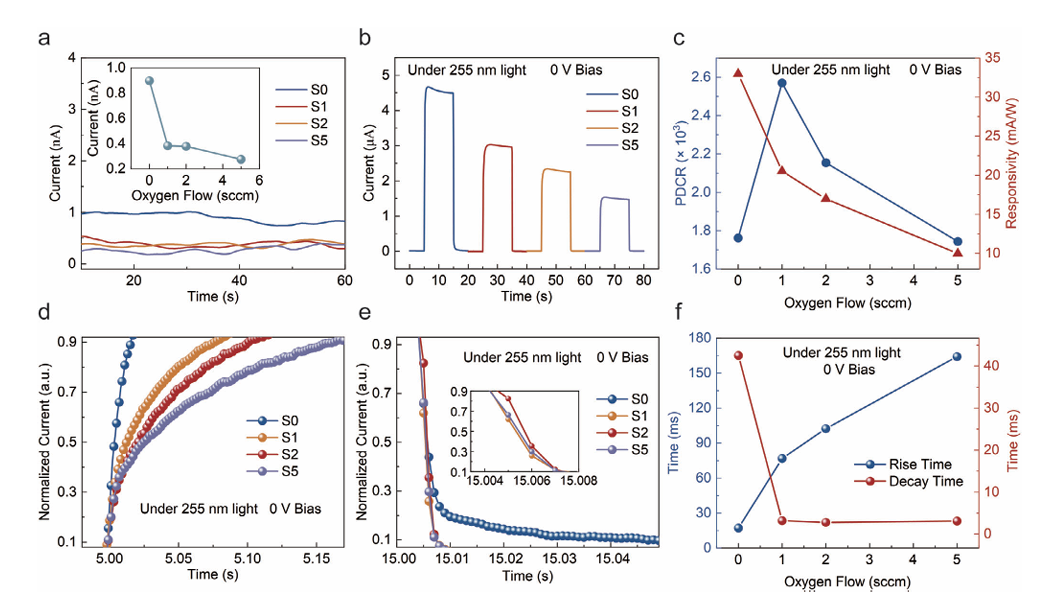
Figure 2 Photoelectronic performance of Ga₂O₃ SBUV PDs fabricated under different oxygen flows under zero bias. (a) Dark current and (b) photocurrent responses of devices fabricated under different oxygen flow rates (S0, S1, S2, and S5). (c) Photo-to-dark current ratio and responsivity of the devices as functions of oxygen flow rate. (d) Rise time and (e) decay time extracted from transient photoresponse measurements. (f) Dependence of rise times and decay times on oxygen flow rate.
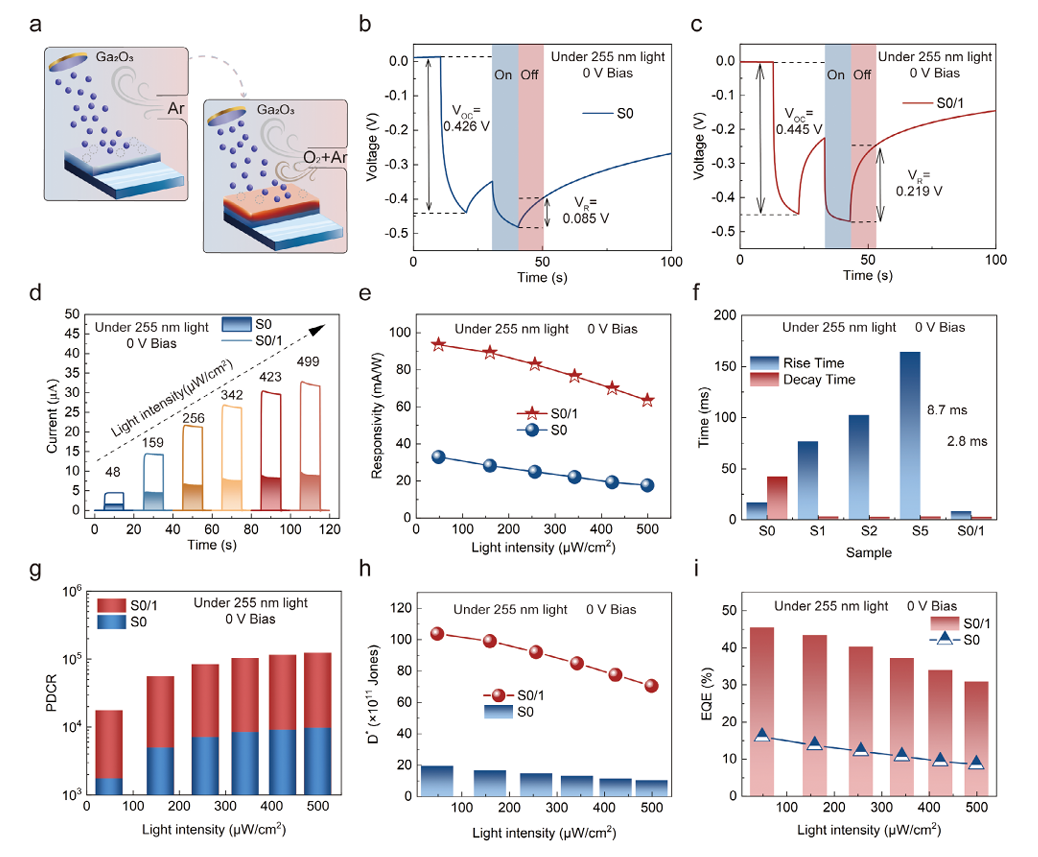
Figure 3 Fabrication and performance enhancement of Ga₂O₃ SBUV PD enabled by stratified oxygen vacancy modulation. (a) Schematic illustration of the fabrication process for Ga₂O₃ SBUV PD with stratified oxygen vacancy modulation. Photovoltage analysis of (b) S0 and (c) S0/1. (d) Comparison of I-t curves between S0 and S0/1 under 255 nm illumination with different light intensities. (e) Responsivity of S0 and S0/1 as functions of light intensity. (f) Comparison of response time of S0/1 and SBUV PDs fabricated under different oxygen flows. (g) Photo-to-dark current ratio, (h) detectivity, and (i) external quantum efficiency of S0 and S0/1 under 255 nm illumination with different light intensities.
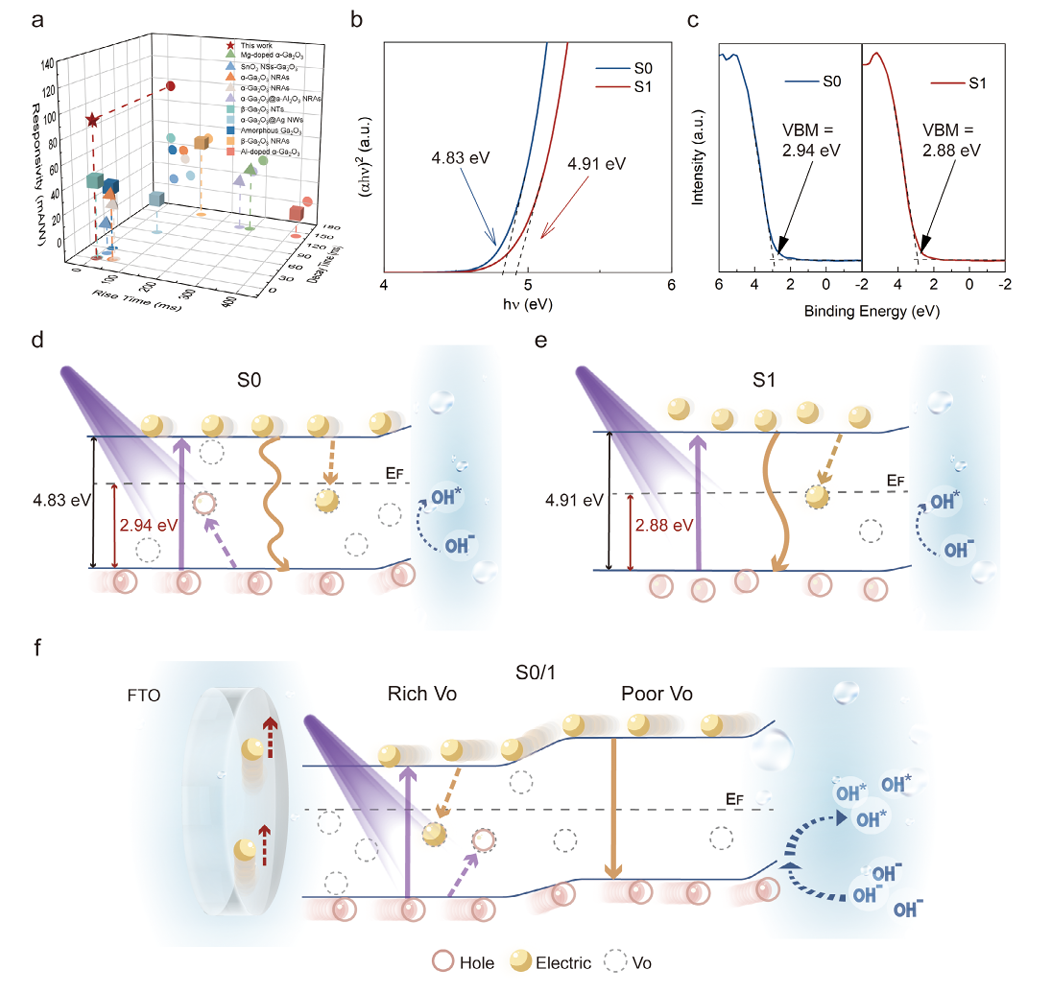
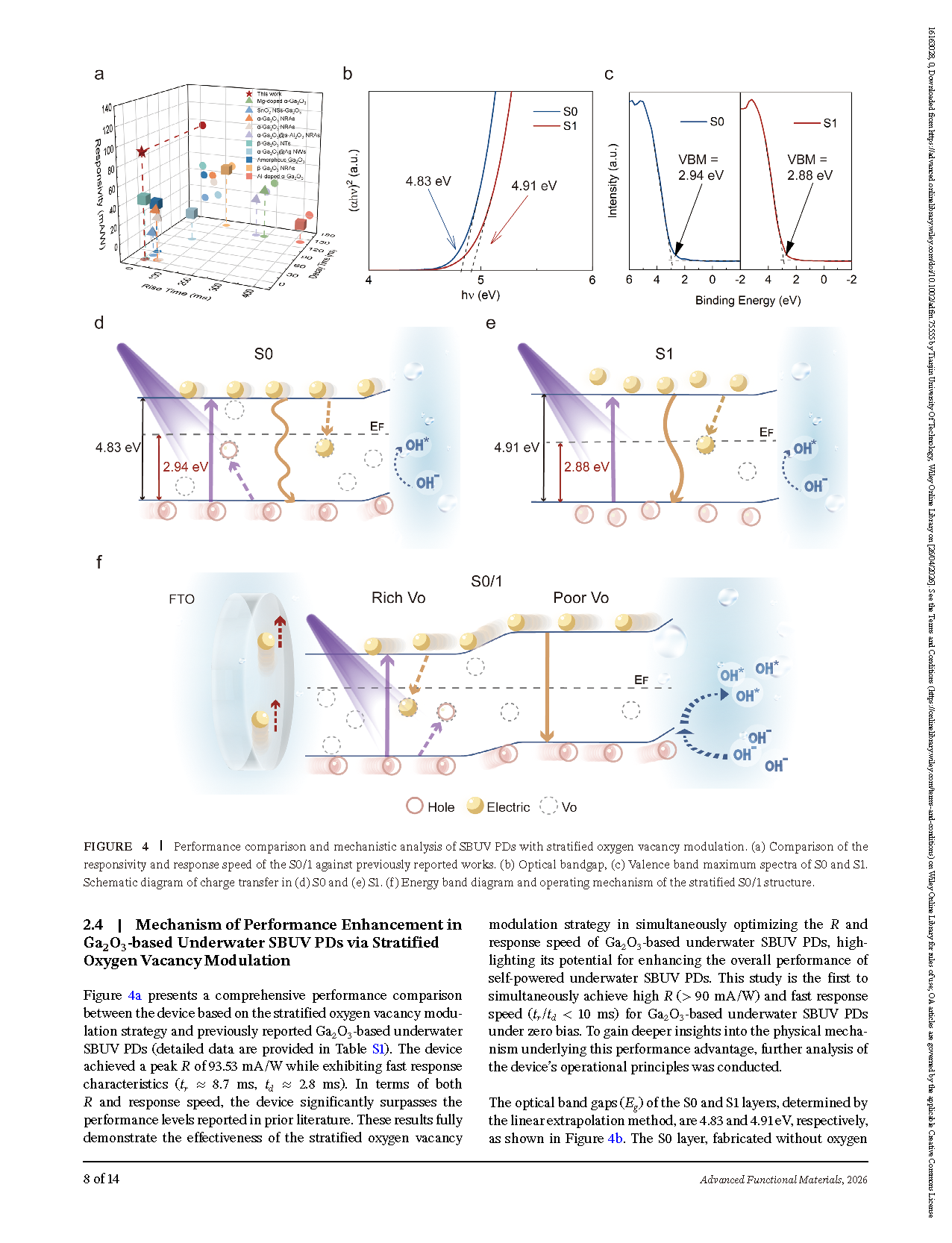
Figure 4 Performance comparison and mechanistic analysis of SBUV PDs with stratified oxygen vacancy modulation. (a) Comparison of the responsivity and response speed of the S0/1 against previously reported works. (b) Optical bandgap, (c) Valence band maximum spectra of S0 and S1. Schematic diagram of charge transfer in (d) S0 and (e) S1. (f) Energy band diagram and operating mechanism of the stratified S0/1 structure.
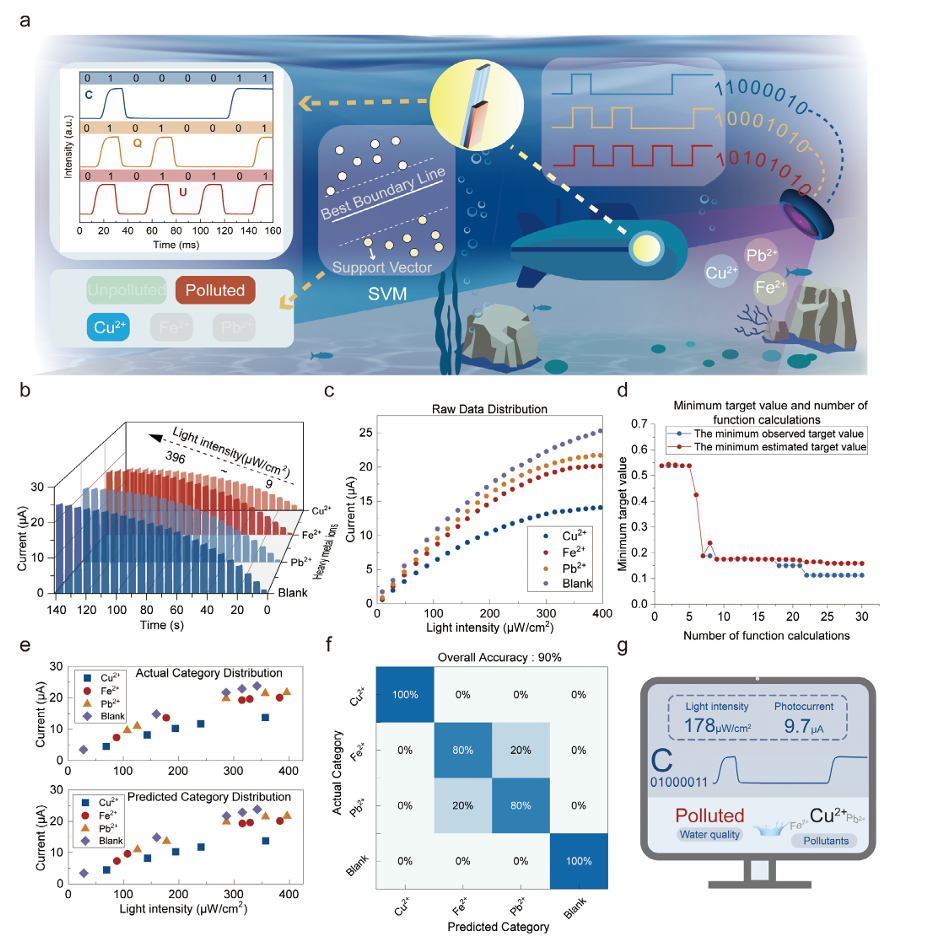
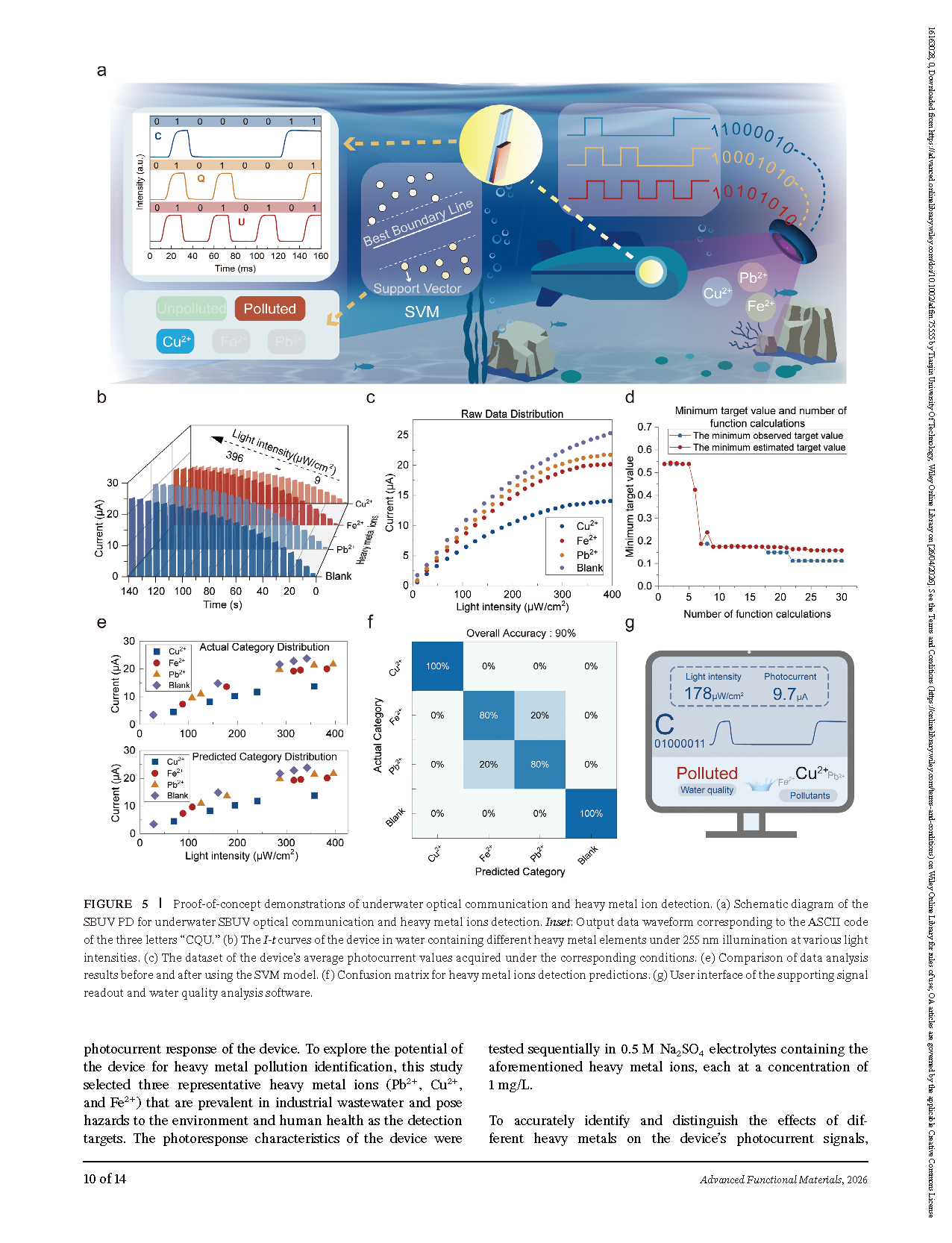
Figure 5 Proof-of-concept demonstrations of underwater optical communication and heavy metal ion detection. (a) Schematic diagram of the SBUV PD for underwater SBUV optical communication and heavy metal ions detection. Inset: Output data waveform corresponding to the ASCII code of the three letters “CQU”. (b) The I-t curves of the device in water containing different heavy metal elements under 255 nm illumination at various light intensities. (c) The dataset of the device’s average photocurrent values acquired under the corresponding conditions. (d) Minimum target value and number of function calculations. (e) Comparison of data analysis results before and after using the SVM model. (f) Confusion matrix for heavy metal ions detection predictions. (g) User interface of the supporting signal readout and water quality analysis software.
DOI:
doi.org/10.1002/adfm.75555

Instruction
Official Account

Cooperation
Top