


Researchers from Tsinghua University and China Electronics Technology Group Co., Ltd. 46 have published a dissertation titled “Variation of Ga vacancy concentration induced by rapid thermal annealing in β‑Ga₂O₃” in Japanese Journal of Applied Physics.
Background
β‑Ga₂O₃ is a promising candidate for next-generation power devices as an ultra-wide bandgap semiconductor with high critical breakdown electric field, and its defect regulation is crucial to device electrical performance. Conventional annealing can significantly change the conductivity of the material, but the roles of Ga vacancies and O vacancies remain controversial. Rapid thermal annealing (RTA) features rapid heating and cooling rates, leading to different defect behaviors from conventional annealing. However, systematic research on the effects of RTA under Ar and O₂ ambients on the surface morphology, chemical states, and Ga vacancy concentration of β‑Ga₂O₃ is still insufficient, and the relevant defect evolution rules have not been clarified.
Abstract
Rapid thermal annealing (RTA) provides a precise control of the thermal budget, making it a powerful tool for tuning semiconductor properties. In this work, unintentionally doped (001) β‑Ga₂O₃ substrates were subjected to RTA under Ar and O₂ ambients, and the resulting surface morphology and chemical states were characterized by atomic force microscopy and X-ray photoelectron spectroscopy. The results reveal pronounced surface thermal decomposition and a significant increase in the near-surface Ga vacancy concentration after RTA in Ar, whereas no obvious changes are observed after RTA in O₂.
Highlights
Systematically investigate the effects of RTA under Ar and O₂ ambients on the surface properties of β‑Ga₂O₃.
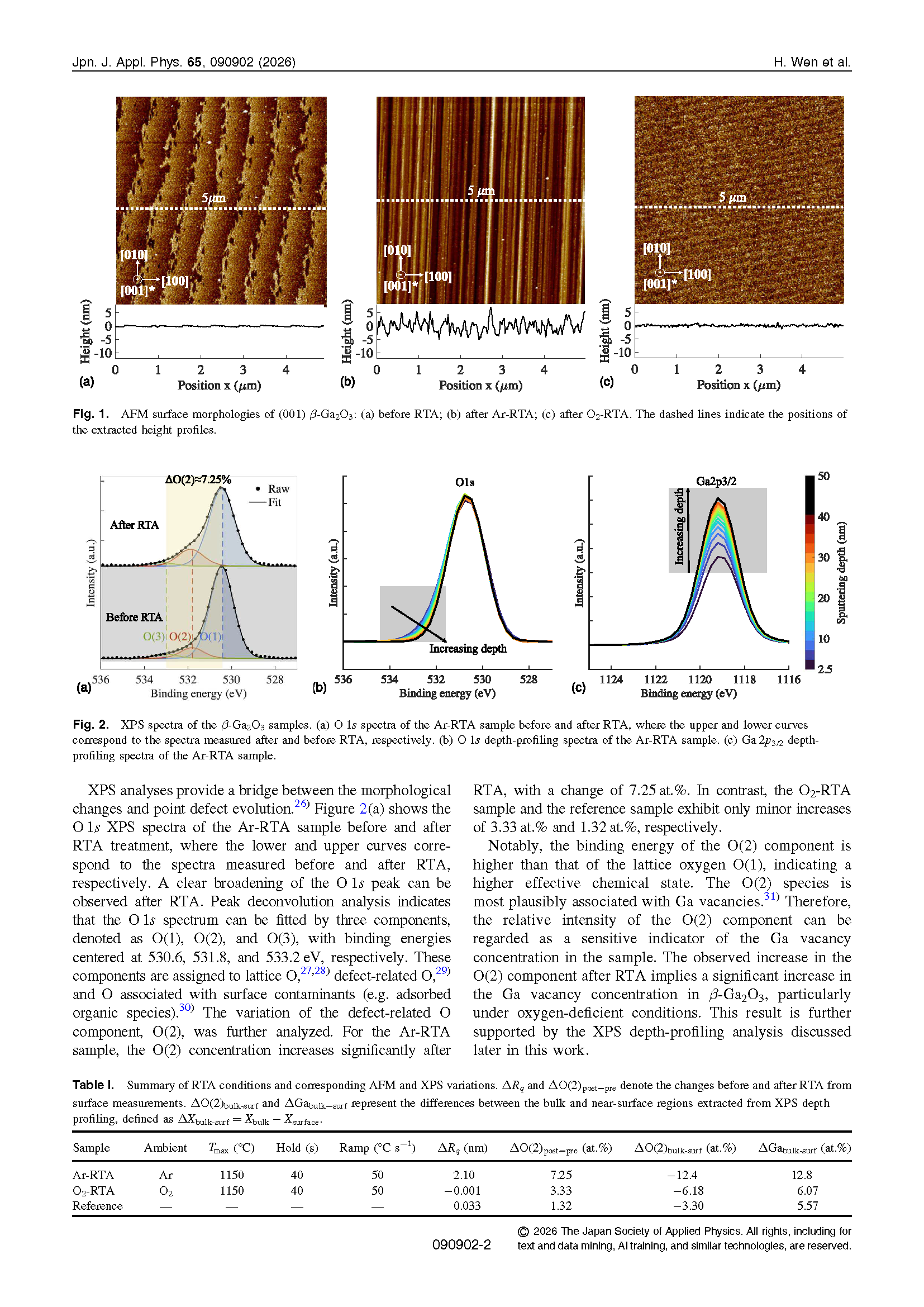
Pronounced thermal decomposition occurs in β‑Ga₂O₃ after Ar-RTA even at 1150 °C (below 1200 °C).
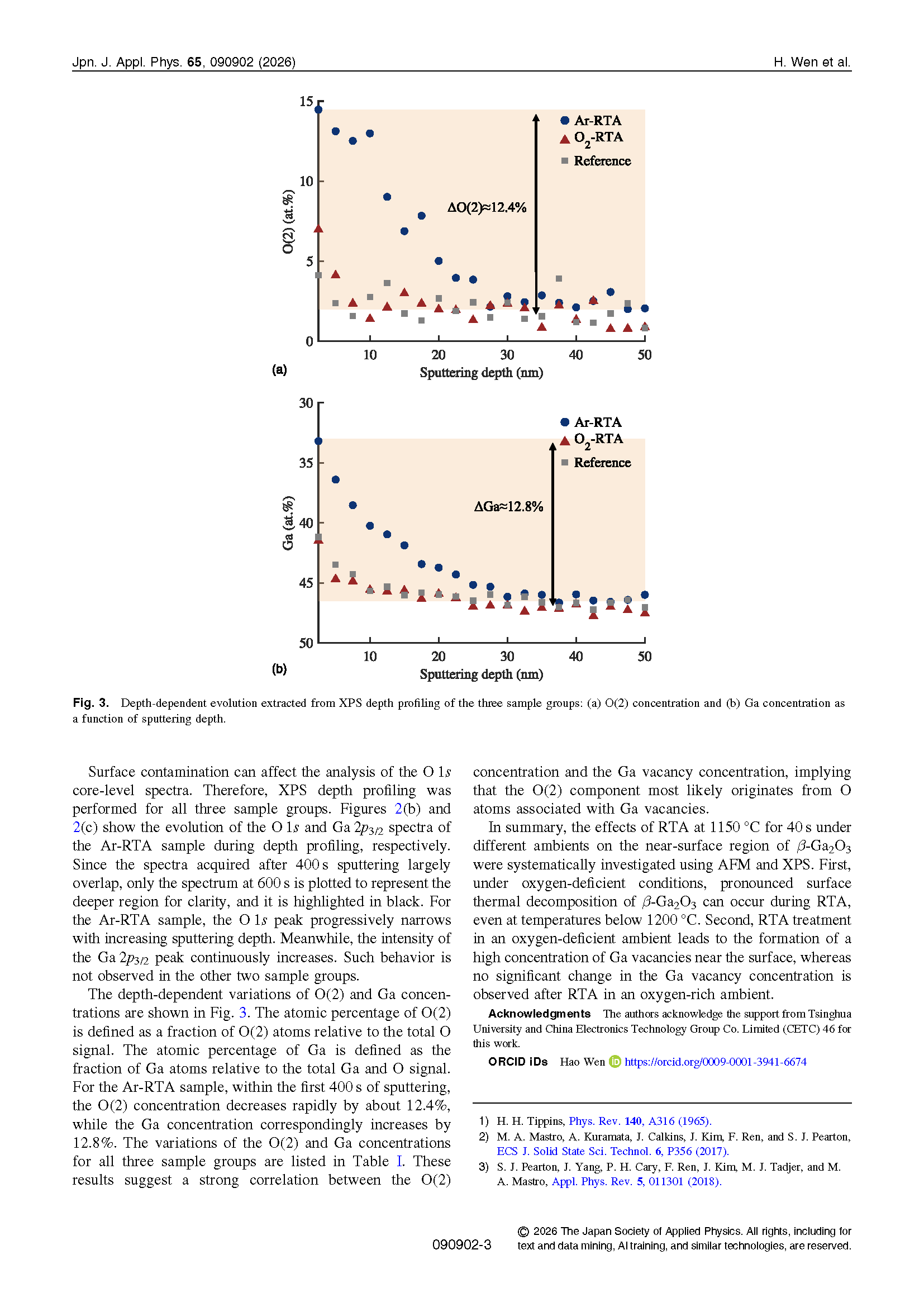
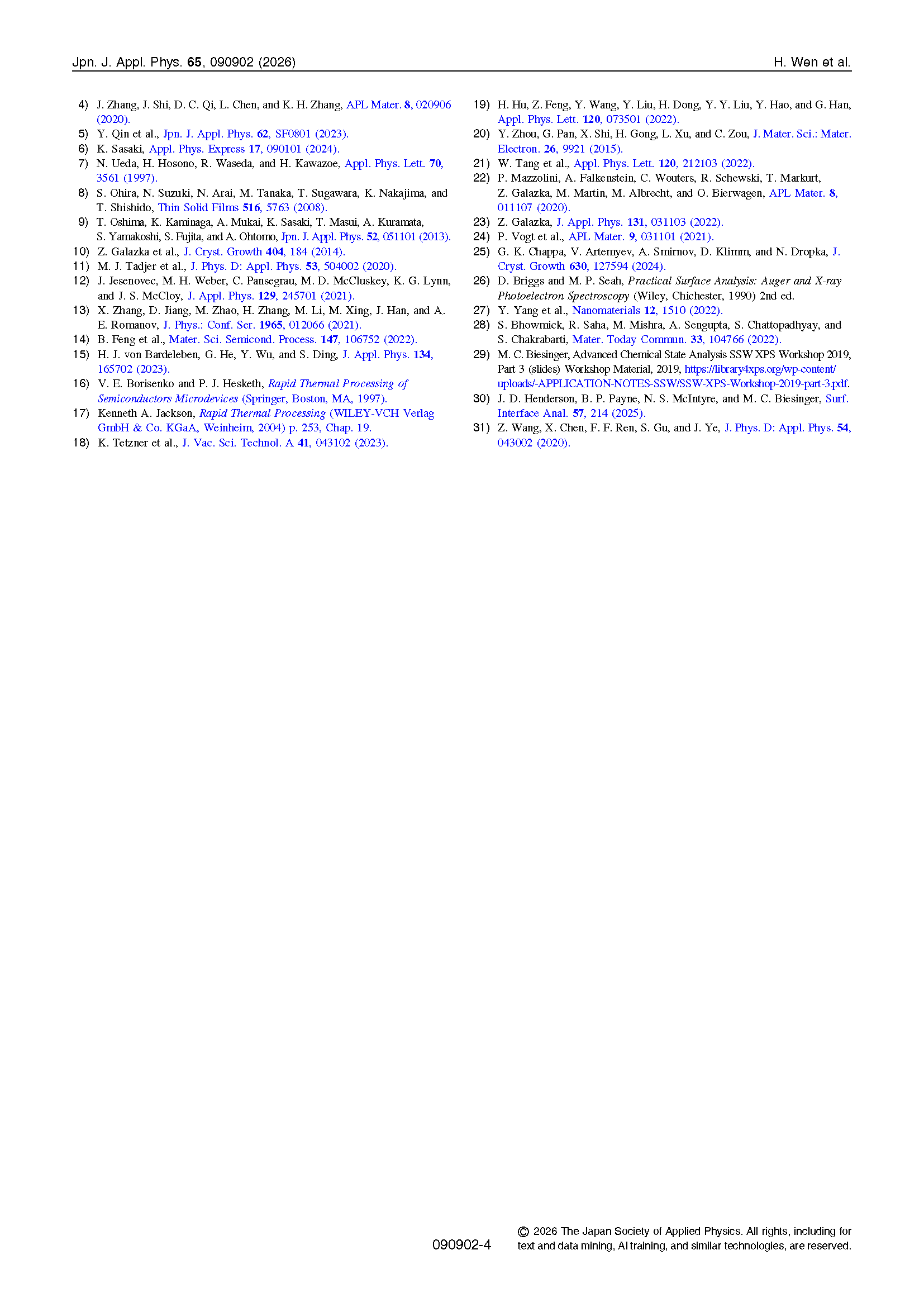
Ar-RTA significantly increases the near-surface Ga vacancy concentration of β‑Ga₂O₃.
O₂-RTA has no obvious influence on the surface morphology and Ga vacancy concentration of β‑Ga₂O₃.
Establish the correlation between O (2) component in XPS and Ga vacancy concentration in β‑Ga₂O₃.
Conclusion
In summary, the effects of RTA at 1150 °C for 40 s under different ambients on the near-surface region of β‑Ga₂O₃ were systematically investigated using AFM and XPS. First, under oxygen-deficient conditions, pronounced surface thermal decomposition of β‑Ga₂O₃ can occur during RTA, even at temperatures below 1200 °C. Second, RTA treatment in an oxygen-deficient ambient leads to the formation of a high concentration of Ga vacancies near the surface, whereas no significant change in the Ga vacancy concentration is observed after RTA in an oxygen-rich ambient.
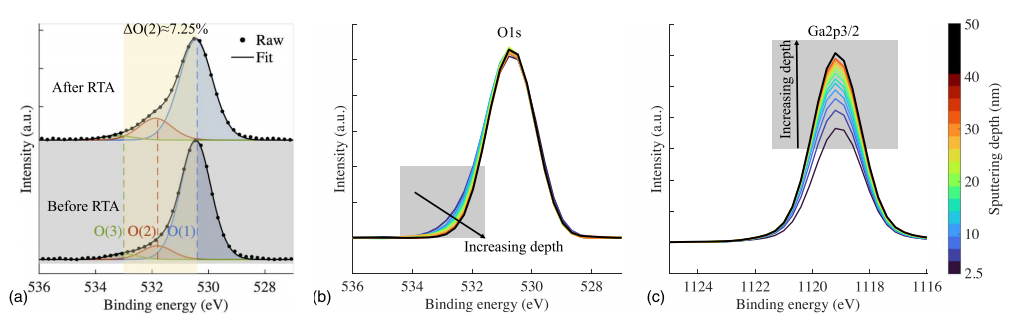
Fig. 1. AFM surface morphologies of (001) β‑Ga₂O₃: (a) before RTA; (b) after Ar-RTA; (c) after O₂-RTA. The dashed lines indicate the positions of the extracted height profiles.
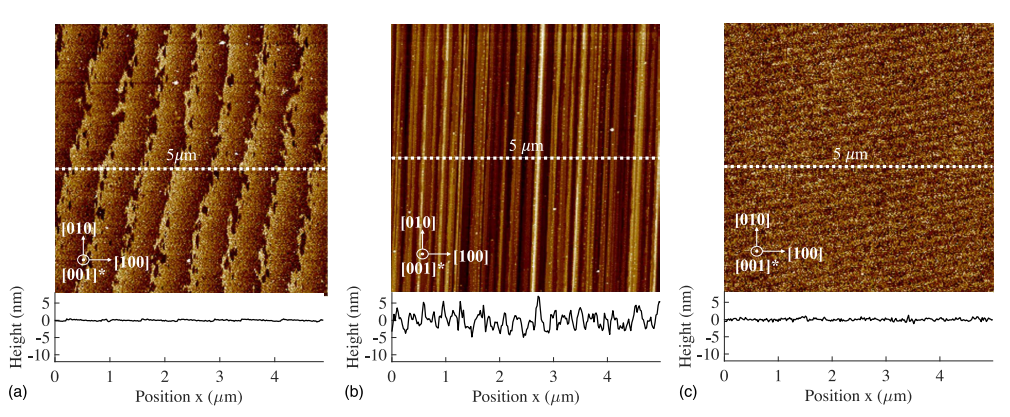
Fig. 2. XPS spectra of the β‑Ga₂O₃ samples. (a) O 1s spectra of the Ar-RTA sample before and after RTA, where the upper and lower curves correspond to the spectra measured after and before RTA, respectively. (b) O 1s depth-profiling spectra of the Ar-RTA sample. (c) Ga 2p3/2 depth-profiling spectra of the Ar-RTA sample.
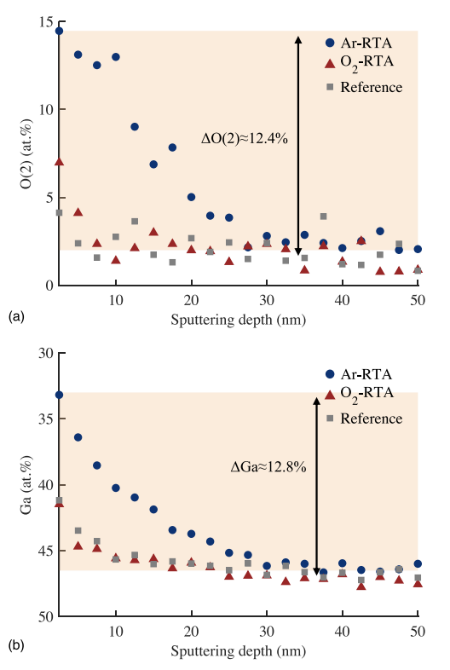
Fig. 3. Depth-dependent evolution extracted from XPS depth profiling of the three sample groups: (a) O (2) concentration and (b) Ga concentration as a function of sputtering depth.
DOI:
doi.org/10.35848/1347-4065/ae5f53
Instruction
Official Account

Cooperation
Top