


Researchers from the University of Chinese Academy of Sciences have published a dissertation titled " Regulation of Electrical Properties in (1-x)Ga2O3-xSiC via Oxygen Vacancy Engineering " in Ceramics International.
Background
Gallium oxide (Ga₂O₃), an ultrawide-bandgap semiconductor with a bandgap of 4.9 eV, high breakdown electric field and excellent thermal stability, shows great potential for high-temperature negative temperature coefficient (NTC) thermistors that demand miniaturization, long lifespan and fast response. However, pure Ga₂O₃ suffers from low carrier mobility and extremely high resistivity, limiting its practical applications. Silicon carbide (SiC) doping is considered effective to tailor the electrical properties of Ga₂O₃, and oxygen vacancies (Ov) are the dominant intrinsic defects governing its conduction behavior, directly determining activation energy and carrier transport. Previous studies mainly focus on thin-film heterostructures, while the synergistic regulation mechanism of SiC doping and oxygen vacancies in bulk composite ceramics remains unclear. In this work, conventional sintering is used to fabricate (1‑x)Ga₂O₃‑xSiC composite ceramics, and the effects of SiC doping on oxygen vacancy content, microstructure and high-temperature electrical properties are systematically investigated, providing a new strategy for developing high-performance high-temperature NTC thermistor materials.
Abstract
Gallium oxide (Ga₂O₃) as wide bandgap semiconductor was applicated for optical and electronic devices. In this study, fully densified (1‑x)Ga₂O₃‑xSiC (where x=0%, 3%, 5%, 7%, 10%) composite ceramics were fabricated by conventional sintering process. A linear relationship (R²=0.9979) observed between the natural logarithm of resistivity (lnρ) and the reciprocal of the absolute temperature (1000/T) for the x=7% ceramic from 573K to 1273K. Arrhenius fitted results and X-ray Photoelectron Spectroscopy (XPS) analysis suggested that the content of oxygen vacancies (Ov) in the ceramics may play a crucial role. The Electron Paramagnetic Resonance (EPR) results reveal that the Ov content was consistent with XPS results and exhibited an inverse relationship with active energy. Highest Ov content, lowest Ea and wider linear temperature range observed in x=7% ceramic. These results demonstrate that low doping levels of SiC are facilitated to improve the electronic performance and (1‑x)Ga₂O₃‑xSiC composite ceramics have potential applications in negative temperature coefficient (NTC) thermistors.
Highlights
(1‑x)Ga₂O₃‑xSiC composite ceramics are successfully fabricated via conventional sintering, with controllable oxygen vacancy regulation by SiC doping.
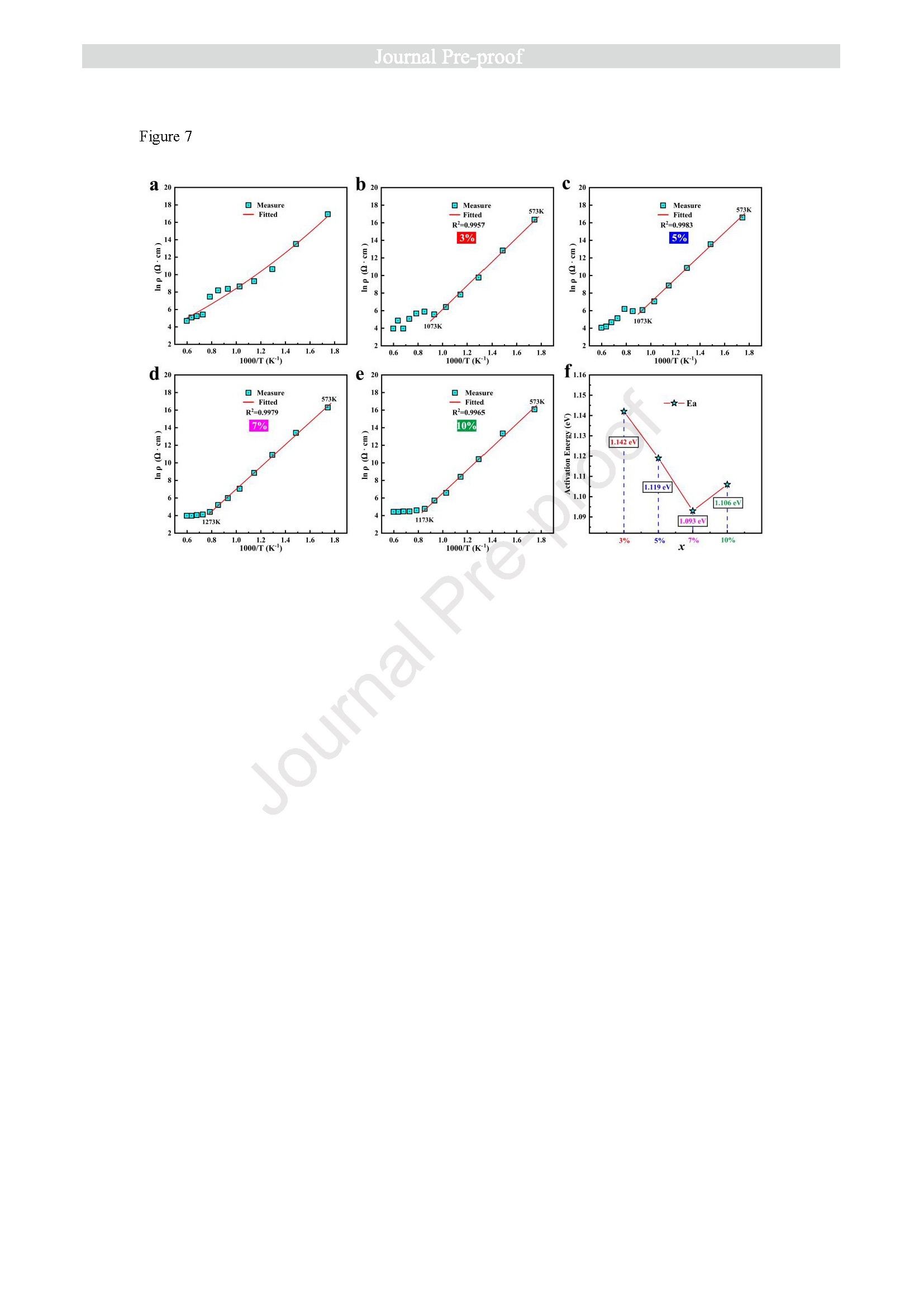
The x=7% composition exhibits the highest oxygen vacancy content, lowest activation energy and widest linear temperature range (573–1273K, R²=0.9979), showing optimal high‑temperature NTC characteristics.
The micro‑mechanism is revealed: high‑temperature oxidation of SiC induces grain‑boundary SiO₂ formation, modulates oxygen vacancies and tailors carrier transport.
The composite ceramics demonstrate promising potential for high‑temperature NTC thermistor applications.
Conclusion
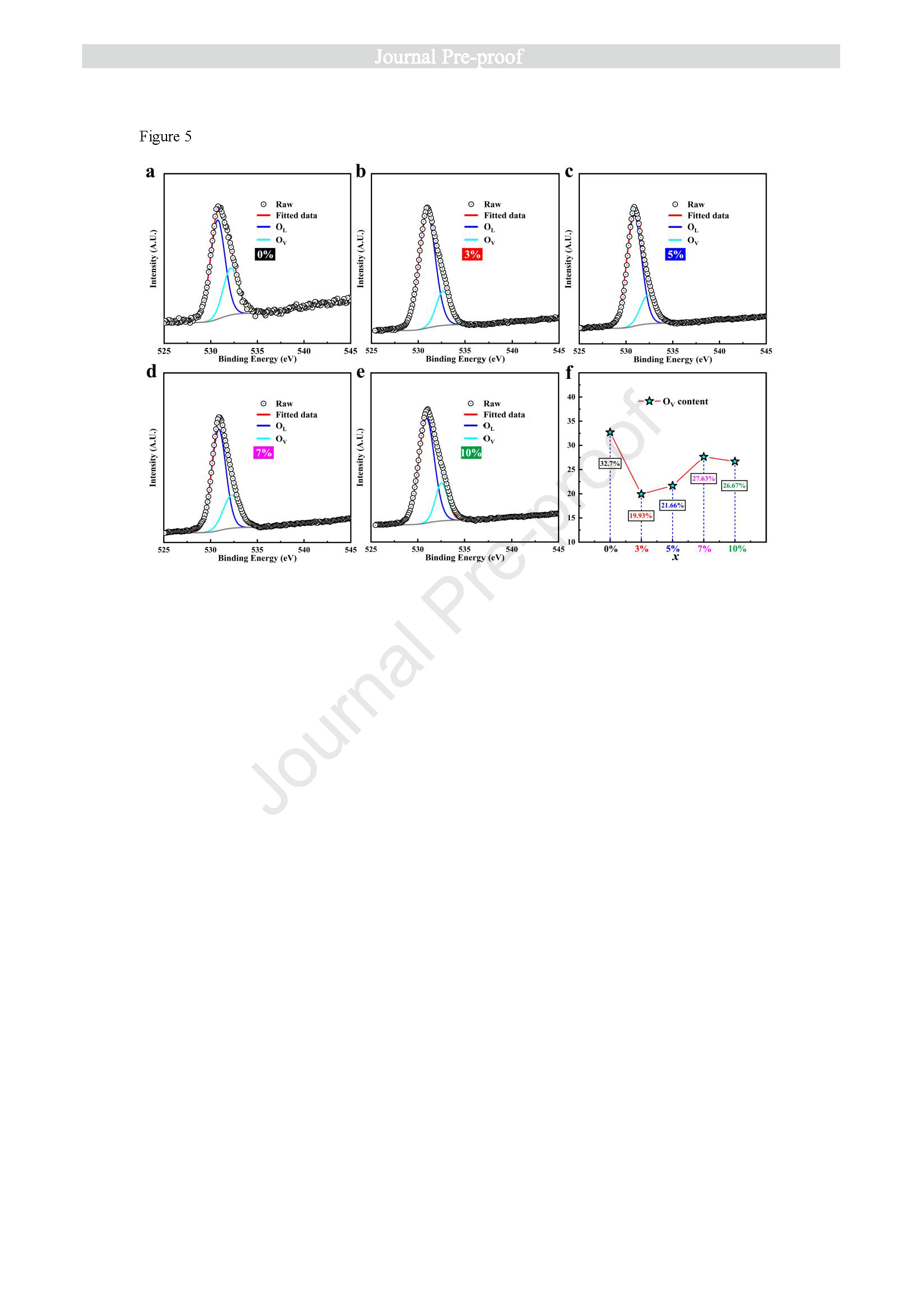
In summary, the (1‑x)Ga₂O₃‑xSiC (where x=0%, 3%, 5%, 7%, 10%) composite ceramics have been fabricated by the conventional sintering method, the x=7% ceramic exhibited highest linear characteristic (R²=0.9979) at 573–1273K. EDS and TEM results suggested that the segregation of silicon elements at the grain boundaries observed on the surface and in the bulk of ceramics. The oxygen vacancies (Ov) in composite ceramics first increase and then decrease, highest Ov content (27.63%) observed in the x=7% ceramic, it’s consistent with EPR results. The active energy first decrease and then increase, which exhibited an inverse relationship with Ov. The variation of Ov may be attributed to the oxidation of SiC. This paper demonstrates that the composite ceramics have potential applications in negative temperature coefficient (NTC) thermistors, and SiC is expected to influence both the oxygen vacancies content and the degree of crystallinity, furthermore affecting the electrical performance.
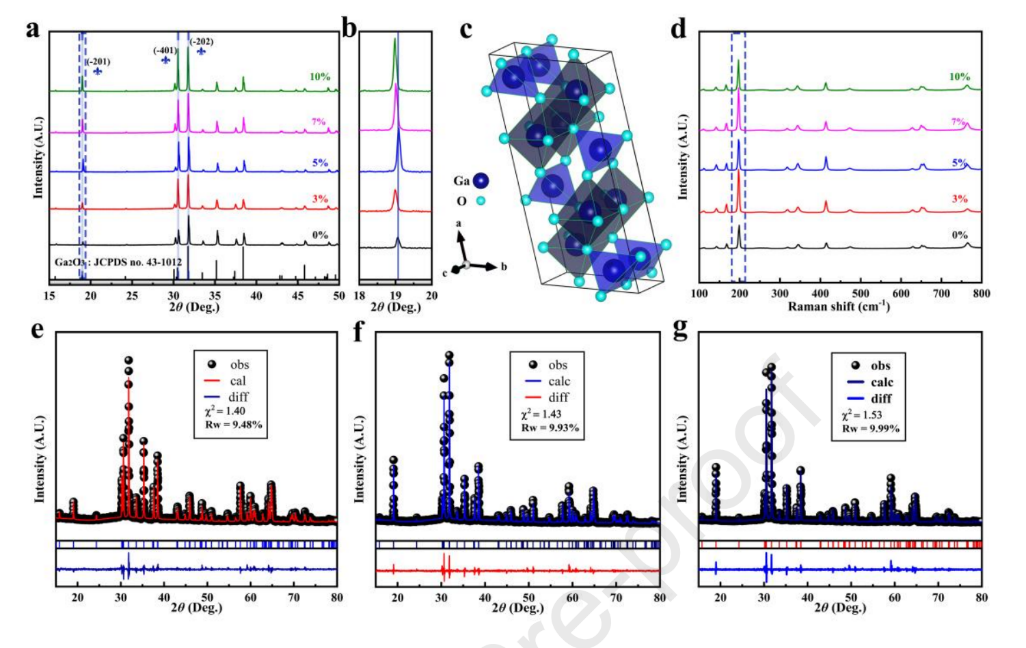
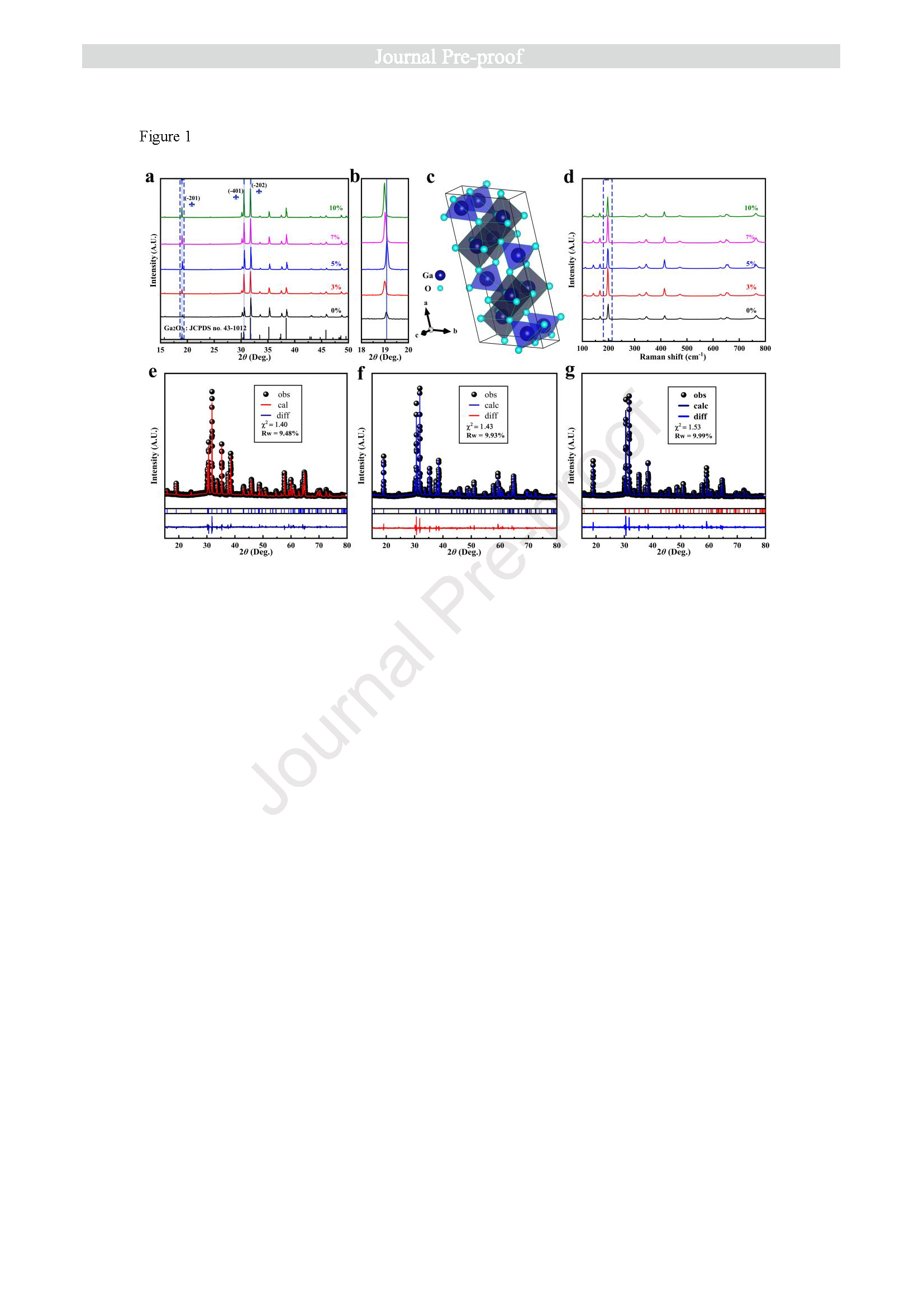
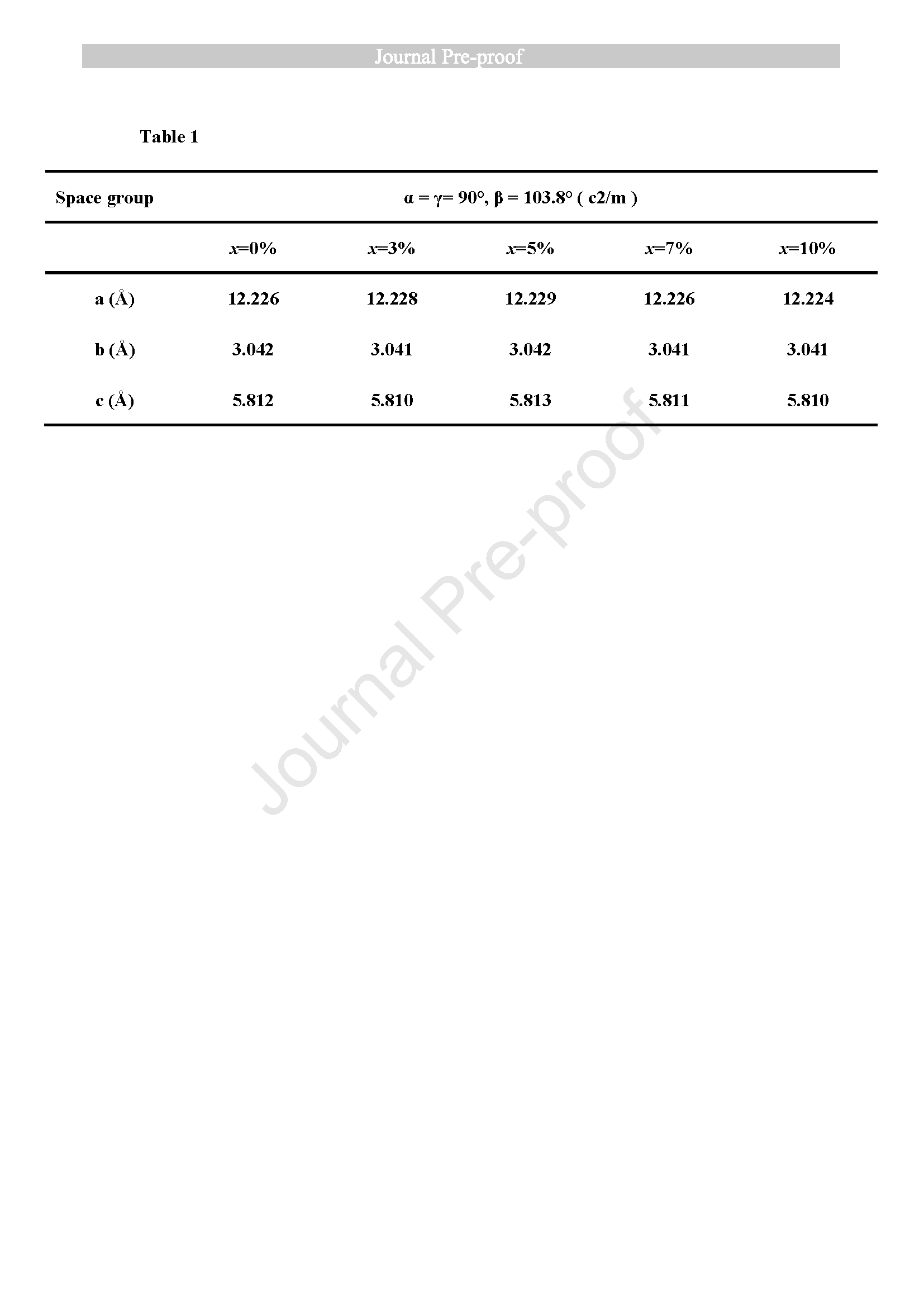
Fig. 1. Phase structure and Rietveld refine result. a, The phase transition process is absent with the increase of SiC content. b, (-201) lattice plane is observed in both XRD and TEM results. c, The monoclinic structure of Ga₂O₃. d, Raman result indicated that the low strain and high crystalline quality in composite ceramics. e-g, The Rietveld refine results suggested without strong variation of lattice parameters.
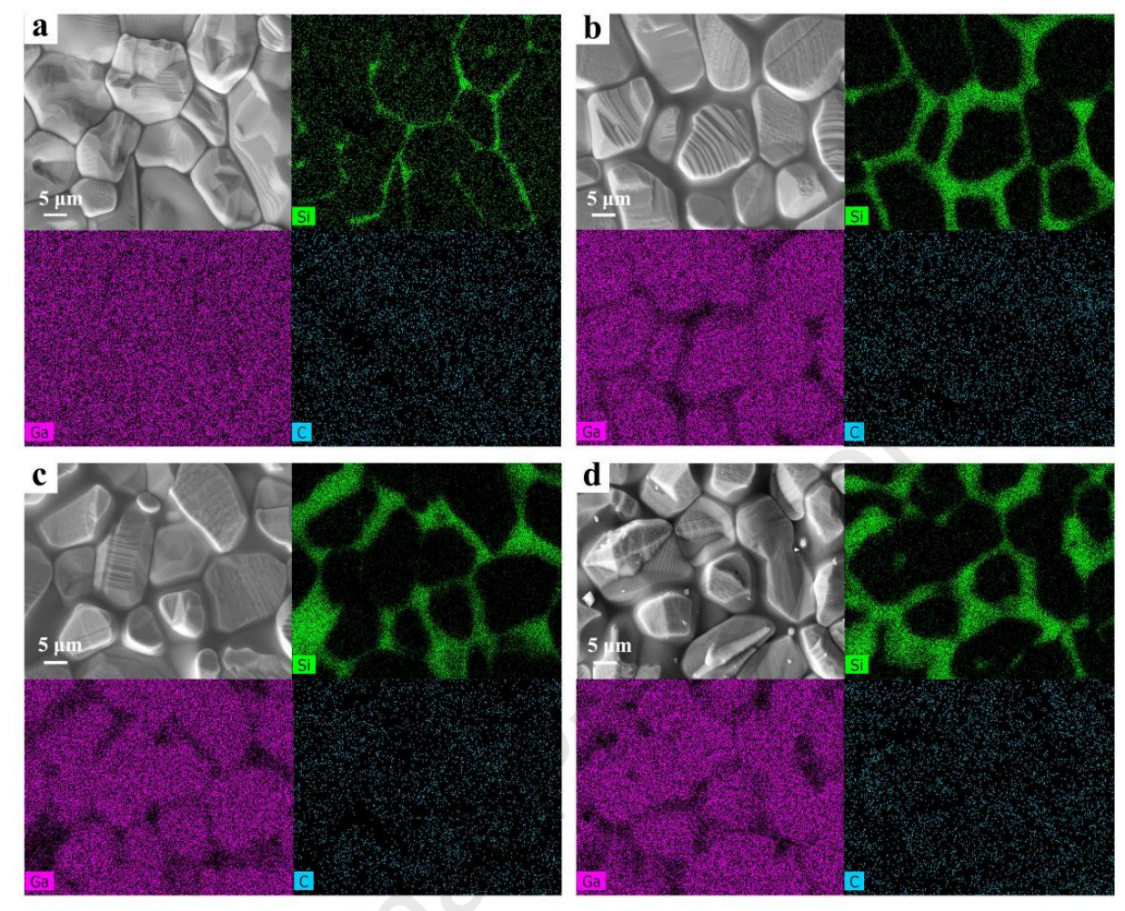
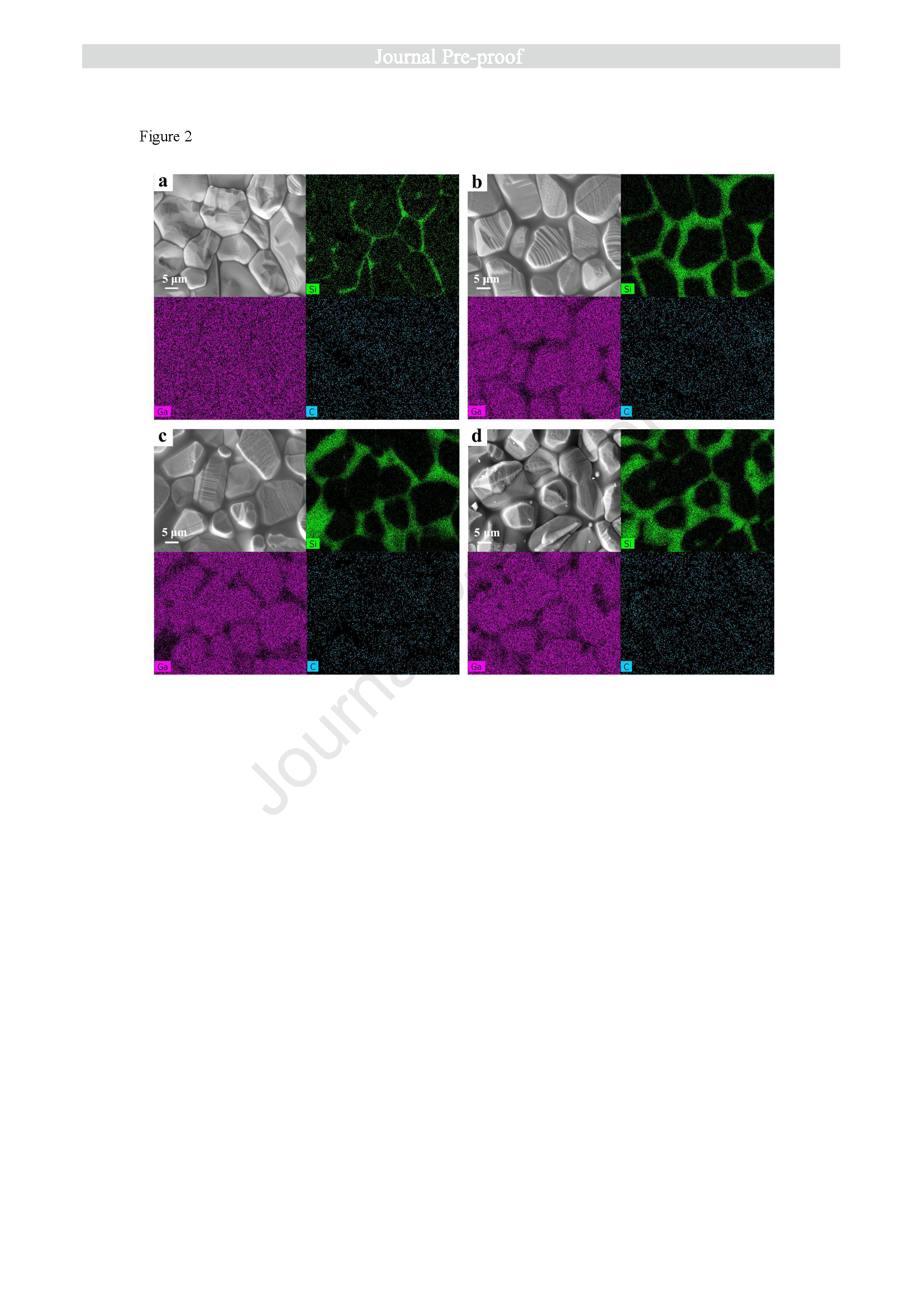
Fig. 2. Microstructure and element distribution. a-d, The segregation of Si in grain boundaries observed and exhibited an increase tendency with SiC content.
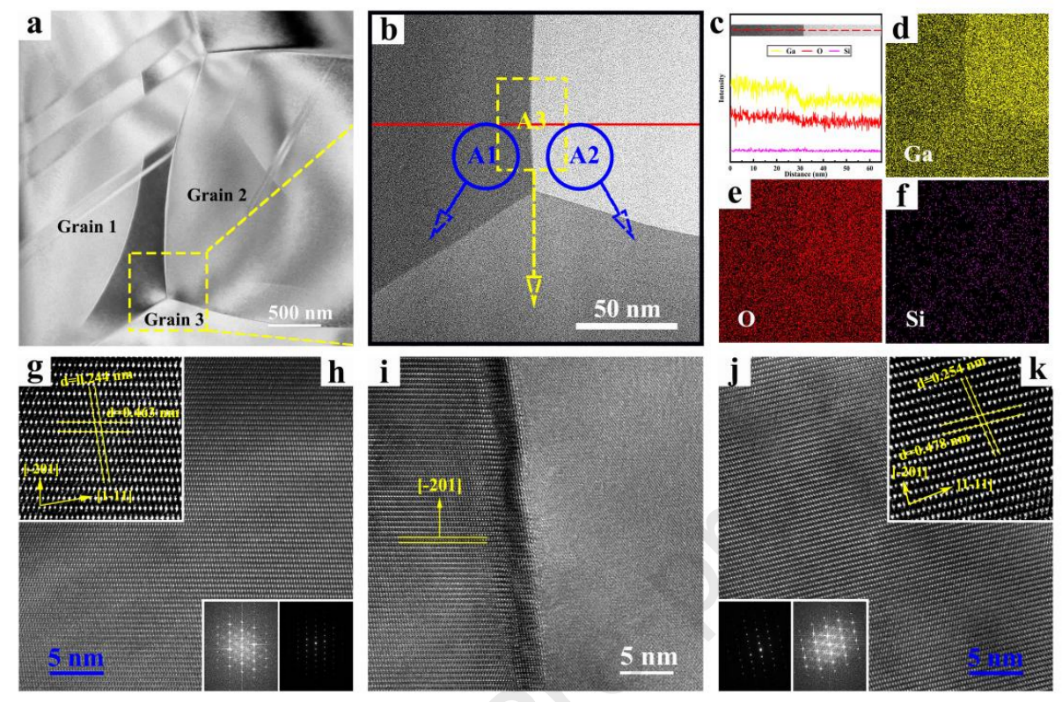
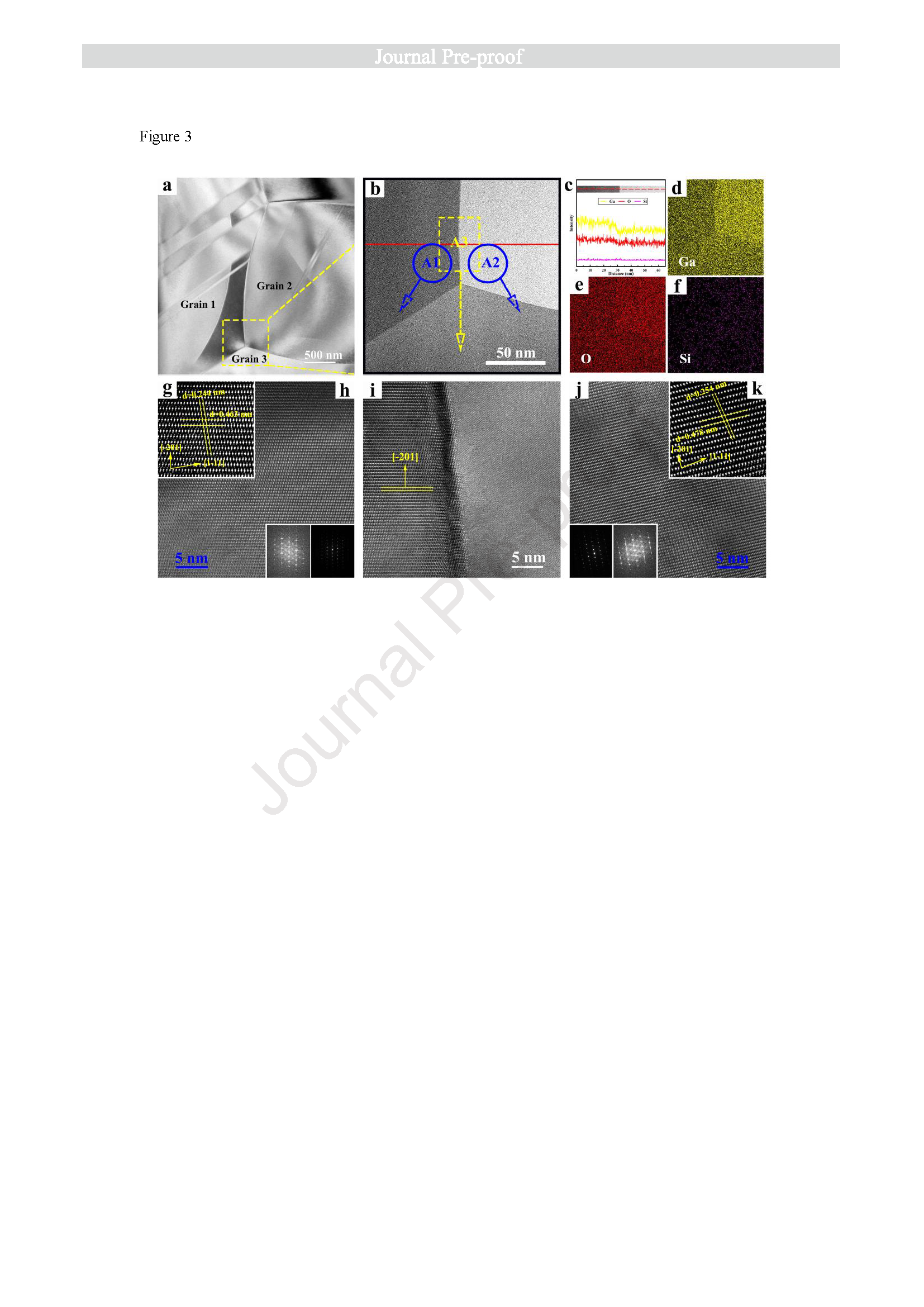
Fig. 3. Element distribution in grain. a-b, The microstructure between grain and grain. c-f, Line scan results suggested that the primary elements in grain are Ga and O, which associated with the Ga₂O₃ phase. g-k, The atomic arrangement and Selected Area Electron Diffraction results, (-201) lattice plane was observed.
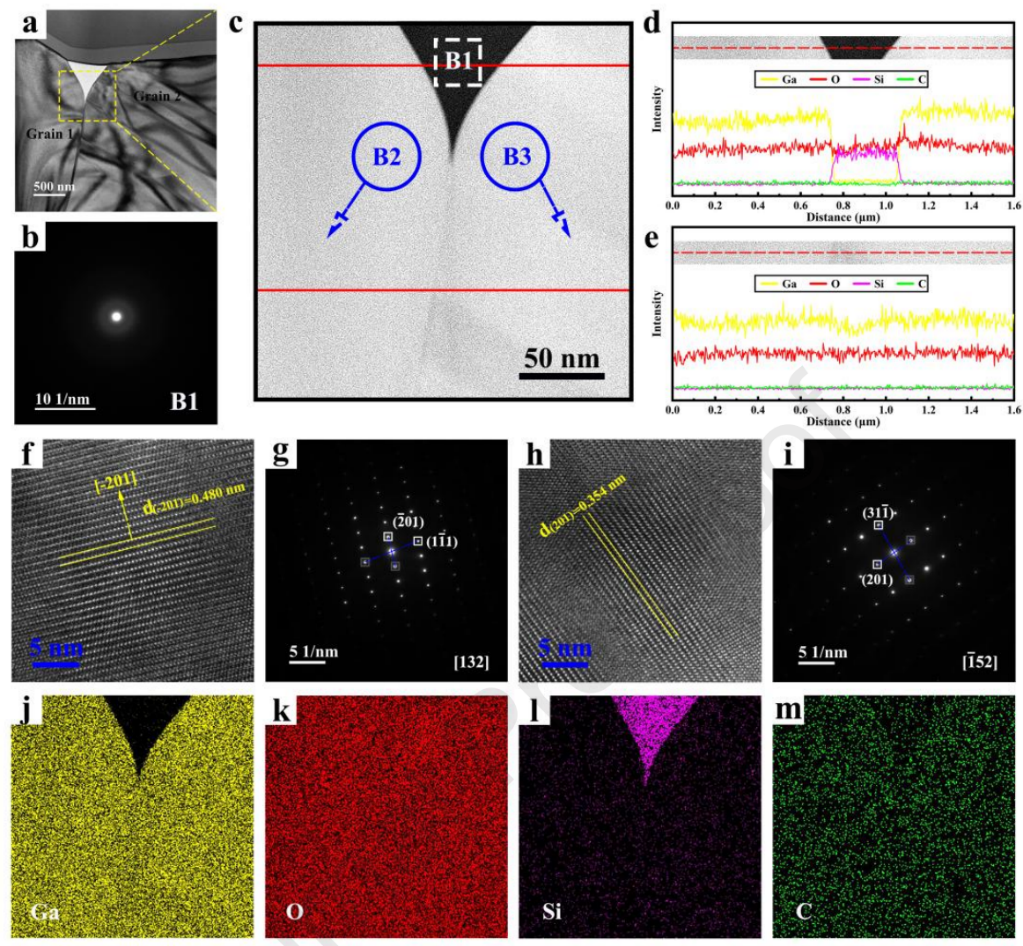
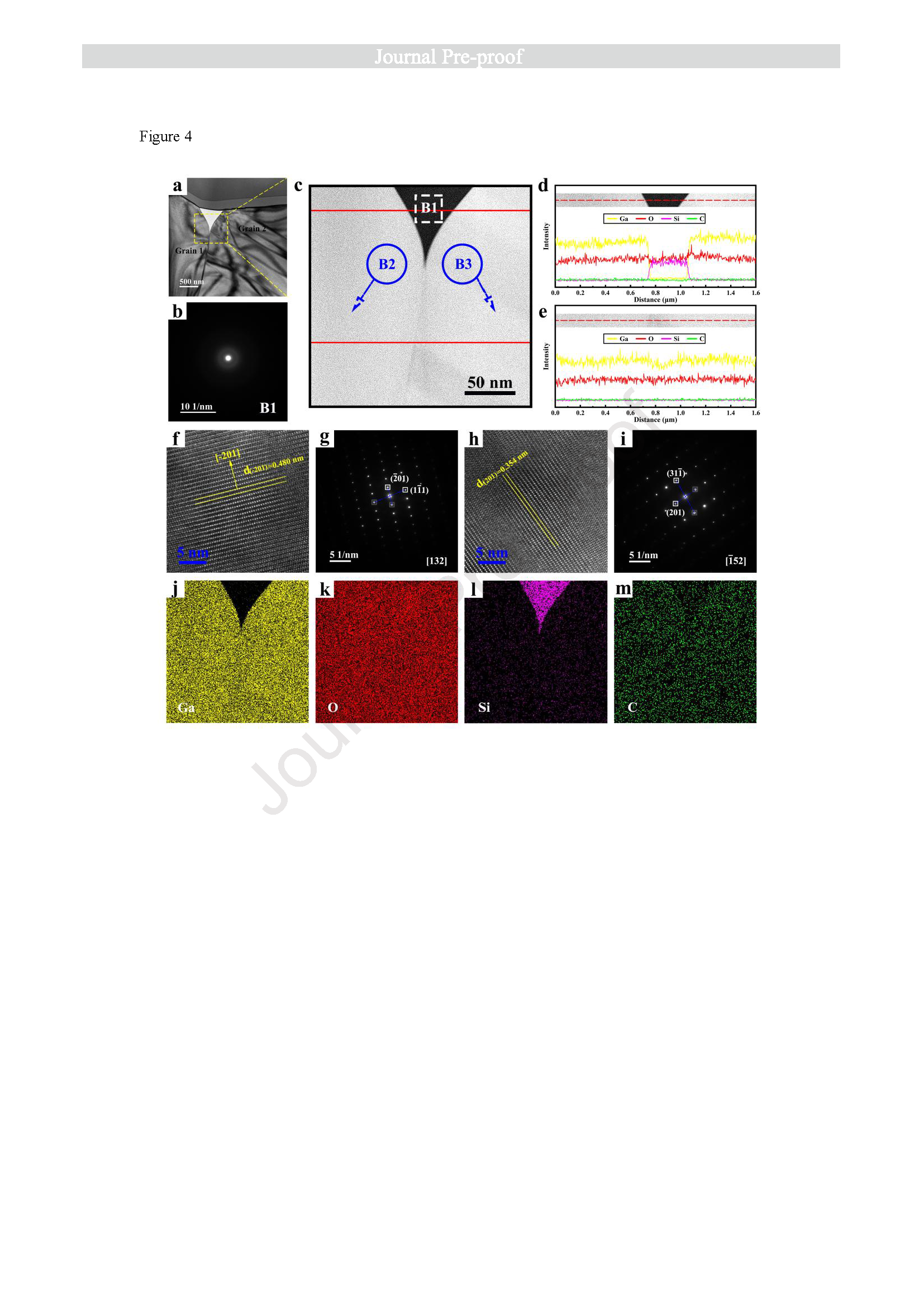
Fig. 4. Element distribution in grain boundaries. a-c, The amorphous phase observed in the grain boundaries. d-e, Considering the difference between grain and grain boundaries in line scan results, the phase in grain is Ga₂O₃ and within grain boundaries is SiO₂, which can be attributed to the oxidation of SiC. f-i, The SAED results. j-m, The EDS results revealed that the segregation of Si in grain boundaries.
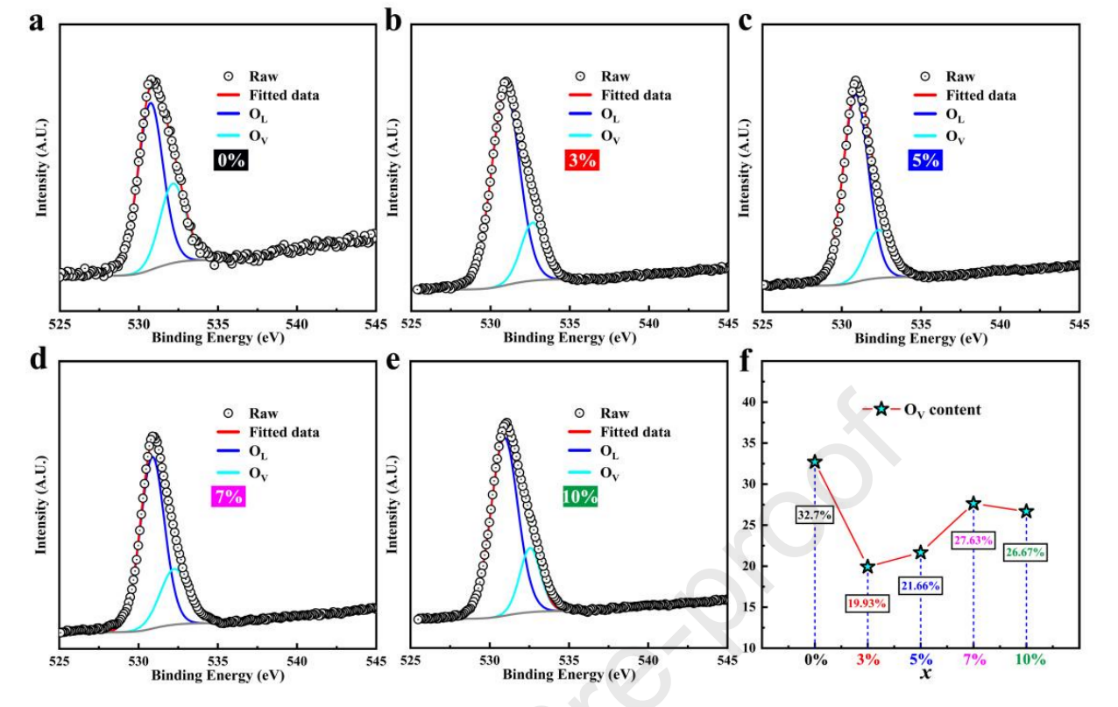
Fig. 5. The oxygen vacancies content in (1‑x) Ga₂O₃‑xSiC composite ceramics. a-e, The XPS fitted results of O 1s signals. f, The variation tendency of oxygen content.
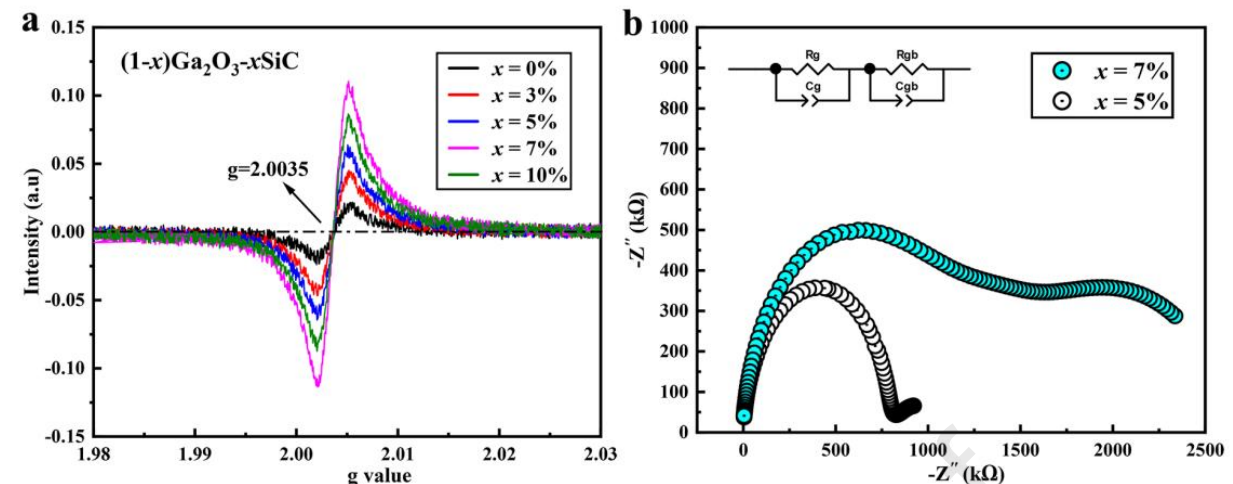
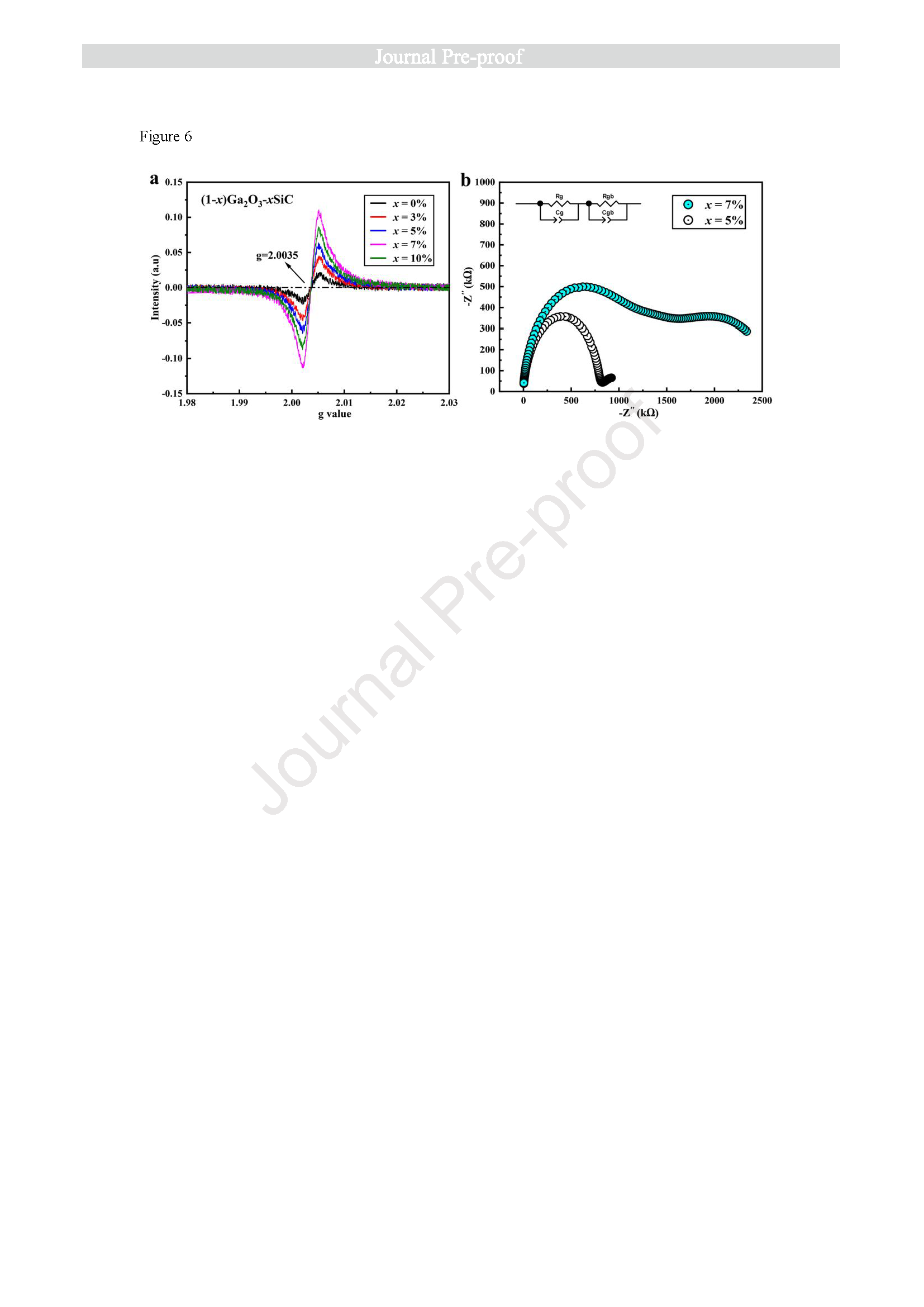
Fig. 6. The dominate defect and the variation of resistivity in composite ceramics. a, the EPR results of (1‑x) Ga₂O₃‑xSi suggested the dominate defect in all ceramics is oxygen. b, The Nyquist plots of x=5% and x=7% ceramics at 673K suggested the x=7% ceramic exhibited higher Rg and Rgb.
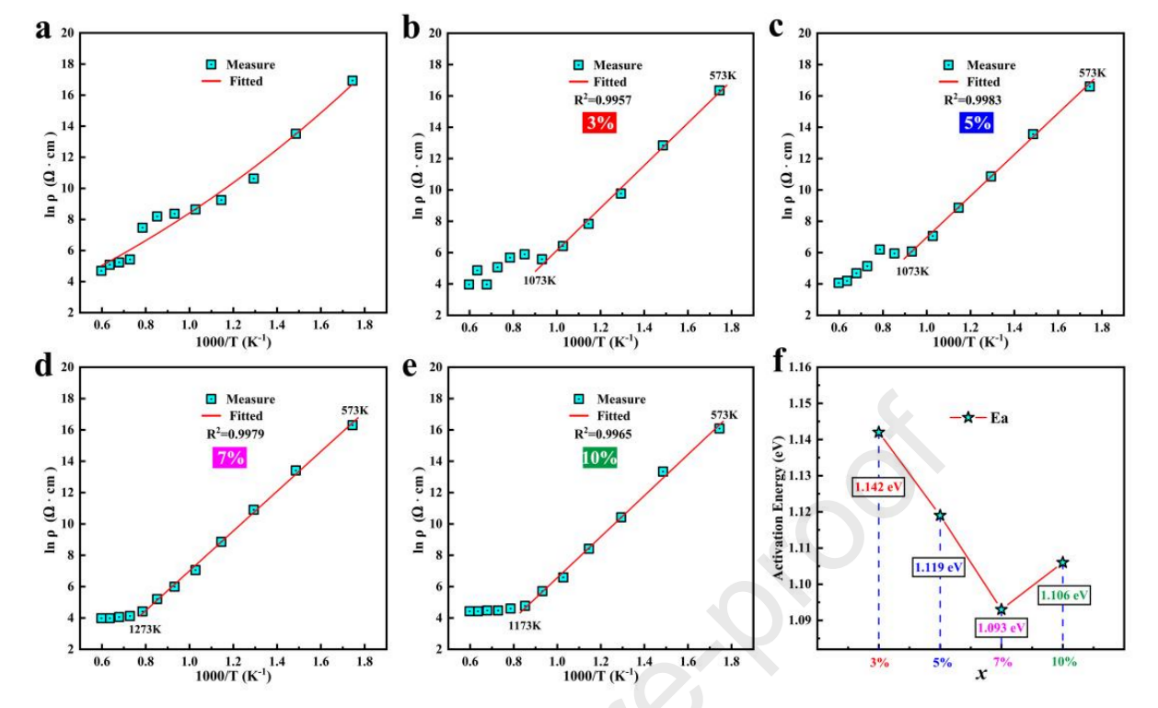
Fig. 7. The electrical properties and variation of Ea. a-e, The relationship between the natural logarithm of resistivity (lnρ) and the reciprocal of the absolute temperature (1000/T) of (1‑x) Ga₂O₃‑xSiC ceramics. f, The variation tendency of active energy shows a reverse relationship with Ov.
DOI :
doi.org/10.1016/j.ceramint.2026.05.093
Instruction
Official Account

Cooperation
Top