


Researchers from Indian Institute of Technology Guwahati, Nanyang Technological University have published a dissertation titled "Mist-CVD: A Scalable and Cost-Effective Growth Pathway for Mn-Doped β‑Ga₂O₃ Ferromagnetic Semiconductor" in Journal of Alloys and Compounds.
Background
β‑Ga₂O₃ is an ultra-wide-bandgap semiconductor with important applications in high-power electronics, solar-blind detection and spintronics. Mn doping can endow it with room-temperature ferromagnetism, making it an ideal candidate for spin optoelectronic devices. Existing fabrication methods such as pulsed laser deposition, molecular beam epitaxy and ion implantation require expensive equipment, harsh vacuum conditions and high scalable production cost, which are difficult to meet industrialization demands. There is still a lack of systematic research on the controllable growth, doping solubility and magnetic property correlation of Mn-doped β‑Ga₂O₃ ferromagnetic semiconductors prepared by low-cost Mist-CVD process, resulting in obvious technical gaps.
Abstract
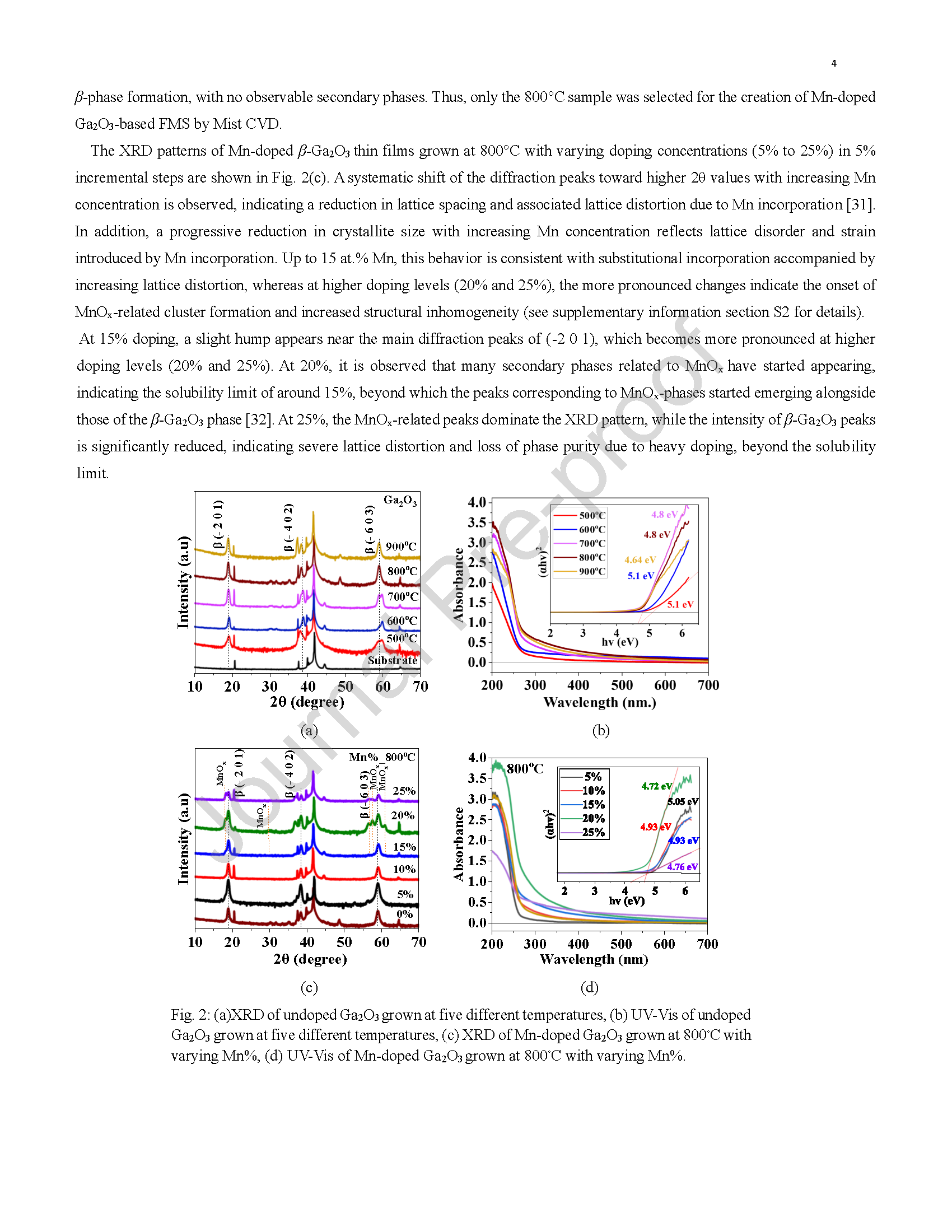
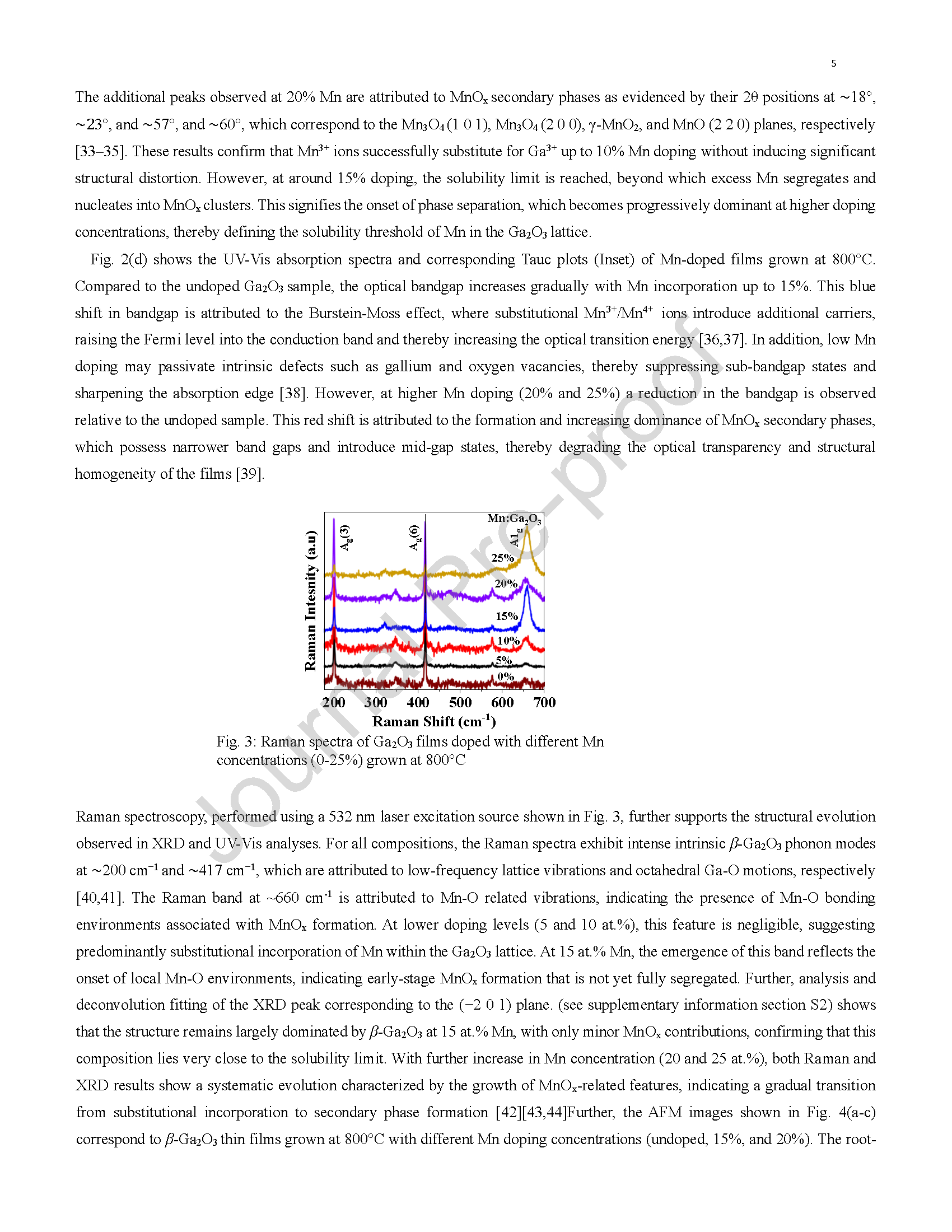
Ferromagnetic semiconductor (FMS) thin films of Mn-doped β‑Ga₂O₃ were synthesized using a pioneering, scalable, cost-effective, and in-house-developed Mist chemical vapor deposition (Mist-CVD) technique. The growth conditions were optimized to stabilize the monoclinic β‑phase, followed by systematic Mn incorporation from 0 to 25 at.% in increments of 5 at.%. Structural and optical characterizations using X-ray diffraction, Raman spectroscopy, and UV-Vis analysis confirm substitutional incorporation of Mn³⁺ ions at Ga lattice sites up to 15 at.%, beyond which secondary MnOₓ phases emerge, indicating the onset of a solubility limit. Magnetic measurements performed using a vibrating sample magnetometer (VSM) reveal well-defined hysteresis over a broad temperature range, confirming the robust ferromagnetic nature of the films. The results demonstrate a strong correlation between Mn incorporation, structural stability, and ferromagnetism, and establish Mn-doped β‑Ga₂O₃ grown by Mist-CVD as a promising and scalable FMS platform for next-generation spintronic and magnetic device applications.
Highlights
270 nm Mn-doped β‑Ga₂O₃ thin films deposited via Mist-CVD.
Maximum saturation magnetization of 27 emu/cc at 15% Mn (300 K).
Mn solubility limit identified around 15% via XRD analysis.
Secondary MnOₓ phase formation at >15% Mn, reduces Ms to 15 emu/cc.
Ferromagnetic hysteresis retained up to 350 K, confirming thermal stability.
Conclusion
In this study, we have demonstrated successful realization of room-temperature ferromagnetism in Mn-doped β‑Ga₂O₃ thin films grown by the Mist-CVD technique, corroborated by X-ray diffraction (XRD) and vibrating sample magnetometer measurements. XRD analysis reveals that the around 15% Mn-doped β‑Ga₂O₃ film maintains good crystalline integrity, indicating effective substitutional incorporation of Mn within the Ga₂O₃ lattice, while higher Mn concentration leads to lattice distortion and the emergence of secondary MnOₓ phases, indicating the onset of a doping saturation limit. Consistent with these structural observations, VSM measurements show that the 15% Mn-doped film exhibits a stable ferromagnetic hysteresis response at and above room temperature with saturation magnetization as high as 27 emu cm⁻³, confirming robust long-range ferromagnetic ordering. In contrast, the 20% and 25% Mn-doped film displays a reduced saturation magnetization and saturation at lower applied fields, indicative of competing magnetic interactions arising from secondary phase formation and enhanced Mn-O-Mn antiferromagnetic coupling. In conclusion, our work indicate 15% Mn doping as the optimal regime for achieving intrinsic and thermally stable ferromagnetism in β‑Ga₂O₃ while also establishing Mist CVD as a scalable, industry-compatible, and economically viable route for the growth of ferromagnetic semiconductors (FMS) for spintronic and memory applications.
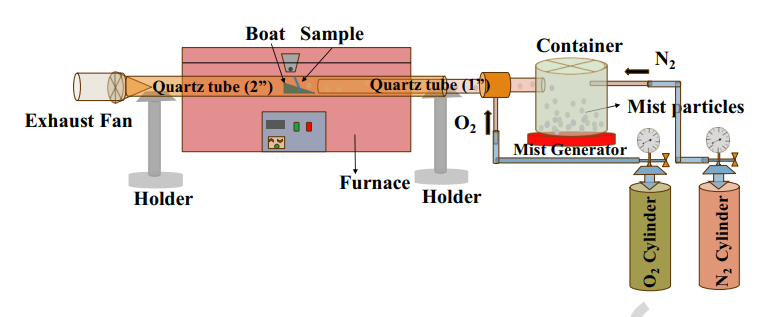
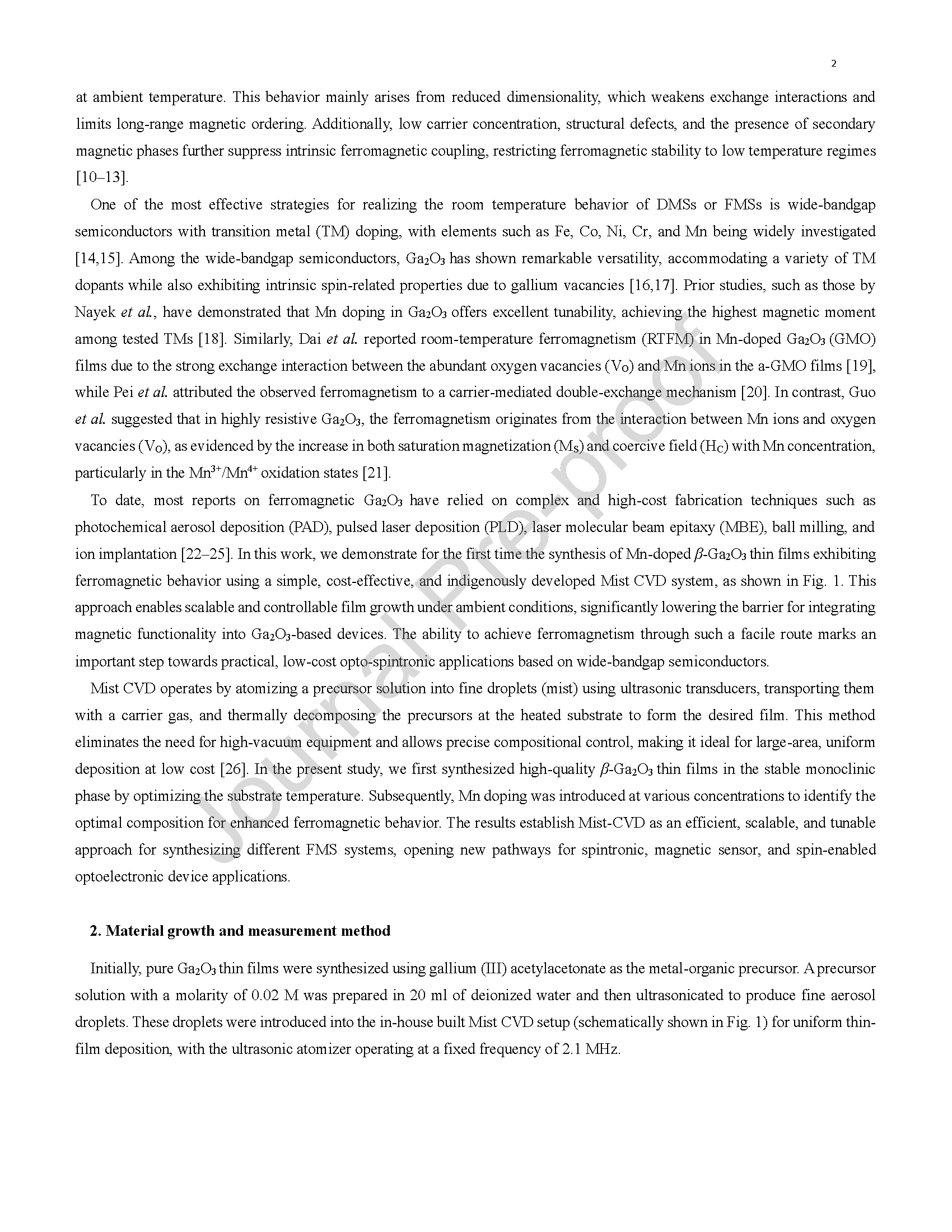
Fig. 1. Schematic of the In-house Mist CVD setup for Thin-Film Deposition.
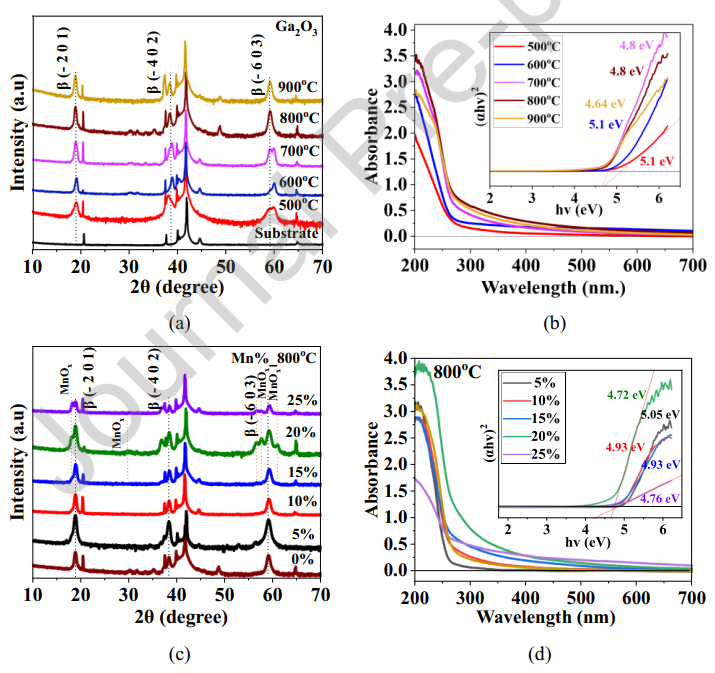
Fig. 2. (a) XRD of undoped Ga₂O₃ grown at five different temperatures, (b) UV-Vis of undoped Ga₂O₃ grown at five different temperatures, (c) XRD of Mn-doped Ga₂O₃ grown at 800°C with varying Mn%, (d) UV-Vis of Mn-doped Ga₂O₃ grown at 800°C with varying Mn%.
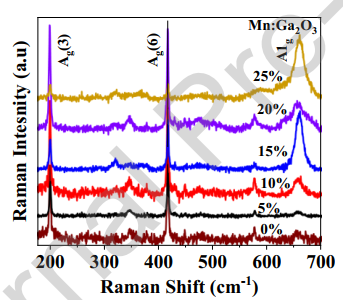
Fig. 3. Raman spectra of Ga₂O₃ films doped with different Mn concentrations (0–25%) grown at 800°C.
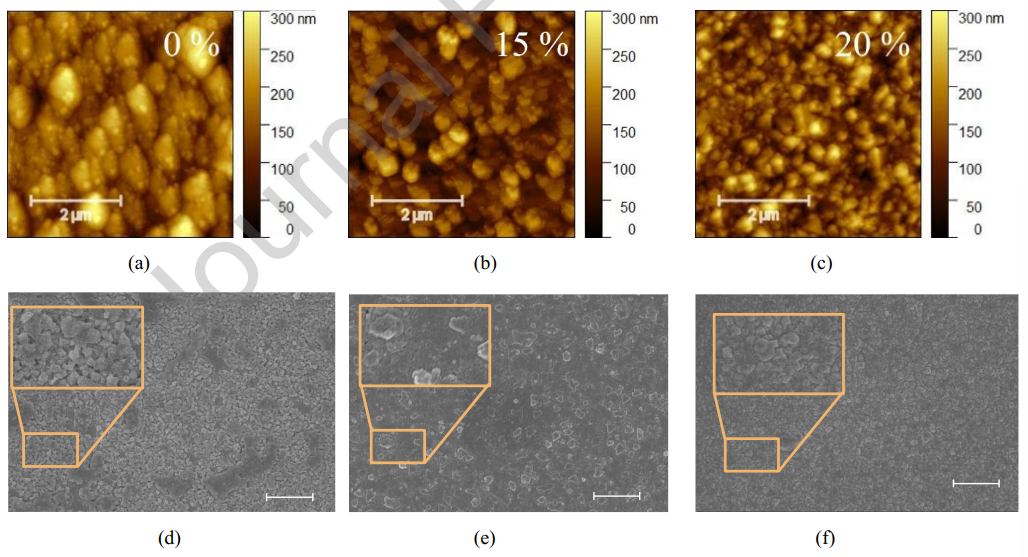
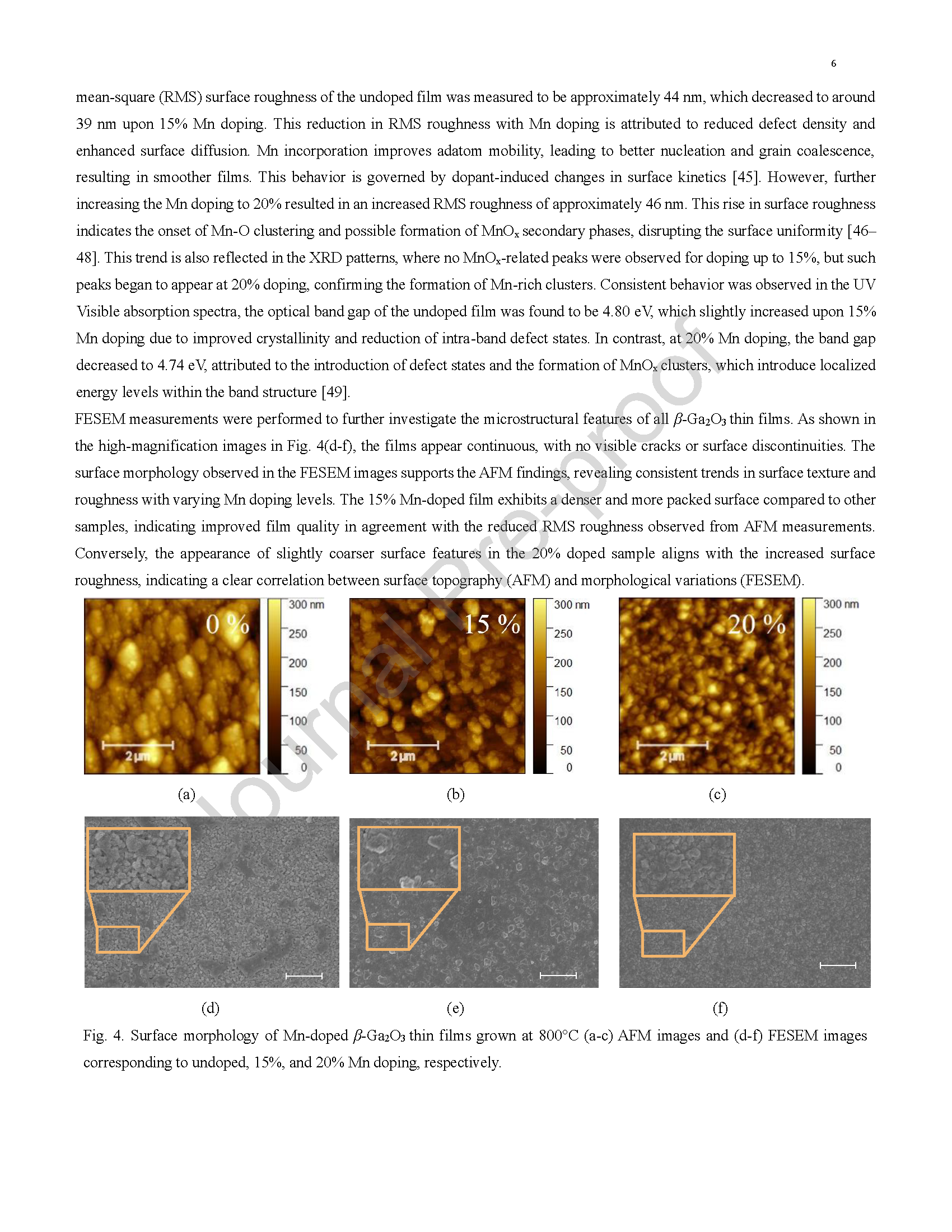
Fig. 4. Surface morphology of Mn-doped β‑Ga₂O₃ thin films grown at 800°C (a–c) AFM images and (d–f) FESEM images corresponding to undoped, 15%, and 20% Mn doping, respectively.
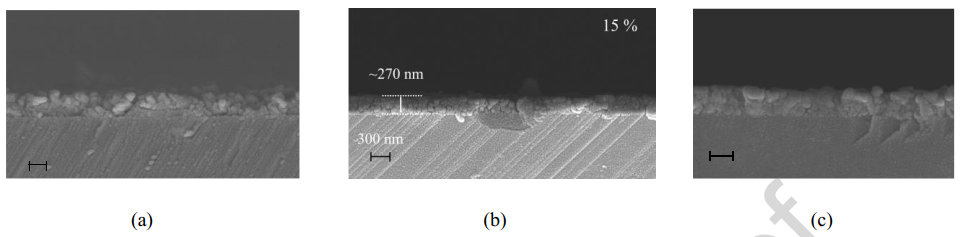
Fig. 5. Cross-sectional FESEM images of β‑Ga₂O₃ thin films (a) undoped, (b) 15% Mn-doped, and (c) 20% Mn-doped.
DOI:
doi.org/10.1016/j.jallcom.2026.188862
Instruction
Official Account

Cooperation
Top