


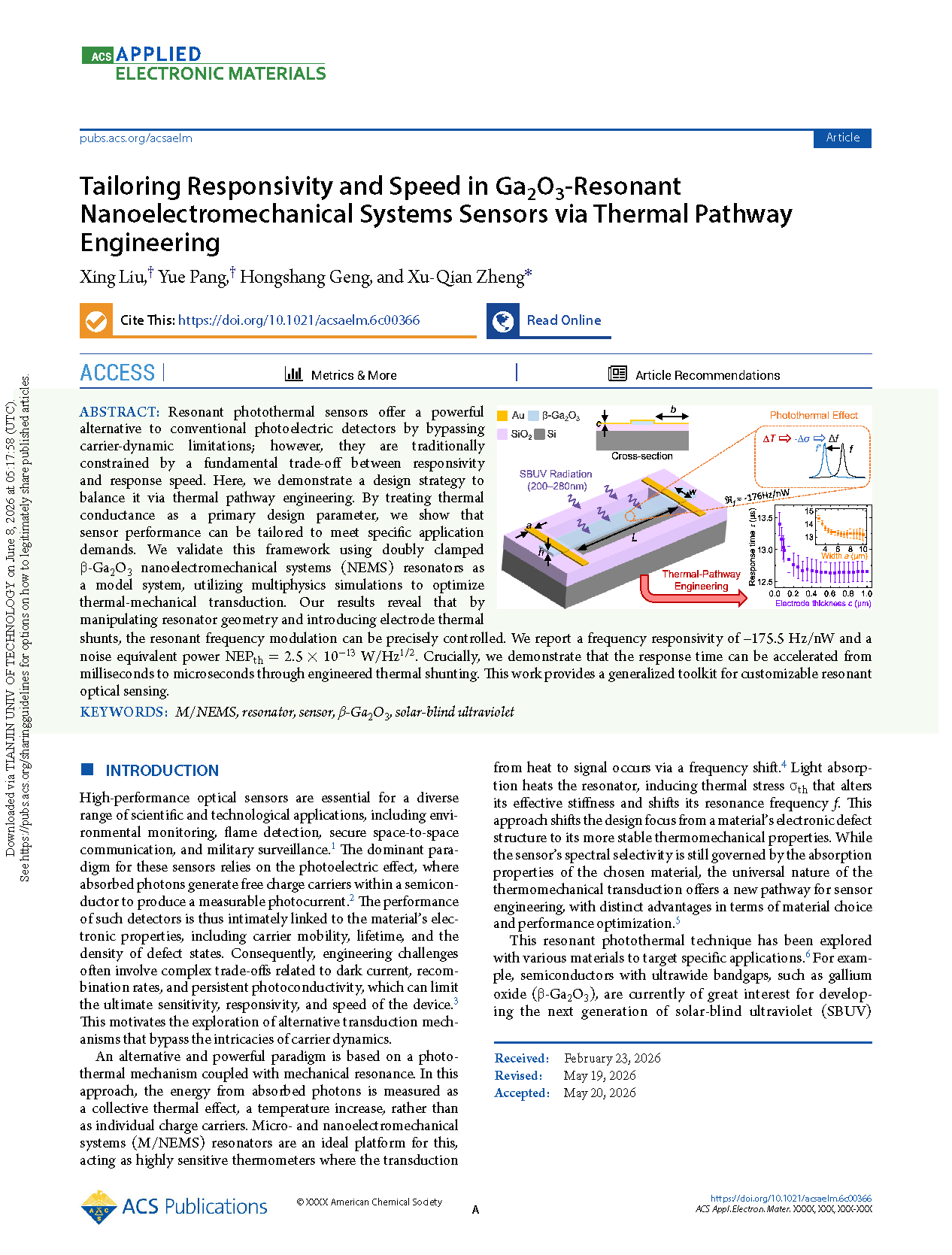
Researchers from Nanjing University of Posts and Telecommunications have published a dissertation titled "Tailoring Responsivity and Speed in Ga₂O₃-Resonant Nanoelectromechanical Systems Sensors via Thermal Pathway Engineering" in ACS Applied Electronic Materials.
Background
Solar-blind ultraviolet detection and gas sensing have an increasing demand for high-performance sensors. As an ultra-wide bandgap semiconductor, β-Ga₂O₃ has excellent mechanical property, thermal stability and optoelectronic performance, showing great potential in micro-nano electromechanical sensing devices. Traditional photoelectric sensors rely on carrier transport, limited by dark current, carrier recombination and persistent photoconductivity, so it is hard to balance responsivity and response speed. Most existing β-Ga₂O₃ sensors work in photoconductive mode, while research on photothermal coupled resonant sensors is insufficient. Such devices face a fundamental trade-off between responsivity and response speed. Few studies systematically regulate thermal and mechanical characteristics by optimizing thermal pathways, and there is no universal optimization strategy. Tunable β-Ga₂O₃ resonant photothermal sensors adapted to different application scenarios remain to be developed.
Abstract
Resonant photothermal sensors offer a powerful alternative to conventional photoelectric detectors by bypassing carrier-dynamic limitations; however, they are traditionally constrained by a fundamental trade-off between responsivity and response speed. Here, we demonstrate a design strategy to balance it via thermal pathway engineering. By treating thermal conductance as a primary design parameter, we show that sensor performance can be tailored to meet specific application demands. We validate this framework using doubly clamped β-Ga₂O₃ nanoelectromechanical systems (NEMS) resonators as a model system, utilizing multiphysics simulations to optimize thermal-mechanical transduction. Our results reveal that by manipulating resonator geometry and introducing electrode thermal shunts, the resonant frequency modulation can be precisely controlled. We report a frequency responsivity of -175.5 Hz/nW and a noise equivalent power NEPₜₕ = 2.5 × 10⁻¹³ W/Hz¹ᐟ². Crucially, we demonstrate that the response time can be accelerated from milliseconds to microseconds through engineered thermal shunting. This work provides a generalized toolkit for customizable resonant optical sensing.
Highlights
Propose a thermal pathway engineering strategy to break the trade-off between responsivity and response speed of resonant photothermal sensors.
Adopt doubly clamped β-Ga₂O₃ NEMS resonators as the research object and verify the performance tuning method through multiphysics simulation.
Realize a frequency responsivity of -175.5 Hz/nW and ultra-low noise equivalent power of 2.5 × 10⁻¹³ W/Hz¹ᐟ².
Utilize electrode thermal shunting to shorten response time from milliseconds to microseconds.
Conclusion
In conclusion, this study investigates the thermodynamic response of doubly clamped β-Ga₂O₃ resonators through theoretical analysis and COMSOL simulations. The results demonstrate that SBUV irradiation alters the device’s temperature via photothermal effects, inducing thermal expansion and stress redistribution. The combined effect significantly modifies the resonant frequency, achieving a responsivity of -175.5 Hz/nW. The simulation reveals that critical parameters affecting the response rate include contact thermal resistance, resonator thickness, and length. Optimizing the resonator thickness and contact resistance enhances the responsivity. Furthermore, the addition of a gold electrode significantly reduces device temperature and shortens the response time from milliseconds to the microsecond level. This study provides a framework for designing photothermal-effect-based resonant electromechanical sensors with responsivity and sensing speed engineering by electrode size and material modulation.
Project Support
We gratefully acknowledge the support from Jiangsu Provincial Team of Innovation and Entrepreneurship (grant JSSCTD202351), Basic Research Program of Jiangsu Province (grant BK20230360), Jiangsu Provincial Young Scientific and Technological Talent Lifting Project (grant JSTJ-2024-428), and Open Research Fund of Science and Technology on Electronic Test and Measurement Laboratory (grant 2024-DZCSJS-02).
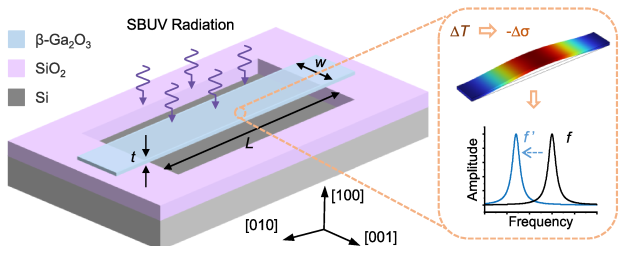
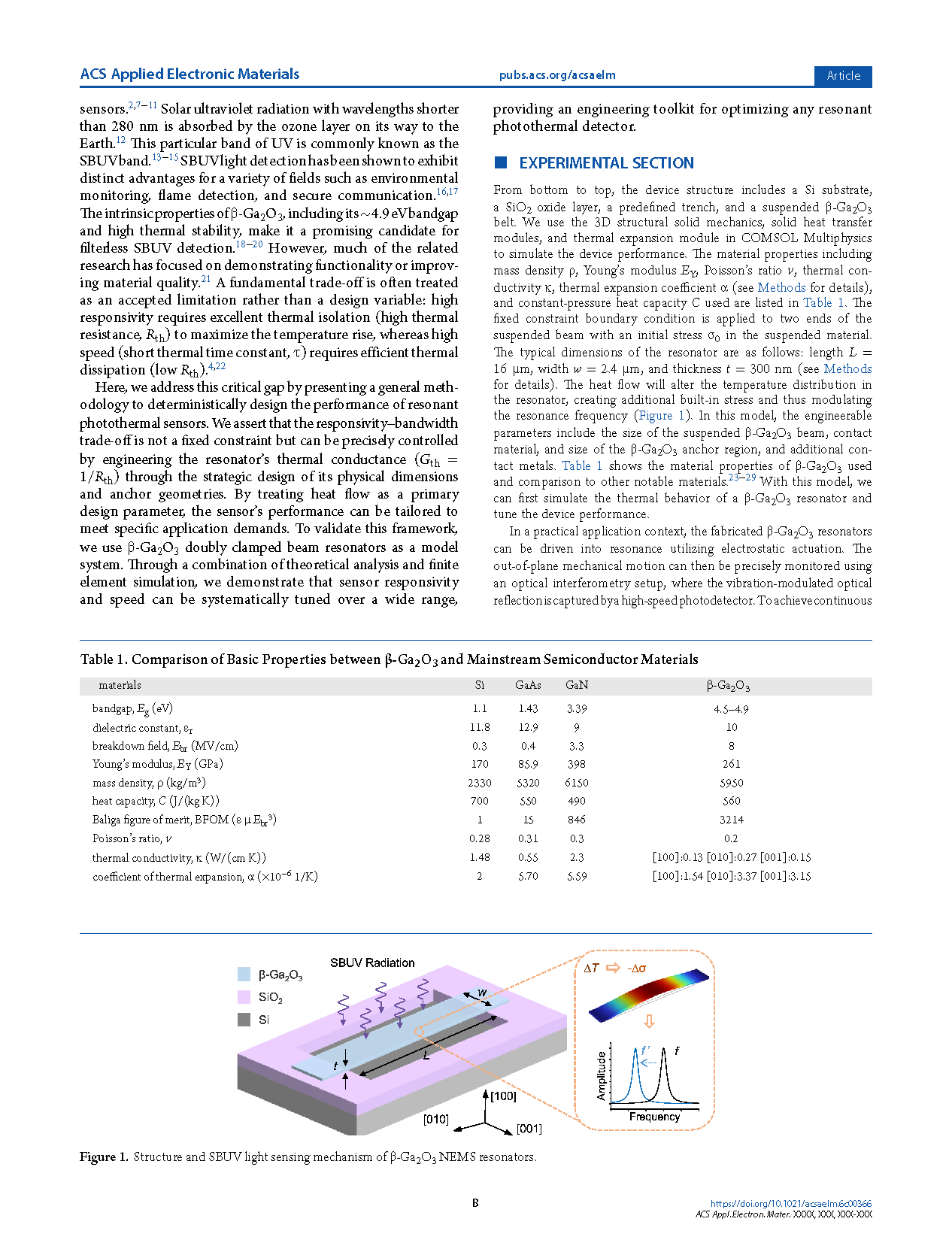
Figure 1. Structure and SBUV light sensing mechanism of β-Ga₂O₃ NEMS resonators.
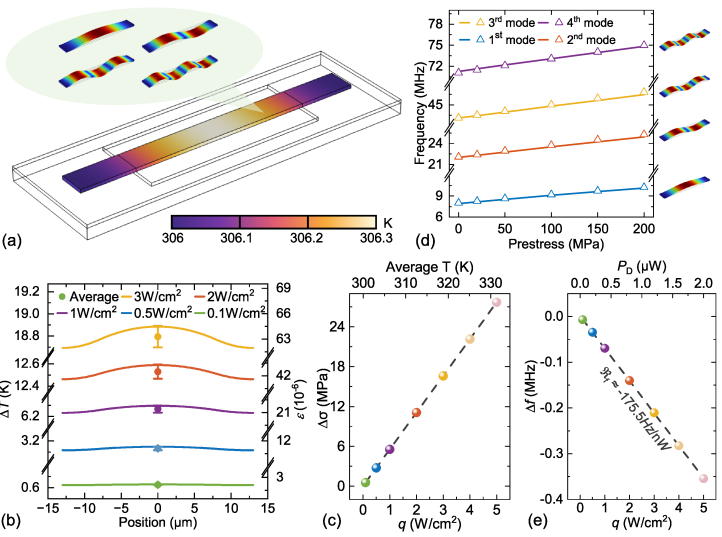
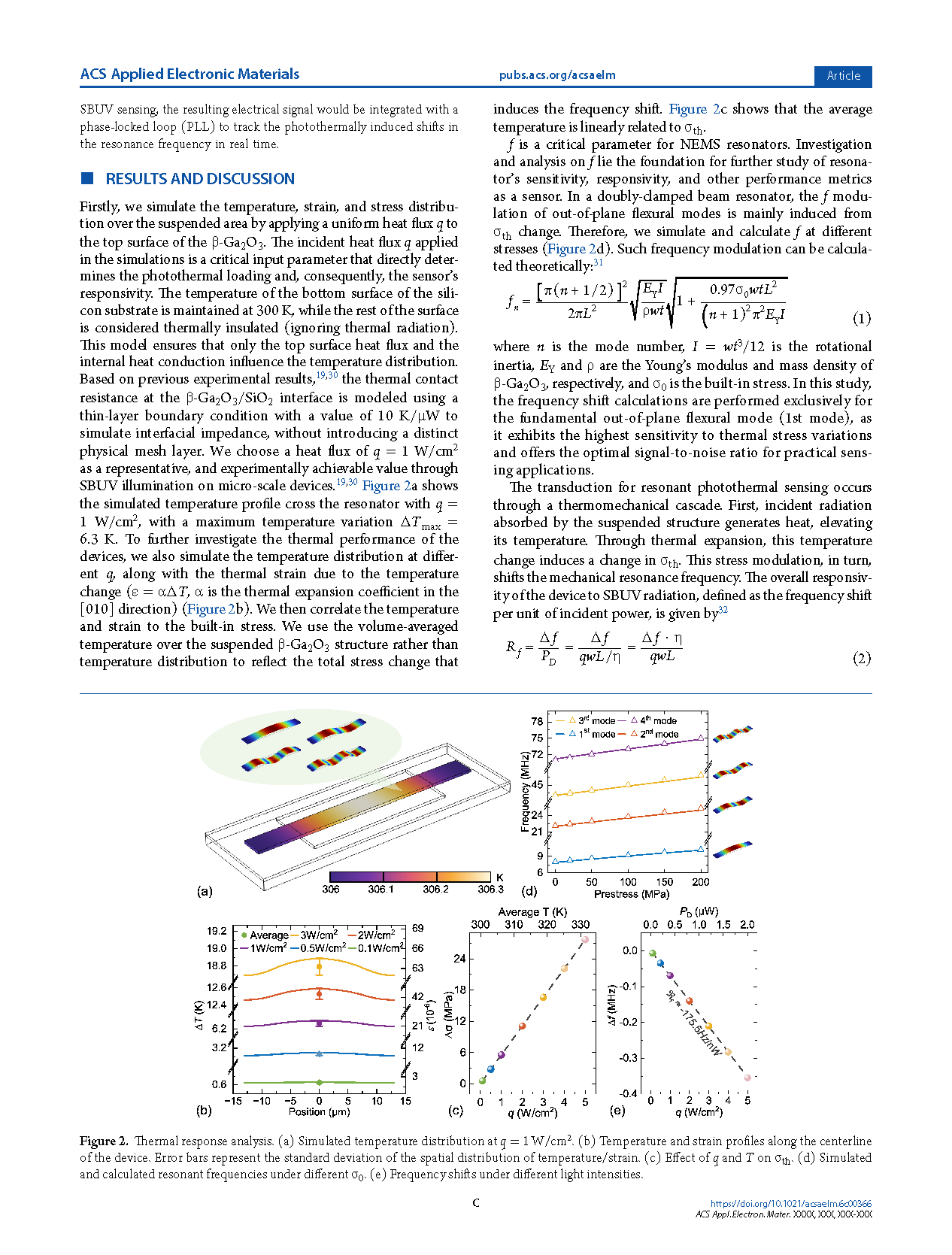
Figure 2. Thermal response analysis. (a) Simulated temperature distribution at q = 1 W/cm². (b) Temperature and strain profiles along the centerline of the device. Error bars represent the standard deviation of the spatial distribution of temperature/strain. (c) Effect of q and T on σₜₕ. (d) Simulated and calculated resonant frequencies under different σ₀. (e) Frequency shifts under different light intensities.
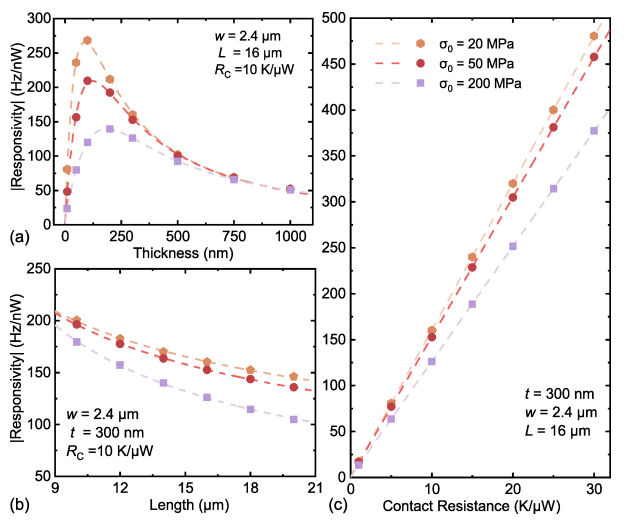
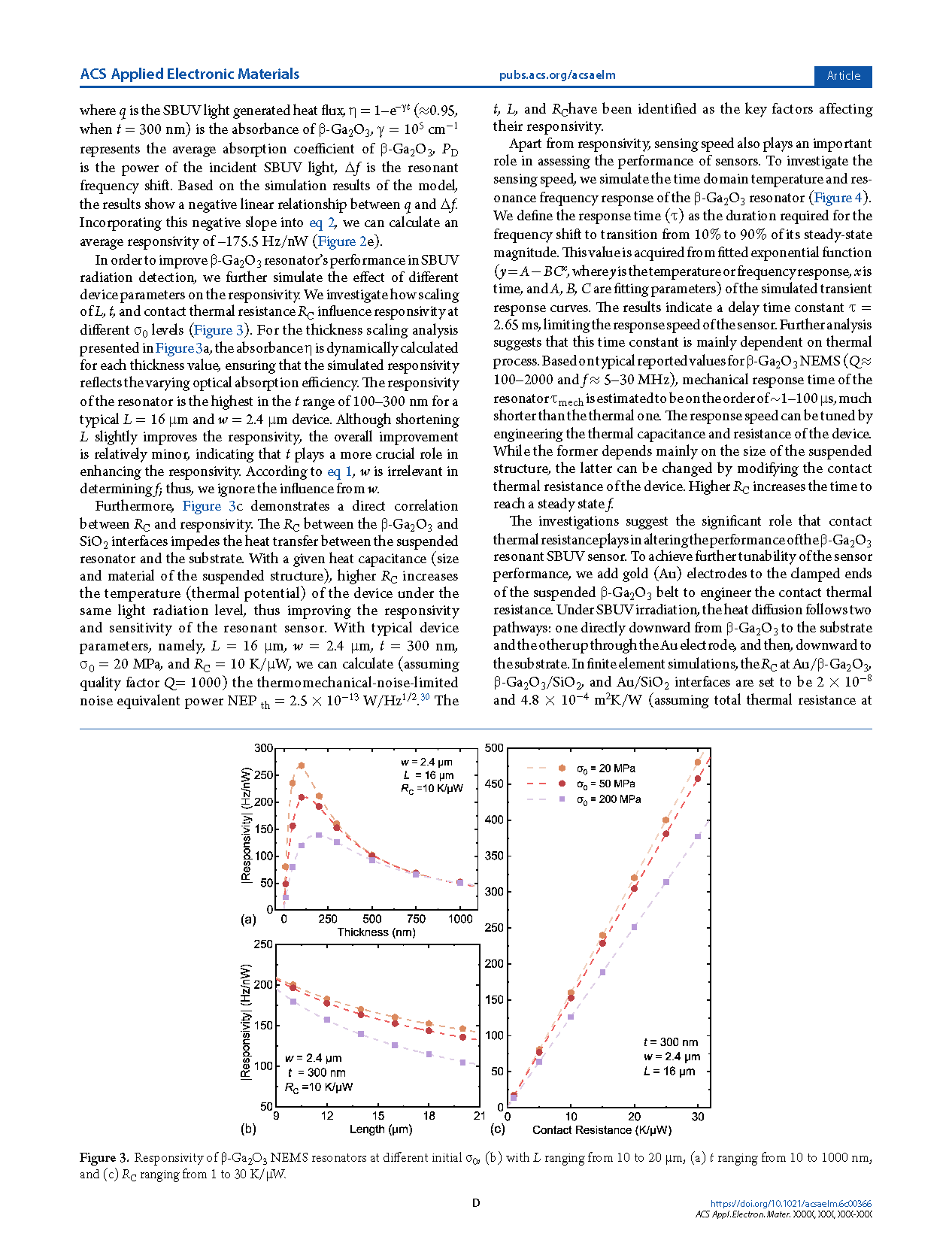
Figure 3. Responsivity of β-Ga₂O₃ NEMS resonators at different initial σ₀, (b) with L ranging from 10 to 20 μm, (a) t ranging from 10 to 1000 nm, and (c) RC ranging from 1 to 30 K/μW.
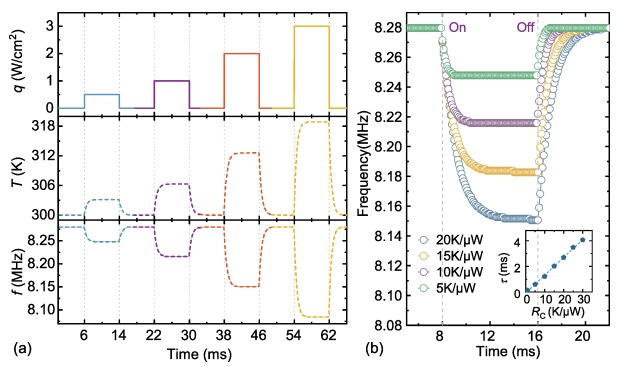
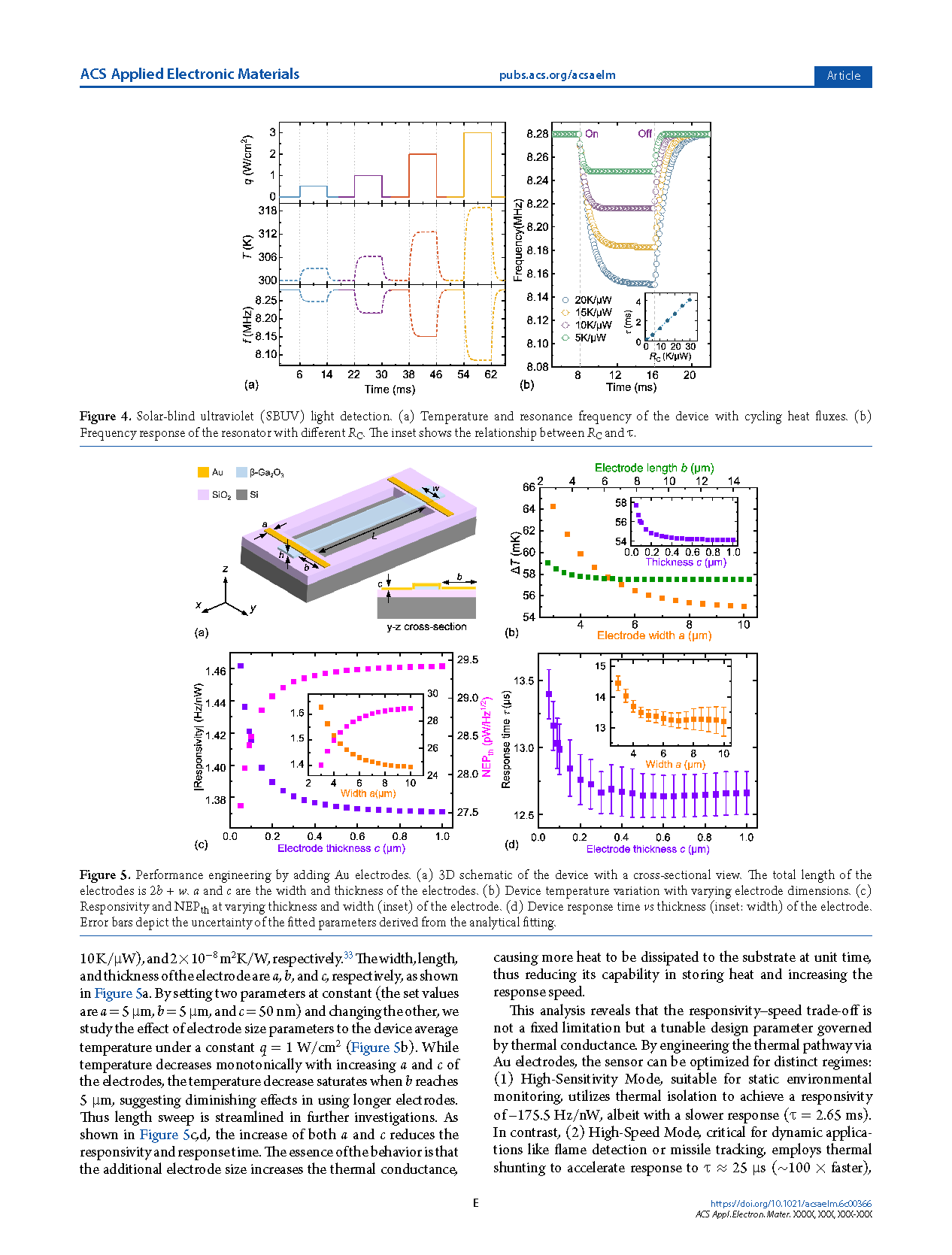
Figure 4. Solar-blind ultraviolet (SBUV) light detection. (a) Temperature and resonance frequency of the device with cycling heat fluxes. (b) Frequency response of the resonator with different RC. The inset shows the relationship between RC and τ.
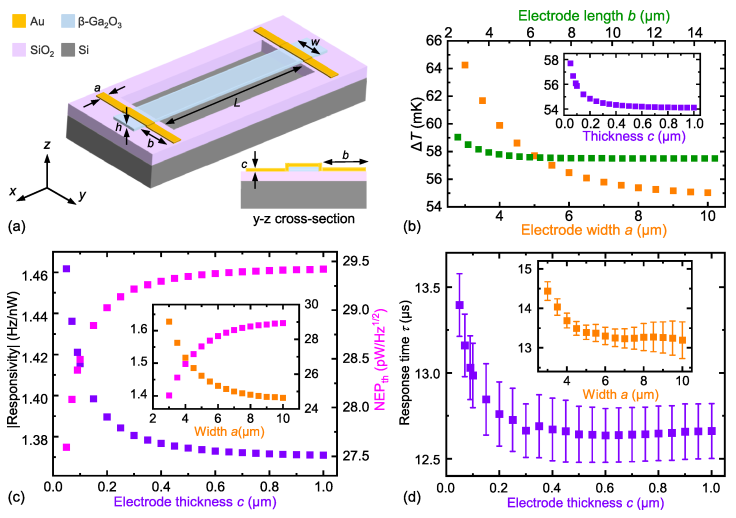
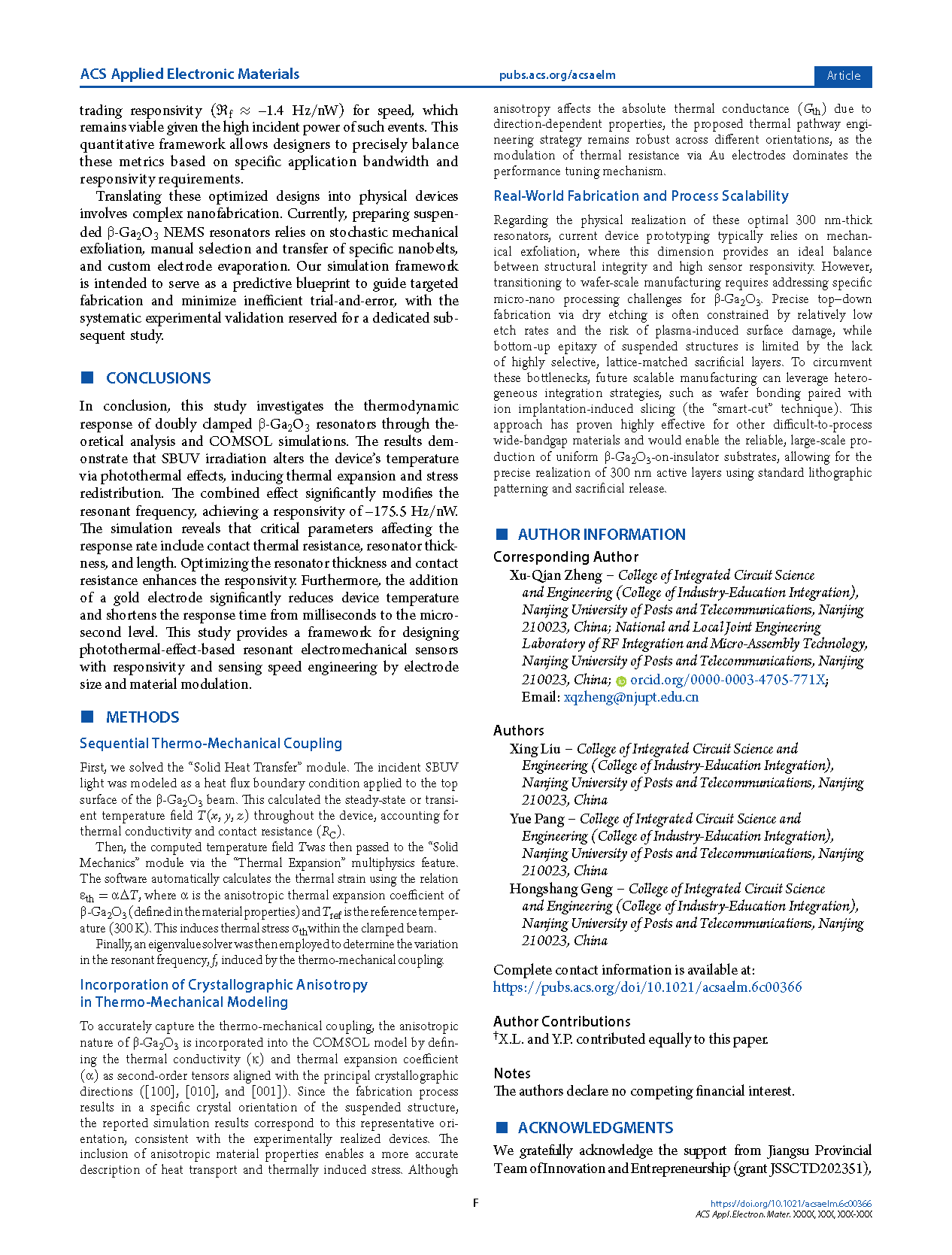
Figure 5. Performance engineering by adding Au electrodes. (a) 3D schematic of the device with a cross-sectional view. The total length of the electrodes is 2b + w. a and c are the width and thickness of the electrodes. (b) Device temperature variation with varying electrode dimensions. (c) Responsivity and NEPₜₕ at varying thickness and width (inset) of the electrode. (d) Device response time vs thickness (inset: width) of the electrode. Error bars depict the uncertainty of the fitted parameters derived from the analytical fitting.
DOI:
doi.org/10.1021/acsaelm.6c00366
Instruction
Official Account

Cooperation
Top