


Researchers from Xi'an University of Technology have published a dissertation titled " Effect of O₂/Ar ratio on crystallization and structural characteristics of β-Ga₂O₃ films deposited on 4H-SiC(0001) substrates" in Vacuum Volume 253 (2026) 115563.
Background
In recent years, β-Ga₂O₃ has gained attention as an emerging ultra-wide bandgap semiconductor material, showing significant potential for high-power and high-frequency electronic device applications, owing to its superior physical properties including an ultra-wide bandgap (~4.8 eV), high electron mobility (180 cm²V⁻¹s⁻¹), and a high saturation electron velocity (2×10⁷ cm/s). Although β-Ga₂O₃ offers several advantages, its relatively low thermal conductivity (11-27 Wm⁻¹K⁻¹) poses a major bottleneck. To address this, researchers have proposed thermal management approaches including integration with 4H-SiC substrates. Notably, there is a very small lattice mismatch between 4H-SiC and β-Ga₂O₃, contributing to enhanced crystalline quality and interfacial stability. However, the effective application of β-Ga₂O₃/4H-SiC photodetectors faces challenges including high costs, intricate processing procedures, and inherent defects such as oxygen vacancies during growth. LPCVD stands out as a highly effective technique for thin film preparation due to its cost-effectiveness, superior crystal quality, and excellent reproducibility. This study systematically investigates the effects of varying O₂/Ar flow ratios on crystal structure, morphology and electrical characteristics, further elucidating the mechanism by which this ratio parameter influences the regulation of oxygen vacancy concentration.
Abstract
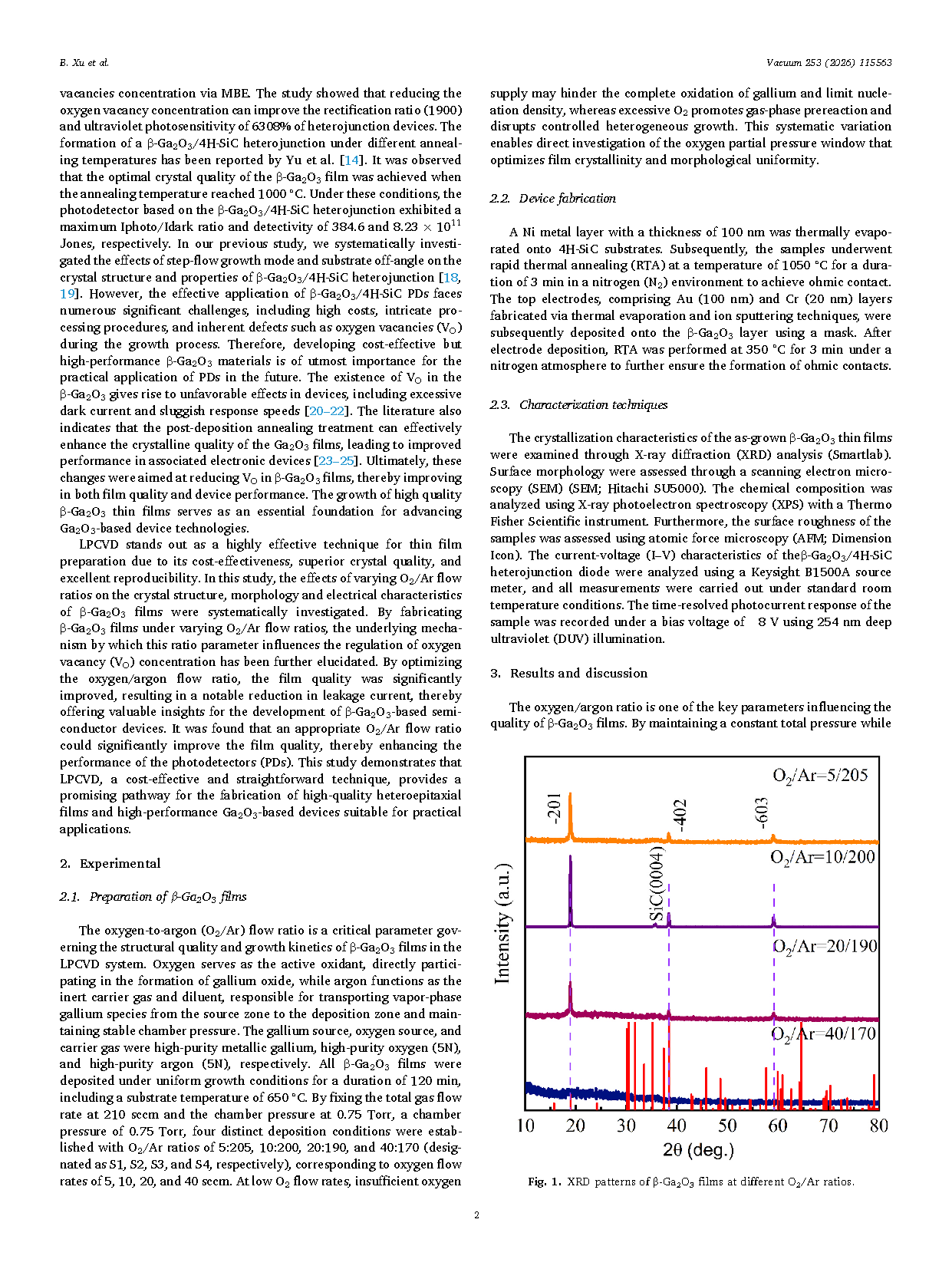
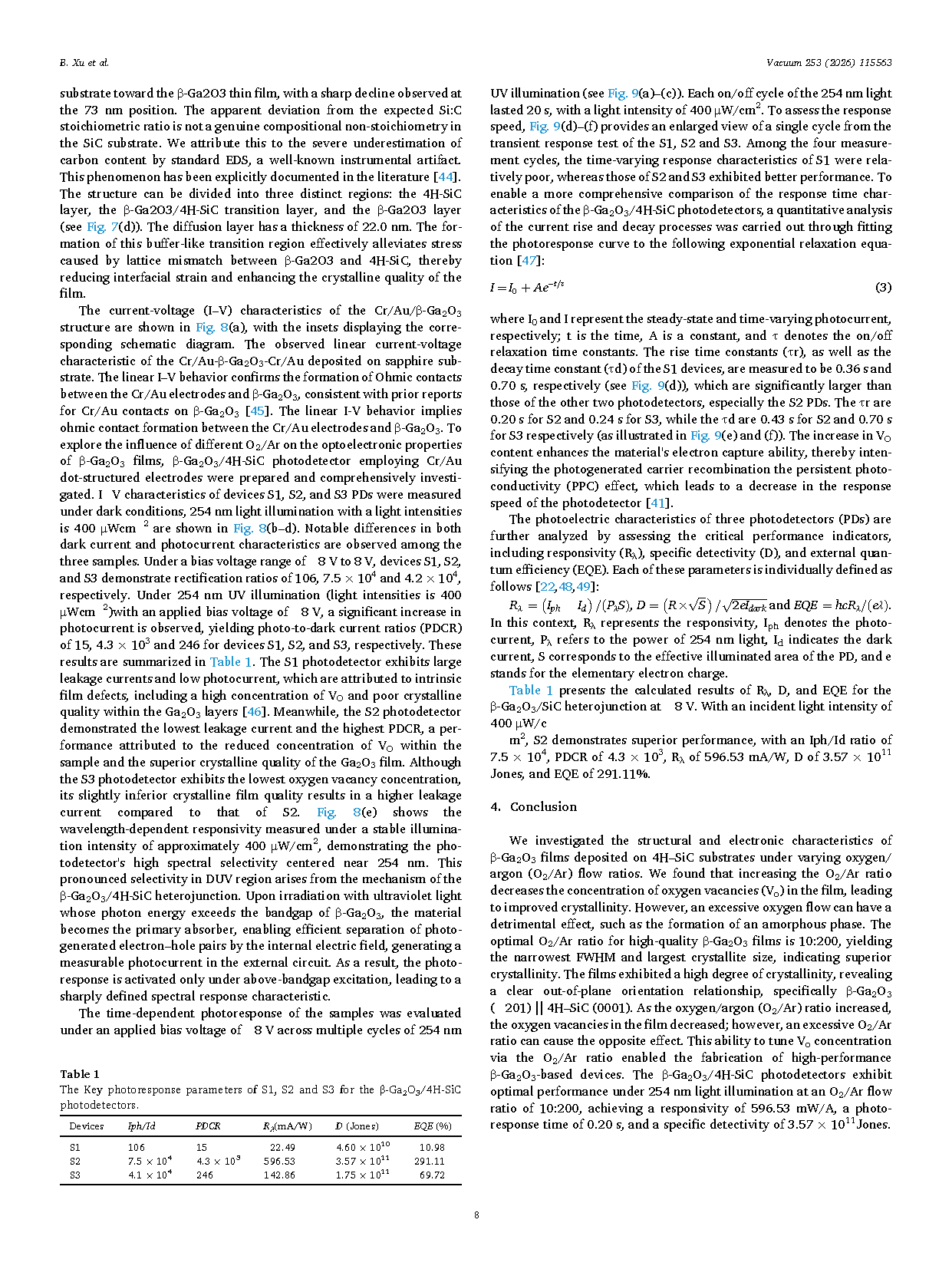
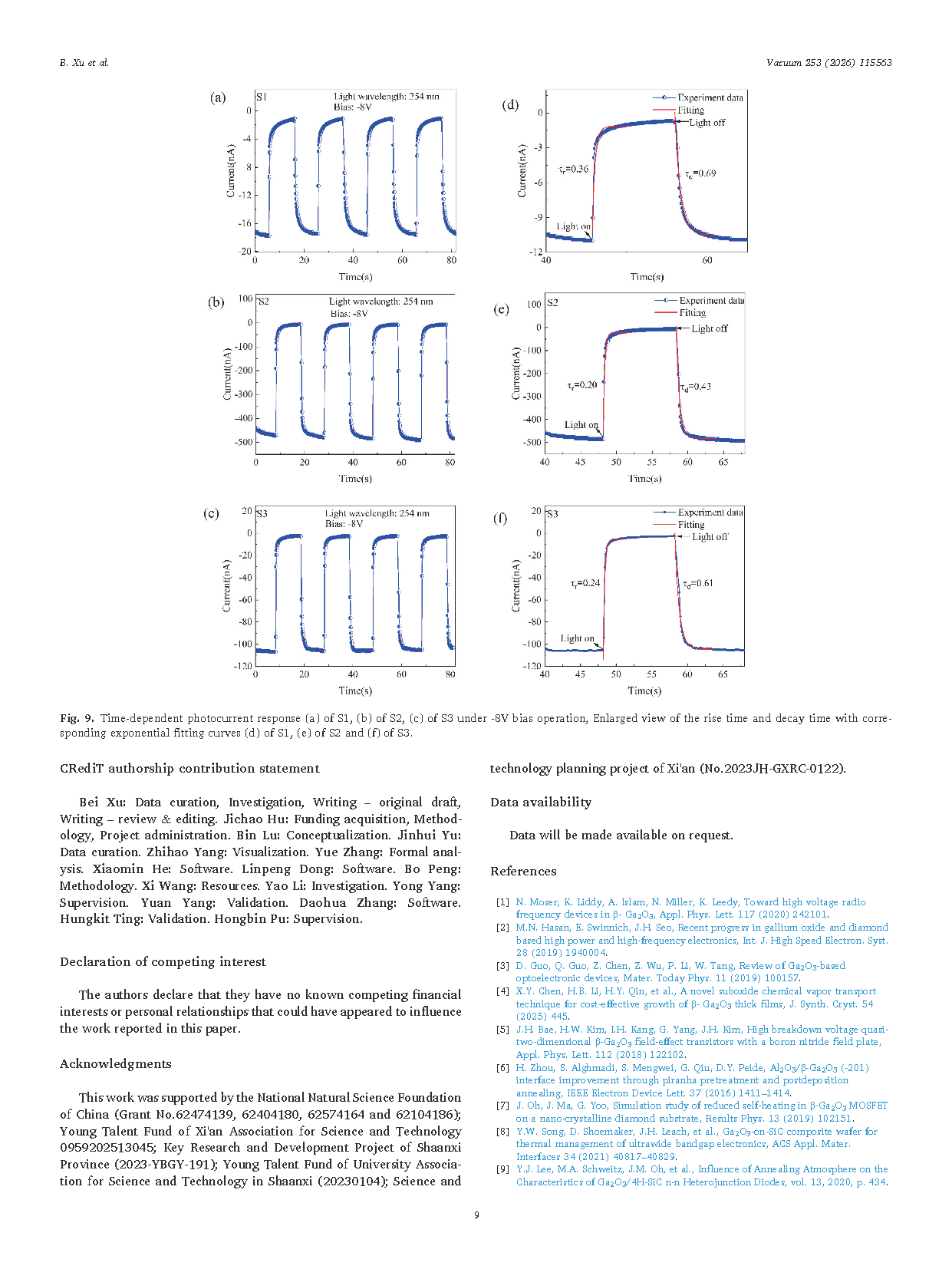
In this study, β-gallium oxide (β-Ga₂O₃) thin films were synthesized on 4H-SiC substrates using the low-pressure chemical vapor deposition (LPCVD) method under varying oxygen/argon (O₂/Ar) flow ratios. The influence of this ratio on the films' properties, including crystalline quality, surface morphology, and oxygen vacancy concentration, was systematically explored. Analysis by X-ray diffraction (XRD) confirmed a clear out-of-plane epitaxial relationship between the β-Ga₂O₃ (-201) plane and the 4H-SiC (0001) plane. When the O₂/Ar flow ratio was 10:200, the sample exhibited the smallest FWHM (1.17°). Both surface morphology and root-mean-square (RMS) roughness were found to exhibit a strong dependence on the O₂/Ar flow ratio. Moreover, X-ray photoelectron spectroscopy (XPS) results indicated that a higher O₂/Ar ratio led to a lower concentration of O-vacancies. The optimized β-Ga₂O₃/4H-SiC photodetector (O₂/Ar = 10:200) achieves a photo-to-dark current ratio of 4.3×10³ and specific detectivity of 3.57×10¹¹ Jones at -8 V under 254 nm UV light. The measured rise and decay response times were 0.20 s and 0.43 s, respectively. A ratio of 10:200 yields the optimal crystal quality; in contrast, excessive oxygen incorporation degrades crystallinity, thereby compromising thin-film quality and device performance.
Conclusion
We investigated the structural and electronic characteristics of β-Ga₂O₃ films deposited on 4H-SiC substrates under varying oxygen/argon (O₂/Ar) flow ratios. We found that increasing the O₂/Ar ratio decreases the concentration of oxygen vacancies (Vo) in the film, leading to improved crystallinity. However, an excessive oxygen flow can have a detrimental effect, such as the formation of an amorphous phase. The optimal O₂/Ar ratio for high-quality β-Ga₂O₃ films is 10:200, yielding the narrowest FWHM and largest crystallite size, indicating superior crystallinity. The films exhibited a high degree of crystallinity, revealing a clear out-of-plane orientation relationship, specifically β-Ga₂O₃ (-201) || 4H-SiC (0001). As the O₂/Ar ratio increased, the oxygen vacancies in the film decreased; however, an excessive O₂/Ar ratio can cause the opposite effect. This ability to tune Vo concentration via the O₂/Ar ratio enabled the fabrication of high-performance Ga₂O₃-based devices. The β-Ga₂O₃/4H-SiC photodetectors exhibit optimal performance under 254 nm light illumination at an O₂/Ar flow ratio of 10:200, achieving a responsivity of 596.53 mA/W, a photo-response time of 0.20 s, and a specific detectivity of 3.57×10¹¹ Jones.
Project
This work was supported by the National Natural Science Foundation of China (Grant No. 62474139, 62404180, 62574164 and 62104186); Young Talent Fund of Xi'an Association for Science and Technology (0959202513045); Key Research and Development Project of Shaanxi Province (2023-YBGY-191); Young Talent Fund of University Association for Science and Technology in Shaanxi (20230104); Science and Technology Planning Project of Xi'an (No. 2023JH-GXRC-0122).
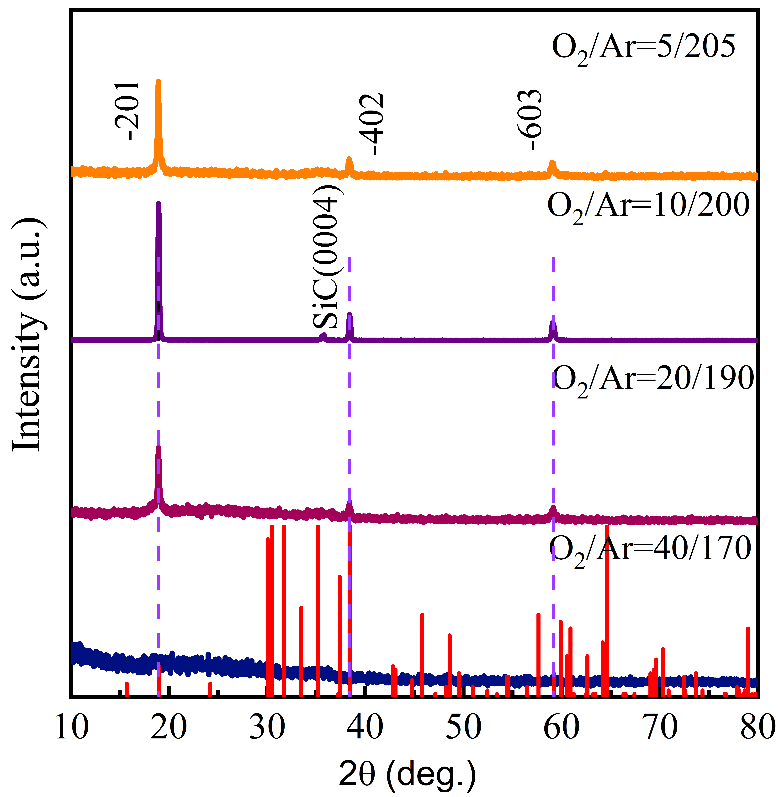
Fig. 1 XRD patterns of β-Ga₂O₃ films at different O₂/Ar ratios.
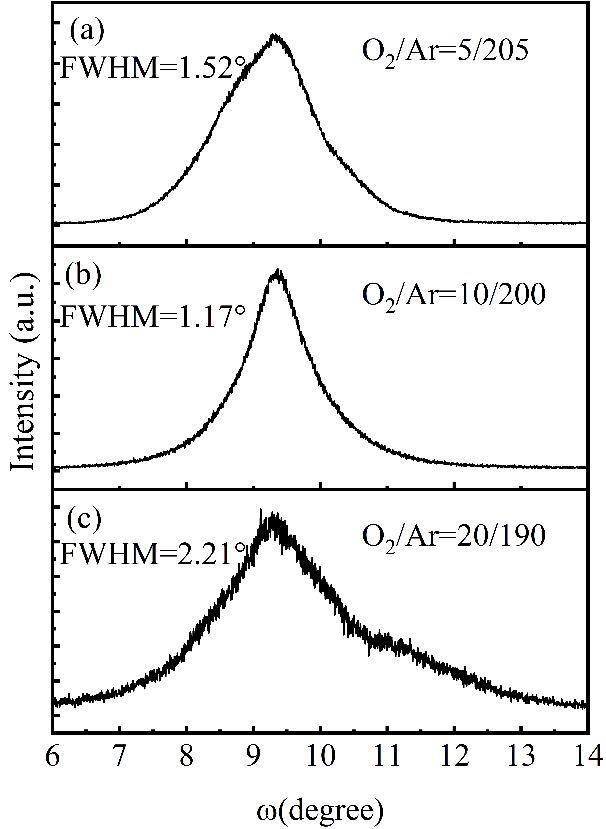
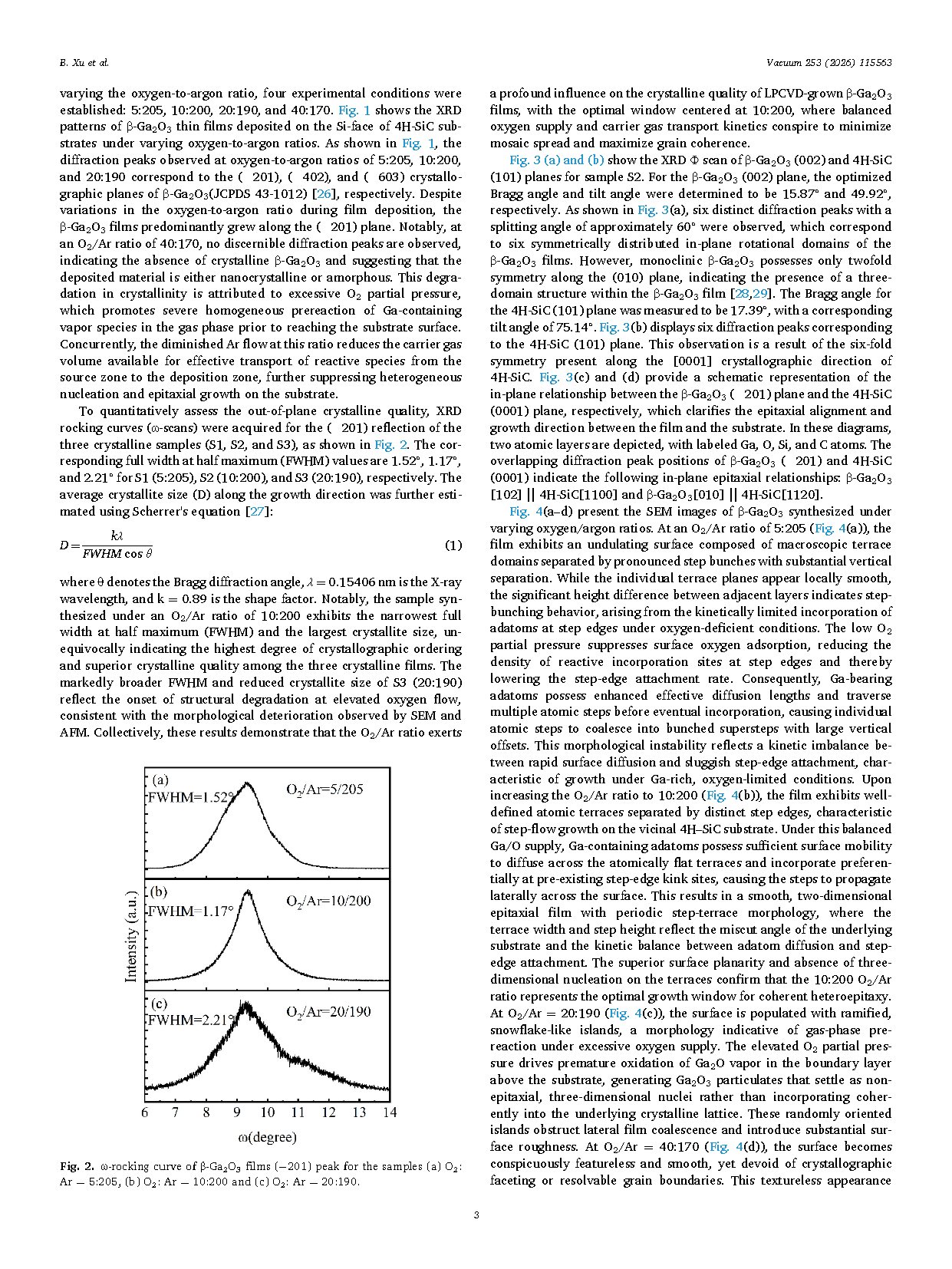
Fig. 2 ω-rocking curve of β-Ga₂O₃ films (-201) peak for the samples (a) O₂:Ar =5:205, (b) O₂: Ar=10:200 and (c) O₂: Ar=20:190
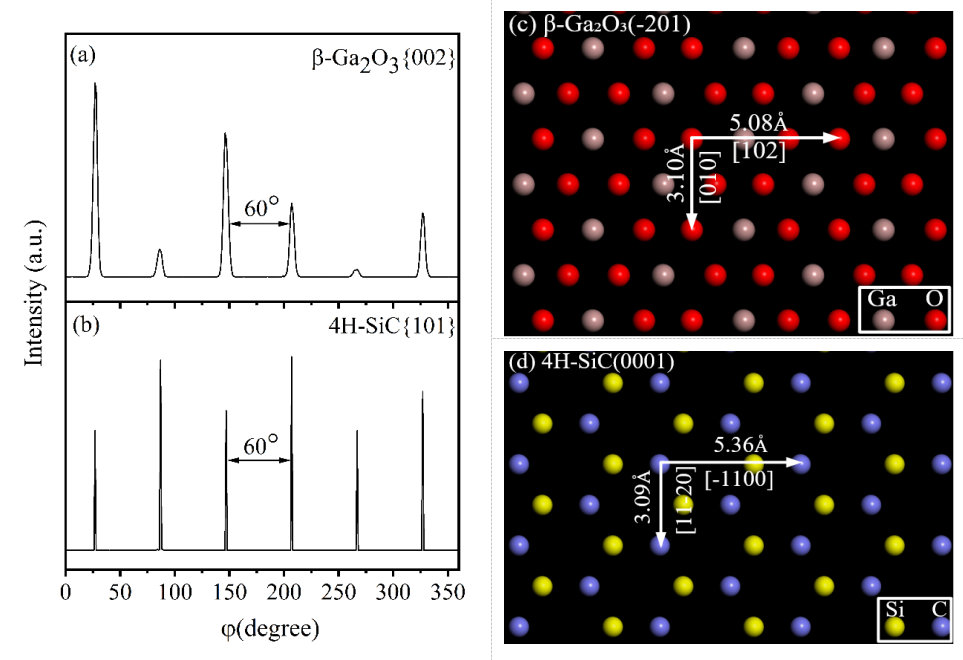
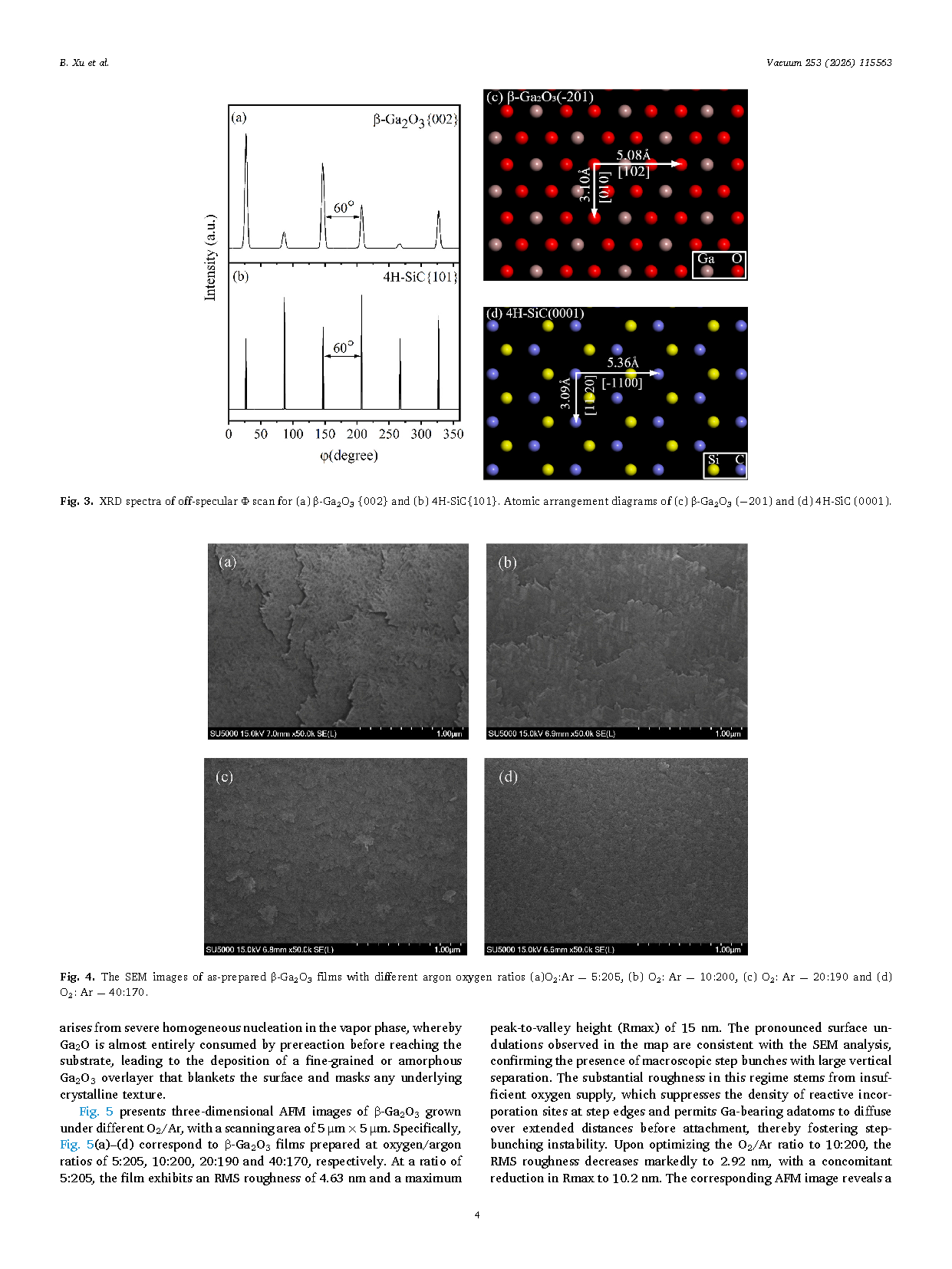
Fig. 3. XRD spectra of off-specular Φ scan for (a) β-Ga₂O₃ {002} and (b) 4H-SiC{101}. Atomic arrangement diagrams of (c) β-Ga₂O₃ (-201) and (d) 4H-SiC (0001).
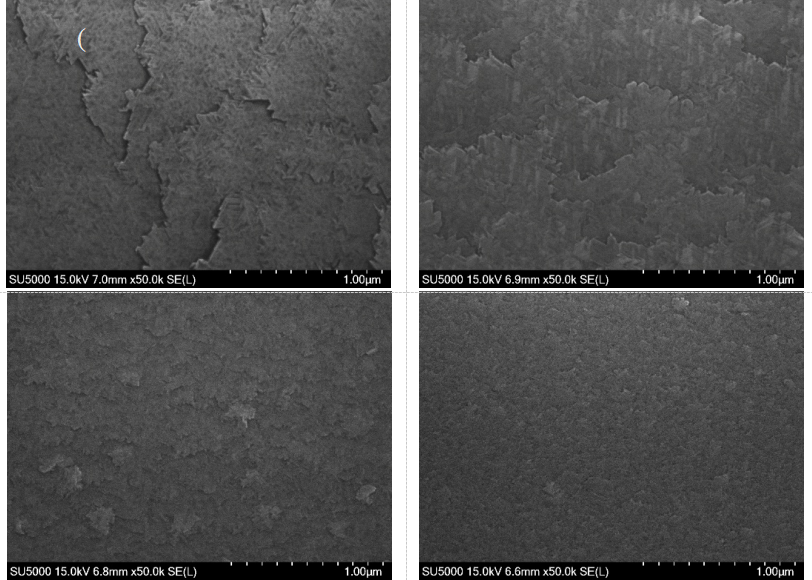
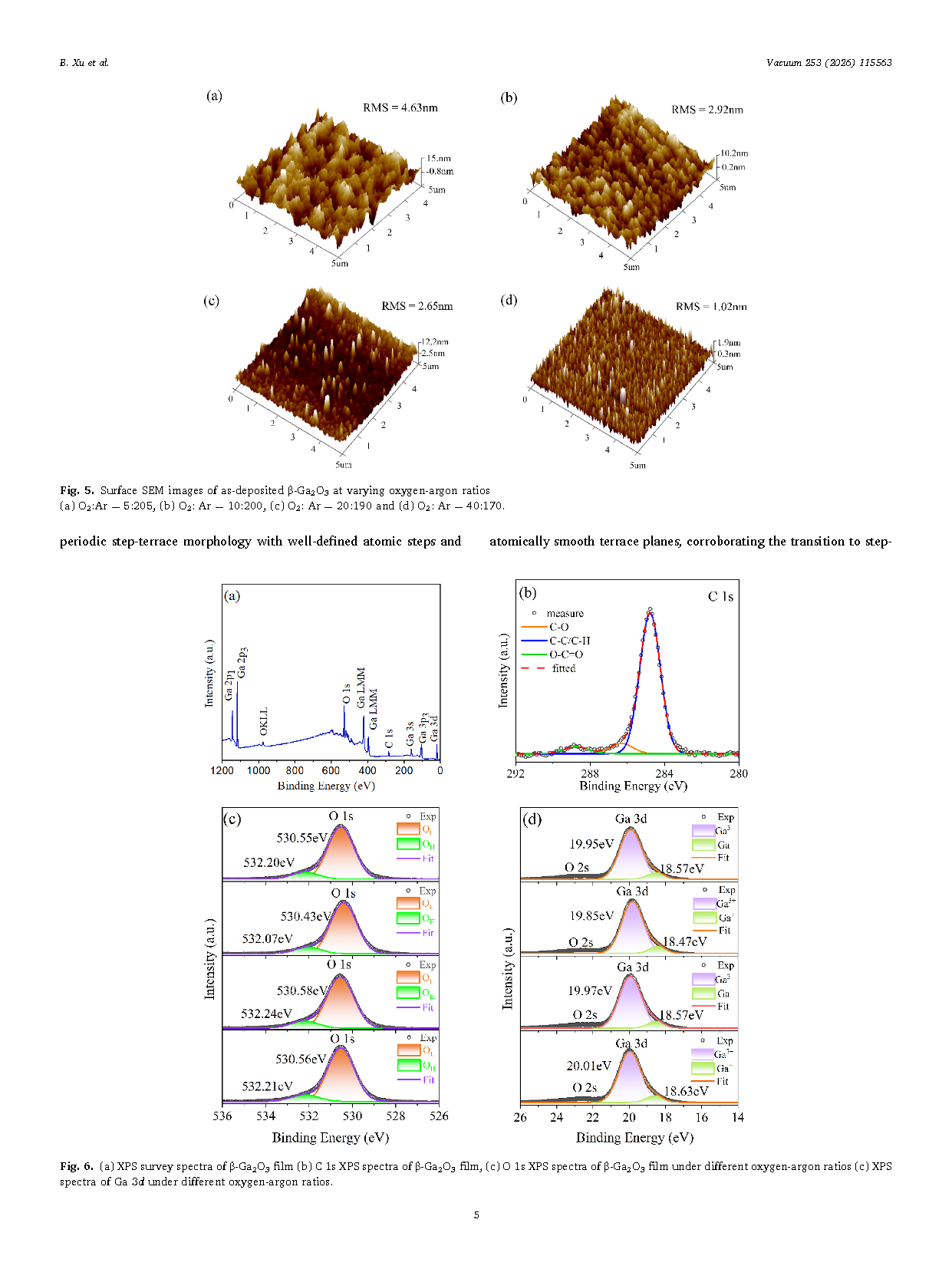
Fig.4. The SEM images of as-prepared β-Ga₂O₃ films with different argon oxygen ratios (a)O₂:Ar =5:205, (b) O₂: Ar=10:200, (c) O₂: Ar=20:190 and (d) O₂: Ar=40:170.
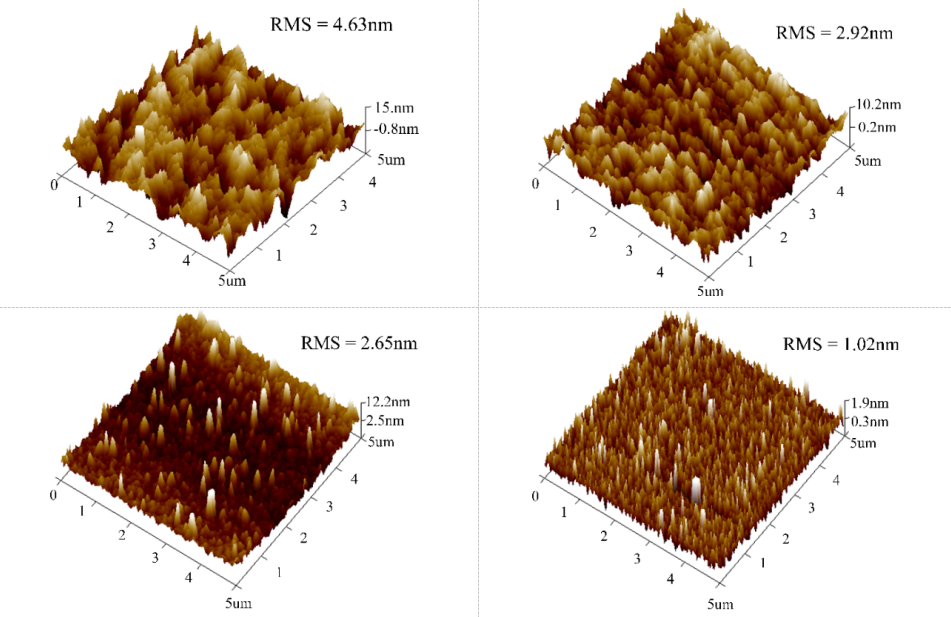
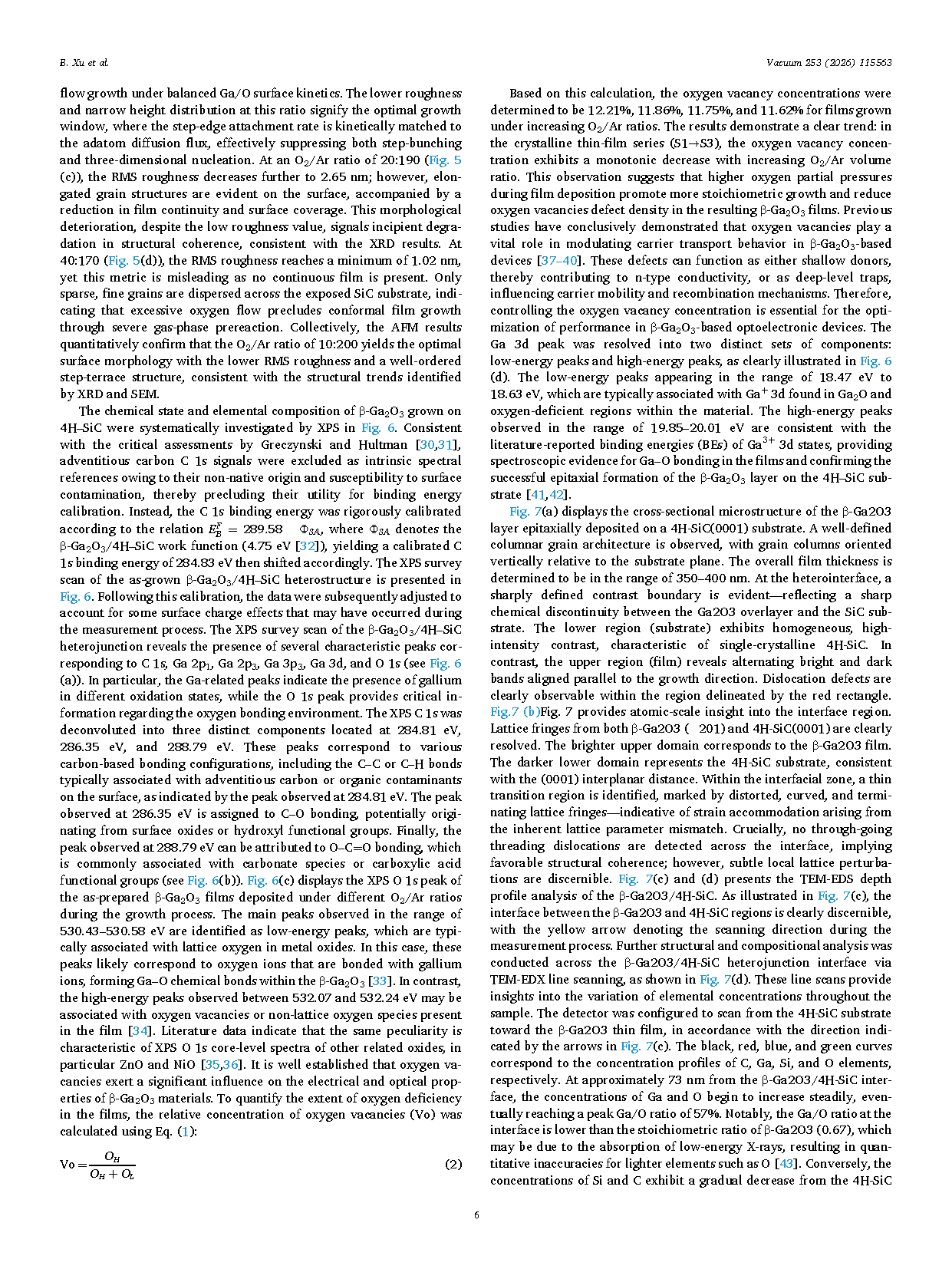
Fig. 5. Surface AFM images of as- deposited β-Ga₂O₃ at varying oxygen-argon ratios (a) O₂:Ar =5:205, (b) O₂: Ar=10:200, (c) O₂: Ar=20:190 and (d) O₂: Ar=40:170.
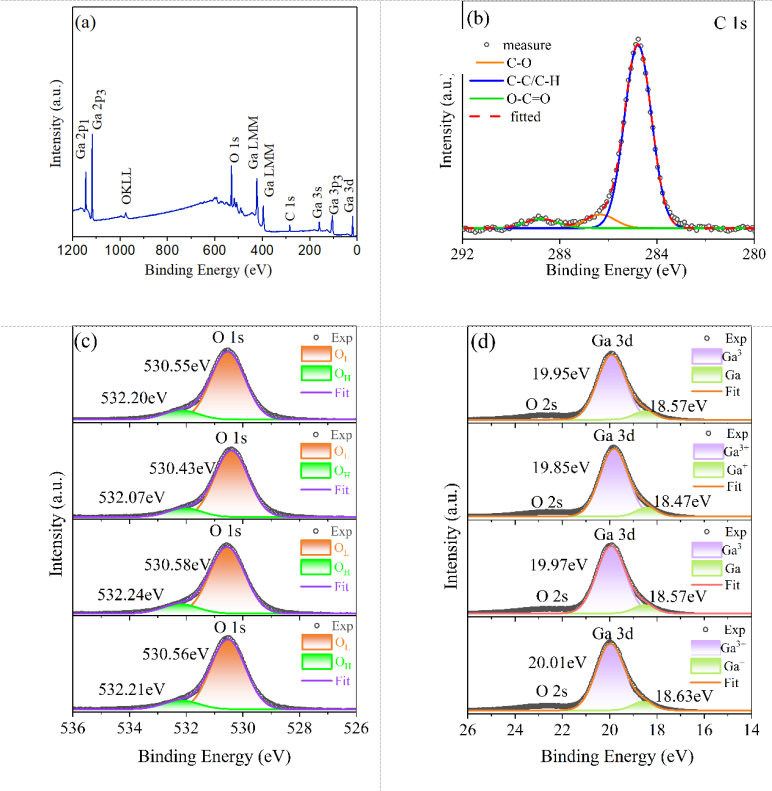
Fig. 6. (a) XPS survey spectra of β-Ga₂O₃ film (b) C 1s XPS spectra of β-Ga₂O₃ film, (c) O 1s XPS spectra of β-Ga₂O₃ film under different oxygen-argon ratios (c) XPS spectra of Ga 3d under different oxygen-argon ratios
DOI:
doi.org/10.1016/j.vacuum.2026.115563
Instruction
Official Account

Cooperation
Top