

Wide-bandgap and ultra-wide-bandgap semiconductors represent a critical pathway for China to achieve semiconductor self-reliance and overcome key technological challenges. The 15th Five-Year Plan highlights the need to “accelerate the upgrading of the wide-bandgap semiconductor industry and promote the industrialization of ultra-wide-bandgap semiconductors such as gallium oxide and diamond,” providing strategic guidance for the future development of China’s ultra-wide-bandgap semiconductor sector.
Driven by national strategies, Shanghai has been accelerating its deployment in the wide-bandgap and ultra-wide-bandgap semiconductor fields, continuously improving its innovation ecosystem across key areas including materials, devices, research platforms, industrial funds, and industrial collaboration networks. Since 2025, Shanghai has launched initiatives for the development of future industrial clusters in ultra-wide-bandgap semiconductors, while establishing key laboratories, proof-of-concept centers, industrial funds, and innovation alliances to build an internationally competitive wide-bandgap and ultra-wide-bandgap semiconductor industry cluster. In 2026, the Lingang Special Area further released the Action Plan for Building a Future Industrial Cluster of Fourth-Generation Semiconductors (2026–2028), identifying ultra-wide-bandgap semiconductor materials including gallium oxide, diamond, and aluminum nitride as key development directions. The plan aims to establish a full-chain innovation ecosystem covering fundamental research, technological breakthroughs, engineering validation, commercialization, and industrial applications.
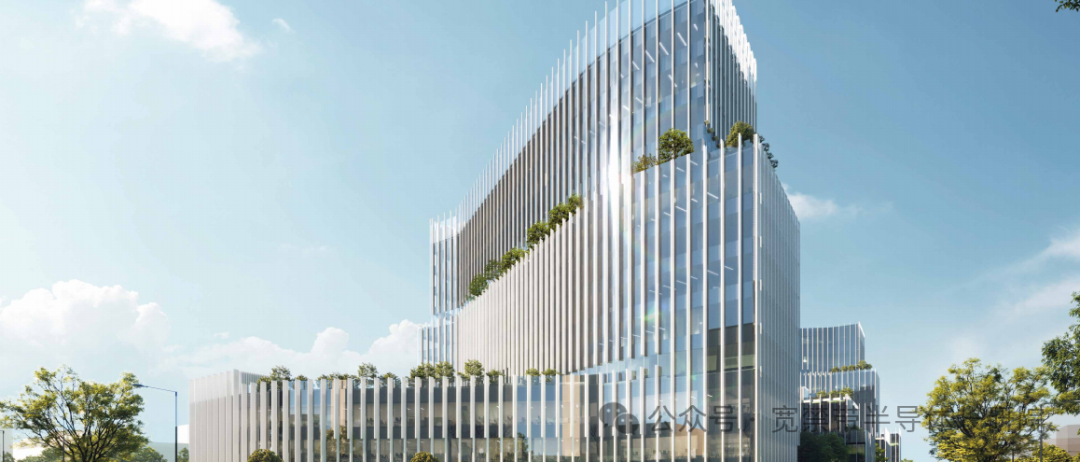
As an important component of Shanghai’s wide-bandgap semiconductor innovation ecosystem, the Yangtze River Delta Research Institute for Wide-Bandgap Semiconductors, located in Qingpu, Shanghai, is jointly established by the Qingpu District Government and Xidian University and led by Qingpu Science and Technology Innovation Group. Leveraging the strategic advantages of the Yangtze River Delta region, the institute adopts a development model supported by four key foundations—regional advantages, scientific innovation, capital support, and operational capabilities—to drive industrial resources from aggregation and integration toward deep ecosystem synergy.
1 Regional Foundation
Located in Qingpu, the institute benefits from multiple national strategic platforms, including the Yangtze River Delta Integrated Development Demonstration Zone, Hongqiao International Opening-up Hub, and the China International Import Expo (CIIE), providing a strategic geographical advantage. In 2025, Qingpu’s new-generation information technology industry generated annual revenue exceeding RMB 100 billion, with year-on-year growth surpassing 20%, creating a strong foundation for project implementation and industrial clustering.
2 Scientific Innovation Foundation
The institute is deeply supported by Xidian University’s National Engineering Research Center for Wide-Bandgap Semiconductor, the only national-level engineering research center of its kind in China, focusing on breakthroughs in key areas such as gallium nitride (GaN) and gallium oxide (Ga₂O₃). As one of China’s leading research institutions in wide-bandgap semiconductor technologies, Xidian University has maintained a strong position in gallium oxide materials and device research and is recognized as one of the most representative research organizations in China’s Ga₂O₃ field. Leveraging these research strengths, the institute will further enhance technological innovation and commercialization capabilities in emerging semiconductor materials such as Ga₂O₃. In addition, the center has accumulated more than 1,000 patents in third-generation semiconductor technologies, and Xidian University ranked first globally in both newly filed and granted GaN-related patents during the first three quarters of 2025.
3 Capital Foundation
The institute is supported by a RMB 1 billion compound semiconductor industrial fund, covering the entire development cycle from early-stage incubation to expansion. It has also established partnerships with more than 10 investment institutions across early, growth, and later stages, forming a continuously advancing capital support ecosystem.
4 Operational Foundation
The institute’s operation team specializes in technology commercialization and enterprise incubation, establishing an integrated service system covering proof-of-concept validation, pilot-scale development, enterprise incubation, and industrialization. More than 50% of team members have extensive experience in the semiconductor industry, with educational backgrounds including Fudan University and Xidian University.
Three-Stage Evolution of Industrial Elements: Creating a New Innovation Ecosystem
The four foundations continuously generate four core capabilities: regional attraction, scientific innovation drive, capital leadership, and ecosystem service capability. Through coordinated development and complementary advantages, these forces establish the institute’s unique competitive strengths.
Supported by these four foundations and four driving forces, the institute promotes the transformation of industrial resources through three progressive stages: aggregation → integration → ecosystem convergence, addressing the traditional gap between scientific research and industrial development.
From gathering technological, talent, capital, and policy resources, to connecting innovation chains, industrial chains, and financial chains, and ultimately achieving deep collaboration among diverse resources and industries, the institute is building a closed-loop ecosystem featuring strong research support, efficient commercialization channels, growth acceleration mechanisms, and industrial clustering capabilities.
With strong foundations, enhanced driving forces, and ecosystem-oriented development, the Yangtze River Delta Research Institute for Wide-Bandgap Semiconductors will establish a practical, sustainable, and replicable model for semiconductor innovation and industrial development. In the future, the institute will continue focusing on key wide-bandgap and ultra-wide-bandgap semiconductor technologies, optimizing industrial ecosystems, strengthening innovation capabilities, and contributing to the high-quality development of the Yangtze River Delta semiconductor industry and China’s pursuit of semiconductor self-reliance.
About the Research Institute
The Yangtze River Delta Research Institute for Wide-Bandgap Semiconductors (under preparation) is a comprehensive research and commercialization platform jointly established by the Qingpu District Government and Xidian University. Led by Qingpu Science and Technology Innovation Group and operated under a market-oriented model, the institute focuses on proof-of-concept validation, pilot-scale technology maturation, enterprise incubation, fund investment, and industrial commercialization. It aims to become a leading hub for semiconductor technology innovation and industrial development in the Yangtze River Delta region.
Instruction
Official Account

Cooperation
Top