


Researchers from Warsaw University of Technology, Institute of Plasma Physics and Laser Microfusion, Jagiellonian University and Leibniz Institute for Crystal Growth Berlin, as well as the Institute of Fundamental Technological Research, Polish Academy of Sciences have published an article titled “Dopant Molecularization in β-Ga₂O₃: Formation of N₂ under Nonequilibrium Conditions“ in The Journal of Physical Chemistry Letters.
Background
β-Ga₂O₃ is an ultrawide bandgap semiconductor with a band gap of ~ 4.8 eV, ultrahigh breakdown electric field and bulk single crystals available via melt growth, which acts as a core candidate for next-generation high-voltage power devices. The primary bottleneck restricting its application is the absence of stable and reliable p-type conductivity. Nitrogen has long been regarded as an ideal substitutional acceptor dopant due to similar valence state with oxygen. However, nonequilibrium doping methods such as ion implantation only introduce deep compensating defects and fail to generate hole conductivity. Previous works merely predict energy levels of substitutional nitrogen via theoretical calculation, without direct experimental characterization to reveal the actual bonding configuration of nitrogen inside the lattice, so the microscopic origin of doping failure remains unclear. Ion implantation generates dense defects including vacancies and interstitials near the surface, which greatly modify the thermodynamically stable dopant configurations. Yet there is a lack of systematic spectral evidence to clarify whether defect environments trigger nitrogen aggregation and N₂ molecular formation. In this work, temperature-dependent N K-edge XANES synchrotron characterization combined with first-principles multiple-scattering simulations are adopted to directly resolve local bonding structures of implanted nitrogen, and fully elaborate the dopant molecularization mechanism under nonequilibrium ion implantation, providing microscopic guidance for p-type doping optimization of wide-bandgap oxides.
Abstract
The microscopic fate of dopants introduced under nonequilibrium conditions remains largely unresolved in wideband gap oxides. Using temperature-dependent N K-edge X-ray absorption spectroscopy, we directly resolve the local bonding configuration of implanted nitrogen in (100) β-Ga₂O₃. The spectra are dominated by a sharp π* resonance characteristic of N ≡ N bonding that systematically intensifies upon annealing, providing a direct spectroscopic fingerprint of molecular nitrogen formation. First-principles calculations and multiple-scattering simulations reproduce these spectral features and identify molecular N₂ as the dominant dopant state. Rather than forming substitutional acceptors, implanted nitrogen evolves toward N₂-like configurations stabilized in defect-rich environments associated with local β→γ-like structural motifs. This behavior reflects a thermally driven reconfiguration of nitrogen within the damaged layer. These results demonstrate that dopant incorporation can proceed via molecularization pathways that bypass conventional substitutional doping, providing a general mechanism for dopant deactivation under nonequilibrium incorporation conditions in oxides.
Highlights
In-situ characterization via synchrotron temperature-dependent N K-edge XANES detects characteristic π* resonance of N≡N bond, which directly proves the formation of molecular N₂ inside β-Ga₂O₃ lattice;
Three DFT theoretical models (substitutional N, interstitial N-N pairs, vacancy-confined N₂) are compared, verifying molecular N₂ dominates after annealing and overturns the traditional substitutional acceptor doping theory;
Clarify that defect-rich regions generated by ion implantation and local γ-like lattice jointly stabilize N₂ clusters, revealing the microscopic origin of failed p-type doping by nitrogen;
XRD, RBS, SIMS measurements and DFT multiple-scattering simulations are combined to comprehensively verify the whole annealing-induced process of nitrogen aggregation and molecularization;
Propose a universal defect-assisted dopant molecularization deactivation mechanism for all wide-bandgap oxides, offering theoretical guidance for optimizing nonequilibrium doping technologies including ion implantation and plasma treatment.
Conclusion
Taken together, the structural, electronic, and spectroscopic data suggest a heterogeneous nitrogen speciation during the thermal evolution of the implanted layer. At lower temperatures, the system likely contains a heterogeneous mixture of configurations, including substitutional N_O defects predicted by first-principles as deep acceptors, interstitial N-N pairs (i5-i9), and vacancy-assisted molecular complexes (i5-i9-V_O). The coexistence of these configurations is consistent with the strongly nonequilibrium nature of ion implantation and the broad distribution of defect environments created in the damaged layer, where both atomic and molecular configurations compete during thermal evolution. As the material is annealed, defect recombination and structural relaxation progressively favor the stabilization of molecular nitrogen species. Consequently, after annealing at temperatures approaching 725 °C, the nitrogen population becomes dominated by N₂-like configurations trapped within the oxide matrix, indicating a thermally driven transition from atomic to molecular dopant states. Combined with analogous observations of molecular N₂ formation in nitrogen-implanted ZnO, we hypothesize that dopant molecularization may represent a broader defect-assisted incorporation pathway in wide-band gap oxides subjected to nonequilibrium processing, rather than a phenomenon unique to β-Ga₂O₃.
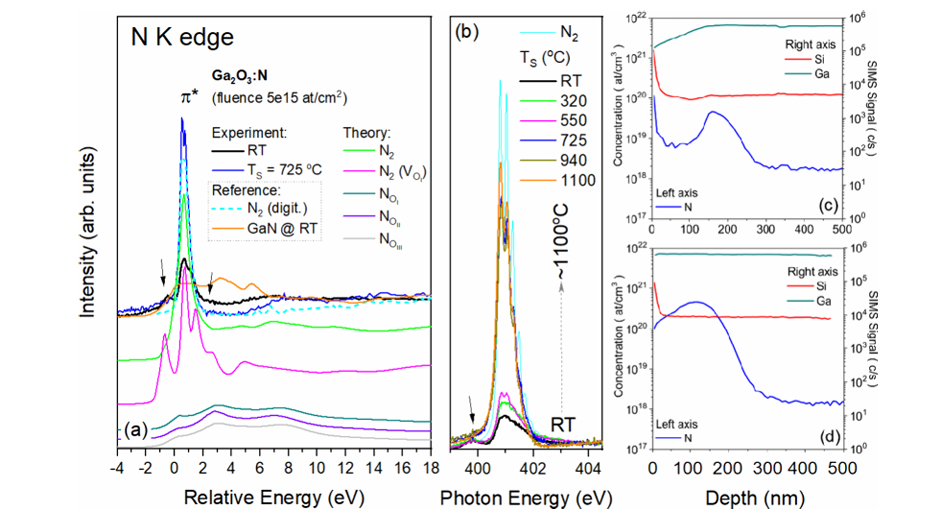
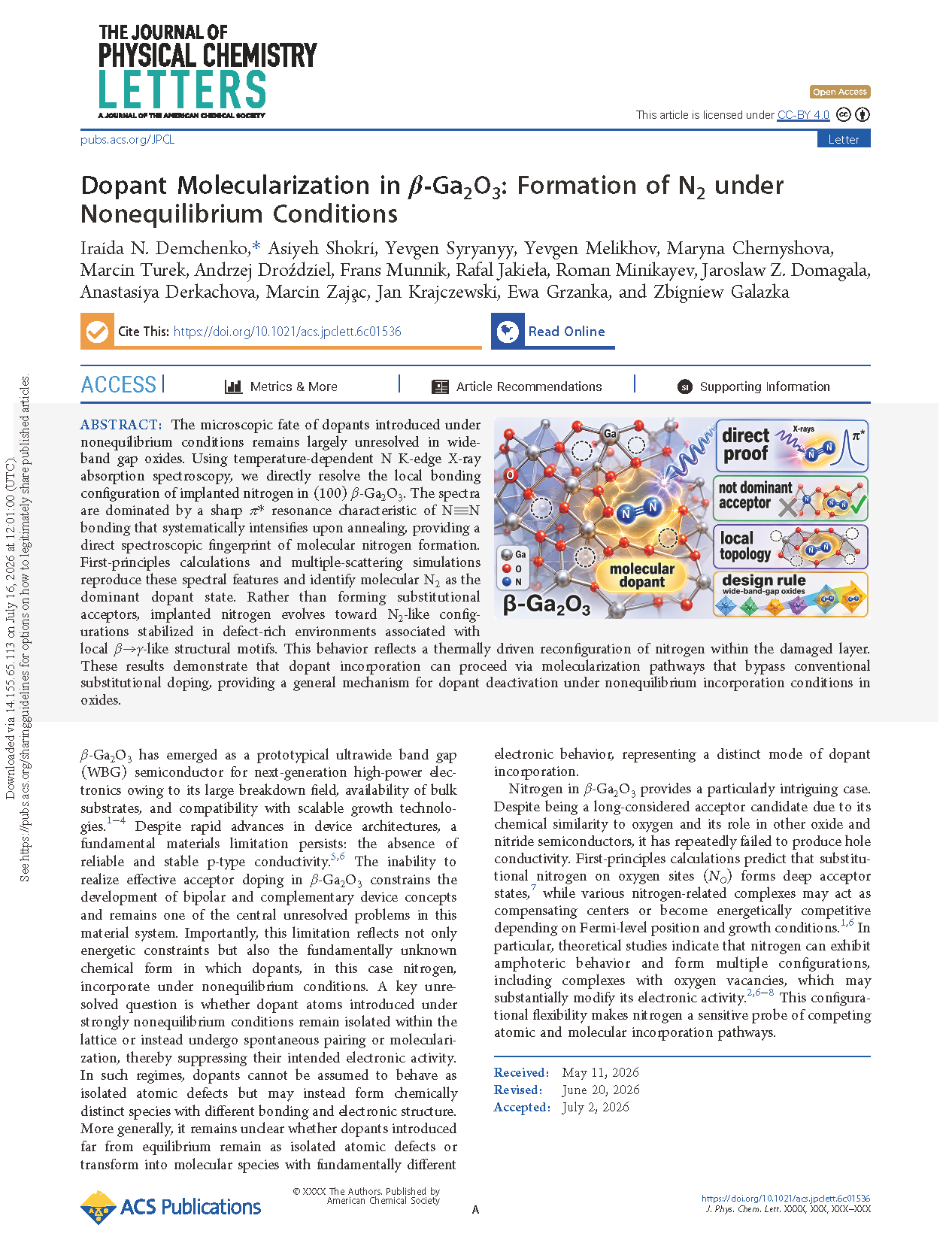
Figure 1 (a) Normalized N K-edge XANES spectra of β-Ga₂O₃: N with fluence 5 × 10¹⁵ atoms /cm² implanted at room temperature (RT) and annealed at 725 °C; (b) High-resolution XANES spectra covering the full range of annealing temperatures; (c) SIMS depth profiles of samples implanted at room temperature; (d) SIMS depth profiles of samples annealed at 1100 °C
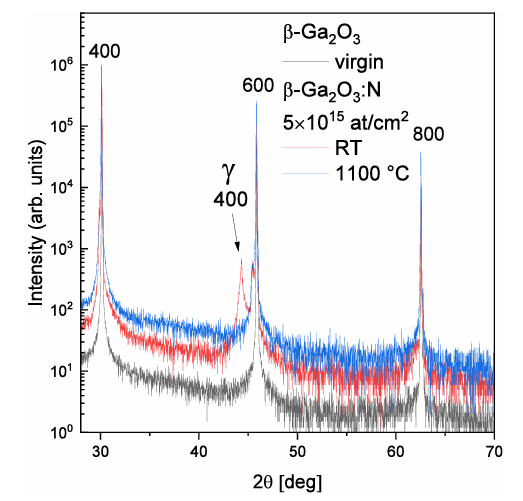
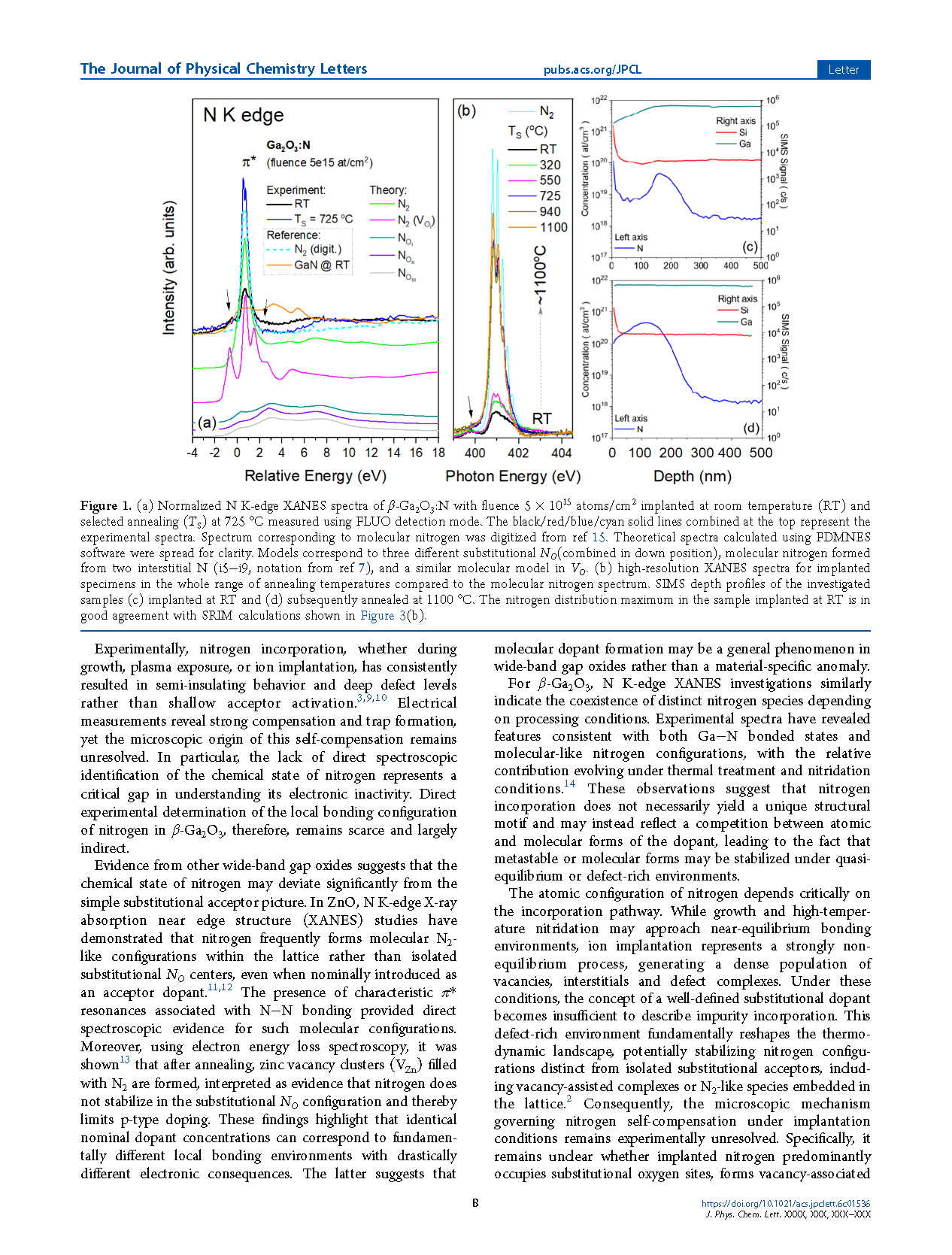
Figure 2 Wide-angle XRD patterns of N-implanted β-Ga₂O₃ under different annealing temperatures, including virgin single crystal, as-implanted RT sample and 1100 °C annealed sample; the arrow marks diffraction peak of γ-like phase
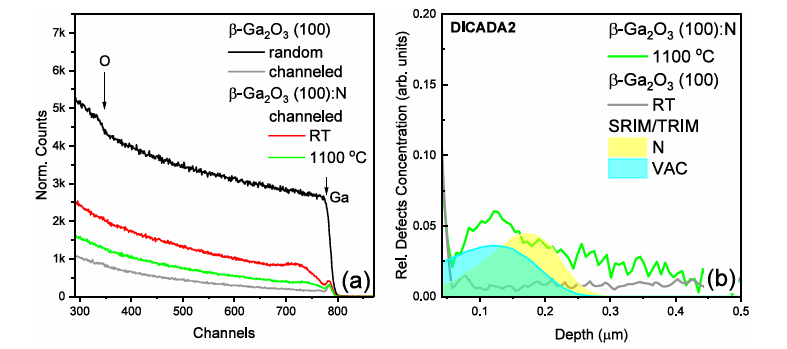
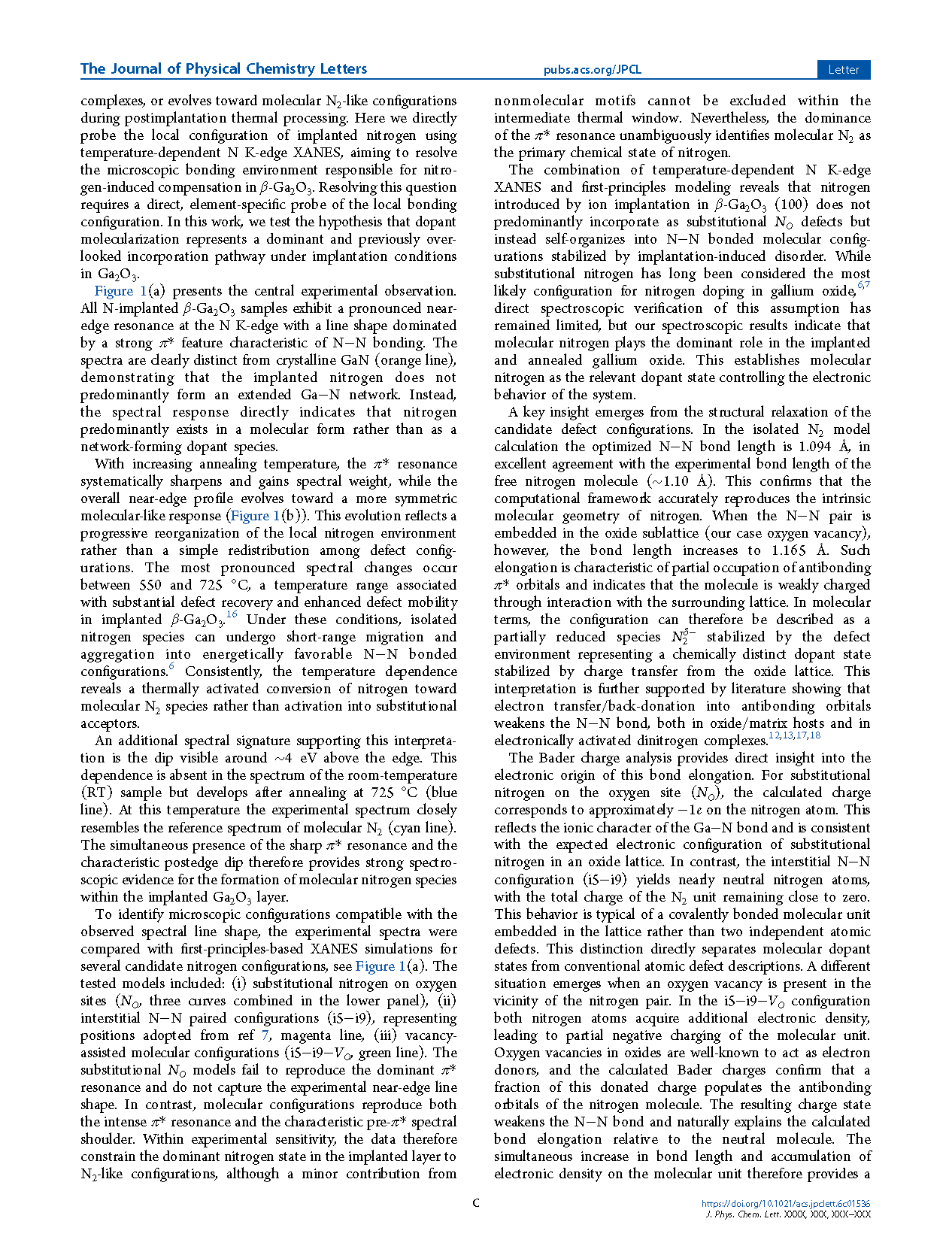
Figure 3 (a) Random and channeling-mode RBS spectra of virgin and N-implanted β-Ga₂O₃; (b) Depth distribution of relative defect concentration extracted from RBS, together with SRIM-simulated profiles of N and oxygen vacancies
DOI:
doi.org/10.1021/acs.jpclett.6c01536
Instruction
Official Account

Cooperation
Top