


Researchers from Xi’an University of Technology, University College London, Shenzhen Pinghu Laboratory, and the National Wide Bandgap Semiconductor Technology Innovation Center (Shenzhen) have published an article entitled “Ferroelectric switching in κ-Ga2O3 and polarization tuning in κ-Ga2O3/AlN heterostructures by first-principles and machine-learning molecular dynamics” in Computational Materials Science.
Background
κ-Ga2O3 is an ultra-wide-bandgap semiconductor with a non-centrosymmetric orthorhombic structure. Its wide bandgap, high breakdown field, and intrinsic spontaneous polarization make it attractive for high-temperature electronics, radio-frequency resonators, and polarization-engineered power devices. Its experimentally reported Curie temperature reaches approximately 690 K. When integrated with polar wide-bandgap semiconductors such as AlN, the ferroelectric polarization of κ-Ga2O3 and the polarization discontinuity across the heterointerface can jointly regulate two-dimensional electron gases (2DEGs) and two-dimensional hole gases (2DHGs), providing a promising platform for controlling high-density interfacial carriers. Several key scientific questions, however, remain to be addressed. Owing to computational cost and accessible timescale limitations, conventional first-principles methods cannot directly simulate ferroelectric switching dynamics in systems containing tens to hundreds of thousands of atoms, making it difficult to fully resolve the field-driven sliding and shearing of Ga–O sublayers. Moreover, using the zinc-blende structure as a nonpolar reference for wurtzite AlN may introduce spurious contributions to the polarization difference, leading to a substantial underestimation of its spontaneous polarization and affecting the quantitative evaluation of polarization at κ-Ga2O3/AlN interfaces. Effectively connecting static calculations of electronic structure and mechanical stability with large-scale simulations of dynamic ferroelectric switching therefore remains an important theoretical challenge. In addition, a systematic and unified comparison of interfacial polarization, carrier type, and sheet density across different κ-Ga2O3 polarization states and AlN substrate polarities is still needed to clarify the polarization-controlled formation of 2DEGs and 2DHGs.
Abstract
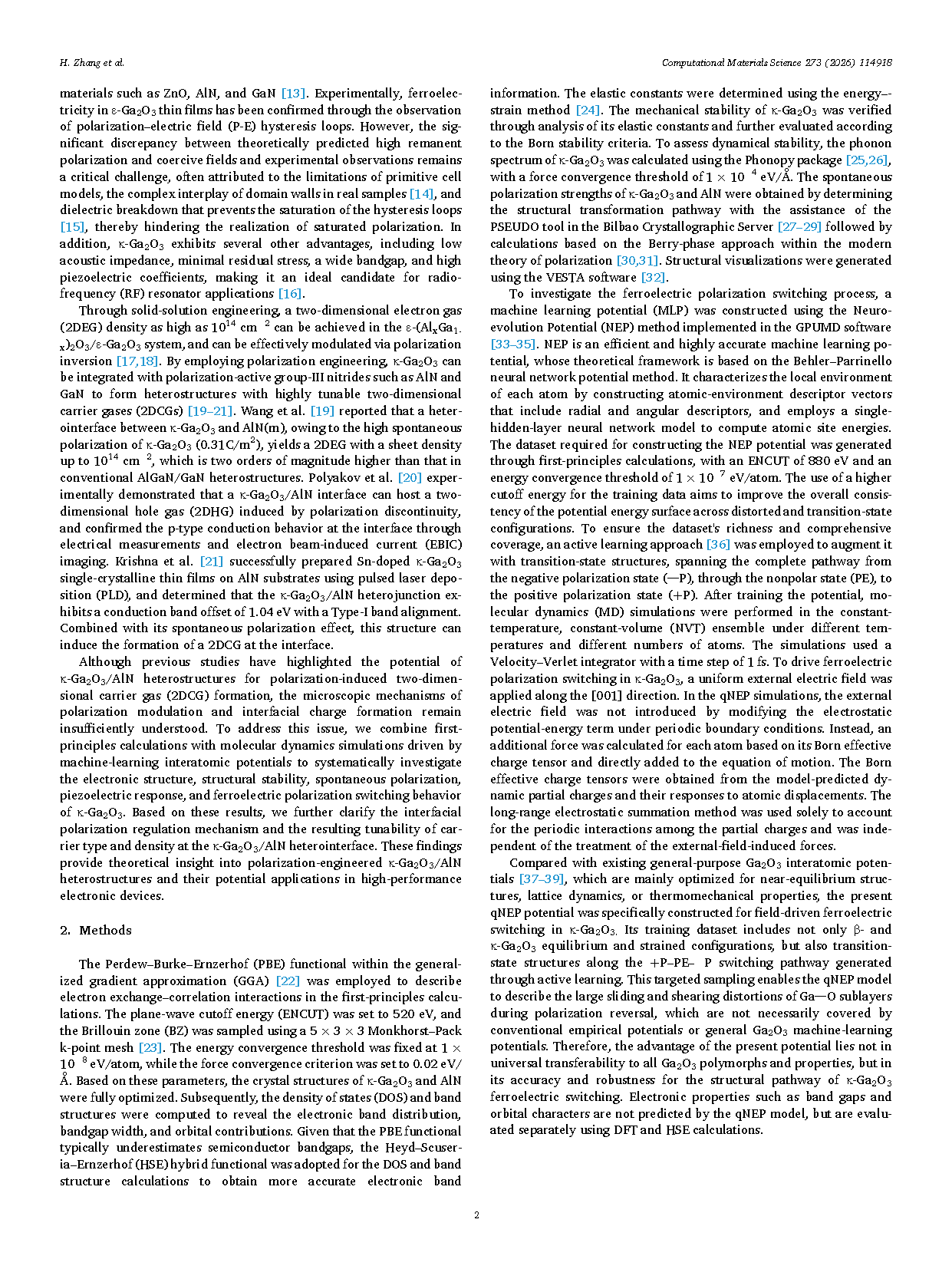
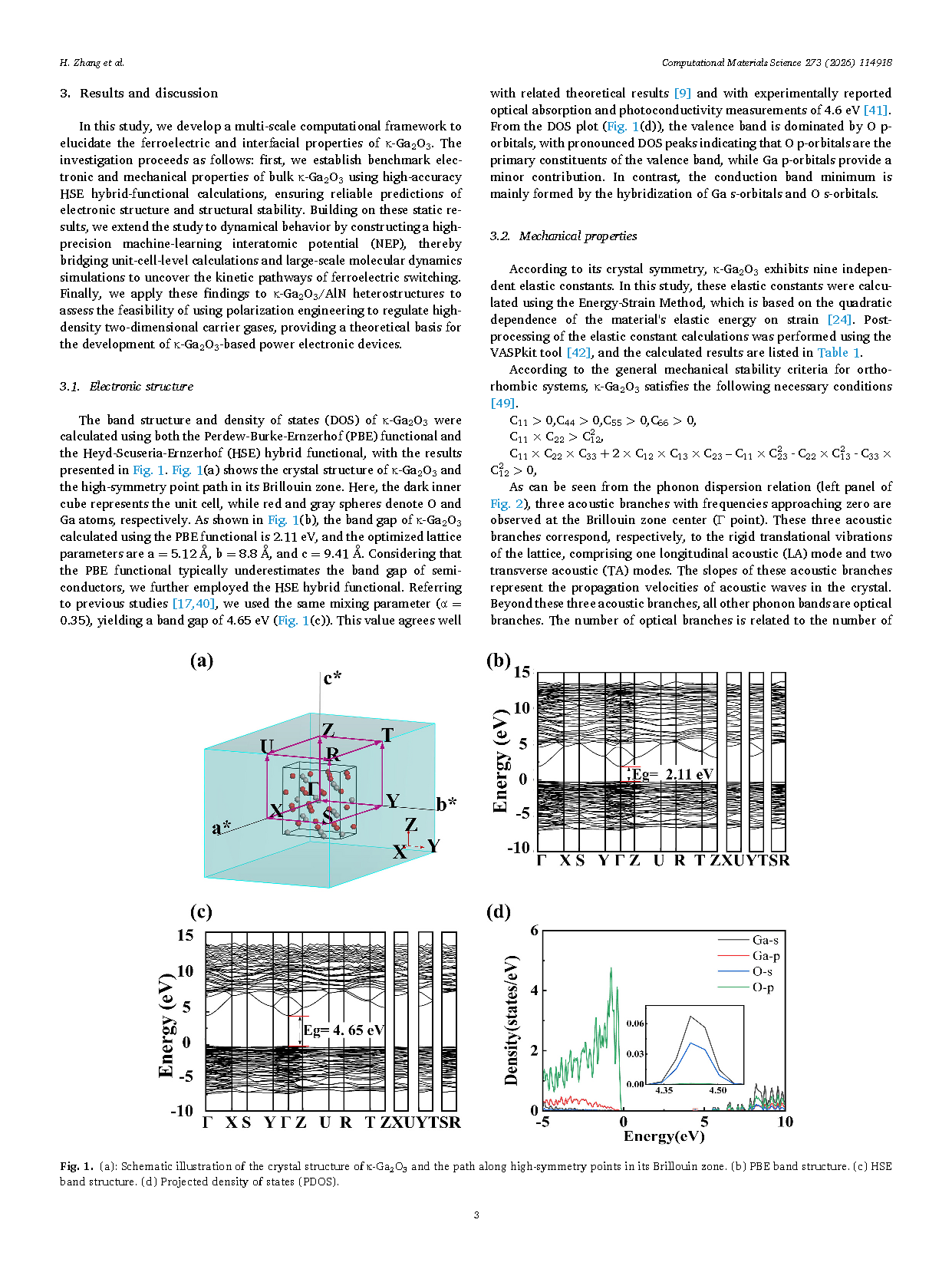
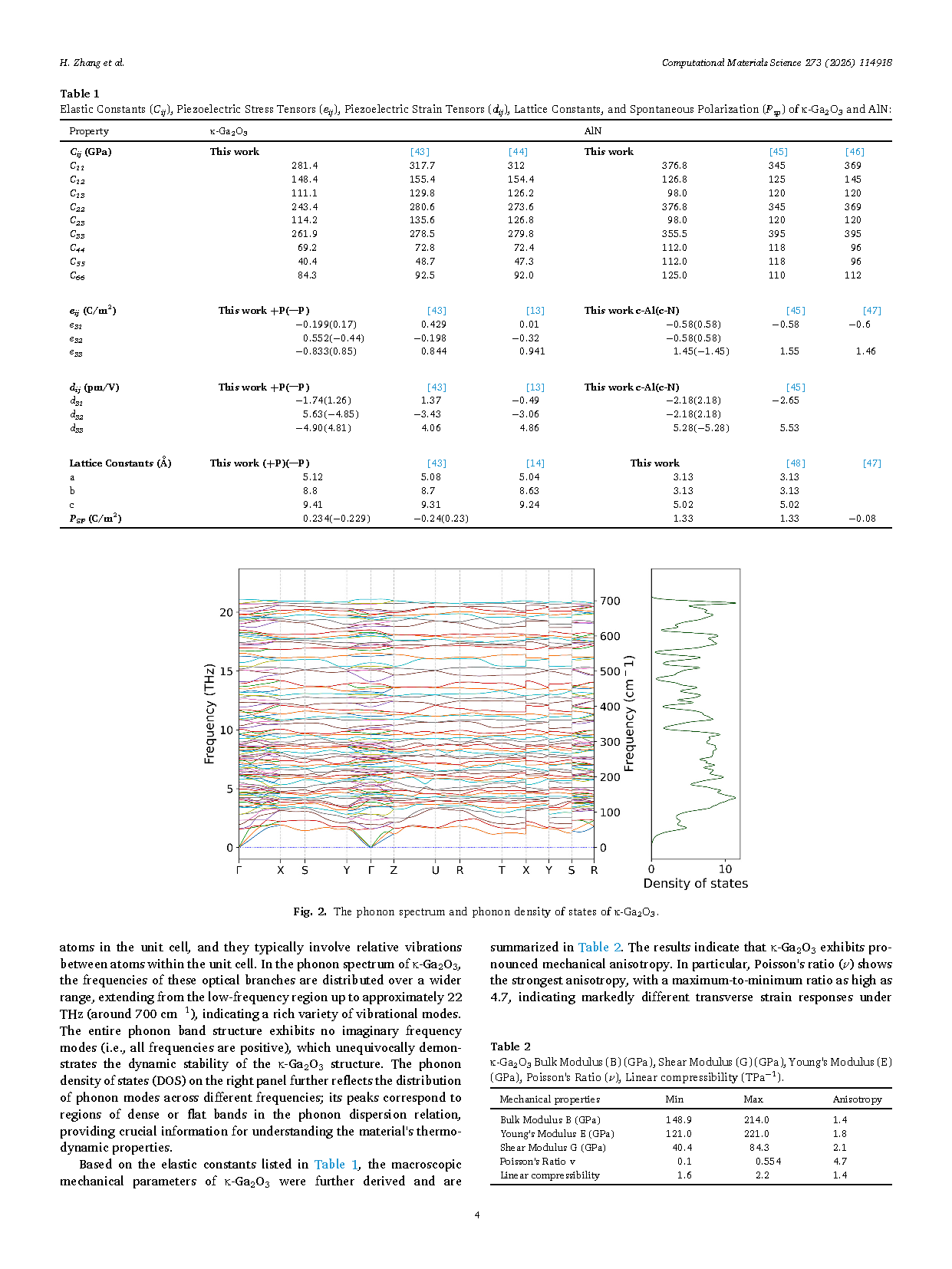
This study combines first-principles calculations with molecular dynamics (MD) simulations based on a machine-learning interatomic potential to investigate the electronic structure, structural stability, polarization properties, and interfacial polarization engineering of κ-Ga2O3. HSE hybrid-functional calculations yield a bandgap of 4.65 eV, in good agreement with experimental results. Density-of-states analysis shows that the valence band is dominated by O-p orbitals, whereas the conduction-band minimum arises from Ga-s and O-s orbitals. Elastic-constant and phonon-dispersion calculations confirm the mechanical and dynamical stability of κ-Ga2O3. The calculated spontaneous polarization of κ-Ga2O3 is 0.23 C/m². Using a layered hexagonal structure as the reference phase, the spontaneous polarization of AlN is revised to 1.33 C/m² and is confirmed to point toward the Al-polar surface. A machine-learning interatomic potential was further developed to simulate polarization switching in κ-Ga2O3. The simulations reveal a two-step switching mechanism: a strong electric field is required to overcome the initial switching barrier, whereas the subsequent polarization reversal can proceed under a substantially lower field once the system approaches the critical configuration. This distinction between the trigger field and the sustaining field provides new insight into ferroelectric switching in κ-Ga2O3. Furthermore, the type and density of interfacial carriers can be tuned by controlling the polarization direction of κ-Ga2O3 and the polarity of the AlN substrate. The κ-Ga2O3(–P)/AlN (c-Al) interface supports a two-dimensional electron gas with a maximum sheet density of 9.42 × 1014 cm⁻², whereas the κ-Ga2O3(+P)/AlN (c-N) interface supports a two-dimensional hole gas with a maximum sheet density of 9.44 × 1014 cm⁻².
Highlights
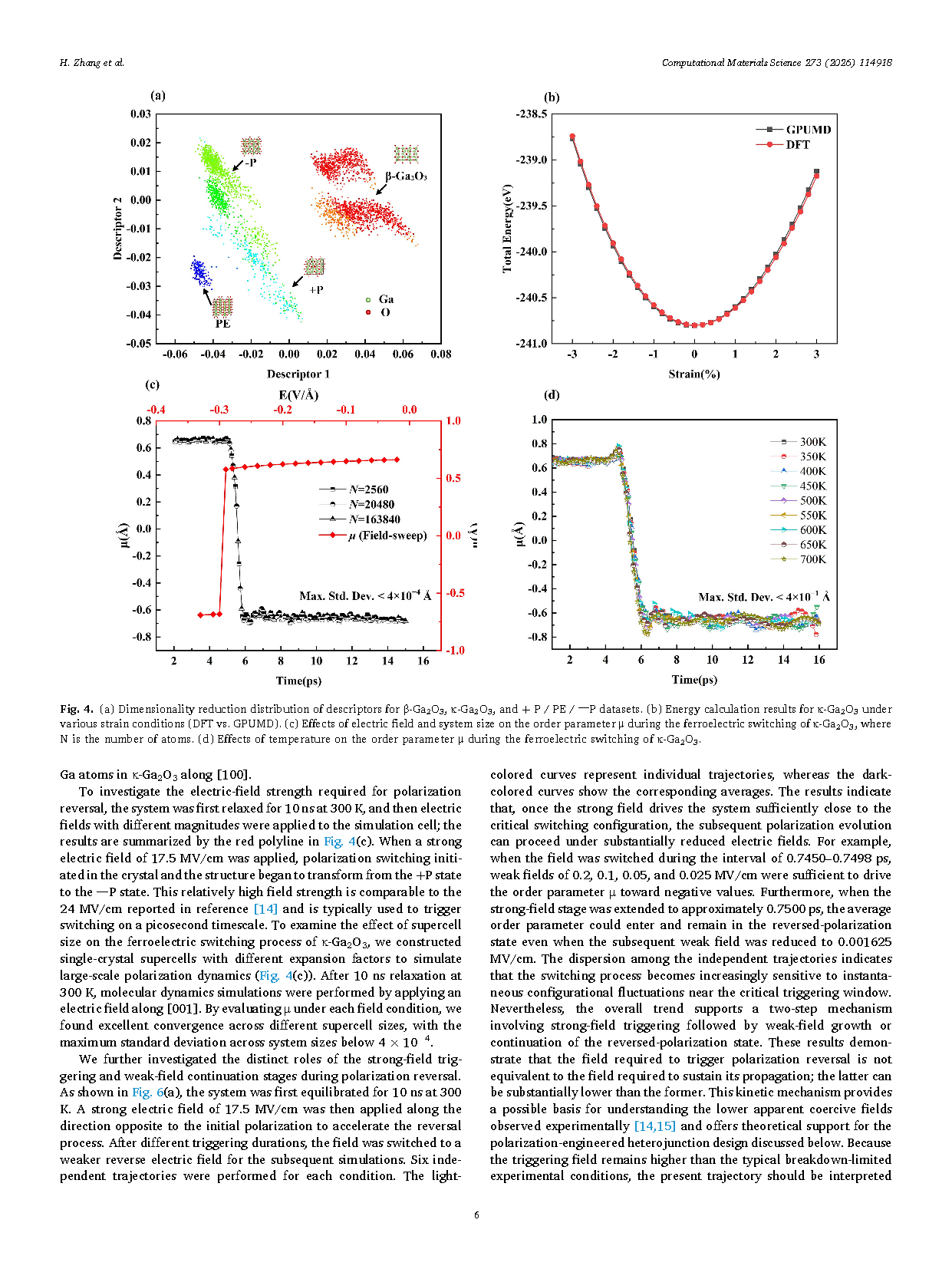
A qNEP machine-learning interatomic potential was specifically developed for large-scale simulations of ferroelectric switching in κ-Ga₂O₃, with the training dataset covering the +P, PE, and −P states and the entire transition pathway.
The spontaneous polarization of AlN was re-evaluated using a layered hexagonal structure as the nonpolar reference, thereby avoiding spurious polarization contributions associated with the zinc-blende reference.
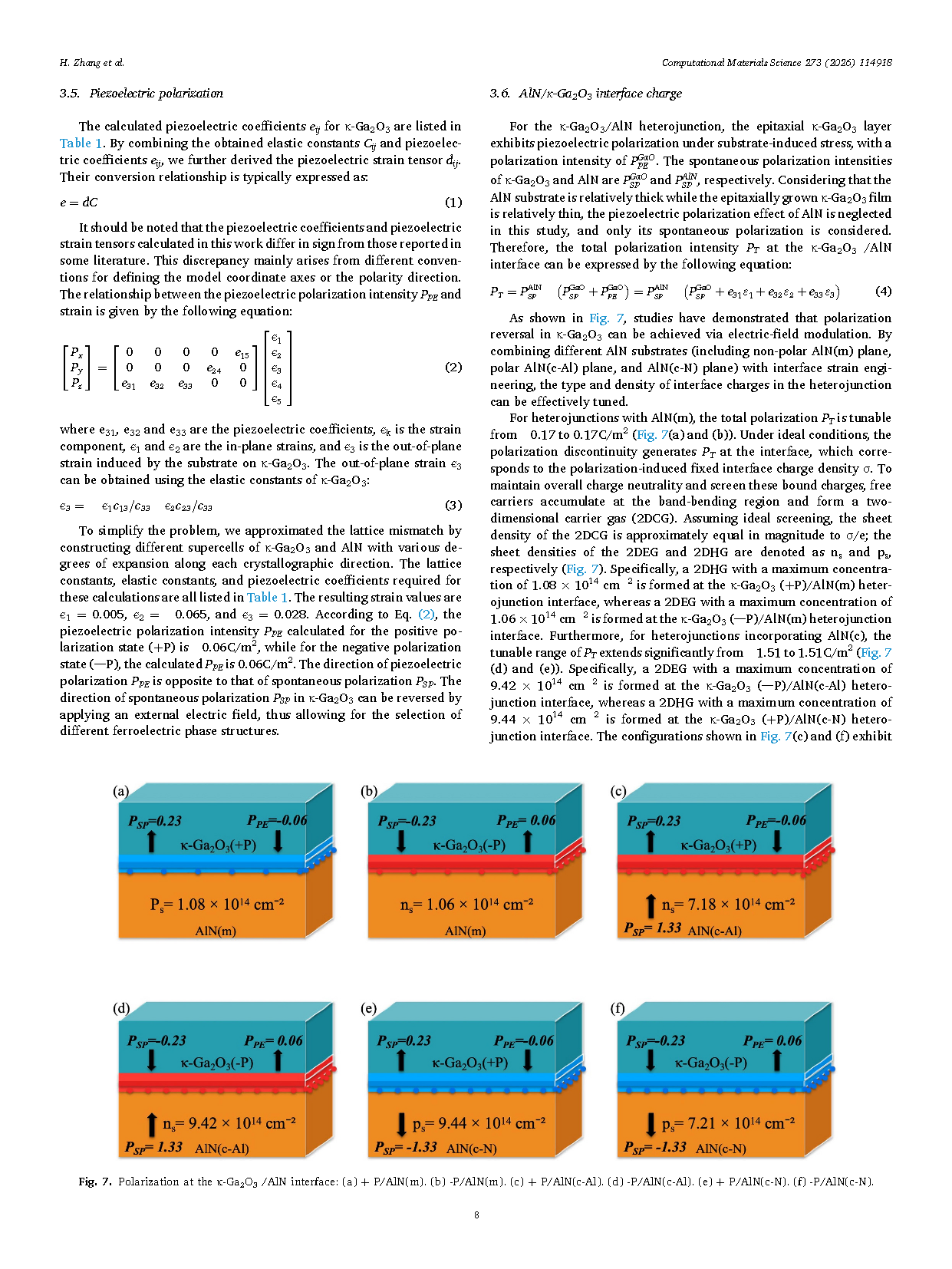
A two-stage ferroelectric switching mechanism involving strong-field triggering and weak-field continuation was revealed in κ-Ga₂O₃, clarifying the distinct roles of the triggering and sustaining fields.
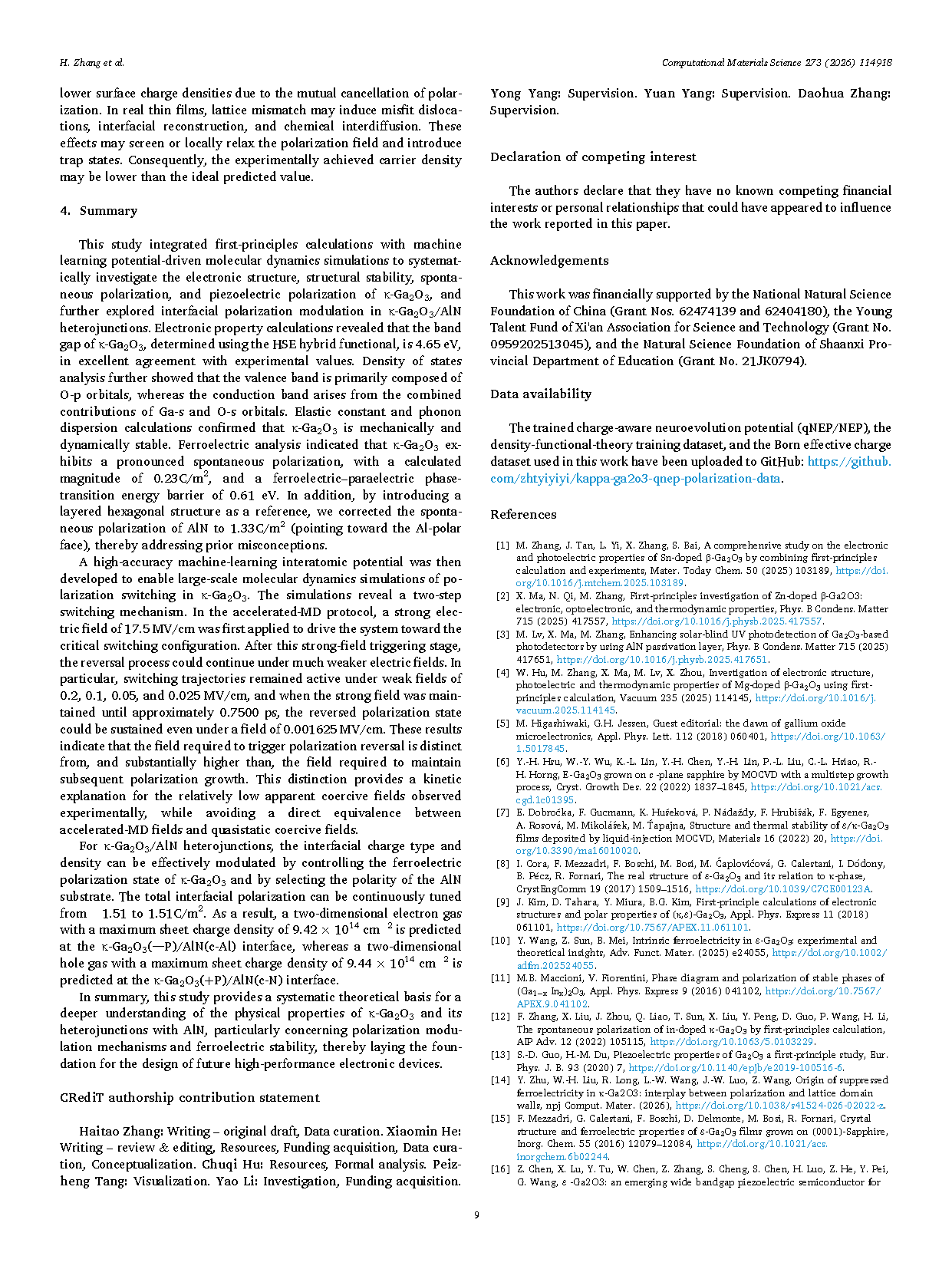
Interfacial polarization, carrier type, and ideal sheet density were systematically evaluated for different combinations of κ-Ga₂O₃ polarization states and AlN substrate polarities, enabling quantitative predictions of 2DEGs and 2DHGs.
Conclusion
This study integrated first-principles calculations with machine learning potential-driven molecular dynamics simulations to systematically investigate the electronic structure, structural stability, spontaneous polarization, and piezoelectric polarization of κ-Ga2O3, and further explored interfacial polarization modulation in κ-Ga2O3/AlN heterojunctions. Electronic property calculations revealed that the band gap of κ-Ga2O3, determined using the HSE hybrid functional, is 4.65 eV, in excellent agreement with experimental values. Density of states analysis further showed that the valence band is primarily composed of O-p orbitals, whereas the conduction band arises from the combined contributions of Ga-s and O-s orbitals. Elastic constant and phonon dispersion calculations confirmed that κ-Ga2O3 is mechanically and dynamically stable. Ferroelectric analysis indicated that κ-Ga2O3 exhibits a pronounced spontaneous polarization, with a calculated magnitude of 0.23 C/m², and a ferroelectric–paraelectric phase transition energy barrier of 0.61 eV. In addition, by introducing a layered hexagonal structure as a reference, we corrected the spontaneous polarization of AlN to 1.33 C/m² (pointing toward the Al-polar face), thereby addressing prior misconceptions.
A high-accuracy machine-learning interatomic potential was then developed to enable large-scale molecular dynamics simulations of polarization switching in κ-Ga2O3. The simulations reveal a two-step switching mechanism. In the accelerated-MD protocol, a strong electric field of 17.5 MV/cm was first applied to drive the system toward the critical switching configuration. After this strong-field triggering stage, the reversal process could continue under much weaker electric fields. These results indicate that the field required to trigger polarization reversal is distinct from, and substantially higher than, the field required to sustain its propagation. This distinction provides a kinetic explanation for the relatively low apparent coercive fields observed experimentally, while avoiding a direct equivalence between accelerated-MD fields and quasistatic coercive fields.
For κ-Ga2O3/AlN heterojunctions, the interfacial charge type and density can be effectively modulated by controlling the ferroelectric polarization state of κ-Ga2O3 and by selecting the polarity of the AlN substrate. The total interfacial polarization can be continuously tuned from −1.51 to 1.51 C/m². As a result, a two-dimensional electron gas with a maximum sheet charge density of 9.42 × 1014 cm⁻² is predicted at the κ-Ga2O3(–P)/AlN(c-Al) interface, whereas a two-dimensional hole gas with a maximum sheet charge density of 9.44 × 1014 cm⁻² is predicted at the κ-Ga2O3 (+P)/AlN(c-N) interface.
In summary, this study provides a systematic theoretical basis for a deeper understanding of the physical properties of κ-Ga2O3 and its heterojunctions with AlN, particularly concerning polarization modulation mechanisms and ferroelectric stability, thereby laying the foundation for the design of future high-performance electronic devices.
Project Support
This work was financially supported by the National Natural Science Foundation of China (Grant Nos. 62474139 and 62404180), the Young Talent Fund of Xi'an Association for Science and Technology (Grant No. 0959202513045), and the Natural Science Foundation of Shaanxi Provincial Department of Education (Grant No. 21JK0794).
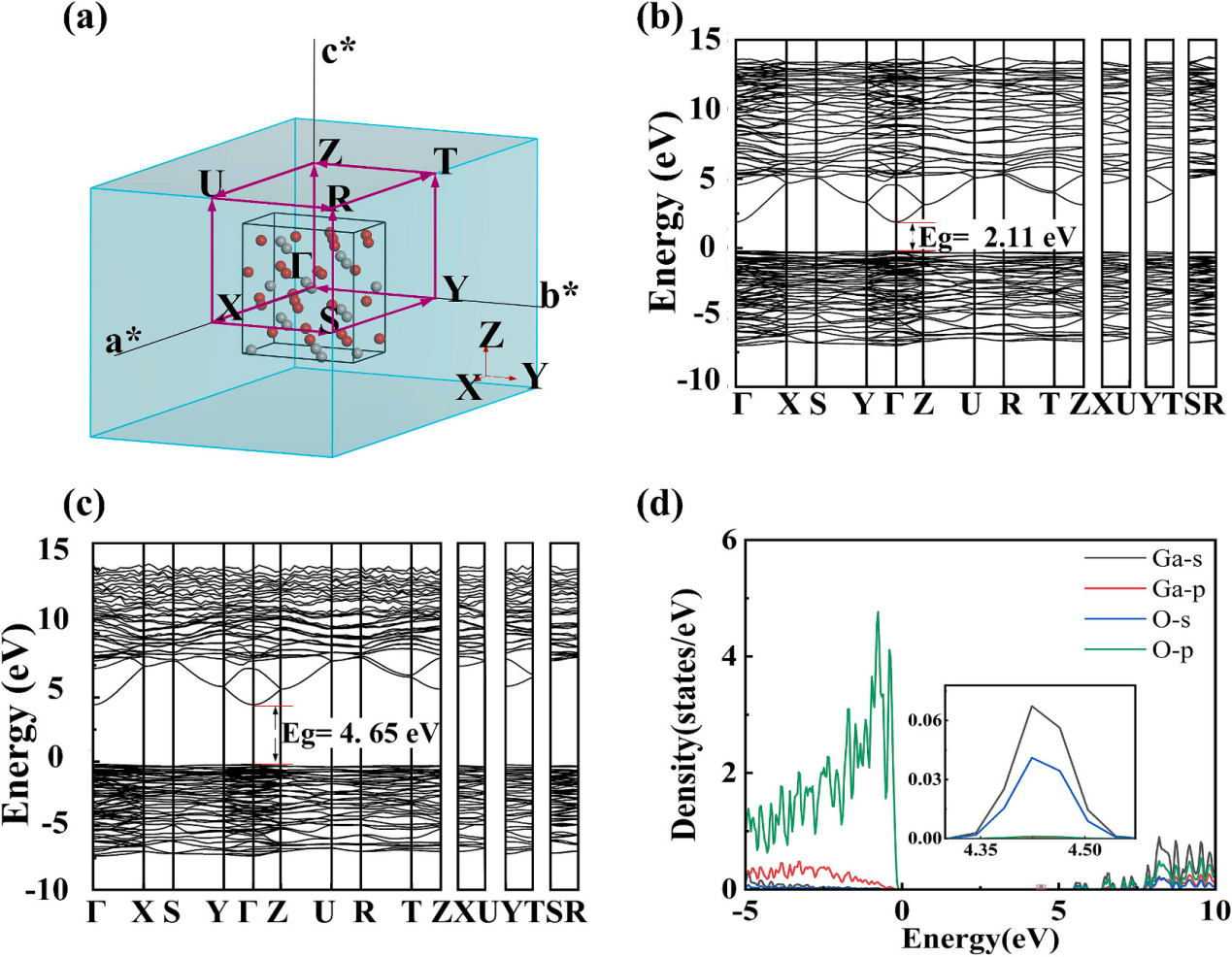
Fig. 1. (a) Schematic illustration of the crystal structure of κ-Ga2O3 and the path along high-symmetry points in its Brillouin zone. (b) PBE band structure. (c) HSE band structure. (d) Projected density of states (PDOS).
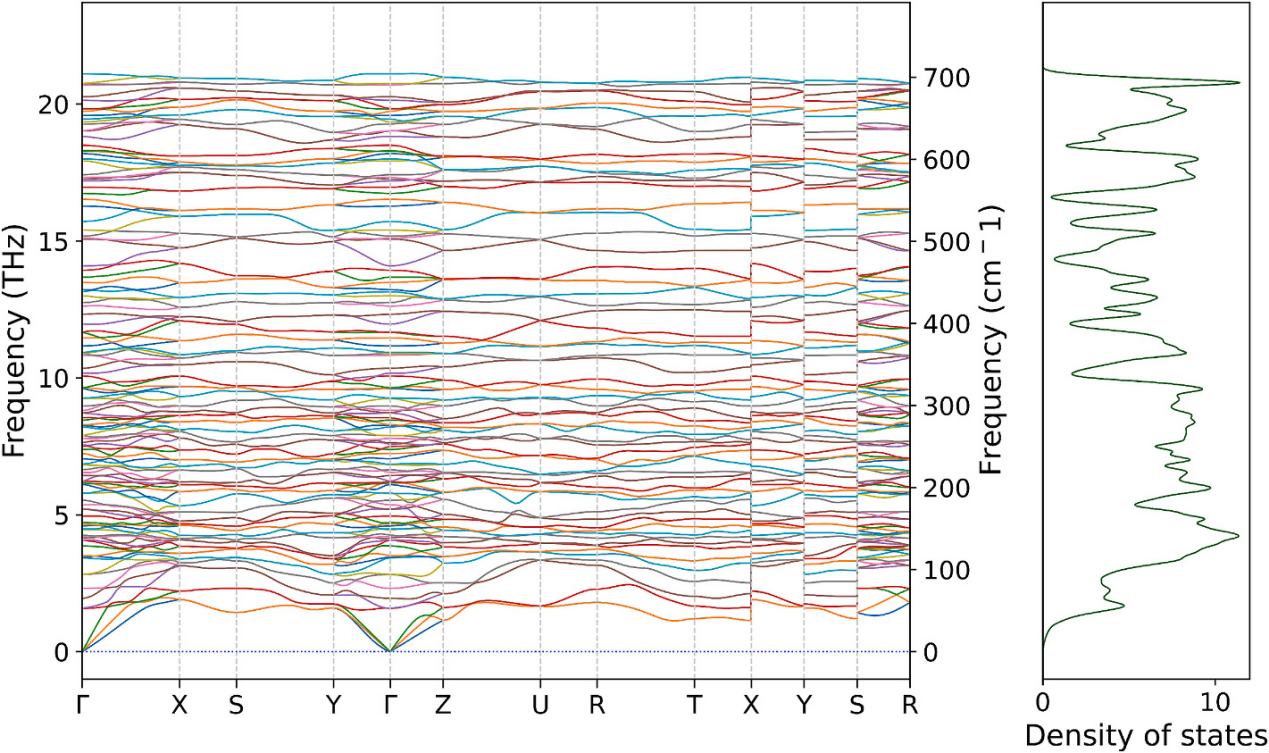
Fig. 2. The phonon spectrum and phonon density of states of κ-Ga2O3.
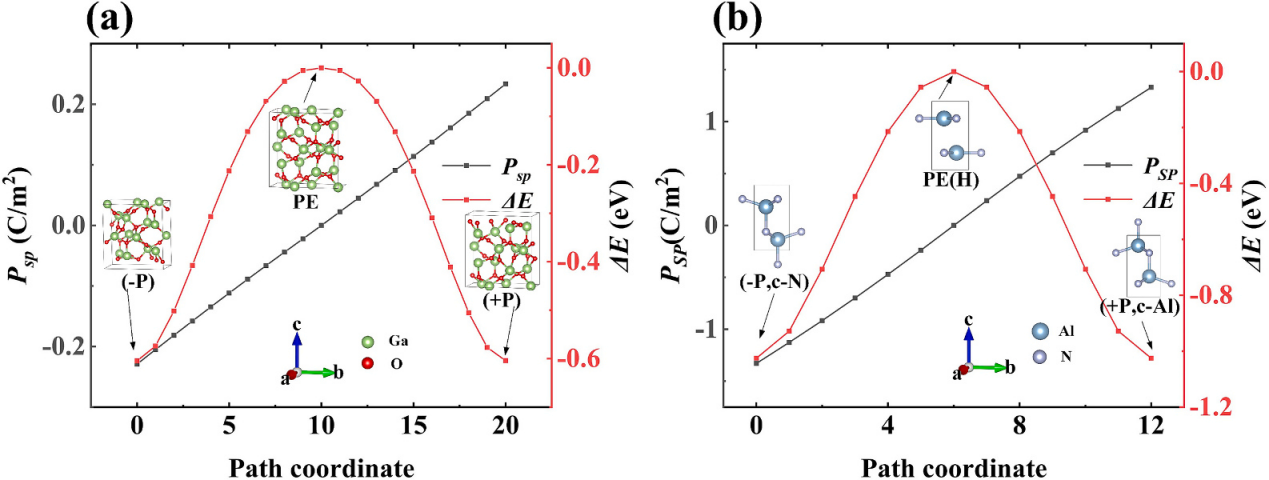
Fig. 3. Spontaneous polarization (Psp) and energy barrier (ΔE) are presented, with insets displaying the corresponding crystal structures for (a) κ-Ga2O3 and (b) AlN.
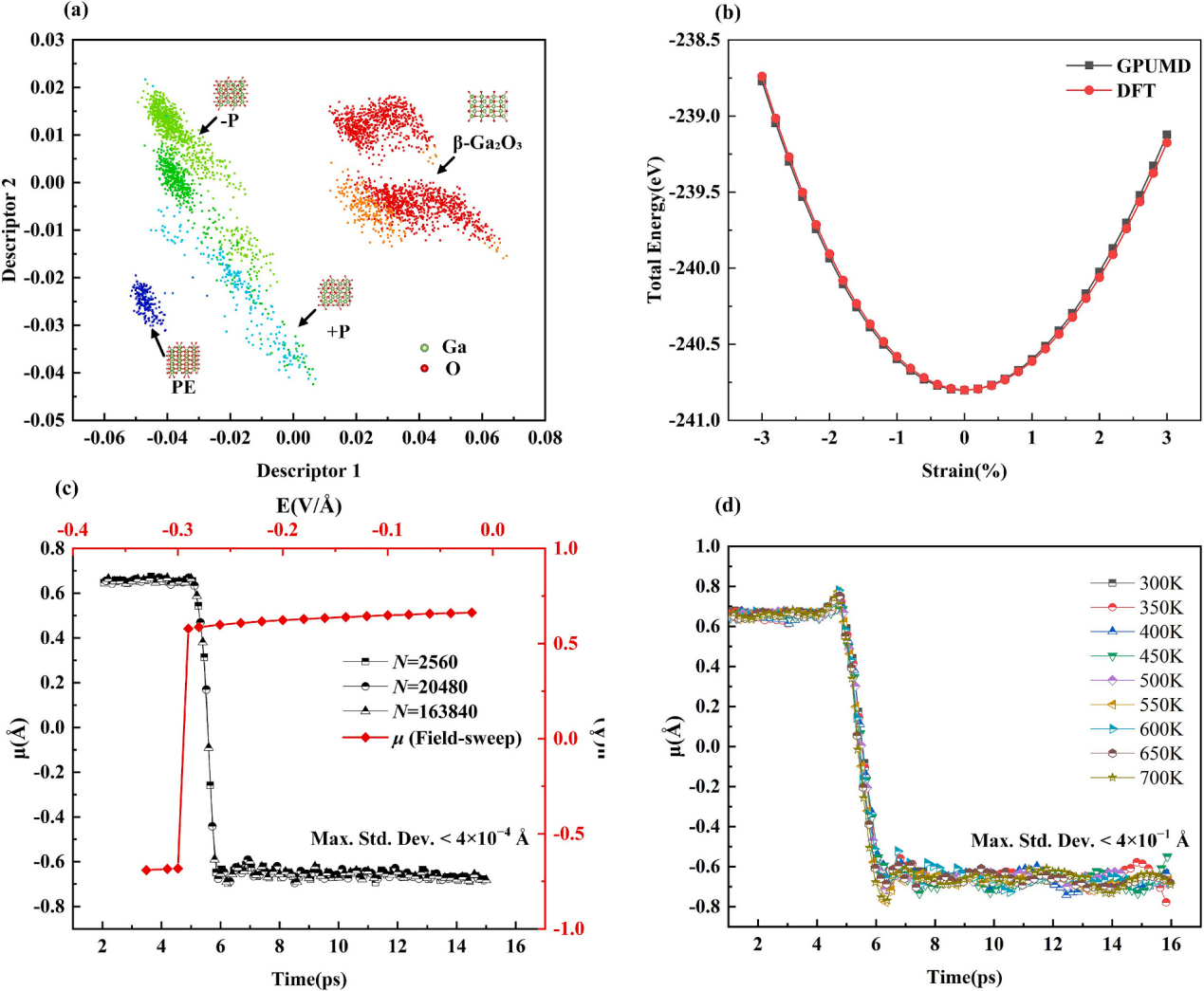
Fig. 4. (a) Dimensionality reduction distribution of descriptors for β-Ga2O3, κ-Ga2O3 + P / PE / –P datasets. (b) Energy calculation results for κ-Ga2O3 under various strain conditions (DFT vs. GPUMD). (c) Effects of electric field and system size on the order parameter μ during the ferroelectric switching of κ-Ga2O3 where N is the number of atoms. (d) Effects of temperature on the order parameter μ during the ferroelectric switching of κ-Ga2O3.
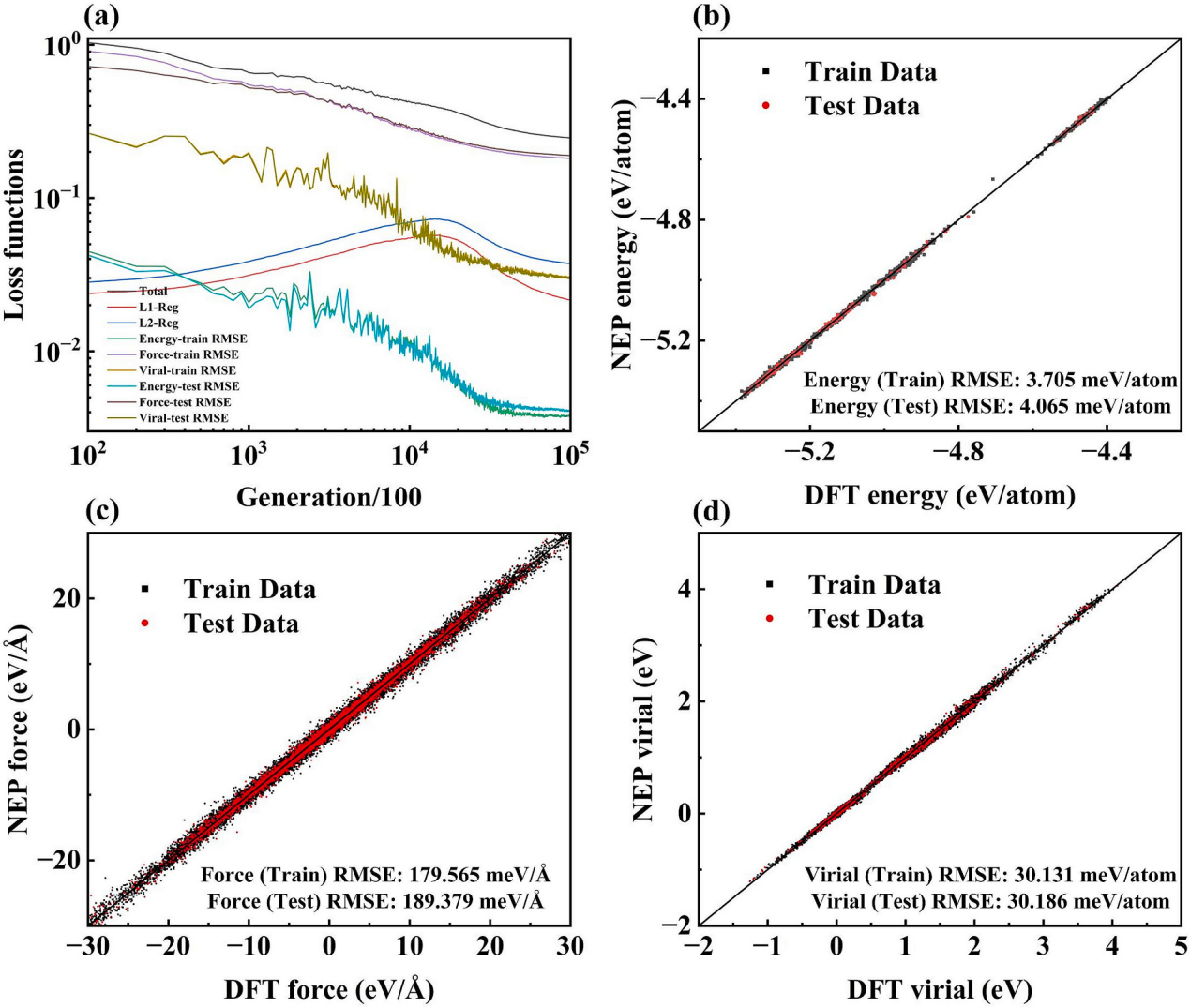
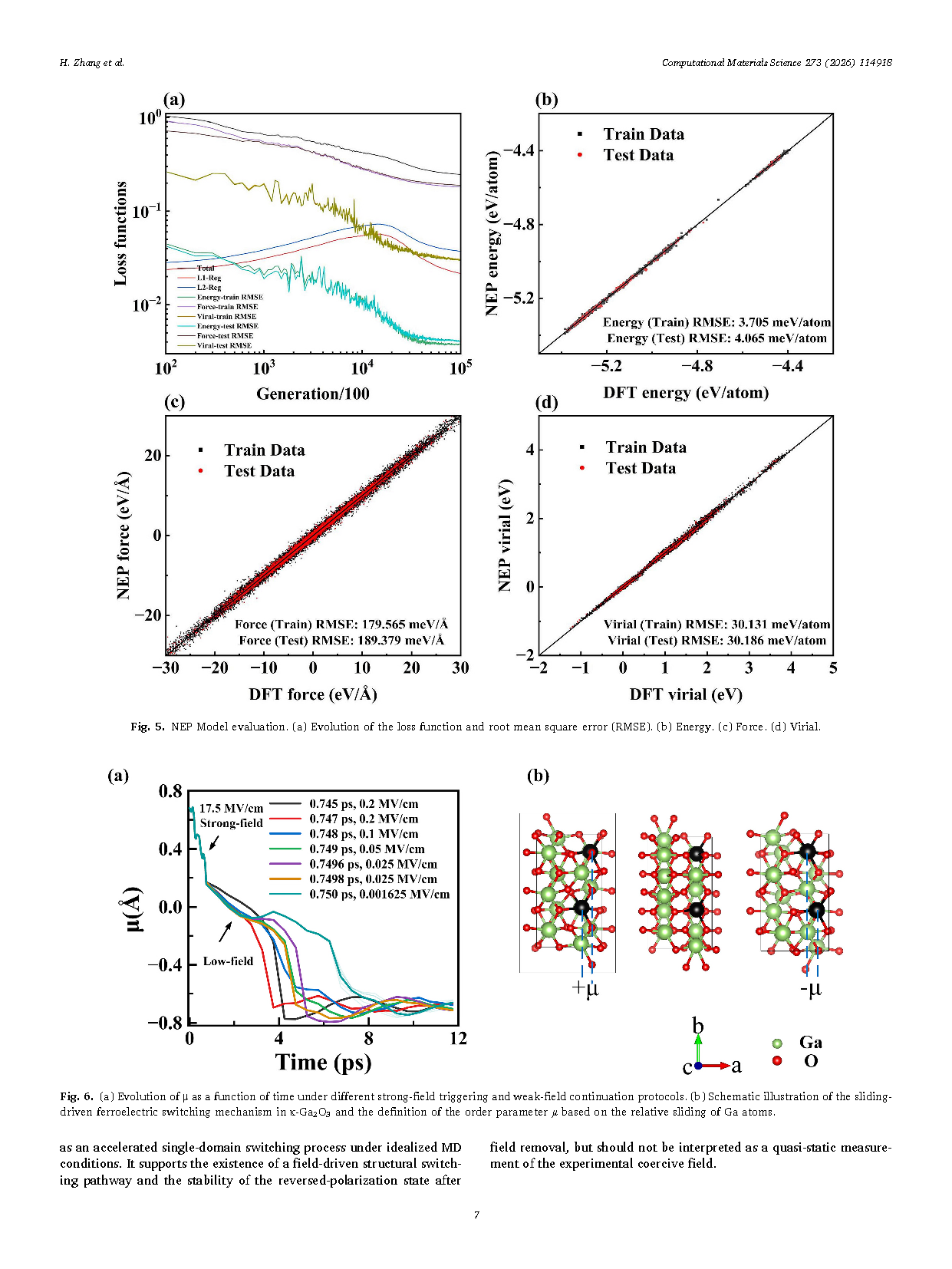
Fig. 5. NEP Model evaluation. (a) Evolution of the loss function and root mean square error (RMSE). (b) Energy. (c) Force. (d) Virial.
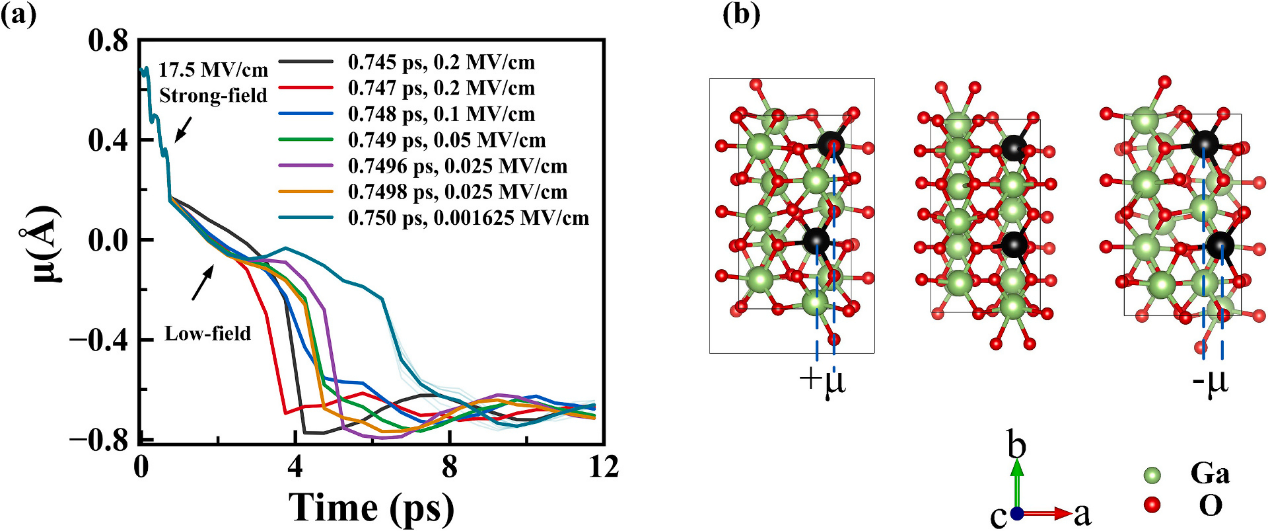
Fig. 6. (a) Evolution of μ as a function of time under different strong-field triggering and weak-field continuation protocols. (b) Schematic illustration of the sliding-driven ferroelectric switching mechanism in κ-Ga2O3 and the definition of the order parameter μ based on the relative sliding of Ga atoms.
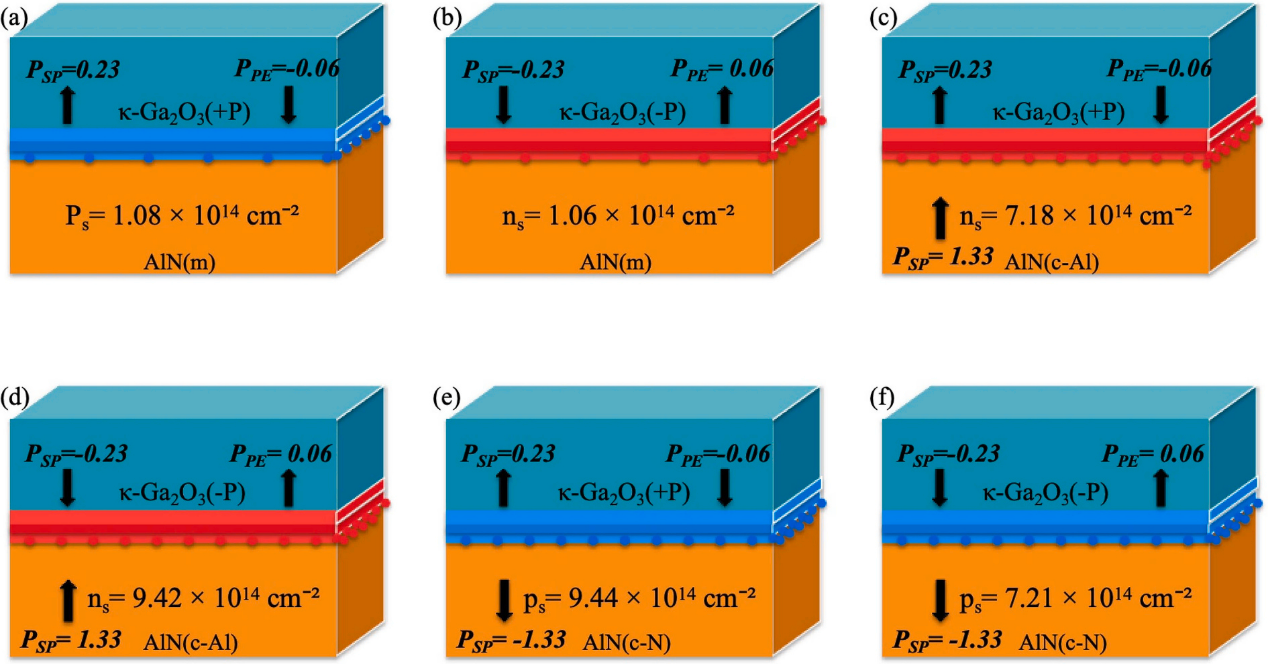
Fig. 7. Polarization at the κ-Ga2O3 /AlN interface: (a) + P/AlN (m). (b) -P/AlN (m). (c) + P/AlN (c-Al). (d) -P/AlN (c-Al). (e) + P/AlN (c-N). (f) -P/AlN (c-N).
DOI:
doi.org/10.1016/j.commatsci.2026.114918
Instruction
Official Account

Cooperation
Top