


Researchers from Nanjing University have published a dissertation titled " Celestial neuromorphics based on ferroelectric gallium oxide " in National Science Review.
Background
Light curve analysis, which captures time-resolved brightness variations of celestial objects across multiple wavebands, is a cornerstone technique in observational astronomy for probing dynamic astrophysical phenomena. Precise extraction and recognition of these temporal signals are pivotal for disaster monitoring and for classifying cosmic events such as stellar flares, eclipsing binaries, cataclysmic variables, and irregular variable stars. Deep-ultraviolet (DUV) light detection plays a particularly important role, as many in capturing astrophysical activities manifest strongly in this spectral range and are primarily observed using space-based telescopes. Conventional recognition of light curves relies on von Neumann computing architectures, where sensing, memory, and processing are separated. Such separation results in increased latency and energy consumption in light curve recognition, and these limitations are especially critical in space applications with constrained power budgets and payload volumes. Therefore, breaking the fundamental trade-off between efficiency, compactness, and radiation robustness of celestial signal processing hardware is of growing importance.
Abstract
Efficient recognition of celestial activities demands hardware that can operate with high efficiency and robustness in radiation-rich space environments. Ultra-wide bandgap (UWBG) semiconductors are well-suited for such environments, but conventional UWBG transistors are not inherently compatible with advanced computing functions. To address this limitation, here we report a κ-phase gallium oxide (κ-Ga₂O₃) based in-sensor reservoir computing system (κ-ISRC), which incorporates deep ultraviolet sensing, memory, and neuromorphic computation for celestial activity recognition. A ferroelectric high-electron-mobility transistor (FeHEMT) is fabricated by exploiting polarization switching of κ-Ga₂O₃ through atomic sliding mechanisms. The Al₂O₃/κ-Ga₂O₃ dielectric/ferroelectric gate stack provides negative-capacitance effect, supporting configurable memory operations. Furthermore, the device can maintain its performance over a wide temperature range (from −270 °C to 210 °C) and under ion irradiation with an average flux of 1×10⁴ rad/s. Leveraging these device features, the celestial neuromorphic system achieves up to 95% classification accuracies across diverse astrophysical events, including solar flares, cosmic-ray bursts, and pulsar emissions. This work establishes UWBG ferroelectric semiconductors as a multifunctional platform for energy-efficient in-sensor neuromorphic electronics for aerospace and deep-space applications.
Conclusion
In summary, we have demonstrated κ-Ga₂O₃-gated FeHEMT that integrate ferroelectric functionality with wide-bandgap heterostructures, achieving sub-60 mV/dec switching, high ON/OFF current ratios, and polarization-programmable states. The negative capacitance effect of the Al2O3/κ-Ga₂O₃ stack enables steep-slope operation beyond the Boltzmann limit, while the inherent radiation hardness of κ-Ga₂O₃ ensures stable performance under harsh environments. By leveraging these unique device characteristics, we further developed a κ-Ga₂O₃-based in-sensor reservoir computing (κ-ISRC) framework for celestial activity recognition. The device intrinsically performs nonlinear transformation and memory processing, enabling compact, energy-efficient classification of solar flares, cosmic-ray bursts, and pulsar emissions with an accuracy of ~95%.
This work establishes κ-Ga₂O₃ as a multifunctional material that not only extends the frontier of ferroelectric-gated GaN transistors but also provides a radiation-tolerant platform for intelligent sensing and low-power neuromorphic computation. Notably, by unifying sensing, processing, and memory within a single material system, the κ-ISRC minimizes data transfer, improves computational efficiency, and ensures resilience in harsh conditions, eliminating the bonding and interconnect complexity common in heterogeneous reservoir computing systems. Furthermore, the κ-Ga₂O₃-gated FeHEMT has demonstrated exceptional radiation resistance and ultrawide operating temperature range. The comparative analysis with other material systems is summarized in Supplementary Table S1. This intrinsic resistance under irradiation renders it highly suitable for deployment in harsh environments and mission-critical applications. The demonstrated synergy between steep-slope device physics and in-sensor computing architectures opens new pathways toward integrated electronics for next-generation aerospace and deep-space applications.
Project Support
This work was supported by the National Key R&D Program of China (2022YFB3605403), the Jiangsu Provincial Science and Technology Major Project (BG2024030), the National Natural Science Foundation of China (62425403, 92364106, 62234007, 62293522, U21A2071 and U21A20503), the Postdoctoral Fellowship Program of CPSF (GZB20240720), and the China Postdoctoral Science Foundation (2024M763182).
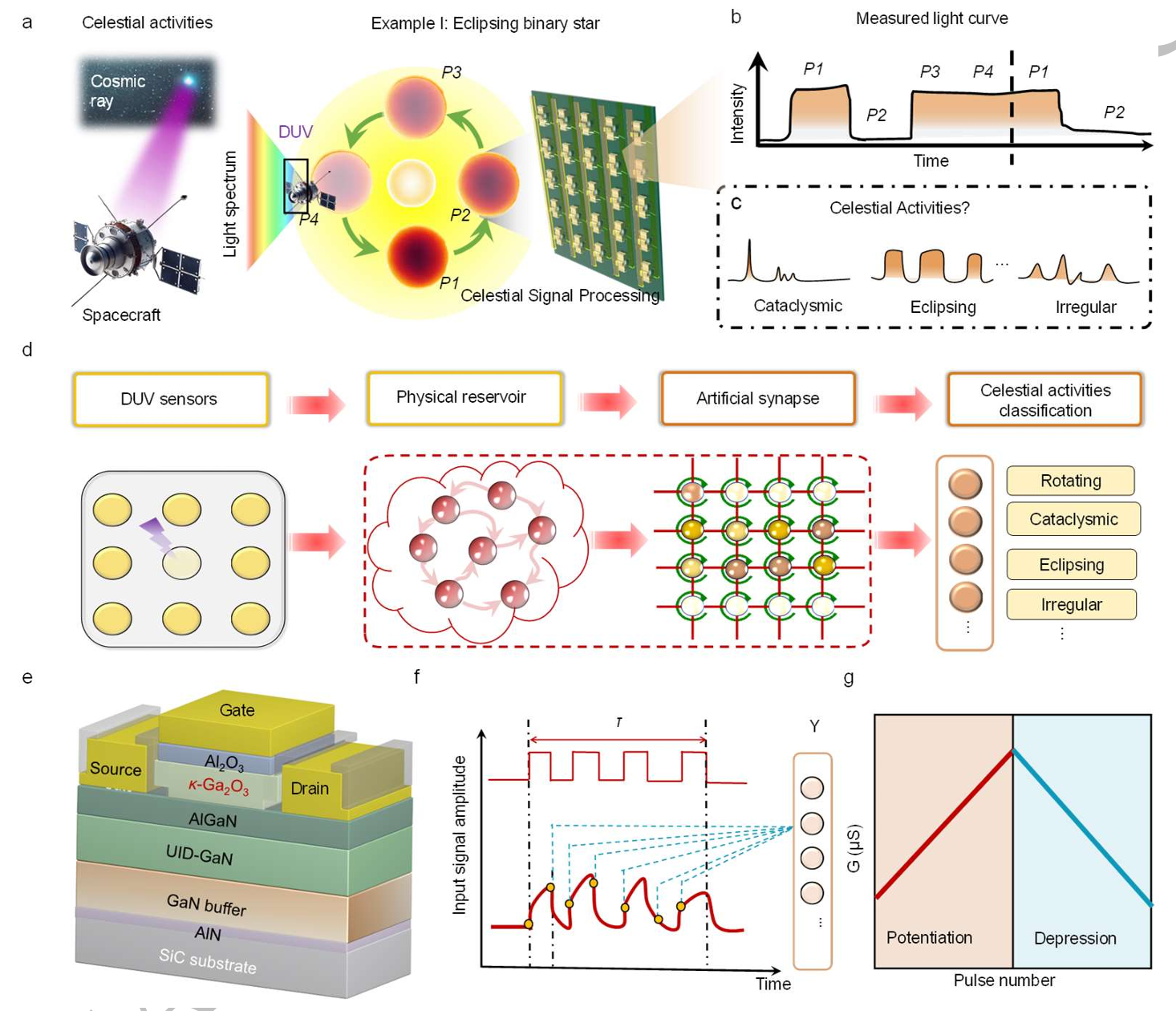
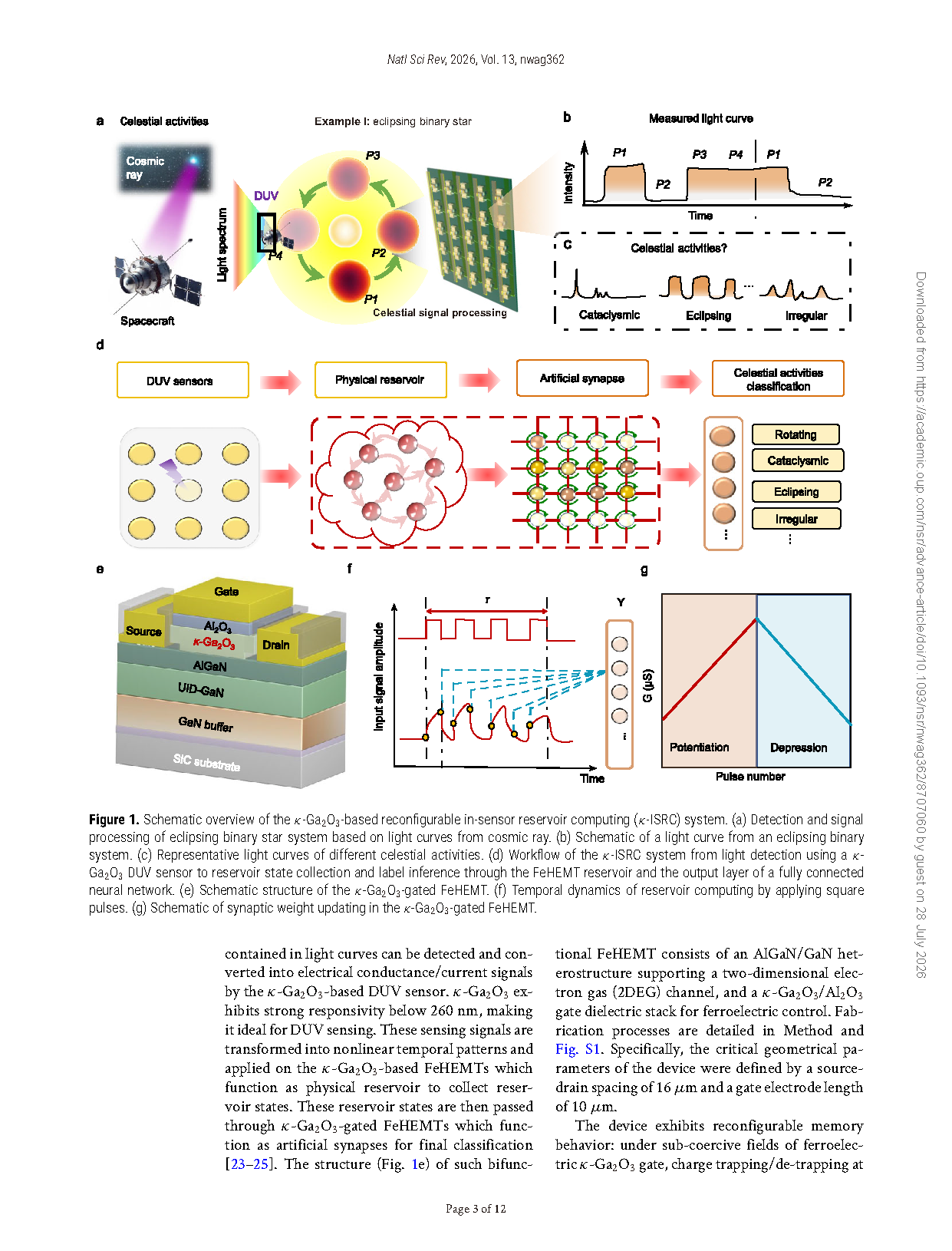
Figure 1. Schematic overview of the κ-Ga₂O₃-based reconfigurable in-sensor reservoir computing (κ-ISRC) system. (a) Detection and signal processing of eclipsing binary star system based on light curves from cosmic ray. (b) Schematic of a light curve from an eclipsing binary system. (c) Representative light curves of different celestial activities. (d) Workflow of the κ-ISRC system from light detection using a κ-Ga₂O₃ DUV sensor to reservoir state collection and label inference through the FeHEMT reservoir and the output layer of a fully-connected neural network. (e) Schematic structure of the κ-Ga₂O₃-gated FeHEMT. (f) Temporal dynamics of reservoir computing by applying square pulses. (g) Schematic of synaptic weight updating in the κ-Ga₂O₃-gated FeHEMT.
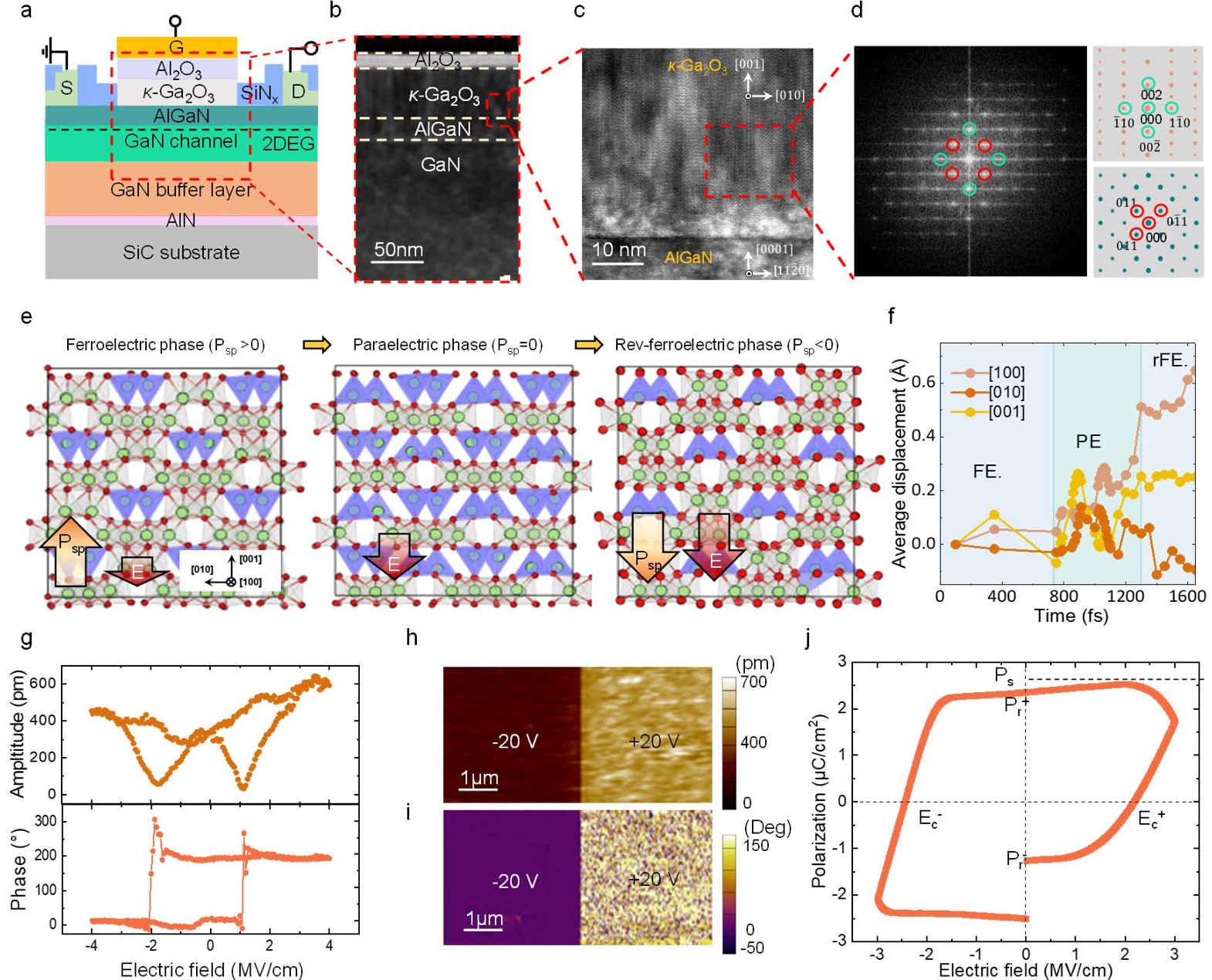
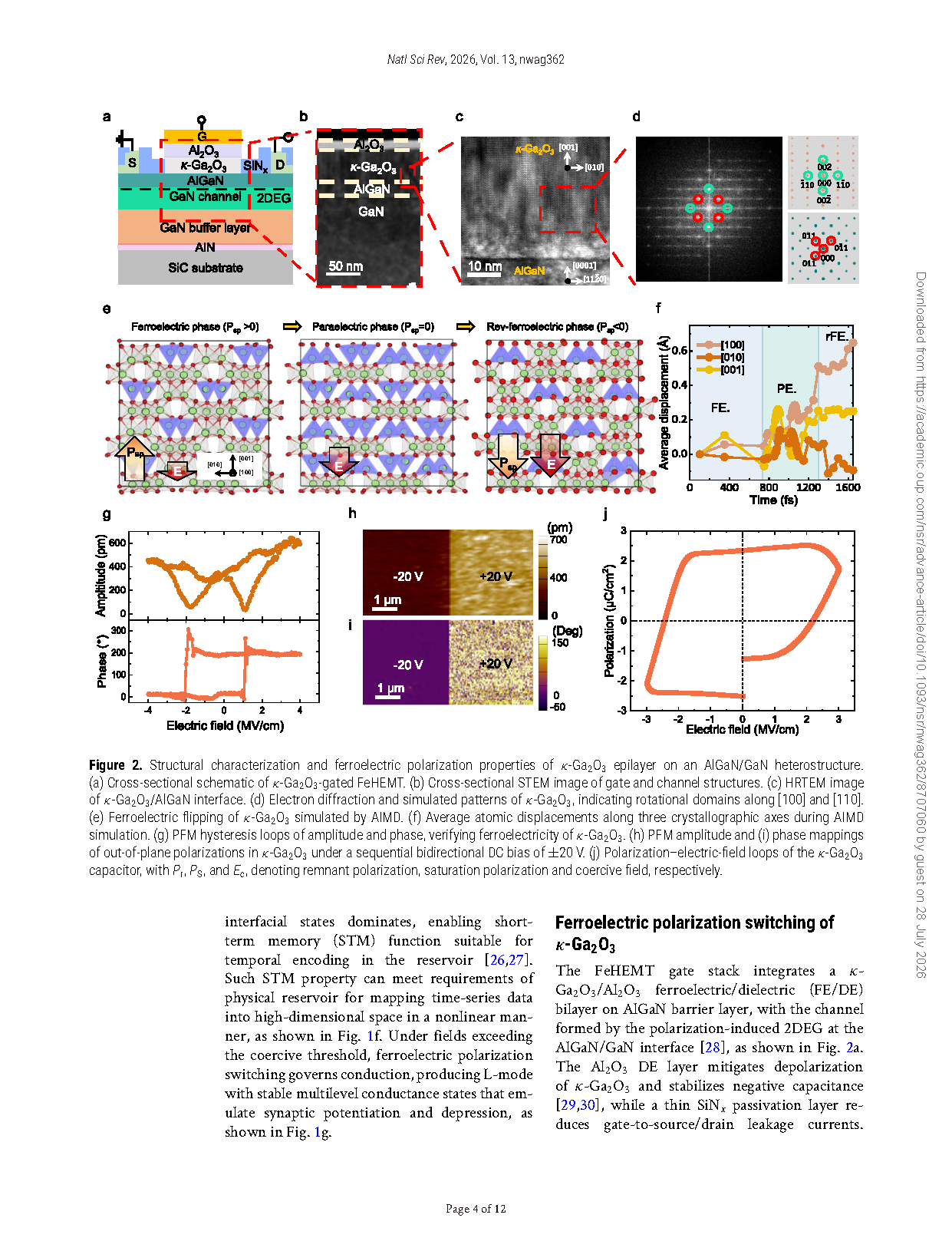
Figure 2. Structural characterization and ferroelectric polarization properties of κ-Ga₂O₃ epilayer on an κ-AlGaN/GaN heterostructure. (a) Cross-sectional schematic of κ-Ga₂O₃-gated FeHEMT. (b) Cross-sectional STEM image of gate and channel structures. (c) HRTEM image of κ-Ga₂O₃ /AlGaN interface. (d) Electron diffraction and simulated patterns of κ-Ga₂O₃,indicating rotational domains along [100] and [110]. (e) Ferroelectric flipping of κ-Ga₂O₃ simulated by AIMD. (f) Average atomic displacements along three crystallographic axes during AIMD simulation. (g) PFM hysteresis loops of amplitude and phase, verifying ferroelectricity of κ-Ga₂O₃. (h) PFM amplitude and (i) phase mappings of out-of-plane polarizations in κ-Ga₂O₃ under a sequential bidirectional DC bias of ±20 V. (j) Polarization–electric-field loops of the κ-Ga₂O₃ capacitor, with Pᵣ , Pₛ and Ec,denoting remnant polarization, saturation polarization and coercive field, respectively.
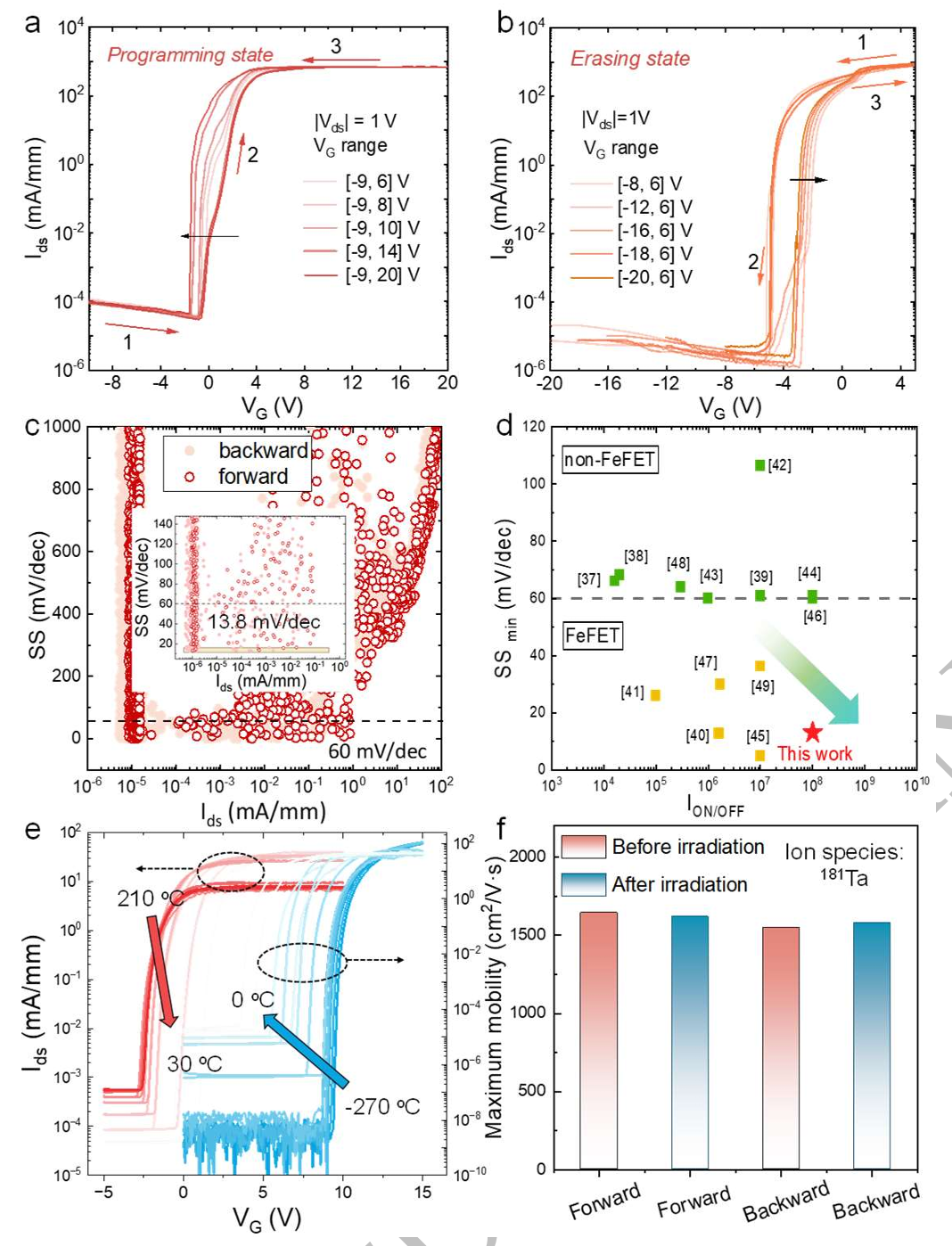
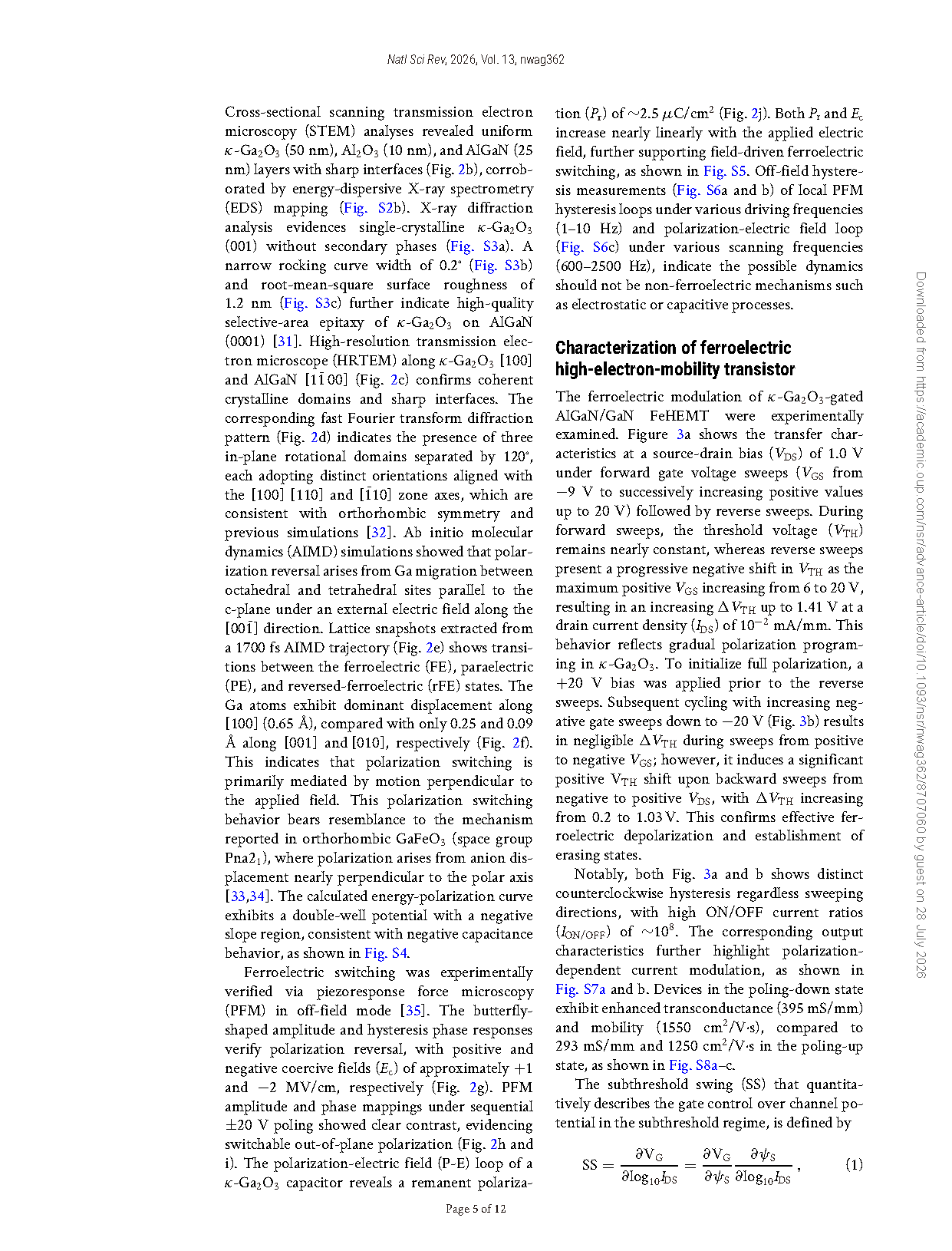
Figure 3. Electrical characterizations of κ-Ga₂O₃-gated FeHEMT. (a) Hysteresis curves of a κ-Ga₂O₃ gated FeHEMT under increasing positive gate voltage sweeps from −9.0 V to +20 V (program states). (b) Hysteresis curves Hysteresis curves under increasing negative gate voltage sweeps from +6.0 V to −20 V (erase states). (c) Subthreshold swing (SS) measured during forward and backward gate sweeps with a rate of 0.003 V/s, demonstrating SS below the the Boltzmann limit of 60 mV/dec. (d) Benchmark plot of SSmin versus ION/OFF ratio of κ-Ga₂O₃-gated FeHEMT, compared with previous reported devices. (e) Temperature-dependent transfer characteristics of the device. (f) Maximum mobilities of the κ-Ga₂O₃-gated FeHEMT before and after Ta heavy-ion irradiation. Bars 1-2: forward scan; bars 3-4: reverse scan.
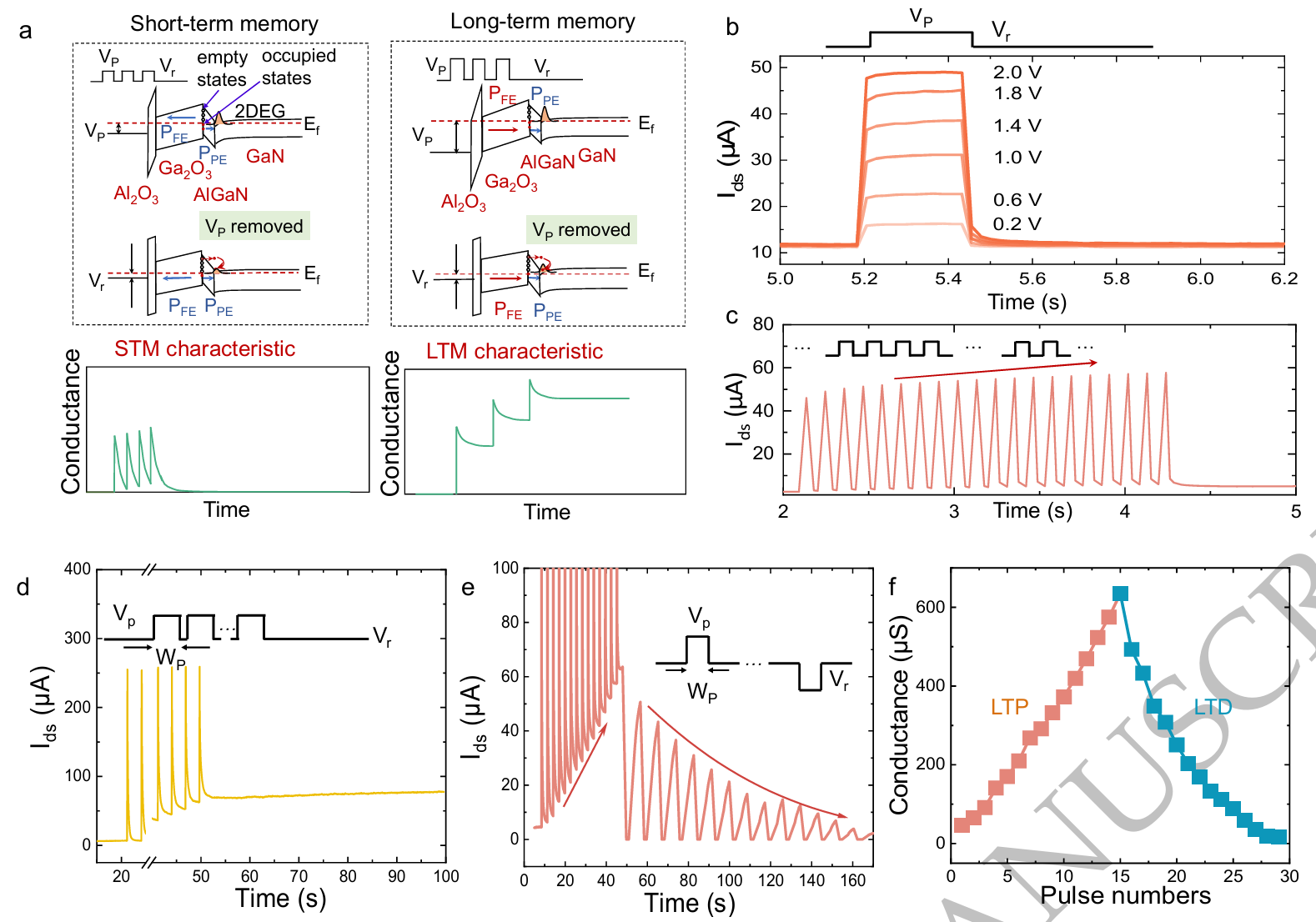
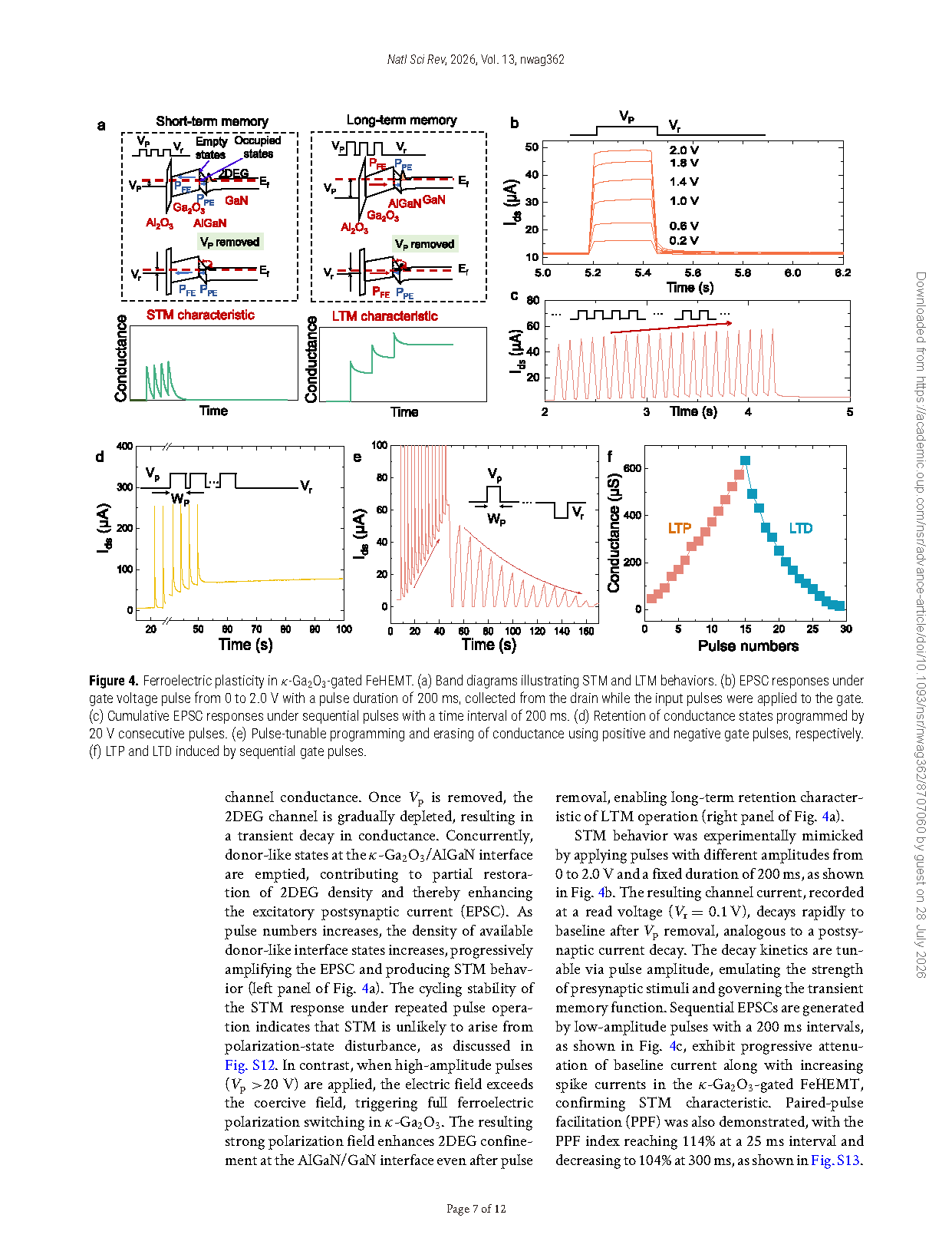
Figure 4. Ferroelectric plasticity in κ-Ga₂O₃-gated FeHEMT. (a) Band diagrams illustrating short-term memory (STM) and long-term memory (LTM) behaviors. (b) Excitatory postsynaptic current (EPSC) responses under gate voltage pulse from 0 to 2.0 V with a time interval of 200 ms, collected from the drain while the input pulses were applied to the gate. (c) Cumulative EPSC responses under sequential pulses with a time interval of 50 ms. (d) Retention of conductance states programmed by 20 V consecutive pulses. (e) Pulse-tunable programming and erasing of conductance using positive and negative gate pulses, respectively. (f) Long-term potentiation (LTP) and depression (LTD) induced by sequential gate pulses.
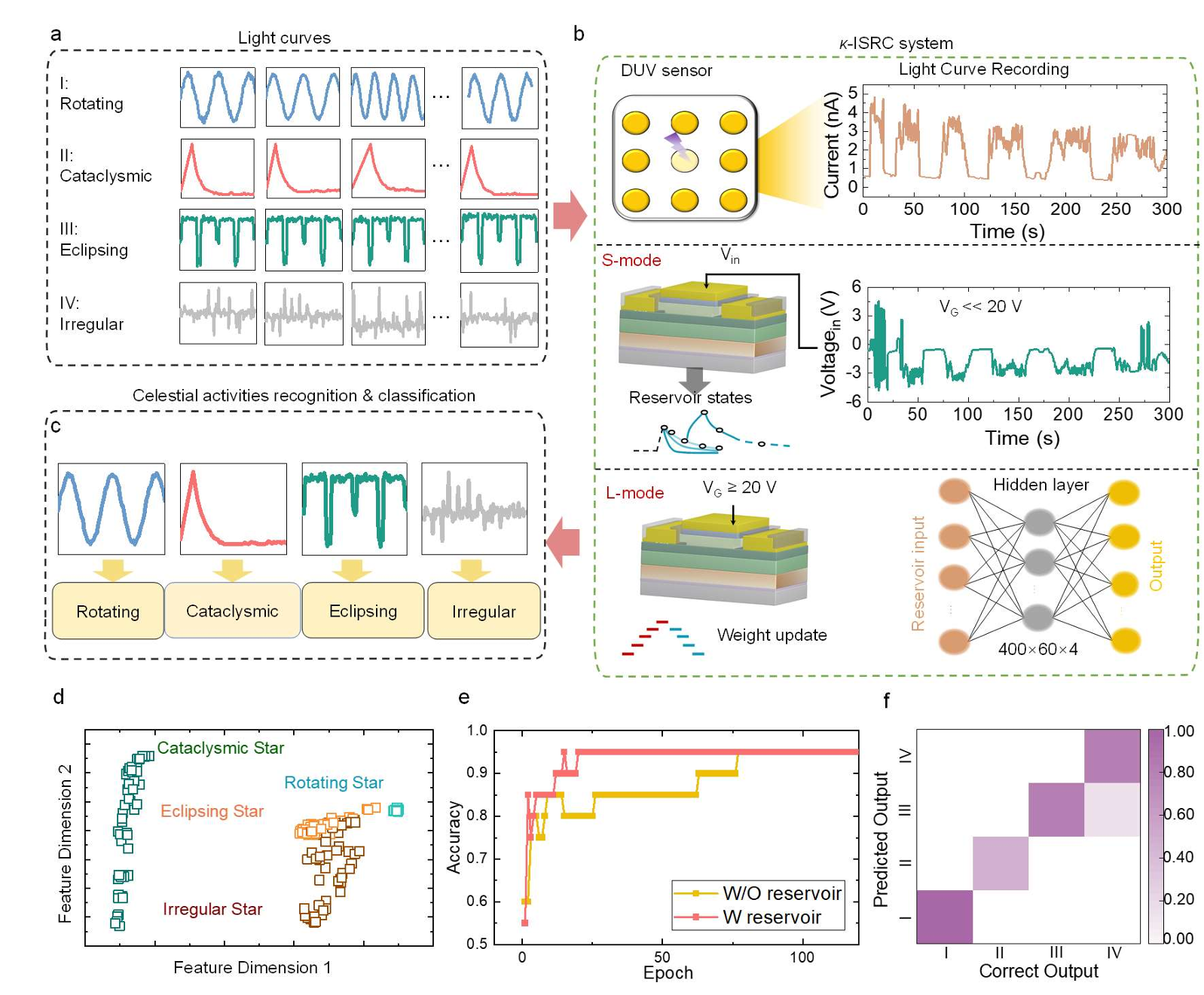
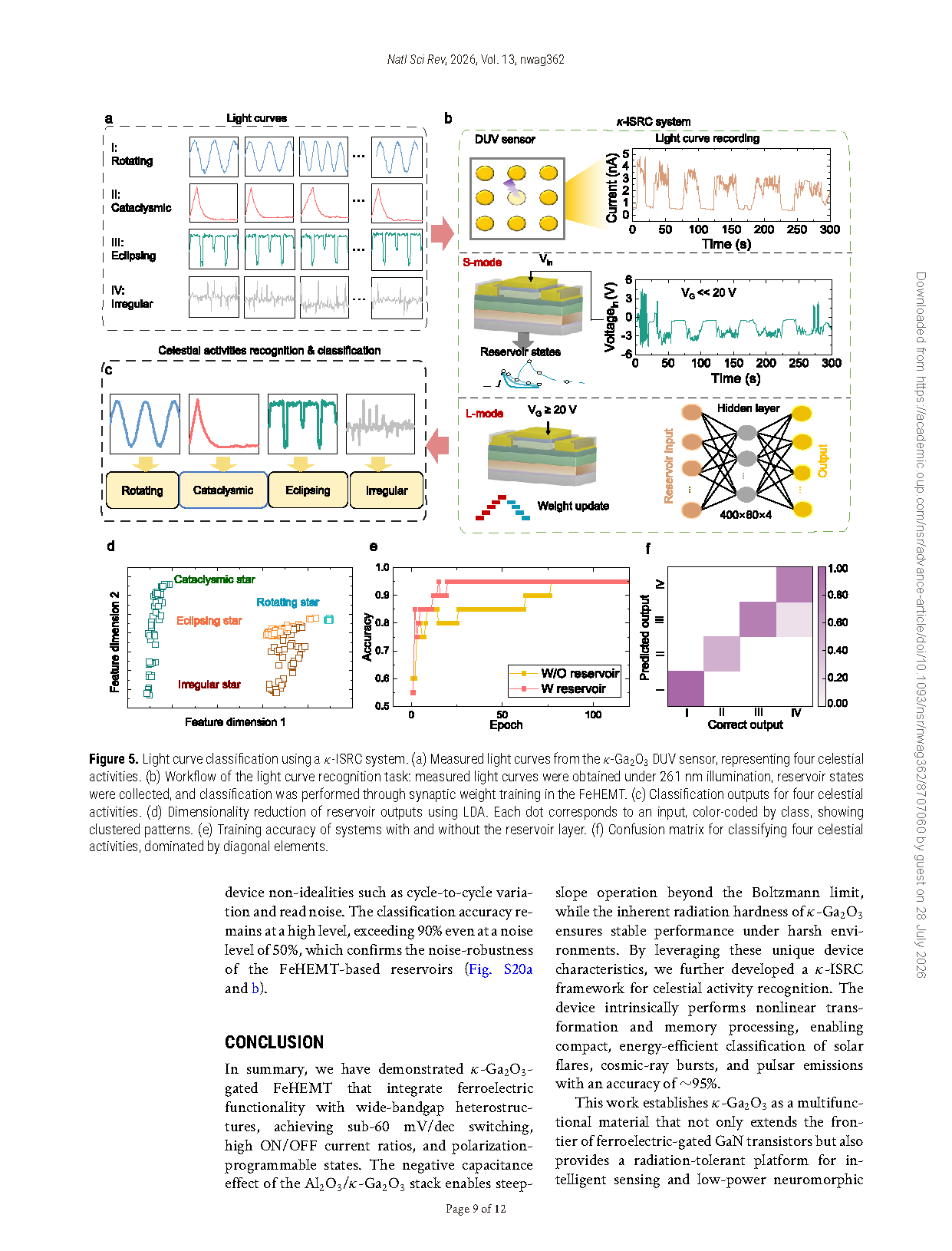
Figure 5. Light curve classification using a κ-ISRC system. (a) Measured light curves from the κ-Ga₂O₃ DUV sensor, representing four celestial activities. (b) Workflow of the light curve recognition task: measured light curves were obtained under 261 nm illumination, reservoir states were collected, and classification was performed through synaptic weight training in the FeHEMT. (c) Classification outputs for four celestial activities. (d) Dimensionality reduction of reservoir outputs using LDA. Each dot corresponds to an input, color-coded by class, showing clustered patterns. (e) Training accuracy of systems with and without the reservoir layer. (f) Confusion matrix for classifying four celestial activities, dominated by diagonal elements.
DOI:
doi.org/10.1093/nsr/nwag362
Instruction
Official Account

Cooperation
Top