


Researchers from the Northeast Normal University and Inner Mongolia University have published a dissertation titled "γ-Ga₂O₃ Quantum Dots/Graphene Heterostructure Enabling Bidirectional All-Optical Artificial Synapses for Ultraviolet Motion Recognition" in Advanced Functional Materials.
Background
Artificial intelligence vision systems serve as core supports for cutting-edge fields including autonomous driving, intelligent robotics and intelligent surveillance. Traditional machine vision systems follow the von Neumann architecture, where sensing, memory and computing units are physically separated, resulting in inherent bottlenecks of high latency and excessive power consumption during data transmission. Biological retinas complete in-situ detection and preprocessing of visual information before signals are delivered to the visual cortex, featuring natural advantages of low power consumption and parallel processing. This biological paradigm inspires the research of optoelectronic neuromorphic devices integrating perception, storage and computing, among which artificial synapses act as the core component.
To realize high-speed neuromorphic vision with low crosstalk, all-optical modulation of synaptic weight is highly demanded to avoid current crosstalk and extra power loss induced by electrical biasing. Most existing optoelectronic synapses rely on hybrid optical-electrical regulation, or suffer from poor environmental stability caused by complicated multi-physical modulation mechanisms. Reported all-optical heterostructure devices generally depend on bulk photoconductive effects, bolometric effects or external gas adsorption, which severely compromise device robustness and predictability.
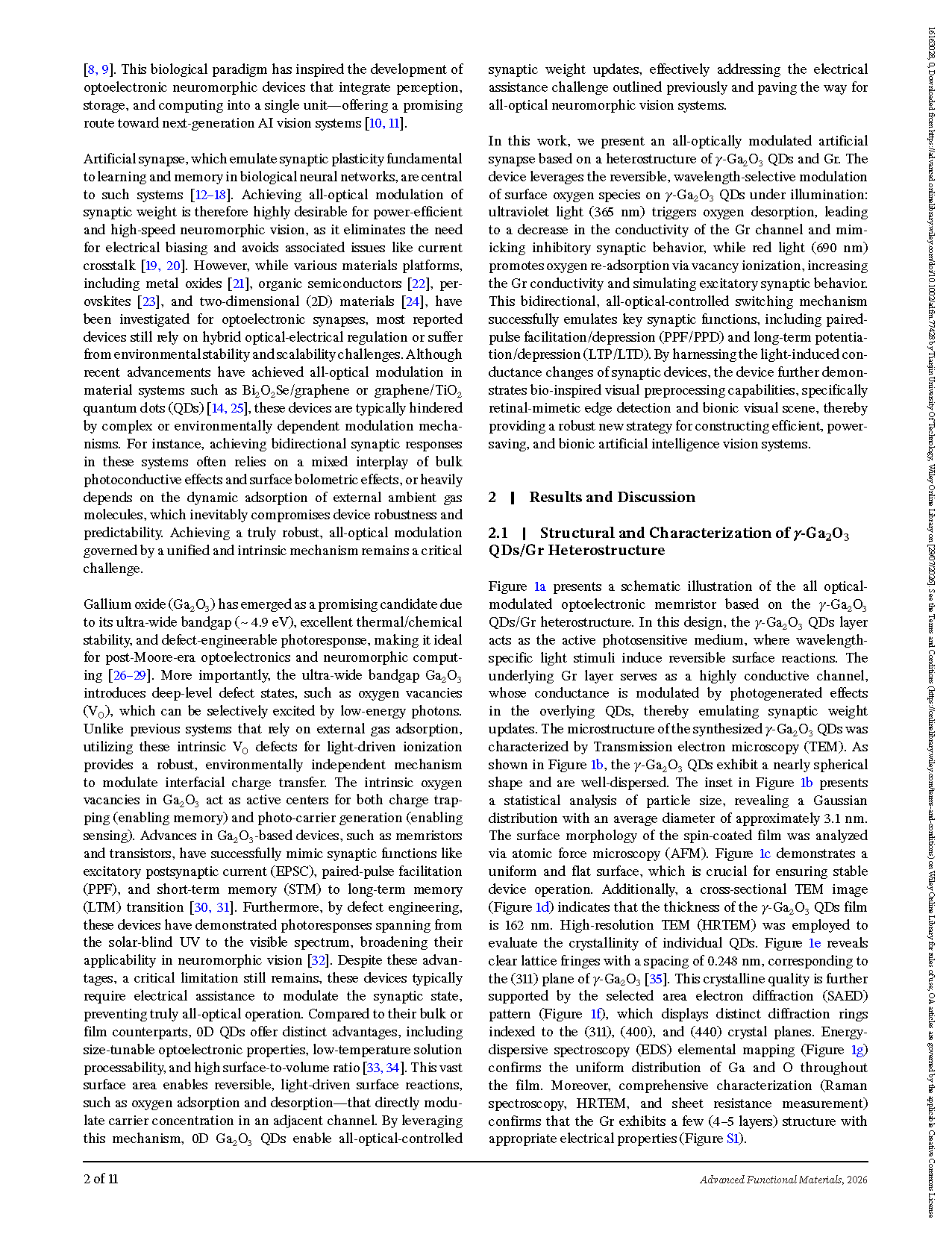
Gallium oxide (Ga₂O₃) exhibits an ultra-wide bandgap (~4.9 eV), outstanding thermal and chemical stability, and intrinsic oxygen vacancy defects that enable broadband photoresponse ranging from solar-blind ultraviolet to visible light, making it a promising candidate for optoelectronic devices in post-Moore era. Nevertheless, conventional bulk or thin-film Ga₂O₃ synaptic devices still require electrical assistance to modulate synaptic states, which restricts purely all-optical operation. Zero-dimensional quantum dots possess unique merits including size-tunable optoelectronic properties, low-temperature solution processability and ultrahigh surface-to-volume ratio, which support light-driven reversible surface oxygen adsorption and desorption to achieve electrical-free synaptic weight updates. This characteristic provides a feasible route for all-optical neuromorphic vision devices. In this work, a bidirectional all-optical modulated artificial synapse is constructed based on γ-Ga₂O₃ quantum dots/graphene heterostructure, addressing the critical drawbacks of electrical assistance dependence and inferior environmental stability in existing devices.
Abstract
Artificial intelligence vision systems require the seamless integration of sensing, memory, and computing to overcome the latency and power consumption bottlenecks of traditional von Neumann architectures. While optoelectronic memristors offer a promising solution, most existing devices rely on hybrid optical-electrical modulation, limiting their efficiency and speed. Here, we present an all optical-modulated artificial synapse based on a γ-Ga₂O₃ quantum dots/graphene heterostructure. This device leverages the reversible, wavelength-selective oxygen adsorption/desorption of the γ-Ga₂O₃ QDs. Specifically, 365 nm ultraviolet light triggers oxygen desorption, reducing graphene conductivity to mimic inhibitory synaptic behavior, while 690 nm red light promotes oxygen re-adsorption, enhancing conductivity to simulate excitatory behavior. In situ Kelvin probe force microscopy and environmental controls experiments confirm this mechanism is driven by interfacial charge transfer modulated by surface oxygen dynamics. The device emulates essential synaptic plasticities, including paired-pulse facilitation/depression and the transition from short-term to long-term plasticity. Furthermore, by leveraging the light-induced conductance changes of synaptic devices, we demonstrate bio-inspired visual preprocessing capabilities such as retinal-mimetic edge detection and bionic motion tracking within a foraging scene simulation. This work offers a feasible strategy for developing power-efficient, all-optical-controlled neuromorphic vision prototypes at the device level, bridging surface defect engineering with advanced visual perception.
Highlights
An all-optically modulated artificial synapse based on γ-Ga₂O₃ quantum dots/graphene heterostructure is fabricated for the first time, eliminating the requirement of electrical bias assistance in conventional optoelectronic synapses, and bidirectional synaptic weight modulation is solely realized by 365 nm ultraviolet and 690 nm red light stimuli.
A unified intrinsic modulation mechanism relying on wavelength-selective reversible oxygen adsorption and desorption is clarified: 365 nm UV light induces oxygen desorption to generate inhibitory postsynaptic current (IPSC), while 690 nm red light drives oxygen re-adsorption to produce excitatory postsynaptic current (EPSC). In situ KPFM and air/vacuum control experiments verify the interfacial charge transfer dynamics; the modulation mechanism is independent of ambient gas and delivers outstanding environmental stability.
Core biological synaptic plasticities are fully emulated, including paired-pulse facilitation/depression (PPF/PPD) and reversible transition from short-term plasticity (STP) to long-term potentiation/depression (LTP/LTD). Spike-duration-dependent, intensity-dependent, number-dependent and rate-dependent plasticity are all achieved, with excellent device uniformity, cycle stability and thermal tolerance.
Benefiting from linear and symmetric conductance update characteristics, two types of bio-inspired visual preprocessing functions are demonstrated: retinal-mimetic edge detection based on center-surround antagonism mechanism, and bionic moving target tracking inspired by bee compound eyes. Static edge features and dynamic motion trajectories can be extracted simultaneously, promising applications in ultraviolet biomimetic vision and low-power in-sensor computing.
Conclusion
In summary, we have successfully demonstrated an all-optically modulated artificial synapse based on a γ-Ga₂O₃ QDs/Gr heterostructure. This device alleviates the critical limitation of requiring external electrical gating in conventional optoelectronic synapses by leveraging the reversible, wavelength-selective surface oxygen adsorption/desorption dynamics on the γ-Ga₂O₃ QDs. Under 365 nm UV and 690 nm red light illumination, the device exhibits bidirectional, all-optical modulation of the Gr channel conductance, emulating key excitatory and inhibitory synaptic functions such as EPSC/IPSC, PPF/PPD, and the transition from STP to LTP. The underlying mechanism, confirmed through environmental control and in situ KPFM measurements, is attributed to photo-induced oxygen dynamics and subsequent interfacial charge transfer. Furthermore, by harnessing the linear and symmetric conductance changes of synaptic devices, the device successfully implements bio-inspired visual preprocessing functionalities, including retinal-mimetic edge detection and bionic motion tracking. This work provides a robust and efficient strategy for constructing power-saving, all-optical-controlled neuromorphic vision systems at the device level, paving the way for bridging advanced defect engineering with biomimetic visual perception.
Project Support
This work was supported by the National Key Research and Development Program of China (2021YFA0716404, 2024YFA1208800), the NSFC for Distinguished Young Scholars (No. 52025022), the National Natural Science Foundation of China (No. 12474164, No. 62404038, No. U23A20568, No. 52372137, No. 62571109), the Fund from Jilin Province (Grant Number. SKL202602014JC), the Postdoctoral Fellowship Program of CPSF (GZC20240240), the Research Projects of the Education Office of Jilin Province (JJKH20250300KJ), the Natural Science Foundation of Inner Mongolia Autonomous Region (No. 2026QC0226), the Scientific Research Innovation Capability Support Project for Young Faculty (ZYGXQNJSKYCXNLZCXM-I10).
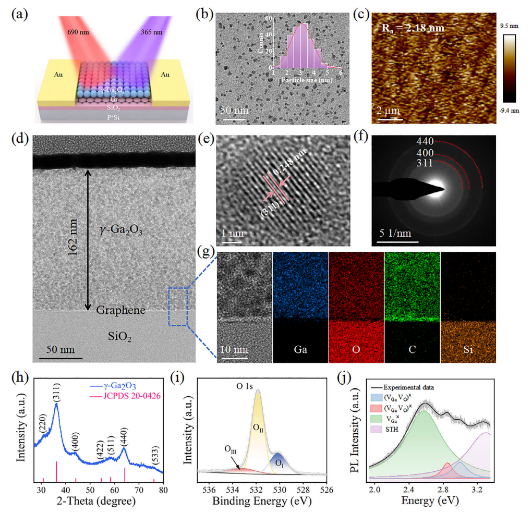
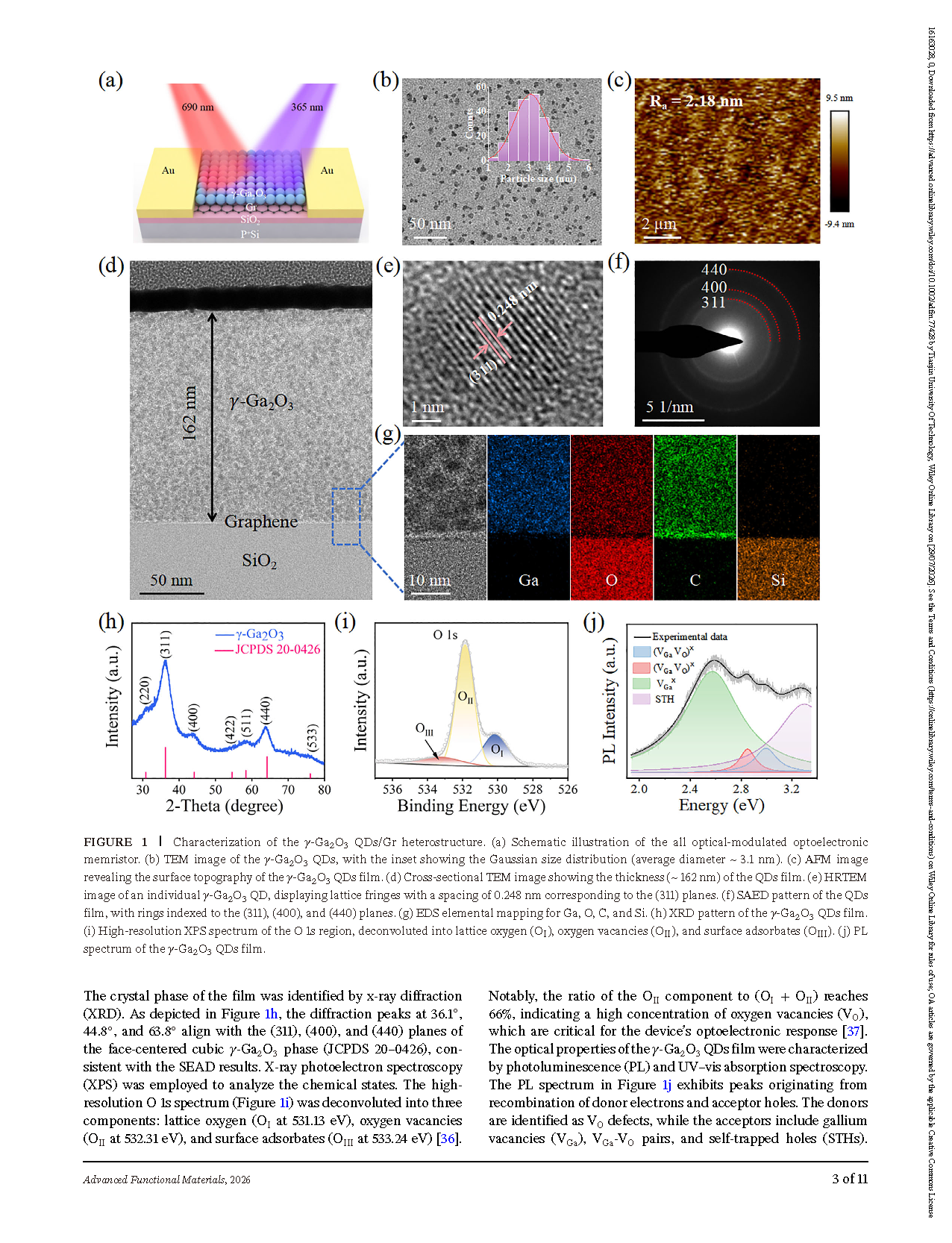
Figure 1 Characterization of the γ-Ga₂O₃ QDs/Gr heterostructure. (a) Schematic illustration of the all optical-modulated optoelectronic memristor. (b) TEM image of the γ-Ga₂O₃ QDs, with the inset showing the Gaussian size distribution (average diameter ~ 3.1 nm). (c) AFM image revealing the surface topography of the γ-Ga₂O₃ QDs film. (d) Cross-sectional TEM image showing the thickness (~ 162 nm) of the QDs film. (e) HRTEM image of an individual γ-Ga₂O₃ QD, displaying lattice fringes with a spacing of 0.248 nm corresponding to the (311) planes. (f) SAED pattern of the QDs film, with rings indexed to the (311), (400), and (440) planes. (g) EDS elemental mapping for Ga, O, C, and Si. (h) XRD pattern of the γ-Ga₂O₃ QDs film. (i) High-resolution XPS spectrum of the O 1s region, deconvoluted into lattice oxygen (O₁), oxygen vacancies (OⅡ), and surface adsorbates (OⅢ). (j) PL spectrum of the γ-Ga₂O₃ QDs film.
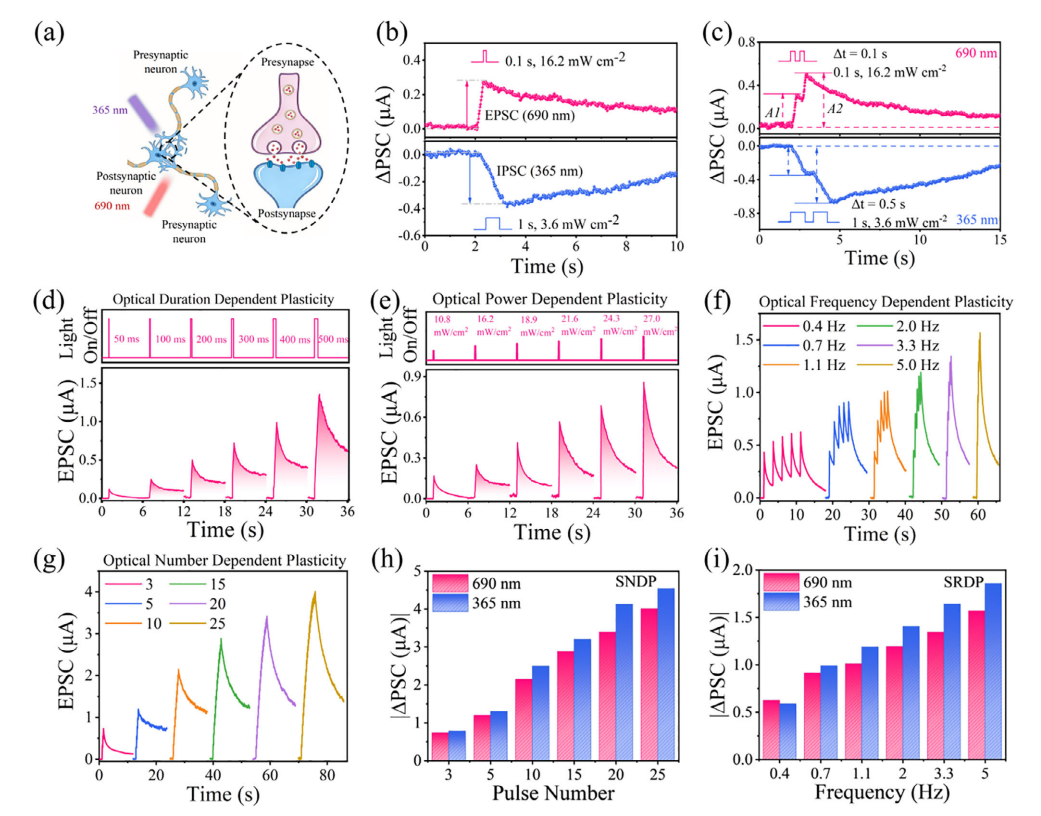
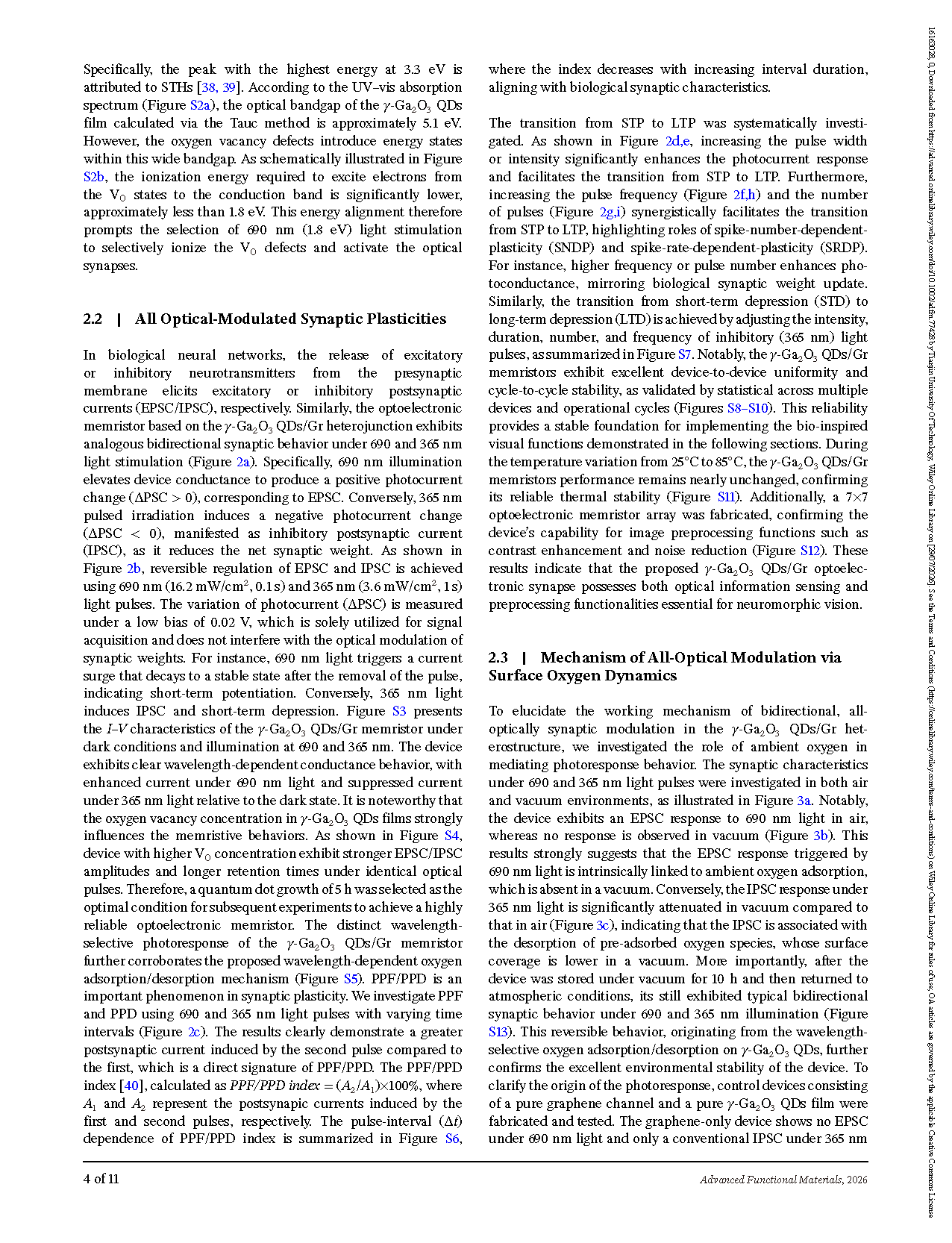
Figure 2 Bidirectional optoelectronic synaptic behavior of γ-Ga₂O₃ QDs/Gr heterojunction-based device. (a) Schematic diagram of the bidirectional optoelectronic synaptic behavior under 690 and 365 nm light. (b) The EPSC and IPSC induced by 690 and 365 nm light illumination. (c) PPF and PPD behaviors of the synapse induced by a pair of light pulses under 690 and 365 nm. (d,e) EPSC behavior under different light irradiation duration and intensities. (f,g) The SRDP and SNDP of the EPSC triggered by 690 nm light, illustrating the transition from STP to LTP caused by the frequency and number of the spikes. (h,i) The SRDP and SNDP characteristics of synapses under the 690 and 365 nm light pulses, respectively.
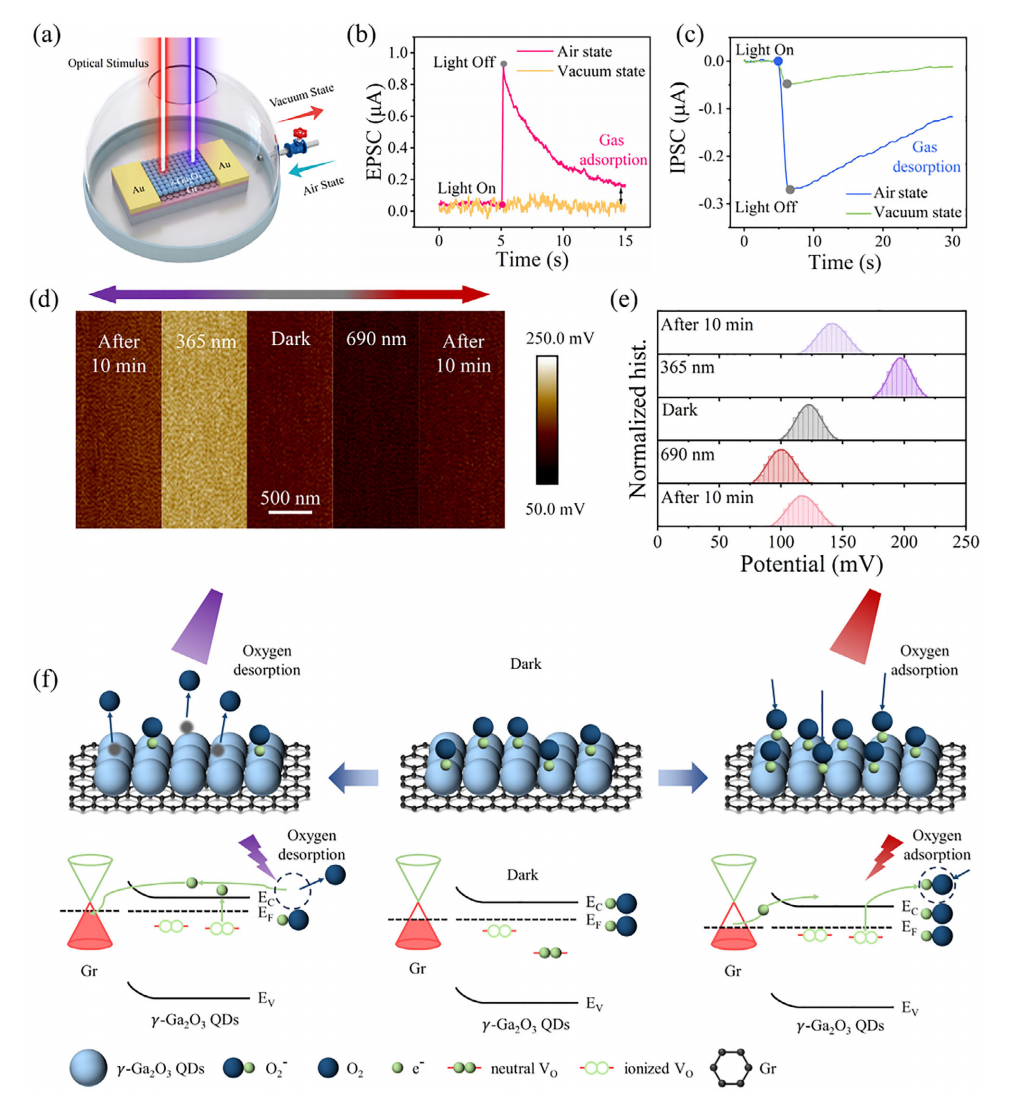
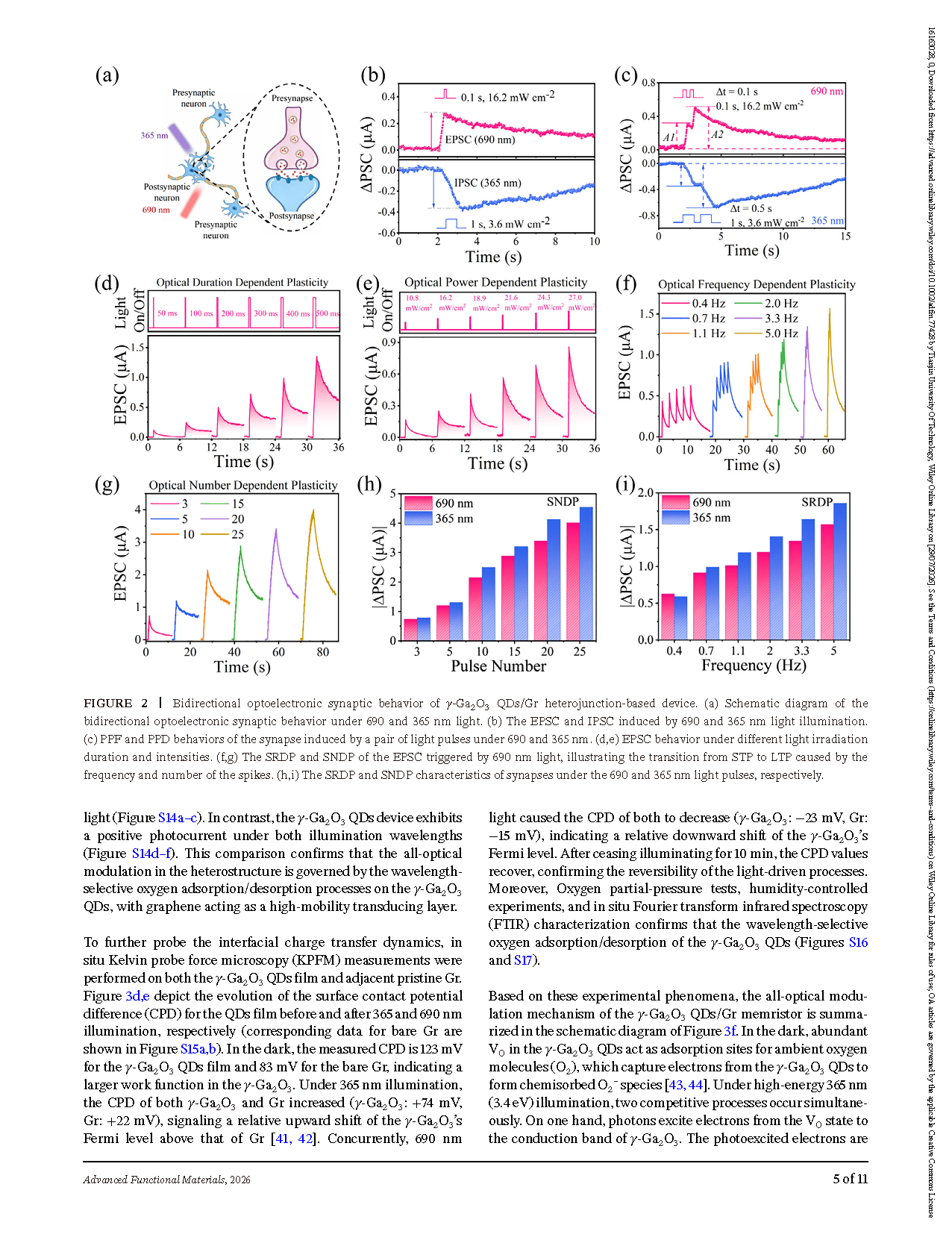
Figure 3 Working mechanism of the all-optically modulated γ-Ga₂O₃ QDs/Gr optoelectronic memristor. (a) Schematic of the testing configuration in air and vacuum environments. (b) EPSC responses of the device to 690 nm light pulses in air and vacuum. (c) IPSC responses of the device to 365 nm light pulses in air and vacuum. (d,e) In situ KPFM surface potential mappings and the corresponding cross-sectional profiles of the γ-Ga₂O₃ QDs film before and after 690/365 nm light illumination. (f) Schematic energy band diagram illustrating the mechanism of bidirectional, all-optical synaptic modulation via photo-induced oxygen adsorption/desorption and charge transfer at the γ-Ga₂O₃ QDs/Gr interface.
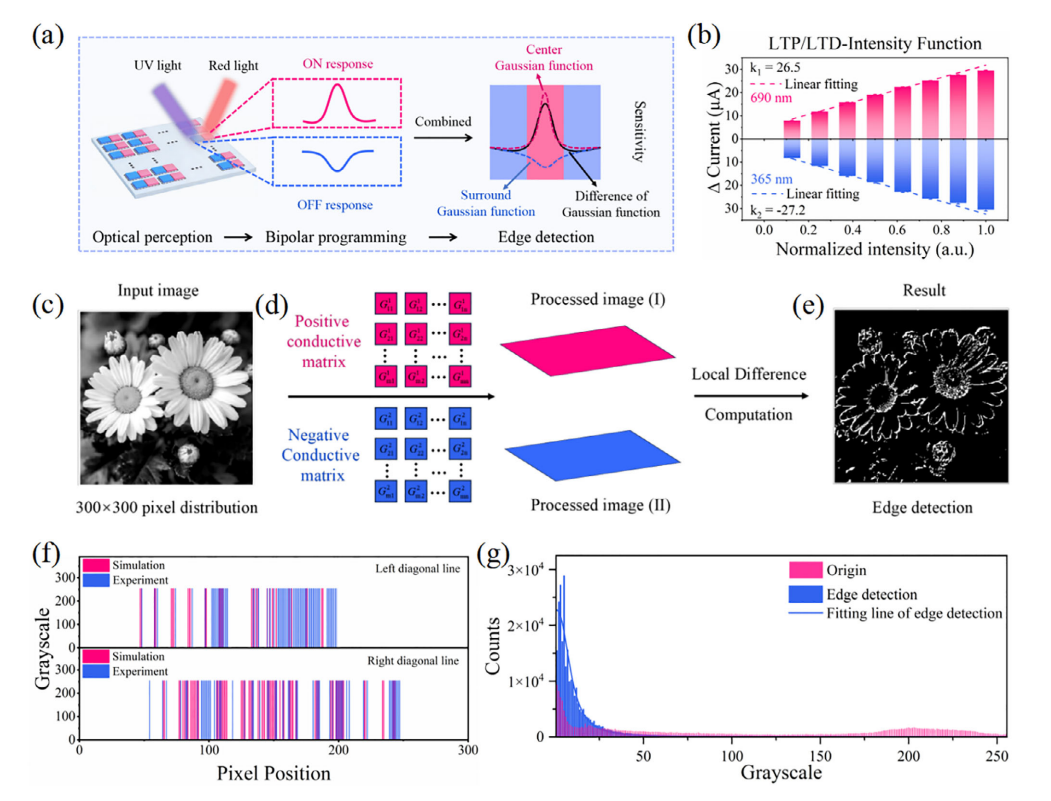
Figure 4 Edge detection implemented in γ-Ga₂O₃ QDs/Gr-based synaptic devices. (a) Schematic illustration of the edge detection mechanism based on retinal-mimetic optoelectronic synaptic devices. (b) LTP/LTD functions of ΔPSC as a function of light intensity under 690 and 365 nm irradiation. (c) The original input image with a resolution of 300 × 300 pixels. (d) Illustration of the edge extraction process. (e) The resulting edge-detected image. (f) Pixel intensity profiles along the image diagonal comparing the Canny operator and local difference algorithm. (g) Pixel intensity distribution of the original grayscale image and the edge-detected image.
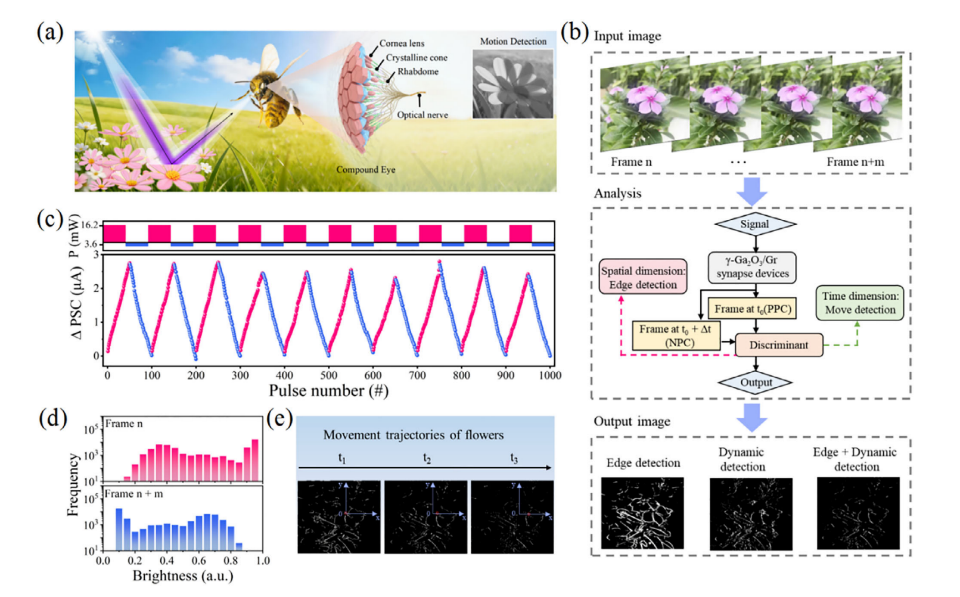
Figure 5 Applications of the Au/γ-Ga₂O₃ QDs/Gr/Au synaptic device array in image sensing. (a) Schematic of bees foraging in a flower bed and the longitudinal cross-section of an ommatidia in a bees’ compound eye. (b) Schematic of synchronous static edge and dynamic trajectory detection enabled by the Au/γ-Ga₂O₃ QDs/Gr/Au array. (c) Cyclic LTP/LTD characteristics of the synaptic device triggered by 50 consecutive pluses at 690 and 365 nm. (d) Pixel brightness distribution of images at frame n and frame n+m. (e) Output results during static edge and dynamic detection.
DOI :
10.1002/adfm.77428
Instruction
Official Account

Cooperation
Top