


Researchers from Carnegie Mellon University have published a dissertation titled "Kinetic study of κ(ε) to β phase transformation in Ga₂O₃ thin films via in situ high-temperature XRD" in Applied Physics Letters.
Background
κ(ε)-Ga₂O₃ is an ultra-wide bandgap polymorph with intrinsic spontaneous polarization much stronger than AlN and GaN, capable of generating high-density dopant-free 2DEG, which serves as core functional layers for RF HEMTs and high-temperature ferroelectric devices for aerospace harsh environments. Conventional Ga₂O₃ epitaxy mainly adopts β-phase films, while κ-phase materials possess superior thermal stability and polarization properties. Irreversible κ-to-β phase transition occurs under high-temperature annealing and eliminates polarization performance, limiting device application. Existing in-situ TEM researches only qualitatively describe morphological evolution without quantitative kinetic parameter extraction. Classical JMAK model relies on 3D unlimited growth assumption and fails for thickness-confined thin films. No systematic quantitative comparison of activation energy and Avrami exponent under varied film thickness and annealing temperature has been reported, and the modulation effect of in-plane rotational domains on transition paths remains unclear. There lacks a revised JMAK kinetic model adapted to ultra-thin Ga₂O₃ films to accurately predict phase evolution during device thermal treatment, forming a major research gap for industrial polar Ga₂O₃ thin films.
Abstract
The kinetics of the κ(ε) to β phase transformation were investigated in five batches of nominally phase-pure κ(ε)-Ga₂O₃ thin films heteroepitaxially grown on c-plane sapphire, with film thickness ranging from 700 to 1100 nm, using in situ high-temperature x-ray diffraction. Phase fractions were quantitatively extracted through modified Rietveld refinement that accounts for preferred orientation, and the transformation kinetics were analyzed using the Johnson–Mehl–Avrami–Kolmogorov (JMAK) model. The applicability of the JMAK model to thin-film materials was evaluated, and its lower and upper bounds for thin films and bulk materials were established. Based on this analysis, a model specifically suited for thin-film kinetic studies was developed and yielded reproducible and robust results across all five sample batches. The results indicate that the κ(ε) to β phase transformation in ~700–1100 nm films is best described as a diffusionless transformation comprising local atomic rearrangements with effectively two-dimensional (2D) growth, as evidenced by an Avrami exponent near 2 throughout the transformation interval.
Highlights
Adopt in-situ HT-XRD combined modified Rietveld refinement to quantitatively extract phase volume fraction of κ(ε)→β transition at different annealing temperatures.
Revise classical JMAK model considering film thickness confinement and growth anisotropy, clarify its applicable boundary for thin and bulk Ga₂O₃materials.
Verify the κ(ε)→β transition is diffusionless 2D site-saturated nucleation process with Avrami exponent n≈2 for 700–1100 nm films.
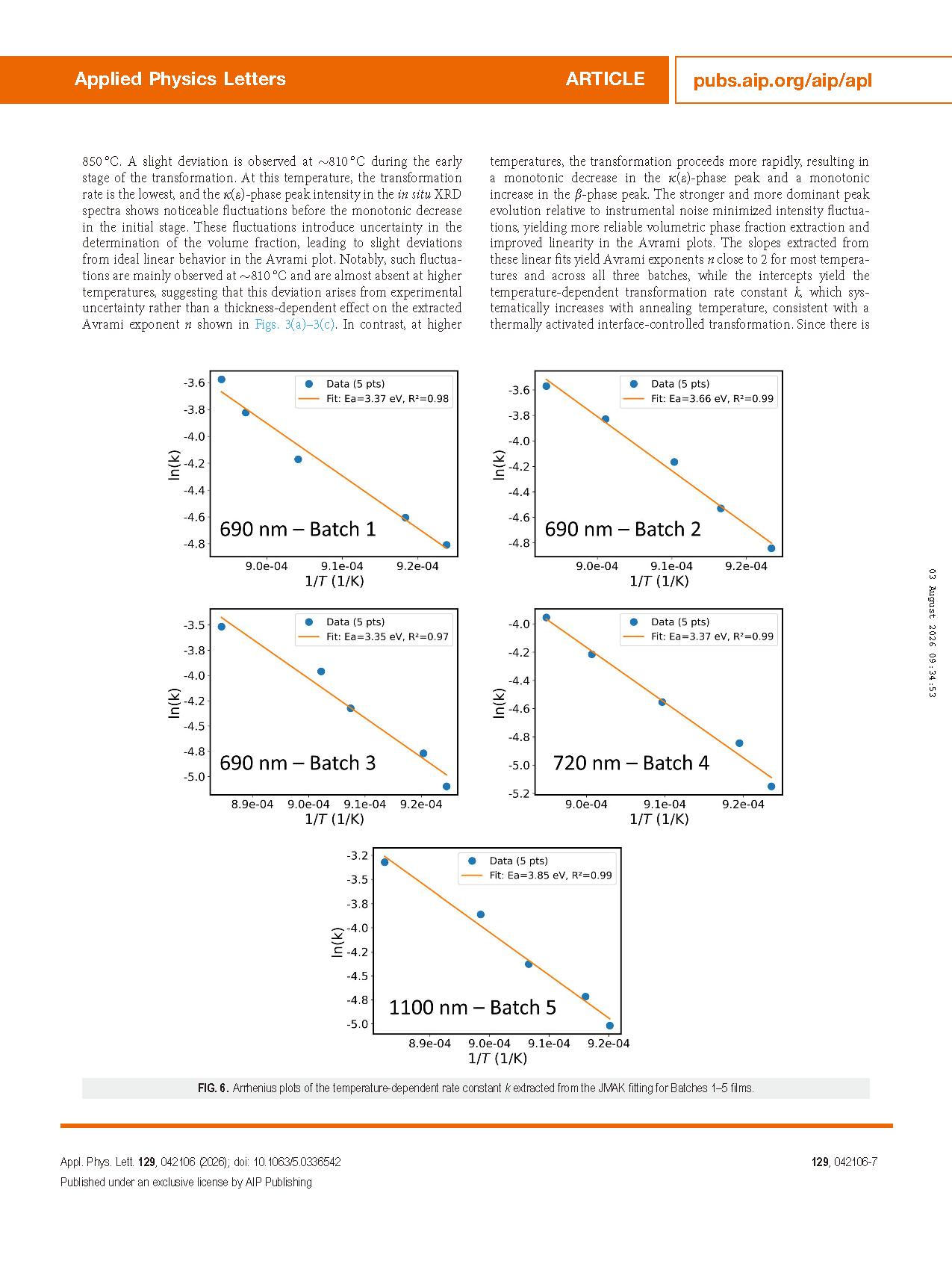
Quantitatively calculate transformation activation energy 3.35–3.85 eV for multiple film thickness batches, elucidate the influence of rotational domains on epitaxial matching relationship after phase transition.
Conclusion
In summary, the κ(ε) to β phase transformation in five batches of nominally phase-pure κ(ε)-Ga₂O₃ thin films has been systematically investigated through in situ isothermal HT-XRD. The transformation proceeds directly from κ(ε) to β without the formation of any detectable intermediate phase, while preserving both out-of-plane and in-plane epitaxial relationships with the c-plane sapphire substrate consistent with an as-grown β film.
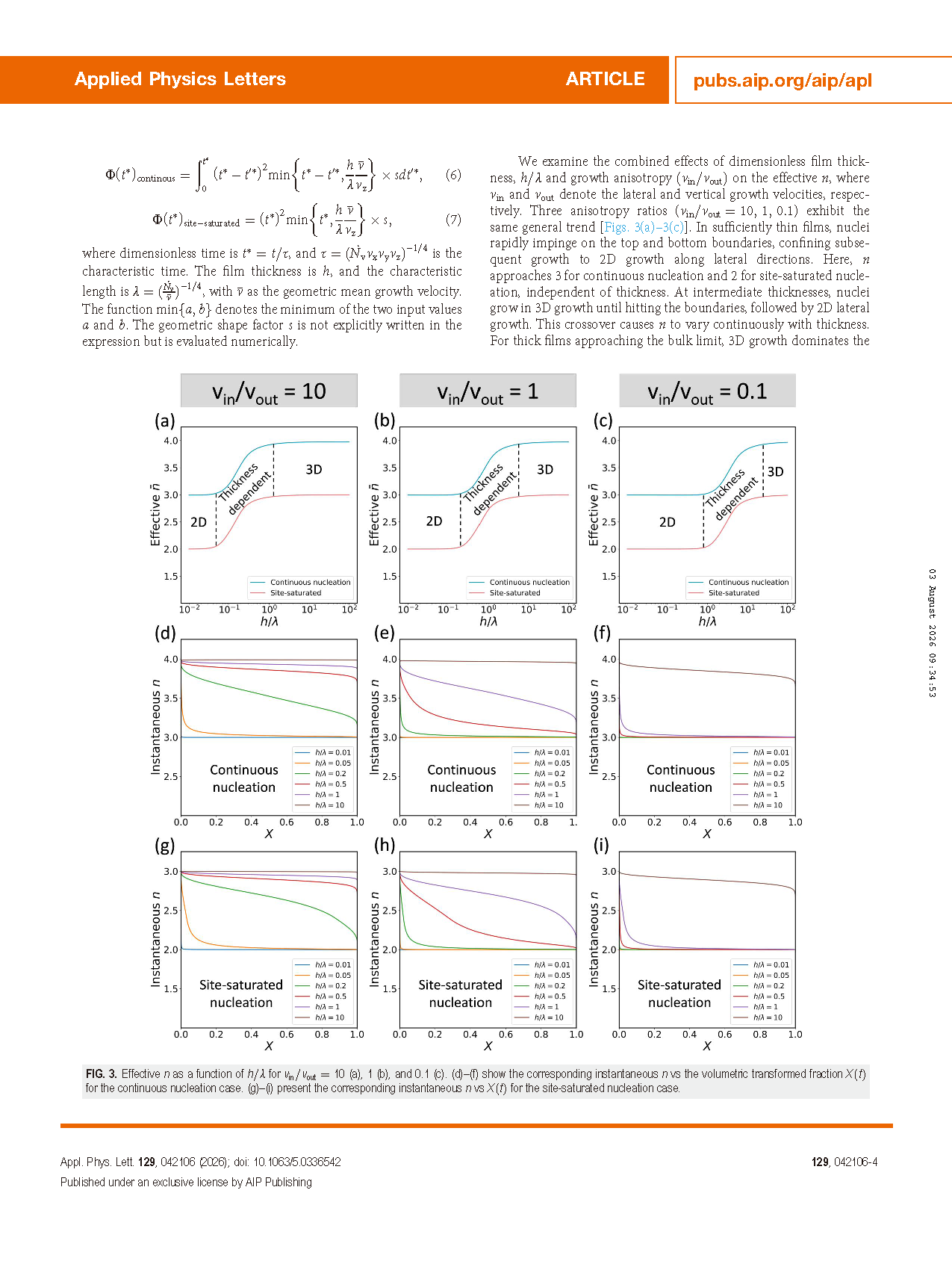
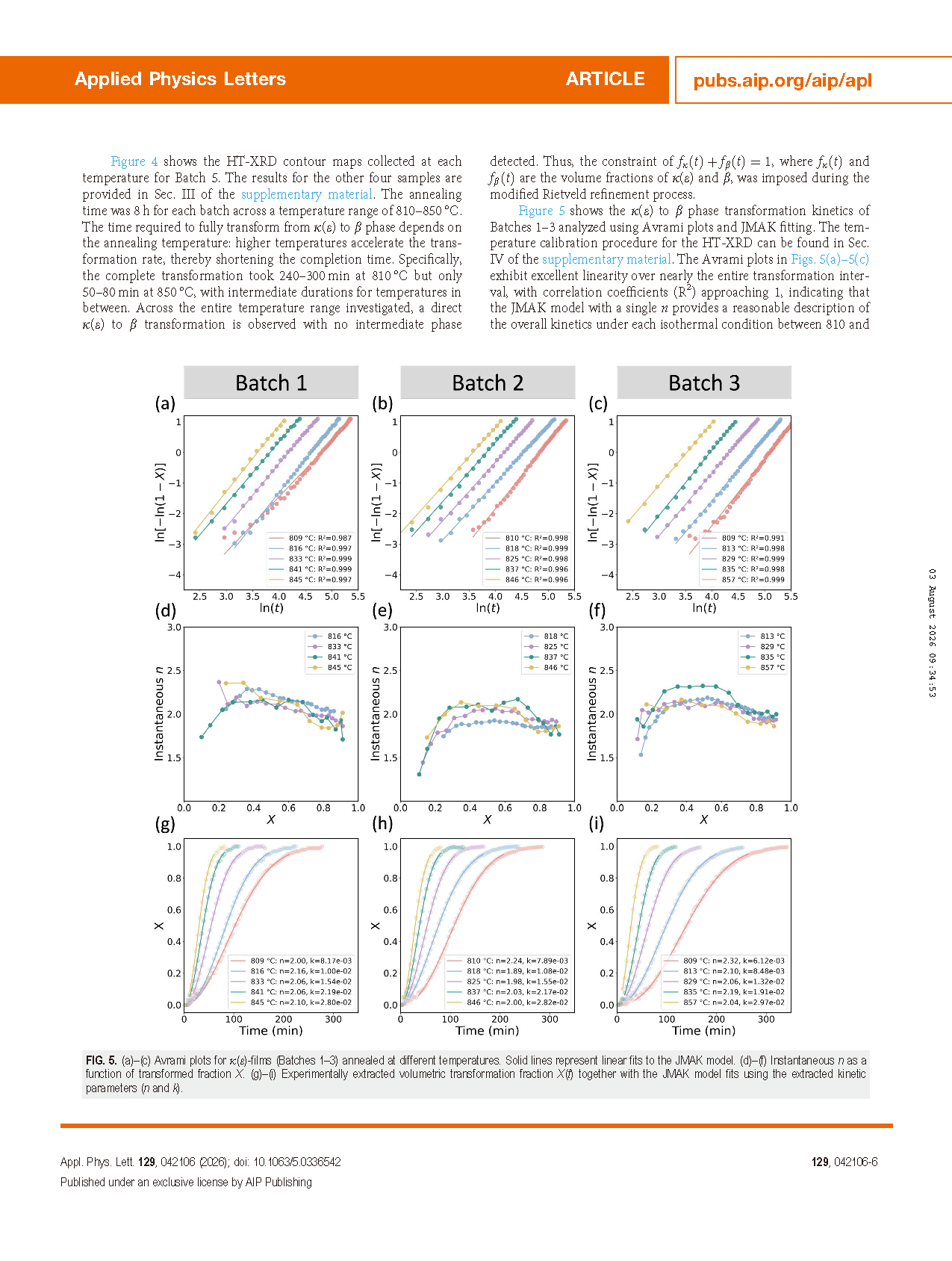
By revisiting the original Kolmogorov formulation and explicitly accounting for finite thickness and growth anisotropy, we clarify the applicability of the classical JMAK model in these films. The effective Avrami exponent depends on the dimensionless thickness h / λ as well as the growth anisotropy ratio. Experimentally, Avrami plots for all five batches show excellent linearity over the transformation interval, yielding a consistent Avrami exponent of n ≈ 2 across temperatures from 810 to 850 C. The instantaneous n analysis further confirms that the exponent remains nearly constant throughout the transformation interval of 0.1–0.9 in volume fraction, indicating that n ≈ 2 is not only a fitting average but also reflects the intrinsic kinetic behavior. The extracted rate constants exhibit clear Arrhenius behavior with activation energies of 3.35–3.85 eV. The strong agreement among the five batches demonstrates the robustness and reproducibility of the analysis. Overall, the κ(ε) to β transformation in ~700–1100 nm films can be best described as interface-controlled, site-saturated nucleation with thickness-limited or effectively 2D growth.
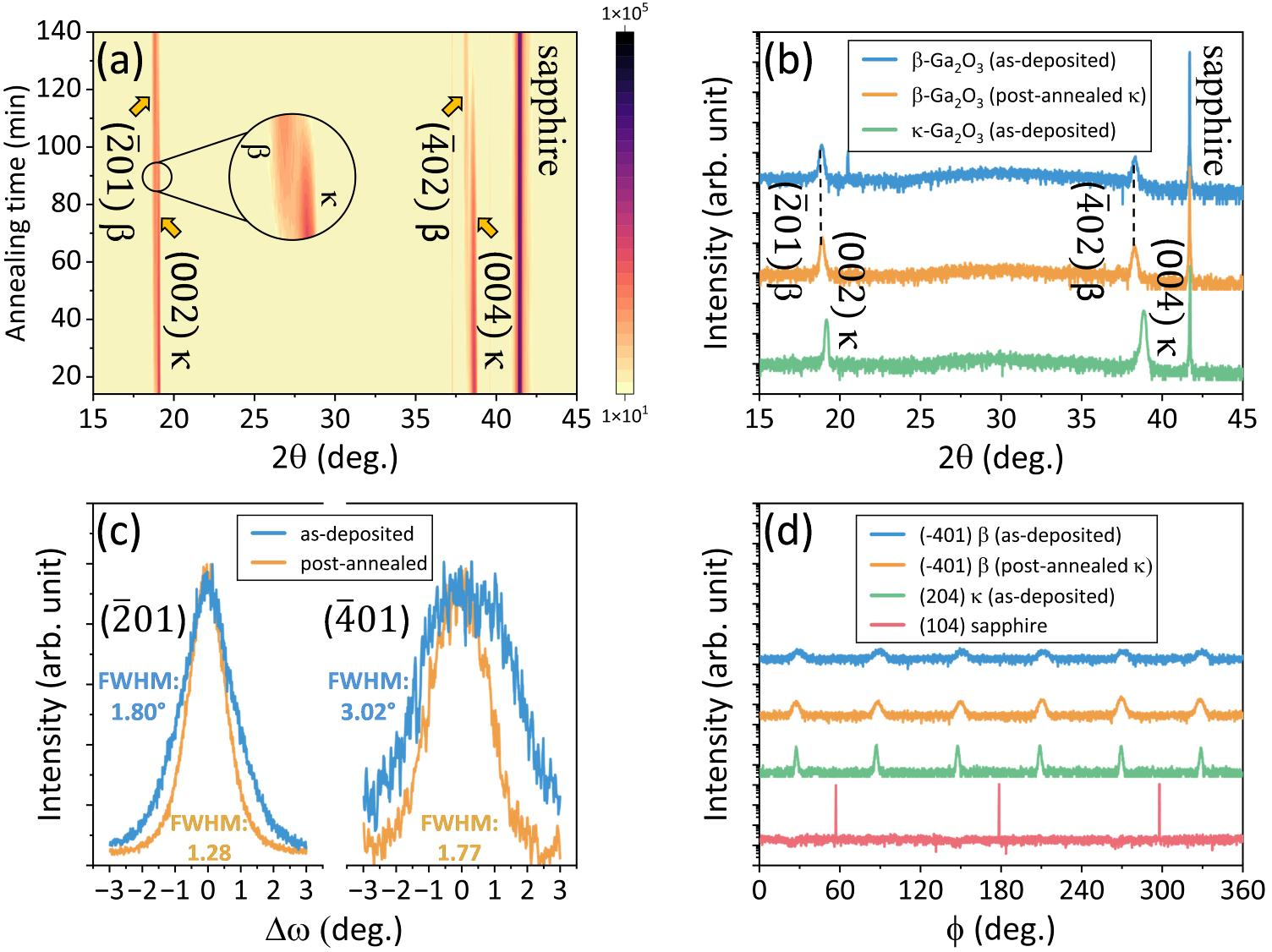
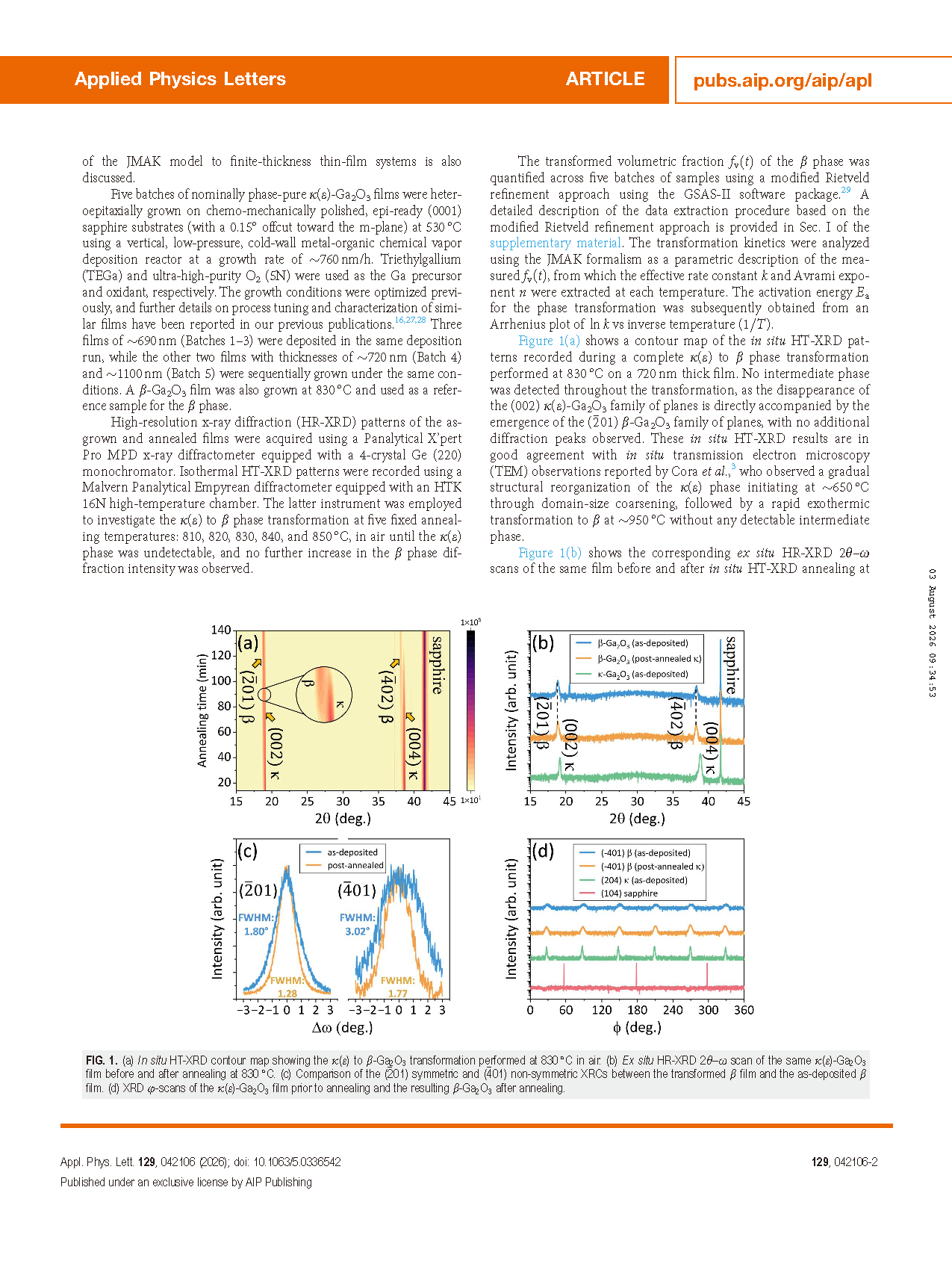
FIG. 1. (a) In situ HT-XRD contour map showing the κ(ε) to β-Ga₂O₃ transformation performed at 830 ℃ in air. (b) Ex situ HR-XRD 2θ–ω scan of the same κ(ε)-Ga₂O₃ film before and after annealing at 830 C. (c) Comparison of the (-201) symmetric and (-401) non-symmetric XRCs between the transformed β film and the as-deposited β film. (d) XRD φ-scans of the κ(ε)-Ga₂O₃ film prior to annealing and the resulting β-Ga₂O₃ after annealing.
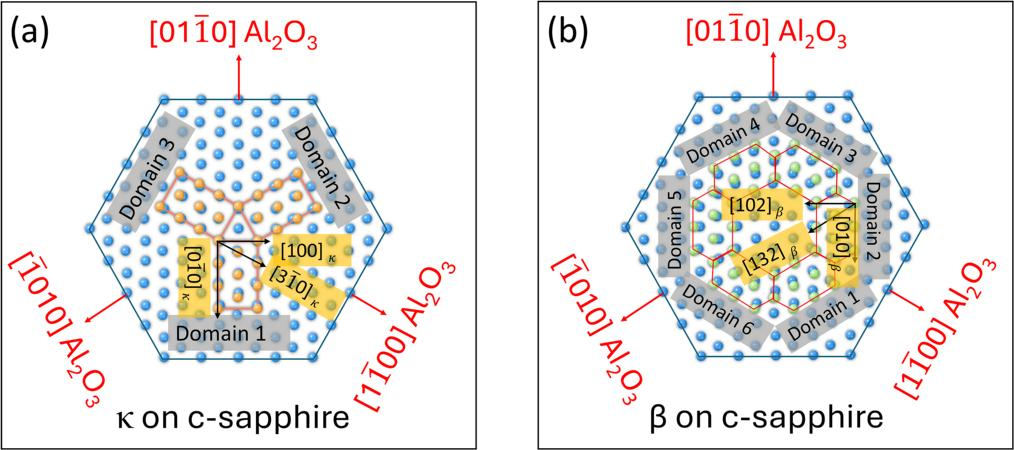
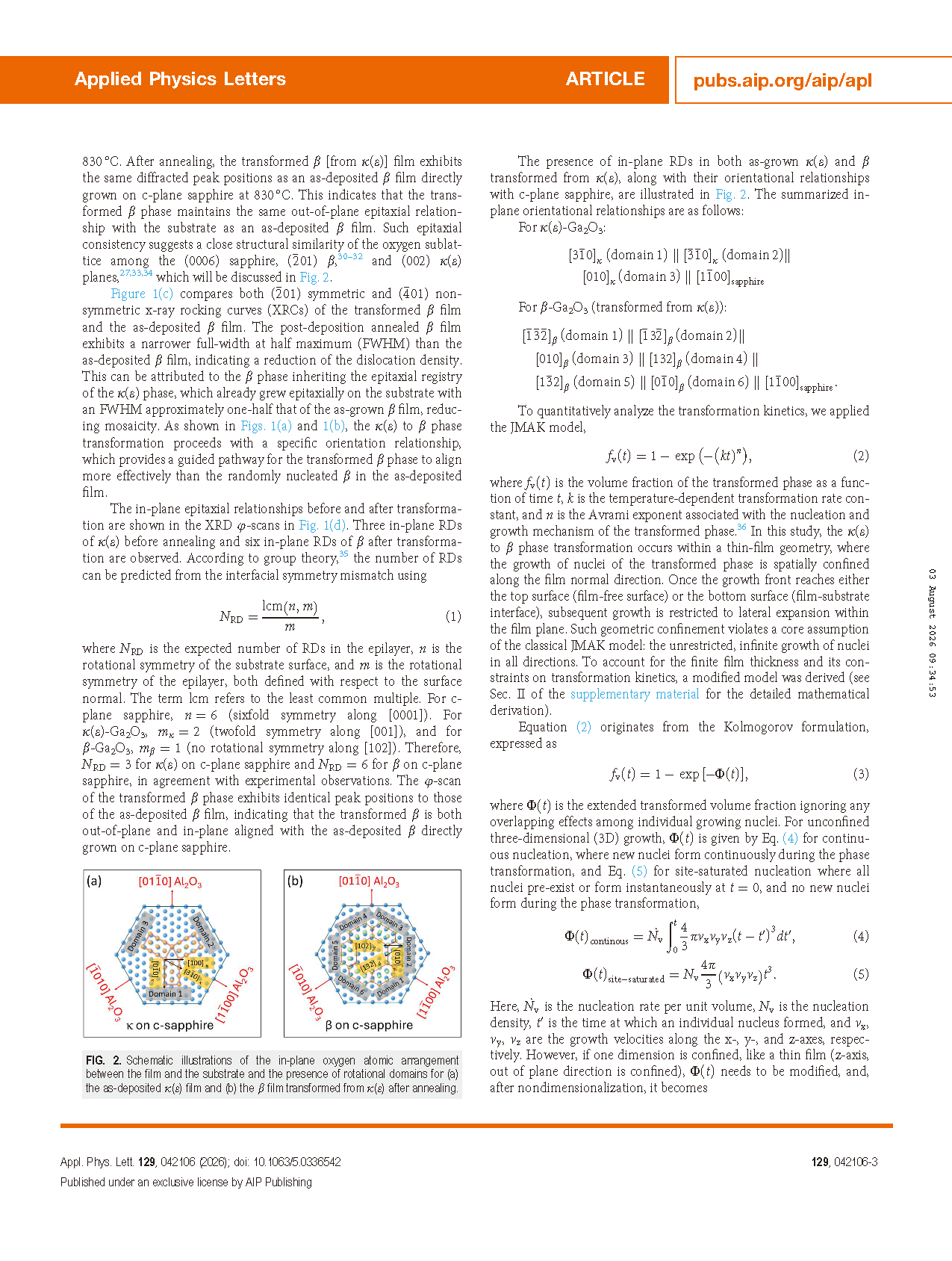
FIG. 2. Schematic illustrations of the in-plane oxygen atomic arrangement between the film and the substrate and the presence of rotational domains for (a) the as-deposited κ(ε) film and (b) the β film transformed from κ(ε) after annealing.
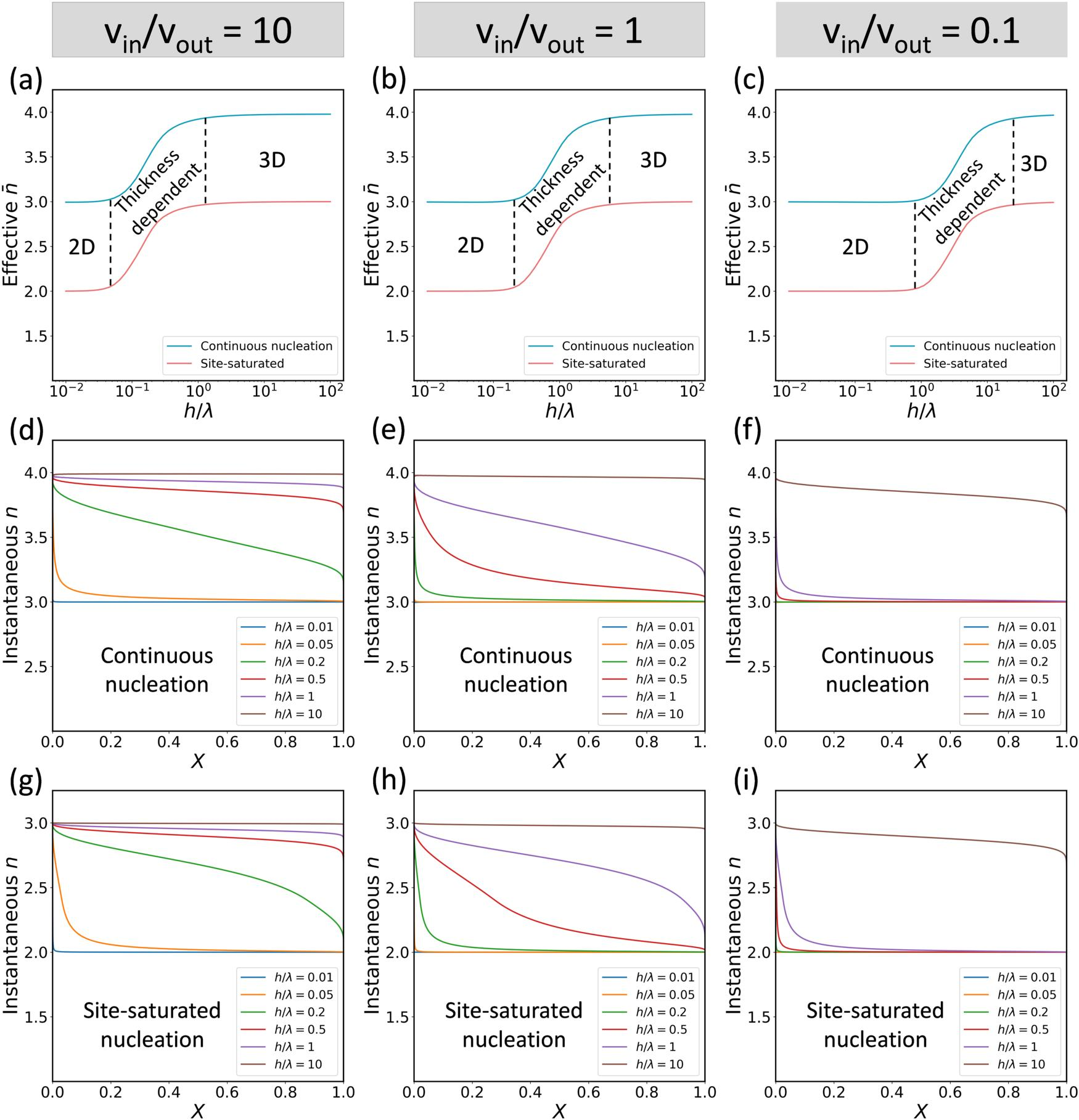
FIG. 3. Effective n as a function of h/λ for vin/vout =10 (a), 1 (b), and 0.1 (c). (d)–(f) show the corresponding instantaneous n vs the volumetric transformed fraction X (t) for the continuous nucleation case. (g)–(i) present the corresponding instantaneous n vs X (t) for the site-saturated nucleation case.
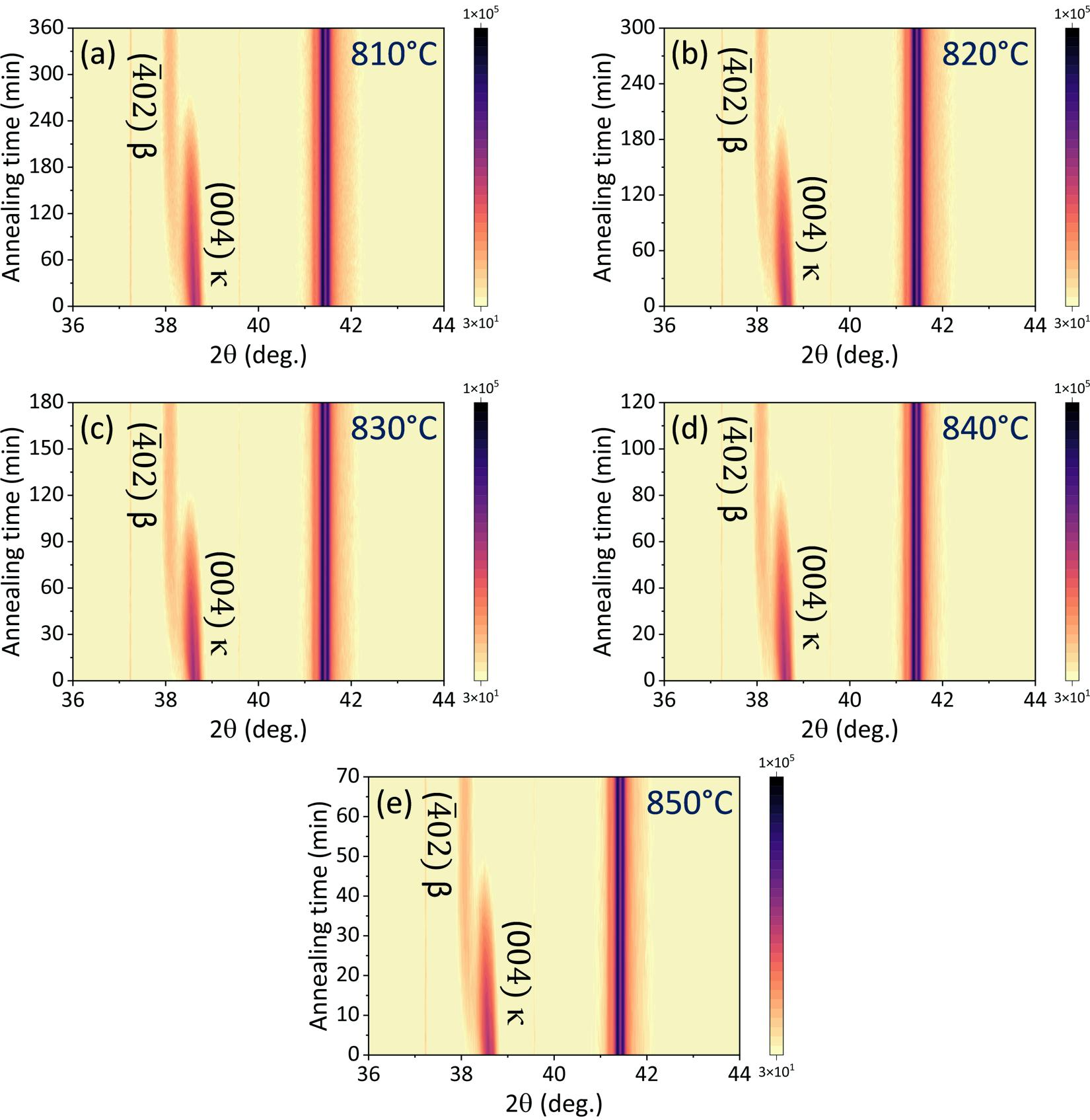
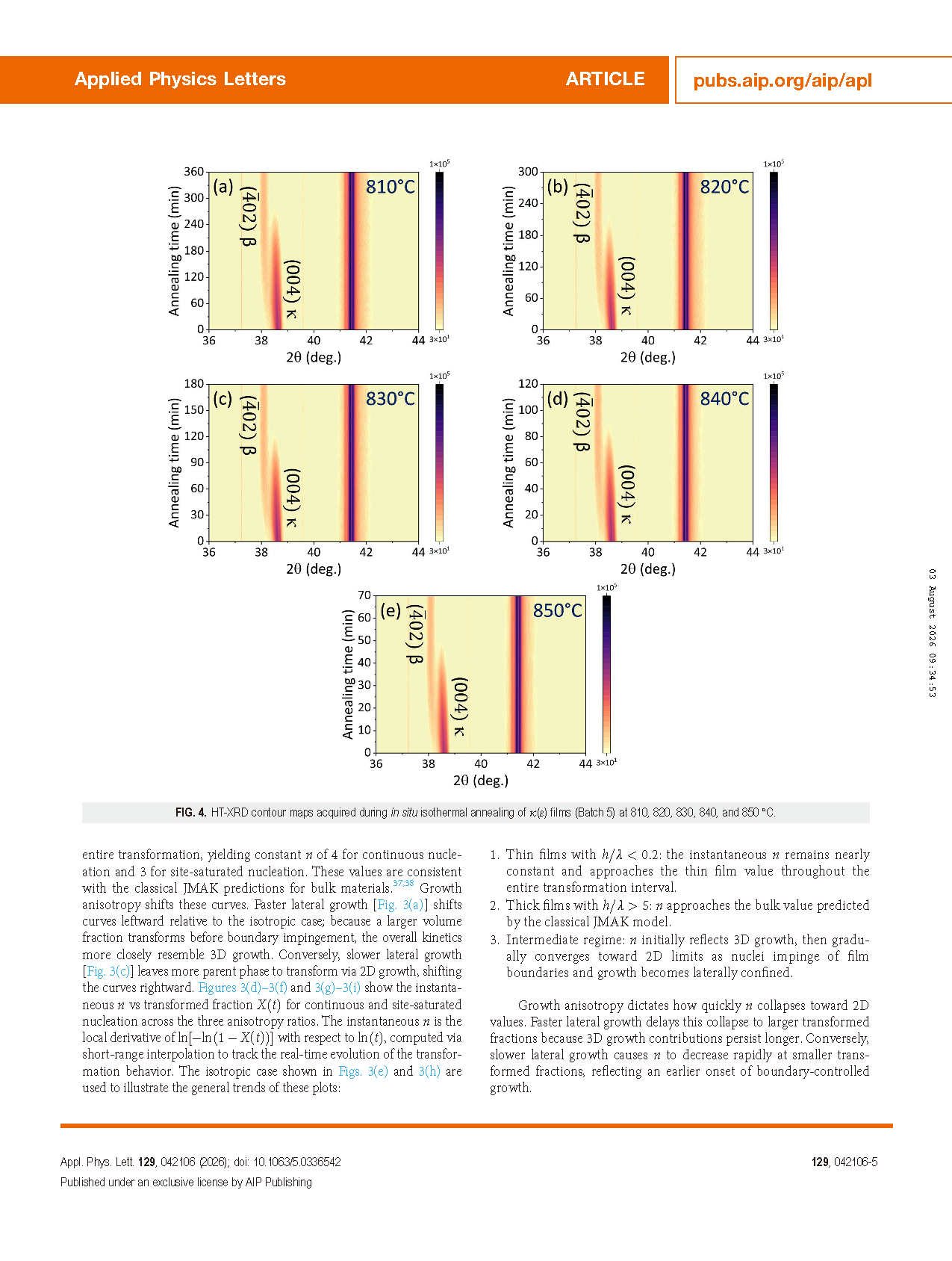
FIG. 4. HT-XRD contour maps acquired during in situ isothermal annealing of κ(ε) films (Batch 5) at 810, 820, 830, 840, and 850 ℃.
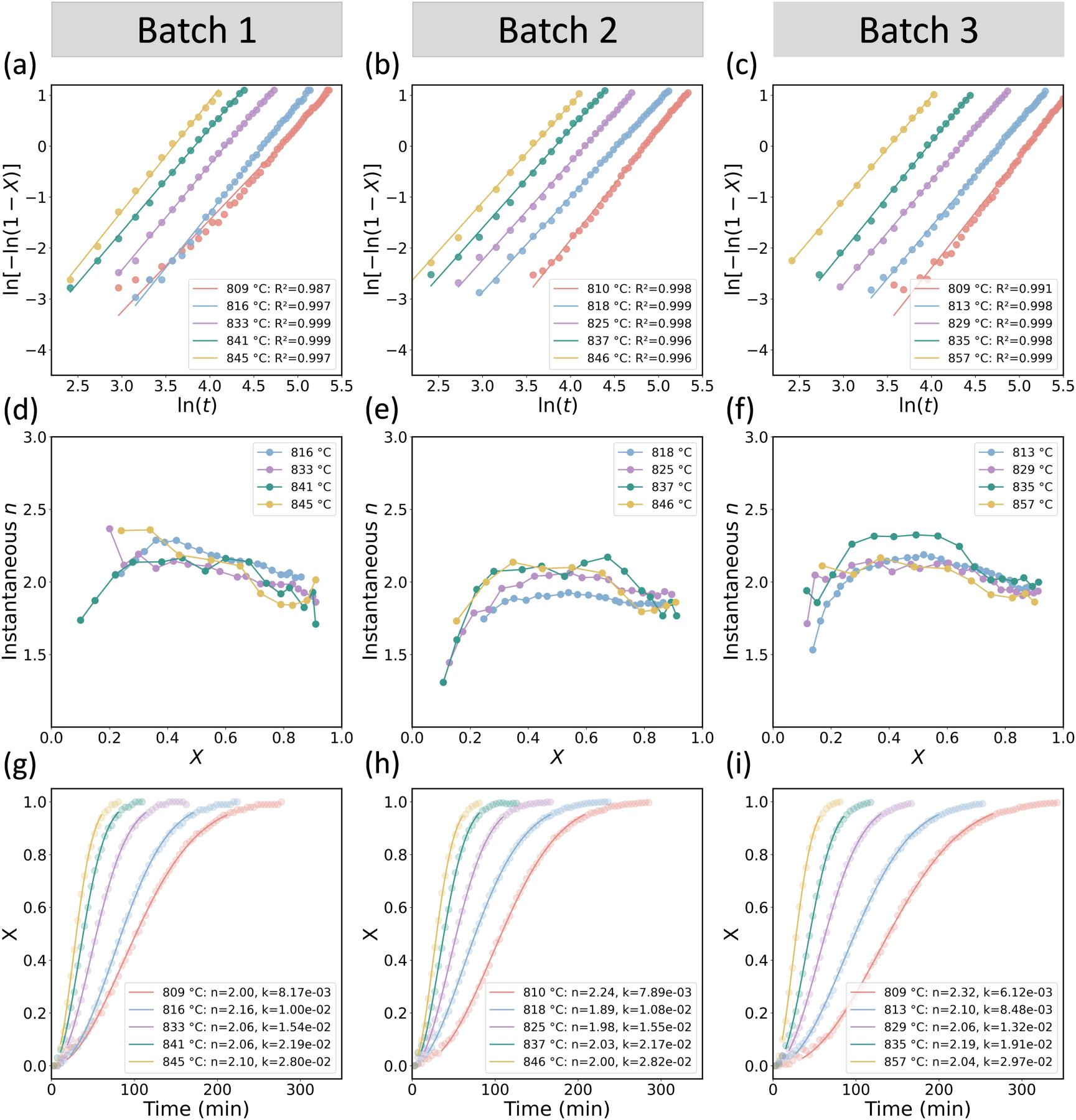
FIG. 5. (a)–(c) Avrami plots for κ(ε)-films (Batches 1–3) annealed at different temperatures. Solid lines represent linear fits to the JMAK model. (d)–(f) Instantaneous n as a function of transformed fraction X. (g)–(i) Experimentally extracted volumetric transformation fraction X (t) together with the JMAK model fits using the extracted kinetic parameters (n and k).
DOI:
doi.org/10.1063/5.0336542
Instruction
Official Account

Cooperation
Top